Many believe that tightening the chain fully eliminates slack and protects the swingarm, but this isn’t true. Over-tightening causes excessive stress on bearings and seals, risking damage, while too loose can lead to derailments and uneven wear. Proper chain slack, aligned with manufacturer specs, evenly distributes force and minimizes component stress. Understanding these myths helps prevent costly repairs; explore further to master the correct adjustments that safeguard your swingarm effectively.
Key Takeaways
- Proper chain slack prevents excessive tension that can stress and damage the swingarm over time.
- Avoiding overly tight chains ensures even load distribution, protecting swingarm bearings from premature wear.
- Correct chain tension minimizes lateral movement, reducing chain slap and swingarm impact during riding.
- Regularly measuring and adjusting chain slack helps prevent misalignment that could harm the swingarm.
- Maintaining manufacturer-recommended slack levels shields the swingarm from unnecessary stress and long-term damage.
How to Check and Set Your Chain Slack Correctly
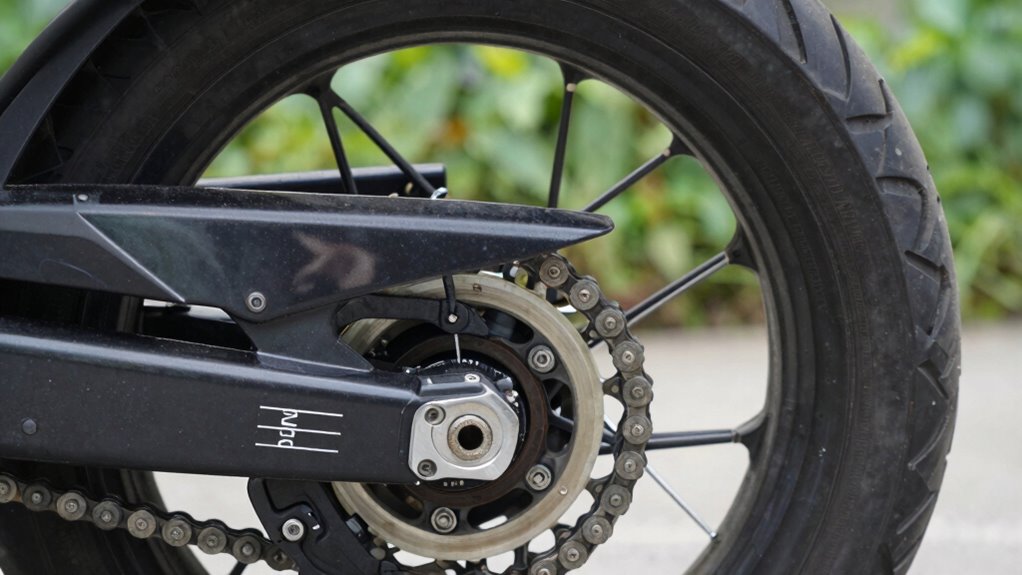
How can you accurately check and set your bike chain slack to maximize performance and prevent premature wear? Begin by positioning the bike on a stand or ensuring it’s on a flat surface. Locate the chain and measure the vertical movement at its midpoint between the front and rear sprockets. Use a ruler or chain tension gauge to quantify slack, which should fall within manufacturer specifications—typically 1-2 inches of movement. To adjust, loosen the rear axle nut and move the wheel backward or forward to achieve the correct slack, then tighten the nut securely. Recheck the slack after tightening. Precise measurement and adjustment prevent excessive tension that accelerates wear, or slack that causes chain derailment, ensuring optimal drivetrain efficiency and component longevity. Additionally, understanding the European cloud infrastructure can help you appreciate how modern technology supports sustainable and secure solutions in various industries.
Common Myths About Chain Slack That Can Damage Your Swingarm

Are common misconceptions about chain slack risking damage to your swingarm? Many believe that overly tight or loose chains directly cause swingarm deterioration, but this isn’t always accurate. Excessively tight chains increase tension on bearings and mounting points, accelerating wear and potentially warping the swingarm over time. Conversely, overly loose chains can cause excessive lateral movement, leading to impacts against the swingarm’s chain guide or chainstay, which may cause abrasion or deformation. Misinterpreting ideal slack levels often results in improper adjustments, stressing components beyond their design limits. These myths obscure the fact that correct chain slack maintains proper load distribution and reduces undue stress. Proper chain tension is essential for distributing load evenly and preventing undue stress on the swingarm components. Understanding the precise relationship between chain tension and swingarm integrity is essential for mitigating premature damage and ensuring peak bike performance.
Signs Your Chain Slack Is Too Tight or Too Loose

Proper chain slack is essential for peak motorcycle performance and component longevity; deviations can signal underlying issues. If your chain is excessively tight, you’ll notice increased tension during suspension compression or when the bike is stationary, which can lead to accelerated wear on the swingarm and sprockets. Conversely, a chain that’s too loose will exhibit noticeable slack when checked, often resulting in a rattling sound during acceleration or deceleration. You may also observe uneven wear patterns or difficulty maintaining consistent throttle response. Sharp or irregular tension changes suggest misalignment or improper adjustment. Regularly inspecting your chain’s tension and noting these signs helps prevent undue stress on your drivetrain components and ensures safe, efficient operation. Additionally, navigation and mapping explainers can help you better understand how proper chain tension contributes to your motorcycle’s overall handling and safety. Understanding proper maintenance schedules ensures that your chain remains in optimal condition and extends its lifespan. Maintaining correct tension levels is crucial for preventing damage and ensuring smooth riding performance. Keeping an eye on chain wear patterns can also help identify early issues before they lead to costly repairs. Being aware of adjustment techniques will allow you to correct tension issues promptly and maintain your motorcycle’s performance.
Why Proper Chain Tension Protects Your Swingarm

Maintaining correct chain tension is crucial for safeguarding your swingarm from undue stress and premature wear. When tension is ideal, the chain distributes forces evenly, minimizing lateral movement and reducing strain on the swingarm pivots. Excess slack allows the chain to slap against the swingarm and sprockets, accelerating wear and risking misalignment. Conversely, overly tight chains increase tension on the swingarm bearings and seals, risking deformation and failure. To visualize this, consider the following:
| Chain Condition | Effect on Swingarm |
|---|---|
| Proper tension | Uniform force distribution |
| Excess slack | Increased lateral stress |
| Over-tightened | Bearing and seal strain |
| Slightly loose | Reduced impact on components |
| Correct tension range | Optimal longevity and performance |
Proper tension acts as a buffer, protecting the swingarm from mechanical fatigue. Additionally, chain maintenance is essential to ensure consistent performance and durability over time.
Troubleshooting Chain Slack Problems Quickly and Safely
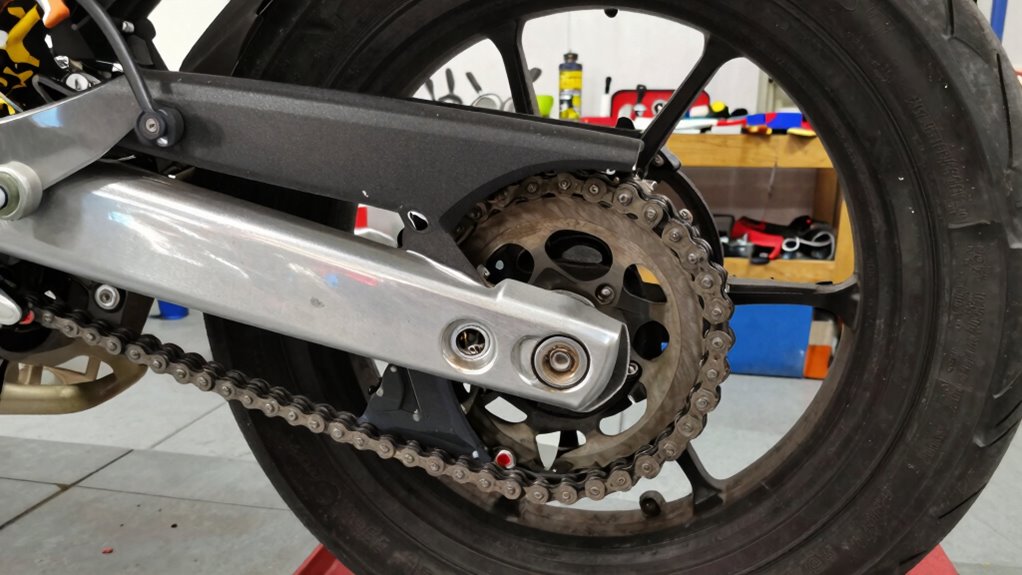
When troubleshooting chain slack issues, start by inspecting the chain’s tension and alignment to identify deviations from the ideal range. Use a precise tension gauge or measure the slack at the midpoint between sprockets, ensuring it aligns with manufacturer specifications. Check for uneven tension or misalignment that could cause excessive slack or tight spots. Confirm the chain’s alignment by verifying the sprockets are properly concentric and the chain runs straight without lateral deviation. Look for signs of wear, damaged links, or stiff links that could impair smooth operation. Document your measurements and compare them against recommended values. Address any irregularities systematically—tighten or loosen the chain as needed, and realign components to restore proper tension and alignment. Proper maintenance of support breakfast practices can also help prevent issues related to chain wear and ensure consistent performance. Additionally, regularly inspecting the lubrication of your chain can significantly extend its lifespan and smoothness. Keeping your chain clean and well-maintained is essential for optimal performance and safety. This methodical approach ensures quick, safe resolution of chain slack problems, especially considering how color accuracy and contrast ratio influence the overall performance and durability of your setup. Maintaining proper chain tension is crucial for optimal riding experience and safety, so always double-check your adjustments.
Expert Tips to Maintain Proper Chain Slack and Keep Your Swingarm Safe
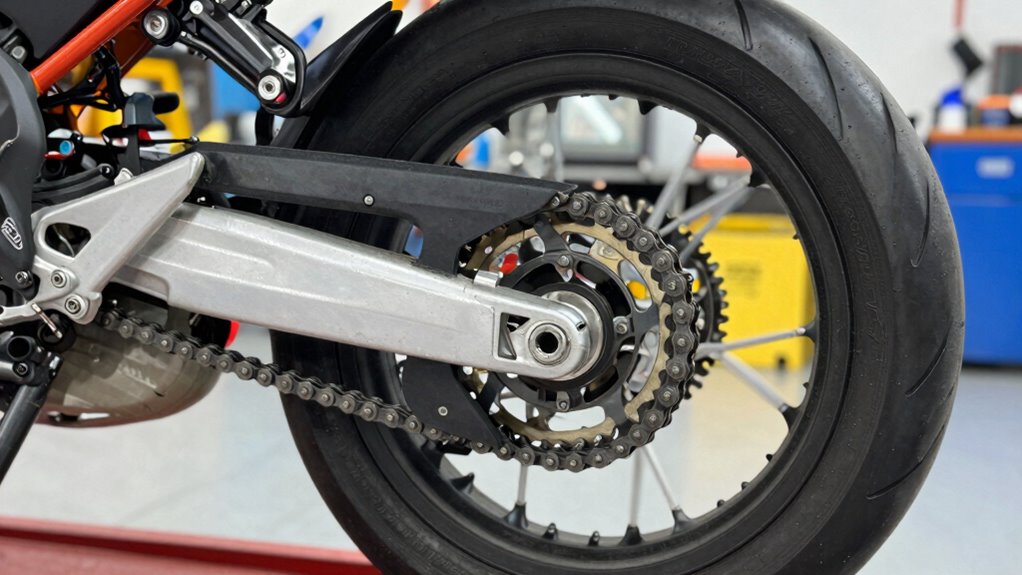
Maintaining proper chain tension requires precise adjustment using recommended techniques to prevent excessive slack that can harm your swingarm. Recognizing signs of slack, such as inconsistent tension or unusual noise, ensures early detection of issues. Incorporating regular maintenance routines optimizes chain performance and safeguards your motorcycle’s mechanical integrity. For example, understanding the importance of net worth in various contexts can help you appreciate the value of routine upkeep and investment in your motorcycle gear. Additionally, paying attention to air purifier maintenance dos and don’ts can serve as a useful analogy for understanding proper maintenance practices to ensure ongoing optimal performance. Regularly checking your precious metals IRA holdings can also remind you of the importance of safeguarding your investments through proper care and timely adjustments. Moreover, staying informed about holistic SEO approaches can help you understand how integrating different strategies enhances overall system health and longevity. Furthermore, engaging in eco-friendly accommodations during your maintenance breaks can promote sustainable practices even in leisure activities related to motorcycle touring.
Proper Chain Tensioning Techniques
Proper chain tensioning is essential for ideal performance and safety, as excessive slack can cause derailments and accelerate wear, while overtightening places unnecessary stress on the swingarm and drivetrain. To achieve perfect tension, measure chain slack at its midpoint between the sprockets, ensuring it aligns with manufacturer specifications. Use a reliable tensioning device or a calibrated method to maintain consistent tension, adjusting the chain’s tensioner or axle alignment accordingly. Tighten the axle locknut securely after adjustments, then recheck slack to confirm accuracy. Avoid relying solely on visual inspection; precise measurement ensures proper tension. Regularly monitor tension during maintenance intervals, especially after riding in rough terrain or after chain adjustments, to prevent misalignment and component fatigue. Proper tensioning maximizes efficiency and prolongs component lifespan. Incorporating creative storytelling techniques into maintenance guides can enhance rider engagement and understanding of technical procedures. Additionally, understanding chain slack and its impact can help riders recognize when adjustments are truly needed.
Signs of Excess Slack
Excess chain slack can be detected through specific symptoms that compromise both performance and safety. You may notice increased chain noise during operation, such as rattling or squeaking, indicating excessive movement. Additionally, a visibly sagging chain can be observed when inspecting the swingarm, suggesting the tension is too loose. Reduced responsiveness during acceleration or deceleration, along with inconsistent power transfer, may also signal slack issues. Moreover, if the chain exhibits excessive side-to-side movement when manually tested, it’s a clear indicator that the tension exceeds recommended levels. These symptoms not only diminish ride quality but can accelerate component wear and increase the risk of chain derailment or damage. Recognizing these signs promptly allows for timely adjustment, preserving both your motorcycle’s integrity and safety.
Regular Maintenance Routines
Implementing a consistent maintenance routine is essential for ensuring ideal chain tension and safeguarding your swingarm’s integrity. Regular inspections should be scheduled to measure chain slack precisely, using manufacturer-recommended specifications. Lubrication reduces friction and prevents premature wear, but over-lubricating can attract debris, compromising performance. Tighten or loosen the chain as needed, ensuring uniform tension across the span to avoid uneven load distribution. Check sprockets for wear and alignment to prevent chain derailment and excessive stress on the swingarm. Maintain a clean drivetrain by removing accumulated dirt and grime, which can accelerate component degradation. Document maintenance intervals and keep detailed records to track wear patterns. Adopting a disciplined, analytical approach minimizes the risk of slack-related damage, ensuring best performance and long-term swingarm protection. Proper tension is crucial for optimal performance and component longevity.
What Happens if You Ignore Chain Slack Issues?

Ignoring chain slack issues can lead to increased chain wear, shortening its lifespan and compromising efficiency. It also raises the risk of derailment, which can cause sudden loss of control. Additionally, persistent slack can accelerate swingarm damage, resulting in costly repairs and safety hazards. Properly adjusting chain slack helps prevent premature component failure and ensures safe, smooth operation. Maintaining correct chain tension also supports the overall air-based system, promoting safer riding and better control.
Increased Chain Wear
When chain slack is neglected, it leads to increased chain wear, which accelerates the deterioration of both the chain and the sprockets. Excessive slack causes uneven distribution of tension, resulting in increased friction and metal-to-metal contact. This wear manifests as elongated chain links, stretched pins, and worn sprocket teeth, reducing efficiency and increasing the risk of failure. Over time, the chain’s elasticity diminishes, compromising proper engagement with the sprockets. Additionally, uneven wear patterns can cause misalignment, further accelerating component degradation. Without proper adjustment, you’ll observe increased resistance during acceleration and deceleration, along with potential noise and vibration. Ultimately, ignoring chain slack fosters a cycle of accelerated wear, demanding more frequent replacements and risking damage to drivetrain components.
Risk of Derailment
If chain slack is not properly maintained, the risk of derailment increases considerably. Excess slack allows the chain to shift laterally under load, especially during high-torque situations like acceleration or cornering. This lateral movement can cause the chain to jump off the sprockets, particularly if the chain’s tension is uneven or if the sprockets are worn. Conversely, too little slack results in increased tension, which can cause binding or stiff movement, heightening the chance of the chain catching on components or derailing. Proper chain slack ensures a balanced tension distribution, reducing lateral movement and maintaining consistent engagement with the sprockets. Ignoring these adjustments creates instability, heightening the likelihood of derailment and potentially causing damage to the chain, sprockets, and swingarm.
Accelerated Swingarm Damage
Proper chain slack maintenance is crucial because excessive or insufficient tension directly stresses the swingarm components. Ignoring these issues accelerates wear and can lead to costly damage. When chain slack isn’t properly adjusted, increased lateral forces are transferred to the swingarm, causing metal fatigue. Over time, this can result in:
- Cracked or bent swingarm brackets
- Worn or elongated pivot points
- Premature bearing failure
- Frame misalignment
- Increased vibration and noise
These symptoms indicate underlying structural stress, which compromises the integrity of your motorcycle’s suspension system. Continuous neglect can cause irreversible damage, leading to expensive repairs or replacement. Maintaining ideal chain slack is essential to prevent these issues, ensuring the longevity and safety of your swingarm and overall motorcycle performance.
Long-Term Chain Slack Maintenance for a Smooth Ride

Maintaining ideal chain slack over the long term is essential for guaranteeing a smooth and efficient ride. Consistent adjustment prevents excessive wear on drivetrain components, reduces stress on the swingarm, and minimizes energy loss. To achieve this, regularly measure chain tension using precise tools like a tension gauge or by following manufacturer specifications. Avoid neglecting slack adjustments, as overly tight chains increase bearing load and cause premature wear, while overly loose chains risk derailment and uneven wear. Incorporate scheduled inspections into your maintenance routine, especially after riding on rough terrain or after significant mileage accumulation. Proper lubrication, combined with correct slack, ensures minimal friction and peak power transfer. Ultimately, disciplined long-term maintenance preserves component integrity and sustains ride quality.
Frequently Asked Questions
Can Incorrect Chain Slack Cause Motorcycle Frame Damage?
Yes, incorrect chain slack can cause motorcycle frame damage. If your chain is too tight, it puts excessive stress on the swingarm and frame during riding, leading to premature wear or cracks. Conversely, if it’s too loose, the chain may slap against the swingarm or other components, causing impact damage over time. Maintaining proper chain slack guarantees smooth power transfer and minimizes the risk of structural damage to your motorcycle.
How Often Should I Check My Chain Slack?
You should check your chain slack every 300 to 600 miles or as recommended by your motorcycle’s manufacturer. Regular inspections ensure proper tension, preventing excessive wear or damage to your swingarm and drivetrain components. Use precise measurement tools, like a ruler or chain tension gauge, to confirm the slack falls within the specified range. Consistent checks help maintain ideal performance and extend the lifespan of your motorcycle’s chain and related parts.
Is Chain Slack Adjustment Different for Dirt Bikes and Street Bikes?
Yes, chain slack adjustment differs between dirt bikes and street bikes due to their distinct riding conditions and suspension dynamics. Dirt bikes require more precise slack to handle rough terrain, preventing chain derailment and swingarm damage. Street bikes, with smoother surfaces, typically need slightly less slack for ideal performance. Always follow the manufacturer’s specifications for each bike type, as improper adjustment can compromise safety and component longevity.
What Tools Are Best for Measuring Chain Slack Accurately?
You should use a precise ruler or a chain tension gauge to measure chain slack accurately. A ruler allows you to quantify vertical movement at the midpoint between sprockets, while a tension gauge provides consistent, repeatable readings. For ideal results, guarantee your bike is on a level surface, the chain is clean and lubricated, and you follow the manufacturer’s specified slack range. This guarantees proper tension and prolongs chain and sprocket lifespan.
Does Chain Slack Affect Motorcycle Fuel Efficiency?
Think of chain slack as the tension in a tightrope—if it’s too loose, your motorcycle struggles to stay efficient. Excess slack increases drivetrain resistance, causing your engine to work harder and burn more fuel. Conversely, too little slack causes excessive wear and potential damage. Maintaining ideal chain slack reduces friction, improves power transfer, and enhances fuel efficiency, making your ride smoother and more economical over time.
Conclusion
Maintaining proper chain slack is like tuning a precision instrument—you guarantee smooth, reliable performance while safeguarding your swingarm. Ignoring tension issues can cause excessive wear or costly repairs, much like neglecting the tension on a tightrope risks a fall. Regular checks and adjustments keep your ride stable and efficient. Think of it as a essential calibration; small, consistent efforts prevent major failures, guaranteeing your motorcycle’s longevity and ideal performance.