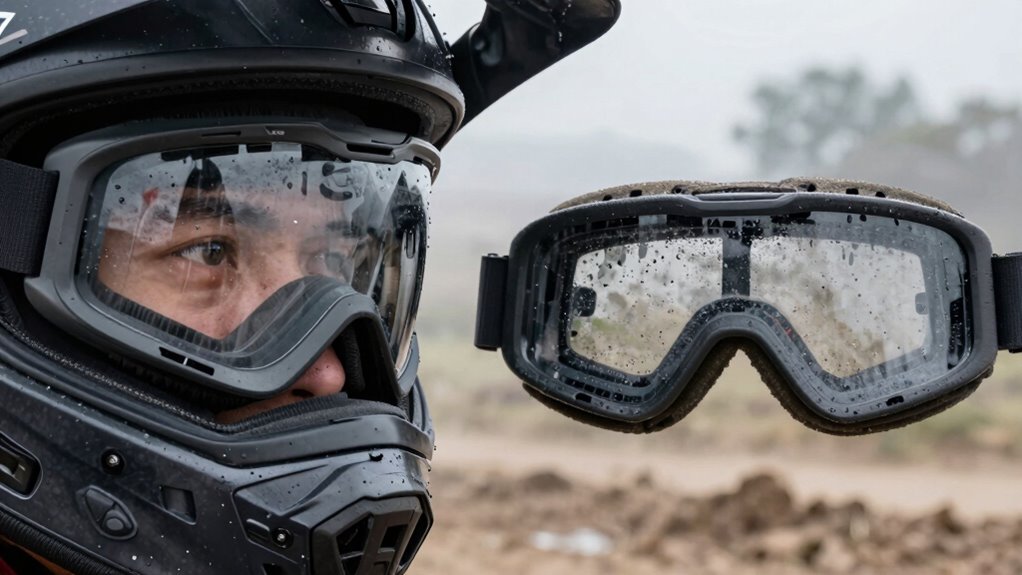

If you need eye protection in dust and rain, goggles offer a tighter seal, better dust and moisture resistance, and clearer vision in humid conditions thanks to anti-fog coatings. Visors provide broader peripheral view and are more comfortable in rain, but may let dust and water in more easily. Your choice depends on whether you prioritize protection or wide visibility. Keep exploring to discover which option suits your outdoor adventures best.

Get business pricing on garage and car supplies
- Business-only prices and quantity discounts
- Tax-exempt purchasing
- Multiple users, one account, clear invoices
Key Takeaways
- Goggles offer superior sealing and anti-fog coatings, maintaining clearer vision in dusty and humid conditions.
- Visors provide broader front coverage, enhancing peripheral awareness in rain but may suffer from water droplet glare.
- Goggles excel at blocking dust and particles, thanks to sealed frames and impact-resistant materials.
- Visors are lighter with better ventilation, reducing fogging in rain and dust, but can be less effective against fine particles.
- Both options’ visibility can degrade in adverse weather, but goggles generally provide more consistent clarity in dust and rain.
Which Eye Gear Is Better for Dust and Rain: Visors or Goggles?

When it comes to protecting your eyes from dust and rain, which gear performs better: visors or goggles? Visors typically offer broader coverage and are often equipped with lens coatings that repel water and dust, enhancing visibility. Goggles, on the other hand, usually feature sealed frames and advanced ventilation systems that prevent fogging and keep out debris. The lens coatings on goggles are vital for resisting scratches and smudges, maintaining clarity even in harsh conditions. Ventilation systems in goggles help reduce fog buildup, which is essential during heavy rain or dust storms. Color accuracy in goggles helps ensure that the visual information remains clear and true to life in challenging environments. Proper ventilation design is crucial for preventing fogging and maintaining clear vision during adverse weather. Visors may lack these advanced features but provide quick coverage with less fuss. Additionally, the materials used in goggle lenses are often impact resistant, providing extra protection against flying debris. Ultimately, goggles tend to offer more specialized protection against dust and rain, especially with optimized lens coatings and ventilation systems.
How Do Visors and Goggles Protect Your Eyes From Dust and Rain?
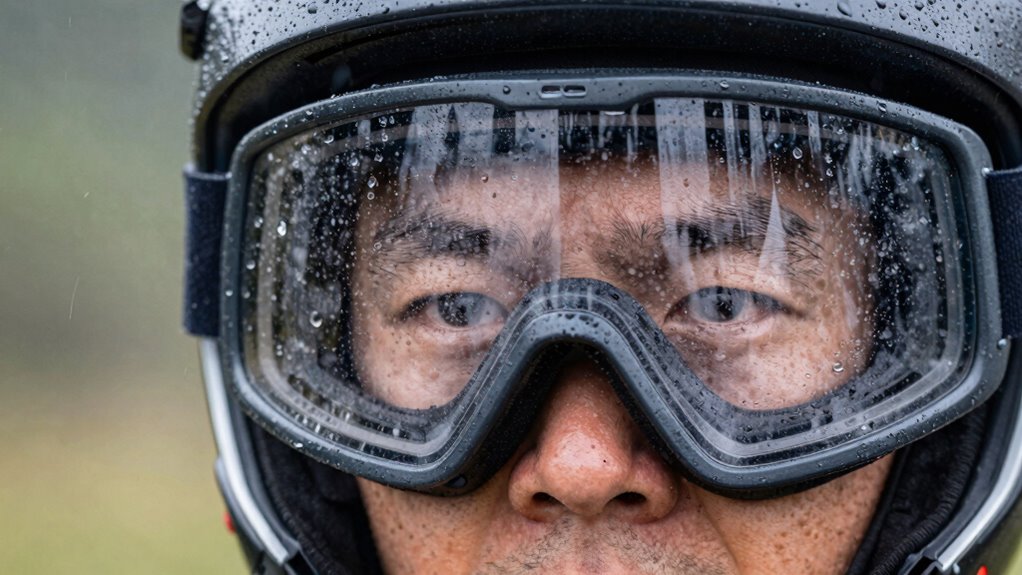
Both visors and goggles use durable materials that resist dust and rain, but their clarity can vary. A snug seal and proper fit guarantee dust and water stay out, while affecting how well you see. Additionally, their design impacts your visibility range, influencing your overall protection. Understanding the decoding slang used to describe their features can help you choose the right gear for your needs. Proper fit and design also play a crucial role in auditory processing, ensuring optimal protection without compromising visibility. Recognizing how visual clarity is affected by different designs can further optimize your choice of protective gear, especially when considering field of view and peripheral vision. Furthermore, the material composition of visors and goggles influences their durability and clarity over time, impacting your overall experience.
Material Durability and Clarity
Visors and goggles are designed with durable materials that withstand harsh conditions, guaranteeing your eyes stay protected. Material resilience is key, as these protective gear must endure dust, rain, and impacts without cracking or degrading. Visors often use tough polycarbonate or acrylic, providing high optical transparency that allows clear vision even in challenging weather. Goggles typically use impact-resistant plastics with anti-scratch coatings to maintain clarity over time. Their materials are engineered to resist fogging and scratching, preserving visibility in demanding environments. The material durability of these protective items ensures your eyes are shielded from debris and moisture without compromising clarity. Whether you’re facing dust storms or heavy rain, well-made visors and goggles keep your vision sharp and your eyes safe, thanks to their resilient and transparent materials.
Seal and Fit Effectiveness
The effectiveness of seals and fit determines how well visors and goggles protect your eyes from dust and rain. Seal effectiveness guarantees that particles and moisture stay out, while fit precision guarantees a snug, secure fit that prevents gaps. A poorly fitting visor or goggle can let dust slip in or rain seep through, reducing protection and comfort. Goggles often feature adjustable straps and rubber seals to improve fit precision, creating a tight barrier around your eyes. Visors, typically larger and less form-fitting, rely more on their shape and positioning to maintain a seal. Ensuring a proper fit is vital; it maximizes seal effectiveness and keeps your eyes shielded from the elements, allowing you to focus on your task without distraction or discomfort. Additionally, choosing a design with versatile add-ins such as foam padding or customizable straps can further enhance seal integrity and comfort during use. Proper fit adjustment is crucial to optimize both comfort and protection, especially in challenging conditions, as it directly impacts the overall protection level provided by the gear. Maintaining a secure fit also reduces the need for frequent adjustments, which can compromise the seal and expose your eyes to dust or rain. Incorporating adjustable features allows users to customize the fit for different face shapes and sizes, further improving the seal and comfort during extended use.
Impact on Visibility Range
How effectively do visors and goggles shield your eyes from dust and rain? Visors typically offer a broader field of view, but rain and dust can still blur your vision if they aren’t equipped with polarized filters. Goggles, on the other hand, often have snug seals that help block particles and moisture, maintaining clarity. Both options can include UV protection, reducing glare and eye strain in bright conditions. Polarized filters further improve visibility by minimizing glare from rain droplets or dust particles, extending your effective range of vision. However, visors might sometimes cause reflections or distortions, limiting peripheral awareness. Goggles usually provide more consistent clarity, especially when fitted with specialized coatings. Additionally, eye protection features in goggles tend to be more reliable in adverse weather, ensuring safety and clear sightlines. Overall, goggles tend to preserve a clearer, more consistent visibility range in adverse weather.
How Does Visibility Change With Visors and Goggles in Wet and Dusty Conditions?
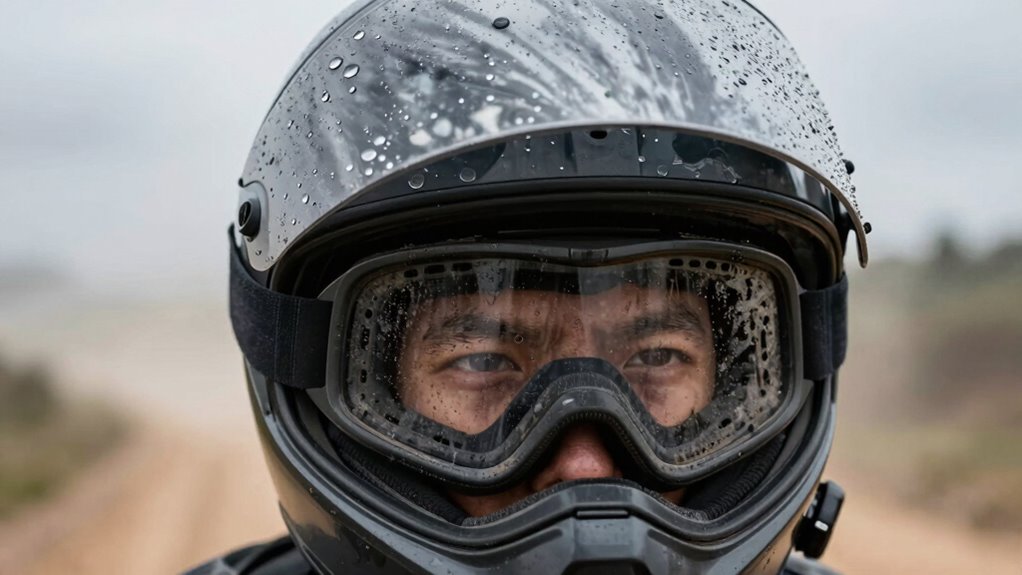
When conditions become wet or dusty, visibility through visors and goggles can change dramatically, affecting your safety and performance. In rain, visors often provide better UV protection, shielding your eyes from harmful rays and reducing glare from wet surfaces. However, water droplets can stick to the visor’s surface, scattering light and impairing clarity. Goggles with anti-fog coatings help maintain visibility but can still fog up in humid conditions, decreasing your field of view. Dusty environments challenge both options: goggles tend to trap dust against the lenses, reducing clarity, while visors can get scratched or coated with particles, affecting glare reduction. The lens material also plays a critical role in how well each option performs under these challenging conditions. Additionally, anti-fog technology integrated into lenses can significantly improve visibility in humid or rainy environments, but its effectiveness varies. Ultimately, each offers different trade-offs, but both can see significant visibility shifts in wet and dusty conditions, impacting your safety.
Are Goggles or Visors Better for Dust and Rain Protection?

Goggles and visors each have strengths and weaknesses when it comes to protecting your eyes from dust and rain. Goggles typically provide a snug fit that seals out particles and moisture, making them excellent for dust-heavy environments. They also often offer UV protection, shielding your eyes from harmful rays. However, goggles can feel bulky and may not suit your style preferences if you prefer a sleek look. Visors, on the other hand, offer good coverage and are generally lighter and more comfortable, especially in rain. While they may not seal as tightly against dust, some visors come with UV protection options. Ultimately, if you prioritize maximum dust and rain protection, goggles are more effective, but if style and comfort are your focus, visors might be better suited. Additionally, consider cleaning and maintenance aspects, as goggles typically require more careful handling to keep their seals intact.
Which Offers Better Peripheral Vision: Visors or Goggles?

When comparing visors and goggles, you’ll notice differences in frame coverage and how much side view they allow. Goggles typically offer a wider peripheral field, making obstacle detection easier. Visors, on the other hand, provide more extensive front coverage but can limit your side vision. Additionally, ventilation considerations can impact comfort and fogging, influencing overall visibility during use. Proper ventilation helps reduce fogging and keeps the wearer comfortable, especially during intense activities. Incorporating advanced ventilation systems can further improve airflow and reduce condensation, enhancing clarity during use. Understanding the cultural significance of design features can also inform choices that align with individual preferences and environmental conditions.
Frame Coverage Extent
Visors generally provide better peripheral vision than goggles because of their larger, more open frame design. This extensive frame coverage means you can see more of your surroundings without turning your head, enhancing peripheral visibility. The open structure allows your eyes to take in a wider area, making it easier to spot hazards or obstacles on the sides. Goggles, on the other hand, have a more enclosed frame that restricts peripheral vision, focusing your view forward. If you prioritize awareness of your entire environment, a visor’s frame coverage gives you an edge. However, this broader coverage can sometimes compromise protection or fog resistance. Ultimately, it’s a trade-off between maximum peripheral visibility and the level of protection you need.
Side Field of View
The design differences between visors and goggles considerably impact their side field of view. Visors typically offer a broader side field of view, enhancing your peripheral awareness. Their open, extended shape allows you to see more to the sides without turning your head, which is essential in dynamic environments. Goggles, on the other hand, usually have a more confined frame that limits peripheral vision. This narrower side field of view can reduce your awareness of nearby hazards or movement coming from the sides. If maintaining good peripheral awareness is necessary for your activity, a visor generally provides better side coverage. However, goggles might be preferable if a snug fit and protection outweigh the need for wider peripheral vision. Your choice depends on balancing visibility needs with safety considerations.
Obstacle Visibility Range
Choosing between visors and goggles for obstacle visibility involves considering how well each offers peripheral vision. Visors generally provide a broader obstacle visibility range because their large, open design allows you to see more of your surroundings without obstruction. This makes spotting obstacles on the sides easier, especially in dusty or rainy conditions. Goggles, on the other hand, tend to have a more limited peripheral view due to their smaller, enclosed shape. However, goggles often feature UV protection, guarding your eyes against harmful rays, and can be more stylish, enhancing aesthetic appeal. If obstacle detection in your peripheral vision is a priority, visors typically outperform goggles. But, if UV protection and style matter more, goggles can still be a strong choice.
Do Visors or Goggles Stay Fog-Free Longer?
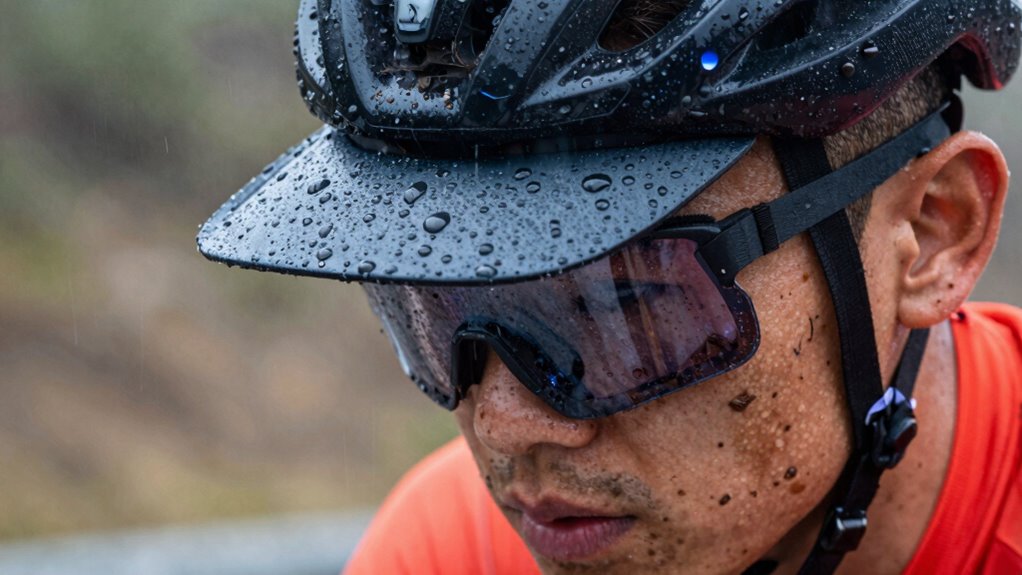
When it comes to staying fog-free, visors often have an advantage over goggles because of their open design that allows better airflow. This improved airflow enhances fog resistance by reducing moisture buildup inside the visor. Additionally, visors typically offer less thermal insulation, which helps prevent the temperature difference that causes fogging. Goggles, with their sealed fit and smaller venting, tend to trap heat and moisture, making them more prone to fogging sooner. If you’re riding in humid or cold conditions, a visor’s open structure helps maintain clearer visibility longer. However, if you need complete protection from dust and rain, goggles may require anti-fog coatings or ventilation to stay clear. Overall, visors generally stay fog-free longer due to better airflow and reduced thermal insulation.
How Durable Are Visors and Goggles in Tough Environments?
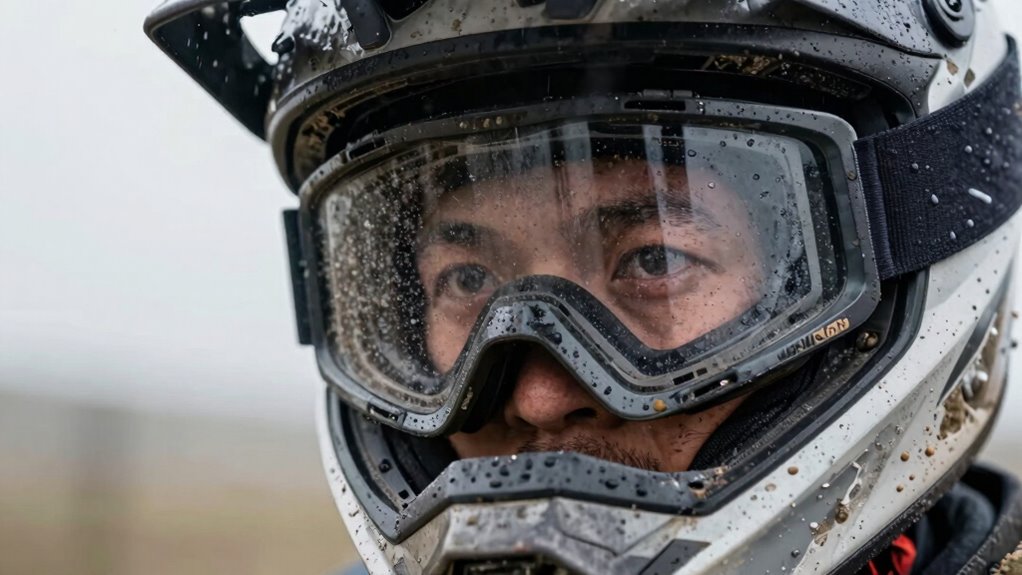
Visors and goggles are built to withstand tough conditions, but their durability varies based on design and materials. You want protection that lasts, especially in demanding environments. Material strength plays a key role in how well they resist damage, while impact resistance determines their ability to absorb shocks without breaking. High-quality helmets often use polycarbonate or tempered glass, offering excellent impact resistance. Cheaper options may crack or deform under stress, reducing effectiveness. Proper maintenance also extends durability, preventing scratches and wear. When choosing gear for rugged use, consider the following:
- Material quality and strength
- Impact resistance ratings
- Resistance to scratches and cracks
- Resistance to environmental factors, like moisture or UV
- Overall construction robustness
Which Eye Protection Should You Choose for Outdoor Activities in Dust and Rain?

Outdoor activities in dust and rain demand eye protection that can handle the elements effectively. When choosing between a visor and goggles, consider UV protection to shield your eyes from harmful rays during prolonged exposure. Goggles often provide better wind resistance, preventing dust and rain from irritating your eyes, making them ideal for windy conditions. Visors offer open airflow but may lack full wind resistance, which can let debris and moisture in. If you’re in an area with heavy dust or rain, goggles are the better choice because they create a seal around your eyes, offering superior protection. Both options should have UV protection built in to prevent eye damage. Ultimately, your choice depends on the intensity of the weather and your activity’s specific demands.
Frequently Asked Questions
How Do Visors and Goggles Affect Long-Term Eye Comfort?
You’ll find that both visors and goggles impact long-term eye comfort, especially with features like UV protection and fog resistance. Visors provide broad coverage but might cause fog buildup, leading to discomfort. Goggles, on the other hand, often have better fog resistance, keeping your eyes clear and comfortable over time. Ensuring they offer UV protection helps prevent eye strain and damage during prolonged wear, boosting comfort in the long run.
Can Visors or Goggles Be Customized for Specific Weather Conditions?
Think of your gear like a tailor-made suit—custom weather gear can be tailored with adjustable features to suit specific conditions. Whether you’re facing dust or rain, you can customize visors or goggles with anti-fog coatings, ventilation, or tinted lenses. This guarantees peak visibility and comfort. So yes, you can adapt your gear for particular weather, making sure it performs perfectly no matter what Mother Nature throws your way.
Are There Any Health Risks Associated With Prolonged Use of Visors or Goggles?
Prolonged use of visors or goggles can cause health risks like eye strain, especially if the fit isn’t perfect, leading to discomfort or blurred vision. Skin irritation may also occur from friction or sweat buildup, particularly with prolonged wear or poor hygiene. To reduce these risks, guarantee a comfortable fit, take regular breaks, and keep the equipment clean. If discomfort persists, consult a healthcare professional.
How Do Visors and Goggles Impact Head Movement and Overall Safety?
You might find that visors slightly restrict head mobility compared to goggles, but they still allow for good peripheral vision. Goggles tend to fit snugly, which can limit your side-to-side head movement, especially during intense activities. Both options enhance safety by protecting your eyes, but consider how each impacts your overall head movement and peripheral vision to choose what’s best for your activity.
What Are the Maintenance Requirements for Visors Versus Goggles?
You need to regularly clean your visor and goggles to maintain clear visibility. Visor durability means you should check for scratches or cracks and replace it if damaged. To prevent goggle fogging, use anti-fog coatings or wipes and ensure proper ventilation. Both require occasional cleaning, but goggles often need more frequent attention due to their smaller size and susceptibility to fogging, while visors might need more frequent cleaning for scratches or dirt buildup.
Conclusion
When facing dust and rain, choosing between visors and goggles depends on your needs. Visors offer wide peripheral vision and better airflow, while goggles provide superior sealing and fog resistance. Think of it like choosing between a knight’s shield and a window—each has its strengths. So, assess your activity, environment, and comfort to make the best call. In the end, it’s about protecting your eyes so you can focus on conquering your adventure, just like heroes of old.
Halloween Picks
halloween
As an affiliate, we earn on qualifying purchases.