If your chin strap is too loose, it can slip or shift during a crash, reducing your helmet’s protective efficiency. To guarantee a safe fit, use the two-finger rule: place two fingers comfortably between your chin and the strap, tightening until they just fit without discomfort. Properly secured straps keep your helmet stable during impact and movement. Keep going to discover how this simple method can genuinely save your life every ride.
Key Takeaways
- Use the two-finger rule to ensure the chin strap is snug but not tight, providing maximum helmet stability.
- Place two fingers between your chin and the strap; if they fit comfortably, the fit is correct.
- Regularly check strap tension before riding to prevent helmet movement during impact.
- Properly adjusted straps prevent helmet slipping or shifting, enhancing crash protection.
- Avoid loose straps that can compromise safety; a secure fit ensures the helmet stays in place during accidents.
Why Securing Your Chin Strap Correctly Is Critical for Motorcycle Safety

Securing your chin strap correctly is essential because it guarantees your helmet stays in place during a crash or sudden stop. A properly fastened strap enhances helmet comfort by preventing unnecessary movement, which can cause discomfort or distraction. The chin strap materials play a significant role in ensuring durability and a secure fit; high-quality materials like nylon or leather resist wear and maintain strength over time. When the strap is snug but not too tight, it offers both safety and comfort, reducing fatigue during long rides. Proper Free Floating tension is key to ensuring the helmet functions as intended in an emergency. Understanding helmet safety standards ensures you select equipment that meets rigorous safety criteria. Additionally, maintaining regular inspection of your chin strap helps identify signs of wear before they compromise safety. Ensuring correct chest strap tension can also improve overall helmet stability and rider confidence. Proper chin strap tension is a simple yet fundamental step in your riding safety routine.
What Are the Risks of Wearing a Loose Chin Strap?
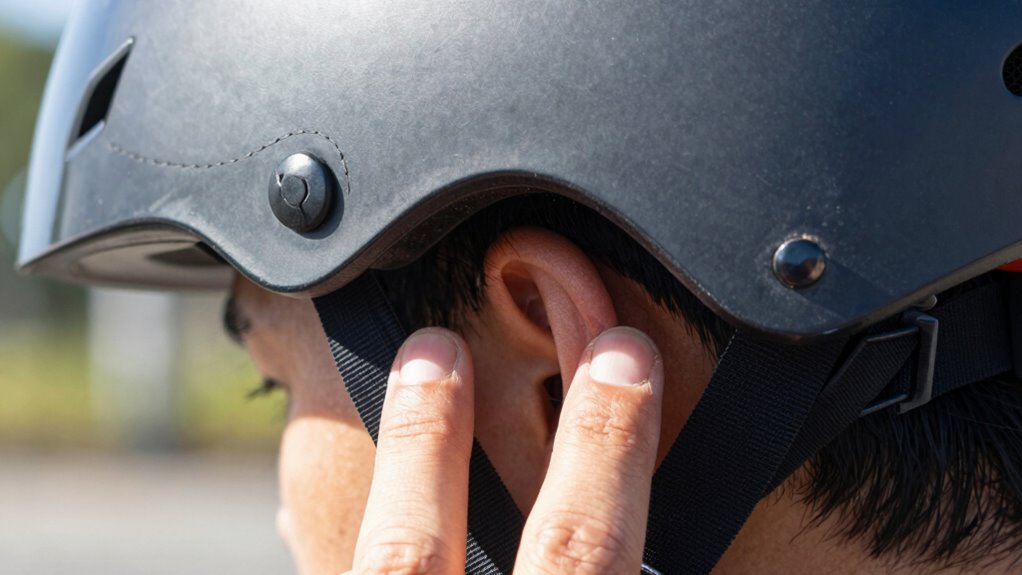
Wearing a loose chin strap can considerably increase your risk of injury if you crash. It also makes your helmet less stable, reducing its protective effectiveness. Ensuring a snug fit is essential to keep you safe on the road. Incorporating smart safety features such as automatic fit adjustments or real-time fit monitoring can further enhance your helmet’s protective capabilities. Additionally, practicing the two-finger rule can help you quickly assess if your helmet is properly fitted before heading out. Paying attention to helmet fit and adjustment ensures your helmet performs as designed during an impact. Emphasizing innovative safety solutions like European cloud-backed helmet technology can help monitor and improve safety standards continuously.
Increased Injury Risk
A loose chin strap considerably increases the risk of injury because it fails to keep the helmet securely in place during impact. When your helmet shifts or slips, it can’t absorb or distribute crash forces effectively, leading to more severe head injuries. Helmet design plays a critical role here—if the helmet isn’t properly fitted, even a well-made helmet can become ineffective. Strap materials also matter: weak or worn-out straps may break or stretch under stress, further reducing helmet stability. Without a snug fit, your helmet won’t stay aligned with your head, increasing the likelihood of direct impact to vulnerable areas. Properly securing your chin strap ensures your helmet functions as intended, providing maximum protection when you need it most.
Reduced Helmet Stability
When your chin strap is loose, the helmet can shift or slip during movement or impact, markedly reducing its stability. This compromises helmet comfort, making your ride less secure and increasing distraction. A loose chin strap allows the helmet to move independently of your head, which can be dangerous if an accident occurs. The stability of your helmet depends on proper fit, and chin strap materials play a role in maintaining that fit. If the strap is too loose, it won’t hold the helmet firmly in place, risking it sliding off or shifting at critical moments. Ensuring your chin strap is snug according to the two-finger rule maximizes stability, enhances comfort, and substantially reduces the risk of injury during a crash.
How to Use the Two-Finger Rule to Check Your Helmet Chin Strap

To check your helmet’s fit using the two-finger rule, start by placing two fingers comfortably between your chin and the strap. Make sure the strap is snug but not too tight, ensuring a secure fit. Regularly perform this check to keep your helmet fitting properly and stay safe on every ride. Proper helmet fit is essential for effective protection, and the helmet safety standards influence helmet design and fit requirements to ensure maximum safety. Additionally, understanding the importance of fit testing can help you determine if your helmet provides optimal coverage and protection.
Proper Finger Placement Technique
Ensuring your helmet fits snugly is essential for safety, and the two-finger rule offers an easy way to check the chin strap’s proper tightness. To do this, place your index and middle fingers flat against your chin strap, just under your chin. Gently press inward, ensuring the strap material is snug but not tight enough to cause discomfort. If you can fit two fingers comfortably, your helmet fit is correct. Avoid over-tightening, which can cause pressure points or discomfort. Remember, different strap materials may feel different—some stretch more than others, so always check regularly. Consistent adjustment of your helmet strap is important to maintain proper fit over time. Use the table below to understand how finger placement varies with strap material and helmet fit:
| Strap Material | Finger Placement | Helmet Fit Quality |
|---|---|---|
| Leather | Two fingers | Proper fit |
| Nylon | Two fingers | Proper fit |
| Rubber | Two fingers | Proper fit |
Additionally, proper helmet fit is crucial because an ill-fitting helmet can compromise safety during an impact. Regularly inspecting your helmet and adjusting strap tension can prevent accidents and ensure maximum protection. Proper helmet maintenance further extends its safety effectiveness and lifespan.
Ensuring Secure Fit
Using the two-finger rule correctly helps you confirm that your helmet stays secure during activity. To do this, place your index and middle fingers between your chin and the strap. The strap should feel snug but not tight, allowing for helmet comfort without restricting movement or breathing. Check the strap materials—high-quality materials like nylon or leather should lie flat and not cause discomfort or chafing. If you can easily insert two fingers but feel tension when you try to add a third, your strap is properly adjusted. This simple test guarantees a secure fit, preventing the helmet from shifting or coming loose during impact. Regularly using the two-finger rule helps maintain safety and comfort every time you wear your helmet. Ensuring a proper fit also reduces the risk of helmet displacement during a fall or collision. Additionally, periodically inspecting your helmet and strap condition can help prevent wear and tear that compromises safety. Properly fitting straps can also prevent injury by keeping the helmet securely in place. Being aware of safe helmet practices can further enhance your overall safety.
Regular Strap Checks
Regularly checking your helmet’s chin strap with the two-finger rule is essential for maintaining safety and comfort. This quick test ensures your chin strap remains snug enough to prevent accidents. To perform the check, place two fingers between your chin and the strap. If your fingers fit easily, it’s time to tighten the strap for proper chin strap adjustment. Keep in mind, strap material durability can affect how often you need to recheck—worn or frayed straps may require replacement. Here’s a quick overview:
| Aspect | What to Look For | Why It Matters |
|---|---|---|
| Chin strap fit | Two fingers fit comfortably | Ensures safety and comfort |
| Strap material | No fraying or weakening | Prevents failure |
| Adjustment ease | Can tighten securely | Maintains proper fit |
| Regularity | Check before each ride | Ensures ongoing safety |
Additionally, inspecting your helmet regularly for damage or cracks can help prevent unforeseen accidents.
Step-By-Step: Checking Your Chin Strap With the Two-Finger Method
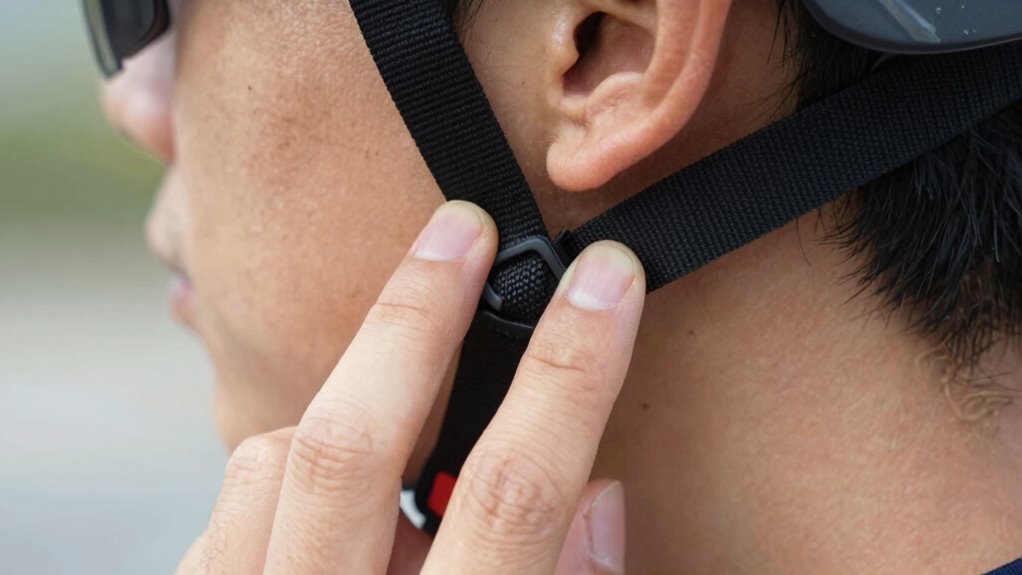
To check if your chin strap fits correctly, place your index and middle fingers between your chin and the strap. You should feel snug but comfortable, ensuring helmet comfort without causing discomfort or restricting movement. Use your fingers to gently press and see if the strap presses firmly against your skin. Pay attention to the chin strap materials; some are softer and more flexible, which can improve comfort, while others may feel stiffer. The goal is to achieve a secure fit that keeps the helmet in place during impact but isn’t so tight that it causes pain. If your fingers can fit easily and the strap feels loose, it’s time to tighten it. Regular checks like this help make sure your helmet provides maximum protection when you need it most. Additionally, advanced filtration systems in some helmets can help reduce allergens, ensuring a cleaner environment while wearing your gear. Remember, proper safety regulations are essential for effective protection and compliance with safety standards.
How to Tell If Your Chin Strap Is Too Loose or Too Tight
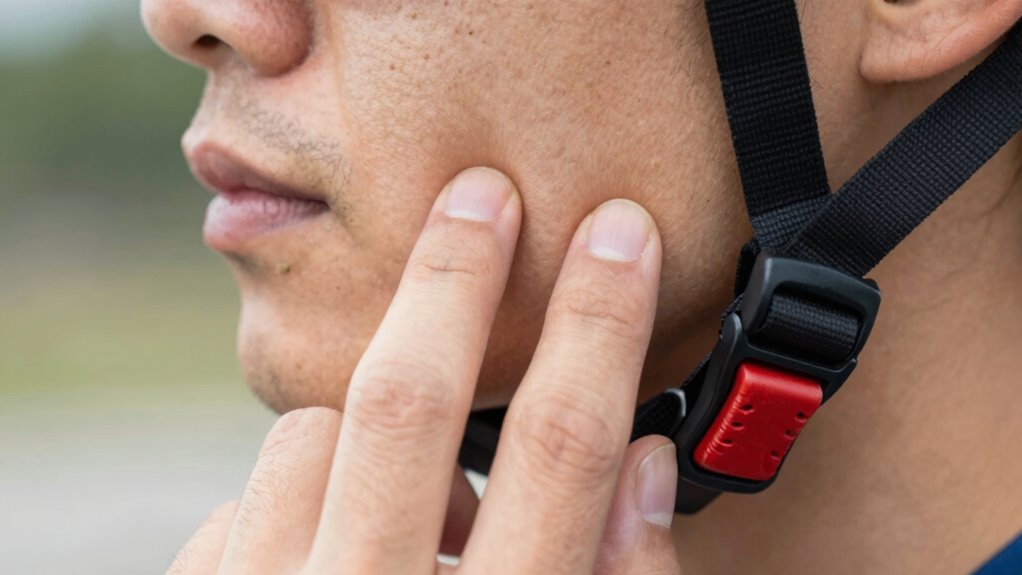
A chin strap that’s either too loose or too tight can compromise your helmet’s effectiveness and comfort. To check strap tension, start by fastening the chin strap snugly. If you can fit more than two fingers between the strap and your chin, it’s too loose. On the other hand, if you struggle to insert two fingers or feel pressure, the strap is too tight. Proper strap tension ensures your helmet stays securely in place during impact without causing discomfort. Remember, a loose chin strap can allow movement, reducing protection, while an overly tight strap can cause pain and distraction. Regularly assess your chin strap fit and adjust accordingly to maintain safety and comfort every time you wear your helmet. Ensuring Proper strap tension also helps maintain the helmet’s overall effectiveness and helps you stay aware of your fit.
Tips to Get the Perfect Fit Every Time

Ever wonder how to achieve the perfect helmet fit every time? It all starts with understanding helmet comfort and choosing the right strap materials. First, adjust the chin strap so it’s snug but not tight—using the two-finger rule as your guide. Make certain the strap materials are soft and flexible to prevent discomfort during extended wear. Look for straps with smooth, durable materials like nylon or webbing that won’t irritate your skin. When securing your helmet, make sure the straps are evenly tightened on both sides, avoiding any pinching or slack. Regularly check the fit to maintain comfort and safety. Remember, a well-fitted helmet stays in place and keeps you protected without causing discomfort. That’s the key to consistent, secure helmet comfort every time.
Common Mistakes When Securing Your Helmet Chin Strap
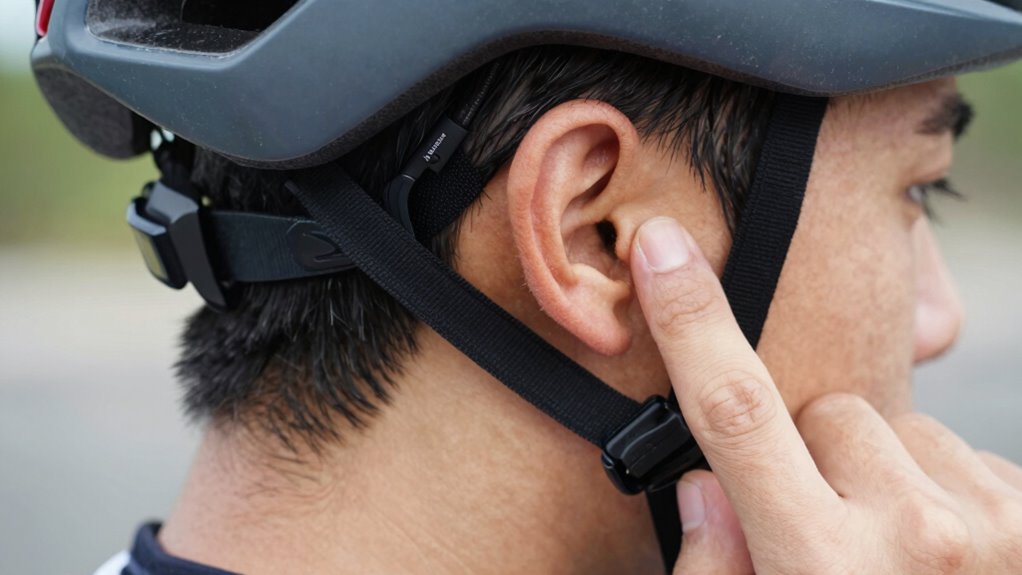
Many riders make the mistake of securing their helmet chin strap too loosely or too tightly, which can compromise safety and comfort. A common error is ignoring helmet comfort, leading to discomfort or distraction while riding. Additionally, using strap materials that aren’t durable or adjustable can cause issues. To avoid these mistakes:
- Failing to adjust the strap for a snug fit, risking helmet movement.
- Over-tightening, which causes discomfort and restricts movement.
- Choosing poor-quality strap materials that wear out quickly or irritate your skin.
How Properly Fastening Your Chin Strap Boosts Helmet Safety
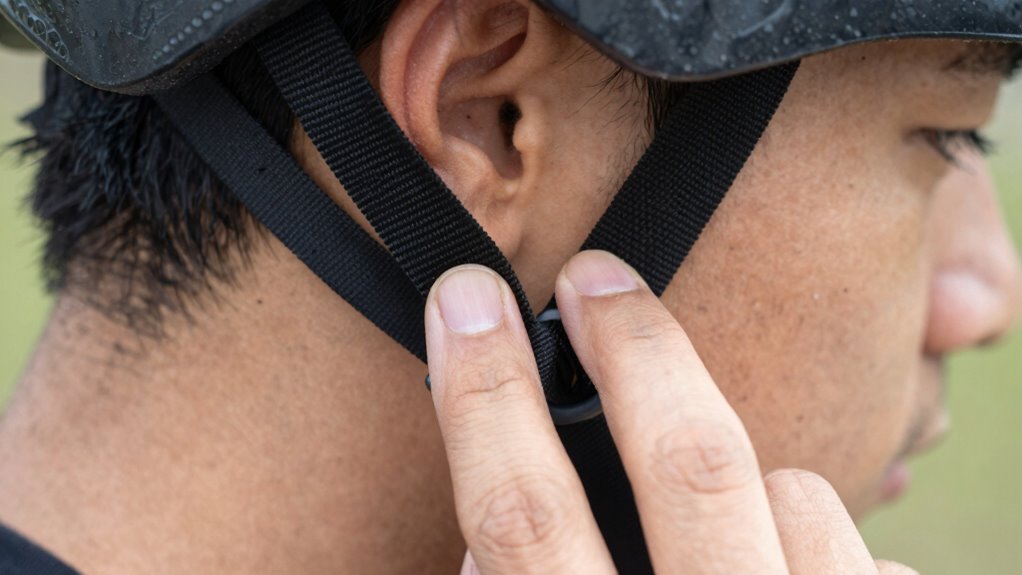
Properly fastening your chin strap is essential for ensuring your helmet stays securely in place during a ride. When your strap is snugly fastened, it helps distribute impact forces evenly, reducing injury risk. Modern helmets are crafted from durable materials like polycarbonate or fiberglass, which absorb shock effectively. Ensuring your strap is tight enough prevents helmet movement upon impact, maximizing these materials’ protective qualities. Additionally, check that your helmet meets safety certifications such as DOT or ECE, confirming it’s tested for impact resistance. A properly fastened chin strap keeps the helmet aligned with your head, allowing the helmet materials and design to provide ideal protection. This simple step considerably boosts your safety, ensuring the helmet functions as intended during an accident.
Why Regularly Checking Your Chin Strap Could Save Your Life
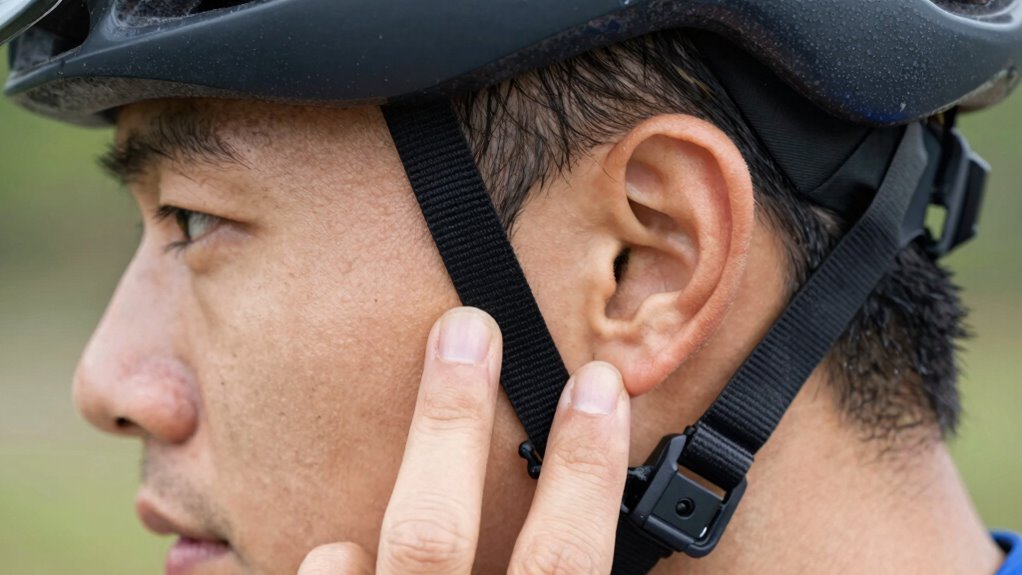
Regularly inspecting your chin strap guarantees it remains secure and effective over time. Over time, strap materials can wear or loosen, affecting helmet comfort and safety. Checking your strap ensures it stays snug and prevents accidents. When you verify, look for signs of wear, fraying, or looseness that could compromise protection. A secure chin strap keeps your helmet in place during a crash. Consider these factors:
- Material integrity: Ensure straps aren’t frayed or stretched
- Fit consistency: Maintain the two-finger rule for comfort
- Buckle functionality: Confirm clips lock securely
Frequently Asked Questions
How Often Should I Check My Helmet’s Chin Strap?
You should check your helmet’s chin strap adjustment before every ride to ensure proper fit consistency. Make a habit of inspecting it regularly, especially after impacts or if you notice any looseness. The two-finger rule helps confirm the strap isn’t too loose, keeping your helmet secure. Consistent checks prevent accidents by maintaining essential fit, so don’t skip this crucial step—your safety depends on it.
Can a Helmet With a Loose Chin Strap Still Be Legal?
A helmet with a loose chin strap isn’t legal because it fails to provide proper protection. You need to guarantee proper helmet adjustment by tightening the strap, following the two-finger rule, and replacing the strap if it’s worn or damaged. Always check your helmet’s fit before riding, and don’t risk using a helmet with a loose strap. Proper strap replacement and adjustment keep you safe and compliant with safety regulations.
What Types of Chin Straps Are Best for Safety?
You should choose chin straps that are easy to adjust, ensuring a snug fit without being uncomfortable. Look for straps that meet helmet safety standards, as they’re tested for durability and security. The best chin straps have quick-release buckles and adjustable sliders, allowing you to customize the fit. Proper chin strap adjustment is vital for safety, so select straps that keep your helmet securely in place during impacts.
Does Helmet Size Affect Chin Strap Fit?
Yes, helmet size affects chin strap fit, impacting your helmet comfort and safety. If your helmet is too big or small, the chin strap may not fit properly, reducing its effectiveness. Make sure to select a helmet that fits snugly, and check that the chin strap materials are durable and comfortable. Properly fitting helmets keep you safe, and a well-adjusted chin strap ensures it stays secure during impact.
Are There Specific Helmet Brands Known for Better Chin Strap Security?
Did you know that some brands, like Shoei and Bell, are renowned for their superior chin strap security? These brands build their straps with high-quality materials like reinforced nylon and quick-release buckles, ensuring a snug fit. Their strong brand reputation comes from consistently prioritizing safety and comfort. When choosing a helmet, opt for those with durable chin strap materials and a trusted name — it’s your best bet for reliable security.
Conclusion
Remember, a loose chin strap is like leaving your helmet vulnerable to flying off in a crash. By using the two-finger rule, you keep your safety gear snug as a bug in a rug. Regular checks are your lifeline, ensuring your helmet stays your best shield. Stay vigilant and tighten up—because in the world of riding, a secure fit keeps you riding safe and sound, like a fortress on wheels.