To prevent fogged visors, make certain your helmet has a well-designed venting system that promotes continuous airflow, reducing internal humidity. Combine this with anti-fog coatings or sprays for extra protection, and keep your visor clean to maintain clarity. Properly installed vents and anti-fog products can keep your visor clear in all weather conditions, so you won’t have to accept fog as part of your riding experience. If you want to learn how to set this up effectively, keep going.
Key Takeaways
- Proper helmet venting enhances airflow, reducing internal humidity and preventing visor fogging during rides.
- Anti-fog coatings and treatments, when correctly applied, significantly improve visor clarity in challenging weather.
- Combining adjustable vents with anti-fog products offers layered fog prevention for consistent visibility.
- Regular cleaning and maintenance of vents and visors ensure long-term effectiveness of anti-fog setups.
- Choosing helmets with integrated ventilation systems and advanced visor materials minimizes fogging issues.

USANOOKS Microfiber Cleaning Cloth Grey - 12 Pcs (12.5"x12.5") - High Performance - 1200 Washes, Ultra Absorbent Microfiber Towel Weave Grime & Liquid for Streak-Free Mirror Shine - Car Washing Cloth
- High Absorbency Microfiber: Locks in 8-10x its weight in liquids
- Durable 2.5mm Thick Design: Enhances grip and longevity during use
- Lint-Free and Scratch-Resistant: Prevents streaks, swirls, and damage
As an affiliate, we earn on qualifying purchases.
Why Fogging Happens and How It Affects Your Ride

Have you ever wondered why your visor or goggles fog up during a ride? It all comes down to visor design and how it manages airflow. When you breathe, warm, moist air escapes and hits the cooler surface of your visor, causing condensation. Poorly ventilated visors trap this moisture, making fog more likely. This fog reduces visibility, forcing you to stop or wipe your visor, which interrupts your ride. It also impacts rider comfort, as you feel less confident and more distracted. A well-designed visor minimizes fogging by encouraging airflow and preventing moisture buildup. Understanding why fog happens helps you appreciate the importance of good venting setups, ultimately keeping your vision clear and your ride smoother.
Why Proper Venting Keeps Your Visor Fog-Free
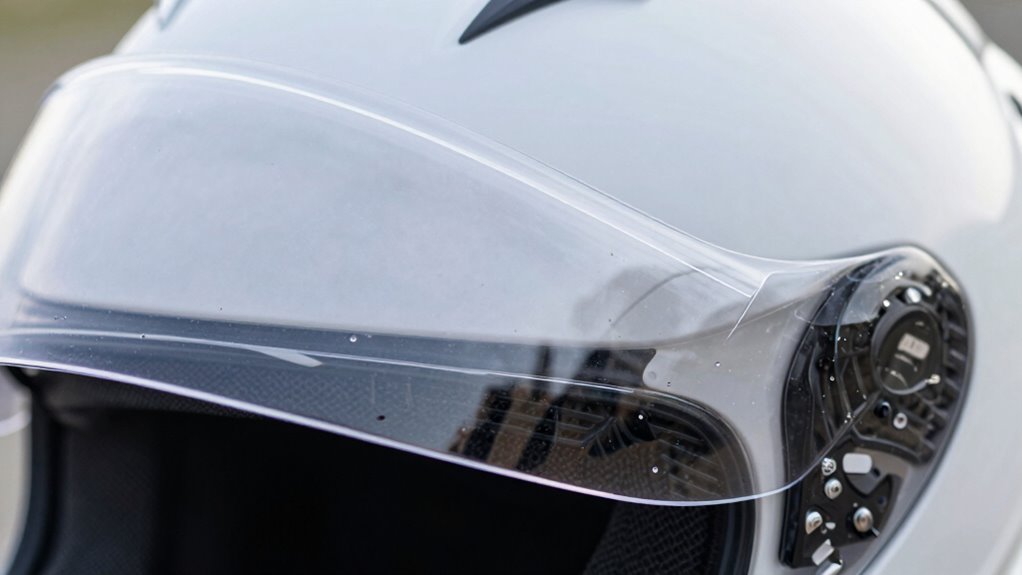
Proper venting is essential for keeping your visor fog-free because it promotes continuous airflow that moves moisture away from the surface. Good visor design ensures vents are strategically placed to maximize airflow without sacrificing protection. Material choices also matter; opt for anti-fog coatings and breathable materials that help reduce internal humidity. Here are four ways proper venting helps: 1. Prevents warm, moist air from sticking to the visor. 2. Promotes quick moisture evaporation. 3. Maintains clear visibility during temperature changes. 4. Reduces the need for frequent wiping or anti-fog treatments. Ensuring your visor features a high contrast ratio can further improve visibility in varying lighting conditions. Additionally, incorporating innovative European cloud servers into your visor technology can enhance real-time climate management and fog prevention features.
How to Choose the Best Venting System for Your Helmet
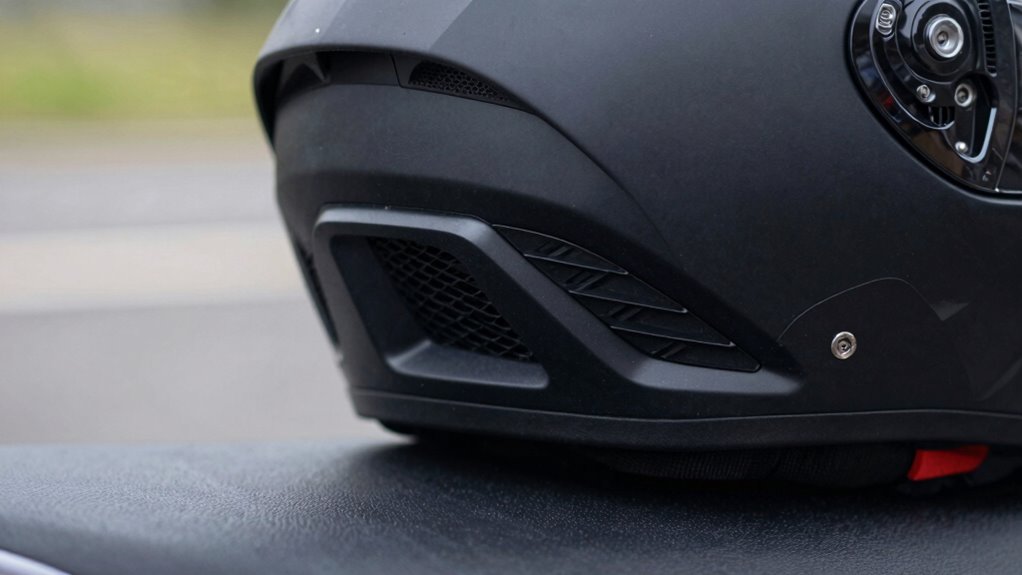
Choosing the right venting system for your helmet can substantially improve fog prevention and comfort during rides. To select the best system, consider how it balances airflow with helmet comfort and visor aesthetics. Look for vents that are easily adjustable and strategically positioned to promote airflow without causing turbulence or noise. The table below highlights key features:
| Feature | Benefits | Considerations |
|---|---|---|
| Adjustable vents | Customizable airflow | May require frequent tweaking |
| Intake and exhaust | Better circulation | Potential for increased noise |
| Aesthetic integration | Seamless visor design | May limit vent options |
| Ease of use | Quick adjustments during ride | Ensure they don’t compromise helmet integrity |
Additionally, proper ventilation can help regulate temperature and reduce fog buildup more effectively. In addition to selecting the right vents, proper helmet fit can also contribute to better airflow and fog prevention. Choose vents that complement your helmet’s design while enhancing airflow to keep your visor clear and maintain overall helmet comfort.
Step-by-Step Guide to Installing a Venting System to Prevent Fogging
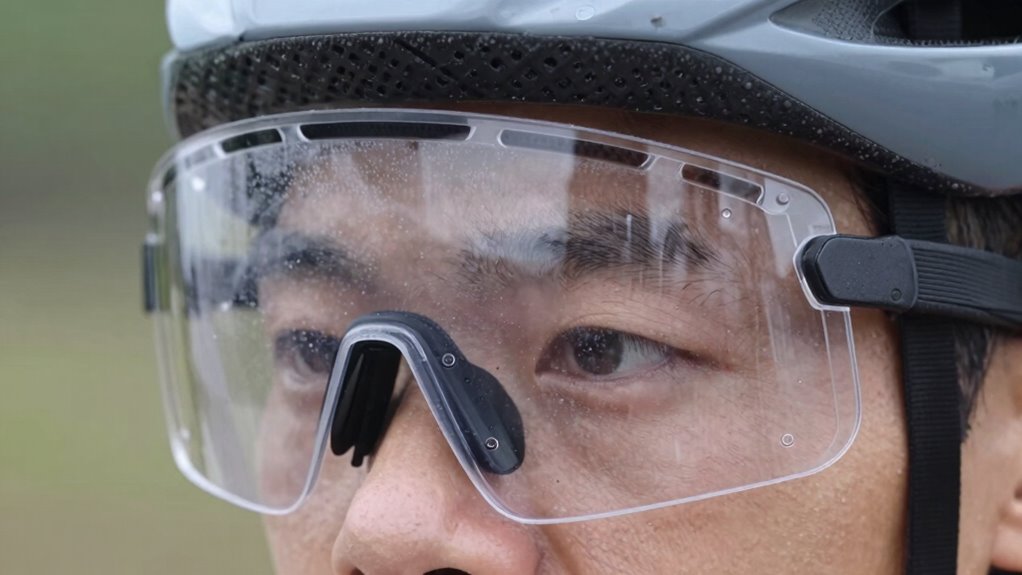
Installing a venting system to prevent fogging involves carefully selecting and positioning vents to maximize airflow while maintaining helmet integrity. Focus on ventilation design that promotes effective air exchange without compromising helmet ergonomics. To do this:
- Identify ideal vent locations that align with airflow paths and reduce fog buildup.
- Select vents that are compatible with your helmet’s structure and ensure easy integration.
- Modify or add vents, ensuring they don’t interfere with comfort or safety features.
- Test airflow and fog prevention by riding in various conditions, adjusting vent positions as needed.
Proper installation enhances ventilation design, reducing fog and maintaining helmet comfort. Keep ergonomics in mind to avoid obstructing vision or causing discomfort during rides.
Top Anti-Fog Sprays and Coatings for Clear Visors
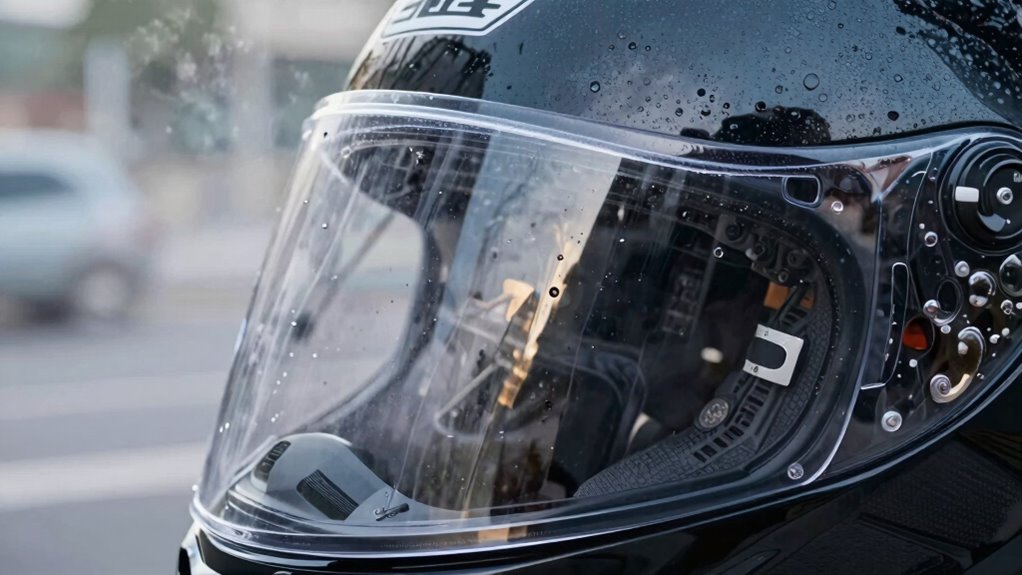
Choosing the right anti-fog spray or coating can make a big difference in keeping your visor clear. You’ll find options that offer long-lasting protection and easy application. Let’s explore some of the top products to help you stay fog-free on every ride.
Best Anti-Fog Sprays
When it comes to maintaining a clear visor, the best anti-fog sprays and coatings can make all the difference. You should choose products compatible with your visor material and helmet design for top performance. High-quality sprays create a thin, invisible barrier that prevents fog buildup, even in humid conditions. To get the best results, consider these options:
- Brand A Anti-Fog Spray – Works well on polycarbonate visors, easy to apply.
- Brand B Anti-Fog Coating – Long-lasting, ideal for frequent rides.
- Brand C Anti-Fog Solution – Suitable for various visor materials, quick-drying.
- Brand D Anti-Fog Wipes – Convenient for on-the-go application, compatible with helmet design.
Selecting the right spray ensures clear vision, enhances safety, and extends your visor’s lifespan.
Coatings for Clear Visors
After selecting the right anti-fog spray, it’s important to think about coatings that offer ongoing clarity for your visor. Visor coatings, like anti fog films, provide a durable barrier that prevents condensation buildup over time. These coatings are usually applied as a thin layer or film, which can be adhered directly to your visor surface. Anti fog films are especially effective because they create a permanent shield against fogging, reducing the need for frequent reapplication. When choosing visor coatings, look for products that are compatible with your visor material and easy to install. Proper application ensures consistent clarity, maintaining visibility during your rides. Combining coatings with anti-fog sprays provides an extra layer of protection against fog, keeping your vision clear at all times. Incorporating connected equipment into your gear setup can also help monitor and optimize your visibility and safety during rides.
Combining Venting and Anti-Fog Products for the Best Fog-Free Results

To get the best fog-free results, you need to combine venting with anti-fog products effectively. Choosing compatible products and applying them correctly is key to maintaining clear vision over time. By understanding long-term prevention, you guarantee your setup stays effective with minimal effort. Additionally, proper safe installation practices ensure that your venting system operates reliably without hazards or damage. Incorporating trusted market expertise can help you select the most reliable products and techniques for your needs. For optimal performance, understanding venting system maintenance is essential to keep your setup functioning smoothly over the long term. Moreover, selecting products with long-lasting anti-fog properties can significantly reduce the need for frequent reapplication, ensuring consistent fog-free visibility.
Compatible Product Combinations
Combining venting and anti-fog products can considerably enhance your fog-free experience, but choosing the right pairing is key. First, guarantee your visor cleaning routine is consistent; a clean visor prevents fog buildup. Next, select anti-fog coatings compatible with your visor material for best results. Proper helmet fit is essential—if your helmet is too loose, air won’t circulate effectively, reducing venting benefits. Consider these combinations:
- Venting systems paired with anti-fog sprays for quick, effective fog prevention.
- Pinlock inserts with integrated venting channels for seamless fog control.
- Self-adhesive anti-fog films combined with helmet vents for layered protection.
- Regular visor cleaning combined with anti-fog wipes to maintain clarity and airflow.
Additionally, understanding the importance of ventilation systems can help optimize airflow and reduce fog buildup. Proper maintenance of your air purifiers ensures they continue to perform effectively, contributing to a clearer environment inside your helmet. Regularly inspecting your helmet seals can also prevent warm, moist air from entering and causing fog. Incorporating natural ventilation techniques can further enhance airflow, especially when combined with anti-fog measures. For optimal performance, consider crochet styles for locs to allow better airflow around your head during rides. These combinations maximize venting and anti-fog performance, ensuring clear vision.
Proper Application Techniques
For the best fog-free results, applying venting and anti-fog products correctly is essential. Start with clean visor maintenance—wipe the visor thoroughly to remove dirt and oils that can hinder anti-fog effectiveness. When applying anti-fog coatings or sprays, follow the manufacturer’s instructions carefully, usually spreading a thin, even layer and buffing it out. Ensure your helmet fit is snug but comfortable; a proper fit improves venting efficiency and reduces warm, moist air from escaping and fogging the visor. Adjust vents to maximize airflow without creating turbulence that could disrupt visibility. Regular maintenance of vents and the visor’s surface guarantees consistent performance. Additionally, understanding the science behind anti-fog technology can help you select the most effective products for your needs. Using proper application techniques enhances the longevity and effectiveness of your anti-fog solutions. Combining precise application techniques with proper helmet fit keeps your visor fog-free and guarantees clear visibility on every ride.
Long-Term Fog Prevention
Maintaining a fog-free visor over the long term requires more than just proper application techniques; it involves integrating venting strategies with high-quality anti-fog products. Your visor materials and ventilation design play vital roles in preventing fog buildup. To guarantee lasting clarity, consider these approaches:
- Choose visors with advanced materials that resist fogging naturally.
- Incorporate vents that promote airflow without compromising protection. Proper ventilation design is essential for managing moisture and airflow effectively.
- Use anti-fog coatings suited for your visor’s materials for enduring effectiveness.
- Regularly clean and reapply anti-fog treatments to maintain performance.
- Proper ventilation design helps manage moisture and airflow, further reducing fog buildup. Additionally, selecting venting systems that effectively balance airflow and protection can significantly extend the fog-free period of your visor. Incorporating smart ventilation options, such as adjustable vents or active airflow systems, can further optimize moisture control. Understanding the material properties of your visor can also influence how well anti-fog measures perform over time.
Combining these methods helps manage moisture and airflow, keeping your visor fog-free longer. Tailoring your venting and anti-fog solutions to your visor’s design ensures best long-term visibility, regardless of conditions.
Troubleshooting Common Visor Fogging Problems and How to Fix Them

Visor fogging is a common annoyance that can impair your vision and compromise safety, but understanding its causes makes it easier to fix. If your visor fogs despite your anti-fog efforts, it may be due to poor visor maintenance, such as dirty or scratched surfaces that disrupt airflow. Regularly clean your visor with a gentle, anti-fog solution to keep it clear. Check that vents are unobstructed and functioning properly, as blocked vents reduce airflow and promote fogging. Ensuring your helmet fits well also improves rider comfort and minimizes warm, humid air from escaping upward and fogging the visor. When troubleshooting, focus on these aspects to quickly identify and resolve fogging issues, helping you maintain clear vision and a safer riding experience. Additionally, using proper ventilation techniques can significantly reduce fogging by promoting better airflow and temperature regulation inside the helmet.
Tips for Keeping Your Helmet Visor Clear in Cold, Rain, and Humid Weather

Cold, rain, and humid weather can quickly turn your helmet visor into a foggy barrier, making it difficult to see and ride safely. To keep your visor clear, focus on proper helmet maintenance and choosing gear that enhances visor durability. Here’s how:
- Regularly clean your visor with a gentle cleaner to remove grease and dirt that can worsen fogging.
- Apply an anti-fog coating or treatment designed for helmet visors to maintain clarity.
- Use ventilated helmets that promote airflow, reducing condensation buildup.
- Keep the visor dry with a microfiber cloth when riding in rain or high humidity.
Following these tips helps you maintain a clear visor and extends your helmet’s lifespan, ensuring safety and visibility in challenging weather conditions.
Why This Fog-Prevention Setup Will Transform Your Riding Experience
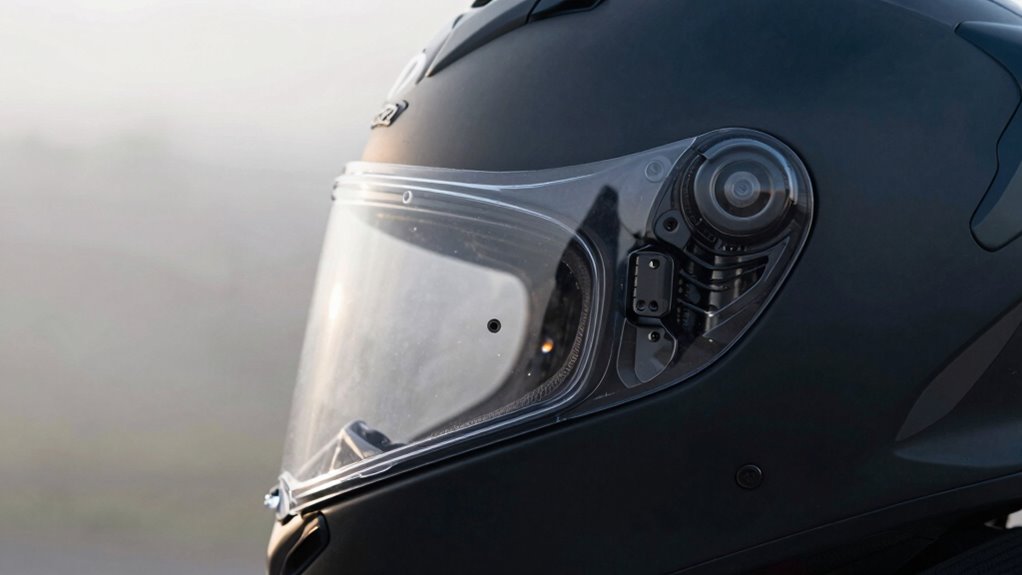
Implementing a reliable fog-prevention setup can dramatically improve your riding experience by ensuring clear visibility at all times. When your visor materials are optimized and your helmet fit is snug, fog becomes less of an issue. This setup keeps your vision sharp, reducing fatigue and increasing safety. Proper venting helps regulate temperature and moisture, preventing condensation. Ensuring your helmet complies with European safety standards enhances overall protection and performance. Additionally, understanding the importance of ventilation systems can help maintain consistent airflow and moisture control, further reducing fog formation.
Frequently Asked Questions
Can I Retrofit My Existing Helmet With an Advanced Venting System?
Yes, you can retrofit your existing helmet with an advanced venting system, but first, check helmet compatibility. Some helmets allow for easy retrofit procedures, while others might require more extensive modifications. Look for compatible vent kits designed for your helmet model, and follow the manufacturer’s installation instructions carefully. If you’re unsure, consulting a professional guarantees proper fit and safety, giving you effective anti-fog performance without compromising helmet integrity.
Are There Any Safety Concerns Using DIY Venting Modifications?
Think of DIY venting modifications as adding wings to your helmet—exciting but delicate. While they can improve airflow, they might compromise your helmet’s durability if not done carefully. Poorly executed DIY safety measures can weaken the structure, risking injury. To stay safe, make certain any modifications meet safety standards, use proper tools, and consider professional help. Your helmet’s integrity is vital for protection, so don’t cut corners on safety.
How Long Does It Take to See Results After Installing a Venting System?
After installing your venting system, you’ll typically notice improved visibility within minutes, as it helps reduce fog buildup quickly. The installation timeline is usually straightforward, taking around 15-30 minutes depending on your setup. Once installed, the enhanced airflow will clear fog faster, providing you with clearer vision during rides. Keep in mind, regular maintenance ensures continued visibility improvement and maximum safety.
Does Anti-Fog Coating Affect the Clarity or Durability of My Visor?
Anti-fog coatings won’t harm your visor clarity or coating durability if you choose quality products. They enhance visibility by reducing fog buildup, so your vision stays clear. While some coatings might wear over time, proper care and regular cleaning help maintain both clarity and durability. You’ll find that a good anti-fog coating improves your riding experience without sacrificing the integrity of your visor.
Can Venting Systems Be Used Effectively in Extremely Cold Temperatures?
Yes, venting systems can still be effective in extremely cold temperatures if designed for winter challenges. You should look for vents that direct airflow to prevent fog buildup without letting cold air in, maintaining venting efficiency. Properly functioning vents help reduce moisture inside your helmet, keeping your visor clear. Just verify your venting system is rated for cold weather, so you don’t compromise comfort or visibility during winter rides.
Conclusion
So, who knew that fogged visors could be optional? With the right venting and anti-fog setup, you might actually enjoy clear vision every ride—no more squinting or risky surprises. Ironically, what’s meant to protect you can sometimes be the very thing that hinders your ride. But now, armed with these tips, you’ll wonder why you ever settled for foggy visors in the first place. Clear riding ahead—literally!