If you get lost on the trail, stay calm and assess your surroundings carefully. Look for landmarks or markers to orient yourself, use a compass or map if available, and identify the safest route back, avoiding hazards. Signal for help with whistles, mirrors, or phones if possible. Prioritize staying visible and organized gear for emergencies. Staying composed during this process drastically improves your chances of finding your way. The next steps will guide you through handling the situation effectively.
Key Takeaways
- Stay calm, assess your surroundings, and confirm you’re lost before taking action.
- Identify natural or man-made landmarks to determine your location and direction.
- Use a map, compass, or technology to orient yourself and plan a safe route.
- Backtrack to the last known safe point if unsure about the path ahead.
- Signal for help with whistles, mirrors, or electronic devices, and stay visible until rescued.
Recognize You’re Lost and Stay Calm

When you realize you’re lost, the first step is to stay calm and keep a clear head. Panicking clouds your judgment and wastes precious energy. Take a deep breath, pause, and assess your situation without rushing. Confirm that you’re truly lost—look for familiar landmarks or trail markers, and avoid jumping to conclusions. Staying calm helps you think rationally and identify your options. Remember, anxiety won’t help you find your way; it only drains your energy. Focus on stabilizing your mind, so you can make practical decisions. Recognizing you’re lost isn’t a failure—it’s a starting point. Once you accept your situation, you can approach it systematically and confidently, increasing your chances of finding your way back safely. Staying aware of your surroundings is key to making safe and effective decisions. Understanding natural landmarks and terrain features can significantly improve your orientation and decision-making. Paying attention to natural features like rivers, ridges, and distinctive trees can provide critical clues to your location and direction. Additionally, being familiar with the natural terrain can help you better interpret your environment and choose the safest path forward, especially when you utilize natural terrain features to navigate.
Check Your Surroundings and Find Landmarks
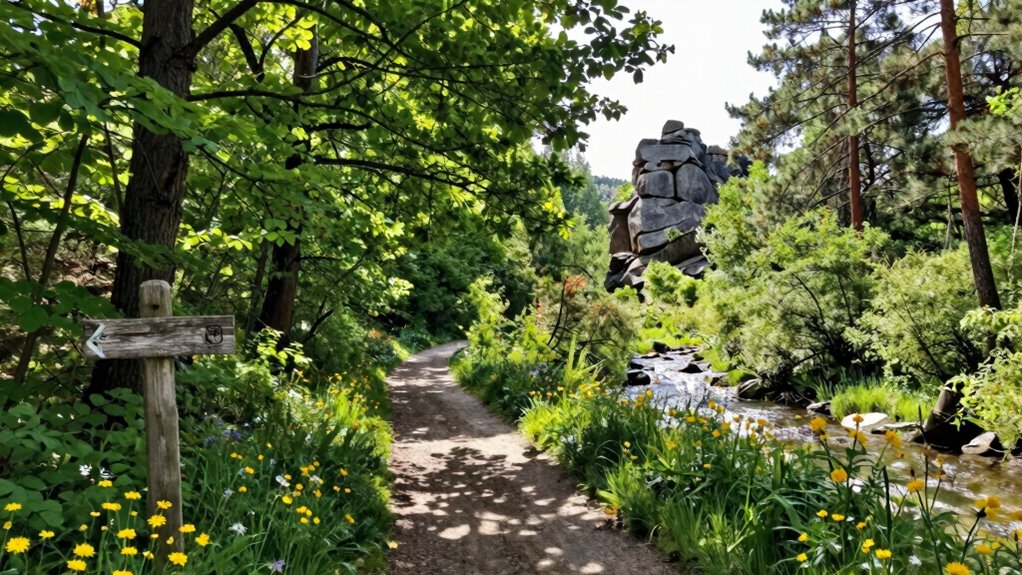
Scan your surroundings for natural landmarks like prominent trees, cliffs, or streams that can guide your direction. Look for man-made markers such as trail signs, cairns, or structures that can confirm your location. Use these clues to orient yourself and plan your next move confidently. Additionally, observe Free Floating features that can help you determine your position relative to your starting point or destination. Recognizing contrast ratio differences in your environment can also assist in identifying landmarks more clearly, especially in varied lighting conditions.
Spotting Natural Landmarks
To effectively find your way, it’s essential to identify natural landmarks around you. Look for prominent features like large trees, distinctive rock formations, water bodies, or unique terrain shapes. Focus on landmarks that stand out and are unlikely to change over time. Scan your surroundings systematically, noting their size, shape, and position relative to your location. Use these features to create mental reference points, helping you determine direction and distance. Remember, natural landmarks are often fixed, so they can serve as reliable navigation aids. Keep your eyes open for patterns or features that can help you orient yourself. Additionally, understanding how to interpret landmark features enhances your ability to navigate confidently and avoid unnecessary detours. Recognizing the stability of natural landmarks can significantly improve your navigation accuracy, especially in unfamiliar terrain. It’s also important to consider sustainable travel practices when exploring natural environments to minimize your ecological footprint. By actively recognizing and remembering these landmarks, you strengthen your ability to navigate confidently and avoid unnecessary detours. Being aware of the potential for natural landmarks to change over time ensures you don’t rely solely on features that might evolve or be obscured. It’s also helpful to understand how electric dirt bike performance can influence your travel, especially in remote areas where reliable transportation options are limited.
Utilizing Man-Made Markers
Man-made markers can be invaluable for navigation, especially when natural features are scarce or unreliable. Look around for signs like trail markers, cairns, or painted blazes on trees or rocks. These markers are intentionally placed to guide hikers and can help you confirm your direction. Pay attention to structures like fences, power lines, or buildings, which often follow established routes or boundaries. If you spot a bridge, signpost, or even a bench, note their positions relative to your location. Use these markers to verify your course or identify nearby landmarks. Remember, man-made features are often consistent and visible from a distance, making them reliable references. Landmark identification is a key skill in navigation, helping you stay oriented even when natural cues are limited. Additionally, paying attention to man-made features can provide critical clues to your location and help you make informed decisions. Recognizing patterns in constructed landmarks can further enhance your understanding of your surroundings. Stay alert and use these markers to orient yourself confidently and find your way back to familiar territory.
Figure Out Where You Are and Which Way to Head

When you’re lost on the trail, the first step is to determine exactly where you are. Look for natural features or landmarks nearby—rocks, streams, or distinctive trees—that can help pinpoint your location. Use your map and compass if available. If not, rely on your surroundings and any clues you’ve noticed. Understanding your orientation guarantees you move confidently in the right direction. Incorporating modern navigation tools can further enhance your ability to stay oriented and find your way back efficiently.
Choose the Safest Route to Get Back
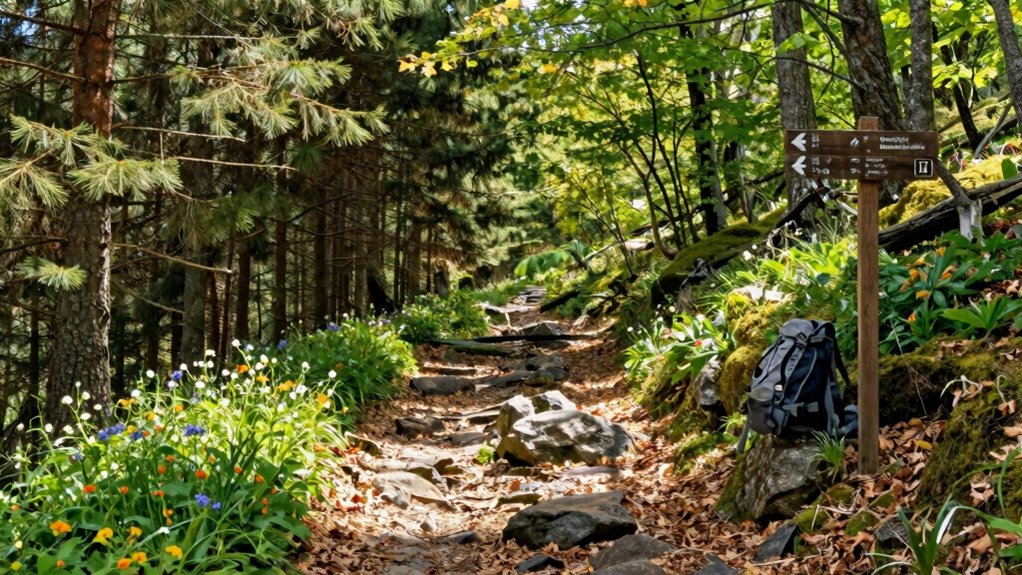
Ever wonder how to pick the safest route back when you’re lost? Focus on avoiding hazards and choosing paths that lead to known landmarks or easier terrain. Stay on established trails if possible; they’re less likely to hide dangerous obstacles. If you must go off-trail, look for visible signs of human activity like footprints, cleared areas, or cairns. Steer clear of steep slopes, unstable ground, or water crossings that seem risky. Prioritize routes that keep you moving downhill or toward familiar features. Trust your instincts—if a route feels unsafe or uncertain, backtrack to your last known point and reassess. Keep your steps deliberate and cautious, ensuring each move minimizes risk while progressing toward safety. Your goal: a steady, cautious path that leads you home, not into further danger. When navigating unfamiliar terrain, understanding basic hazard recognition can help you make smarter decisions and avoid accidents. Being aware of trail markers and environmental cues can further improve your judgment and safety. Incorporating environmental cues like wind direction or animal tracks can also offer clues about the safest way to proceed.
Use Technology, Signals, or Help to Resupply
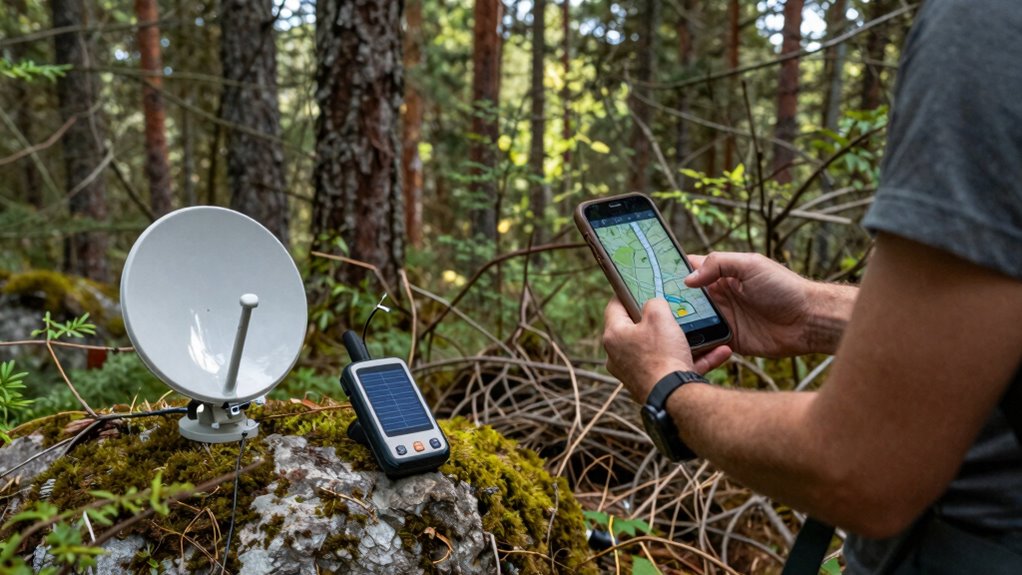
If you have access to technology or communication devices, use them to signal for help or locate resupply options. Send a clear, concise message with your location if possible, and activate GPS or tracking features. Use emergency apps or social media to alert authorities or trusted contacts. If radio or satellite devices are available, broadcast your position and situation. Check for nearby shelters, water sources, or supply caches through maps or digital resources. Don’t hesitate to call for help if you’re in immediate danger. Even a simple signal like a whistle, mirror, or flashing light can attract attention. Being resourceful and proactive with your tech increases your chances of quick rescue and resupply, keeping you safe while you wait or plan your next move. Understanding your gear and systems can help you better utilize available tools and stay calm in critical moments. Knowing how to operate emergency communication devices effectively is essential in these situations. Additionally, familiarizing yourself with basic signal techniques can further improve your chances of attracting help. Developing a comprehensive knowledge of time zones can also assist in coordinating rescue efforts, especially when dealing with international or long-distance contacts. Recognizing the importance of backup power sources ensures your devices remain functional when you need them most.
Learn How to Prevent Getting Lost in the Future
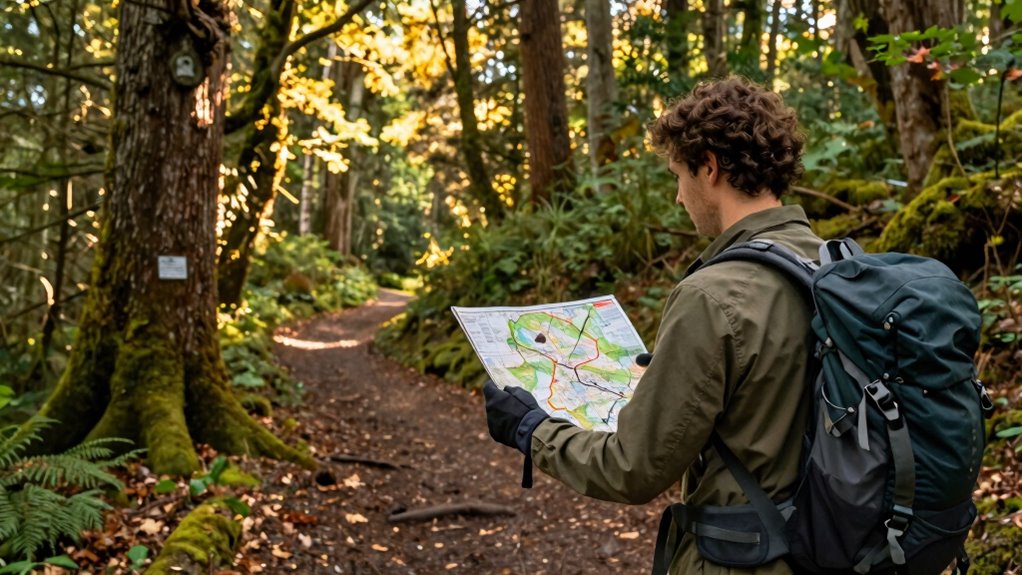
To prevent getting lost, start by mapping your route before you go and sticking to it. Always carry essential gear like a compass, flashlight, and extra supplies, so you’re prepared for any situation. Stay calm, use signals if needed, and remember these steps to keep yourself safe and on track.
Map Your Route
Planning your route before heading out is the most effective way to prevent getting lost. Study maps and trail guides thoroughly, noting key landmarks, water sources, and terrain features. Use a GPS device or smartphone app with offline maps to create a clear plan, marking your start point and intended route. Identify potential hazards and alternative paths in case of detours. Share your plan with someone reliable, including your expected return time. Keep a physical map as a backup—don’t rely solely on digital tools. Visualize your route daily, so you’re familiar with it before setting out. Clear planning reduces confusion, keeps you oriented, and ensures you’re prepared for unexpected twists. A well-mapped route is your best defense against getting lost on the trail.
Carry Essential Gear
Carrying the right essential gear is crucial for preventing getting lost and ensuring you can handle unexpected situations. Pack a reliable map and compass, even if you have a GPS device—technology can fail. Include a flashlight with extra batteries, a multi-tool, and a whistle to signal for help. Bring enough water and high-energy snacks to stay alert and hydrated. Wear appropriate clothing and sturdy footwear suited for the terrain and weather. Consider adding a first aid kit to manage minor injuries. Keep your gear accessible and organized, so you can quickly find what you need. Being prepared with these essentials reduces the risk of losing your way and helps you respond effectively to emergencies, keeping you safer and more confident on the trail.
Stay Calm and Signal
When you realize you’re lost, staying calm is your top priority. Take a deep breath, assess your surroundings, and avoid panicking. Use clear signals to attract attention—shout if it’s safe, but don’t exhaust your energy unnecessarily. If you have a whistle, blow three short blasts; this universal distress signal is easily heard. If you have a mirror or reflective object, use it to catch sunlight and signal rescuers or nearby campers. Keep your movements deliberate and controlled. Position yourself in a visible spot, like an open clearing or hilltop, and stay there. Remember, your goal is to make yourself noticeable without risking further disorientation. Signal consistently until help arrives, and focus on maintaining your composure to think clearly and act effectively.
Frequently Asked Questions
What Should I Do if I Can’t Recognize Any Landmarks?
If you can’t recognize any landmarks, stay calm and avoid wandering. Pull out your map or GPS device if available, and try to identify your surroundings by comparing them with your map. If you’re unsure, stay put to conserve energy and make yourself easier to find. Use your whistle or voice to call for help periodically. Focus on retracing your steps if possible, and remember, staying calm is your best tool.
How Long Should I Wait Before Seeking Help?
Imagine the sun dipping lower, shadows stretching longer, and your stomach tightening. You should wait at least 30 minutes to an hour before seeking help, giving yourself time to assess your surroundings and conserve energy. Stay calm, keep your phone charged, and signal with a whistle or mirror periodically. If no help arrives, then move carefully to a visible spot and call for assistance, ensuring your safety while waiting.
What Are the Best Items to Carry for Emergencies?
You should carry essential emergency items like a map, compass, and whistle to stay oriented and signal for help. Pack a multi-tool, first aid kit, flashlight, and extra batteries for safety and basic repairs. Include enough water, high-energy snacks, and a fire-starting kit. Don’t forget a space blanket or warm clothing to prevent hypothermia. These items guarantee you’re prepared to handle common emergencies confidently and get back safely.
How Can I Improve My Navigation Skills?
Think of your navigation skills as a toolbox—each tool sharpens your ability to find your way. Practice map reading regularly, and learn to use a compass confidently. Pay attention to natural landmarks and trail markers, treating them like signposts guiding your journey. Stay calm and methodical when uncertain, breaking the route into manageable sections. With dedication, your instincts and skills will become a reliable compass, leading you home safely every time.
What Are Common Mistakes That Lead to Getting Lost?
You often get lost by relying solely on electronic devices, ignoring natural landmarks, or not paying attention to your surroundings. Failing to plan your route, rushing without checking maps, or losing track of your trail markers also cause confusion. To stay on track, stay alert, use multiple navigation methods, and frequently verify your position. Keep a mental note of landmarks and stay calm, making deliberate decisions to avoid common pitfalls.
Conclusion
When you follow this calm decision tree, you’ll navigate any lost trail with the confidence of a seasoned explorer. Stay composed, assess your surroundings, and choose your safest route with clarity. Technology and signals are your lifelines, so use them wisely. Remember, staying calm and focused is your most powerful tool—like steering a ship through a storm. Trust your instincts, act decisively, and you’ll find your way back home faster than you ever imagined.