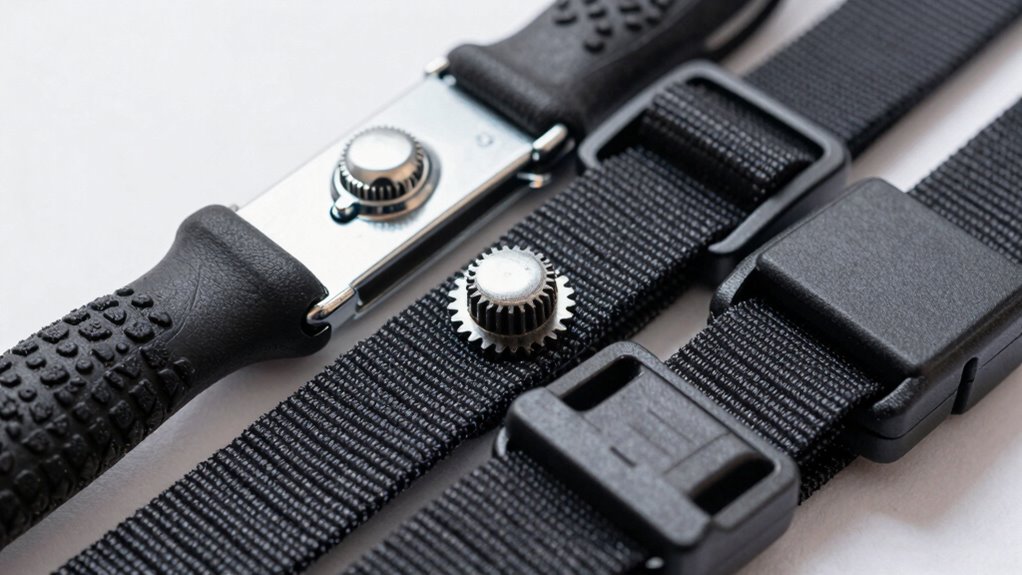

When choosing between ratchet straps and cam straps, you’ll find ratchet straps are safer for heavy or critical loads because they offer higher tension control, stronger material, and better security. Cam straps work better for lightweight, quick tasks where ease of use and gentle securing matter more. Understanding when each is appropriate can prevent accidents and damage. Keep exploring to learn how to select and use the right strap for your safety and cargo security.
Key Takeaways
- Use ratchet straps for heavy, critical, or irregular loads requiring precise tension and maximum security.
- Opt for cam straps for lighter, delicate cargo where quick securing and ease of use are priorities.
- Choose ratchet straps in environments demanding high durability, corrosion resistance, and long-distance transportation safety.
- Select cam straps when speed, simplicity, and preventing surface damage are more important than maximum tension.
- Always inspect straps for damage and ensure proper tension regardless of strap type to maximize safety.
heavy duty ratchet straps for cargo
As an affiliate, we earn on qualifying purchases.
As an affiliate, we earn on qualifying purchases.
Understanding the Key Differences Between Ratchet and Cam Straps
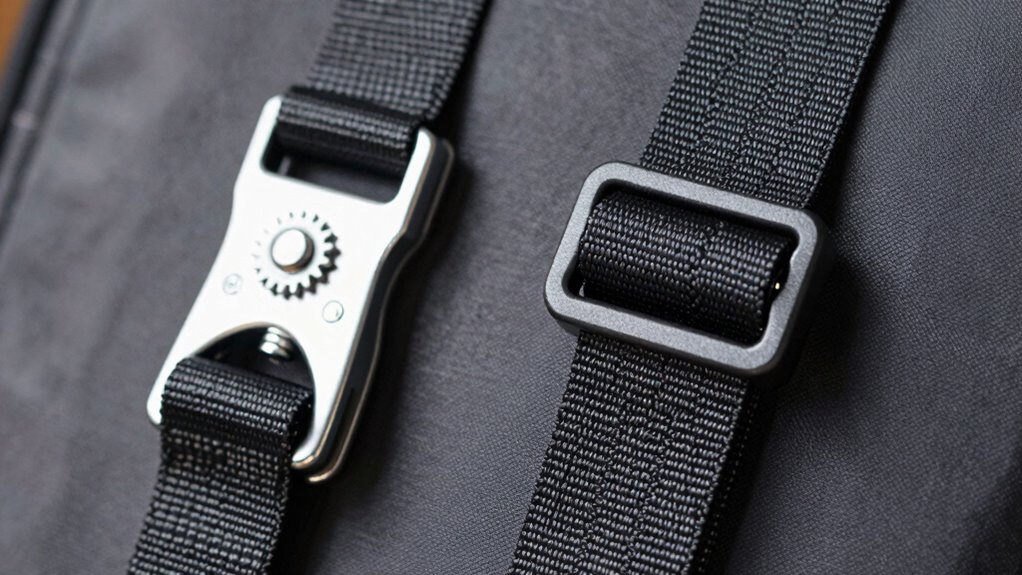
While both ratchet straps and cam straps are essential for securing loads, they operate differently and serve distinct purposes. The key difference lies in their mechanism: ratchet straps use a gear and handle system to tighten and lock, providing high tension, while cam straps rely on a cam buckle that’s quick to secure but offers less tension. When choosing between them, consider strap material—nylon, polyester, or polypropylene—as it affects durability and stretch. Additionally, the stretch resistance of the strap material plays an important role in maintaining load stability during transit. The load capacity of each strap type also influences their suitability for different weights and applications, making proper selection crucial for safety. Moreover, understanding the corrosion resistance of the straps is vital for outdoor or humid conditions to ensure longevity and safety. Selecting straps with appropriate material properties can help prevent failures during transport. For added safety, always check the strap tension before transport to prevent accidents.
cam straps for lightweight cargo
As an affiliate, we earn on qualifying purchases.
As an affiliate, we earn on qualifying purchases.
Which Strap Is Safer for Heavy or Critical Loads?
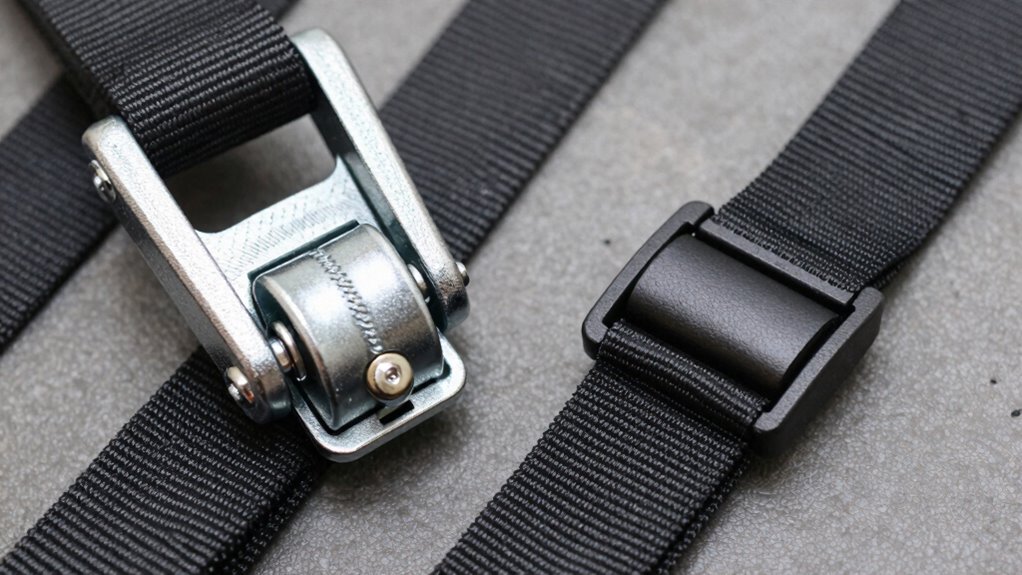
When transporting heavy or critical loads, safety is paramount, and choosing the right strap can make all the difference. For such loads, a strap with higher load capacity and material strength is essential. Ratchet straps generally provide greater tension control and secure heavy items better, making them safer for critical loads. Cam straps, while easier to use, often have lower load capacity and less tension control, limiting their safety for heavy applications. Consider this table:
| Feature | Ratchet Straps | Cam Straps | Suitability for Heavy Loads |
|---|---|---|---|
| Load Capacity | Higher | Lower | Ratchet straps are safer |
| Material Strength | Reinforced, durable | Less reinforced | Ratchet straps excel |
| Tension Control | Precise, secure | Less precise | Safer for critical loads |
| Ease of Use | Slightly complex | Simple | Cam straps for lighter loads |
In critical loads, prioritize strap strength and tension control to ensure load security. Using appropriate straps designed for heavy-duty use is essential to prevent accidents during transit. Properly securing loads with appropriate straps reduces the risk of accidents during transit and is crucial for safe transport.
nylon ratchet straps with high load capacity
As an affiliate, we earn on qualifying purchases.
As an affiliate, we earn on qualifying purchases.
When Should You Use Ratchet Straps for Safety?
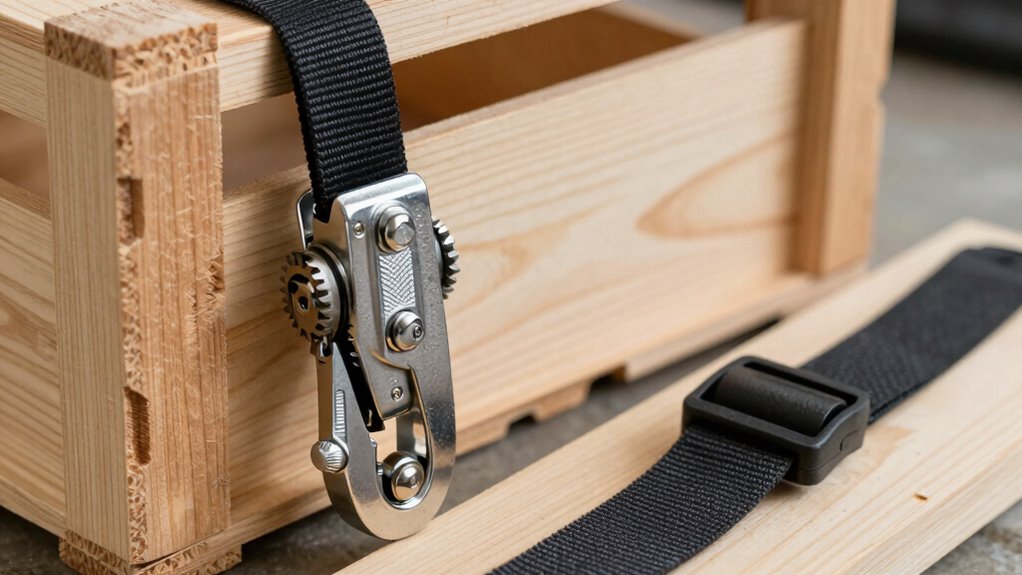
You should use ratchet straps whenever you’re securing heavy or critical loads that require maximum safety and stability. Their high load capacity and durable materials make them ideal for demanding tasks. Consider these scenarios:
- When your load has a high load capacity, and safety depends on tight, secure fastening.
- If you’re working with materials known for their durability, ensuring straps won’t slip or break.
- When transporting equipment or cargo over long distances, where stability is essential.
- For securing irregularly shaped or bulky loads that need maximum tension control.
- Additionally, understanding load distribution can help optimize the safety and effectiveness of your securing methods.
- Proper tensioning techniques are crucial to prevent slippage and ensure the safety of your load.
- Recognizing the importance of material strength can further enhance the safety and reliability of your securing process.
- Being aware of safety standards ensures your securing methods meet necessary regulations and best practices.
- Using quality ratchet straps can significantly reduce the risk of failure during transportation.
corrosion resistant cargo straps
As an affiliate, we earn on qualifying purchases.
As an affiliate, we earn on qualifying purchases.
When Are Cam Straps a Safer Choice?
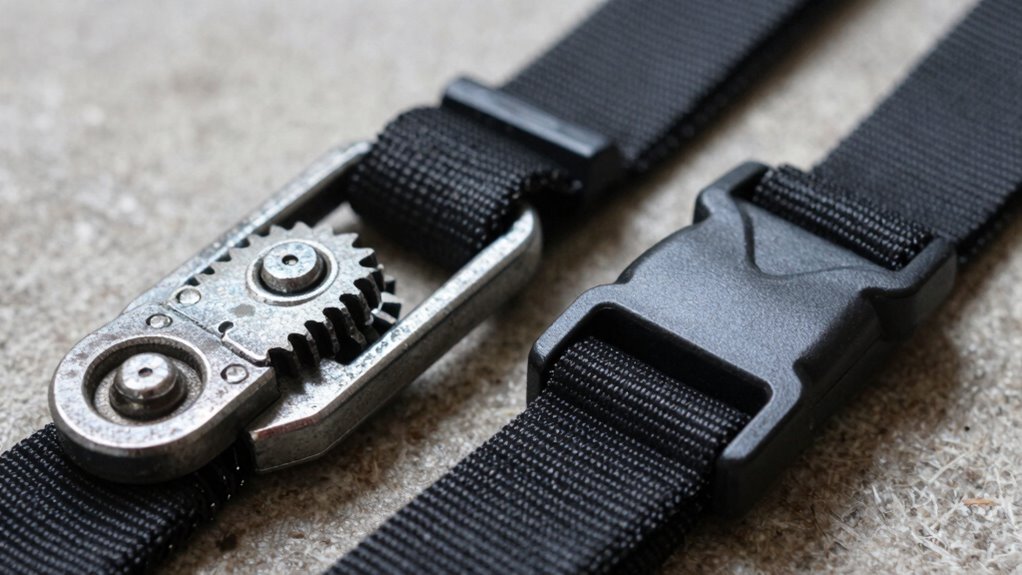
Cam straps can be be a safer choice when you need quick, straightforward securing solutions that minimize the risk of over-tightening or damage. They’re ideal for lightweight loads or situations requiring easy adjustments. The strap material, like polyester, offers durability without damaging delicate surfaces, while the strap color helps you quickly identify the correct strap for each job. Additionally, understanding the proper use of straps can significantly enhance safety during securing tasks. Using straps with clear color coding helps prevent mismatches and ensures proper tension is maintained. Incorporating automatic tensioning features can further improve safety and efficiency during securing processes. Proper training on strap application techniques is essential to maximize safety and effectiveness.
How to Use Ratchet Straps Safely
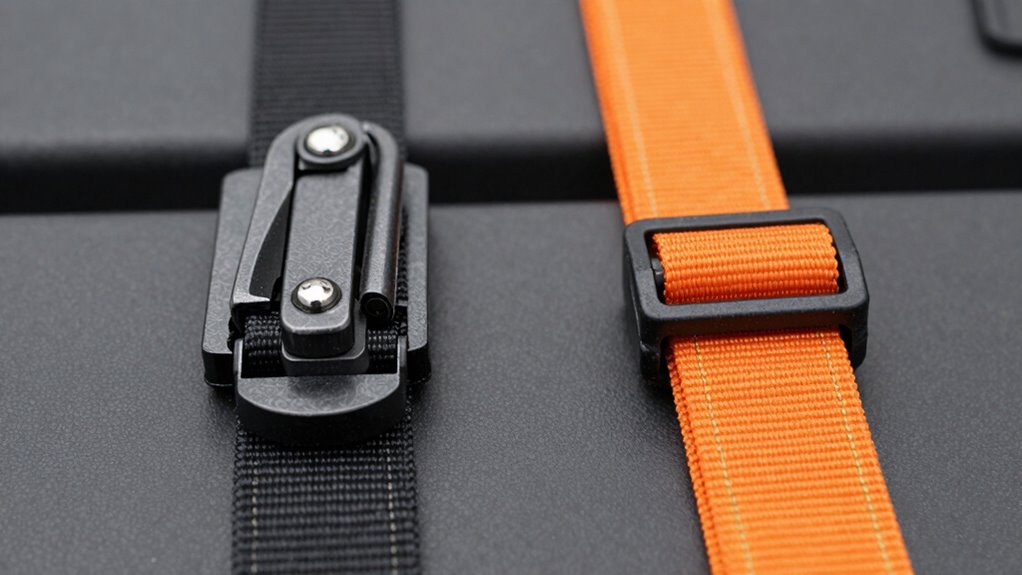
To use ratchet straps safely, it’s important to understand proper handling and tensioning techniques. First, always check the load capacity to guarantee the strap can handle your cargo. Second, inspect strap materials for frays, cuts, or damages before use. Third, position the strap evenly over the load, avoiding sharp edges that could weaken it. Fourth, turn the ratchet handle steadily to tighten, maintaining tension without over-tightening, which could damage the strap or load. Proper tensioning prevents shifting during transport. Remember, exceeding the load capacity risks failure, and damaged straps compromise safety. Regularly inspect straps during use to catch any issues early. Additionally, choosing the appropriate strap type for the specific load, such as cam straps or ratchet straps, can enhance safety and security during transport. Being aware of strapping regulations and standards ensures compliance and safe practice. Incorporating connected fitness concepts like proper equipment handling can also improve overall safety and performance.
Tips for Securing Loads Properly With Cam Straps

To secure loads effectively with cam straps, start by placing the straps properly across your cargo to prevent shifting. Make sure to tighten them firmly using correct techniques, but avoid over-tightening that could damage your load or straps. Don’t forget to verify your straps regularly during transit to ensure they stay tight and secure. Additionally, understanding load stability can help you choose the best securing method for different types of cargo. Recognizing load distribution can also improve your overall safety when securing items.
Proper Strap Placement
Proper strap placement is crucial for securing loads effectively with cam straps. To guarantee safety and stability, follow these tips:
- Position the strap evenly over the load, avoiding bunching or slack that can compromise strap tension.
- Make sure the strap material is free of tears or damage before use.
- Place the strap hooks securely onto anchor points, keeping them flat and aligned.
- Tighten the strap gradually, maintaining consistent strap tension without over-tightening, which can damage the strap material or load.
Tightening Techniques
Achieving a secure load with cam straps depends heavily on effective tightening techniques. Start by selecting the right strap material for your load; polyester straps are durable and stretch-resistant. Use the strap color as a visual cue for tension levels, ensuring you tighten enough without overdoing it. Pull the strap evenly, applying steady pressure to avoid slack. Avoid overtightening, which can damage the strap or load. Always double-check that the strap is snug and the cam mechanism is locked securely.
| Tip | Explanation |
|---|---|
| Use even tension | Prevents uneven load distribution |
| Check strap material | Ensures durability during tightening |
| Monitor strap color | Indicates proper tension levels |
| Avoid overtightening | Protects strap and load from damage |
Regular Inspection Checks
Regular inspection checks are essential to guarantee your cam straps keep loads secure during transportation. Implementing consistent inspection routines helps identify wear and damage early, extending the strap lifespan. To make certain proper safety, follow these steps:
- Check for frayed or cracked webbing before each use.
- Inspect the hooks and buckles for corrosion or deformation.
- Test the strap’s tension to confirm it’s holding securely.
- Look for signs of UV damage or chemical exposure that could weaken the material.
Common Mistakes That Reduce Strap Safety

One of the most common mistakes that can compromise strap safety is using damaged or worn straps. Worn straps can weaken the load distribution, increasing the risk of failure. Always inspect your straps for fraying, cuts, or corrosion before use. Another mistake is ignoring strap compatibility; using straps that aren’t rated for your cargo or mismatched with your securing devices can lead to accidents. Overloading straps beyond their load ratings also reduces safety, as they may stretch or break. Additionally, improper tensioning—either too loose or overly tight—can cause straps to slip or damage the cargo. Avoid these pitfalls by choosing the right straps for your load, ensuring they’re in good condition, and following manufacturer guidelines for tension and load limits.
How Load Ratings and Safety Standards Keep Your Cargo Secure
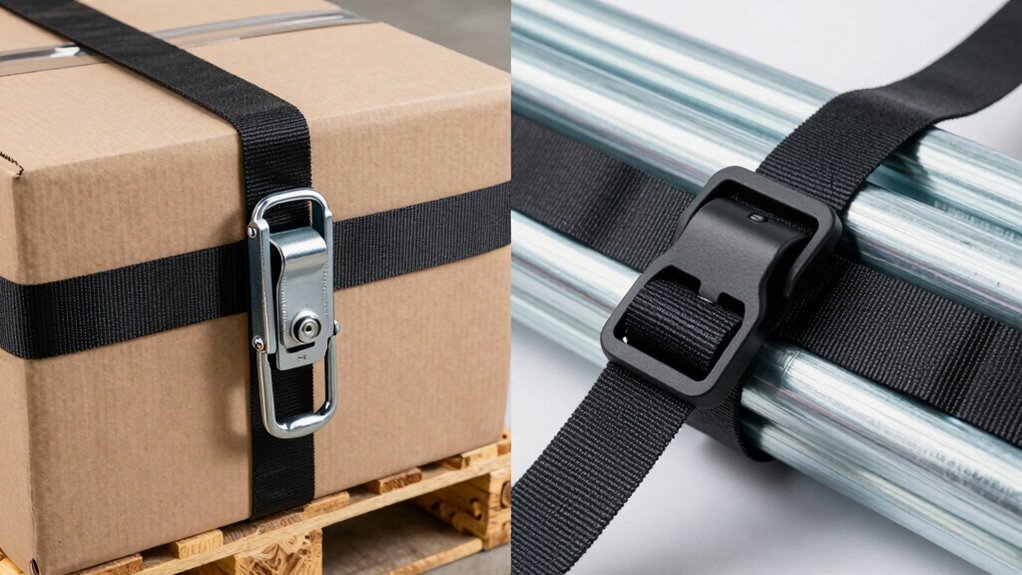
Understanding load ratings and safety standards helps you choose the right straps to secure your cargo effectively. When you follow safety guidelines and proper techniques, you reduce the risk of accidents and damage. Staying informed about these factors guarantees your load stays safe during transit.
Importance of Load Ratings
Load ratings are essential for making sure your cargo stays secure during transport. They help you choose straps with the right load capacity, preventing accidents or damage. Here’s why load ratings matter:
- They match your cargo’s weight to the strap’s maximum capacity.
- They ensure compliance with safety guidelines, avoiding legal issues.
- They reduce the risk of strap failure, protecting your cargo and others.
- They guide you in selecting between ratchet straps and cam straps for specific loads.
Safety Standards Compliance
Ensuring your straps meet safety standards is vital for keeping your cargo secure during transit. Compliance with safety standards guarantees that the strap material and load ratings are appropriate for your cargo’s weight and distribution. Proper load distribution prevents stress concentration, reducing the risk of strap failure. Look for straps that have been tested and certified according to industry standards, such as OSHA or ASTM. These standards specify minimum requirements for strap material strength, durability, and performance. Using straps that meet safety standards guarantees you’re not just guessing about their reliability, but actively protecting your cargo. When safety standards are met, you can trust that your straps will perform under load, preventing accidents and damage while safeguarding everyone involved in the transport process.
Proper Strapping Techniques
Proper strapping techniques are essential to keep your cargo secure, especially when load ratings and safety standards are in place. To do this effectively:
- Choose the right strap material—nylon or polyester—based on load weight and environmental conditions.
- Select a strap color that ensures visibility and quick inspection.
- Always check the load rating and ensure it matches your cargo weight.
- Secure straps tightly, avoiding slack, and ensure they are evenly tensioned.
Environmental Conditions and Handling Tips for Safe Strapping
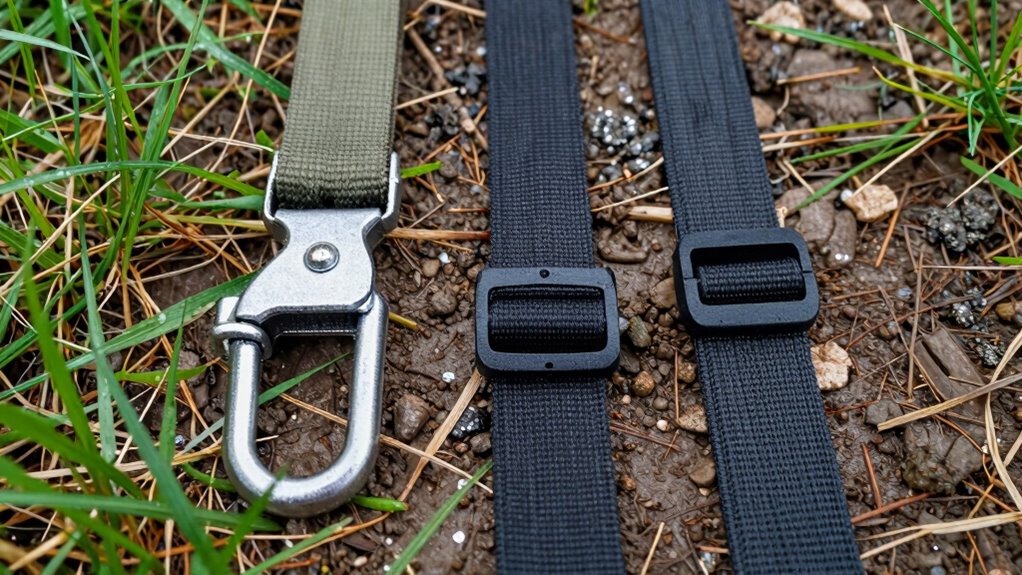
Environmental conditions can considerably impact the safety and effectiveness of your strapping. When working in different settings, consider environmental considerations like moisture, temperature, and UV exposure, which can weaken straps over time. Handling safety involves inspecting straps regularly for damage, and avoiding strapping in extreme conditions that could compromise load security. Use the table below to understand key factors:
| Condition | Effect on Straps | Handling Tips |
|---|---|---|
| Moisture | Causes corrosion, slippage | Keep straps dry and store properly |
| Extreme heat | Weakens material | Avoid exposure to high temperatures |
| UV exposure | Brittle, degrade over time | Use UV-resistant straps where needed |
| Cold temperatures | Reduce flexibility | Warm straps before use if frozen |
Choosing the Safer Strap for Your Cargo: Expert Advice
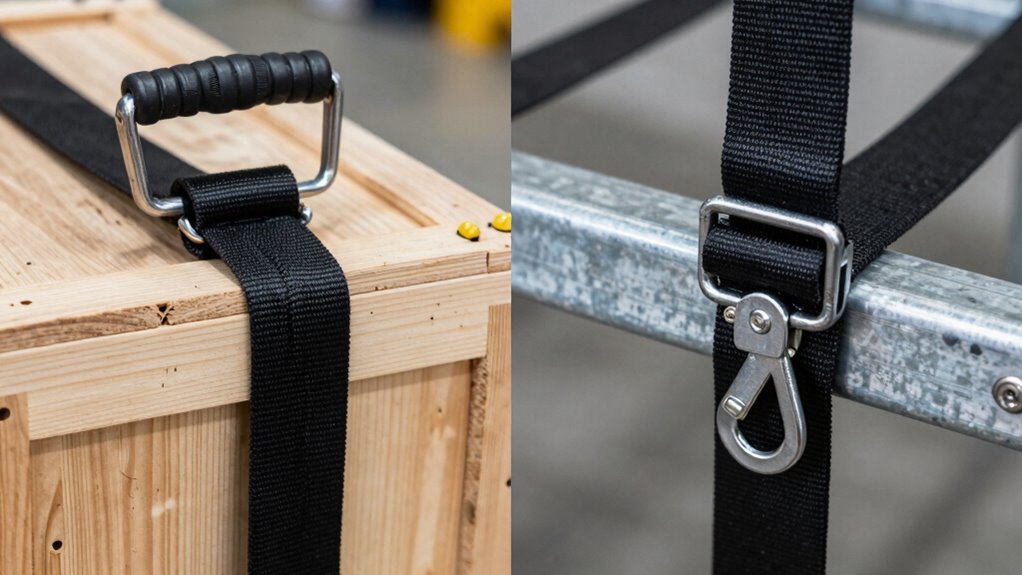
When choosing the safer strap for your cargo, you need to consider load security standards to ensure it can handle your weight safely. Pay attention to strap durability factors like material quality and stretch resistance, which impact long-term performance. Finally, mastering proper usage techniques helps prevent accidents and keeps your cargo secure throughout transit.
Load Security Standards
Choosing the right strap for securing your cargo depends on understanding load security standards that guarantee safety and compliance. These standards ensure your straps can handle the weight and stress during transit. Here are key points to take into account:
- Verify the load capacity to match or exceed your cargo’s weight.
- Check material strength to ensure the strap can withstand tension without failure.
- Confirm the strap meets industry certifications and safety standards.
- Assess compliance with local regulations for transportation safety.
Strap Durability Factors
Ever wondered what makes a strap last through tough conditions? The key factors are strap material and manufacturing quality. High-quality materials like polyester or nylon resist abrasion and UV damage, extending the strap’s lifespan. Manufacturing processes also matter—straps that are well-made have strong stitching and consistent craftsmanship, reducing risks of failure. To help you choose, here’s a quick comparison:
| Factor | Impact on Durability |
|---|---|
| Strap Material | Determines resistance to wear, UV, and moisture |
| Manufacturing Quality | Ensures stitching strength and overall reliability |
| UV Resistance | Protects against sun damage over time |
| Abrasion Resistance | Prevents tears from friction during use |
| Stitching Quality | Maintains integrity under tension |
Choosing straps with superior material and manufacturing quality guarantees safer, longer-lasting cargo security.
Proper Usage Techniques
Selecting the right strap is only part of ensuring safe cargo securement; proper usage techniques make a significant difference in performance and safety. First, choose a strap material suited for your load—nylon offers flexibility, while polyester resists stretching. Second, ensure the strap length matches your cargo size; too long can cause slack, too short may be too tight. Third, always secure the strap tightly, avoiding overtightening that could damage the cargo or strap. Fourth, inspect the strap for wear or damage before use, and double-check that ratchets or cam buckles are locked firmly. Proper technique guarantees the strap holds securely without compromising its integrity, reducing risk during transit. Mastering these steps helps you select the safer strap and use it correctly.
Frequently Asked Questions
Can Both Strap Types Be Reused Safely Multiple Times?
Yes, both ratchet straps and cam straps can be reused safely multiple times if you check their strap durability regularly. Make certain there are no frays, tears, or damaged components before reuse. Proper storage tips, like keeping straps in a cool, dry place away from sunlight, help maintain their integrity. Always inspect them thoroughly and follow manufacturer guidelines to ensure continued safety during each use.
How Do Weather Conditions Affect Strap Safety?
Weather conditions can turn your straps into fragile spaghetti if you’re not careful. Rain, snow, and extreme heat weaken strap material and reduce their safety, so avoid using them in harsh weather. Store your straps in a cool, dry place when not in use to prevent mold and UV damage. By protecting your straps properly, you guarantee they stay strong and safe, even when Mother Nature throws her worst at you.
Are There Specific Industries Preferring One Strap Type Over the Other?
In many industries, safety considerations influence whether you prefer ratchet straps or cam straps. For heavy-duty transport or securing large loads, you likely favor ratchet straps because they offer stronger tension and better security. Conversely, for lighter, quick setups, cam straps are popular due to their ease of use. Industry preferences often depend on the load size and safety standards, guiding you toward the most reliable strap type for your specific application.
What Are the Signs of Strap Wear or Damage to Watch For?
You should regularly check your straps for signs of wear or damage. Look for strap material deterioration, such as fraying, cracking, or fading, which indicates compromised strength. Also, inspect the buckle for deformation, bending, or rust, as these can hinder secure fastening. If you notice any of these issues, replace the strap immediately to guarantee safety and prevent load failure during use.
How Do I Choose the Right Strap Length for My Load?
You need to measure your load carefully to pick the right strap length; don’t leave it to guesswork. Use precise strap length measurement to make certain your straps are long enough to secure your load properly. Remember, a stitch in time saves nine—so, double-check your load securing techniques before tightening your straps. Choosing the correct length prevents slack or over-tightening, keeping your cargo safe during transit.
Conclusion
Just like a seasoned sailor chooses the right knot for calm or stormy seas, selecting between ratchet and cam straps depends on your load and conditions. Knowing when to tighten securely or when a quick, gentle hold suffices keeps your cargo safe. By understanding their strengths and pitfalls, you’ll navigate the road with confidence, ensuring your journey remains smooth and secure—no matter the weather or weight, you’re the captain of your cargo’s fate.