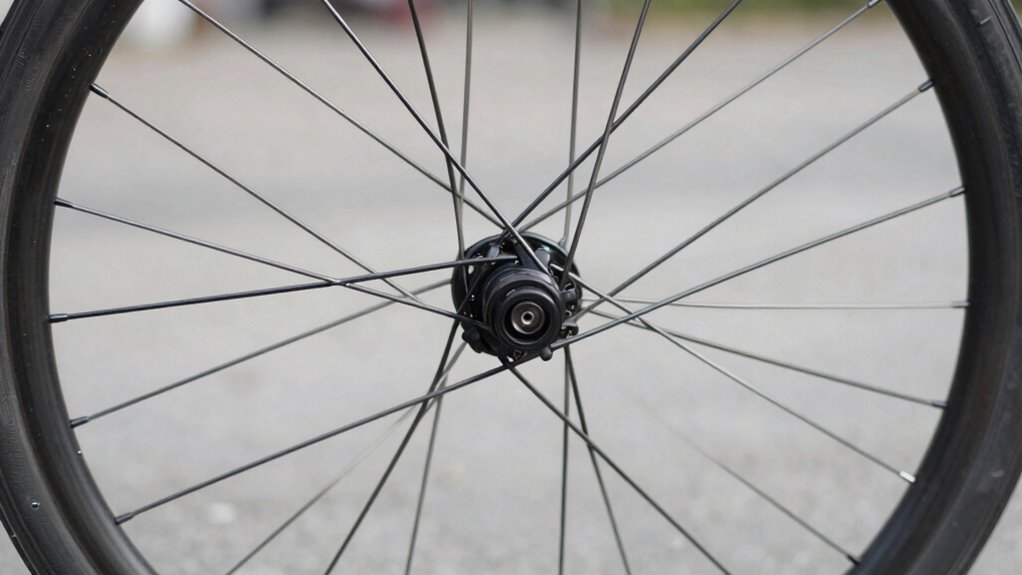

Proper spoke tension is essential for keeping your wheel strong and true, preventing rim damage and wobbling. When spokes are too loose or unevenly tensioned, stress builds up, risking cracks or bent rims. You can check tension by plucking spokes or using a tension gauge, then adjust them evenly. Maintaining correct tension avoids costly repairs and ensures a smooth ride. If you want to know how to do it safely and effectively, keep exploring the details below.

Get business pricing on garage and car supplies
- Business-only prices and quantity discounts
- Tax-exempt purchasing
- Multiple users, one account, clear invoices
Key Takeaways
- Proper spoke tension maintains wheel true, preventing rim wobble and deformation.
- Regular tension checks identify loose or uneven spokes that could cause rim damage.
- Using a tension meter ensures precise adjustment for balanced spoke tension.
- Even tension distributes forces uniformly, enhancing wheel durability and preventing cracks.
- Seeking professional help is advised for severe issues like broken spokes or persistent wobbling.
What Are Bicycle Wheel Spokes and Why Do They Matter?

Have you ever wondered what keeps a bicycle wheel stable and strong? It’s the spokes that do the heavy lifting. Spokes are thin rods connecting the hub to the rim, providing structural support. The spoke material, usually steel, aluminum, or carbon fiber, affects durability and weight. The spoke pattern, such as radial or crossed, determines how forces are distributed across the wheel. Properly chosen materials and patterns help maintain true, prevent wobbling, and absorb shocks. Innovative materials can enhance spoke performance and longevity. Additionally, understanding the spoke pattern helps you appreciate how a seemingly simple component plays a pivotal role in riding performance and safety. Without well-designed spokes, the wheel would quickly deform or break under stress. They’re essential for the wheel’s overall strength and longevity. Ensuring the correct tension check is carried out regularly keeps the spokes evenly tight, preventing rim damage and ensuring smooth rotation. Regular tension adjustments can also help avoid issues related to pinched spokes, which can weaken the wheel structure. Maintaining proper spoke tension is crucial for wheel integrity and overall riding quality.
Why Proper Spoke Tension Is Key to a Strong, True Wheel
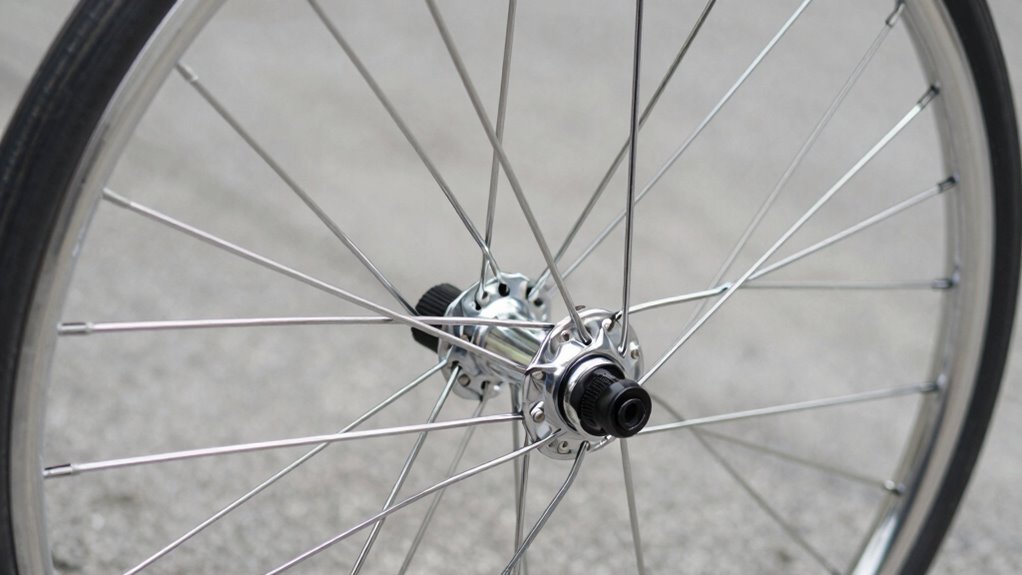
Proper spoke tension is what keeps your wheel true and resilient. When tension is just right, your rim stays straight under load, and your wheel maintains its shape. If spokes are too loose, the rim can wobble or develop dents, reducing rim durability. Too tight, and you risk stressing spokes or damaging the rim. Consistent spoke tension distributes forces evenly, preventing weak spots. This balance ensures your wheel can handle rough terrain and heavy use without going out of true. To maximize rim durability, regularly check and adjust spoke tension. Consistent tension across all spokes prevents uneven stress, ensuring optimal wheel performance. Additionally, maintaining proper tension can help protect your wheels from damage caused by vibrations, which is especially important when navigating uneven surfaces. Ensuring proper tension also aids in preventing wheel truing issues, extending the lifespan of your wheel components.
Signs Your Spokes Are Loose or Tension Is Uneven

You might notice visible damage to your spokes, like cracks or bends, which signals trouble. If your wheel wobbles or feels loose when you ride, uneven tension could be the cause. Additionally, an uneven rim tension might make your wheel less true and affect your ride quality.
Visible Spoke Damage
Visible spoke damage is often the first clue that your wheel may have loose or uneven tension. Look closely at your spokes for signs of wear or irregularities. You might notice rim discoloration, which indicates heat buildup from increased friction, or spoke corrosion that weakens the spoke’s integrity. Damaged or bent spokes can cause uneven tension, risking rim damage over time. Additionally, proper tension maintenance is essential for preventing further issues and ensuring wheel longevity. Regularly checking spoke tension helps prevent rim damage and prolongs the lifespan of your wheel. Watch for these signs: – Cracked or bent spokes – Rust or corrosion on the spoke surface – Discoloration around the rim near spokes. These issues suggest tension imbalance and potential safety risks. Addressing visible damage early can prevent further problems and keep your wheel durable and safe to ride. Maintaining proper spoke tension is also important for wheel stability, which directly impacts your safety and riding performance. Proper tension distribution can also reduce the risk of spoke breakage, which can cause dangerous wheel failure. Furthermore, understanding the tension check process can help you identify issues before they become serious.
Wheel Wobbling or Play
When your wheel starts to wobble or feels loose, it’s often a sign that the tension in the spokes isn’t even or that some spokes have become loose. This uneven tension can cause the wheel to shift, affecting overall hub maintenance and leading to potential damage. You might notice the wobble during riding or when spinning the wheel by hand. To address this, check the tire alignment first, as misalignment can exacerbate the problem. If the wobbling persists, inspect the spokes for looseness or uneven tension. Proper tension ensures the rim stays true and evenly supports the wheel’s load. Regularly maintaining spoke tension helps prevent more serious issues and extends your wheel’s lifespan. Additionally, understanding spoke tension principles can help you better assess and manage your wheel’s stability. Being familiar with tension balance can improve your ability to diagnose and correct issues early. Maintaining optimal air purifier filters and cleaning routines can also serve as a useful analogy for ensuring your wheel’s integrity over time.
Uneven Rim Tension
Uneven rim tension often signals that some spokes are loose or that tension isn’t distributed evenly across the wheel. When tension varies, you might notice rim expansion in certain areas or feel the wheel wobble during rides. Tight spokes keep the rim true, preventing damage from uneven stress. Signs of uneven tension include inconsistent spoke tension readings or a clicking sound when spinning the wheel. Over time, uneven tension can lead to rim deformation or spoke corrosion, weakening the wheel’s integrity. Regularly check for proper tension distribution to ensure your wheel remains true and durable. Understanding wheel tension helps in diagnosing issues early and maintaining optimal performance. Addressing uneven tension promptly promotes wheel longevity and protects your wheel from rim damage and prolongs its lifespan.
How to Check Spoke Tension at Home

Checking spoke tension at home is straightforward if you know what to look for. You want to ensure consistent spoke tension to maintain rim integrity and prevent damage. To do this, gently pluck each spoke and listen for a uniform pitch; higher pitches indicate tighter spokes, while lower pitches mean looser ones. Use a tension meter if available for more accuracy. Here’s a quick reference:
| Spoke Condition | Tension Level | Result |
|---|---|---|
| Too loose | Low pitch | Weak rim support |
| Just right | Medium pitch | Balanced tension |
| Too tight | High pitch | Risk of spoke break |
Regular checks help keep your wheel true and durable, preventing rim damage caused by uneven spoke tension. Monitoring spoke tension periodically ensures your bike or wheel remains safe and functional, especially when riding on rough terrains or long distances. Maintaining proper tension also helps preserve the overall wheel alignment, which is crucial for optimal performance.
Tools Needed to Test Spoke Tension

To accurately test spoke tension, you’ll need a few essential tools. The most important is a spoke tension gauge, which measures the tension precisely. Proper tension gauge calibration ensures accurate readings, so always check or calibrate your tension gauge before use.
Accurate spoke tension testing requires a properly calibrated tension gauge for precise measurements.
You should also have:
- A reliable tension gauge, preferably digital or mechanical
- A spoke wrench for adjustments after testing
- A spoke tension chart or guide for reference
Using spoke tension tools correctly helps prevent rim damage and ensures wheel durability. Regular calibration of your tension gauge guarantees consistent, accurate results, making maintenance more straightforward. Investing in quality tools and maintaining their calibration is key to keeping your wheel spokes properly tensioned and your bike safe.
How to Adjust Spoke Tension to Prevent Rim Damage
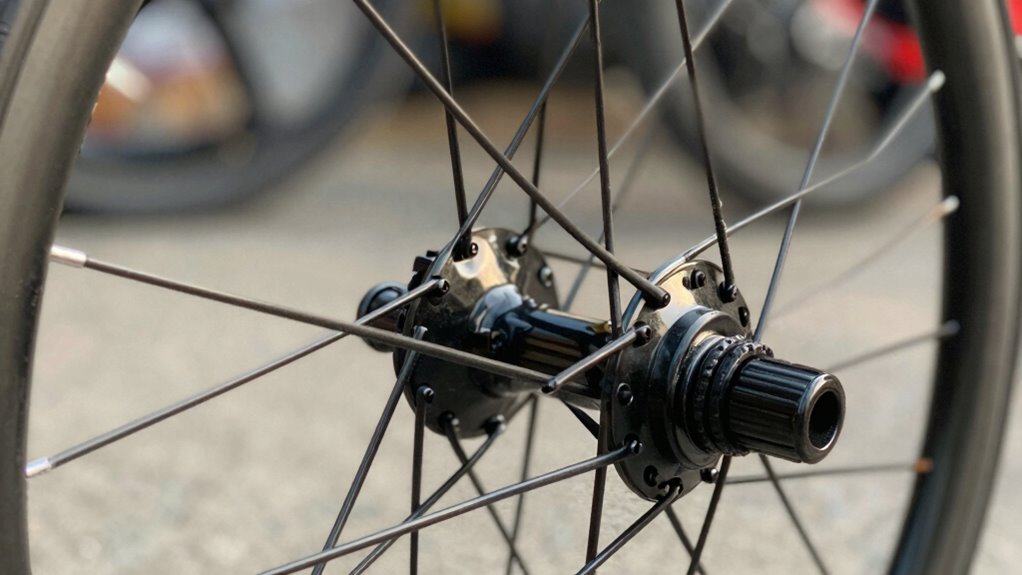
To keep your rim safe from damage, you need to regularly check your spoke tension. Using proper tension tools guarantees you tighten or loosen spokes accurately. Balancing spoke tightening across the wheel prevents uneven stress and maintains rim integrity.
Check Spoke Tension Regularly
Ever wonder how often you should test your spoke tension to keep your wheel true and prevent rim damage? Regular checks are key. Spoke tension affects rim shape and overall wheel durability. If tension is uneven, the rim can warp under stress, risking cracks or damage. Keep an eye on tension—especially after rides or impacts. Use a tension meter or listen for unusual sounds. Remember:
- Different spoke materials may require slightly varied tension levels.
- Consistent tension maintains proper rim shape and wheel alignment.
- Regular checks prevent rim damage by catching issues early.
Use Proper Tension Tools
Using the right tools makes adjusting spoke tension straightforward and effective. A quality tension meter helps you measure each spoke’s force accurately, ensuring consistent tension across the wheel. When working with different spoke materials, like stainless steel or butted spokes, proper tools prevent over-tightening that can damage the material. Knowing your spoke count guides you in balancing tension evenly, avoiding weak spots. Specialized spoke wrenches fit specific nipple sizes, reducing the risk of slipping or damaging the spoke or rim. By using the correct tension tools, you avoid guesswork and maintain ideal spoke tension, which prevents rim damage and extends wheel life. Precise adjustments ensure your wheel remains true, resilient, and safe for riding.
Balance Spoke Tightening
Balancing spoke tension is essential for preventing rim damage and ensuring a durable wheel. Properly adjusting spoke tension involves checking your spoke pattern and making sure each spoke has appropriate tension based on its gauge. If some spokes are too tight or too loose, it can cause uneven stress on the rim, risking damage. Use a tension meter to identify inconsistencies and adjust accordingly. Focus on maintaining even tension across spokes, especially in critical areas of the wheel. Remember, the spoke pattern influences how tension distributes, so keep it uniform. When tightening spokes, pay attention to the gauge, as thicker spokes require different tension levels than thinner ones. Regularly checking and balancing spoke tension keeps your wheel true and resilient.
Common Spoke Tension Problems and How to Fix Them
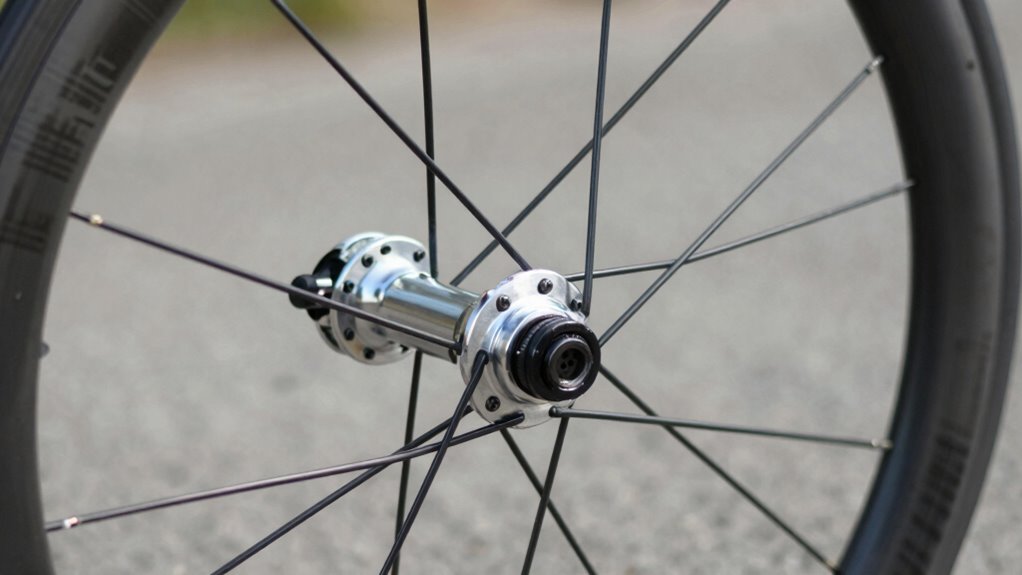
Spoke tension problems are common issues that can compromise the strength and performance of your wheel. One frequent problem is spoke corrosion, which weakens the spoke and can lead to breakage if ignored. Regularly inspect your spokes for rust or corrosion, especially in humid conditions. If you notice significant corrosion, it’s best to replace the affected spokes promptly—this is called spoke replacement. Uneven tension can cause wheel wobbling or rim damage, so check for loose or overly tight spokes. Using a tension meter helps identify inconsistencies. Correcting tension issues involves tightening loose spokes or releasing overly tight ones. Addressing these problems early prevents further damage and maintains a safe, durable wheel. Regular maintenance ensures your spokes stay in ideal condition, reducing the risk of sudden failures.
When to Call a Professional for Wheel Truing and Spoke Repairs

While minor wheel issues can often be addressed at home, there are times when professional help is essential to guarantee your wheel is safe and properly aligned. If you notice persistent wobbling, uneven spoke tension, or difficulty maintaining pedal alignment, it’s time to consult a bike shop. Also, if your bike seat feels off or your riding feels unstable, a professional truing can restore proper alignment. Don’t attempt complex spoke repairs if you lack experience, as improper tension can cause rim damage or spokes breaking.
You should call a pro if:
- The wheel is severely out of true or has broken spokes
- You’re unsure about adjusting spoke tension safely
- You want to guarantee your bike’s overall safety and ride quality
Frequently Asked Questions
How Often Should I Check My Bicycle Wheel Spoke Tension?
You should check your bicycle wheel spoke tension at least once a month or before long rides. Regular spoke tension adjustment helps maintain rim trueness and prevents damage. Also, perform a rim trueness check during each inspection to spot any wobbles early. If you notice uneven tension or rim misalignment, tighten or adjust spokes promptly to keep your wheel strong and smooth, ensuring a safe ride every time.
Can Uneven Spoke Tension Cause Wheel Wobble?
Uneven spoke tension can turn your smooth ride into a wobbling chaos, like a ship tossed by rough seas. When spokes aren’t equally tight, they pull the rim unevenly, causing wheel wobble. This imbalance weakens your wheel’s stability and can lead to damage. Regularly checking and equalizing spoke tension keeps your wheel true, ensuring a steady, confident ride that stays on course and protects your rim.
What Are the Risks of Ignoring Loose Spokes?
Ignoring loose spokes risks serious damage to your wheel. Over time, loose spokes can cause rim wobble, leading to uneven wear, spoke rust, and spoke corrosion. This weakens the wheel’s structure, increasing the chance of spoke breakage or rim failure. Don’t overlook these issues, as they can compromise your safety and lead to costly repairs. Regular tension checks help prevent rust, corrosion, and potential wheel failure.
How Do Spoke Tensions Differ Between Front and Rear Wheels?
You’ll notice that spoke tensions differ between front and rear wheels due to their spoke pattern and load distribution. Typically, rear wheels have higher tension measurement because they support more weight and power transfer, especially with a drive-side pattern. The front usually has lower tension to maintain proper spoke balance. Regularly checking tension measurement helps guarantee spokes stay balanced, preventing wheel wobble and rim damage.
Is It Necessary to Replace Spokes Regularly?
You don’t need to replace spokes regularly unless they show signs of damage or fatigue. Regular spoke tension checks help prevent issues. Keep spokes properly lubricated to avoid corrosion and maintain strength. If you’re interested, you can choose from various spoke color options to customize your bike’s look. Remember, maintaining proper tension and lubrication extends spoke lifespan, reducing the need for frequent replacements.
Conclusion
Remember, a well-tensioned wheel is the backbone of a smooth ride. Regularly check your spokes to catch issues early—an ounce of prevention is worth a pound of cure. If you notice persistent problems, don’t hesitate to call in a pro. Keeping your wheels true guarantees safety and longevity. After all, a stitch in time saves nine, so stay proactive and enjoy the ride without worries.
Fall Picks
fall essentials
As an affiliate, we earn on qualifying purchases.