
Two-stroke engines feel snappier because their powerband is narrow, delivering maximum thrust in a brief RPM range. Design features like rapid combustion, high compression, and port timing produce quick pressure changes, creating sharp torque bursts. These bursts give you immediate, visceral acceleration and a lively response. Outside this range, power drops sharply, making throttle control critical. To understand how this precise combination of mechanics and combustion creates that exhilarating ‘snap,’ keep exploring further.
Key Takeaways
- Two-strokes generate power once every revolution, creating immediate, explosive responses within their narrow powerband.
- The focused powerband delivers quick torque bursts, resulting in sharp, linear throttle response.
- Rapid combustion and pressure fluctuations produce a high-pitched, aggressive exhaust sound that signals quick engine action.
- Their simple design and high operating speeds lead to faster pressure changes and torque “snap.”
- Outside the powerband, power drops sharply, emphasizing the engine’s quick, responsive feel within a limited RPM range.
What Is the Powerband and Why Does It Make Two-Strokes Feel Snappy?

Have you ever wondered why two-stroke engines feel so responsive and snappy? The answer lies in the powerband, which is the engine’s RPM range where it delivers ideal power. Unlike four-strokes, two-strokes generate power once every revolution of the crankshaft, creating a more immediate response within this range. The powerband is characterized by a specific RPM window where combustion efficiency peaks, resulting in a rapid increase in torque. This sharp torque curve produces a perceptible surge as you accelerate through the dialed-in RPMs. Precise carburetion, ignition timing, and port timing contribute to maintaining this narrow but potent powerband. This focused delivery makes two-strokes feel lively and quick, as power is concentrated in a specific RPM zone, enhancing responsiveness and overall perceived snappiness. Additionally, tuning techniques can be employed to further optimize engine performance and extend the effective powerband, ensuring a more responsive ride. Proper diagnostics are also essential for maintaining optimal powerband characteristics over time. Regular adjustments to air-fuel mixture can further enhance power delivery within the powerband.
How Do Two-Stroke Engines Deliver Power Differently Than Four-Strokes?
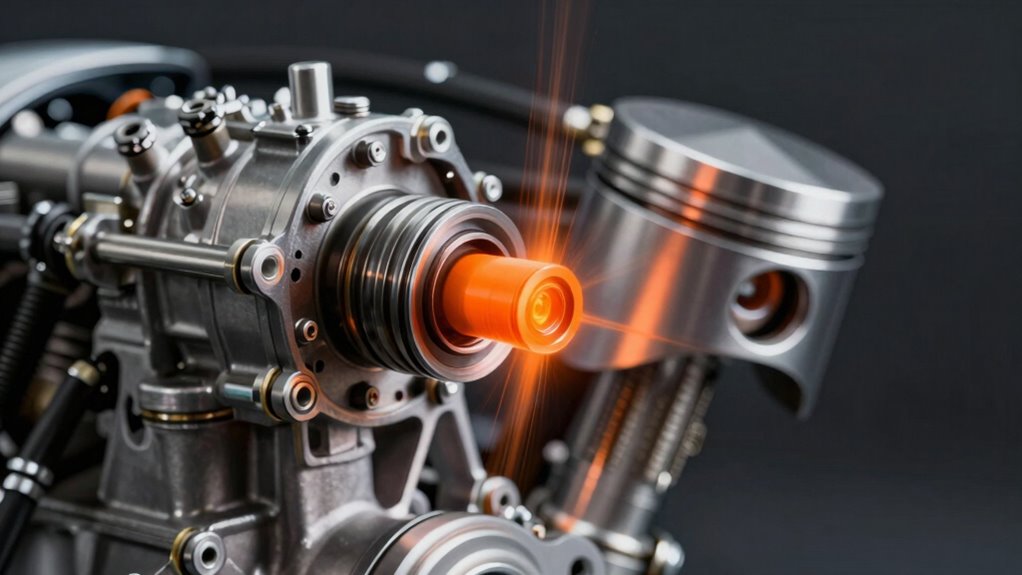
Two-stroke engines generate power through a different process than four-strokes, resulting in a more immediate and frequent delivery of torque. Unlike four-strokes, which complete a power cycle in four piston movements, two-strokes condense this into two movements. During each revolution of the crankshaft, the piston completes both intake/compression and power/exhaust phases. This cycle allows combustion to occur once every revolution, producing a continuous series of power pulses. In contrast, four-strokes require two revolutions for a single power cycle, creating a less frequent power delivery. The two-stroke’s design minimizes dead time between power strokes, resulting in a more rapid, consistent transfer of energy. This fundamental difference explains why two-strokes feel more responsive and deliver power more frequently than four-strokes.
Why Does a Narrow Powerband Make Two-Strokes More Responsive?
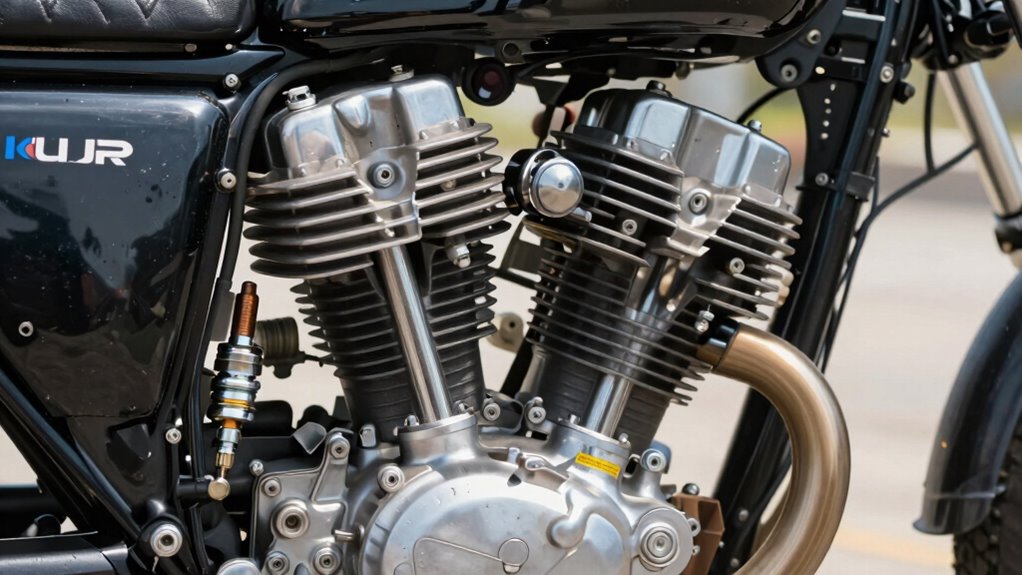
A narrow powerband concentrates thrust within a limited RPM range, allowing for more precise control of engine torque. This focused thrust results in quicker throttle response and improved responsiveness under load. Consequently, the engine’s efficiency dynamics shift, favoring rapid power delivery over broad, sustained output. Additionally, understanding reliable backup power options ensures consistent performance during critical moments. Recognizing the importance of essential oils for respiratory health can also help optimize overall engine performance by reducing stress and promoting mental clarity during rides. Proper maintenance and lubrication are essential for keeping engine components running smoothly and efficiently. Moreover, appreciating engine tuning techniques can further enhance responsiveness and overall performance.
Thrust of Powerband
The narrow powerband of a two-stroke engine concentrates its maximum thrust within a limited RPM range, resulting in a sharper and more immediate response. This focused thrust output means the engine delivers peak torque quickly, directly translating to a perceptible acceleration feel. Because the thrust is confined to a specific RPM window, it produces a distinct “snap” when you hit that range, enhancing responsiveness. Outside this zone, thrust diminishes rapidly, emphasizing the engine’s enthusiasm to operate within its ideal RPM. This concentrated thrust distribution allows the rider to perceive a more immediate and forceful acceleration, making the engine feel more lively and reactive. Additionally, understanding powerband helps explain why two-strokes feel so responsive and why tuning it can elevate performance. Consequently, the narrow powerband enhances the perception of power delivery’s immediacy, contributing substantially to the characteristic “snappy” feel of two-strokes.
Engine Efficiency Dynamics
Why does a narrow powerband enhance the responsiveness of two-stroke engines? It’s primarily due to their optimized combustion efficiency within a confined RPM range. In a narrow band, the engine operates closer to its ideal air-fuel mixture, minimizing losses from partial combustion and unburned fuel. This efficiency results in more immediate torque delivery, as combustion events are precisely synchronized with the engine’s cycle. Additionally, a focused RPM range allows for more consistent and predictable power output, further contributing to the engine’s responsive feel. This targeted operation reduces the combustion variability, which can otherwise lead to lag or uneven power delivery. A narrower powerband also means the engine is less affected by resonance effects, helping maintain smooth performance across the targeted RPMs. Focusing on a narrower RPM window can also improve the engine’s ability to maintain optimal combustion conditions, leading to faster throttle response. Conversely, a broader powerband extends the operational RPM range, requiring the engine to adapt to varying combustion conditions, which can introduce lag or uneven power delivery. By focusing on a narrow band, the engine’s design maximizes volumetric efficiency and combustion stability, leading to quicker throttle response and a more direct feel, making the engine seem “snappier” and more responsive overall. Moreover, understanding the powerband helps riders optimize their throttle inputs for better control and performance.
How Do Engine Design and Combustion Create That ‘Snap’?
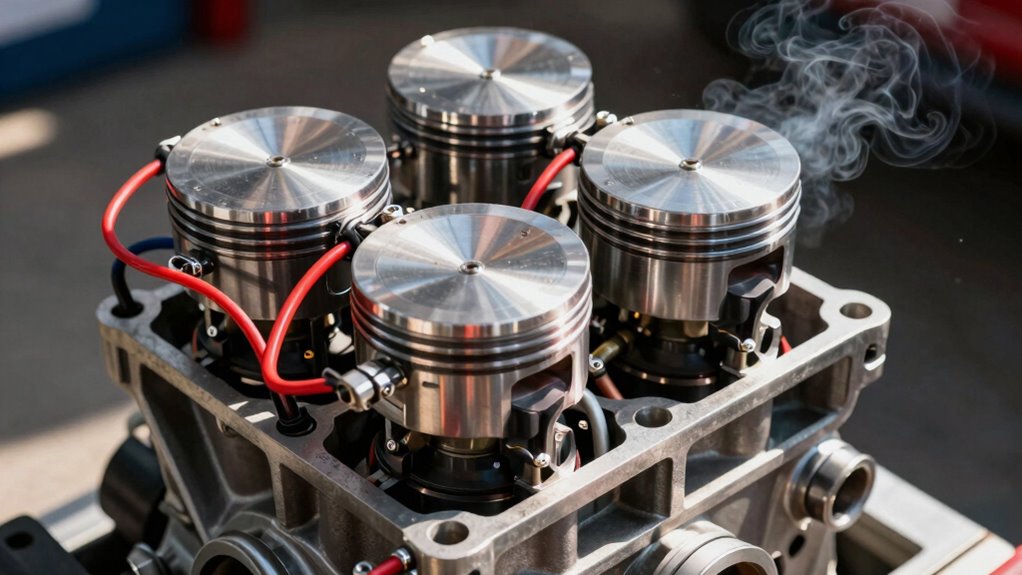
Engine design and combustion processes work together to produce that distinctive ‘snap’ in two-stroke engines by optimizing power transfer and rapid pressure changes. The engine’s piston and port timing are engineered to maximize intake, compression, and exhaust cycles within a single revolution, creating swift pressure fluctuations. Combustion occurs quickly due to a high compression ratio and optimized ignition timing, generating a rapid pressure spike that drives the piston downward with force. The combustion chamber shape and port layout facilitate efficient airflow and combustion speed, ensuring minimal lag between ignition and power delivery. This synergy results in a highly responsive engine that delivers sudden torque bursts, giving the impression of a ‘snap’—a direct outcome of precise mechanical and combustion tuning aimed at rapid cycle completion and pressure change.
How Do RPM Range and Throttle Response Enhance the ‘Snap’?
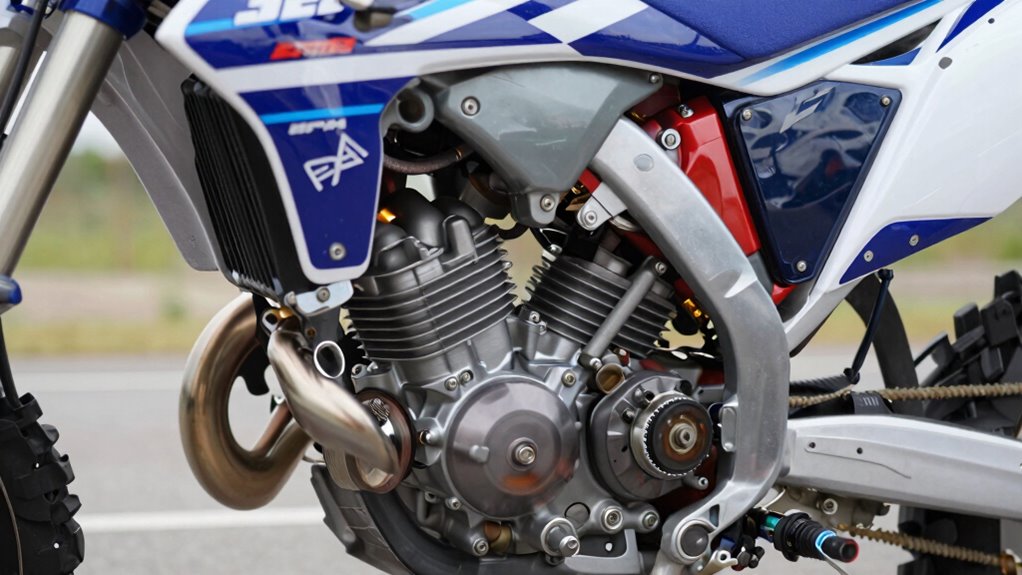
RPM range and throttle response directly influence how sharply the engine can deliver that characteristic ‘snap.’ Operating within an ideal RPM window enables the engine to generate rapid pressure fluctuations, resulting in immediate power pulses. At these advantageous speeds, the combustion cycle occurs with precise timing, maximizing exhaust scavenging and intake efficiency, which enhances responsiveness. This precise timing is crucial for achieving that quick, sharp engine reaction. Throttle response determines how quickly engine power reacts to your input; a responsive throttle minimizes lag, allowing for precise control of pressure buildup and release. This combination ensures the engine can deliver sudden, sharp power surges characteristic of a ‘snap.’ Narrowing the RPM window concentrates power delivery within a specific range, amplifying the sensation of quickness. An optimal engine tuning enhances these effects, making the ‘snap’ even more pronounced. Additionally, improving fuel delivery and ignition timing can further optimize responsiveness. Fine-tuning the air-fuel mixture can also significantly impact engine responsiveness, especially when combined with airflow management. Together, optimal RPM range and swift throttle response create a highly reactive engine, delivering the crisp, immediate sensation that defines that ‘snap’ feeling.
What’s It Like to Ride a Two-Stroke Compared to a Four-Stroke?
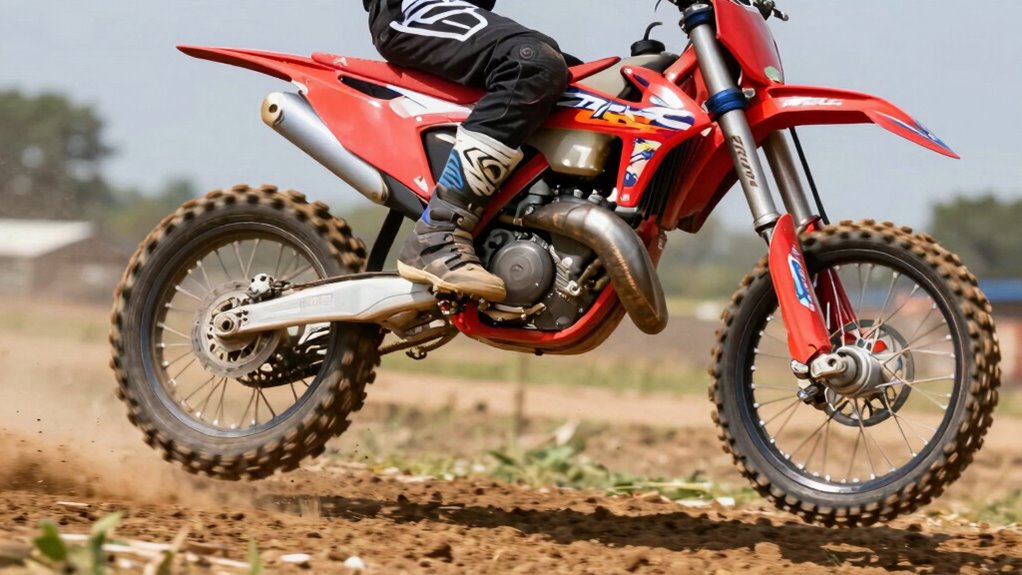
Riding a two-stroke offers a distinct power delivery characterized by an abrupt, linear response, contrasting with the more gradual torque build of a four-stroke. The engine sound of a two-stroke is sharper and more high-pitched, providing immediate auditory feedback of engine RPM. Additionally, two-strokes generally require more frequent maintenance and tend to have a shorter lifespan due to simpler design and higher operating stresses. The engine durability of two-strokes can be affected by these factors, influencing overall longevity and reliability. Because of their simpler design, two-strokes often have fewer internal components, which can make repairs more straightforward but also more sensitive to fuel quality and operating conditions.
Power Delivery Style
Unlike four-stroke engines, which deliver power more gradually through a broad torque curve, two-strokes provide an immediate and explosive power surge once their specific powerband is reached. This results from their combustion cycle, where power strokes occur every revolution of the crankshaft. As a rider, you’ll notice the engine’s response is sharply concentrated within a narrow RPM range, requiring precise throttle control to stay within that zone. The power delivery feels abrupt and linear, with minimal lag or gradual buildup. This characteristic allows for rapid acceleration and quick throttle response, making the engine feel “snappy.” However, it also demands attentiveness, as the engine’s power output drops sharply outside the powerband, requiring you to continually adjust throttle input for ideal performance. Additionally, because of the engine’s combustion cycle, riders often experience a more direct and immediate connection to the engine’s response. The narrow powerband and engine response mean that riding a two-stroke can feel more engaging and visceral, especially for those seeking rapid acceleration and a lively feel.
Engine Sound Experience
The distinct combustion cycles of two-stroke engines produce a markedly different auditory profile compared to four-strokes. You notice a sharper, more aggressive exhaust note characterized by higher frequency sound waves. This tonal difference arises from the engine’s rapid firing rate, producing a continuous, pulsating sound rather than the discrete cycles of a four-stroke. The sound intensity correlates directly with power output, giving a sense of immediacy and responsiveness.
| Aspect | Four-Stroke | Two-Stroke |
|---|---|---|
| Combustion Frequency | Lower, one power stroke per two revolutions | Higher, one power stroke per revolution |
| Exhaust Note | Mellow, steady hum | Sharp, crackling, and more aggressive |
| Sound Character | Controlled and refined | Exuberant and raw |
| Perception | Smoother, less intrusive | Edgier, more visceral |
Maintenance and Longevity
Two-stroke engines generally require more frequent maintenance and have a shorter operational lifespan compared to four-stroke engines due to their simpler design and higher operating speeds. The lack of a dedicated valve train means components like piston rings and seals endure greater wear, necessitating more regular replacements. You’ll need to monitor and replace the spark plug, carburetor adjustments, and fuel mixture to maintain ideal performance. The engine’s higher power-to-weight ratio accelerates component fatigue, reducing overall longevity. Conversely, four-strokes benefit from a more robust valvetrain and better lubrication systems, extending service intervals and lifespan. While two-strokes deliver immediate performance benefits, their maintenance demands and shorter durability make them less suitable for long-term, continuous use without diligent upkeep.
Frequently Asked Questions
Can Two-Strokes Be Tuned for a Broader Powerband?
Yes, you can tune two-strokes for a broader powerband by adjusting port timing, modifying the exhaust system, and selecting high-quality reeds. Re-jetting the carburetor guarantees ideal fuel delivery across RPM ranges. Increasing transfer port duration and optimizing the expansion chamber shape helps extend the effective RPM window. These modifications balance power at low and high speeds, making the engine more versatile and responsive throughout a wider RPM range.
How Does Two-Stroke Lubrication Affect Power Delivery?
You might think lubrication’s just about preventing wear, but in two-strokes, it actually plays a pivotal role in power delivery. Proper oil-to-fuel mix ensures ideal piston sealing and reduces friction, which directly influences throttle response and overall power. Too much oil smothers combustion, while too little causes engine damage. Striking the right balance allows the engine to run smoothly, delivering that sharp, responsive feel you love without sacrificing longevity.
Are Two-Strokes More Fuel-Efficient Than Four-Strokes?
Two-strokes are generally less fuel-efficient than four-strokes because they complete a power cycle in two piston strokes, leading to overlapping intake and exhaust phases that cause unburned fuel loss. This design results in higher fuel consumption per power output. However, their simpler mechanism and lighter weight can offset efficiency concerns in applications where quick response and portability are prioritized. Ultimately, four-strokes offer better fuel economy over extended use.
What Maintenance Differences Impact Two-Stroke Responsiveness?
Think of your engine as a finely tuned instrument; neglecting maintenance strikes a discordant note. For two-strokes, regular cleaning of the exhaust port and piston, plus proper oil mixture, keeps responsiveness sharp. Worn spark plugs or clogged air filters can muffl the powerband, causing sluggishness. Consistent inspection and timely part replacements ensure your two-stroke remains lively and responsive, maintaining that crisp, snappy feel you crave.
Do Two-Strokes Have a Longer Lifespan Than Four-Strokes?
No, two-strokes generally have a shorter lifespan than four-strokes due to their simpler design and higher operating speeds. You’ll notice increased wear on components like piston rings and cylinder walls from the rapid combustion cycles. Proper maintenance, such as regular cleaning and timely part replacements, can extend their lifespan, but overall, four-strokes tend to endure longer because of their more durable construction and oil-lubricated internal parts.
Conclusion
Understanding the unique dynamics of two-stroke engines reveals their rapid, responsive rhythm. Their narrow, potent powerband produces a punchy, perceptible snap, delivering distinct drivetrain dynamism. By balancing combustion, RPM ranges, and throttle timing, you experience an exhilarating edge over four-strokes. This technical transparency underscores why two-strokes feel faster and more ferocious—fueling your fascination with their focused, fiery finesse. It’s a finely tuned fusion of friction, frequency, and finesse that fuels your thrill-seeking throttle tales.