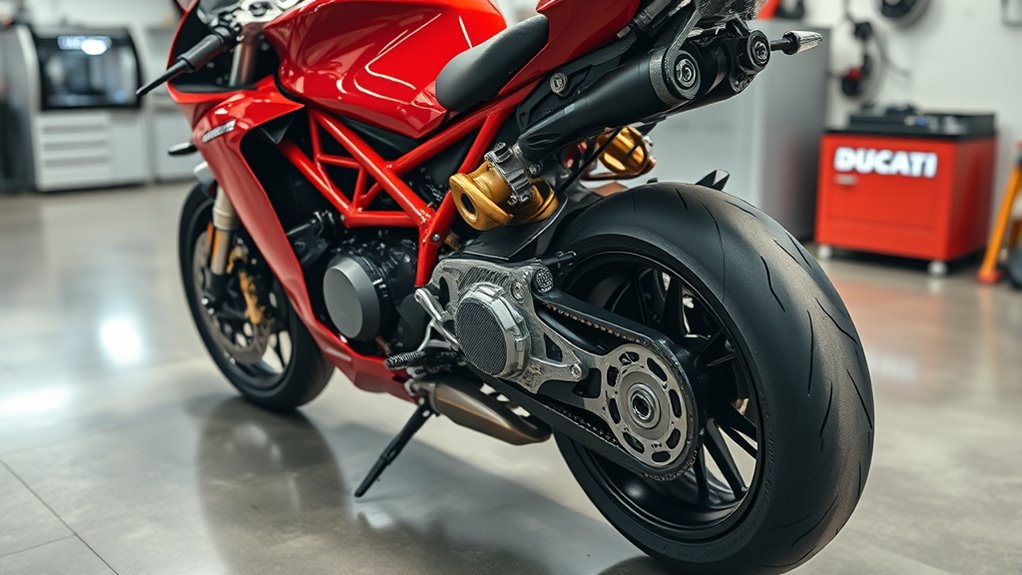

Ducati uses 3D printing to improve component repair by enabling quicker, more precise, and customized replacements. This innovation allows you to get back on your bike faster, with parts that can be tailored to specific needs and complex designs. It also reduces wait times and minimizes waste, supporting sustainable practices. If you want to discover how this technology boosts performance and efficiency further, there’s more to explore below.
Key Takeaways
- Ducati leverages 3D printing for rapid repair and replacement of complex motorcycle components.
- The company uses innovative additive manufacturing materials to ensure durability and performance.
- 3D printing allows Ducati to produce customized parts efficiently, reducing lead times and costs.
- Ducati employs 3D printing for on-demand prototyping and design modifications.
- The technology enhances quality control, providing precise, reliable components that meet safety standards.
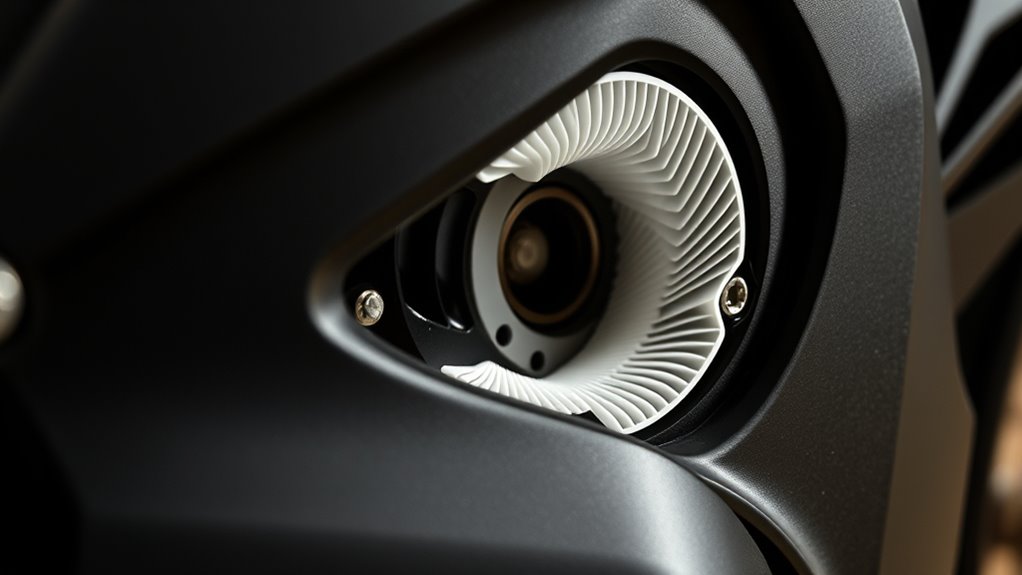
Ducati is revolutionizing its maintenance process by incorporating 3D printing into component repair. This innovative approach allows you to replace or restore parts more efficiently, reducing downtime and costs. By leveraging 3D printing technology, Ducati can produce complex components with intricate geometries that traditional manufacturing methods might struggle to replicate. This shift not only speeds up repairs but also enhances the precision and customization of parts, giving you a more tailored riding experience.
The key to this transformation lies in the use of innovative materials specifically designed for additive manufacturing. These materials are engineered to withstand the demanding conditions of motorcycle operation, ensuring durability and performance. As a rider, you’ll benefit from components that are both lightweight and resilient, thanks to these advanced materials. The manufacturing process itself is more flexible, allowing Ducati to create prototypes and functional parts on demand. If a component breaks or wears out, the team can quickly produce a replacement without waiting for traditional supply chains, minimizing disruptions to your riding schedule.
This new manufacturing process also opens doors for customization. Suppose you want a part with specific aesthetic or aerodynamic features; 3D printing makes that feasible without the need for costly molds or tooling. You can have parts tailored to your bike’s unique specifications, improving both appearance and performance. Furthermore, this approach is environmentally friendly, as it reduces waste by only using the material necessary for each component. This aligns with Ducati’s commitment to sustainability, giving you the confidence that your bike’s maintenance is eco-conscious.
Additionally, Ducati’s adoption of 3D printing enhances quality control. Because the process is highly precise, it ensures consistent production standards. You’ll notice fewer defects and a better fit for replacement parts, which enhances safety and reliability. This technology also allows for rapid iteration; if a design needs adjustments, engineers can quickly modify digital models and produce updated parts without extensive retooling. In fact, the use of additive manufacturing can also enable the creation of complex internal structures that improve performance and weight reduction. For you, this translates to faster implementation of improvements and innovations, keeping your Ducati at the forefront of performance and technology.
Frequently Asked Questions
What Materials Does Ducati Use in Their 3D Printed Components?
You should know that Ducati selects materials like durable plastics and metals for their 3D printed components. They focus on material selection to guarantee strength and safety, using advanced printing techniques like FDM and SLS. These methods allow them to create high-quality parts that withstand stress. By choosing the right materials and techniques, Ducati ensures their 3D printed components are reliable, functional, and meet strict performance standards.
How Cost-Effective Is 3D Printing for Ducati Repairs?
Imagine you’re in the year 3000, and 3D printing revolutionizes everything. For Ducati, it’s highly cost-effective, offering significant cost savings and boosting repair efficiency. By printing complex parts on demand, they reduce downtime and eliminate the need for expensive, traditional manufacturing. This technology streamlines repairs, minimizes waste, and speeds up turnaround times, making it a smart investment that keeps Ducati bikes in top shape without breaking the bank.
What Is the Turnaround Time for 3D Printed Parts at Ducati?
You’ll find that the turnaround time for 3D printed parts at Ducati is quite fast, often just a few days, thanks to rapid prototyping techniques. This speed allows for quick repairs and customization options, so you don’t have to wait long for replacement or personalized components. The process is efficient, ensuring you get your parts swiftly while maintaining high-quality standards for durability and performance.
Are 3D Printed Components as Durable as Traditional Parts?
You might wonder if 3D printed components are as durable as traditional parts. Generally, they offer comparable material longevity and repair precision, but it depends on the material used and the application. High-quality 3D printing materials provide strength, heat resistance, and longevity similar to conventional parts. Always consider the specific requirements of your motorcycle, as proper material selection guarantees durability and reliable performance, matching or exceeding traditional standards.
How Does 3D Printing Impact Ducati’s Repair Workflow?
You’ll find that 3D printing speeds up Ducati’s repair workflow by enabling rapid prototyping and creating custom tooling quickly. Instead of waiting for traditional parts, you can produce replacement components on demand, reducing downtime. This approach streamlines repairs, offers flexibility for complex designs, and cuts costs. Overall, it makes Ducati’s repair process more efficient, allowing you to get bikes back on the road faster with high-quality, tailored solutions.
Conclusion
By embracing 3D printing for component repair, Ducati demonstrates innovation and sustainability. You might wonder, could this technology revolutionize how we maintain and extend the life of high-performance machines? It’s clear that 3D printing isn’t just a trend but a game-changer, offering faster, cost-effective solutions. As you see how Ducati leads the way, ask yourself—are you ready to embrace the future of manufacturing and repair?