
The air-and-oil cooling system is essential for managing heat in your Harley, impacting its performance and longevity more than you might think. These systems work together to keep temperatures in check, allowing you to push your bike to the limits without overheating. When you’re aware of how this cooling strategy functions, you can avoid potential damage and enhance your riding experience. Discovering more about heat management will help you understand your bike even better.

Get garage and car supplies delivered free — and shop member deals
- Fast, free delivery on millions of items
- Access to Prime Big Deal Days deals on October 6–7
- Prime Video, Amazon Music and more included
Key Takeaways
- Harley engines generate significant heat, necessitating effective heat management for optimal performance and longevity.
- The air-and-oil cooling system combines airflow and oil circulation for enhanced cooling efficiency.
- High RPMs can elevate engine temperatures, making monitoring temperature gauges essential for performance.
- Customizations like aftermarket oil coolers and modified air intakes improve cooling and overall riding experience.
- Understanding cooling mechanics enables riders to maintain engine reliability and prevent potential damage.
Have you ever wondered why Harley riders seem so passionate about their bikes, especially when it comes to heat management? It’s not just about the thrill of the ride; it’s also about the intricate relationship between engine temperature and cooling efficiency. Harley-Davidson has built its reputation around powerful engines, but that power comes with a price: heat. Understanding how air-and-oil cooling works can deepen your appreciation for these iconic machines.
When you twist the throttle and feel that surge of power, you might not think about what’s happening under the hood. The engine generates heat as it operates, and that heat needs to be managed effectively to keep the bike running smoothly. You might have noticed that Harley engines run hotter than some other motorcycles. This is partly due to their design, which emphasizes torque and performance. But don’t let that concern you; it’s all about how heat is dissipated.
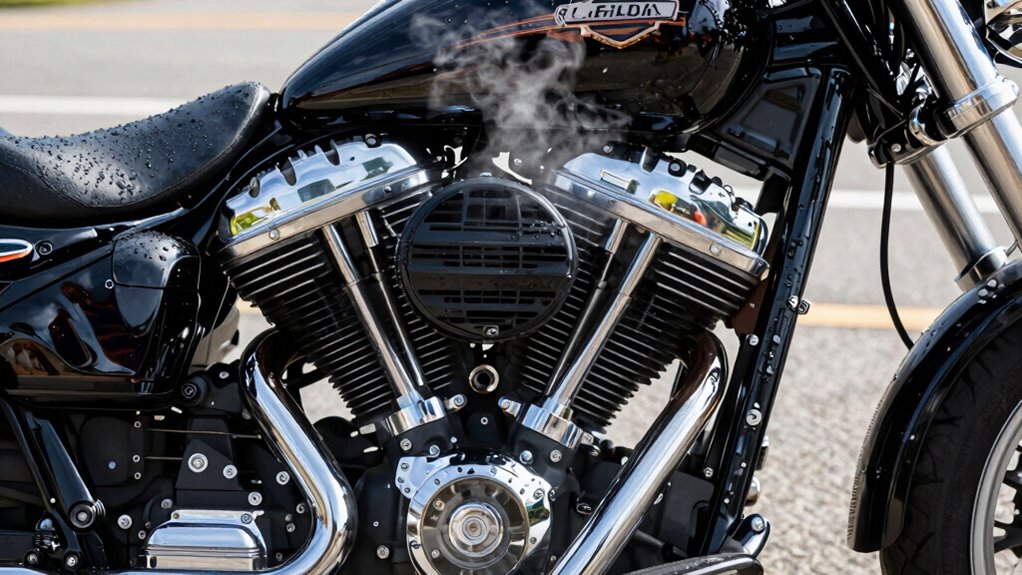
The air-and-oil cooling system is a clever solution to keep engine temperature in check. Air cooling relies on airflow to dissipate heat, while oil cooling circulates oil through the engine to absorb and carry heat away. This dual strategy enhances cooling efficiency, allowing you to push your bike to its limits without worrying about overheating. You’ll often see riders discussing the merits of this cooling system, and it’s not just idle chatter; it’s vital for the engine longevity.
Additionally, understanding the cooling system mechanics can help riders better troubleshoot and maintain their bikes, ensuring consistent performance over time. You might think that simply riding faster would solve overheating issues, but it’s not that straightforward. High RPMs can actually increase engine temperature if the cooling system isn’t up to snuff. That’s why riders often pay close attention to their bike’s temperature gauge. Keeping an eye on engine temperature can help you avoid potential damage. Knowing how to read these indicators can make a significant difference in your riding experience.
Moreover, riders often tweak and customize their cooling systems to enhance performance. Aftermarket oil coolers or modified air intakes can improve cooling efficiency even further. When you understand the mechanics behind it, you realize that managing heat is an essential aspect of the riding experience. So next time you hit the open road, remember that the passion Harley riders have for their bikes runs deeper than just aesthetics; it’s about ensuring that their engines stay cool and powerful, mile after mile. And understanding engine cooling systems can help riders optimize their bike’s performance and longevity.
As an affiliate, we earn on qualifying purchases.
Frequently Asked Questions
How Often Should I Change the Oil in My Harley?
You should change the oil in your Harley every 3,000 to 5,000 miles, depending on your riding style and conditions. Regular oil changes not only keep your engine running smoothly but also extend its lifespan. If you ride hard or in extreme conditions, consider changing it more frequently. Staying on top of oil change frequency helps prevent engine wear and keeps your bike in top shape for years to come.
What Type of Oil Is Best for Air-And-Oil Cooling?
For air-and-oil cooling, you’ll want to use a high-quality motorcycle oil with the right oil viscosity, typically a 20W-50 grade. This helps guarantee peak cooling efficiency, especially in warmer weather. Make sure it meets the specifications recommended by Harley. Regularly checking and changing your oil will keep your engine running smoothly and help prevent overheating, giving you the performance you expect from your ride.
Can I Modify My Harley’s Cooling System?
Absolutely, you can modify your Harley’s cooling system! Have you considered how cooling modifications could enhance your ride? Upgrading components like oil coolers or adding performance fans can greatly improve heat management. Just make sure your changes align with your bike’s specifications to avoid issues. Whether you’re aiming for better performance upgrades or simply want to ride cooler, these modifications can make a noticeable difference in your overall experience.
How Do Temperature Fluctuations Affect Harley Performance?
Temperature fluctuations can greatly affect your Harley’s performance. When the engine runs too hot or too cold, it struggles with efficiency and power output. Effective temperature management is essential; it helps maintain ideal combustion and reduces wear on engine components. If you notice irregular temperature changes, consider checking your cooling system. Keeping your Harley within the perfect temperature range guarantees smoother rides and better overall performance, enhancing your riding experience.
What Signs Indicate Overheating in My Harley?
You’ll notice several overheating symptoms in your Harley. If the engine temperature gauge climbs into the red zone, that’s a clear warning. You might also hear unusual knocking sounds or see steam rising from the engine. Additionally, if you smell burning oil or feel excessive heat coming from the engine, it’s time to pull over. Regularly checking fluid levels can help prevent overheating and keep your ride smooth and safe.
Conclusion
In summary, understanding air-and-oil cooling is essential for grasping Harley’s heat dynamics. Did you know that nearly 50% of Harley riders report overheating issues during warmer months? That’s a significant number! By recognizing how these cooling systems work, you can make informed decisions about maintenance and riding strategies. Embracing this knowledge not only enhances your riding experience but also helps keep your bike running smoothly, ensuring you enjoy the open road without the heat hassle.
Halloween Picks
halloween
As an affiliate, we earn on qualifying purchases.