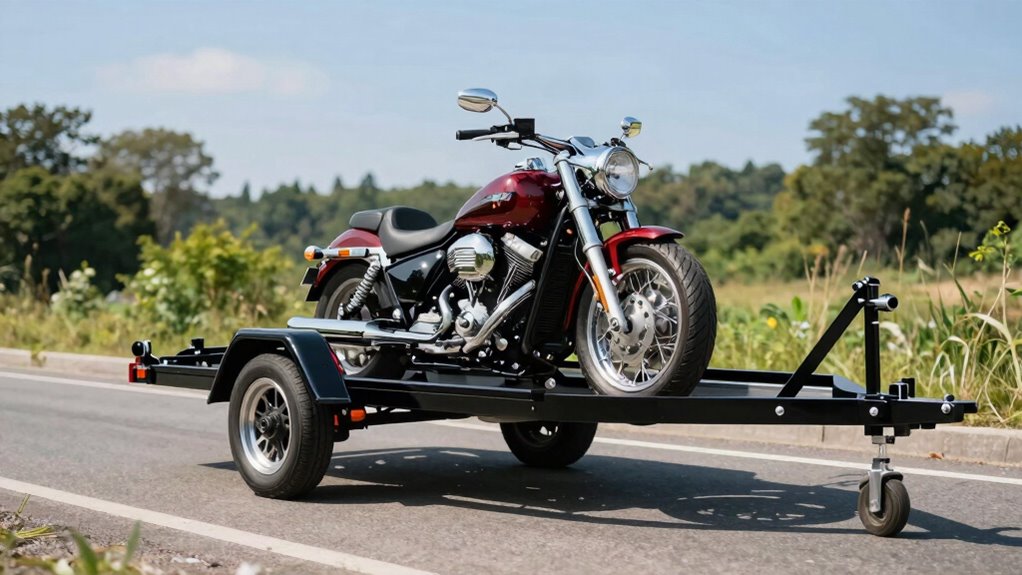

For a smooth and stable tow, you want your motorcycle trailer’s axle positioned carefully, usually around the midpoint of the trailer frame. Proper placement helps distribute weight evenly, reducing sway and improving handling at various speeds. Moving the axle too far forward or back can cause instability or bouncing. Ensuring correct axle siting can make your towing safer and easier—stick around to discover how to get it just right.

Get business pricing on garage and car supplies
- Business-only prices and quantity discounts
- Tax-exempt purchasing
- Multiple users, one account, clear invoices
Key Takeaways
- Proper axle placement ensures balanced weight distribution, reducing sway and enhancing stability during towing.
- Positioning the axle correctly improves handling control, especially at higher speeds or during turns.
- Adjusting the axle according to manufacturer guidelines prevents uneven tire wear and suspension stress.
- Correct axle siting minimizes trailer fishtailing and bounce, making towing smoother and safer.
- Proper axle placement enhances trailer durability and extends component lifespan by promoting even load distribution.
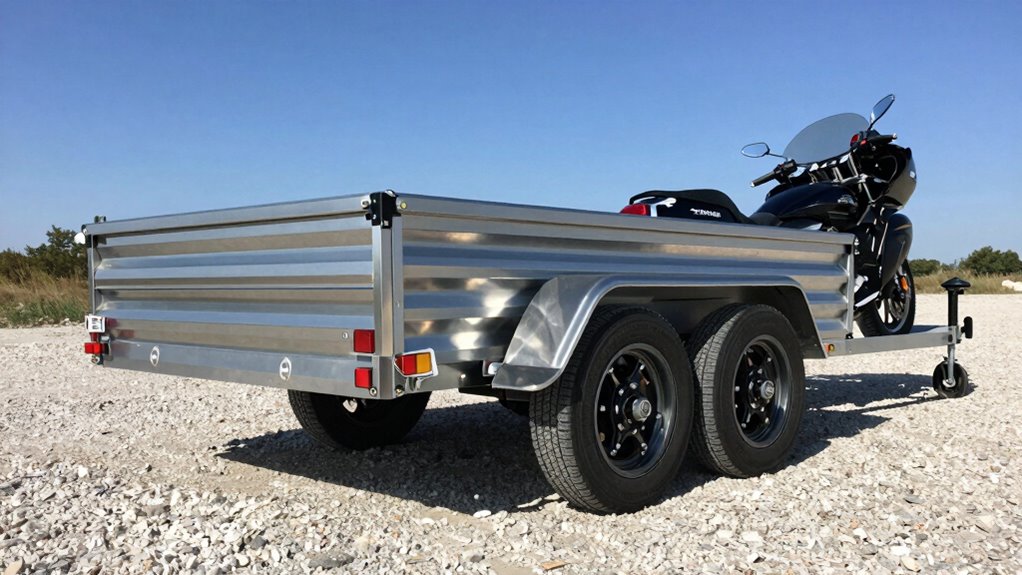
When it comes to towing a motorcycle trailer, the position of the axle can make a significant difference in how smoothly and safely your trailer handles on the road. You might not realize it, but the placement of the axle directly influences the trailer’s handling stability and how well it manages its trailer weight. If the axle is positioned correctly, you’ll notice a smoother ride, better control, and less strain on your towing vehicle. Conversely, poor axle placement can lead to instability, swaying, or even dangerous situations where the trailer feels like it’s fighting against you.
Proper axle placement ensures safer, smoother motorcycle trailer towing with better control and stability on the road.
The key factor here is understanding how the trailer weight is distributed. When the axle sits too far forward, the front of the trailer becomes heavier, which can cause excessive sway and reduce handling stability. You might find yourself constantly battling to keep the trailer aligned, especially at higher speeds or during sudden maneuvers. On the other hand, if the axle is placed too far back, it shifts the weight distribution, making the trailer more prone to bouncing or fishtailing. This instability isn’t just uncomfortable; it’s a safety hazard that can compromise your control, especially when navigating turns or uneven surfaces.
Ideally, the axle should be positioned to balance the trailer weight efficiently. Proper placement ensures that the trailer remains stable at various speeds, making handling predictable and less stressful. When the axle sits at the right spot, it helps distribute the trailer weight evenly, reducing sway and improving handling stability. This means you can focus more on the road and less on counteracting trailer movements, which is crucial when you’re on long trips or hauling heavier loads. Understanding how axle placement impacts overall trailer stability is essential for safe towing. Proper weight distribution plays a vital role in ensuring a safe and comfortable towing experience, especially over extended distances. Additionally, regular checks of the towing setup can help identify potential issues before they become dangerous. Proper adjustments to the axle position can also extend the lifespan of your trailer components by minimizing uneven wear.
Keep in mind that adjusting the axle position isn’t just about weight; it’s also about achieving the right balance for your specific trailer and motorcycle. Some trailers come with adjustable axles, allowing you to fine-tune the placement for optimal handling. Additionally, consulting manufacturer guidelines can help you determine the ideal axle position for your trailer model. If yours doesn’t, you might need to consider modifications or choosing a trailer with better weight distribution options. Remember, a well-placed axle doesn’t just improve handling stability; it also prolongs the life of your trailer tires and suspension components by reducing unnecessary stress. When you prioritize proper axle placement, towing becomes safer, easier, and more enjoyable, ensuring your motorcycle and gear arrive in one piece every time.
motorcycle trailer axle positioning
As an affiliate, we earn on qualifying purchases.
As an affiliate, we earn on qualifying purchases.
Frequently Asked Questions
How Does Axle Placement Affect Trailer Weight Distribution?
Axle placement directly impacts your trailer’s weight distribution and axle load. When the axle sits forward, it shifts more weight toward the tongue, improving weight balance but reducing stability. Conversely, placing the axle farther back increases overall trailer support and stability but can cause uneven weight distribution. You should position the axle to optimize weight balance and maintain proper axle load, ensuring safer, smoother towing experience.
What Types of Motorcycles Are Best Suited for Specific Axle Positions?
Imagine your motorcycle as a swift river, flowing smoothly with the right balance. Sportbikes and lightweight cruisers suit trailers with the axle positioned forward, enhancing agility and reducing strain. Heavier touring bikes, like the sturdy oak, prefer centered or rear axle placement for stability. This setup not only optimizes motorcycle weight and trailer aesthetics but also guarantees safer towing, letting your journey flow seamlessly without wobbling or imbalance.
Does Axle Positioning Influence Trailer Maneuverability on Sharp Turns?
Yes, axle positioning influences trailer maneuverability on sharp turns. Proper axle alignment helps reduce trailer sway, making turns smoother and safer. When the axle sits in the right spot, it improves weight distribution, giving you better control. If the axle isn’t aligned correctly, you might experience increased sway and difficulty handling tight corners. Adjusting the axle position guarantees you maintain stability and responsiveness during sharp maneuvers.
How Can I Measure the Optimal Axle Location for My Trailer?
To measure the ideal axle location, start by confirming your trailer has proper trailer lighting and matches tire compatibility. Place the trailer on a level surface, then mark the best axle position based on the manufacturer’s weight distribution recommendations. Use a tape measure from the trailer’s front to the axle, adjusting until the weight is balanced for better maneuverability. Proper axle placement improves handling, safety, and guarantees your trailer’s components work effectively.
Are There Safety Concerns With Incorrect Axle Placement?
You should definitely be concerned about safety with incorrect axle placement, as improper positioning can cause trailer sway or uneven tire wear. Did you know that 30% of trailer accidents involve brake or lighting issues? Poor axle placement can compromise trailer lighting and brake compatibility, increasing risks. Always make sure the axle is correctly aligned to maintain safe towing, proper brake operation, and reliable lighting, reducing your chances of accidents or breakdowns.
Conclusion
When you position the axle just right, your motorcycle trailer becomes like a well-balanced dancer, gliding smoothly behind you. It’s all about that perfect spot—right where it can absorb bumps and handle turns with ease. When you tow smarter, you ride safer and more comfortably. Think of it as tuning an instrument—you’ll notice the difference in every mile, making your journey feel like a gentle cruise rather than a rough ride.
Columbus Day / Indigenous Peoples' Day Picks
long weekend sales
As an affiliate, we earn on qualifying purchases.