
Clutch feel is the heartbeat of your technical riding. It shapes your control and confidence more than horsepower ever could. Mastering clutch control lets you tackle tricky terrain, navigate rocky inclines, and handle tight corners with ease. You’ll find that grip modulation enhances stability, while finesse prevents stalling and jerking. Getting attuned to your bike’s responses allows for quick decisions, transforming intimidating challenges into achievable ones. Discover how clutch techniques can elevate your riding experience even further.

Get business pricing on garage and car supplies
- Business-only prices and quantity discounts
- Tax-exempt purchasing
- Multiple users, one account, clear invoices
Key Takeaways
- Clutch control enhances bike responsiveness, making it crucial for navigating tricky terrains more than sheer horsepower.
- Mastery of grip modulation allows smooth power transfer, preventing stalling and rear wheel spin.
- Proper clutch engagement in rocky inclines maintains traction, distinguishing skilled riders from novices.
- Consistent clutch techniques improve stability in tight corners, allowing for confident navigation through obstacles.
- Enhanced clutch feel leads to quicker decision-making, making challenging terrains less intimidating and improving overall riding confidence.
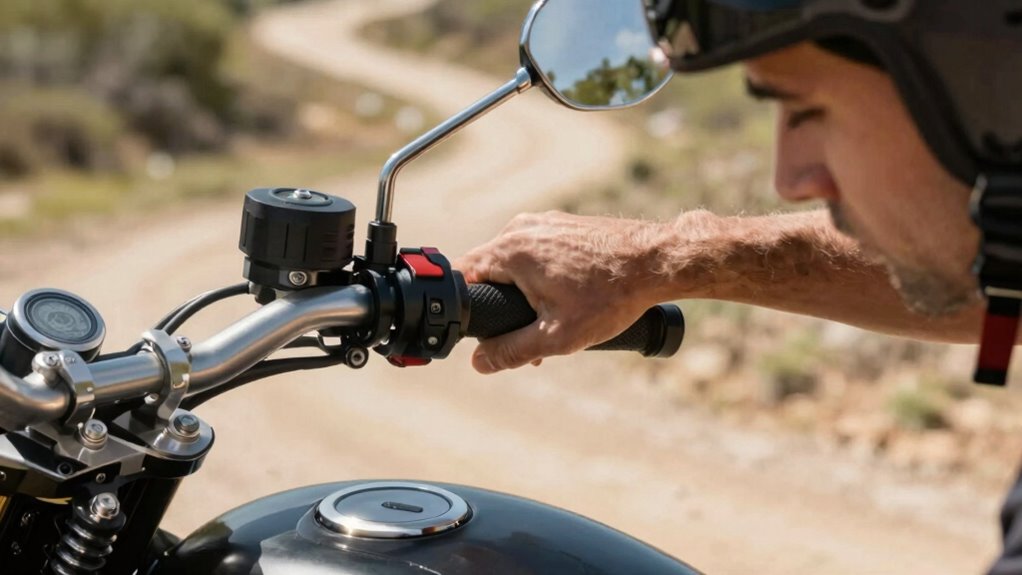
When you’re maneuvering tricky terrain, the feel of your clutch can make all the difference. You might think that horsepower is the king of the trail, but in reality, it’s your clutch control techniques that truly dictate your success. The way you engage and disengage the clutch can drastically affect your bike’s responsiveness. If you don’t have a solid grip on your clutch feel, you could find yourself struggling when the ground gets rough.
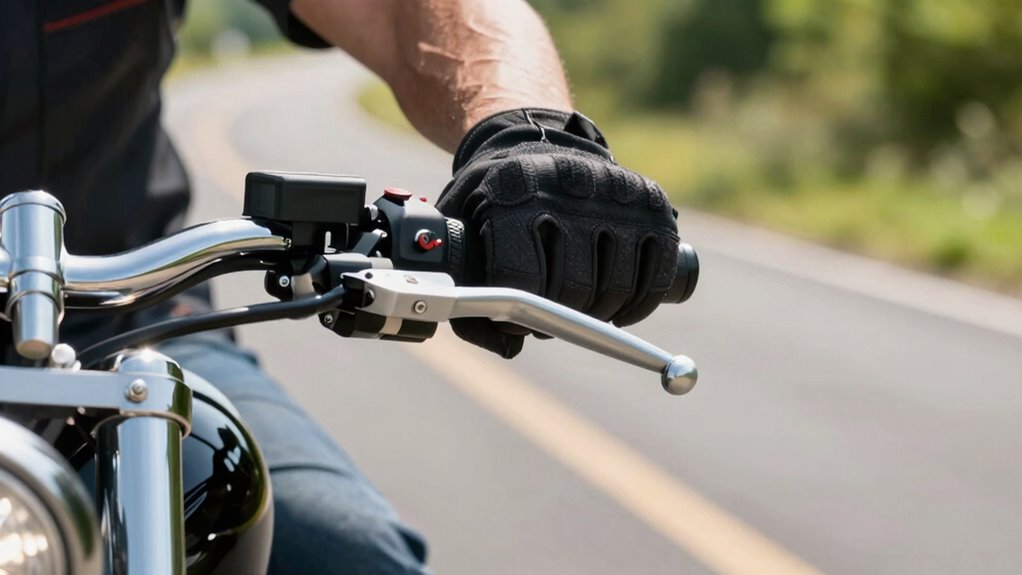
Grip modulation is essential here. It’s all about how you adjust your hand pressure on the lever. Too little grip, and you might stall out; too much, and you’ll jerk the bike, which can throw you off balance. You want to find that sweet spot where you can smoothly transfer power to the rear wheel while maintaining control over your speed. This balance is especially critical in steep climbs or slippery descents.
Grip modulation is key; finding the right pressure on the clutch ensures smooth power transfer and stability on challenging terrain.
Imagine traversing a rocky incline. As you approach, you need to be light on the throttle while simultaneously feathering the clutch. If your grip modulation is on point, you can keep the power flowing just right, allowing your rear wheel to grip without spinning out. This finesse is often what separates a skilled rider from a novice. The ability to feel when the bike wants to go and when it needs a little more coaxing is a game changer.
In tight corners, the same principles apply. You’ll want to maintain a steady throttle while adjusting your grip on the clutch. If you let the clutch out too suddenly, your bike may lurch or lose traction. Instead, practice those clutch control techniques that allow for gradual engagement. That smooth shift keeps you stable, helping you maneuver through obstacles with confidence.
As you refine your clutch feel, you’ll notice the difference in your overall riding experience. You’ll become more attuned to your bike’s responses, allowing you to make split-second decisions without second-guessing yourself. The terrain will start to feel less intimidating, and you’ll find yourself tackling challenges that once seemed insurmountable.
motorcycle clutch control training
As an affiliate, we earn on qualifying purchases.
As an affiliate, we earn on qualifying purchases.
Frequently Asked Questions
How Does Clutch Feel Affect Overall Bike Performance?
Clutch feel directly affects your bike’s performance by influencing clutch modulation and throttle response. When you can smoothly engage and disengage the clutch, it allows for precise control during cornering and acceleration. This responsiveness helps you maintain momentum and stability, making your ride more efficient. If the clutch feel is off, you might struggle with power delivery, which can hinder your overall performance on the track or the road.
What Are the Best Bikes for Technical Riding?
Think of technical riding as a dance; you need the right partner. For the best experience, look for bikes with adjustable suspension setups and suitable tire selections. Models like the KTM 300 EXC or Honda CRF450X excel in maneuvering tight trails. Their suspension absorbs bumps, while the right tires grip the terrain. You’ll feel more confident, allowing you to focus on your line, not just the obstacles ahead.
How Can I Improve My Clutch Feel?
To improve your clutch feel, practice engaging and releasing it smoothly while adjusting your throttle response. Start in a controlled environment, focusing on clutch sensitivity—feel how it interacts with your throttle. Experiment with different lever positions and settings to find what suits you best. Regularly riding in technical conditions will also enhance your skills, helping you develop a more intuitive connection between the clutch and throttle, leading to better overall control.
Is Clutch Feel Important for Beginners?
When it comes to clutch feel, you’ve got to grasp the reins early. For beginners, clutch sensitivity is essential; it helps you control your bike smoothly. Start with simple exercises, like practicing gradual releases while in a safe environment. Focus on feeling the engagement point to avoid stalling. Remember, mastering your clutch will keep you in the saddle longer, so don’t overlook these beginner tips. It’s the key to building confidence and skill!
What Techniques Enhance Clutch Control in Technical Terrains?
To enhance clutch control in technical terrains, focus on smooth clutch engagement and practice terrain adaptation. Start by finding the sweet spot in your clutch where it engages gradually, allowing for precise throttle modulation. As you navigate obstacles, shift your weight to maintain balance and grip. Experiment with feathering the clutch while keeping your speed steady, which helps you adapt to varying surfaces. Regular practice will make these techniques second nature, boosting your confidence on challenging trails.
Conclusion
In technical riding, clutch feel‘s your secret weapon, more essential than raw horsepower. It’s like wielding a lightsaber: precision and finesse matter more than brute strength. When you master that clutch, you gain control over every twist and turn, letting you dance through obstacles effortlessly. So, next time you hit the trails, remember: it’s not just about the engine roar; it’s how you feel that clutch in your hand that truly shapes your ride.
Halloween Picks
halloween
As an affiliate, we earn on qualifying purchases.