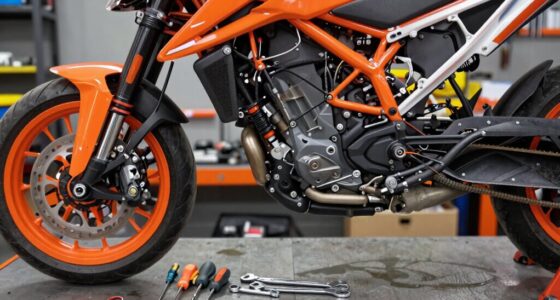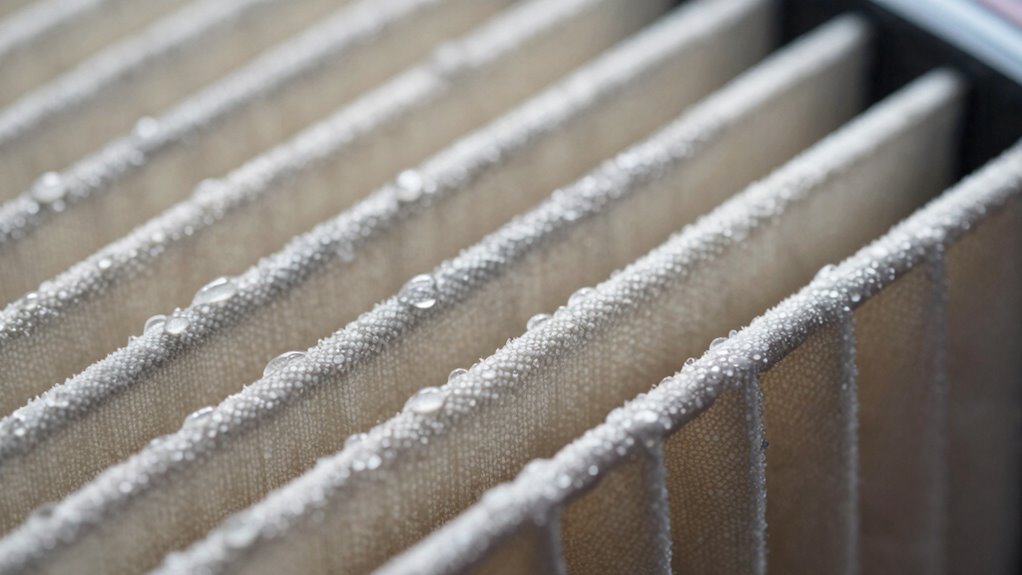

Oiling your KTM air filter just right is vital because it directly impacts its ability to trap dirt without restricting airflow. Too much oil creates a thick barrier that hampers breathing and can cause excessive engine strain, while too little leaves the filter vulnerable to debris damage. Precise application guarantees maximum filtration, engine protection, and longevity. By understanding the science behind proper oil thickness and spread, you can maximize your dirt bike’s performance—keep going to learn the detailed techniques.

Get business pricing on garage and car supplies
- Business-only prices and quantity discounts
- Tax-exempt purchasing
- Multiple users, one account, clear invoices
Key Takeaways
- Proper oiling ensures optimal dirt-trapping without impeding airflow, maintaining engine efficiency.
- Over-oiling can cause oil seepage into the carburetor, risking engine damage.
- Under-oiling reduces filtration effectiveness, allowing harmful particles to reach the engine.
- Even oil application promotes consistent filtration and prevents uneven dirt accumulation.
- Correct oil viscosity and spread optimize filter performance and extend component lifespan.
Why Proper Oil Levels Are Critical for KTM Dirt Bike Performance
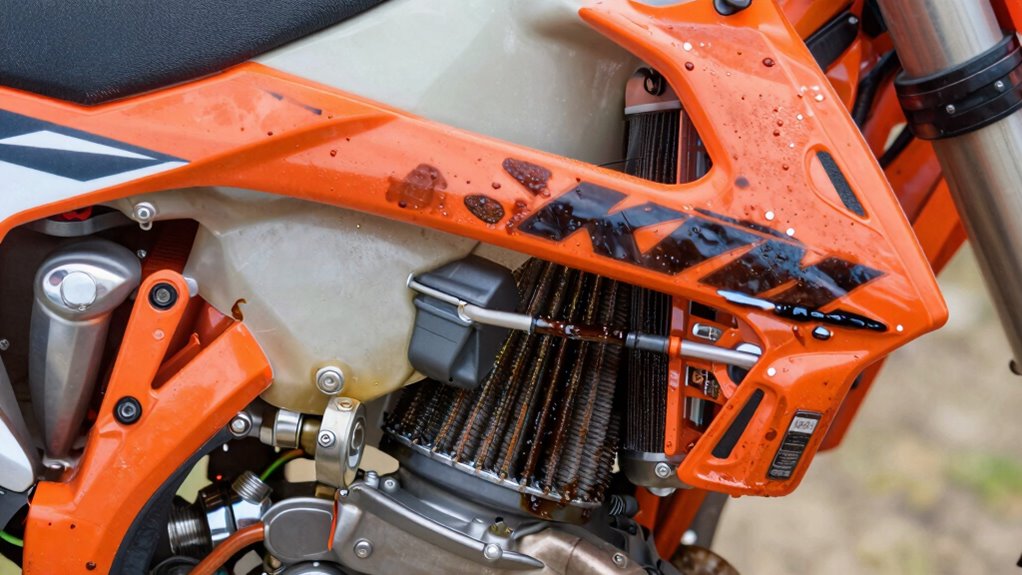
Maintaining the correct oil level in your KTM dirt bike’s air filter is essential because it directly influences the filter’s ability to trap dirt and debris effectively. Too little oil leaves the filter vulnerable to unfiltered particles, increasing engine wear and potential damage. Conversely, excessive oil creates a dense barrier that impedes airflow, reducing engine performance and causing potential power loss. Proper oil levels ensure ideal adhesion of oil to the filter media, enhancing its ability to capture fine dust and grit without restricting airflow. Precise oil application maintains a balance, preventing premature filter breakdown and ensuring consistent filtration efficiency. Regularly checking and maintaining the correct oil level guarantees your KTM’s air intake system functions at peak performance, extending filter lifespan and safeguarding engine health under demanding riding conditions. Additionally, understanding filter maintenance best practices can help you optimize your dirt bike’s performance and longevity. Incorporating air filtration technology can further improve dirt and debris trapping efficiency, especially in dusty environments. Ensuring the filter is properly oiled also minimizes the risk of filter clogging, which can significantly hinder airflow. Applying the right amount of oil enhances the filter’s dirt-trapping capacity, leading to better engine protection and efficiency. Properly oil application techniques are crucial to achieving these benefits and maintaining optimal engine health.
The Science Behind the Perfect KTM Air Filter Oil Thickness and Spread

Achieving the ideal thickness and even spread of KTM air filter oil requires understanding the interplay of viscosity, capillary action, and surface tension. Viscosity determines how readily the oil flows; too thick, and it won’t penetrate the filter media effectively; too thin, and it won’t provide adequate filtration. Capillary action drives the oil into the microscopic fibers, ensuring uniform coverage, which depends on the oil’s surface tension and the pore size of the filter material. Surface tension influences how the oil beads and spreads across fibers—optimal tension promotes even distribution without pooling. Proper application techniques can significantly influence how well the oil distributes across the filter media. Mastering this balance is key to maximizing filter performance and longevity, especially when considering oil viscosity and its impact on flow characteristics. The application method plays a crucial role in ensuring the oil forms a consistent, thin film that traps dirt particles efficiently while allowing airflow. Precise control of these factors ensures the oil forms a consistent, thin film that traps dirt particles efficiently while allowing airflow. Additionally, understanding filter media properties can help in selecting the right oil viscosity for specific conditions.
How to Oil Your KTM Air Filter Correctly: Step-by-Step Guide
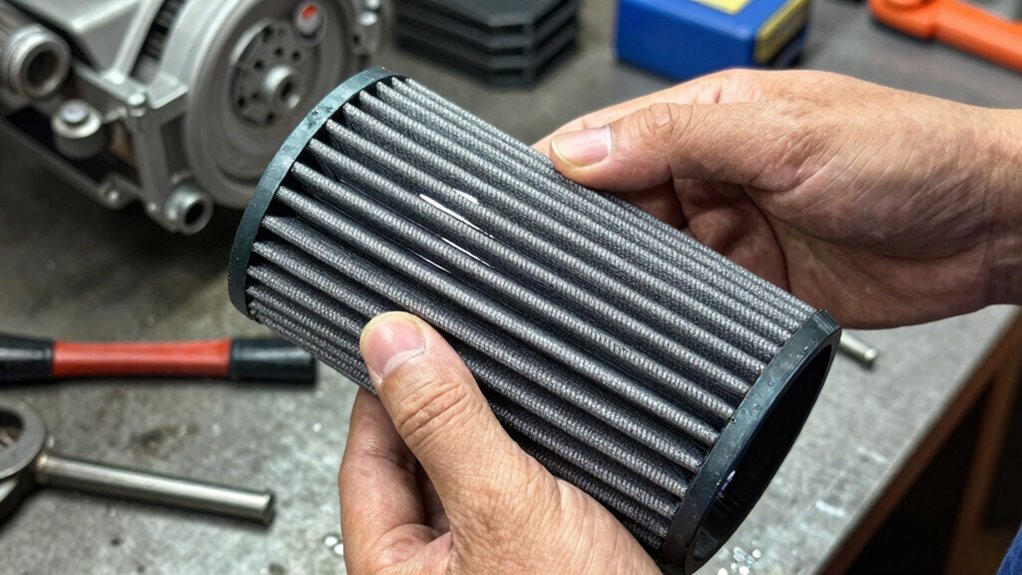
Properly oiling your KTM air filter involves a precise process to guarantee ideal filtration and airflow. First, confirm the filter is clean and dry before oiling. Use a high-quality air filter oil designed specifically for foam filters. Apply the oil evenly by spraying it directly onto the entire surface in a light, consistent layer. Avoid oversaturating; a thin, uniform coating ensures maximum absorption and prevents clogging. Gently massage the oil into the foam to promote even distribution, paying close attention to the edges and corners. After application, allow the filter to sit for 10-15 minutes to let excess oil drain and any residual oil to set. Proper maintenance of your air filter can significantly extend its lifespan and performance. Do not twist or wring the filter, as this could damage the foam structure. Ensuring proper color accuracy during application can help you better see the distribution of oil on the filter surface. Maintaining correct oil thickness is crucial for optimal performance and longevity of the filter. Additionally, understanding the importance of filter material can help you select the best oiling technique for your specific filter type.
Common Mistakes in Oiling KTM Air Filters and How to Avoid Them
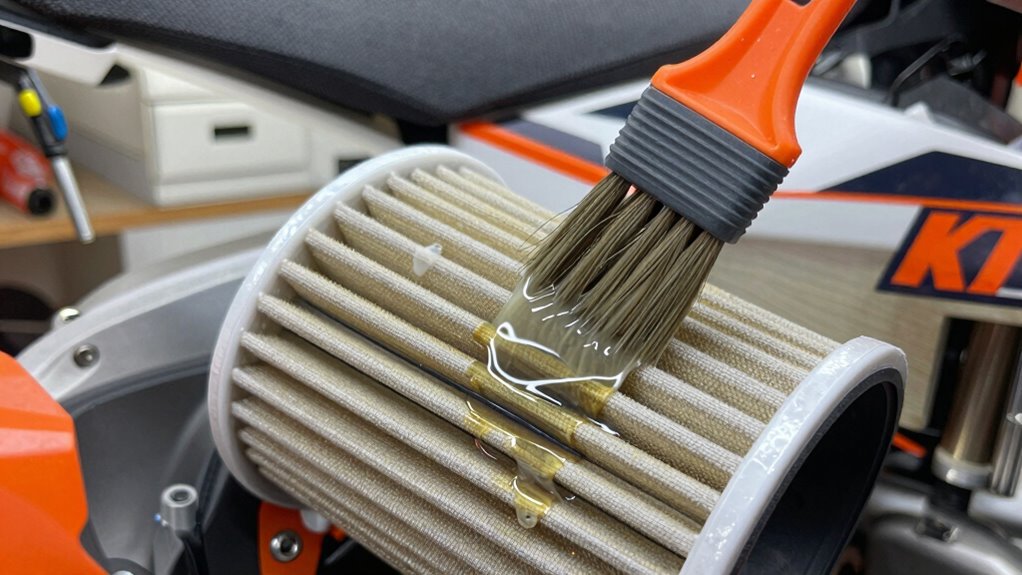
One of the most common mistakes when oiling KTM air filters is applying too much oil, which can substantially impair airflow and reduce filter lifespan. Excess oil creates a thick film that clogs the fine mesh and impedes proper air passage, leading to decreased engine performance and increased strain on the filter material. To avoid this, evenly distribute a thin, uniform layer of oil using a controlled spray or dip method, ensuring coverage without pooling. Over-oiling can also cause oil to seep into the carburetor or intake system, causing fouling or contamination. Proper oiling also involves allowing the oil to evenly soak into the filter media and remove any excess before installation. Additionally, selecting the correct oil type is essential for maintaining optimal filtration and engine health. Ensuring the correct oil type and application method is crucial for optimal performance, as proper maintenance can extend the life of your KTM air filter. Furthermore, understanding the importance of navigation and mapping in maintaining optimal filter performance can help you troubleshoot issues more effectively, as accurate filter maintenance records can inform timely replacements and adjustments. Keeping track of maintenance schedules can further prevent common mistakes by reminding you when to inspect and re-oil the filter.
Tips to Maintain Your KTM Air Filter for Long-Lasting Performance
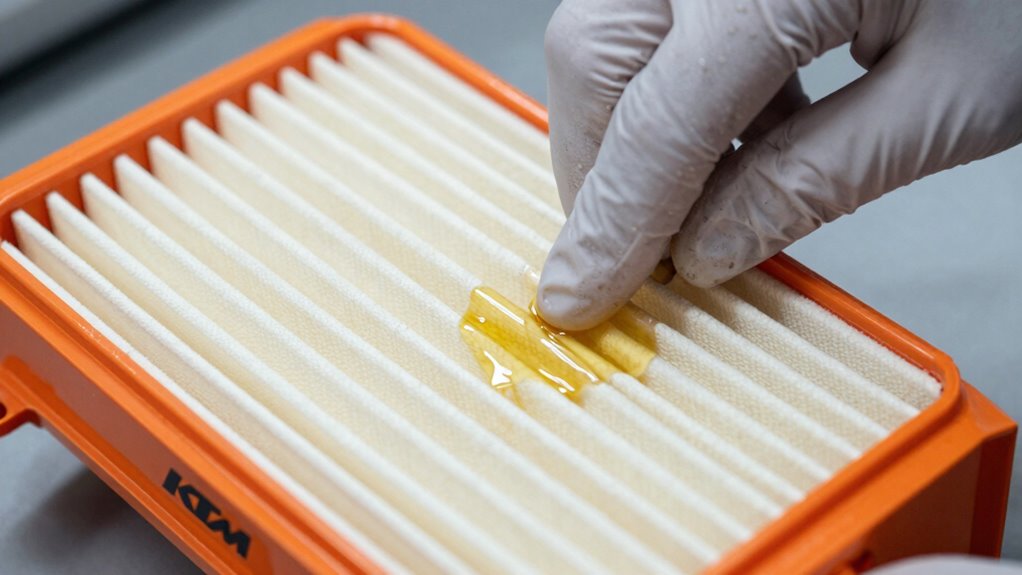
Regularly inspecting and cleaning your KTM air filter is essential for maintaining ideal engine performance and extending its lifespan. To optimize filtration efficiency, follow a systematic maintenance schedule. Use a solvent specifically designed for air filters to remove dirt and debris thoroughly, then allow it to dry completely. Properly oil the filter with the recommended amount of high-quality filter oil, ensuring an even coating without oversaturation. Avoid common mistakes such as under- or over-oiling, which compromise filtration. Additionally, understanding the importance of Free Floating in filter media can help you select the best filter type for your riding conditions. Proper oiling also plays a crucial role in maintaining the filter’s filtration efficiency, which is vital for protecting your engine from harmful particles. Recognizing the filter media type can significantly impact your maintenance routine. Being aware of how airflow dynamics influence filter performance can further enhance your maintenance practices. Additionally, maintaining proper airflow can prevent engine strain and improve overall efficiency. Below is a maintenance guide:
| Step | Key Action | Result |
|---|---|---|
| Inspection | Check for visible dirt or tears | Detect damage early, prevent engine harm |
| Cleaning | Use appropriate solvent | Restore airflow, remove contaminants |
| Oiling | Apply thin, even coat of filter oil | Ensure proper filtration and airflow |
| Reinstallation | Fit securely into housing | Prevent unfiltered air bypass |
Frequently Asked Questions
How Often Should I Oil My KTM Air Filter During Riding Season?
You should oil your KTM air filter every 3 to 4 rides or whenever it appears dusty or dry. During extensive riding in dusty conditions, check and re-oil more frequently, ideally after every ride. To guarantee peak filtration, apply a thin, even coat of air filter oil, avoiding over-oiling, which can hinder airflow and reduce filter efficiency. Regular inspection and maintenance keep your engine running smoothly.
Can Over-Oiling Damage My KTM Air Filter or Engine?
Yes, over-oiling your KTM air filter can damage both the filter and your engine. Excess oil can clog the filter fibers, restricting airflow and reducing filtration efficiency. It can also seep into the carburetor or intake, fouling spark plugs or causing poor engine performance. Make sure to apply a thin, even coat during oiling, allowing it to absorb fully before installation, to prevent these issues.
What Type of Oil Is Best for KTM Air Filters?
You should use a high-quality, foam-compatible air filter oil specifically formulated for motorcycle filters. Brands like Maxima, K&N, or Motorex offer oils designed to penetrate the foam’s pores without over-saturating. Apply a thin, even layer, ensuring no excess drips or pooling, as over-oiling can hinder airflow and damage your filter or engine. Always follow the manufacturer’s instructions for best results and ideal filtration.
How Can I Tell if My KTM Air Filter Is Over- or Under-Oiled?
You can tell if your KTM air filter is over- or under-oiled by inspecting its appearance and airflow. An over-oiled filter appears dark, shiny, and may cause airflow restriction, while an under-oiled filter looks dry and light-colored. Perform a simple test by holding the filter up to a light source; if light barely passes through, it’s over-oiled. If too much light gets through, it’s under-oiled. Adjust accordingly for ideal performance.
Does Climate or Riding Conditions Affect How I Oil My KTM Filter?
You’ll want to adjust your KTM filter oiling based on climate and riding conditions. Hot, dry weather causes the oil to evaporate faster, so you might need to apply a slightly thicker or more frequent coat. Conversely, in wet or muddy conditions, a lighter oil layer prevents clogging and maintains airflow. Always consider your environment and riding intensity to fine-tune the oil amount, ensuring ideal filtration and airflow.
Conclusion
Ensuring your KTM air filter is oiled precisely is vital for maximum performance and engine protection. Too little oil risks letting debris in, while too much hampers airflow and filtration efficiency. Mastering the correct oil thickness and application technique can make all the difference, but there’s more to uncover. Are you ready to fine-tune your process and reveal peak dirt bike performance? The difference lies in the details—don’t let a small mistake hold you back from riding at your best.
Fall Picks
fall essentials
As an affiliate, we earn on qualifying purchases.