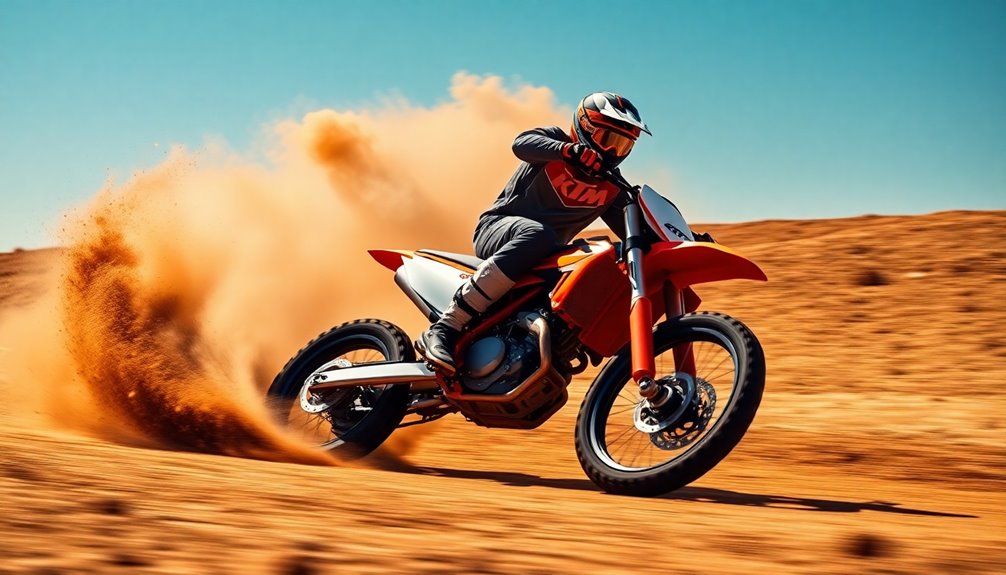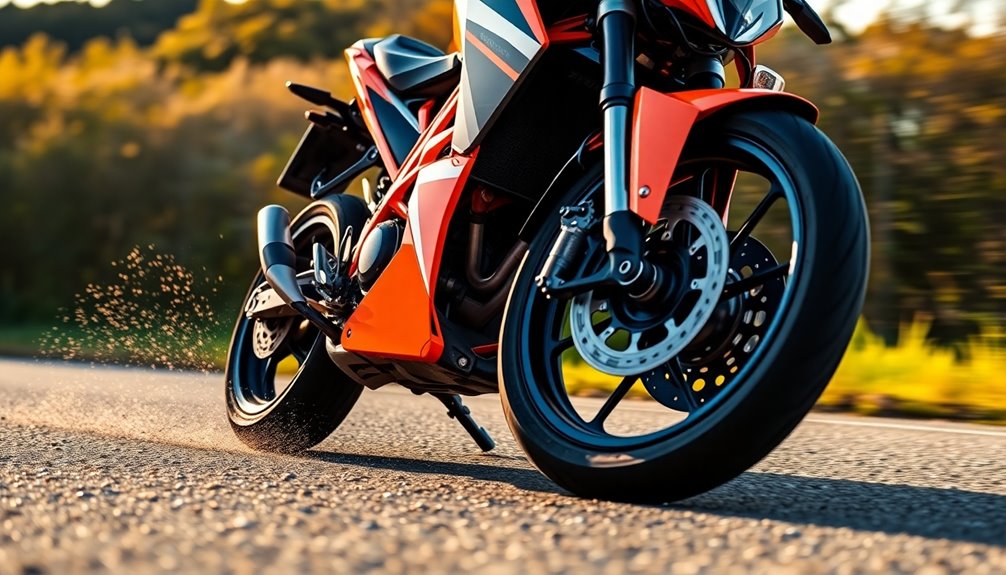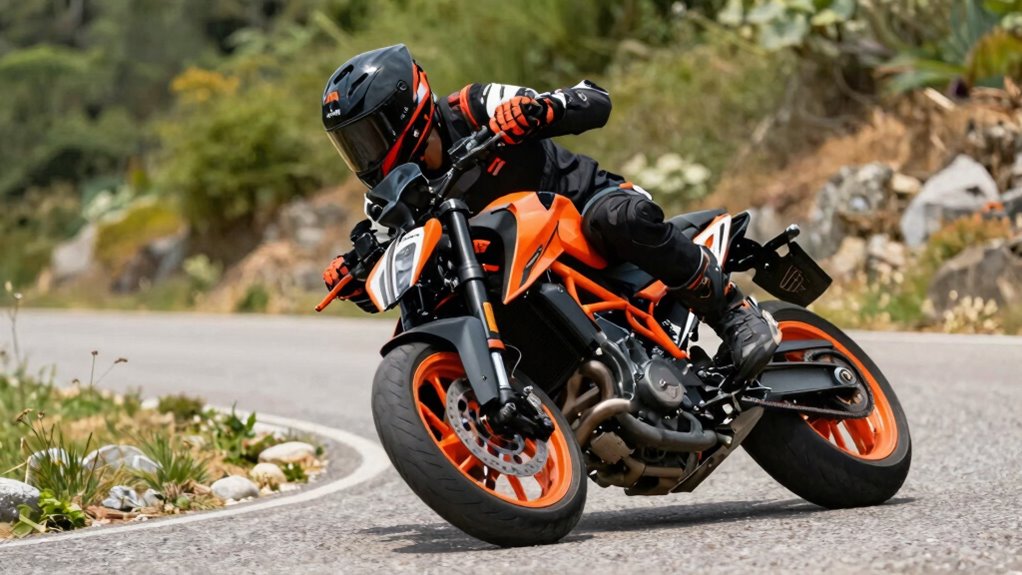

KTM’s front-end feel definitely divides riders because it demands your active inputs for the best control and performance. If you enjoy engaging with every detail of the ride, this challenge can be exhilarating. However, if you prefer a more forgiving setup, you might find it overwhelming. Adapting your technique is essential, and optimizing your suspension can make a big difference. Stick around, and you’ll discover more about what makes the KTM experience unique.

Get business pricing on garage and car supplies
- Business-only prices and quantity discounts
- Tax-exempt purchasing
- Multiple users, one account, clear invoices
Key Takeaways
- The front-end feel of KTM motorcycles elicits mixed reactions, with some riders loving its engagement while others find it demanding.
- Riders who prefer a forgiving front-end may feel overwhelmed by KTM’s need for active inputs and precise handling.
- KTM’s sharper steering response provides surgical precision in cornering, appealing to those seeking a more engaging ride.
- Proper suspension setup enhances comfort, control, and responsiveness, making active inputs more intuitive for skilled riders.
- Balancing the demands of active riding with personal preferences is crucial for rider enjoyment and skill development on a KTM.
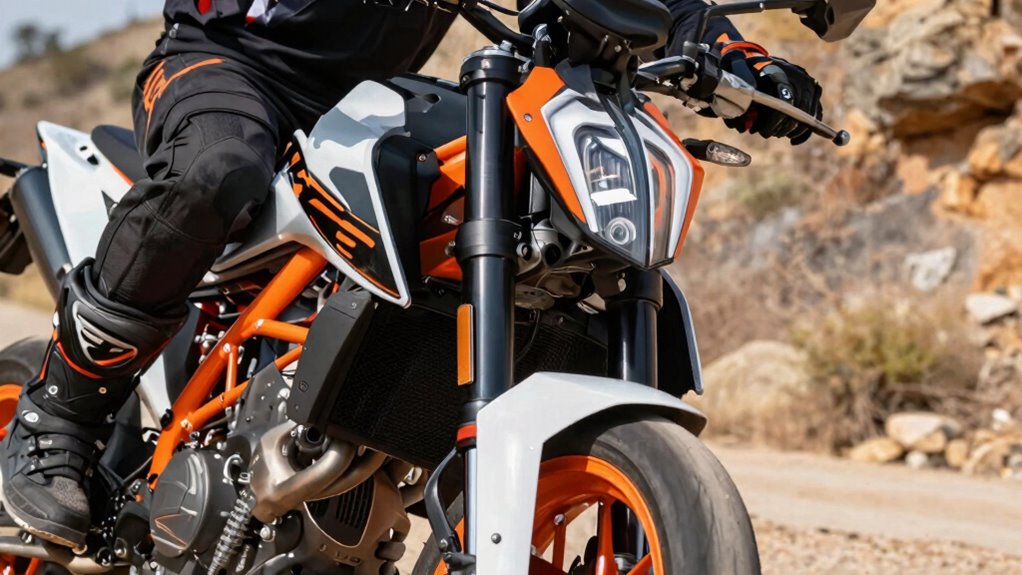
When you hit the trails on a KTM, you’ll quickly notice that the front-end feel can spark strong opinions among riders. It’s one of those aspects that divides enthusiasts—some love it, while others can’t stand it. The reason for this polarized view lies in the handling characteristics and how they demand active inputs from you. If you’re the kind of rider who thrives on engagement, you might find the KTM’s front-end feel exhilarating.
The bike’s responsiveness requires you to be in tune with every bump, dip, and twist of the trail. This is where rider preferences come into play. Some riders appreciate a front-end that communicates every nuance of the terrain, allowing for precise adjustments mid-ride. Others, however, might find it unsettling. They prefer a more forgiving front-end, one that absorbs shocks and smooths out the ride, allowing for a laid-back experience.
The KTM’s front-end responsiveness demands rider engagement, offering a thrilling connection for some, while others seek a more forgiving ride.
You’ll notice that the KTM tends to have a sharper, more direct steering response. This can be a double-edged sword. On one hand, it lets you carve through corners with surgical precision. On the other, it can feel twitchy if you’re not fully committed to the ride. If you’re used to a more relaxed style, this might take some getting used to. You’ll need to adapt your riding technique, applying deliberate inputs to harness that front-end feel effectively. Understanding the handling characteristics of your motorcycle can significantly influence your riding experience, especially when it comes to active inputs and rider confidence. Additionally, becoming familiar with the bike’s suspension setup can help you fine-tune the ride to better suit your preferences. Proper suspension tuning can greatly improve comfort and control, making the active inputs feel more natural. Recognizing the importance of bike setup can be key to optimizing your riding experience on a KTM.
Finding the right balance becomes essential. If you’re willing to invest time and energy into understanding how your KTM reacts, you’ll likely come to appreciate its unique handling characteristics. However, if you prefer a bike that handles more passively, you might find the KTM’s demands a bit too high. Ultimately, it’s about what resonates with you as a rider.
Whether you love the thrill of an active front-end or prefer a more subdued ride, the KTM will challenge you. Embrace it, and you may find yourself becoming a more skilled and versatile rider, ready to tackle whatever the trails throw your way.
KTM motorcycle front suspension upgrade
As an affiliate, we earn on qualifying purchases.
As an affiliate, we earn on qualifying purchases.
Frequently Asked Questions
What Is the Best Way to Improve Front-End Feel on a KTM?
To improve front-end feel on your KTM, start with suspension tuning. Adjust the settings to find a balance between comfort and responsiveness. Next, check your tire pressure; it can considerably affect handling. Make sure it’s within the recommended range for ideal grip. Experimenting with different compounds and pressures can also enhance feedback. Don’t hesitate to test various configurations until you find what suits your riding style best. You’ll feel the difference!
How Does Front-End Feel Impact Riding Style and Performance?
Front-end feel’s like the pulse of your ride; it dictates how you dance with the track. When you fine-tune your suspension, you’ll notice it dramatically enhances your riding technique, allowing you to carve corners with confidence. A responsive front end encourages you to engage actively, improving your performance as you navigate varied terrains. Embracing this connection transforms your riding experience, making every twist and turn feel like a thrilling ballet on wheels.
Are There Specific Tires Recommended for Better Front-End Feedback?
For better front-end feedback, consider tires with specific compounds and tread patterns suited to your riding style. Brands like Michelin and Pirelli offer options that enhance grip levels on various road surfaces. Adjusting tire pressure can also optimize performance, depending on weather conditions. If you ride aggressively, choose a softer compound for better feel, while harder compounds can provide durability for everyday use. Tailor your tire choice to match your riding needs for the best experience.
What Modifications Can Enhance Front-End Feel on a KTM Bike?
To enhance front-end feel on your KTM, think of it as tuning a musical instrument. Start with suspension tuning to match your riding style, then consider fork upgrades for better responsiveness. Adjust your handlebars to find that sweet spot for comfort and control. Finally, keep an eye on tire pressure; it can make or break your connection with the road. These tweaks will transform your ride into a symphony of precision and stability.
How Does Rider Weight Influence KTM Front-End Feel?
Rider weight notably impacts KTM front-end feel by affecting rider positioning and suspension settings. If you’re heavier, you might need stiffer springs or firmer damping to maintain stability and feedback. Conversely, if you’re lighter, softer settings could enhance grip and responsiveness. Adjusting your stance on the bike can also help, allowing you to shift weight effectively during turns, which further enhances how the front end reacts to your inputs.
Conclusion
To sum up, the KTM front-end feel really stirs the pot among riders. While some thrive on the bike’s need for active inputs, others find it a bit too demanding, like trying to tame a wild stallion. Ultimately, it’s about what makes you feel alive on the road. If you’re up for the challenge, the KTM might just be your trusty steed. Embrace that connection, and let the ride lead you to thrilling adventures.
Fall Picks
fall essentials
As an affiliate, we earn on qualifying purchases.