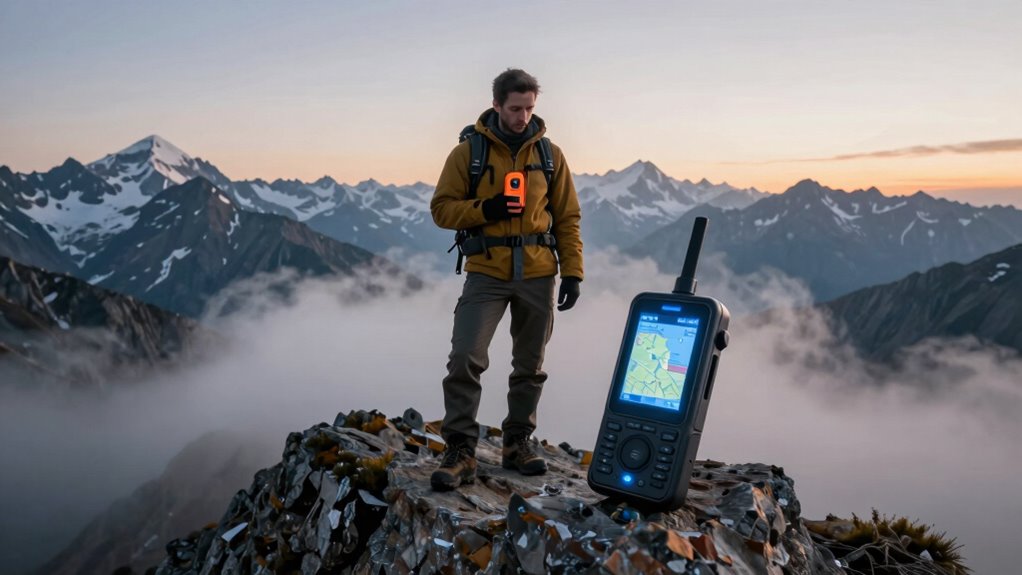

Personal locator beacons (PLBs) are compact devices built for emergency distress signals, ideal for rugged environments and quick activation. Satellite communicators allow two-way messaging and navigation, perfect for ongoing contact during outdoor adventures. If you need instant rescue signals, a PLB is best. For regular communication and detailed updates, choose a satellite communicator. To understand which device fits your activities and environment, explore the key features and use cases further—you’ll find valuable insights ahead.
Key Takeaways
- PLBs are ideal for emergency-only use in remote or harsh environments due to their durability and long-lasting batteries.
- Satellite communicators support two-way messaging, making them suitable for ongoing communication during extended outdoor activities.
- PLBs transmit distress signals without subscription fees, whereas satellite communicators often require ongoing service plans.
- Use PLBs for quick rescue activation in life-threatening situations, while satellite communicators are better for regular check-ins and coordination.
- The choice depends on activity type: PLBs excel in emergency response, whereas satellite communicators suit activities requiring continuous contact.
What Are Personal Locator Beacons and Satellite Communicators?
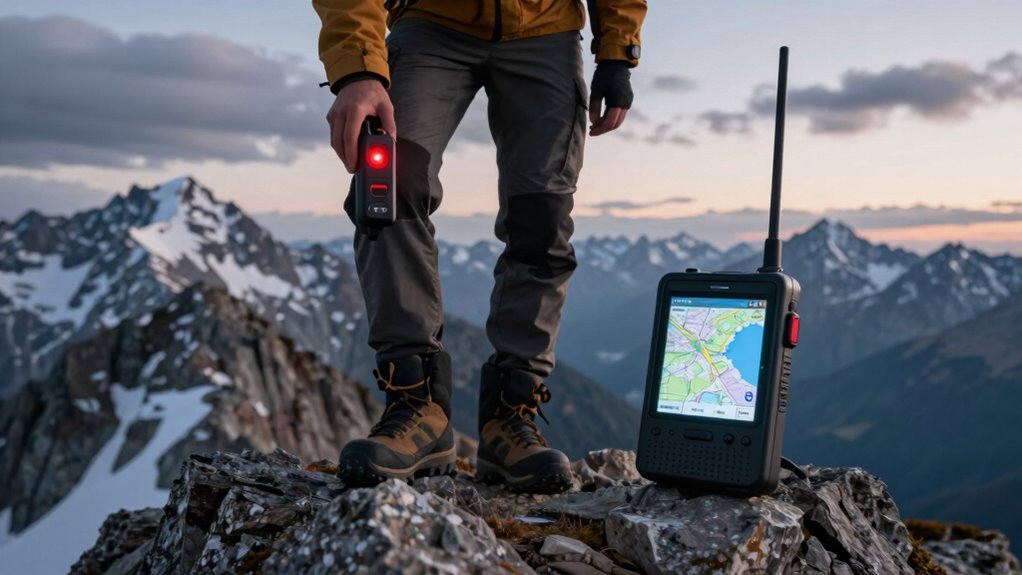
Personal locator beacons (PLBs) and satellite communicators are essential tools for staying connected and safe in remote areas. These devices leverage satellite technology to transmit your location directly to emergency services, guaranteeing help arrives quickly. A PLB is a compact device designed primarily for emergency alerts; once activated, it sends a distress signal following strict emergency protocols. Satellite communicators, on the other hand, offer two-way messaging, allowing you to communicate with loved ones or support teams even in isolated locations. Both tools function without relying on cellular networks, making them reliable for outdoor adventurers and remote workers. Understanding their capabilities and how they fit into emergency protocols helps you choose the right device to ensure your safety when venturing into the wilderness. Advanced satellite communication features enhance reliability and coverage, providing added peace of mind in critical situations. Additionally, global coverage ensures these devices remain effective regardless of your location, making them indispensable for remote safety and outdoor adventures. To maximize their effectiveness, many models incorporate GPS technology that improves location accuracy and emergency response times.
How Do These Devices Work During Emergencies?
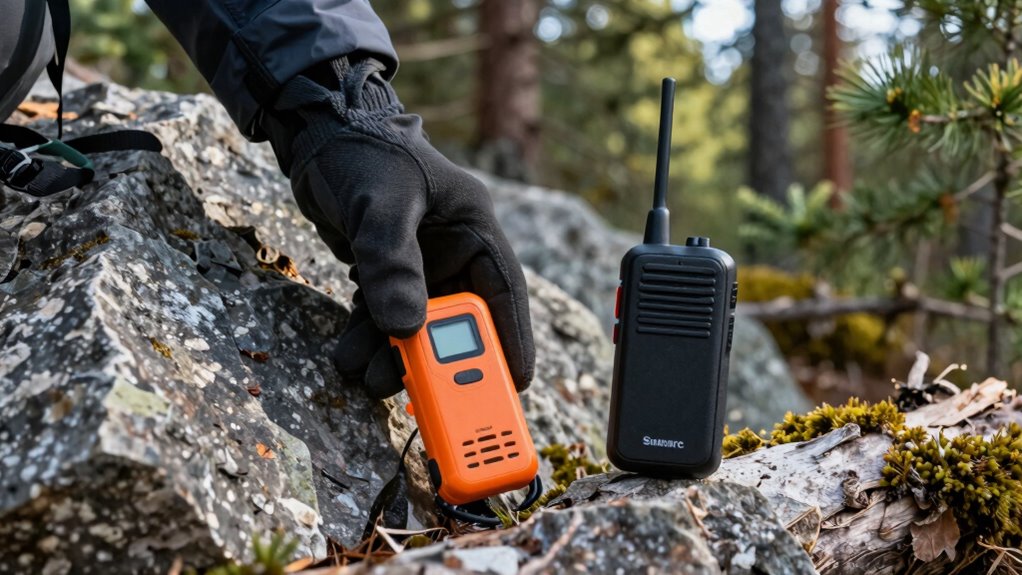
When you activate your device in an emergency, it quickly transmits a distress signal to rescue services. The accuracy of your location helps responders find you faster, increasing your safety. Understanding how these signals work can make a vital difference when every second counts. Additionally, many devices utilize satellite communication technology to operate in remote areas where cellular networks are unavailable. This technology is crucial for reliable emergency communication, which often requires precise craftsmanship and innovative materials even in the most secluded locations. Knowing how signal transmission functions can further enhance your preparedness and response effectiveness in critical situations.
Emergency Signal Transmission
Ever wonder how these devices guarantee help arrives when you’re in trouble? It all comes down to reliable emergency signal transmission. When you activate a Personal Locator Beacon or Satellite Communicator, the device sends a distress signal via satellite coverage, ensuring your location reaches rescue centers even in remote areas. Thanks to their device portability, you can carry these compact tools easily, making them accessible during urgent moments. Once the signal is transmitted, rescue teams receive your coordinates and details almost instantly, accelerating your help. These devices use dedicated satellite networks to guarantee continuous coverage, even across vast or rugged terrains. This seamless communication system guarantees that your emergency alert reaches the right responders, giving you peace of mind wherever you go. Reliable coverage ensures that your distress signal can be transmitted without interruption regardless of your location. Additionally, these devices often incorporate automatic distress detection, which can activate the signal even if you are unable to do so manually, further ensuring your safety. Moreover, satellite network coverage plays a crucial role in maintaining consistent communication in remote environments. The integration of advanced signal technology further enhances the reliability of these devices in critical situations.
Device Location Accuracy
During emergencies, device location accuracy is crucial for a swift rescue. High signal precision ensures rescue teams find you quickly, reducing response times. Personal Locator Beacons (PLBs) rely on satellite triangulation, offering precise device tracking even in remote areas. Satellite communicators use GPS signals for accurate positioning, but their accuracy can vary with environmental factors. Factors affecting device location accuracy include:
- Satellite signal strength and clarity
- Obstructions like mountains or dense forests
- Device quality and calibration
- Network coverage and signal interference
- Battery life impacting signal transmission
Understanding how these factors influence signal precision helps you choose the right device. During a crisis, accurate device tracking is essential to guide rescuers directly to your location, increasing your chances of a safe rescue.
Which Device Is Better for Your Outdoor Adventures?
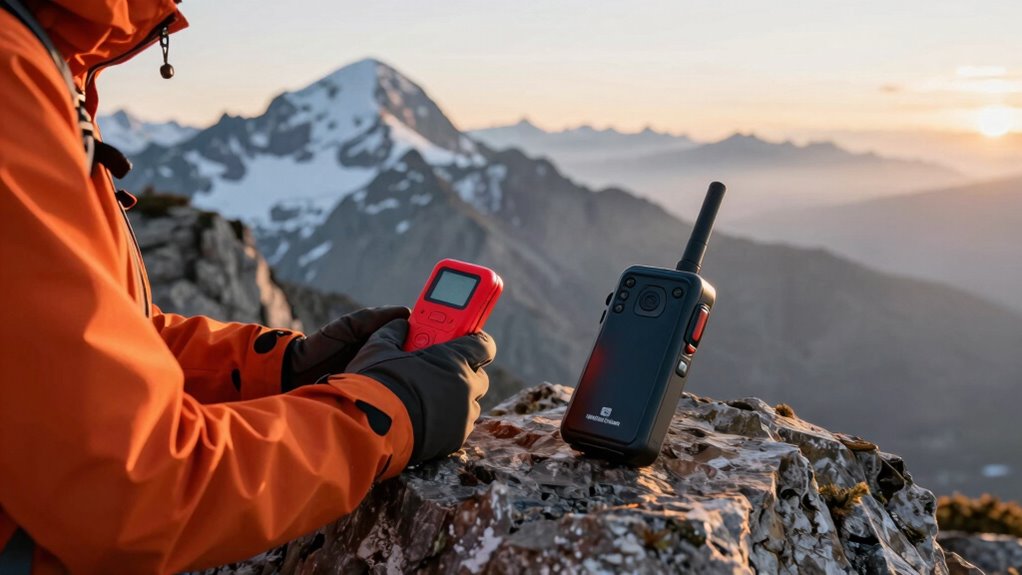
Choosing between a Personal Locator Beacon (PLB) and a satellite communicator depends on your specific outdoor needs. If durability and a long-lasting battery are priorities, a PLB is often better, as it’s built tough and typically has a battery that lasts for years without maintenance. It’s designed for emergency use, so you can count on its reliability in harsh conditions. Additionally, many PLBs come with rugged construction, making them suitable for tough terrains and extreme weather. A key advantage of PLBs is their cost-effectiveness in emergencies, as they are usually subscription-free and only transmit when activated. Their simple operation ensures quick deployment when every second counts, especially in life-threatening situations. Conversely, satellite communicators offer more versatility, like two-way messaging and regular communication, but may have shorter battery life and less rugged construction. Consider how you’ll use the device—if your adventures involve rough terrains and extended periods without recharging, a durable PLB might be the smarter choice. For frequent communication and lighter conditions, a satellite communicator could serve you better. Battery life also plays a crucial role when choosing the right device for your outdoor adventures. Additionally, understanding the environmental conditions you’ll encounter can influence which device suits your needs best.
Top Outdoor Activities That Benefit From a PLB
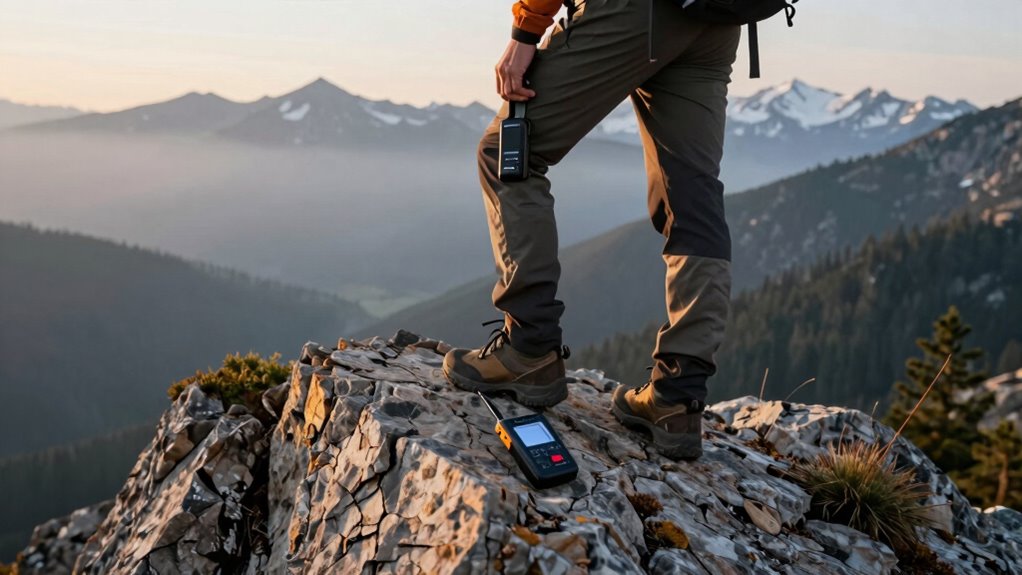
Personal Locator Beacons (PLBs) excel in outdoor activities where safety and reliability are paramount. They are essential for ensuring quick rescue responses when emergencies happen. Whether you’re tackling rugged terrain or steering open waters, a PLB provides peace of mind. Activities that benefit most include:
- Mountaineering safety on remote peaks
- Marine navigation during long sea voyages
- Backcountry hiking in isolated areas
- Skiing in avalanche-prone zones
- Kayaking in unpredictable weather conditions
In these scenarios, a PLB’s ability to send distress signals instantly can be life-saving. They’re especially indispensable when cellular coverage is nonexistent, making them an essential safety tool for outdoor enthusiasts seeking reliable communication in critical moments. Incorporating advanced nanotechnology into PLBs can enhance their durability and miniaturization, further improving their effectiveness in extreme environments. Additionally, the longevity of battery life is crucial for extended expeditions where recharging options are limited. Ensuring that a PLB has robust power management can significantly extend its operational readiness during long-term adventures. Implementing reliable signal transmission methods can also improve rescue response times in remote areas. Moreover, advancements in signal processing technology help in reducing false alarms and increasing the accuracy of distress signals.
When Are Satellite Communicators the Right Choice?
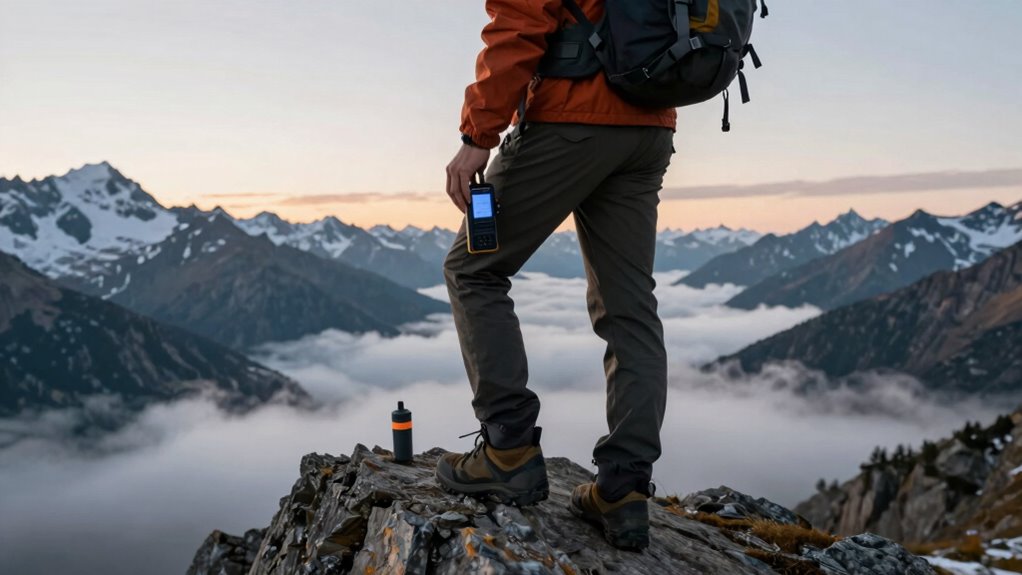
Satellite communicators are the ideal choice when you need reliable, two-way communication in areas beyond the reach of cell towers. They excel in providing satellite coverage where cell signals are unavailable, ensuring you stay connected no matter how remote your location. If your outdoor activities or work require frequent contact with others, these devices are invaluable. Additionally, device compatibility plays a fundamental role; many satellite communicators work seamlessly with smartphones and other gear, making them versatile and easy to integrate into your existing setup. You should consider a satellite communicator if you prioritize two-way messaging, real-time updates, and broad satellite coverage. They’re especially useful for backcountry trips, remote expeditions, or work sites where staying connected can be a matter of safety and efficiency. Understanding satellite coverage is essential to choosing the right device for your needs.
What Features Matter Most When Picking a Device?
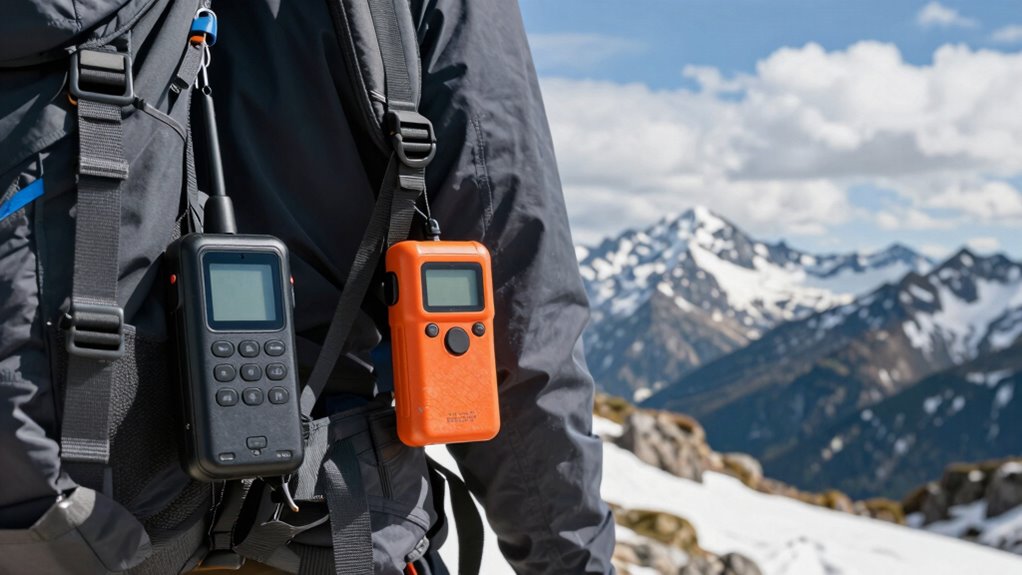
When selecting a device, focusing on the features that align with your specific needs and activities is vital. Consider the following when choosing between a personal locator beacon or satellite communicator:
- Battery life, ensuring it lasts through your trips without frequent recharging
- Device size, balancing portability with ease of use
- Durability and weather resistance for harsh conditions
- Ease of operation, so you can activate quickly in emergencies
- Connectivity options, like GPS tracking or two-way messaging
Prioritize features that match your adventure style, whether you’re in remote wilderness or on coastal waters. A longer battery life and compact device size make a significant difference, especially for extended trips where reliability and convenience are key.
How Much Do These Devices Cost and Require Maintenance?
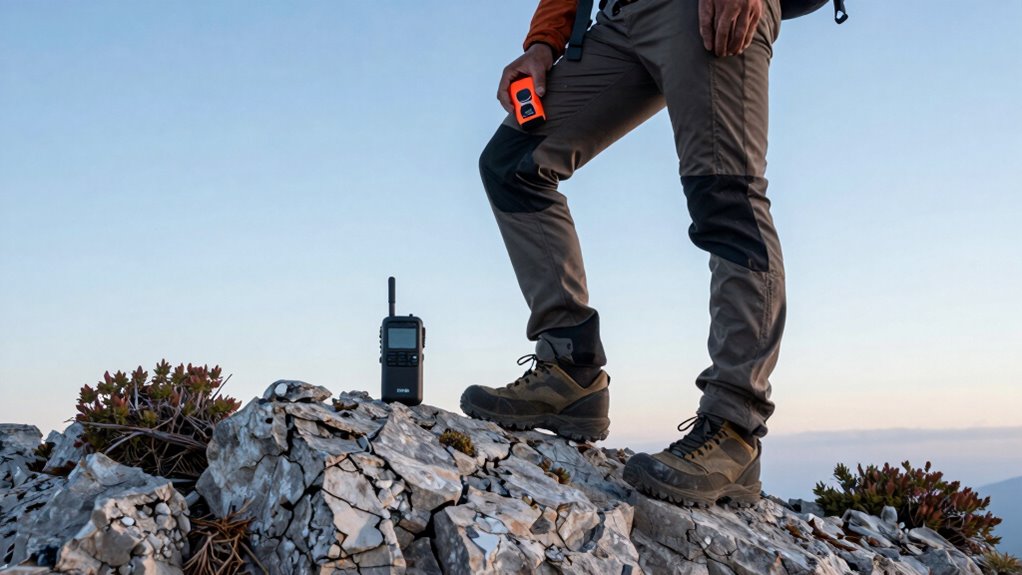
The cost of personal locator beacons and satellite communicators varies widely based on features, brand, and service plans, making it vital to budget accordingly. You’ll need to contemplate device subscription fees, which are ongoing costs for service access, and these can range from modest to significant depending on coverage and features. Additionally, device durability plays a critical role in long-term expenses. A rugged, weather-resistant device may cost more upfront but requires less maintenance and fewer replacements, saving you money over time. Keep in mind that some devices may also need periodic battery replacements or firmware updates, adding to maintenance costs. Overall, investing in a reliable, durable device with transparent subscription fees ensures you’re prepared without surprise expenses during emergencies.
How to Choose the Right Emergency Device for Your Adventure

Choosing the right emergency device for your adventure depends on understanding your specific needs and the environment you’ll be in. Consider factors like coverage, ease of use, and reliability. A satellite network is essential—ensure your device works where you’ll be exploring. Device durability matters; wilderness adventures demand rugged gear that withstands water, dust, and impact. Think about how you’ll carry and operate it during emergencies.
- Confirm the device works across the satellite networks you’ll encounter
- Prioritize rugged, weather-resistant design for durability
- Decide if a personal locator beacon or satellite communicator suits your needs
- Check battery life and ease of recharging in remote locations
- Evaluate the size and weight for portability during your adventure
Frequently Asked Questions
Can PLBS Be Used for Non-Emergency Communication?
Personal Locator Beacons aren’t designed for non-emergency communication, so you can’t use them for regular chats. Their main purpose is personal safety and emergency preparedness, ensuring you can signal distress when needed. If you want to stay connected during outdoor adventures or remote trips, consider satellite communicators instead. These devices let you send messages and stay in touch, supporting your safety without relying solely on emergency signaling functions.
Are Satellite Communicators Suitable for Everyday Use?
You can definitely consider satellite communicators for everyday use, as they enhance personal safety and keep you connected across vast geographic coverage. While they’re not just for emergencies, they’re like having a lifeline in your pocket, providing reliable communication even in remote areas. Whether you’re adventuring or staying connected, these devices offer peace of mind, making them a smart choice for daily life beyond just crisis situations.
How Reliable Are These Devices in Extreme Weather Conditions?
Satellite communicators are generally reliable in extreme weather, thanks to their weather resilience and signal stability. You can count on them in storms, heavy rain, or snow, as their design minimizes disruptions caused by harsh conditions. However, extreme weather can occasionally affect signal strength, so it’s wise to guarantee your device is well-maintained and positioned correctly. Overall, they’re dependable tools for staying connected in challenging environments.
What’s the Battery Life Difference Between PLBS and Satellite Communicators?
You’ll find that PLBs typically offer longer battery longevity, often lasting several days or even weeks in standby mode, thanks to simple power management. Satellite communicators, however, usually have shorter battery life, ranging from a few hours to a day, depending on usage. This means you need to manage power wisely, especially during extended trips. Always check device specifications and carry spare batteries to guarantee reliable communication when needed.
Do These Devices Require Monthly Testing or Updates?
You don’t typically need to perform monthly testing or updates on these devices, but regular device maintenance is recommended. Some satellite communicators may require software updates to guarantee peak performance and compatibility. Check your device’s manual for specific instructions. Keeping the device charged and testing it periodically before trips helps ensure it works correctly when you need it most. Staying on top of maintenance prolongs device life and guarantees reliability.
Conclusion
Choosing between a personal locator beacon and a satellite communicator is like picking the right tool for your adventure’s safety toolbox. Both are your lifelines in the wild, ready to sing their song of rescue when you need it most. Trust your instincts, consider your activities, and remember: in the vast wilderness, having the right device is like carrying a safety net woven from the stars—ready to catch you when you fall.