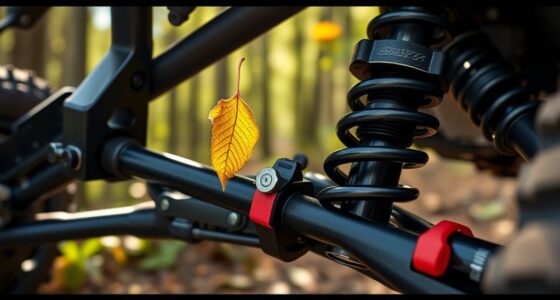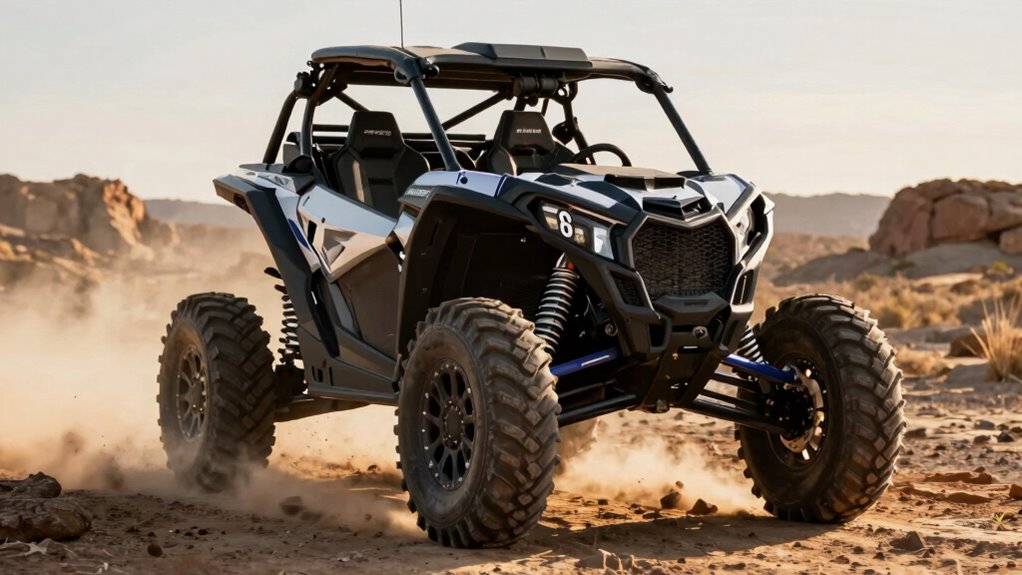

When it comes to your Polaris, big suspension numbers can be misleading. Usable travel is what truly matters and enhances your off-road experience. A well-tuned suspension adapts to rocky or muddy terrain, improving both comfort and control as you navigate challenges. Regular maintenance, like inspecting shocks and checking air pressure, is essential for peak performance. You’ll find that understanding the specs and their real-world impact can make all the difference in your ride. Explore more insights to elevate your setup.
Key Takeaways
- Usable travel is crucial for off-road performance, surpassing mere suspension size in importance.
- Properly tuned shocks provide better control and comfort over rough terrains than large suspension numbers alone.
- Regular maintenance of shocks ensures optimal performance, enhancing overall ride quality and usability.
- Aftermarket upgrades should focus on adjustable shocks for improved adaptability to various terrains.
- Understanding suspension technology is vital for making informed decisions about performance and usability.
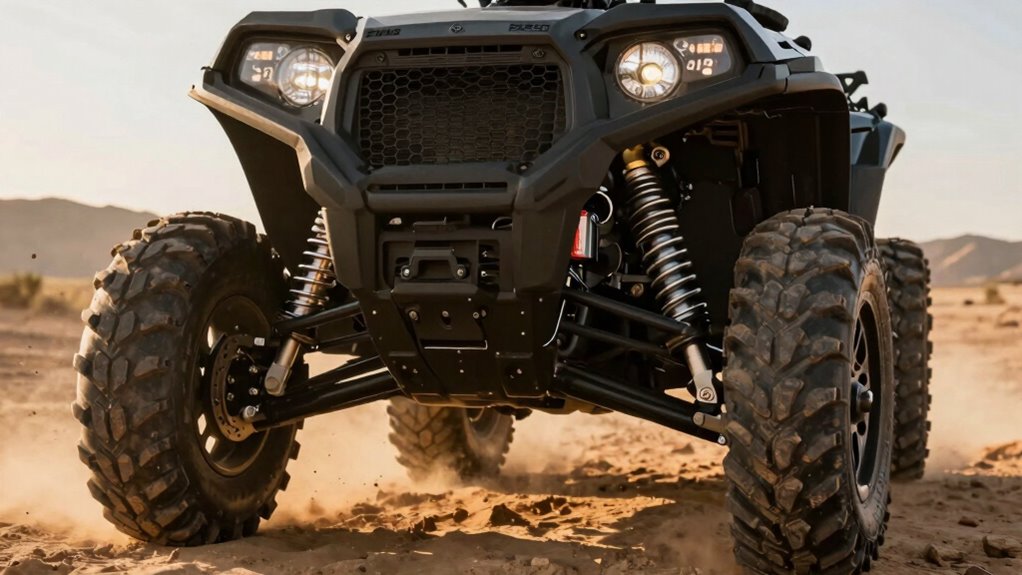
When you think of off-road adventures, the suspension on a Polaris stands out as an essential component. It’s not just about big suspension numbers; it’s about how effectively that suspension translates into usable travel. If you’re looking to enhance your ride, understanding shock tuning and travel efficiency is vital. You want your Polaris to handle rough terrain while maximizing ride comfort.
The suspension on your Polaris is crucial; it’s about usable travel, not just big numbers, for ultimate off-road comfort and control.
Reflect on the terrain you typically encounter. Is it rocky, muddy, or a mix of both? The suspension’s terrain adaptability plays a significant role in how well you navigate those challenges. A well-tuned shock allows your vehicle to absorb bumps without compromising stability. You’ll notice that when you hit a rough patch, the suspension can either make or break your experience. Proper shock tuning guarantees that your Polaris responds correctly, providing the right balance between comfort and control.
To get the most out of your suspension, you’ll need to take into account maintenance tips. Regularly checking and adjusting your shocks can prevent issues down the line. If your shocks are neglected, you might lose out on important performance upgrades that could elevate your off-road experience. Simple things like inspecting for leaks or confirming the right air pressure can make a big difference. Paying attention to shock tuning and setup ensures that your suspension remains responsive and effective. Additionally, understanding suspension specifications helps you evaluate how well your setup matches your riding needs. Recognizing the performance metrics of your suspension can help guide your upgrades and adjustments more effectively. Being familiar with suspension technology also helps you make informed decisions about potential improvements. Knowing how adjustability features work allows you to customize your suspension for different terrains and riding styles.
Investing in performance upgrades can also enhance your ride. Aftermarket shocks or springs can improve travel efficiency, allowing for better handling and stability. When you upgrade, look for options that offer adjustability, so you can fine-tune your setup based on your specific needs. This adaptability means you can tackle varying terrains without compromising on ride comfort.
It’s easy to get caught up in the numbers when it comes to suspension specs. However, the real measure of performance lies in how well your Polaris can navigate the challenges you face. Usable travel defines your ride experience more than sheer size ever could. So, when you’re out there, remember that it’s not just about the big suspension numbers; it’s about how effectively your vehicle can respond to the terrain.
In essence, understanding and optimizing your Polaris suspension is key to revealing its full potential. With proper shock tuning, maintenance, and the right upgrades, you can enhance your off-road adventures and enjoy every ride to its fullest.
Polaris shock absorbers adjustable
As an affiliate, we earn on qualifying purchases.
As an affiliate, we earn on qualifying purchases.
Frequently Asked Questions
How Do Suspension Settings Affect Handling in Different Terrains?
Suspension settings directly impact handling across different terrains by influencing suspension geometry and terrain responsiveness. When you adjust the stiffness and damping, you tailor your ride to absorb bumps or maintain stability on rough paths. For example, softer settings help you glide over obstacles in soft terrain, while firmer settings enhance control on hard surfaces. By fine-tuning these settings, you can greatly improve your vehicle’s performance and comfort in various conditions.
What Is the Impact of Weight on Suspension Performance?
Weight greatly impacts suspension performance by affecting suspension dynamics and weight distribution. When your vehicle’s weight is unevenly distributed, it can lead to poor handling and compromised traction. A well-balanced weight distribution allows the suspension to respond more effectively, improving stability and comfort. If you load your vehicle unevenly, you might notice increased body roll and reduced control, especially in rough terrains. Proper weight management is essential for ideal suspension function and ride quality.
Can I Upgrade My Polaris Suspension for Better Performance?
Absolutely, you can upgrade your Polaris suspension for better performance! Think of it like giving your ride a new pair of shoes—better grip and comfort on the trail. Suspension upgrades, like new shocks or springs, can greatly enhance handling and stability. Performance tuning guarantees your setup matches your riding style, allowing you to tackle rough terrain with confidence. Just remember to balance upgrades with weight distribution for the best results!
How Often Should I Maintain My Polaris Suspension System?
You should maintain your Polaris suspension system regularly, ideally every 25-50 hours of riding or at least once a season. Check the suspension fluid levels and replace it if it’s dirty or low. Inspect your shock absorbers for leaks or damage, and guarantee they’re functioning properly. Regular maintenance helps prevent issues and keeps your ride smooth. Staying proactive will enhance your vehicle’s performance and longevity on the trails.
What Tools Do I Need for Basic Suspension Adjustments?
For basic suspension adjustments, you’ll need a few essential suspension tools: a torque wrench, a socket set, and a suspension pump. You might also want a spanner wrench for adjusting preload and a measuring tape for checking ride height. Familiarize yourself with adjustment techniques like sag measurement and damping changes. With these tools and techniques, you’ll keep your suspension performing at its best, ensuring a smoother ride on your Polaris.
Conclusion
In the world of off-roading, think of your Polaris as a ship sailing the turbulent seas. A vast hull might promise smooth navigation, but without the right sails, it struggles against the winds. Similarly, big suspension numbers might look impressive, but if they don’t translate to usable travel, you’re left adrift. Embrace the journey, not just the spec sheet, and let your Polaris truly navigate the rugged waters ahead with grace and confidence.