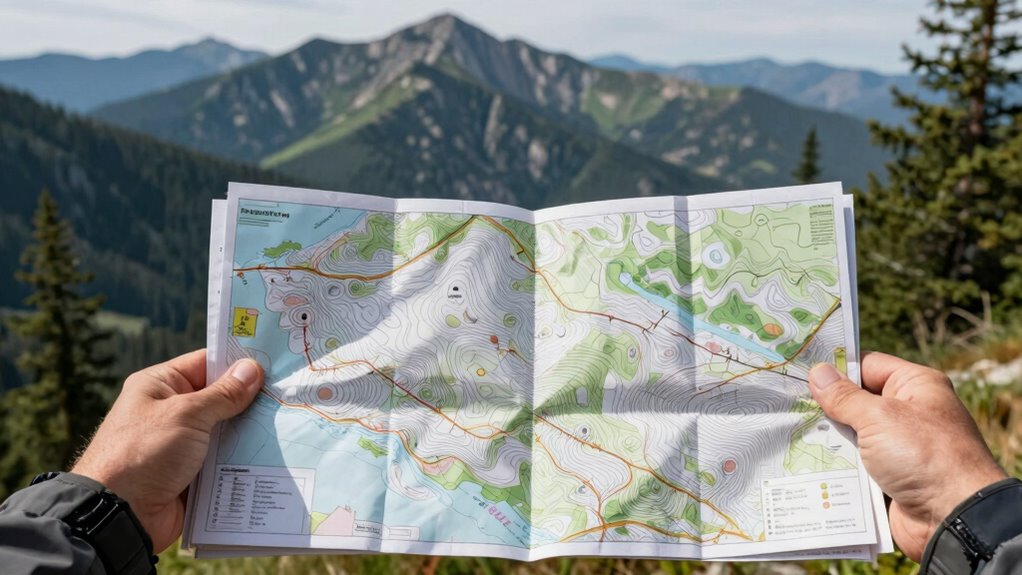

In the backcountry, having detailed, accurate topographic maps is more important than the size of your device’s screen. Good maps help you understand terrain features like ridges and valleys, which are essential for safe navigation. Even if your device has a large screen, poor map quality can lead to mistakes and increased risk. Focusing on reliable maps and developing your terrain recognition skills can greatly improve your safety—there’s much more to discover if you keep exploring.

Get business pricing on garage and car supplies
- Business-only prices and quantity discounts
- Tax-exempt purchasing
- Multiple users, one account, clear invoices
Key Takeaways
- Map detail and accuracy are more critical than device screen size for reliable navigation.
- Strong topographic map skills enable better terrain understanding and hazard recognition.
- Detailed maps reveal natural features essential for route planning and situational awareness.
- Relying solely on GPS can be risky; map interpretation skills are vital for verification.
- High-quality maps improve safety and decision-making more than larger screens or device specs.
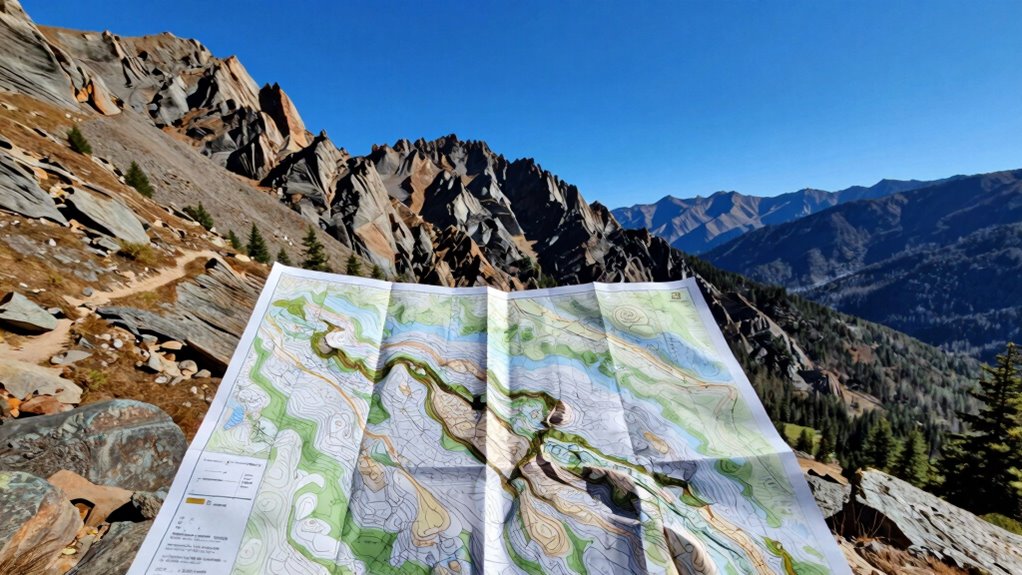
When you’re steering through the backcountry, the size of your device’s screen can seem important, but in reality, the quality and detail of your topographic maps matter far more. A larger screen might make it easier to see terrain features at a glance, but if your maps lack accuracy or detail, you could easily get lost or misjudge your surroundings. The key to navigating confidently lies in understanding and trusting the maps you rely on, which means honing your map reading skills is essential. Even the most advanced GPS device won’t compensate for poor map quality or a lack of understanding of topographic features. Map quality is a critical factor that often outweighs device specifications when it comes to reliable navigation. Developing strong navigation skills can help you interpret terrain and make informed decisions in the wild. Additionally, understanding topographic features enhances your ability to anticipate terrain challenges and select safer routes.
GPS accuracy plays a crucial role in backcountry navigation. Modern devices often boast impressive positioning precision, but they’re still subject to limitations like signal interference or battery life. Relying solely on GPS can be dangerous if you don’t know how to interpret topographic maps accurately. Your ability to read contour lines, identify landmarks, and understand terrain elevation changes makes all the difference when electronic signals falter or when you’re in areas with poor reception. With strong map reading skills, you can verify your position, plan alternative routes, and avoid hazards, even if your GPS isn’t pinpoint accurate at a given moment. Developing interpersonal navigation skills can further enhance your confidence in the wild.
Having detailed topographic maps also helps you develop a better sense of the terrain, which is vital for making informed decisions. You can identify ridges, valleys, water sources, and other natural features that aren’t always obvious on a small-screen device. This knowledge allows you to plan routes more effectively and respond to unexpected challenges. Remember, a highly detailed map with clear contour lines, symbols, and labels provides the spatial awareness you need to navigate safely, especially when electronic devices fail or become unreliable. Developing topographic map skills can greatly improve your overall navigation confidence, especially in challenging environments.
As an affiliate, we earn on qualifying purchases.
Frequently Asked Questions
How Do I Read Contour Lines on a Topographic Map?
To read contour lines on a topographic map, start by identifying the contour line interpretation; closely spaced lines indicate steep terrain, while wider spaces show gentle slopes. Recognize elevation change by noting the contour interval, which tells you how much elevation each line represents. Follow the lines to understand terrain features, and remember that crossing contour lines means elevation changes, helping you navigate the landscape effectively in the backcountry.
What Features Should I Look for in a Reliable Topographic Map?
You should look for clear map symbols that accurately represent terrain features like trails, water sources, and elevation changes. Reliable topographic maps also have a well-defined scale, helping you interpret distances correctly. Check for a legend to understand symbols easily, and verify the map’s contour lines are detailed enough to show elevation changes. A trusted map combines accurate symbols and scale interpretation, making navigation safer and more effective in the backcountry.
How Do I Navigate Using a Topographic Map Without a GPS?
Finding your way with a topographic map without a GPS is like deciphering a secret code. Start by aligning your map with the terrain using natural features and compass for map orientation. Identify landmarks, contour lines, and elevation changes to determine your position. Use alternative navigation methods like dead reckoning or pacing. Trust your skills, stay aware of your surroundings, and keep your map handy to stay on course even when technology fails.
What Are the Best Practices for Keeping Maps Dry and Intact?
To keep your maps dry and intact, focus on map preservation by using waterproof techniques. Store your map in a waterproof case or seal it inside a plastic bag with a zipper or ziplock to prevent water damage. Consider laminated maps, which are more durable and resistant to moisture. Always keep your map in an accessible, protected spot, and avoid exposing it to rain or wet conditions unnecessarily.
How Often Should I Update or Replace My Topographic Maps?
A stitch in time saves nine, and that applies to updating your topographic maps. You should replace or update them whenever you notice changes in the terrain or after several years, typically every 3-5 years. Always double-check the map scale and verify your legend interpretation is accurate. Regular updates ensure you have the most current information, helping you navigate safely and confidently in the backcountry.
Conclusion
In the backcountry, your safety hinges more on the quality of your topographic maps than on your screen size. Studies show that nearly 60% of outdoor navigational errors stem from inadequate map detail or misinterpretation. So, don’t rely solely on your device’s display; invest time in understanding your maps. With detailed topographic maps, you’ll navigate confidently, no matter your screen size or technology limitations, ensuring a safer, more enjoyable adventure.
Columbus Day / Indigenous Peoples' Day Picks
long weekend sales
As an affiliate, we earn on qualifying purchases.