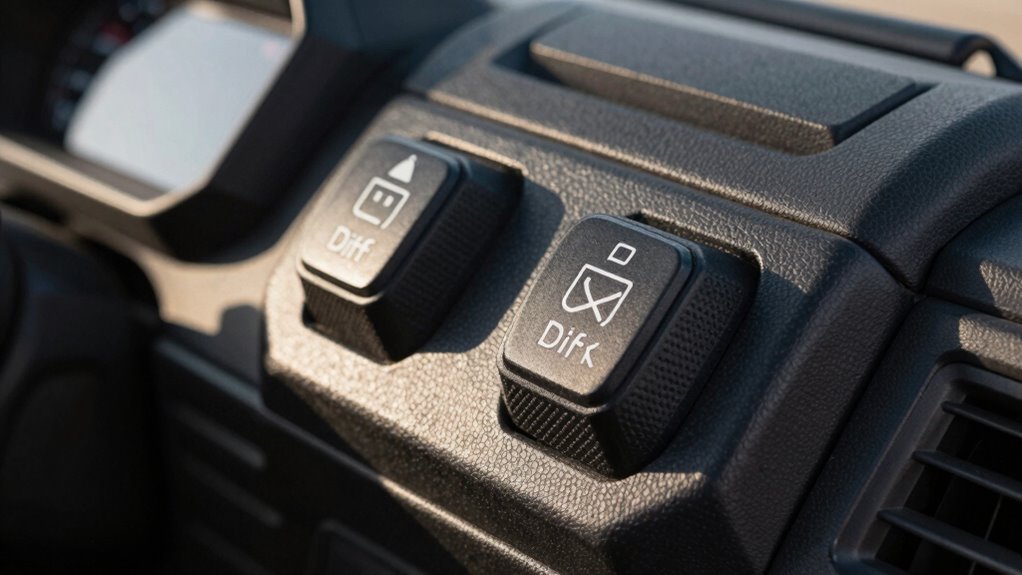
Polaris 4×4 models often feature multiple buttons for engaging the differential lock, which can seem confusing. To optimize traction, you’ll need to understand when and how to activate the diff lock, typically via specific controls on your vehicle’s dashboard or handlebar. Proper use involves engaging on low-traction surfaces and avoiding activation on dry pavement. Mastering these controls prevents damage and enhances performance—discover the details behind these buttons to maximize your off-road experience.
Key Takeaways
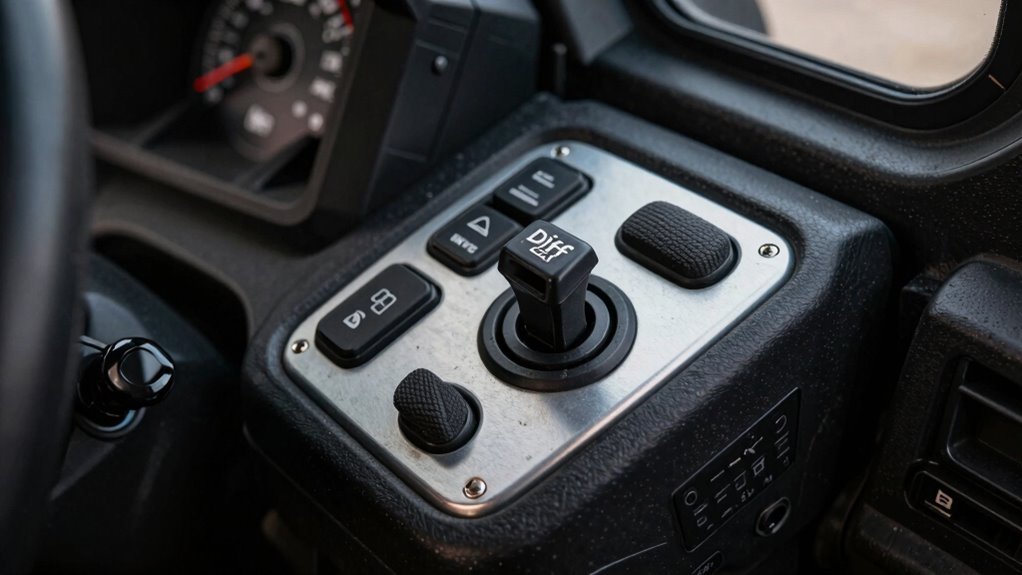
- Polaris 4×4 vehicles typically have a dedicated button or switch labeled “Diff Lock” for engaging the differential lock.
- Diff lock buttons are often marked with icons, such as a locked differential symbol or “LOCK,” making them easier to identify.
- Activation usually involves pressing the button while the vehicle is moving slowly on low-traction terrain; some models require the vehicle to be stationary.
- Troubleshooting involves checking for indicator lights, mechanical sounds, and electrical issues like blown fuses or faulty wiring.
- Proper use and understanding of diff lock buttons prevent damage and maximize traction during challenging off-road conditions.
Polaris differential lock button
As an affiliate, we earn on qualifying purchases.
As an affiliate, we earn on qualifying purchases.
What Is Polaris 4×4 Diff Lock and How Does It Work?
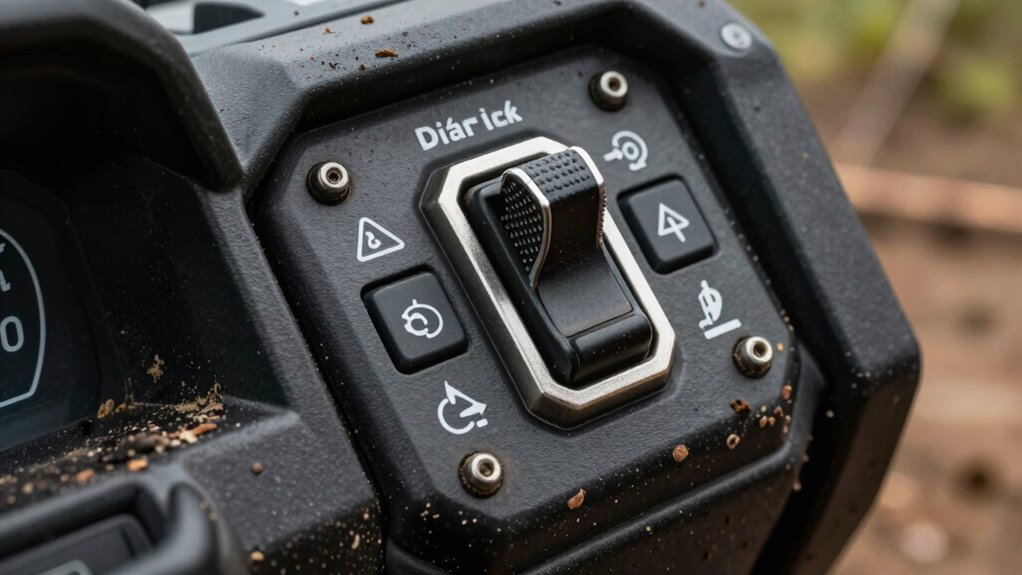
The Polaris 4×4 differential lock is a device that temporarily locks the front and rear axles together, ensuring both wheels rotate at the same speed. This mechanism engages a mechanical coupling within the differential, preventing differential slip during challenging terrain. When activated, it transmits torque equally to both wheels on an axle, optimizing traction in low-traction conditions. The lock bypasses the typical differential action, which allows wheels to spin at different speeds, especially during turns. This process is controlled either manually or electronically, depending on your Polaris model. Engaging the diff lock alters power distribution, providing enhanced stability but also increasing stress on drivetrain components. Proper training and knowledge about diff lock operation can help prolong your vehicle’s lifespan and improve your off-road experience. Understanding the mechanical components involved in the diff lock system can help you diagnose potential issues early. Additionally, familiarity with traction management systems can further enhance your off-road capabilities and safety.
When and Why Should You Use Diff Lock on Your Polaris?

Utilizing the diff lock on your Polaris is most effective when you encounter challenging terrain that requires maximum traction, such as deep mud, loose sand, or steep inclines. Engaging the differential lock ensures both wheels on the axle turn at the same speed, preventing wheel slip and improving stability. You should activate diff lock when:
- Traction is lost on one wheel due to uneven surface conditions
- Steering through off-road obstacles where wheel spin is likely
- Climbing steep inclines or descending uneven terrain
Using diff lock in these situations minimizes wheel slip, enhances control, and prevents getting stuck. However, avoid engaging it on high-traction surfaces like pavement, as it can cause drivetrain strain and damage. Proper timing maximizes performance and prolongs component lifespan. Understanding diff lock operation and how it interacts with vehicle traction can help prevent unnecessary wear and ensure optimal vehicle performance. Additionally, awareness of off-road driving techniques can contribute to safer and more efficient use of your Polaris’s diff lock system.
How to Find and Engage the Diff Lock Button on Polaris Models

To locate the Diff Lock button on your Polaris, consult your model’s user manual or dashboard layout, as placement varies across years and models. Once identified, engage the lock by pressing the button firmly, ensuring the indicator light confirms activation. Proper identification and engagement are critical for maximum four-wheel-drive performance in challenging terrain. Additionally, understanding the diff lock function can prevent unnecessary wear and improve your vehicle’s handling in tough conditions.
Locating the Diff Lock
Locating the diff lock button on Polaris models requires familiarity with the control layout specific to your vehicle. Typically, the button is integrated into the dashboard or steering wheel cluster, but placement varies by model. To identify it accurately, consider these key points:
- Position: Often near the main instrument panel, either as a dedicated button or integrated into a multi-function switch.
- Labeling: Look for symbols like a locked differential icon or the word “Diff Lock” for clear identification.
- Accessibility: Ensure the button is within easy reach for quick engagement while operating, especially in challenging terrain.
- Control Layout: Familiarity with vehicle control layouts can help you quickly locate essential features like the diff lock.
- Additionally, understanding diff lock operation ensures you activate it correctly when needed, preventing potential damage.
Understanding these layout elements helps you quickly locate the diff lock, enabling precise control when terrain conditions demand it. Proper identification guarantees safe and efficient activation during off-road use.
Engaging the Diff Lock
How you engage the diff lock on your Polaris model directly impacts its effectiveness in challenging terrain. To do so correctly, you must first locate the dedicated diff lock switch or button, often positioned on the dashboard or near the steering wheel. Confirm the vehicle is at a standstill or moving slowly, as engaging the diff lock under high speed can cause drivetrain damage. Press or toggle the switch firmly; you should observe a corresponding indicator light confirming engagement. Some models require you to hold the button briefly, while others automatically lock once pressed. Always consult your user manual for specific instructions. Proper engagement ensures balanced power distribution between wheels, optimizing traction without risking mechanical issues.
Common Mistakes When Using Diff Lock and How to Avoid Them
Misusing the diff lock can lead to drivetrain damage or reduced vehicle control. Ensuring proper engagement and recognizing clear signs of lock activation helps prevent these issues. By understanding these common mistakes, you can optimize diff lock operation and maintain vehicle longevity. Additionally, integrating smart fitness technology into vehicle management systems can provide real-time feedback and alerts to ensure correct diff lock usage. Being aware of proper engagement procedures is essential, as incorrect methods can cause unnecessary wear or damage. Proper training and familiarity with your vehicle’s manufacturer guidelines can further minimize risks associated with diff lock operation. Recognizing proper timing for activation is crucial, as engaging the diff lock at the wrong moments increases the risk of drivetrain stress.
Engaging Diff Lock Properly
Engaging the differential lock correctly is essential for ideal traction and vehicle control, but many users make common mistakes that can lead to mechanical damage or reduced performance. Proper engagement requires understanding when and how to activate the lock to avoid strain on drivetrain components. To do this effectively:
- Engage the lock only on low-traction surfaces like mud or snow, avoiding use on pavement or hard surfaces.
- Ensure the vehicle is moving at a slow, steady pace before activating the lock to prevent sudden stress.
- Disengage the lock once traction is regained or when shifting to solid ground to prevent drivetrain binding.
- Familiarizing yourself with digital asset management and understanding how to safely operate vehicle systems can help prevent accidental damage caused by improper use. Additionally, consulting the vehicle’s owner’s manual for specific instructions can provide valuable guidance tailored to your Polaris 4×4 model.
- Recognizing proper diff lock operation techniques is crucial for maintaining vehicle longevity and ensuring safe off-road adventures. Being aware of diff lock indicators and feedback from your vehicle can further enhance safe engagement practices. Understanding the correct usage procedures for your model can also help prevent unnecessary wear and tear.
Ignoring these steps can cause excessive wear, overheating, or damage to the differential and drivetrain components, compromising vehicle longevity and safety.
Recognizing Lock Engagement Signs
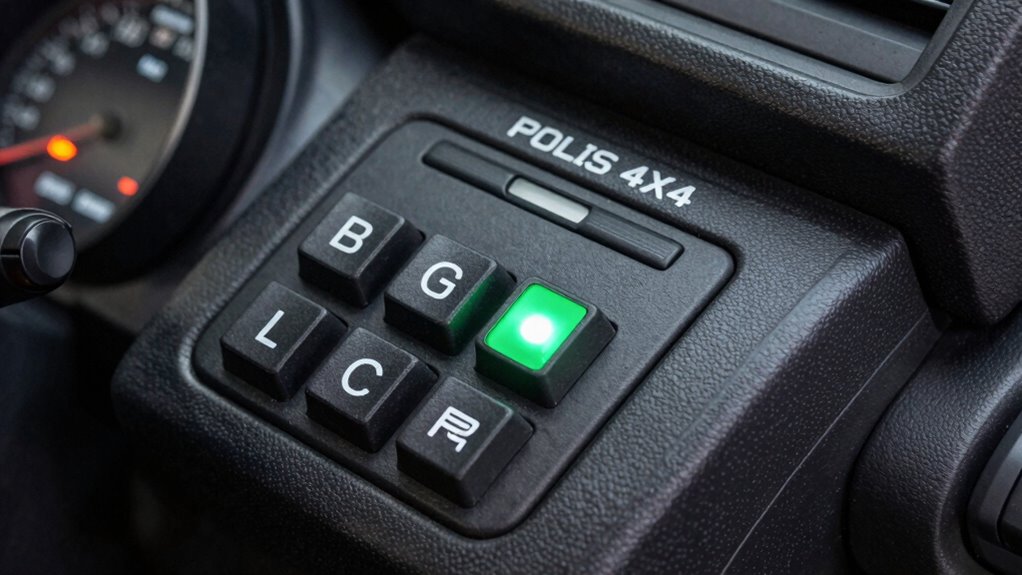
Recognizing the signs of proper lock engagement is essential to prevent damage and guarantee ideal traction. You should observe the dashboard indicators, which typically illuminate when the differential is engaged. Additionally, feel for changes in vehicle behavior; a noticeable increase in traction and a reduction in wheel slip indicate successful lock engagement. Listen for mechanical sounds, such as a slight clunk or engagement noise, signaling the diff lock has activated. Confirm that the vehicle remains stable without excessive resistance or binding, which can suggest improper engagement. Proper diff lock operation is crucial for maintaining your Polaris 4×4 system’s performance and longevity. Being aware of proper engagement signs helps prevent common mistakes like driving with the diff lock engaged on dry pavement, which causes drivetrain stress. Accurate recognition ensures excellent performance and longevity of your Polaris 4×4 system.
Troubleshooting Diff Lock Problems: Tips and When to Get Help

When your Polaris 4×4’s differential lock isn’t functioning properly, diagnosing the issue promptly can prevent further damage and guarantee ideal performance. Begin by checking for electrical faults, such as a blown fuse or faulty wiring, since these often disrupt the lock’s operation. Next, verify the actuator’s functionality—listen for clicks or test the switch to ensure proper signal transmission. Additionally, inspect the transfer case and related mechanical components for wear, debris, or damage that could hinder engagement. It’s also helpful to refer to the best practices for electrical diagnostics when troubleshooting these issues. Confirm electrical connections and fuse integrity. Test actuator operation and switch responsiveness. Examine mechanical components for damage or obstructions. Familiarity with vehicle electrical systems can significantly aid in efficient diagnostics. Conducting proper testing procedures and understanding electrical circuit layouts can streamline the troubleshooting process. If these steps don’t resolve the problem, it’s advisable to consult a qualified technician to prevent further mechanical or electronic failures.
Diff Lock vs. Other 4WD Features: Which Is Right for You?
Understanding the differences between a differential lock and other four-wheel-drive (4WD) systems is essential for selecting the appropriate feature for your needs. Differential locks mechanically restrict wheel slip, providing maximum traction by forcing both wheels on an axle to rotate at the same speed, ideal in extreme off-road conditions. In contrast, other 4WD systems—such as automatic or part-time 4WD—distribute torque electronically or mechanically without locking the differential, offering versatility for varying terrains. If you frequently encounter challenging obstacles or deep mud, a diff lock is advantageous. However, for mixed-use or less severe terrain, a selectable 4WD mode may suffice, offering smoother operation and reducing drivetrain stress. Choosing between these options depends on your driving environment and technical requirements for traction control.
Frequently Asked Questions
Can I Use Diff Lock While Driving at High Speeds?
You should avoid using the diff lock at high speeds because it can cause drivetrain stress and reduce maneuverability. Engaging diff lock is best reserved for low-speed, off-road situations where traction is compromised, such as mud or rock crawling. Using it at high speeds increases the risk of drivetrain damage and handling issues. Always follow manufacturer guidelines to prevent potential mechanical failures and guarantee safe operation.
Does Diff Lock Improve Fuel Efficiency?
Using diff lock can decrease fuel efficiency because it increases drivetrain resistance by locking the axles together, forcing the engine to work harder. This added load results in higher fuel consumption, especially on smooth, dry surfaces where differential slip isn’t needed. You should only engage diff lock when necessary, such as off-road or on slippery terrain, to avoid unnecessary fuel drain and maintain maximum efficiency.
Is Diff Lock Necessary for All Off-Road Terrains?
No, diff lock isn’t necessary for all off-road terrains. It becomes vital when you’re steering through slippery, uneven, or loose surfaces like mud, snow, or rocks, where traction loss is common. Engaging diff lock distributes power evenly to both wheels, preventing slippage. However, on firm, flat terrains, using diff lock can cause unnecessary wear and reduce maneuverability. Use it selectively based on terrain conditions to optimize performance and longevity.
How Do I Know if My Diff Lock Is Fully Engaged?
You’ll know your diff lock is fully engaged when the indicator light illuminates steadily, confirming activation. Additionally, you might notice increased resistance or a click sound as the system engages mechanically. For precise verification, check your vehicle’s dashboard or user manual. Always ensure the vehicle is stationary or moving at a low speed during engagement. Proper confirmation prevents drivetrain damage and guarantees ideal traction performance in challenging terrains.
Can Diff Lock Cause Damage if Used Improperly?
Using your diff lock improperly can cause significant damage. If you engage it at high speeds or on dry, hard surfaces, you’ll put undue stress on the drivetrain, risking gear and axle failure. The lock is designed for low-traction conditions; misuse accelerates wear and may lead to costly repairs. Always follow manufacturer guidelines, engaging only when necessary, and disengage promptly to prevent long-term damage.
Conclusion
Mastering your Polaris 4×4 diff lock is like revealing a hidden engine of capability within your machine. When used correctly, it transforms your ride into a relentless force against challenging terrain. But beware—misuse can cause damage or loss of control. By understanding the buttons and their purpose, you harness precision over power. With careful engagement and troubleshooting, you’ll keep your Polaris running smoothly—turning complex technology into your most trusted ally on every adventure.