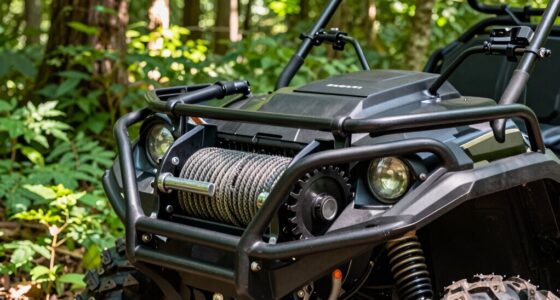
The Massimo MVR Cargo Max is my best overall pick among the best compact utility vehicles because its 5,000W motor, 1,100-pound capacity, and 45-mile range give it the strongest work-focused specification set. The WISELD GT3 is a more portable alternative for lighter hauling, while the JURNEQUAD Stand-Up Electric ATV is better matched to steep or uneven terrain. Buyers must choose between true cargo capability, foldable cart convenience, recreational performance, and child-friendly designs. Electric models offer quieter operation and simpler upkeep, while gas vehicles can suit longer recreational outings where charging is difficult. Continue reading for the full breakdown of all 10 options and the buyers each one serves best.

Get business pricing on garage and car supplies
- Business-only prices and quantity discounts
- Tax-exempt purchasing
- Multiple users, one account, clear invoices
Complete the kit



Key Takeaways
- The Massimo MVR Cargo Max leads the roundup because its 1,100-pound stated capacity and 45-mile listed range put it closer to a genuine work vehicle than the smaller carts and recreational machines.
- The WISELD GT3 and NAVEE 4X occupy the middle ground between hand carts and full UTVs, pairing seated operation with foldable designs that are easier to store and transport.
- The JURNEQUAD has the clearest rough-terrain focus, with all-wheel drive, heavy-duty suspension, and a stated 45-degree climbing capability, but its stand-up format is less relaxed for routine hauling.
- The Venom 200cc and Safari 200cc favor recreation over quiet property work, making them stronger fits for trail use than noise-sensitive yards, farms, or campgrounds.
- The First Ride On and Coolster require extra buyer scrutiny because age suitability, speed, supervision, and local riding rules matter more than cargo specifications for younger operators.
| First Ride On 36V Kids Ride On UTV, 2-Seater, 400W Electric Off-Road Vehicle |  | Best for Young Drivers | Voltage: 36V | Battery: 9Ah | Motor Power: 2 × 200W | VIEW LATEST PRICE | See Our Full Breakdown |
| NAVEE 4X Electric Wagon Cart with Seat, 3000W Motor |  | Best Foldable Utility Cart | Static Load Capacity: 1300 lbs | Dynamic Load Capacity: 770 lbs | Motor Power: 3000W | VIEW LATEST PRICE | See Our Full Breakdown |
| Venom Armored UTV 200cc 2-Seater Off-Road Utility Vehicle |  | Best Gas-Powered Farm Pick | Engine: 200cc 4-stroke air-cooled | Transmission: CVT automatic | Gear Selection: Forward, neutral, reverse | VIEW LATEST PRICE | See Our Full Breakdown |
| Massimo MVR Cargo Max Electric Utility Vehicle |  | Best Overall | Motor: 5000W | Load Capacity: 1100 lbs | Range: 45 miles | VIEW LATEST PRICE | See Our Full Breakdown |
| 200cc Safari Go-Kart Off-Road Utility Vehicle |  | Best for Recreational Trail Riding | Engine: 200cc | Transmission: Fully automatic CVT | Tires: 10-inch all-terrain | VIEW LATEST PRICE | See Our Full Breakdown |
| WISELD GT3 Electric Wagon 4WD Off-Road Utility Cart with Dual Batteries |  | Best Long-Range Folding Wagon | Motor Power: 3000W | Load Capacity: 772 lbs | Battery Type: Lithium iron phosphate, dual-battery system | VIEW LATEST PRICE | See Our Full Breakdown |
| WISELD GT AIR Electric Wagon Cart with Seat and Battery |  | Best Lightweight Utility Wagon | Load Capacity: 330 lbs | Motor Power: 700W | Battery: 36V 8Ah | VIEW LATEST PRICE | See Our Full Breakdown |
| JURNEQUAD Stand-Up Electric ATV |  | Best for Steep Terrain | Vehicle Type: Stand-up electric ATV | Battery: 75Ah lithium-ion | Drive System: All-wheel drive | VIEW LATEST PRICE | See Our Full Breakdown |
| WISELD GT3 4WD Off-Road Electric Wagon Cart with Seat |  | Best Heavy-Duty Hauler | Motor Power: 3000W | Battery: 36V 12Ah | Range: 12.4 miles in FWD; 9.32 miles in 4WD | VIEW LATEST PRICE | See Our Full Breakdown |
| Coolster 175cc ATV for Kids & Adults |  | Best Gas-Powered Compact ATV | Vehicle Type: Gas-powered ATV | Engine: 175cc | Transmission: Automatic | VIEW LATEST PRICE | See Our Full Breakdown |
| compact utility vehicle | Battery | Motor Power | Range |
|---|---|---|---|
| First Ride On 36V Kids Ride On | 9Ah | 2 × 200W | — |
| NAVEE 4X Electric Wagon Cart w | 36V LiFePO₄ | 3000W | 18.6 miles |
| Venom Armored UTV 200cc 2-Seat | — | — | — |
| Massimo MVR Cargo Max Electric | — | — | 45 miles |
| 200cc Safari Go-Kart Off-Road | — | — | — |
| WISELD GT3 Electric Wagon 4WD | — | 3000W | 18.6 miles in 4WD; 24.6 miles in front-wheel drive |
| WISELD GT AIR Electric Wagon C | 36V 8Ah | 700W | 12.4 miles |
| JURNEQUAD Stand-Up Electric AT | 75Ah lithium-ion | — | — |
| WISELD GT3 4WD Off-Road Electr | 36V 12Ah | 3000W | 12.4 miles in FWD; 9.32 miles in 4WD |
| Coolster 175cc ATV for Kids & | — | — | — |
More Details on Our Top Picks
First Ride On 36V Kids Ride On UTV, 2-Seater, 400W Electric Off-Road Vehicle
I rank the First Ride On 36V Kids Ride On UTV as the strongest child-focused choice because its manual throttle, brake, and two-seat layout provide a more involved driving experience than a basic ride-on toy. Its 5–8 mph speed range is far more manageable for families than the adult-oriented 200cc Safari Go-Kart, while EVA tires and a metal frame suit grass and uneven yards. Bluetooth audio, FM radio, and LED lights add play value, but they do not turn it into a working utility vehicle. The 40–60-minute runtime also limits longer outings, and performance can drop on demanding terrain. I would choose it for supervised recreation, not hauling, farm work, or riders who need the speed and suspension of a gasoline model.
Pros:- Manual throttle and brake provide more realistic driving control
- Two seats and safety belts accommodate siblings or friends
- EVA tires and a metal frame are suited to uneven outdoor surfaces
- Bluetooth, FM radio, and LED lights add entertainment value
Cons:- Not designed for hauling or practical property work
- Runtime can fall toward 40 minutes on demanding terrain
- Requires a sizable, supervised outdoor riding area
Best for: Families with children aged six and older who have a spacious yard and want a supervised two-seat electric off-road ride-on
Not ideal for: Buyers needing a functional hauling vehicle or long riding sessions, since its 130-pound limit and 40–60-minute runtime restrict utility
- Voltage:36V
- Battery:9Ah
- Motor Power:2 × 200W
- Top Speed:5–8 mph
- Tire Size:14 inches
- Seating Capacity:2
- Maximum Weight:130 lbs
- Run Time:40–60 minutes
Our verdict“This is my pick for families seeking a controlled two-child driving experience rather than a true work vehicle.”
NAVEE 4X Electric Wagon Cart with Seat, 3000W Motor
The NAVEE 4X Electric Wagon Cart earns its place by packing serious carrying ability into a design that folds for transport and storage. Its 770-pound dynamic rating makes it better suited to moving production equipment, camping supplies, or tools than the lighter-duty Venom Armored UTV cargo bed. I also favor its 3000W motor and all-terrain wheels for slopes and rough ground where an unpowered wagon becomes tiring. It is still a cart rather than a conventional side-by-side: the small 6.5-inch wheels offer less obstacle clearance, and the controls may take new owners time to learn. Although the folded footprint is compact, the unit can remain awkward to lift. The 18.6-mile stated range is useful for a workday but trails the Massimo MVR Cargo Max by a wide margin.
Pros:- Carries up to 770 pounds while moving
- 3000W motor supports loaded travel over slopes and rough surfaces
- Foldable frame reduces its storage footprint
- IPX5 protection and aluminum construction suit outdoor work
Cons:- Small wheels provide less clearance than full-size UTV tires
- Heavy construction can make manual lifting difficult
- 18.6-mile range is shorter than the Massimo electric utility vehicle
Best for: Campers, film crews, event teams, and property owners who need to move heavy equipment but must store the vehicle in a compact space
Not ideal for: Buyers wanting a conventional ride-in UTV with high ground clearance or a lightweight cart that can be lifted easily
- Static Load Capacity:1300 lbs
- Dynamic Load Capacity:770 lbs
- Motor Power:3000W
- Wheels:6.5-inch all-terrain
- Battery:36V LiFePO₄
- Range:18.6 miles
- Folded Dimensions:18.9 × 11.4 × 31.5 inches
- Water Resistance:IPX5
- Frame Material:6061 aerospace-grade aluminum
Our verdict“I recommend this cart when compact storage and powered heavy hauling matter more than passenger comfort or full-size UTV clearance.”
Venom Armored UTV 200cc 2-Seater Off-Road Utility Vehicle
I place the Venom Armored UTV 200cc ahead of recreational go-karts for buyers who need a small gasoline vehicle that can mix trail travel with property chores. The 33-by-16-inch cargo bed gives it a clearer working role than the 200cc Safari Go-Kart and its utility rack, while the CVT transmission keeps operation approachable. A 45 mph top speed supplies ample pace on private trails, and front and rear disc brakes offer stronger control than a simple mechanical setup. Its limits are equally clear: this is a light-duty hauler, not a substitute for the Massimo MVR Cargo Max and its 1,100-pound capacity. The air-cooled engine also brings fuel, noise, and routine maintenance that electric alternatives avoid. I rank it for farms and large properties where refueling speed matters more than quiet operation.
Pros:- Dedicated cargo bed is more useful for chores than a basic rear rack
- Automatic CVT simplifies low-speed property and trail driving
- 45 mph top speed supports travel across larger private properties
- Front and rear disc brakes provide controlled stopping
Cons:- Cargo capability is limited to light-duty jobs
- Gasoline engine requires more maintenance than electric alternatives
- Air-cooled operation is noisier and less suitable around residential areas
Best for: Small-farm owners and rural property users who want two seats, a cargo bed, and quick gasoline refueling for light-duty chores
Not ideal for: Buyers moving heavy payloads or working near noise-sensitive homes, since its small bed and gasoline engine limit those uses
- Engine:200cc 4-stroke air-cooled
- Transmission:CVT automatic
- Gear Selection:Forward, neutral, reverse
- Top Speed:45 mph
- Cargo Bed Size:33 × 16 × 6 inches
- Wheelbase:72 inches
- Brakes:Front and rear disc
- Seating:2 seats
Our verdict“This is my gasoline pick for light farm chores when a real cargo bed and fast refueling outweigh payload and noise concerns.”
Massimo MVR Cargo Max Electric Utility Vehicle
The Massimo MVR Cargo Max takes my top spot because it combines the strongest work-focused figures in this group: a 5,000W motor, 1,100-pound capacity, and 45-mile range. Compared with the NAVEE 4X Electric Wagon Cart, it offers more range and a higher moving payload, making it better suited to full-day groundskeeping, farm, or facility work. Its 13-plus-cubic-foot hydraulic dumping bed also turns capacity into a practical advantage by reducing manual unloading of soil, feed, or debris. That capability comes with costs. The larger vehicle is less convenient to transport or store than the foldable NAVEE, and its pricing is likely to suit commercial buyers better than occasional users. Published data also omits charging time, which makes shift planning harder. Even so, I rank its balanced electric work capability above the narrower alternatives.
Pros:- 5000W motor provides the strongest electric output in this batch
- 1100-pound capacity supports demanding property and grounds work
- 45-mile range exceeds the NAVEE cart’s stated range
- Hydraulic dumping bed reduces effort when unloading bulk material
Cons:- Less portable and compact than a foldable electric wagon
- Likely priced beyond the needs of casual users
- No charging-time figure is supplied for workday planning
Best for: Farm, estate, campus, and facility crews that need quiet electric hauling capacity across long workdays
Not ideal for: Occasional users with tight storage or limited budgets, since its work-grade capacity is likely to bring added size and cost
- Motor:5000W
- Load Capacity:1100 lbs
- Range:45 miles
- Cargo Bed Volume:13+ cubic feet
- Cargo Bed Type:Hydraulic dumping
- Powertrain:Electric
Our verdict“I would choose the Massimo for serious electric utility work where payload, range, and powered dumping justify the larger investment.”
200cc Safari Go-Kart Off-Road Utility Vehicle
I rank the 200cc Safari Go-Kart as the recreation-first option for adults who want two-seat trail capability with a small amount of gear-carrying utility. Its automatic CVT removes manual shifting, while 10-inch all-terrain tires and upgraded suspension target dirt and gravel rather than manicured property lanes. Compared with the Venom Armored UTV, the Safari emphasizes rider fun and rough-surface handling; the Venom’s enclosed cargo bed is the better choice for routine chores. Hydraulic disc brakes and LED top lights help with control and visibility, yet lighting does not make night trail use risk-free. At 94 inches long, this is also less compact in storage than the NAVEE 4X wagon. I see the rear utility rack as a secondary benefit, since it cannot match a dumping bed or dedicated cargo box for loose materials.
Pros:- Automatic CVT makes trail operation accessible to more adult riders
- All-terrain tires and upgraded suspension are tailored to rough surfaces
- Hydraulic disc brakes support controlled off-road stopping
- LED lighting and a utility rack add practical trail features
Cons:- Rear rack cannot replace a proper cargo or dumping bed
- 94-inch length demands substantial storage and transport space
- Gasoline off-road components require ongoing maintenance
Best for: Adult recreational riders who want to bring a passenger and modest gear onto private dirt, gravel, and trail routes
Not ideal for: Farm workers needing a cargo bed or owners with short storage bays, since the rack is limited and the vehicle is 94 inches long
- Engine:200cc
- Transmission:Fully automatic CVT
- Tires:10-inch all-terrain
- Length:94 inches
- Seating Capacity:2
- Lighting:LED top and front lights
- Brakes:Hydraulic disc
- Frame:Heavy-duty steel
Our verdict“This is my choice for two-person trail recreation, but work-focused buyers should favor the Venom or Massimo instead.”
WISELD GT3 Electric Wagon 4WD Off-Road Utility Cart with Dual Batteries
I rank the WISELD GT3 Dual-Battery Wagon highest for buyers who want serious hauling ability without dedicating permanent garage space to a utility vehicle. Its 3000W motor and 772-pound load rating suit steep campsites, beach gear, and garden loads, while the dual batteries extend front-wheel-drive range to 24.6 miles. That is nearly double the stated FWD range of the single-battery WISELD GT3 B0GHMWJSRW. The frame also folds to one-quarter of its original size, giving it a portability advantage over the JURNEQUAD. I would still plan transport carefully: this is a high-capacity machine, not a cart most buyers will lift alone. Its 10 MPH speed ceiling also favors controlled hauling over fast trail riding, and the unspecified price makes value harder to judge.
Pros:- Dual batteries provide up to 24.6 miles of range in front-wheel drive
- 3000W motor and four-wheel drive support demanding off-road hauling
- 772-pound load capacity accommodates several riders or substantial cargo
- Ride, tow, and manual modes broaden its practical uses
Cons:- Heavy construction may require two people or loading equipment for transport
- Maximum speed is limited to 10 MPH
- No listed price makes its value difficult to compare before purchase
Best for: Campers, gardeners, and large families who need long range, four-wheel-drive traction, and space-saving storage
Not ideal for: Solo buyers who must regularly lift the vehicle into a trunk or riders seeking speeds above 10 MPH
- Motor Power:3000W
- Load Capacity:772 lbs
- Battery Type:Lithium iron phosphate, dual-battery system
- Range:18.6 miles in 4WD; 24.6 miles in front-wheel drive
- Speed:0-10 MPH
- Tires:Deep-tread off-road tires
- Water Resistance:IPX5
- Display:HD TFT full-color LCD dashboard
- Folded Size:One-quarter of original size
Our verdict“I would choose this GT3 for long off-road outings where range and payload matter more than easy lifting or higher speed.”
WISELD GT AIR Electric Wagon Cart with Seat and Battery
I place the WISELD GT AIR ahead of heavier alternatives for buyers who value manageable storage and transport. Its aluminum-alloy construction is three kilograms lighter than the prior model, and the foldable frame is better suited to car-based outings than the heavy-duty JURNEQUAD. A 700W motor, all-terrain wheels, and ride or tow modes make it capable enough for parks, campgrounds, and event venues. The tradeoff is clear: its 330-pound capacity is far below either WISELD GT3 model’s 772-pound static rating, while its 12.4-mile range leaves less margin for long days away from charging. I also would not pick it for the roughest slopes, where the GT3’s 3000W four-wheel-drive system has a large traction advantage. This is the more portable choice, not the strongest hauler.
Pros:- Lighter foldable construction simplifies storage and vehicle transport
- 700W motor provides useful assistance for moderate outdoor terrain
- Ride and tow modes support passengers, pets, or cargo
- Aluminum-alloy and stainless-steel materials balance weight with durability
Cons:- 330-pound capacity is much lower than the WISELD GT3 models
- 12.4-mile range may be restrictive on full-day outings
- Multiple operating modes may take new users time to learn
Best for: Couples, pet owners, and event vendors who need a foldable powered cart that is easier to load into a vehicle
Not ideal for: Buyers hauling more than 330 pounds or regularly crossing steep, deeply rutted, or highly technical terrain
- Load Capacity:330 lbs
- Motor Power:700W
- Battery:36V 8Ah
- Maximum Speed:10 MPH
- Range:12.4 miles
- Wheels:100mm solid-rubber all-terrain wheels
- Materials:6061 aluminum alloy, stainless steel, and nylon composite
- Folding Design:Yes
- Weight Reduction:3 kg lighter than the previous model
Our verdict“I recommend the GT AIR when portability and everyday versatility outweigh the need for maximum payload or aggressive off-road power.”
JURNEQUAD Stand-Up Electric ATV
I give the JURNEQUAD Stand-Up Electric ATV the specialist slot for steep, broken ground. Its all-wheel drive, heavy-duty suspension, and 45-degree climbing rating target mud, snow, and rough trails more directly than the cargo-focused WISELD GT AIR. Four-wheel disc brakes add stopping control on descents, while the 75Ah lithium-ion battery is substantially larger than the GT AIR’s 8Ah pack. Yet this is not the most practical compact hauler: the stand-up format lacks the GT3’s wagon bed and 772-pound carrying claim, and heavy suspension hardware may make loading difficult. I am also cautious about the missing speed, range, charging-time, and weight figures, since those gaps prevent a clean portability comparison. The terrain-first design earns its place, but casual campground users may pay for capability they rarely need.
Pros:- All-wheel drive supplies traction across mud, snow, and loose ground
- 45-degree climbing capability suits unusually steep routes
- Heavy-duty suspension helps absorb impacts on broken trails
- Four-wheel disc brakes provide controlled stopping on descents
Cons:- Heavy-duty components may make transport and storage difficult
- Top speed, operating range, charging time, and total weight are not provided
- Stand-up design offers less cargo utility than a wagon-style vehicle
Best for: Rural property owners and experienced off-road riders who need electric traction for steep, muddy, or snowy routes
Not ideal for: Cargo-focused buyers or casual riders who need published range, speed, charging, and vehicle-weight figures before purchasing
- Vehicle Type:Stand-up electric ATV
- Battery:75Ah lithium-ion
- Drive System:All-wheel drive
- Climb Capability:Up to 45 degrees
- Suspension:Heavy-duty
- Brakes:Four-wheel disc brakes
- Terrain Applications:Trails, snow, mud, and rugged ground
Our verdict“I would reserve the JURNEQUAD for buyers whose routes demand climbing ability and suspension strength more than cargo space or easy transport.”
WISELD GT3 4WD Off-Road Electric Wagon Cart with Seat
I rank this WISELD GT3 4WD Wagon as the work-focused choice because its 3000W drive system pairs a 661.4-pound dynamic limit with a 772-pound static rating. That makes it far more suitable for tools, supplies, or several occupants than the 330-pound WISELD GT AIR. Its 100mm solid-rubber wheels also avoid punctures, and IPX5 construction suits damp gardens, campgrounds, and outdoor events. Compared with the dual-battery GT3 B0G2S4MJZ7, however, this version trades range for a simpler 36V 12Ah battery: it lists 12.4 miles in front-wheel drive and only 9.32 miles in four-wheel drive. The folding chassis helps with storage, but heavy-duty materials may still make lifting awkward. I see it as a short-range payload specialist, with battery-shipping delays and modest speed limiting its appeal for spontaneous trips.
Pros:- 3000W four-wheel-drive system provides strong low-speed off-road traction
- 661.4-pound dynamic capacity supports demanding cargo jobs
- Solid 100mm tires resist punctures on rough surfaces
- IPX5 foldable construction suits outdoor work and compact storage
Cons:- Four-wheel-drive range falls to 9.32 miles
- Heavy-duty construction may require assistance during loading
- Battery delivery may be delayed by hazardous-material shipping rules
Best for: Landscapers, gardeners, campers, and trade-show crews moving heavy loads over short off-road routes
Not ideal for: Long-distance users or solo owners who need a lightweight cart that can be lifted and transported without help
- Motor Power:3000W
- Battery:36V 12Ah
- Range:12.4 miles in FWD; 9.32 miles in 4WD
- Load Capacity:772 lbs static; 661.4 lbs dynamic
- Maximum Speed:10 MPH in 4WD; 9 MPH in front- or rear-wheel drive
- Tires:100mm-wide solid-rubber all-terrain wheels
- Water Resistance:IPX5
- Materials:6061 aluminum alloy, stainless steel, carbon steel, and nylon composite
- Folding Design:Yes
Our verdict“I favor this GT3 for heavy, short-distance hauling where payload and traction matter more than extended battery range.”
Coolster 175cc ATV for Kids & Adults
I include the Coolster 175cc ATV for buyers who prefer quick refueling and a conventional riding layout over battery-dependent utility carts. Its automatic transmission and electric start reduce the learning burden compared with a manual gas ATV, while all-terrain tires suit recreational trails. Unlike the WISELD GT3 wagons, this model is built mainly for riding rather than carrying bulky camp or garden cargo. It also avoids the JURNEQUAD’s missing engine-style familiarity, but the supplied data does not state speed, payload, dimensions, brakes, or suspension details. That makes its adult-and-child positioning too broad for me to treat as a universal family recommendation; fit and supervision need careful judgment. Gas fueling, engine noise, and routine maintenance are further compromises beside the quieter WISELD electric models. Its simple automatic operation is the main draw.
Pros:- 175cc gas engine permits fast refueling between rides
- Automatic transmission lowers the operating burden for newer riders
- Electric start avoids manual pull-start effort
- All-terrain tires support varied recreational surfaces
Cons:- Gas engine requires fueling, maintenance, and suitable storage
- Broad kids-and-adults label does not establish safe fit for very young riders
- No listed speed, payload, dimensions, braking, or suspension specifications
Best for: Recreational riders who want a compact automatic gas ATV and have space for fuel storage and routine engine maintenance
Not ideal for: Very young children, cargo haulers, or households wanting quiet operation with no gasoline handling
- Vehicle Type:Gas-powered ATV
- Engine:175cc
- Transmission:Automatic
- Start System:Electric
- Tires:All-terrain
- Color:Army green
- Intended Riders:Kids and adults
Our verdict“I would pick the Coolster for supervised recreational riding when quick refueling matters more than cargo capacity, quiet operation, or detailed published specifications.”
How We Picked
I ranked these vehicles by how well they satisfy the compact utility brief, giving the most weight to usable cargo capacity, traction, range, power delivery, rider format, and storage demands. I also compared electric versus gas ownership, since charging access, noise, fuel storage, and routine service can change which vehicle makes sense. Models built mainly for play ranked below work-oriented machines when their hauling ability or practical range appeared limited.
The final order also reflects versatility and buyer fit, not motor output alone. A foldable wagon can outrank a faster recreational vehicle when it offers easier transport and more useful day-to-day hauling. I treated stated capacities, ranges, and climbing figures as manufacturer claims rather than guaranteed real-world results, and I gave added credit to products with a clear, distinct purpose within the lineup.
Factors to Consider When Choosing Best Compact Utility Vehicles
Choosing among compact utility vehicles starts with defining the job, because this list spans cargo machines, seated electric wagons, recreational off-road vehicles, and youth models. I would narrow the field by deciding what must be carried, where the vehicle will travel, who will operate it, and where it will be stored. Those answers matter more than chasing the largest motor figure.
Match the Vehicle Type to the Actual Job
A compact utility vehicle should be selected around its primary weekly task, not an occasional adventure. Property maintenance and material transport favor a cargo bed, stable seating, and a published payload, while camping or event use may be better served by a foldable wagon. Recreational go-karts and ATVs can cover rough ground, but they may lack the loading access and low-speed control needed for repeated work. A stand-up vehicle offers a smaller operating footprint, though it demands more balance and physical effort from the rider. Youth ride-ons belong in a separate class because their controls, speed, and load ratings are designed around supervised play. I would reject any model whose basic layout makes the main job awkward, even if its power specification looks appealing.
Treat Payload and Towing as Separate Measurements
Payload capacity includes the operator, passengers, tools, and cargo carried on the vehicle, so a large published number can shrink quickly. Towing capacity measures a different load and should never be inferred from motor wattage or engine displacement. Buyers moving soil, firewood, feed, or equipment should check the rating of the frame, cargo platform, tires, and brakes rather than focusing on power alone. Load dimensions matter as well: bulky branches may exceed a compact bed even when they remain below its weight limit. Repeatedly operating at the maximum rating can shorten tire, suspension, and brake life. I would choose capacity headroom of roughly 20 percent for frequent hauling rather than planning every trip at the stated ceiling.
Compare Electric Range with Gas Refueling
An electric vehicle’s advertised range is usually measured under conditions that may differ from a loaded trip over hills, mud, grass, or cold ground. Heavy cargo and repeated climbing can reduce usable distance, making battery reserve more valuable than a headline range figure. Charging time also shapes the workday because a vehicle parked for hours cannot cover an unexpected second shift. Dual-battery designs may extend operating flexibility, but replacement cost and battery availability deserve attention before purchase. Gas models can be refueled quickly and may suit remote trail use, yet they add fuel storage, engine service, exhaust, and noise. For use near homes, animals, or campsites, I would often favor quiet electric operation even if it requires more route planning.
Check Terrain Hardware Beyond Motor Power
A high wattage or engine-size figure does not automatically produce secure movement on loose or sloped ground. Driven wheels, tire tread, ground clearance, gearing, suspension, and braking work together to determine whether a vehicle can carry a load safely. Four-wheel drive can aid traction, but it does not prevent sliding on wet grass or compensate for excessive speed on a descent. A claimed climbing angle should be read as a controlled-condition limit, not a target for routine operation. Narrow vehicles may fit gates and paths more easily, while wider machines usually feel more planted across side slopes. I would prioritize low-speed control and stability over maximum speed for property work.
Plan for Storage, Transport, and Service
Compact dimensions only help when the vehicle fits the buyer’s shed, trailer, doorway, or vehicle cargo area. Foldable wagons have a clear advantage for apartment storage and occasional transport, but folding mechanisms introduce hinges and locking points that need inspection. Full-size cargo machines demand more parking space and may require a trailer with adequate payload, tie-down locations, and ramp capacity. Service access is another dividing line: gas engines need fluids and mechanical upkeep, while electric systems depend on battery support and compatible electronic parts. Buyers should check local parts supply, warranty handling, tire sizes, and replacement-battery pricing before ordering an unfamiliar brand. I would pay more for reliable parts access when the vehicle supports work that cannot wait for a long repair.
Frequently Asked Questions
Should I Buy a Compact UTV or a Seated Electric Wagon?
A compact UTV makes more sense when the job involves heavy loads, regular off-road travel, or two-person transport. A seated electric wagon is easier to store and can be a better match for gardens, campgrounds, events, and short property runs. The wagon format usually gives up payload, weather protection, suspension travel, and long-shift comfort. Buyers should also check whether the seat is intended for powered riding or simply stationary use, since designs vary. I would choose the smallest format that can handle the heaviest recurring task without running at its limit.
How Much Electric Range Do I Really Need?
I would calculate the longest expected round trip, then seek a stated range at least 30 to 50 percent higher. That margin accounts for cargo, hills, soft surfaces, temperature, battery aging, and detours. A 45-mile claim may be valuable for a large property, while a short campsite or garden route may not justify paying for the same battery capacity. Charging location matters just as much, particularly if the vehicle cannot be parked near an outlet. Dual batteries can help high-use buyers, but only when both batteries are easy to replace and supported by the seller.
Is Four-Wheel Drive Necessary for a Compact Utility Vehicle?
Four-wheel drive is most useful on mud, loose gravel, steep grades, and uneven trails, especially while carrying weight. It may add cost, weight, energy use, and mechanical complexity that a buyer on pavement or firm paths does not need. Tire quality and weight distribution can matter more than the number of driven wheels on mild terrain. Four-wheel drive also improves forward traction rather than braking grip, so it does not make steep descents automatically safe. I would pay for it when poor surfaces are routine, not merely possible.
Can a Youth ATV or Ride-On Replace a Small Adult Utility Vehicle?
No, a youth model should be treated as supervised recreational equipment, not a substitute for an adult work vehicle. Its frame, controls, speed settings, seating, and load rating may be built around a limited rider size and age range. Even when a youth ATV can cross similar terrain, that does not mean it can carry adult-sized loads or perform repeated hauling. Buyers should verify manufacturer age guidance, protective-equipment requirements, speed controls, and local riding restrictions. For chores, I would select a machine rated for the operator and load rather than stretching a youth model beyond its intended use.
When Is a Gas Utility Vehicle Better Than an Electric One?
A gas model can be the better choice for long recreational outings, remote areas, and workdays without charging access. Refueling takes less time than charging, and spare fuel can extend a trip when it is stored and handled correctly. Electric vehicles counter with quieter running, no tailpipe exhaust at the vehicle, and fewer routine engine-service tasks. Gas machines may also face use restrictions in noise-sensitive communities, indoor spaces, parks, or campgrounds. I would choose gas for sustained remote use and electric for shorter, repeated trips near buildings or animals.
Conclusion
For the strongest blend of hauling ability, range, and work-focused design, my best overall choice is the Massimo MVR Cargo Max. The WISELD GT3 3000W is my value-oriented pick for buyers who want four-wheel-drive utility in a foldable format, while the JURNEQUAD Stand-Up Electric ATV is the premium terrain specialist for steep, rough routes. Beginners seeking manageable seated transport should start with the WISELD GT AIR, provided its load and range suit the planned route. The NAVEE 4X fits buyers who prioritize portable hauling, while the Venom and Safari 200cc models make more sense for gas-powered recreation than routine cargo work. For younger riders, the First Ride On offers the more approachable two-seat format, whereas the Coolster 175cc should only be chosen after matching its specifications to rider age, size, and skill.
Halloween Picks
halloween
As an affiliate, we earn on qualifying purchases.