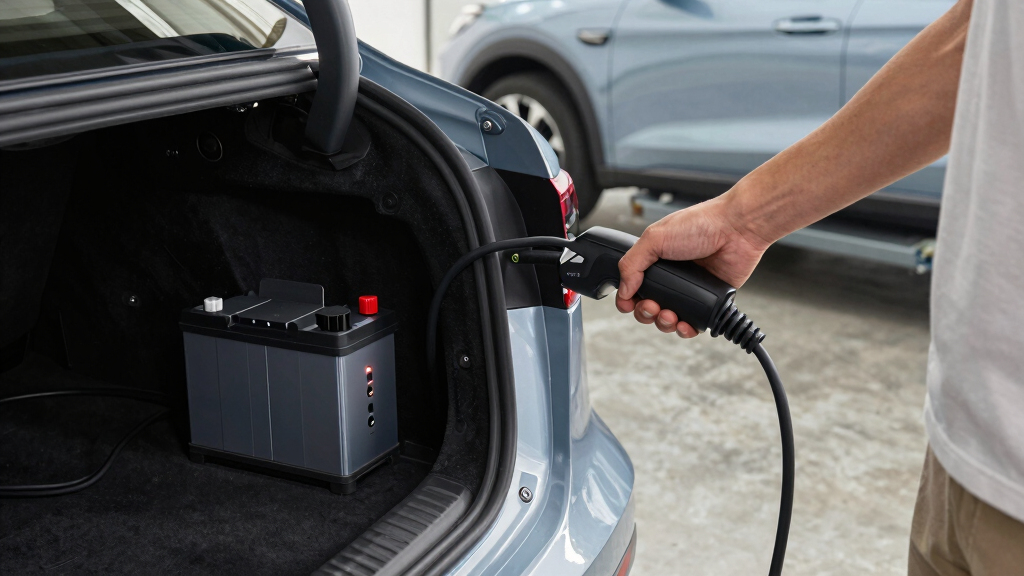

The DEWALT Level 1 & 2 Portable EV Charger is my best overall pick because its dual-voltage support, 25-foot cable, and manageable 16-amp output balance travel flexibility with everyday usability. Drivers who prioritize charging speed should look at the Aimiler 40A Level 2 Charger, while Tesla owners get a more natural connector match from the Lectron NACS Portable EV Charger. The main choice is between slower dual-voltage models that work with more outlets and faster 32- or 40-amp units that require suitable 240-volt circuits. Connector type, cable reach, electrical certification, and app dependence also separate otherwise similar chargers. Continue reading for my full breakdown of the best portable EV battery chargers and the buyer each option suits.

Get business pricing on garage and car supplies
- Business-only prices and quantity discounts
- Tax-exempt purchasing
- Multiple users, one account, clear invoices
Complete the kit



Key Takeaways
- The DEWALT 16A model ranks first because outlet flexibility, cable length, and portable handling matter more for mixed home-and-travel use than maximum charging speed alone.
- The 40A Aimiler, Lectron, Seguma, and EVDANCE models offer the shortest home charging times, but their NEMA 14-50 requirement makes them less adaptable on the road.
- Dual-level chargers form the most versatile group: DEWALT, Battery Tender, AIXINE, EVDANCE, Grasside, and the 3.5kW model can cover both routine charging and slower 120-volt backup duty.
- Connector choice creates a clear dividing line: most picks use J1772, while the Lectron NACS model is the direct-fit choice for compatible Tesla and NACS vehicles.
- Cable reach and certification separate close rivals; 25-foot ETL-listed options make a stronger case than short-cable models or listings that provide limited safety information.
| DEWALT Level 1 & 2 Portable EV Charger |  | Best for Everyday Flexibility | Charging levels: Level 1 and Level 2 | Maximum current: 16A | Input voltage: 120–240V | VIEW LATEST PRICE | See Our Full Breakdown |
| Portable Level 2 32 Amp WiFi EV Charger |  | Best Smart Portable Charger | Charging level: Level 2 | Input voltage: 240V | Maximum current: 32A | VIEW LATEST PRICE | See Our Full Breakdown |
| Battery Tender eCharge 32 AMP EV Charger |  | Best App-Free Controls | Charging levels: Level 1 and Level 2 | Voltage compatibility: 120V and 240V | Maximum current: 32A | VIEW LATEST PRICE | See Our Full Breakdown |
| Lectron Level 2 40 Amp J1772 EV Charger |  | Best for Fast J1772 Charging | Charging level: Level 2 | Input voltage: 240V | Maximum current: 40A | VIEW LATEST PRICE | See Our Full Breakdown |
| Lectron Level 1/2 40 Amp NACS Portable EV Charger |  | Best for NACS Vehicles | Charging levels: Level 1 and Level 2 | Adjustable current: 8A–40A | Vehicle connector: NACS | VIEW LATEST PRICE | See Our Full Breakdown |
| EVDANCE Level 1 & 2 EV Charger with 25FT Cable |  | Best Dual-Voltage Travel Pick | Charging Levels: Level 1 and Level 2 | Voltage: 120V / 240V | Current: 12A / 16A | VIEW LATEST PRICE | See Our Full Breakdown |
| Schumacher Electric SEV1670 Level 1 Portable EV Charger |  | Best for Basic Overnight Charging | Charging Level: Level 1 | Current: 12A | Voltage: 120V | VIEW LATEST PRICE | See Our Full Breakdown |
| Level 1 & 2 32 Amp Portable Electric Car Charger |  | Best Adjustable High-Output Pick | Charging Levels: Level 1 and Level 2 | Charging Current: 6A–32A adjustable | Maximum Power: 7.68kW | VIEW LATEST PRICE | See Our Full Breakdown |
| Aimiler Level 2 EV Charger, 40A with WiFi App Control | 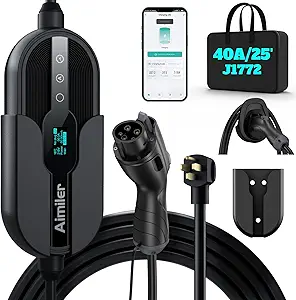 | Best Smart Portable Charger | Charging Level: Level 2 | Maximum Current: 40A | Voltage: 220V–240V | VIEW LATEST PRICE | See Our Full Breakdown |
| Level 1 & 2 16Amp Portable EV Charger with 20FT Cable |  | Best No-Frills Dual-Level Pick | Charging Levels: Level 1 and Level 2 | Power Output: Up to 3.5kW | Current: 16A | VIEW LATEST PRICE | See Our Full Breakdown |
| AIXINE Level 1 & 2 EV Charger |  | Best for All-Weather Dual-Voltage Charging | Output Voltage: 240V | Maximum Current: 16A | Maximum Power: 3.68kW | VIEW LATEST PRICE | See Our Full Breakdown |
| Schumacher Electric SC1455 Level 2 EV Charger |  | Best for Long-Reach Charging | Voltage: 240V | Maximum Current: 16A | Cable Length: 28 feet | VIEW LATEST PRICE | See Our Full Breakdown |
| Seguma Level 2 EV Charger |  | Best for Scheduled High-Speed Charging | Maximum Power: 9.6kW | Maximum Current: 40A | Voltage: 240V | VIEW LATEST PRICE | See Our Full Breakdown |
| EVDANCE Level 2 EV Charger 40Amp |  | Best for Wide-Range Current Control | Maximum Power: 9.6kW | Voltage: 240V | Current Range: 10A to 40A | VIEW LATEST PRICE | See Our Full Breakdown |
| 2026 Grasside Level 1 & 2 EV Charger |  | Best Warranty-Backed Travel Pick | Compatibility: J1772 EVs and PHEVs | Current Range: 8A to 16A | Maximum Power: 3.84kW | VIEW LATEST PRICE | See Our Full Breakdown |
| portable EV battery charger | Cable length | Maximum power | Vehicle connector | Maximum current |
|---|---|---|---|---|
| DEWALT Level 1 & 2 Portable EV | 25 ft | 3.84kW | SAE J1772 | 16A |
| Portable Level 2 32 Amp WiFi E | 25 ft | 7.68kW | J1772 | 32A |
| Battery Tender eCharge 32 AMP | — | 7.6kW | J1772 | 32A |
| Lectron Level 2 40 Amp J1772 E | 16 ft | 9.6kW | J1772 | 40A |
| Lectron Level 1/2 40 Amp NACS | 20 ft | — | NACS | — |
| EVDANCE Level 1 & 2 EV Charger | 25 ft | — | — | — |
| Schumacher Electric SEV1670 Le | 20 ft | — | — | — |
| Level 1 & 2 32 Amp Portable El | 25 ft | 7.68kW | — | — |
| Aimiler Level 2 EV Charger | 25 ft | — | — | 40A |
| Level 1 & 2 16Amp Portable EV | 20 ft | — | — | — |
| AIXINE Level 1 & 2 EV Charger | 25 feet | 3.68kW | J1772 | 16A |
| Schumacher Electric SC1455 Lev | 28 feet | — | J1772 | 16A |
| Seguma Level 2 EV Charger | 25 feet | 9.6kW | J1772 | 40A |
| EVDANCE Level 2 EV Charger 40A | 25 feet | 9.6kW | J1772 | — |
| 2026 Grasside Level 1 & 2 EV C | — | 3.84kW | — | — |
More Details on Our Top Picks
DEWALT Level 1 & 2 Portable EV Charger
I rank the DEWALT Level 1 & 2 Portable EV Charger highly for drivers who regularly switch between household and 240V outlets. Its included NEMA 5-15 adapter, NEMA 6-20 plug, and 25-foot cable make it more adaptable than the 240V-only Lectron Level 2 charger. The 16-amp ceiling also places less demand on modest electrical circuits, while the IP66 enclosure supports outdoor charging. That flexibility comes at the cost of speed: its 3.84kW maximum is half the output of the 32-amp Battery Tender eCharge and well below either 40-amp Lectron. I see this as a dependable travel and backup choice rather than a rapid daily charger. Tesla and other NACS owners need a separate adapter, and renters seeking app scheduling will find no connected controls.
Pros:- Supports both 120V and 240V charging with an included household-outlet adapter
- 25-foot cable offers more parking flexibility than the 16-foot Lectron Level 2 charger
- IP66 construction is suited to exposed driveways and outdoor travel use
- CSA certification and built-in protections strengthen its safety case
Cons:- 3.84kW maximum output is slow beside the 7.6kW and 9.6kW alternatives
- Tesla and other NACS vehicles require a separate adapter
- Plug-in-only design is poorly suited to buyers planning a permanent hardwired installation
Best for: J1772 drivers who need one rugged charger for household outlets, 240V outlets, travel, and outdoor parking
Not ideal for: High-mileage commuters who need faster overnight charging or NACS owners unwilling to carry a separate adapter
- Charging levels:Level 1 and Level 2
- Maximum current:16A
- Input voltage:120–240V
- Maximum power:3.84kW
- Cable length:25 ft
- Vehicle connector:SAE J1772
- Outlet connections:NEMA 6-20 plug and NEMA 5-15 adapter
- Weather rating:IP66
- Certification:CSA
Our verdict“Choose the DEWALT when outlet flexibility and weather resistance matter more than maximum charging speed.”
Portable Level 2 32 Amp WiFi EV Charger
The Portable Level 2 32 Amp WiFi EV Charger earns its place through remote scheduling and charging visibility, capabilities absent from the Battery Tender eCharge 32. Its adjustable output reaches 7.68kW, a useful middle ground between the slower 16-amp DEWALT and the faster 40-amp Lectron models. I would favor it for a driveway where off-peak scheduling can lower charging costs without committing to a hardwired wall unit. A 25-foot cable and IP66 enclosure also give it better outdoor reach than Lectron’s 16-foot J1772 model. Portability is relative, though: the rugged housing and full-length cable make it bulky to move frequently. The app depends on WiFi, and its 32-amp ceiling leaves some charging speed unused on vehicles and circuits capable of accepting 40 amps.
Pros:- WiFi app supports remote monitoring and scheduled charging
- Adjustable output reaches a useful 7.68kW maximum
- 25-foot cable accommodates awkward driveway and garage layouts
- ETL listing and IP66 protection support regular outdoor use
Cons:- Heavier, bulkier construction weakens its travel credentials
- Full smart functionality relies on a stable WiFi connection
- Slower than the 9.6kW Lectron options when paired with a 40-amp-capable vehicle
Best for: J1772 owners with a NEMA 14-50 outlet who want app scheduling, adjustable current, and outdoor charging
Not ideal for: Drivers without dependable home WiFi or travelers who need the smallest possible charger for a crowded cargo area
- Charging level:Level 2
- Input voltage:240V
- Maximum current:32A
- Maximum power:7.68kW
- Vehicle connector:J1772
- Wall plug:NEMA 14-50
- Cable length:25 ft
- Enclosure rating:NEMA Type 4 and IP66
- Safety listing:ETL listed to UL 2594 and UL 2231-1/-2
Our verdict“This is the strongest fit for J1772 drivers who value connected controls and cable reach over the lightest carrying weight.”
Battery Tender eCharge 32 AMP EV Charger
I would choose the Battery Tender eCharge 32 for buyers who want useful charging information without pairing accounts, phones, or home networks. Its LCD provides status at the unit, while adjustable Level 1 and Level 2 operation covers both 120V travel stops and faster 240V home charging. Compared with the 32-amp WiFi model, it sacrifices remote scheduling but offers simpler stand-alone operation. It also includes a mounting bracket, plug holder, carry bag, and adapter, making it better organized for mixed home and road use than a bare charging cable. At 7.6kW, it cannot match either 9.6kW Lectron charger, although its dual-voltage support is more versatile than the J1772 Lectron Level 2 model. The main limitation is ecosystem fit: NACS vehicles require an adapter, and buyers seeking charging alerts away from the car should pick the WiFi option.
Pros:- Operates on both 120V and 240V power sources
- LCD gives charging status without an app or WiFi account
- Adjustable current can match different outlet and vehicle limits
- Carry bag, mounting bracket, plug holder, and adapter are included
Cons:- No remote monitoring, notifications, or app-based scheduling
- J1772 connector requires an adapter for NACS vehicles
- 7.6kW output trails the 9.6kW Lectron chargers
Best for: J1772 drivers who split charging between home and travel locations and prefer an LCD over phone-based controls
Not ideal for: Smart-home users who want remote notifications and scheduling, or NACS drivers seeking a native connector
- Charging levels:Level 1 and Level 2
- Voltage compatibility:120V and 240V
- Maximum current:32A
- Maximum power:7.6kW
- Estimated range rate:Up to 28.5 miles per hour
- Vehicle connector:J1772
- Status interface:LCD
- Included accessories:Mounting bracket, plug holder, carry bag, and adapter
Our verdict“Buy the Battery Tender eCharge 32 for dual-voltage versatility and clear local controls without app dependence.”
Lectron Level 2 40 Amp J1772 EV Charger
The Lectron Level 2 40 Amp J1772 EV Charger prioritizes charging speed over outlet flexibility. Its 9.6kW output can replenish a compatible EV faster than the 7.6kW Battery Tender eCharge 32 and twice as quickly as the 3.84kW DEWALT maximum. I rank it as the performance pick for drivers with a suitable NEMA 14-50 outlet who routinely return home with a low battery. The tradeoff is reach and versatility. Its 16-foot cable is the shortest here, so outlet placement and parking direction matter more than with either 25-foot alternative. It also lacks Level 1 support, making it less useful when travel plans provide only a household receptacle. The native J1772 connector suits many established EVs and plug-in hybrids, but Tesla and other NACS drivers face the added cost and inconvenience of an adapter.
Pros:- 9.6kW output is the fastest native J1772 option in this batch
- 40-amp charging suits high-mileage drivers with compatible vehicles
- NEMA 14-50 plug allows setup without hardwiring
- Safety certifications support use as a regular home charger
Cons:- 16-foot cable offers much less positioning freedom than the 25-foot models
- Requires a compatible 240V NEMA 14-50 outlet and circuit
- NACS vehicles need an adapter
Best for: J1772 owners with a correctly installed NEMA 14-50 outlet who need high-output daily home charging
Not ideal for: Apartment residents, frequent travelers relying on household outlets, or garages where the outlet sits far from the charge port
- Charging level:Level 2
- Input voltage:240V
- Maximum current:40A
- Maximum power:9.6kW
- Vehicle connector:J1772
- Wall plug:NEMA 14-50
- Cable length:16 ft
- Vehicle compatibility:J1772 electric vehicles
Our verdict“Pick this Lectron when fast native J1772 charging matters more than cable reach or 120V backup capability.”
Lectron Level 1/2 40 Amp NACS Portable EV Charger
I rank the Lectron Level 1/2 NACS Portable EV Charger as the most flexible choice for Tesla and other NACS vehicles. Unlike the J1772 Lectron, it connects natively to those cars, while its NEMA 5-15 and 14-50 connections cover slow household charging and higher-output 240V use. The 8A-to-40A adjustment range also lets buyers match output to different circuits rather than treating every stop alike. Its 20-foot cable provides more reach than Lectron’s 16-foot J1772 charger, though both 25-foot models remain easier to position across wide driveways. I would pick this over the DEWALT for a NACS household because no vehicle adapter is needed and the current ceiling is much higher. Still, safe setup requires knowing the outlet and circuit limits, and the charger may feel bulky when packed into a small trunk compartment.
Pros:- Native NACS connector avoids an adapter for Tesla and compatible vehicles
- Level 1 and Level 2 support covers both household and 240V charging
- Wide 8A-to-40A current range accommodates varied power sources
- 20-foot cable balances reach with travel storage
Cons:- J1772 vehicles require a separate adapter
- Users must match the amperage setting to the outlet and circuit capacity
- Dual plugs and a 20-foot cable create a bulkier travel package
Best for: Tesla and other NACS drivers who want one adjustable charger for household outlets, NEMA 14-50 outlets, and road trips
Not ideal for: J1772-only households or drivers who want automatic circuit detection instead of selecting an appropriate current
- Charging levels:Level 1 and Level 2
- Adjustable current:8A–40A
- Vehicle connector:NACS
- Wall plugs:NEMA 14-50 and NEMA 5-15
- Cable length:20 ft
- Vehicle compatibility:Tesla Model 3, Y, S, X, Cybertruck, and other NACS EVs
- Monitoring:Real-time charging display
- Safety certification:ETL
Our verdict“This Lectron is the clear choice for NACS drivers who want maximum outlet flexibility without carrying a vehicle-side adapter.”
EVDANCE Level 1 & 2 EV Charger with 25FT Cable
I rank the EVDANCE Level 1 & 2 EV Charger as the strongest travel-oriented choice here because its NEMA 5-15 and 6-20 connections let drivers use both household and 240-volt outlets. The 25-foot cable provides more parking flexibility than the 20-foot Schumacher SEV1670, while IP66 protection and ETL listing add confidence when charging outdoors. Its 16-amp ceiling cannot match the 32-amp adjustable model or the 40-amp Aimiler, so this is better viewed as a dependable backup than a rapid everyday charger. I also find the lack of native NACS support limiting for Tesla owners, and some locations may call for another outlet adapter. Still, its combination of dual-voltage flexibility, reach, and durable construction earns it a clear role for road trips and mixed-outlet use.
Pros:- Supports both 120V Level 1 and 240V Level 2 charging
- 25-foot cable reaches vehicles across awkward parking layouts
- ETL-listed, IP66 housing suits regular outdoor use
- Includes NEMA 5-15 and NEMA 6-20 connection options
Cons:- 16A maximum is much slower than the higher-output chargers in the lineup
- Tesla and other NACS vehicles require an adapter
- Additional outlet types may require separately purchased adapters
Best for: J1772 EV and plug-in hybrid drivers who want one weather-resistant charger for household outlets, 240-volt outlets, and road-trip backup use
Not ideal for: Drivers needing 32A or 40A daily charging, or Tesla owners who do not want to carry a separate adapter
- Charging Levels:Level 1 and Level 2
- Voltage:120V / 240V
- Current:12A / 16A
- Cable Length:25 ft
- Plug Types:NEMA 5-15 and NEMA 6-20
- Certification:ETL Listed
- Protection Rating:IP66
- Fire Rating:UL 94 V-0
Our verdict“This is my pick for travelers who value outlet flexibility and cable reach more than maximum charging speed.”
Schumacher Electric SEV1670 Level 1 Portable EV Charger
The Schumacher Electric SEV1670 takes the simplest route: plug it into a common 120-volt receptacle and charge without managing current settings or outlet adapters. I place it behind dual-level models for versatility, but ahead of lesser-known basic chargers for its three-year warranty, IP66 protection, and established 12-amp configuration. Compared with the EVDANCE Level 1 & 2 charger, it loses five feet of cable and cannot take advantage of a 240-volt outlet. That makes replenishing a large battery a slow process, especially after a long commute. Its strength is predictability rather than performance. The 20-foot J1772 cable still offers useful reach, and LED indicators keep operation approachable. I would choose it for plug-in hybrids, low-mileage EVs, or emergency trunk duty, not as the primary charger for a frequently depleted battery-electric vehicle.
Pros:- Works from a common NEMA 5-15 household outlet
- Three-year warranty offers stronger coverage than many generic alternatives
- IP66 protection supports indoor or outdoor charging
- LED indicators make charging status easy to read
Cons:- Level 1-only operation cannot use 240V power
- 12A output produces slow charging for large EV batteries
- 20-foot cable is shorter than several 25-foot options in the roundup
Best for: Plug-in hybrid owners and low-mileage EV commuters who need uncomplicated overnight charging from an existing 120V outlet
Not ideal for: Long-distance battery-electric vehicle drivers who routinely need to recover a large amount of range overnight
- Charging Level:Level 1
- Current:12A
- Voltage:120V
- Connector:J1772
- Cable Length:20 ft
- Plug Type:NEMA 5-15P
- Ingress Protection:IP66
- Warranty:3 years
Our verdict“I recommend this to low-mileage drivers who want a straightforward, warranty-backed Level 1 charger and can accept slow replenishment.”
Level 1 & 2 32 Amp Portable Electric Car Charger
I give this 32-amp Level 1 & 2 charger the performance-flexibility role because its 6A-to-32A adjustment range can match several circuits instead of locking the buyer into one output. At 240 volts, its 7.68kW rating offers much quicker recovery than either 16-amp EVDANCE option, yet the included 5-15 adapter preserves access to household outlets during travel. The real-time LCD also supplies more charging detail than basic LED-only models. Aimiler’s 40A charger remains faster and adds app control, so buyers with a NEMA 14-50 circuit and reliable Wi-Fi may prefer that model. This unit instead favors people who want local controls without app dependence. Its drawbacks are the missing remote scheduling features and the need for an adapter with Tesla or NACS vehicles. The 25-foot lead helps offset those limits in driveways and shared garages.
Pros:- Adjustable 6A-to-32A output accommodates varied circuit limits
- 7.68kW maximum output is substantially faster than 16A alternatives
- Included NEMA 5-15 adapter enables Level 1 fallback charging
- LCD shows charging information without requiring a phone
Cons:- No Wi-Fi or app-based remote controls
- Tesla and other NACS vehicles need an additional adapter
- Full 32A performance depends on a suitable 240V circuit
Best for: J1772 households with access to different circuit capacities that want adjustable output, fast 240V charging, and a household-outlet fallback
Not ideal for: Smart-home users who want remote scheduling and NACS drivers unwilling to buy an additional connector adapter
- Charging Levels:Level 1 and Level 2
- Charging Current:6A–32A adjustable
- Maximum Power:7.68kW
- Voltage:120V / 240V
- Cable Length:25 ft
- Connector:J1772
- Weather Resistance:IP66
- Safety Certification:UL Listed
Our verdict“This is my choice for buyers who want strong Level 2 speed and broad amperage control without paying for connected features.”
Aimiler Level 2 EV Charger, 40A with WiFi App Control
The Aimiler 40A Level 2 charger ranks highest for connected charging because its app supports remote starts, scheduling, and monitoring while adjustable amperage helps manage available circuit capacity. Its 40A output exceeds the 32A model’s maximum, making it better suited to large batteries and short overnight windows. I also favor its 25-foot cable over the shorter Lectron 40A option listed elsewhere in the roundup when the outlet is far from the charge port. That speed and connectivity come with stricter requirements: it needs a suitable 220–240V NEMA 14-50 supply, and some buyers may need professional electrical work before using the full output. Wi-Fi setup also adds complexity absent from plug-and-charge models, though a direct-start mode remains available. With ETL certification and NEMA Type 4/IP66 protection, this is my premium smart choice for connected home charging that can still travel.
Pros:- Up to 40A output supports fast overnight charging
- Wi-Fi app provides scheduling, remote starts, and monitoring
- Adjustable amperage helps match available circuit capacity
- NEMA Type 4 and IP66 protection suit exposed charging locations
Cons:- Requires a compatible 220–240V NEMA 14-50 circuit
- Tesla and other NACS vehicles need an adapter
- Electrical preparation and Wi-Fi setup make it less beginner-friendly
Best for: High-mileage J1772 drivers with a suitable NEMA 14-50 circuit who want fast charging, scheduling, and phone-based energy monitoring
Not ideal for: Apartment residents without a 240V NEMA 14-50 outlet, or buyers who want a simple 120V travel fallback
- Charging Level:Level 2
- Maximum Current:40A
- Voltage:220V–240V
- Plug Type:NEMA 14-50P
- Connector:J1772
- Cable Length:25 ft
- Certification:ETL Certified
- Weather Protection:NEMA Type 4 / IP66
- Wi-Fi Control:Yes
Our verdict“I would pick the Aimiler for connected households that can support 40A charging and want speed plus remote control.”
Level 1 & 2 16Amp Portable EV Charger with 20FT Cable
This 16-amp dual-level charger makes the list as a straightforward bridge between slow household charging and modest 240-volt charging. Its NEMA 5-15 and 6-20 connections cover the same basic outlet strategy as the EVDANCE Level 1 & 2 model, but the 20-foot cable gives up five feet of reach and its IP65 rating offers less environmental protection than EVDANCE’s IP66 enclosure. In return, buyers get a focused 3.5kW design without app setup or complicated current menus. I see that simplicity working well for plug-in hybrids, smaller-battery EVs, and occasional travel charging. It is harder to recommend for high-mileage drivers because 16A falls far behind the 32A and Aimiler 40A choices. The FCC certification also is not the same type of electrical safety listing supplied with the UL- or ETL-listed alternatives, leaving certification-conscious buyers with stronger options elsewhere.
Pros:- Supports both 110V Level 1 and 240V Level 2 charging
- NEMA 5-15 and 6-20 plugs cover common household and 240V sources
- 3.5kW output is useful for smaller batteries and plug-in hybrids
- Built-in lightning and leakage protections address common electrical faults
Cons:- 16A ceiling is slow beside 32A and 40A models
- 20-foot cable provides less reach than competing 25-foot chargers
- FCC certification does not replace a stated UL or ETL electrical safety listing
Best for: Plug-in hybrid and smaller-battery EV owners who want basic 120V and 240V charging without apps or advanced controls
Not ideal for: High-mileage EV drivers needing rapid overnight recovery, or buyers who require a UL- or ETL-listed charger
- Charging Levels:Level 1 and Level 2
- Power Output:Up to 3.5kW
- Current:16A
- Input Voltage:110V–240V
- Cable Length:20 ft
- Plug Types:NEMA 6-20 and NEMA 5-15
- Waterproof Rating:IP65
- Certification:FCC
Our verdict“This is my no-frills choice for moderate charging needs, provided cable reach and high-amperage performance are not priorities.”
AIXINE Level 1 & 2 EV Charger
I place the AIXINE Level 1 & 2 EV Charger here for drivers who value outlet flexibility and outdoor durability more than outright speed. Its NEMA 6-20 plug and 5-15 adapter support charging at home or from a standard outlet while traveling, and the IP67 enclosure offers stronger water and dust protection than the IP65 Grasside. Compared with the 40A Seguma, however, its 16A ceiling means much longer charging sessions, making it better for overnight replenishment than rapid turnaround. The 25-foot cable helps when an outlet is poorly positioned, while adjustable current gives me more confidence when matching the charger to different circuits. Manual adjustments and the lack of app control limit convenience, and native NACS vehicles need a separate adapter.
Pros:- Supports Level 1 and Level 2 charging through two common outlet types
- IP67 protection suits exposed driveways and wet conditions
- 25-foot cable accommodates awkward parking arrangements
- ETL, FCC, and UL safety certifications add purchasing confidence
Cons:- 16A output is considerably slower than the 40A Seguma and EVDANCE models
- Current changes require manual operation rather than app control
- Native NACS vehicles require a separate adapter
Best for: J1772 drivers who regularly charge outdoors and need one cable for both standard 120V and NEMA 6-20 outlets
Not ideal for: High-mileage drivers who need 32A or 40A charging, or NACS owners unwilling to carry a separate adapter
- Output Voltage:240V
- Maximum Current:16A
- Maximum Power:3.68kW
- Cable Length:25 feet
- Vehicle Connector:J1772
- Outlet Connections:NEMA 6-20 plug and NEMA 5-15 adapter
- Weather Rating:IP67
- Safety Certifications:ETL, FCC, and UL
- Weight:7.7 pounds
Our verdict“I recommend this for outdoor J1772 charging when dual-voltage flexibility matters more than high-speed output.”
Schumacher Electric SC1455 Level 2 EV Charger
The Schumacher Electric SC1455 earns its place through reach: its 28-foot cable is the longest among these five picks, giving drivers more freedom when a garage outlet and charging port sit on opposite sides. It also supports Level 1 operation with the supplied 120V adapter, so I see it as a more flexible travel choice than a 240V-only model such as the Seguma. That convenience comes with a 16A performance limit; the 40A EVDANCE can deliver far more power from a suitable circuit. Schumacher includes overcurrent and overvoltage protection, but no app or scheduling controls, and its one-year warranty trails Grasside’s two-year coverage. I rank it for practical cable placement and familiar controls, not for maximum charging speed or connected features.
Pros:- 28-foot cable provides the greatest reach in this group
- Supports both 120V Level 1 and 240V Level 2 charging
- J1772 connector works with most North American non-NACS EVs
- Overcurrent and overvoltage protections address common electrical risks
Cons:- 16A maximum output falls well behind the 40A alternatives
- No app connectivity or built-in smart controls
- One-year warranty is shorter than Grasside’s coverage
Best for: Drivers with distant or inconveniently positioned outlets who need a dual-level J1772 charger with extra cable reach
Not ideal for: Drivers seeking 40A home charging, remote monitoring, or warranty coverage beyond one year
- Voltage:240V
- Maximum Current:16A
- Cable Length:28 feet
- Vehicle Connector:J1772
- Outlet Plug:NEMA 6-20P
- Charging Levels:Level 1 and Level 2
- Protection Features:Overcurrent and overvoltage protection
- Warranty:1 year
Our verdict“I would choose the SC1455 when cable reach and dual-voltage use outweigh the need for high-amperage charging.”
Seguma Level 2 EV Charger
I rank the Seguma Level 2 EV Charger highest for drivers who want fast charging without depending on an app. Its 40A output reaches 9.6kW, while adjustable current can reduce the load when the available circuit cannot support the maximum setting. The defining advantage over the similarly powerful EVDANCE is its emphasis on a delay timer, which makes overnight or off-peak charging easier to arrange directly from the unit. A large TFT screen also presents live data more clearly than the simpler LCD on the Grasside. Speed has a cost: this charger needs a NEMA 14-50 outlet, cannot fall back to an ordinary 120V receptacle, and its 25-foot cable adds bulk in storage. It suits planned home charging better than lightweight emergency carry.
Pros:- 9.6kW maximum output supports much faster replenishment than 16A models
- Delay timer enables scheduled charging without network access
- Adjustable current helps match output to the available circuit
- Large TFT display shows charging information at the unit
Cons:- Requires a NEMA 14-50 outlet and 240V service
- No Level 1 fallback for standard household receptacles
- Cable and control unit may be cumbersome for frequent transport
Best for: Homeowners with a NEMA 14-50 outlet who want 40A charging and device-based off-peak scheduling without an app
Not ideal for: Apartment residents, frequent travelers, or anyone limited to ordinary 120V outlets
- Maximum Power:9.6kW
- Maximum Current:40A
- Voltage:240V
- Cable Length:25 feet
- Outlet Plug:NEMA 14-50
- Vehicle Connector:J1772
- Weather Rating:IP66
- Operating Temperature:-22°F to 122°F
- Controls:Adjustable current and delay timer
Our verdict“I favor the Seguma for homeowners who want fast, scheduled J1772 charging from a properly installed NEMA 14-50 outlet.”
EVDANCE Level 2 EV Charger 40Amp
The EVDANCE 40A Level 2 Charger is my pick for households that need one high-power unit to accommodate changing circuit or vehicle limits. Its current adjusts from 10A to 40A, offering more explicit low-end flexibility than the fixed-maximum 16A Schumacher while still reaching 9.6kW at full output. Compared with the Seguma, the core charging hardware is similar: both use NEMA 14-50 power, 25-foot J1772 cables, TFT displays, and IP66 housings. I place EVDANCE behind Seguma for scheduling-focused buyers because the supplied data does not identify a delay timer. It also lacks an included NACS adapter, and its controls may feel excessive for someone who only needs occasional overnight charging. For multi-EV J1772 households, though, the broad 10A-to-40A range is a useful distinction.
Pros:- 10A-to-40A adjustment range supports varied charging requirements
- 9.6kW maximum power can replenish compatible EVs quickly
- 25-foot cable and carrying accessories support portable use
- IP66 enclosure and broad temperature rating suit outdoor conditions
Cons:- Cannot connect to a standard 120V outlet
- NACS vehicles need an adapter that is not included
- Extra controls add complexity for drivers with simple charging needs
Best for: Multi-EV J1772 households that want to tailor charging current across different vehicles or 240V circuit limits
Not ideal for: Occasional Level 1 users, NACS owners expecting an included adapter, or homes without a NEMA 14-50 outlet
- Maximum Power:9.6kW
- Voltage:240V
- Current Range:10A to 40A
- Cable Length:25 feet
- Vehicle Connector:J1772
- Outlet Plug:NEMA 14-50P
- Weather Rating:IP66
- Operating Temperature:-22°F to 122°F
Our verdict“I recommend EVDANCE to J1772 households that can use 40A power but want the freedom to dial charging current down.”
2026 Grasside Level 1 & 2 EV Charger
I see the 2026 Grasside Level 1 & 2 EV Charger as the strongest travel-oriented choice for buyers who prioritize warranty length and outlet versatility. Its NEMA 5-15 and 6-20 connections cover Level 1 and Level 2 situations, while the 8A-to-16A adjustment range helps avoid overloading a lower-capacity circuit. Unlike the Schumacher, Grasside pairs those dual-level options with a two-year warranty and an LCD for live charging data. Its maximum 3.84kW output still sits far below the 9.6kW Seguma and EVDANCE, so drivers with large batteries or long daily commutes may find recovery too slow. The IP65 rating handles outdoor exposure but provides less ingress protection than AIXINE’s IP67 enclosure. No app control or included NACS adapter rounds out the compromises.
Pros:- NEMA 5-15 and 6-20 support both Level 1 and Level 2 charging
- Two-year warranty exceeds the Schumacher’s one-year coverage
- LCD provides real-time charging information
- 25-foot cord offers useful reach at homes and travel stops
Cons:- 16A ceiling is slow compared with 40A Level 2 chargers
- IP65 protection is weaker than AIXINE’s IP67 rating
- No app connectivity or included NACS adapter
Best for: Road-tripping J1772 EV and PHEV owners who want 120V and 240V flexibility backed by a two-year warranty
Not ideal for: Long-distance commuters who need rapid overnight recovery or NACS drivers who do not already own an adapter
- Compatibility:J1772 EVs and PHEVs
- Current Range:8A to 16A
- Maximum Power:3.84kW
- Cord Length:25 feet
- Outlet Connections:NEMA 5-15 and NEMA 6-20
- Weather Rating:IP65
- Protection Features:Overcurrent, overheating, and electrical-fault protection
- Display:LCD with real-time monitoring
- Warranty:2 years
Our verdict“I would pick the Grasside for flexible travel charging when warranty coverage matters more than maximum Level 2 speed.”
How We Picked
I ranked these chargers around portable usefulness rather than headline amperage. My main criteria were charging performance, 120/240-volt flexibility, connector compatibility, cable reach, plug type, weather resistance, current adjustment, and the clarity of third-party safety certification. I also weighed setup simplicity, storage burden, app reliance, and whether a charger could serve both as a daily home unit and a travel backup.
The ordering gives extra weight to electrical confidence, practical versatility, and realistic value. A 40-amp charger moves energy faster, but it loses ground if it only works with a NEMA 14-50 outlet or adds bulk without helping on ordinary 120-volt circuits. Dual-level models rank well for mixed use, while dedicated Level 1 units earn narrower roles for beginners, plug-in hybrids, and low-mileage drivers. Where two products appear similar, I favor the model with clearer certification, longer reach, or more useful controls.
Factors to Consider When Choosing Best Portable EV Battery Chargers
I treat a portable EV charger as a mobile charging cable, not a battery that carries stored energy. That distinction matters because every product here still needs a compatible wall outlet and cannot recharge a stranded vehicle without an external power source. The right choice depends less on the word “portable” and more on where the charger will plug in, how fast the car can accept power, and how often the cable will travel.
Match Charging Speed to the Circuit
I start with the electrical circuit because it sets the real charging ceiling. A 40-amp charger normally needs a 50-amp circuit, while a 32-amp unit generally pairs with a 40-amp circuit under continuous-load rules. A 16-amp Level 2 model can be a better fit for a 20-amp 240-volt circuit, even though charging takes longer. Buying more amperage than the vehicle or circuit supports adds cost and bulk without reducing charging time. Plug-in hybrids and low-mileage commuters may recover their daily driving overnight with 12 or 16 amps. I recommend confirming the breaker, wiring, receptacle, and vehicle intake limit before choosing a speed tier.
Choose Between Dual-Voltage Flexibility and Level 2 Speed
A dual-voltage charger can use 120 volts as a fallback and 240 volts when a matching outlet is available. That makes models such as the DEWALT, Battery Tender, AIXINE, and Grasside more useful for unfamiliar garages or visits with family. Dedicated 32- and 40-amp units make more sense when the charger will spend most of its life beside a known 240-volt outlet. Level 1 charging may add only a few miles of range per hour, so it can be frustrating for long-range battery EVs. For a plug-in hybrid, that slower pace may still refill the usable battery overnight. I would pay for dual-voltage capability when travel flexibility matters, but favor higher Level 2 output for heavy daily mileage.
Verify the Plug and Vehicle Connector
The wall plug and vehicle connector must both match the charging setup. Most products in this roundup use J1772 for the vehicle side, while the Lectron dual-level model uses NACS for compatible Tesla and NACS vehicles. An adapter can broaden compatibility, but it adds another connection point, more equipment to carry, and another component with its own current rating. On the wall side, NEMA 14-50, NEMA 6-20, and NEMA 5-15 plugs are not interchangeable without properly rated adapters. A common mistake is buying a high-output charger and assuming any garage receptacle can support it. I recommend mapping the outlets at home and at frequent destinations before choosing the plug configuration.
Treat Cable Length as a Parking Constraint
A longer cable affects where the vehicle can park and whether its charge port can face toward or away from the outlet. The 25-foot chargers provide more placement freedom than the 16-foot Lectron J1772 model, especially in shared driveways or two-car garages. Extra length also adds weight, storage volume, and more cable that can sit on wet or dirty ground. I would not plan on an ordinary extension cord because many are not rated for sustained EV charging loads. A better approach is choosing enough built-in reach and mounting the control box so its weight does not pull on the receptacle. Buyers who travel often should balance usable reach against trunk space and cable handling.
Prioritize Safety Hardware Over App Features
Wi-Fi scheduling and energy tracking are useful, but they should come after electrical protection and certification. I give more weight to ETL or comparable third-party listing, weather protection, temperature monitoring, and clear current limits than to a polished phone app. Smart controls can duplicate scheduling already built into many EVs, which limits their value for some owners. Outdoor users should also check the protection rating of the connector, control box, and plug rather than relying on a broad waterproof claim. Repeated plugging can wear a household receptacle, particularly under high continuous loads, so a quality industrial-grade outlet or hardwired home unit may be safer for permanent daily use. I see app control as a useful bonus on the Aimiler and similar models, not the main reason to buy them.
Frequently Asked Questions
Can a portable EV charger recharge my car if I run out of power on the road?
No product in this roundup stores electricity like a power bank. Each is portable EV supply equipment that must connect to a working 120- or 240-volt outlet. It can help at a home, campground, workshop, or other location with a compatible circuit, but it cannot create energy at the roadside. For true roadside recovery, I would rely on a towing service or a mobile charging provider. Buyers should view these products as flexible charging cables rather than portable batteries.
Is a 40-amp portable charger always better than a 16-amp model?
A 40-amp charger is better only when the vehicle can accept that rate and the electrical circuit can supply it safely. It may cut charging time for a long-range EV, but it usually requires a 50-amp 240-volt circuit and a suitable receptacle. A 16-amp dual-level unit is slower yet easier to match with lower-capacity circuits and backup 120-volt outlets. It can also be lighter and easier to store. I favor 40 amps for high daily mileage and 16 amps for travel flexibility, plug-in hybrids, or modest overnight charging needs.
Should I buy J1772 or NACS for a portable charger?
I would choose the connector that fits the vehicle without an adapter whenever possible. J1772 matches the majority of products in this lineup, while NACS is the direct-fit choice for compatible Tesla and newer NACS-equipped vehicles. An adapter may make either format usable with another vehicle, but its current rating and weather exposure deserve the same care as the charger itself. Households with two connector types should compare the cost of one charger plus a rated adapter against owning separate cables. The Lectron NACS dual-level model has the clearest role for drivers who want native NACS compatibility.
Can I use one of these chargers with a standard household outlet?
Only models that support 120 volts and include a NEMA 5-15 plug or approved adapter can use a standard household outlet. The outlet should be grounded, in sound condition, and on a circuit that can handle a continuous load without other heavy appliances running. Charging at 120 volts is slow, but it can work for plug-in hybrids, short commutes, or emergency range recovery overnight. A 240-volt-only NEMA 14-50 charger will not work from a normal outlet through a simple travel adapter. I would have an electrician inspect any outlet that becomes hot, discolored, loose, or prone to tripping.
When is a portable charger a better buy than a wall-mounted unit?
A portable model makes more sense for renters, frequent travelers, multi-home drivers, and anyone who needs one charger for several locations. It also offers a useful backup when a primary home station fails. A wall-mounted or hardwired charger is often better for daily high-power charging because it reduces receptacle wear and keeps the cable organized. Smart load management and cleaner outdoor installation are also more common among permanent units. I would choose portability for flexibility, but choose a fixed station for intensive daily charging and keep a smaller cable in the vehicle.
Conclusion
For most buyers, I recommend the DEWALT Level 1 & 2 Portable EV Charger as the best overall because its 25-foot reach and dual-voltage design suit both routine charging and travel backup duty. The AIXINE 16A dual-level charger is my value-oriented choice for buyers who want similar outlet flexibility without paying for 32- or 40-amp capability they may not use. Beginners and low-mileage drivers should start with the Schumacher 12A Level 1 charger, which favors simple household-outlet charging over speed. For premium connected charging, I would pick the Aimiler 40A model for its Wi-Fi controls, long cable, and ETL certification, provided a suitable NEMA 14-50 circuit is already available. The Lectron NACS dual-level charger is the strongest fit for Tesla or NACS-focused travel, while the Seguma 40A suits buyers who value adjustable current and delayed charging. Drivers who want maximum Level 2 output without prioritizing an app should compare the Seguma, Lectron 40A, and EVDANCE 40A models around cable reach, connector fit, and electrical setup.
Halloween Picks
halloween
As an affiliate, we earn on qualifying purchases.