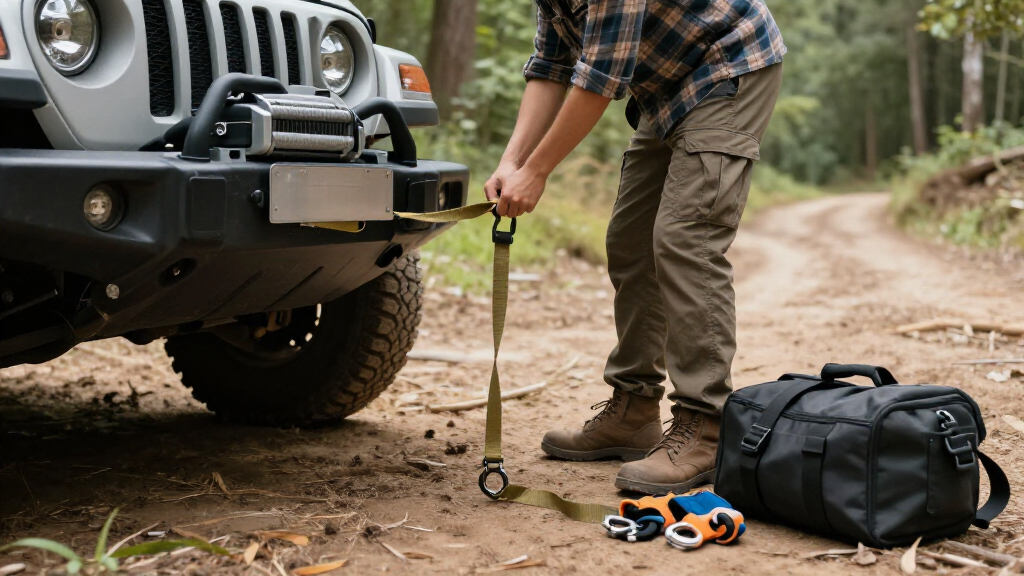

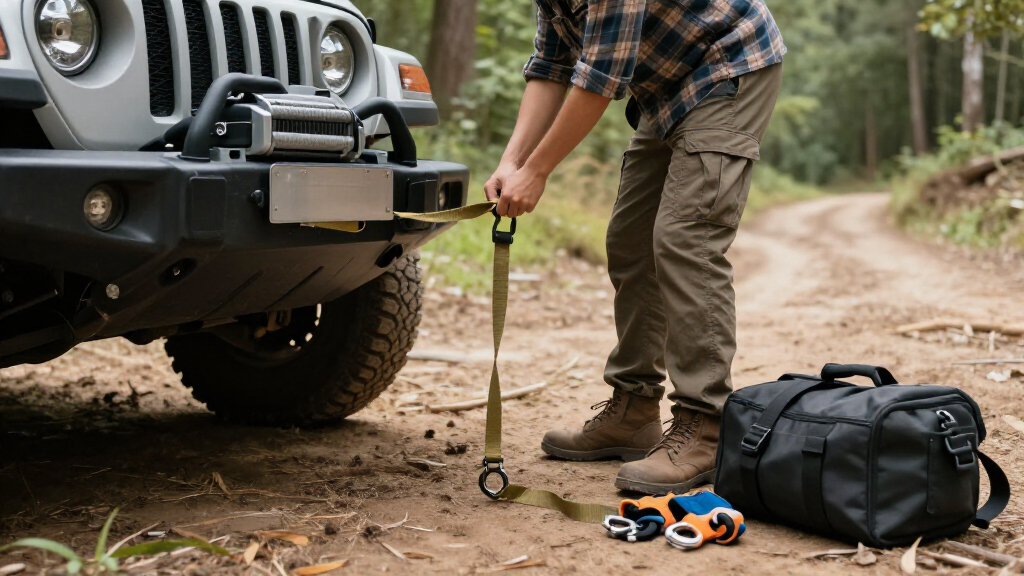
The right off-road vehicle recovery gear can mean the difference between a ten-minute self-recovery and a very expensive tow out of the backcountry. After comparing a dozen kits head-to-head, the BUNKER INDUST Kinetic Recovery Kit stands out as my best overall pick because it pairs a kinetic rope with soft shackles, a recovery ring, and a dampener — everything needed for safe dynamic recovery without metal failure points. Budget-minded buyers get more raw kit for the money with the ALL-TOP Recovery Pack Pro 11-in-1, while Rhino USA’s Recovery Combo Kit is the safer bet for buyers who prioritize brand accountability and build consistency. The main tradeoff in this category is kinetic ropes versus static tow straps: ropes stretch and store energy for pulling a stuck vehicle free, while straps are better for steady towing but punish you if misused as snatch straps. Kit completeness, breaking strength relative to your rig’s weight, and whether shackles are soft or metal all separate a smart purchase from an expensive pile of nylon. Keep reading for the full breakdown.

Get business pricing on garage and car supplies
- Business-only prices and quantity discounts
- Tax-exempt purchasing
- Multiple users, one account, clear invoices
Complete the kit


Key Takeaways
- Kinetic rope kits (BUNKER INDUST, NTR, and the standalone 48,800 lb rope) consistently offer higher break strengths and safer stretch-based recovery than the 3-inch static strap kits from ALL-TOP, METOWARE, and Rhino USA.
- The biggest price difference in this roundup is not strength but completeness: bare straps like the Rhino USA 3in x 20ft cost less up front, then nickel-and-dime you on shackles, dampeners, and receivers later.
- Soft shackles appeared in every kinetic kit and none of the static strap kits — a clear pattern favoring rope kits for solo wheelers who want less metal stored energy near the winch line.
- The VEVOR kit is the only option with a snatch block pulley, making it the standout choice for winch-equipped rigs despite its lower 30,000 lb strap rating.
- Three ALL-TOP kits made the list at nearly identical specs (35,000 lbs), so the deciding factors came down to strap length (20′ vs 30′), included accessories, and price per component rather than raw strength.
| ALL-TOP Heavy Duty Tow Strap Recovery Kit |  | Best Overall Strap Kit | Material: 100% Nylon N66 | Elongation: 22% | Length: 20 feet | VIEW LATEST PRICE | See Our Full Breakdown |
| BUNKER INDUST Recovery Kit |  | Best Complete Kit | Pieces Included: 9 | Rope Length: 30 feet | Recovery Rope Strength: 34,000 lbs | VIEW LATEST PRICE | See Our Full Breakdown |
| METOWARE Heavy Duty Tow Strap Recovery Kit |  | Best Value | Length: 20 feet | Width: 3 inches | Break Strength: 35,000 lbs | VIEW LATEST PRICE | See Our Full Breakdown |
| Kinetic Recovery Tow Rope with Soft Shackles |  | Best Kinetic Rope | Diameter: 1.26 inches | Length: 30 feet | Material: 100% nylon 66 | VIEW LATEST PRICE | See Our Full Breakdown |
| ALL-TOP Nylon Recovery Kit with Hitch Receiver |  | Best Strap Kit with Hitch Receiver | Strap Material: 100% Nylon N66 | Elasticity: 22% | Strap Length: 20 feet | VIEW LATEST PRICE | See Our Full Breakdown |
| ALL-TOP Nylon Recovery Kit with Hitch Receiver, 3″ x 30′ (35,000 lbs) |  | Best Heavy-Duty Kinetic Kit | Strap Material: 100% Nylon N66 | Strap Dimensions: 3 in x 30 ft | Breaking Strength: 35,000 lbs | VIEW LATEST PRICE | See Our Full Breakdown |
| Kinetic Tow Rope with 2 Soft Shackles, 1 inch x 30 feet, 48,800 lbs Break Strength |  | Best Premium Kinetic Rope | Break Strength: 48,800 lbs | Working Load Limit: 16,000 lbs | Dimensions: 1 in diameter x 30 ft | VIEW LATEST PRICE | See Our Full Breakdown |
| Rhino USA Recovery Tow Strap (3in x 20ft) – 31,518lb Heavy Duty Towing |  | Best Value Strap | Break Strength: 31,518 lbs | Dimensions: 3 in x 20 ft | Material: Polyester, weather-resistant | VIEW LATEST PRICE | See Our Full Breakdown |
| Rhino USA Recovery Combo Kit – 30ft Tow Strap & D-Ring Shackles |  | Best for Beginners | Strap Break Strength: 31,518 lbs | Strap Length: 30 ft | Shackle Capacity: 41,850 lbs (20+ ton) | VIEW LATEST PRICE | See Our Full Breakdown |
| ALL-TOP Recovery Pack Pro 11-in-1 Offroad Gear Bag with Recovery Strap Kit |  | Best Complete Overlanding Kit | Recovery Strap: 3 in x 20 ft | Tree Saver Strap: 3 in x 8 ft | Extension Strap: 2 in x 65.6 ft | VIEW LATEST PRICE | See Our Full Breakdown |
| NTR 1-1/8″ x 30′ Kinetic Recovery Tow Rope with 2 UHMWPE Soft Shackles |  | Best Kinetic Rope for Serious Recoveries | Tow Rope Breaking Strength: 37,480 lbs | Soft Shackle Breaking Strength: 40,980 lbs | Rope Size: 1-1/8″ x 30 feet | VIEW LATEST PRICE | See Our Full Breakdown |
| VEVOR Off-Road Recovery Kit with Tow Straps, D-Ring Shackles, Snatch Block, and Accessories |  | Best Complete Starter Toolkit | Tow Strap Size: 3″ x 30 feet | Tow Strap Capacity: 30,000 lbs | Shackle Breaking Strength: 44,092 lbs | VIEW LATEST PRICE | See Our Full Breakdown |
| off-road vehicle recovery gear | Material |
|---|---|
| ALL-TOP Heavy Duty Tow Strap R | 100% Nylon N66 |
| BUNKER INDUST Recovery Kit | — |
| METOWARE Heavy Duty Tow Strap | Polyester |
| Kinetic Recovery Tow Rope with | 100% nylon 66 |
| ALL-TOP Nylon Recovery Kit wit | — |
| ALL-TOP Nylon Recovery Kit wit | — |
| Kinetic Tow Rope with 2 Soft S | Double-braided Nylon N66 |
| Rhino USA Recovery Tow Strap | Polyester, weather-resistant |
| Rhino USA Recovery Combo Kit | — |
| ALL-TOP Recovery Pack Pro 11-i | — |
| NTR 1-1/8" x 30′ Kinetic Recov | Nylon 66, UHMWPE |
| VEVOR Off-Road Recovery Kit wi | — |
More Details on Our Top Picks
ALL-TOP Heavy Duty Tow Strap Recovery Kit
This ALL-TOP kit earns the top strap spot because it gets the fundamentals right: 100% nylon N66 construction with 22% elongation, which stores energy and softens the jolt of a snatch recovery compared with the polyester strap in the METOWARE kit below. Polyester stretches far less, so every yank hits both vehicles harder. The 35,000 lbs breaking strength and 12,000 lbs work load limit cover full-size trucks and loaded rigs, and the neoprene sleeves on the reinforced loops protect both the strap and whoever is standing nearby.
The tradeoff is that this is a strap-and-shackle kit only. Unlike the BUNKER INDUST 9-piece kit, there’s no hitch receiver, dampener, or gloves, so buyers building a complete kit from scratch will spend more piecemeal. It’s also heavy and genuinely dangerous in untrained hands — kinetic straps demand respect.
Pros:- Nylon N66 with 22% elongation delivers safer, smoother kinetic recoveries than polyester straps
- 35,000 lbs breaking strength with a stated 12,000 lbs work load limit
- Neoprene sleeves and reinforced loops add real safety margin
- Includes two carbon-steel D-ring shackles and a storage bag
Cons:- No hitch receiver, dampener, or gloves — it’s a strap kit, not a full recovery system
- Bulky and heavy, awkward to stow in smaller rigs
Best for: Experienced wheelers with full-size trucks or SUVs who already own mounting hardware and want a proven kinetic strap
Not ideal for: Beginners building a first recovery kit who need dampeners, gloves, and a hitch receiver included
- Material:100% Nylon N66
- Elongation:22%
- Length:20 feet
- Width:3 inches
- Breaking Strength:35,000 lbs
- Work Load Limit:12,000 lbs
- D-Ring Material:45# special treated carbon steel
Our verdict“Buy this if you already have recovery points sorted and want the safest-performing strap-only kit in the lineup.”
BUNKER INDUST Recovery Kit
Where the ALL-TOP and METOWARE strap kits hand you two components and call it a day, this BUNKER INDUST package covers the entire recovery workflow: a 30-foot kinetic rope, two soft shackles, a recovery ring, a shackle hitch receiver, a winch dampener, gloves, and a bag to hold it all. That completeness is the whole point — the recovery ring effectively doubles your winch’s pulling power on steep pulls, and the dampener is the piece most people forget until a snapped line whips across a trail.
The compromises are real, though. At 34,000 lbs rope strength, it’s on par with the standalone kinetic rope reviewed later, but the whole kit is heavy and takes up meaningful cargo space. Buyers who already own shackles and a receiver are paying twice for hardware they don’t need. For someone starting from zero, though, the per-piece economics favor buying it as a set.
Pros:- Nine pieces cover snatch, winch, and mechanical-advantage recovery scenarios
- Winch dampener and gloves included — safety gear most kits omit
- Reflective strips aid visibility during nighttime recoveries
- Recovery ring enables doubled-line winch pulls
Cons:- Heavy and bulky — a full bag of steel and rope that eats cargo space
- More expensive than buying just a strap and shackles if you already own hardware
Best for: First-time overlanders or wheelers assembling a recovery kit from scratch who want everything in one purchase
Not ideal for: Owners who already own D-rings and a hitch receiver and only need a rope — the duplicated hardware inflates the price
- Pieces Included:9
- Rope Length:30 feet
- Recovery Rope Strength:34,000 lbs
- Maximum Load Support:4.75 tons
- System Breaking Strength:66,000 lbs
- Key Components:Kinetic rope, 2 soft shackles, recovery ring, hitch receiver, winch dampener, gloves
Our verdict“The smartest single-box purchase for a driver starting an off-road kit from empty.”
METOWARE Heavy Duty Tow Strap Recovery Kit
For buyers who mostly need a steady towing and static pull strap rather than a kinetic snatch strap, this METOWARE kit is the budget-minded pick. It matches the ALL-TOP kit’s headline 35,000 lbs break strength and actually beats it on shackle capacity at 45,000 lbs, while typically undercutting it on price. The polyester build shrugs off rain, mud, and UV exposure across seasons, which matters for a strap living under a truck seat.
But here’s the catch that separates it from the ALL-TOP: polyester barely stretches. That’s fine — even preferable — for controlled towing of a disabled rig, but it makes aggressive snatch recoveries harsher on recovery points and frames. Compared with the nylon kinetic ropes in this roundup, it’s simply the wrong tool for a hard yank out of deep sand or mud. Treat it as a tow strap first and the value equation makes sense.
Pros:- 35,000 lbs break strength at a lower price than comparable nylon kits
- 45,000 lbs shackles exceed the strap’s own rating
- Polyester resists water, UV, and abrasion across all seasons
- Versatile for towing trucks, SUVs, ATVs, UTVs, and boats
Cons:- Minimal stretch makes it poorly suited to dynamic snatch recoveries
- Bulky for smaller vehicles with limited storage
Best for: Budget-conscious truck and boat owners who tow more often than they wheel and want weatherproof gear
Not ideal for: Off-roaders who expect to perform kinetic snatch recoveries in mud or sand — the low-stretch polyester transmits shock harshly
- Length:20 feet
- Width:3 inches
- Break Strength:35,000 lbs
- Material:Polyester
- Shackle Capacity:45,000 lbs
- Shackles Included:2 (3/4-inch D-rings)
- Weather Resistance:All-season
Our verdict“The best cheap insurance for towing duty, as long as you understand it’s not a true kinetic strap.”
Kinetic Recovery Tow Rope with Soft Shackles
When a vehicle is buried to the axles, a flat strap runs out of options and a kinetic rope becomes the right tool. This 1.26-inch, 30-foot nylon 66 rope stretches under load and then converts that stored energy into a smooth, impact-free extraction — something neither the ALL-TOP nor METOWARE straps can match in severity. The included soft shackles rated to 48,500 lbs are a quiet upgrade over steel D-rings: they weigh almost nothing and won’t become projectiles if something fails.
Against the BUNKER INDUST kit, this rope wins on focus — slightly thicker diameter, waterproof coating, and a −40°F to 215°F temperature range for winter wheeling — but you give up the recovery ring, dampener, and gloves. It also costs more than a basic tow strap, which stings if your recoveries are mild. For serious stuck situations, though, that premium buys capability a strap simply doesn’t have.
Pros:- True kinetic design smooths hard extractions that stall flat straps
- Soft shackles rated at 48,500 lbs are lighter and safer than steel D-rings
- Waterproof coating and abrasion resistance extend outdoor lifespan
- Handles extremes from -40°F to 215°F for winter and desert use
Cons:- Costs noticeably more than basic tow strap kits
- Requires real technique — misuse of kinetic energy can damage vehicles or injure bystanders
Best for: Wheelers who regularly extract rigs from deep mud, sand, or snow and want maximum kinetic energy with lightweight soft shackles
Not ideal for: Casual users doing occasional light tows — the higher price and specialized design go unused
- Diameter:1.26 inches
- Length:30 feet
- Material:100% nylon 66
- Soft Shackle Breaking Strength:48,500 lbs
- Temperature Range:-40°F to 215°F
- Includes:Rope, 2 soft shackles, storage bag
Our verdict“The pick for drivers whose recoveries are measured in axle-deep mud, not gentle tows.”
ALL-TOP Nylon Recovery Kit with Hitch Receiver
This kit sits neatly between the strap-only ALL-TOP kit and the full BUNKER INDUST package. You get the same 35,000 lbs elastic nylon snatch strap, two 3/4-inch shackles with isolators, and — the differentiator — an aluminum shackle hitch receiver that turns any standard 2-inch hitch into a rated recovery point. That matters because many stock bumpers have no proper anchor at all, and recovering from a tow ball is a well-known way to send metal flying. The aluminum build also sidesteps the rust that plagues steel receivers.
What’s missing versus BUNKER INDUST is everything else: no dampener, no gloves, no recovery ring. And there’s a hidden cost consideration — the isolators on the shackles wear and the price isn’t always clearly listed, so compare it against buying the strap-only ALL-TOP kit plus a separate receiver before committing. The lifetime warranty tips the scale for buyers who keep gear for a decade.
Pros:- Aluminum hitch receiver creates a rated recovery point on any 2-inch hitch without rust risk
- Genuine 22%-stretch nylon snatch strap matching the standalone ALL-TOP kit
- Shackle isolators reduce rattling and paint damage
- Backed by a lifetime warranty
Cons:- Still missing dampener, gloves, and winch accessories found in fuller kits
- Heavy and awkward to handle, and the receiver is wasted if your bumper already has recovery points
Best for: Drivers whose vehicles lack factory recovery points and want a rated hitch-mounted anchor bundled with a proven strap
Not ideal for: Rigs already equipped with proper bumper recovery points — the receiver becomes redundant weight
- Strap Material:100% Nylon N66
- Elasticity:22%
- Strap Length:20 feet
- Strap Width:3 inches
- Breaking Strength:35,000 lbs
- Work Load Limit:12,000 lbs
- Hitch Receiver:Aluminum, 2-inch
- Shackles:2 x 3/4-inch with isolators
- Warranty:Lifetime
Our verdict“The right middle-ground kit if your biggest gap is a safe recovery point rather than a full gear bag.”
ALL-TOP Nylon Recovery Kit with Hitch Receiver, 3″ x 30′ (35,000 lbs)
This ALL-TOP kit earns its spot by pairing a genuinely elastic 100% nylon N66 snatch strap with the mounting hardware most kits leave out. The aluminum hitch receiver is a real differentiator — unlike the Rhino USA combo kit, which assumes you already own a shackle mount, this package lets a stock truck recover another vehicle the day it arrives. The 30-foot length gives more stretch runway than the 20-foot Rhino strap, which matters when the stuck vehicle is buried to the axles. The tradeoff is weight and bulk: this is not a kit you toss in a trunk “just in case.” Compared with the standalone kinetic rope later in this roundup, the steel shackles here are heavier and less forgiving in a failure, but they’re also more familiar to traditionalists.
Pros:- 35,000 lbs breaking strength handles full-size truck recoveries
- Aluminum hitch receiver included, so no separate mount purchase needed
- True nylon elasticity for kinetic snatch recoveries, unlike static polyester straps
- Lifetime warranty with customer support
Cons:- Heavy and bulky, awkward to stow in smaller vehicles
- Kinetic recovery with steel shackles demands proper technique to stay safe
Best for: Full-size truck and SUV owners who want a complete kinetic recovery setup with hardware included from day one
Not ideal for: Drivers of small crossovers or ATVs — the kit’s weight and 3-inch strap are overkill and storage-unfriendly
- Strap Material:100% Nylon N66
- Strap Dimensions:3 in x 30 ft
- Breaking Strength:35,000 lbs
- Work Load Limit:12,000 lbs
- Shackles:2 x 3/4 in carbon steel D-rings
- Hitch Receiver:Aluminum, 2 in
- Warranty:Lifetime
Our verdict“Buy this if you drive a heavy rig and want one purchase that covers strap, shackles, and mounting hardware.”
Kinetic Tow Rope with 2 Soft Shackles, 1 inch x 30 feet, 48,800 lbs Break Strength
With a 48,800 lbs break strength on a rope barely an inch thick, this option represents the modern end of recovery gear. The two included soft shackles are the story here: they weigh a fraction of the steel D-rings in the ALL-TOP kit, and if the rope ever fails under load, a flying soft shackle does far less damage than a steel one. The 35% elasticity means real energy transfer during a snatch — more forgiving than the stiffer polyester Rhino USA strap, which relies more on momentum than stretch. Where the BUNKER INDUST kit adds a recovery ring and dampener for similar money, this package concentrates its budget on a higher-grade rope and shackles. The drawback is price and technique: kinetic ropes store serious energy, and careless rigging is dangerous.
Pros:- 48,800 lbs break strength, the highest in this batch
- Soft shackles included, safer and lighter than steel D-rings
- 35% elasticity provides effective kinetic pull on badly stuck vehicles
- UV- and abrasion-resistant with a -40°F to 215°F temperature range
Cons:- Among the pricier rope options compared with standard tow straps
- High stored energy under tension demands careful handling and training
Best for: Experienced wheelers with heavy rigs who prioritize maximum strength-to-weight and safer soft-shackle rigging
Not ideal for: Occasional campers and first-timers — the cost and tension-handling demands outweigh the benefits of occasional light use
- Break Strength:48,800 lbs
- Working Load Limit:16,000 lbs
- Dimensions:1 in diameter x 30 ft
- Material:Double-braided Nylon N66
- Elasticity:35%
- Temperature Range:-40°F to 215°F
- Included Shackles:2 soft shackles
Our verdict“This is the pick for serious recovery work where strength, weight, and safety margins justify a premium price.”
Rhino USA Recovery Tow Strap (3in x 20ft) – 31,518lb Heavy Duty Towing
If the budget question is “what’s the least I can spend and still trust the strap,” this Rhino USA option is the answer. The 31,518 lb break strength covers most Jeeps, UTVs, and half-ton trucks, and the triple-reinforced ends address the most common failure point on cheap straps — the eyes tearing out. The polyester build is a deliberate choice: it stretches less than the nylon ALL-TOP snatch strap, making it better suited to steady pulls and towing than aggressive kinetic yanks. Compared with the Rhino combo kit, you give up the included D-ring shackles, so factor that cost in if your bumper is bare. The 20-foot length is the real compromise — tight in deep mud or steep ditches where a 30-footer like the ALL-TOP gives more run-up room.
Pros:- Affordable entry point from a well-known recovery brand
- Weather-resistant polyester won’t weaken from rain or UV like budget straps
- Triple-reinforced eyes protect the most common failure point
- Lifetime replacement warranty
Cons:- 20-foot length restricts run-up distance in difficult recoveries
- Low-stretch polyester is poor for aggressive kinetic pulls
Best for: Weekend wheelers and Jeep owners who need a dependable, affordable strap for moderate recoveries
Not ideal for: Heavy recovery scenarios with buried full-size trucks — the 20-foot length and lower stretch limit its effectiveness
- Break Strength:31,518 lbs
- Dimensions:3 in x 20 ft
- Material:Polyester, weather-resistant
- Reinforced Ends:Triple reinforced
- Weight:4.6 lbs
- Warranty:Lifetime replacement
Our verdict“A sensible budget buy for light-to-moderate recoveries, as long as you already own shackles and don’t need serious stretch.”
Rhino USA Recovery Combo Kit – 30ft Tow Strap & D-Ring Shackles
This combo kit does the thinking for a first-time buyer: one purchase, one brand, and the two pieces most people forget — strap plus D-ring shackles — arrive together. The 41,850 lbs shackle capacity comfortably exceeds the strap’s 31,518 lbs rating, which is the correct order of things; you want the strap to be the weak link, not the metal. Compared with the bare Rhino strap, the longer 30-foot length gives beginners more margin for error when positioning the recovery vehicle, though the polyester construction still favors steady pulls over snatch-style recoveries. It undercuts the ALL-TOP kit in complexity — no hitch receiver to install, fewer parts to misuse — which is a feature for novices, not a limitation. The ceiling is real, though: hard-core users will outgrow this quickly.
Pros:- Strap and shackles bundled, eliminating compatibility guesswork
- Shackle rating properly exceeds strap strength for safe rigging
- Lab-inspected components from a recognized brand
- 30-foot length offers flexible vehicle positioning
Cons:- Basic kit with no dampener, gloves, or soft shackles
- Capacity ceiling makes it unsuitable for heavily loaded or buried trucks
Best for: First-time off-roaders building a baseline recovery kit without overspending or overcomplicating
Not ideal for: Heavy-duty wheelers with built rigs — the capacity and feature set won’t keep up with serious recovery demands
- Strap Break Strength:31,518 lbs
- Strap Length:30 ft
- Shackle Capacity:41,850 lbs (20+ ton)
- Included Hardware:D-ring shackles
- Intended Use:Entry-level off-road recovery
Our verdict“The right first purchase for a new wheeler who wants safe, matched basics in one box.”
ALL-TOP Recovery Pack Pro 11-in-1 Offroad Gear Bag with Recovery Strap Kit
This is the roundup’s one-bag answer for overlanders who’d rather buy a system than assemble one. Eleven pieces — strap, tree saver, 65-foot extension, soft shackles, recovery ring, dampener, tire deflator, gloves — cover scenarios the other kits don’t touch. The tree saver and recovery ring alone put it ahead of the Rhino combo kit and roughly on par with the BUNKER INDUST kit, but the waterproof, foam-padded bag with reflective strips is what sets it apart for vehicle-based travel where gear lives in dust and rain for weeks. The tradeoff is honest: you pay for breadth, not depth. Each individual component is mid-grade, and serious users may eventually want a dedicated premium kinetic rope like the 48,800 lbs option reviewed earlier. Some pieces, particularly the deflator and ring, assume knowledge the beginner-friendly Rhino kit doesn’t demand.
Pros:- 11-piece kit covers towing, winching, tree-saver, and tire-adjustment scenarios
- Waterproof bag with shock-absorbing foam and reflective strips survives roof-rack and trailer storage
- 65-foot extension strap doubles as a winch line extension for long-distance pulls
- Two-year warranty plus lifetime customer support
Cons:- Heavy and bulky — a real burden in small vehicles or minimalist builds
- Several components require prior recovery knowledge to use safely
- Breadth over depth: individual pieces aren’t as strong as standalone premium gear
Best for: Overlanders and multi-day 4WD travelers who want every common recovery scenario covered in one organized, weatherproof bag
Not ideal for: Casual weekend drivers — it’s heavy, bulky, and most of the 11 pieces will never leave the bag
- Recovery Strap:3 in x 20 ft
- Tree Saver Strap:3 in x 8 ft
- Extension Strap:2 in x 65.6 ft
- Soft Shackles:2 included
- Extras:Recovery ring, dampener, tire deflator gauge, hitch mount, gloves
- Bag Capacity:Up to 50 lbs
- Bag Features:Waterproof, foam layer, hard insert, reflective strips
- Warranty:2 years, lifetime support
Our verdict“Choose this if you want expedition-level coverage in a single organized purchase rather than the strongest individual components.”
NTR 1-1/8″ x 30′ Kinetic Recovery Tow Rope with 2 UHMWPE Soft Shackles
When a vehicle is buried to the axles in mud or sand, a static strap simply won’t generate the kinetic energy needed to break it free — that’s where this option stands out. The 30-35% elongation is the whole point: the rope stretches under load and stores energy, delivering a snatch effect that flat webbing straps like the Rhino USA Recovery Tow Strap (3in x 20ft) can’t replicate. Compared with the similar Kinetic Recovery Tow Rope (1.26″ x 30ft Snatch Strap), NTR’s kit pairs the rope with two UHMWPE soft shackles rated at 40,980 lbs, which are rust-proof and won’t become projectiles the way steel D-rings can. The tradeoff is real, though: kinetic recoveries demand proper technique, standoff distance, and dampers. This is a tool for people who know what they’re doing, not a first recovery purchase.
Pros:- 30-35% elongation delivers true kinetic snatch recovery that static straps cannot
- Soft shackles are rust-proof, lightweight, and safer than steel hardware under failure
- 37,480 lbs breaking strength covers full-size trucks and SUVs with margin to spare
- -40°F to 215°F temperature tolerance handles winter and desert conditions
Cons:- Kinetic recovery requires real knowledge — improper use creates extreme safety risk
- Heavier and bulkier to store than simple flat strap kits like the METOWARE 3″ x 20ft set
Best for: Experienced overlanders and trail riders in soft terrain — mud, sand, snow — who need dynamic pull power for heavily mired vehicles
Not ideal for: Beginners or casual users who haven’t trained on kinetic recovery technique; the stored energy in a stretched rope is genuinely dangerous in untrained hands
- Tow Rope Breaking Strength:37,480 lbs
- Soft Shackle Breaking Strength:40,980 lbs
- Rope Size:1-1/8″ x 30 feet
- Elongation:30-35%
- Material:Nylon 66, UHMWPE
- Temperature Range:-40°F to 215°F
- Safety Factor:1:4
Our verdict“This is the pick for trail veterans who need stretch-based pulling power for stuck vehicles, not for someone building their first recovery kit.”
VEVOR Off-Road Recovery Kit with Tow Straps, D-Ring Shackles, Snatch Block, and Accessories
This kit earns its spot by covering more recovery scenarios per dollar than almost anything else in the lineup. Beyond the 3″ x 30′ strap and 44,092-lb D-ring shackles, you get a snatch block pulley — something none of the ALL-TOP strap kits include — which effectively doubles your winch’s pulling power or lets you redirect a pull around obstacles. The included shackle receiver and gloves round out a genuinely usable arsenal for ATVs and Jeeps. Compared with the BUNKER INDUST Recovery Kit, which leans on kinetic rope and a recovery ring for dynamic pulls, VEVOR’s kit is built around static, winch-assisted recoveries — steadier and more forgiving for newer off-roaders. The catch: at 22.1 pounds packed, it’s the heaviest option here, and the hardware-driven approach means more steel to rust and maintain over time.
Pros:- Snatch block pulley doubles winch capacity and enables redirected pulls
- 44,092-lb shackle rating exceeds the 30,000-lb strap capacity with strong margin
- Truly complete kit — gloves, receiver, and storage bag included
- 30-foot strap length offers flexibility on tricky angles
Cons:- At 22.1 pounds, it’s far heavier than soft-shackle kits like the NTR rope set
- Steel D-ring hardware is prone to rust and more dangerous if a connection fails
Best for: Newer off-roaders and ATV/Jeep owners assembling their first full kit who want winching accessories included rather than buying piecemeal
Not ideal for: Weight-conscious overlanders packing light, or anyone who needs kinetic stretch recovery in soft terrain — this kit has no snatch rope
- Tow Strap Size:3″ x 30 feet
- Tow Strap Capacity:30,000 lbs
- Shackle Breaking Strength:44,092 lbs
- Included Components:Tow straps, D-ring shackles, shackle receiver, snatch block pulley, gloves, storage bag
- Kit Weight:22.1 pounds
- Compatible Vehicles:ATV, Jeep, 4×4 trucks, SUVs
Our verdict“The most sensible first kit for someone who wants winch-ready versatility in one purchase, provided weight and static-only pulling aren’t dealbreakers.”
How We Picked
I ranked these kits on five buyer-relevant criteria. Recovery method suitability came first: a kit built around a kinetic rope is fundamentally better at freeing a bogged vehicle than a static strap, so kinetic kits earned an edge when other factors were close. Break strength relative to vehicle weight mattered next — recovery gear should hold at least 2-3 times your loaded rig’s weight under dynamic load, which is why the 48,800 lb rope and 37,480 lb NTR kit score well for full-size trucks while the 30,000 lb VEVOR strap suits lighter rigs. Third, kit completeness: I credited kits that include the connective tissue (shackles, receivers, dampeners, gloves) that many buyers forget until they’re stuck without it.
Fourth, I weighed accessory quality and safety design, favoring soft shackles over bare metal D-rings where energy storage is a concern, and rewarding any kit with a winch dampener. Finally, value per dollar determined placement within tiers — two kits with nearly identical straps were separated entirely by what else came in the bag and at what price. Products with ambiguous specs or thinner accessory bundles ranked lower even when the strap itself was strong, because a recovery kit fails as a kit when any single link is missing.
Factors to Consider When Choosing Off-road Vehicle Recovery Gear
Choosing recovery gear is less about finding the strongest product on the page and more about matching the gear to your rig, your recovery style, and who will be pulling you out. These are the factors that actually change what you should buy.Kinetic Rope vs. Static Strap: Know Which Recovery You’re Doing
This is the single biggest fork in the road, and it explains most of the price and design differences in this roundup. A kinetic recovery rope stretches up to 30% under load, storing energy and delivering a smooth surge that walks a mired vehicle out of mud or sand — this is what the BUNKER INDUST, NTR, and standalone rope kits are built for. A static tow strap barely stretches, which makes it correct for controlled towing and winch-adjacent work but genuinely dangerous if used as a snatch strap: the strap doesn’t absorb energy, so the shock transfers straight to recovery points, and that’s how bumpers and shackles get torn off. The common mistake is buying the cheaper static strap and improvising a dynamic recovery with it. If you wheel in mud, snow, or dune sand, buy kinetic. If your recoveries are mostly slow pulls on firm ground, static is fine and cheaper.
Break Strength Must Match Your Rig — With Headroom
Manufacturers list minimum break strength (MBS), and the working load you should actually plan around is roughly a third of that. A loaded full-size truck or SUV mired to the axles in mud can generate far more force than its curb weight, which is why I recommend an MBS of at least 2-3 times your loaded vehicle weight. On this list, that logic makes the 48,800 lb kinetic rope and the 37,480 lb NTR kit the right calls for heavy rigs, while the 30,000 lb VEVOR strap is adequate for Jeeps, ATVs, and UTVs but leaves little margin on a loaded half-ton. Also pay attention to the weakest component: a 35,000 lb strap paired with underrated shackles or a cheap hitch receiver fails at the accessory, not the strap. Buyers routinely over-invest in the strap and under-invest in the connection points.
Soft Shackles vs. Metal D-Rings
Every kinetic kit in this comparison ships with soft shackles, and every static kit ships with metal D-rings — that’s not a coincidence. Soft shackles made from UHMWPE are lighter, float in water, won’t rust, and store far less recoil energy if something fails, which is why experienced off-roaders increasingly prefer them for dynamic recoveries. Metal D-rings are still the standard for static pulls and winch work because they’re abrasion-resistant and less sensitive to sharp edges or heat. The tradeoff: soft shackles must be inspected for chafe and should never run over a sharp recovery point without a guard. If you’re building a kit over time, my advice is soft shackles for the kinetic side and one rated metal shackle pair for winch duty — which is roughly what the higher-tier kits here already bundle.
Kit Completeness and the Hidden Cost of Piecemeal Buying
The most common budgeting mistake in this category is buying a bare strap and assuming you’re covered. A real recovery needs a connection to both vehicles (shackles and a hitch receiver), a dampener draped over the line to absorb recoil energy if the line snaps, gloves for handling loaded synthetic lines, and ideally a recovery ring or snatch block to redirect force or add mechanical advantage. The BUNKER INDUST and VEVOR kits include most of this; the bare Rhino USA and METOWARE straps include almost none of it. Do the math before choosing the cheaper bare option: shackles, a receiver, and a dampener bought separately typically cost more than the difference between a bare strap and a full kit. The exception is buyers who already own hardware from a prior kit — for them, a bare strap is the smarter purchase.
Length, Width, and Storage Practicalities
Length determines whether you can get a tow vehicle onto solid ground before the line goes taut — 30 feet is the practical minimum for kinetic work, since you need room for the stretch cycle plus safe vehicle separation. That’s why the 30-foot versions of the ALL-TOP kits and all the rope kits earn consideration over their 20-foot siblings despite similar pricing. Width on static straps (2-inch vs 3-inch) is mostly a strength indicator, not a usability feature, but wider straps are stiffer and harder to coil when wet. Also think about how the kit lives in your vehicle: bags that separate wet rope from shackles and gloves, like the ALL-TOP Recovery Pack Pro’s organizer, prevent mildew and keep you from rummaging in the rain. A kit that’s miserable to repack is a kit you’ll leave at home.
When to Pay More: Brand Support and Traceable Ratings
Recovery gear is safety equipment, and the premium brands in this space — Rhino USA being the clearest example here — earn their price through consistent quality control, published testing standards, and warranty support that answers when something fails. Budget kits sometimes carry impressive printed break strengths with no independent verification, and a strap that’s been sitting UV-exposed in a warehouse for years can degrade well below its label. The practical middle path: buy the budget kit for accessories that are easy to inspect (receivers, dampeners, gloves) and consider spending more on the primary load-bearing line. Also replace any strap or rope after a severe shock load even if it looks fine — internal fibers damage invisibly, and no warranty replaces a windshield when a failed line comes back through it.
Frequently Asked Questions
Can I use a tow strap as a snatch strap for dynamic recovery?
You should not, and this distinction drives most of my rankings. A tow strap like the Rhino USA 3in x 20ft or the ALL-TOP static straps is designed with minimal stretch for steady pulls; if you use it to snatch a stuck vehicle free, the shock load transfers directly to your recovery points, shackles, and frames instead of being absorbed by the strap. That’s how D-rings turn into projectiles and tow hooks get ripped off bumpers. A kinetic rope or genuine snatch strap stretches 20-30% under load and releases that energy in a controlled surge that lifts the mired vehicle out. If your recoveries involve mud, snow, or sand, choose one of the kinetic kits — the BUNKER INDUST or NTR setups — and reserve static straps for towing and winch extensions on firm ground.
What break strength do I actually need for my truck or Jeep?
The rule I use is a minimum break strength of 2-3 times your loaded vehicle weight, because a vehicle buried to the frame in mud can generate shock loads well beyond what a scale would suggest. A 5,000 lb Jeep with gear and passengers should be on gear rated 15,000 lbs minimum, which everything in this roundup clears. But a loaded 7,000 lb half-ton or an overland-built SUV justifies the 35,000-48,800 lb range — that’s where the ALL-TOP 35,000 lb kits, the 37,480 lb NTR rope, and the 48,800 lb kinetic rope earn their place. Also check the weakest link: a strong strap paired with a 20,000 lb shackle or an unrated hitch receiver caps your whole system at the accessory’s rating, not the strap’s.
Are soft shackles really as strong as metal D-rings?
Good ones are, and in this roundup the soft shackles (like the 40,980 lb UHMWPE units in the NTR kit) often out-rate the metal D-rings bundled with budget kits. The real advantage is safety behavior under failure: a soft shackle stores far less recoil energy, so if it lets go under load it drops to the ground instead of launching. They’re also lighter, they float, and they won’t rust or cross-thread. The tradeoffs are abrasion and heat — soft shackles chafe on sharp recovery points and can be damaged by exhaust heat, so they need inspection before each use and edge protection when running over rough metal. For winch work with high point loads and steel line contact, rated metal D-rings still make sense, which is why the best-equipped kits carry both.
Is a bigger complete kit like the VEVOR or ALL-TOP 11-in-1 better than buying a quality strap and adding hardware later?
It depends on what you already own, and this is where the value math shifts. If you’re starting from zero, the complete kits win on cost almost every time — a bare strap plus separately purchased shackles, a receiver, dampener, and gloves typically exceeds the price of the BUNKER INDUST or ALL-TOP bundles, and the VEVOR kit’s snatch block is an accessory most buyers never get around to buying but will want the first time they’re winching at a bad angle. However, if you already carry rated shackles and a receiver from a prior kit, a bare Rhino USA or METOWARE strap is the smarter buy because you’re not paying twice for hardware. The one caution with mega-kits: verify the rating on every component, because bundled kits sometimes pair a strong strap with the weakest accessories in the lineup.
How should I maintain kinetic ropes and straps between trips?
Synthetic recovery lines fail from three things: abrasion, UV exposure, and storing them wet, and all three are preventable. After every muddy run, rinse the rope or strap with fresh water and let it dry completely before coiling — mildew quietly destroys fiber strength from the inside, which is why kits with ventilated or compartmentalized bags like the ALL-TOP Recovery Pack Pro have a real advantage over stuff-sack bundles. Inspect along the full length before each use for cut fibers, flat spots, or furring; on a kinetic rope, damaged sections cannot be repaired and the rope should be retired. Keep the line out of direct sun in storage, keep soft shackles away from exhaust heat and sharp edges, and re-lubricate metal D-ring threads occasionally. Finally, retire any line that has taken a severe shock load even if it looks intact, since internal damage is invisible.
Conclusion
For most buyers, the BUNKER INDUST Kinetic Recovery Kit is the best overall choice — it’s the rare kit that pairs a proper kinetic rope with soft shackles, a recovery ring, dampener, and gloves, covering both dynamic recovery and mechanical advantage in one bag. The best value pick is the ALL-TOP Recovery Pack Pro 11-in-1, which floods you with functional components at a price that buying piecemeal can’t touch, provided you verify each accessory’s rating before trusting it under load. For heavier rigs and demanding users, the NTR kinetic rope kit with its 37,480 lb rope and 40,980 lb soft shackles is the premium play, with the standalone 48,800 lb rope as the choice for full-size trucks that already own connection hardware. Beginners who want foolproof, well-documented gear should start with the Rhino USA Recovery Combo Kit — the brand’s quality consistency and support reduce the guesswork when you’re still learning recovery technique. And for winch-equipped rigs, the VEVOR kit stands alone thanks to its snatch block pulley. Whatever you choose, match the break strength to your loaded vehicle weight, learn the difference between kinetic and static recovery before you need it, and never skip the dampener — the cheapest item in any kit is the one that keeps the rest from hurting you.
Fall Picks
fall essentials
As an affiliate, we earn on qualifying purchases.