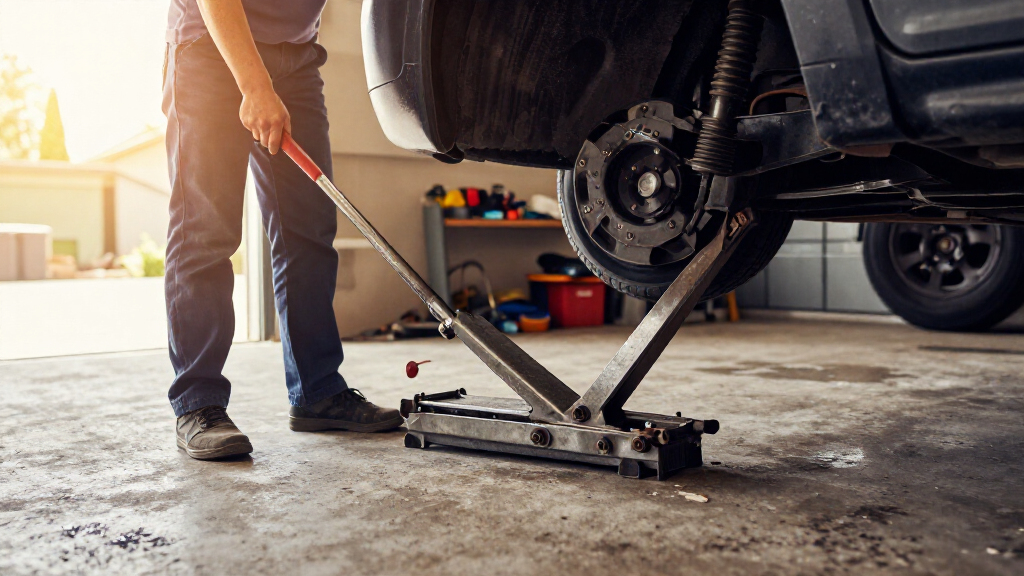
For most home garages, I’d start with the AV Steel Heavy-Duty 4 Ton Floor Jack, whose dual-piston pump and higher stated capacity make it a strong all-around candidate. The SATA 3-Ton Ultra-Low Profile stands out for cars with limited clearance, while the Majority 5-Ton is aimed at heavier vehicles and jobs where extra rated capacity matters. The main tradeoffs are lifting capacity versus jack weight, low-entry access versus maximum lift height, and faster pumping versus price and storage demands. A jack’s rating does not replace properly rated stands or safe lifting points, and a floor jack should not support a vehicle by itself. Continue reading for the full comparison and guidance on matching a jack to your vehicle, floor, and typical jobs.

Get business pricing on garage and car supplies
- Business-only prices and quantity discounts
- Tax-exempt purchasing
- Multiple users, one account, clear invoices
Complete the kit


Key Takeaways
- The AV Steel 4-ton dual-piston jack is the most balanced candidate: it combines a higher capacity than the many 3-ton options with a dual-piston pump, though buyers should check its entry height against their vehicles.
- Low clearance narrows the field: the SATA’s ultra-low profile and the Larbanke 3-ton with a stated 2.87-inch minimum target cars that may be difficult to reach with standard-height jacks.
- Capacity is not the only measure of heavy-duty suitability: the Majority 5-ton and 5-ton grey jack have the highest stated ratings, but their size, reach, and fit for the vehicle still matter.
- Dual-piston pumps appear across several capacity classes: they are a recurring convenience feature, not a substitute for checking rated load, lift range, construction, or manufacturer instructions.
- The Powerbuilt U-Jack serves a different lifting need: its 2-ton rating and U-shaped saddle design distinguish it from the steel floor jacks, making it a specialized option rather than a general capacity upgrade.


| heavy-duty garage floor jack | Material | Capacity |
|---|---|---|
| AV Steel Heavy-Duty 4 Ton Floo | Steel | 4 tons (8,000 lbs) |
| LARBANKE 3 Ton Hydraulic Floor | Carbon steel | 3 tons (6,600 lbs) |
| LiftMaster 3 Ton Heavy Duty Ul | Steel | 3 tons |
| 5 Ton Hydraulic Low Profile Fl | Heavy-duty steel | 5 tons (10,000 lbs) |
| Yellow Jacket Low Profile Floo | Heavy-duty steel | 4 tons (8,800 lbs) |
| LARBANKE 3 Ton Hydraulic Floor | Carbon steel | — |
| Maxority 3-Ton Low Profile Hyd | High-strength steel | 6,600 lbs |
| SATA 3-Ton Heavy-Duty Steel Fl | Industrial-grade steel | — |
| Powerbuilt 2 Ton U-Jack Garage | Steel | 3,000 lbs |
| AV Steel Low Profile Floor Jac | Steel | 3 tons (6,600 lbs) |
| Majority 5-Ton | — | — |
| Jack Boss 4 Ton Hydraulic Low | — | — |
| Heavy-Duty 3-Ton Low Profile H | — | — |
| Larbanke 3 Ton Hydraulic Floor | — | — |
| AV Steel 3 Ton Floor Jack | — | — |
More Details on Our Top Picks
AV Steel Heavy-Duty 4 Ton Floor Jack with Dual Piston Pump
The AV Steel combines a 4-ton capacity with a 4-1/4-inch minimum height, making it a strong fit for pickup trucks, vans, SUVs, and many standard-height cars. Its dual-piston pump is intended to reach lifting height with fewer strokes, while the steel construction and overload protection suit regular garage maintenance. Compared with the 3-ton LARBANKE, this jack provides more stated capacity and a higher maximum lift, but it is also much heavier at 87.3 pounds. That weight can make repositioning a chore, and the minimum height rules it out for many low-slung sports cars. Choose it for heavier everyday vehicles, not for a lightweight jack you plan to carry or move often.
Pros:- 4-ton capacity provides more headroom than the 3-ton LARBANKE for heavier vehicles
- Dual-piston pump is designed to raise the load with fewer strokes
- 19-3/4-inch maximum lift supports work that needs greater clearance
- Steel construction and overload protection address durability and lifting safety
Cons:- 87.3-pound weight makes frequent repositioning difficult
- 4-1/4-inch minimum height is too tall for many lowered vehicles
- The listed vehicle fit is limited to cars, SUVs, vans, and pickups rather than RVs or lifted vehicles
Best for: DIY mechanics lifting pickups, vans, and SUVs who want 4-ton capacity and a taller maximum lift for garage repairs
Not ideal for: Owners of lowered sports cars or anyone who needs a jack that is easy to carry and reposition
- Capacity:4 tons (8,000 lbs)
- Lift range:4-1/4 to 19-3/4 inches
- Minimum height:8.05 inches
- Maximum height:19.75 inches
- Weight:87.3 lbs
- Material:Steel
- Dimensions:31.69 x 14.56 x 8.07 inches
- Pump style:Dual piston
Our verdict“Choose the AV Steel if you need a high-capacity garage jack for standard-height trucks and SUVs and can manage its substantial weight.”
LARBANKE 3 Ton Hydraulic Floor Jack, 6600 lbs, Lift Range 5.31”-18.11”, Red
The LARBANKE is the more compact-capacity choice in this group: it supports 3 tons and uses swivel casters to help steer around a garage or workshop. Its carbon-steel build and 4.65-inch saddle give it a substantial working platform, while the 18.11-inch maximum lift covers many routine maintenance jobs. Against the AV Steel 4 Ton, it gives up lifting capacity and maximum height, so it is a less suitable match for heavier vehicles or jobs needing extra clearance. Its 5.31-inch minimum height also sits above the AV Steel’s stated 4-1/4-inch entry point, making it a poor pick for low cars. At 20.5 kg, it is still a heavy tool, but the listed size is more compact than the AV Steel’s.
Pros:- 3-ton capacity suits many routine passenger-vehicle maintenance tasks
- Swivel casters help steer the jack into position
- Carbon-steel construction is suited to workshop use
- Listed dimensions are more compact than the AV Steel 4 Ton
Cons:- 5.31-inch minimum height may not fit beneath lowered vehicles
- 18.11-inch maximum height is lower than the AV Steel’s 19.75-inch maximum
- 20.5 kg weight can still make lifting or carrying the jack awkward
Best for: Home-garage owners working on compatible cars and light vehicles who value caster-assisted positioning and a smaller footprint
Not ideal for: Owners of heavy pickups or lowered cars who need greater capacity or a lower minimum saddle height
- Capacity:3 tons (6,600 lbs)
- Lift range:5.31 to 18.11 inches
- Saddle diameter:4.65 inches
- Material:Carbon steel
- Weight:20.5 kg
- Dimensions:21.97 x 12.52 x 6.77 inches
- Wheel type:Swivel casters
- Color:Red
Our verdict“Pick the LARBANKE for routine garage jobs where caster-assisted maneuvering matters more than extra capacity or low-profile access.”
LiftMaster 3 Ton Heavy Duty Ultra Low Profile Steel Floor Jack with Quick Lift
The LiftMaster’s main advantage is its 7.5-centimeter minimum height, which gives it a lower entry point than the LARBANKE’s 5.31 inches. That extra access can make the difference when a standard jack saddle will not clear a lowered car. The dual-pump system is designed for quicker lifting, and its rubber pad helps protect the vehicle’s contact point. Its 3-ton capacity and 19.7-inch maximum height suit many garage jobs, though they do not match the 5-ton capacity offered by the grey hydraulic jack in this lineup. The tradeoff is its 33 kg weight: this is a substantial shop tool, not an easy-to-carry option. It makes the most sense when low clearance matters more than portability or maximum load capacity.
Pros:- 7.5-centimeter minimum height offers lower access than the LARBANKE
- Dual-pump system is designed to reduce pumping time
- Rubber pad helps protect the vehicle at the lifting point
- 19.7-inch maximum lift accommodates many routine repair tasks
Cons:- 33 kg weight makes it difficult to reposition without effort
- 3-ton capacity is below the 4-ton AV Steel and 5-ton grey jack
- The low-profile design does not make it suitable for loads beyond its rated capacity
Best for: Owners of lowered cars who need a steel floor jack with a low entry height for garage maintenance
Not ideal for: Buyers lifting vehicles beyond its 3-ton capacity or anyone who needs a lightweight jack to move frequently
- Capacity:3 tons
- Minimum height:7.5 cm
- Maximum lifting height:19.7 inches
- Material:Steel
- Weight:33 kg
- Dimensions:31 x 15 x 6.5 inches
- Pump system:Dual pump
- Vehicle protection:Rubber pad
Our verdict“Choose the LiftMaster when your vehicle’s low clearance is the deciding factor and a heavy 3-ton jack suits your work.”
5 Ton Hydraulic Low Profile Floor Jack, Grey
When load rating is the priority, this grey jack leads the group with a stated 5-ton capacity. Its dual-piston quick-lift system is intended to cut down on pumping, while the extra-long ergonomic handle gives the operator more leverage and control. A built-in safety valve, anti-slip saddle, and rubber padding add useful safeguards for heavy garage lifting. Compared with the AV Steel 4 Ton, it offers another ton of stated capacity, but the supplied details do not give a minimum or maximum lift height, so buyers cannot confirm clearance or reach from this listing alone. The jack is also described as heavy, with no weight supplied. It suits buyers who need the highest capacity here, but the missing dimensions and lift range make vehicle fit harder to verify.
Pros:- 5-ton capacity is the highest stated rating among these five products
- Dual-piston quick lift is designed to reduce pumping effort
- Extra-long ergonomic handle supports leverage and control
- Safety valve, anti-slip saddle, and rubber padding provide useful safety features
Cons:- Minimum and maximum lift heights are not provided
- Weight and dimensions are not listed, so storage and maneuverability are hard to judge
- Its greater capacity does not by itself confirm fit for low-clearance vehicles
Best for: Garage owners and repair professionals who need a 5-ton-rated floor jack and can verify its lift range and fit before buying
Not ideal for: Buyers who need confirmed minimum and maximum lift heights or an easy-to-move jack
- Capacity:5 tons (10,000 lbs)
- Material:Heavy-duty steel
- Handle:Extra-long ergonomic handle
- Lift system:Dual-piston quick lift
- Safety features:Built-in safety valve, anti-slip saddle, rubber padding
- Model number:AS332HN
- Warranty:1 year
Our verdict“Choose this jack for its 5-ton rating only if you can confirm its lift range and physical fit for your vehicle and garage.”
Yellow Jacket Low Profile Floor Jack with Dual Pumps, 4 Ton Capacity
The Yellow Jacket pairs a 4-ton capacity with a 4-5/16-inch minimum height, giving buyers a low-profile entry point without dropping to a 3-ton rating. Its dual pumps are designed for quicker lifting, and overload protection adds a practical safeguard for garage work on cars, light trucks, and SUVs. Compared with the AV Steel 4 Ton, its stated minimum height is close, while its maximum height is slightly greater at 19-7/8 inches. The tradeoff is portability: at 87 pounds, it is nearly as substantial as the AV Steel, so moving it around a crowded garage will take effort. The listing also gives limited detail about included accessories beyond the pad. It is a strong capacity-and-clearance match, but not a lightweight or broadly documented option.
Pros:- 4-ton capacity suits a range of cars, light trucks, and SUVs
- 4-5/16-inch minimum height is close to the AV Steel’s low entry point
- 19-7/8-inch maximum height is slightly greater than the AV Steel’s listed maximum
- Dual pumps and overload protection support quicker, safer lifting
Cons:- 87-pound weight makes it cumbersome to move or carry
- Product details do not specify accessories beyond the pad
- Listed vehicle use is limited to cars, light trucks, and SUVs
Best for: DIY mechanics lifting cars, light trucks, or SUVs who want a low-profile entry height and 4-ton capacity
Not ideal for: Buyers who need a portable jack, lift-range details beyond the listed heights, or a clearly specified accessory package
- Capacity:4 tons (8,800 lbs)
- Minimum lifting height:4-5/16 inches
- Maximum lifting height:19-7/8 inches
- Material:Heavy-duty steel
- Weight:87 pounds
- Dimensions:14.8 x 29.7 x 7.3 inches
- Pump style:Dual pumps
- Safety feature:Overload protection
Our verdict“Choose the Yellow Jacket if you want 4-ton capacity with low-profile access and can accept a jack that is difficult to move.”
LARBANKE 3 Ton Hydraulic Floor Jack, Lift Range: 5.31”-18.11”, 6600 lbs, Red
The LARBANKE pairs a 6,600-pound capacity with a broad 5.31-to-18.11-inch lift range, making it a practical fit for routine garage work across many passenger vehicles. Compared with the Maxority 3-Ton Low Profile Jack, it gives up low-clearance access and quick-lift pump features, but its listed range and carbon-steel build suit buyers who want straightforward lifting rather than a specialized low-profile setup. Swivel casters and reinforced rollers help when repositioning the jack around a vehicle, though no weight is provided to judge how easy it is to move in practice. The manual hydraulic operation may take effort, and the product details do not identify specific safety features or warranty terms. I’d choose it for capacity and basic versatility, not for low-slung cars or buyers who need clearly documented protections.
Pros:- 6,600-pound capacity suits many passenger vehicles and light trucks.
- 5.31-to-18.11-inch range supports a variety of routine lifting tasks.
- Carbon-steel construction is suited to regular garage use.
- Swivel casters and reinforced rollers aid repositioning.
Cons:- Minimum height is far higher than the SATA and AV Steel low-profile jacks, limiting access under lowered vehicles.
- No specific safety features or warranty details are supplied.
- Manual operation may require more effort than quick-lift dual-piston options.
Best for: Home mechanics lifting everyday cars and light trucks who want a 3-ton rating and a wide working range.
Not ideal for: Owners of lowered sports cars, or buyers who require listed overload protection and clear warranty details.
- Load capacity:6,600 lbs
- Lift range:5.31–18.11 inches
- Material:Carbon steel
- Color:Red
- Model number:S460Red
- Caster type:Swivel casters; reinforced rollers
Our verdict“Choose this LARBANKE for general-purpose 3-ton lifting and maneuverability, but skip it if your vehicle has very low clearance or you need clearly specified safety protections.”
Maxority 3-Ton Low Profile Hydraulic Floor Jack with Dual Pistons and Quick Lift Pump
The Maxority is the more specialized choice for low-clearance vehicles: its low-profile design and RAPID PUMP dual-piston system are aimed at getting a car up with fewer strokes. Its stated maximum height of 19.9 inches also exceeds the LARBANKE’s 18.11 inches, giving more room to work once the jack is positioned. The tradeoff is that the available specifications do not state the minimum height, so buyers cannot verify the exact clearance fit before choosing it. A built-in safety valve and high-strength steel add useful protections and durability, while the SATA jack provides a more explicit minimum-height figure and overload details. The random color and 90-day warranty are less appealing for buyers who prioritize a known finish or longer support. I’d favor the Maxority when quick pumping matters, after confirming its entry height suits the vehicle.
Pros:- Low-profile design targets vehicles with limited ground clearance.
- Dual-piston RAPID PUMP is intended to reduce pumping time and effort.
- Built-in safety valve helps guard against overloading.
- High-strength steel construction is suited to heavy garage use.
Cons:- Minimum lifting height is not provided, making clearance compatibility hard to verify.
- Color is supplied at random.
- The stated warranty period is only 90 days.
Best for: Owners of sports cars or lowered vehicles who want a 3-ton jack with a quick-lift pump and built-in safety valve.
Not ideal for: Buyers who need a confirmed minimum saddle height, a specific color, or longer warranty coverage.
- Capacity:6,600 lbs
- Maximum lifting height:19.9 inches
- Minimum lifting height:Not specified
- Pump:Dual-piston RAPID PUMP
- Material:High-strength steel
- Safety feature:Built-in safety valve
- Color:Random color
- Warranty:90 days
Our verdict“Pick the Maxority for a quick-lift low-profile setup, provided you confirm its unstated minimum height works for your car.”
SATA 3-Ton Heavy-Duty Steel Floor Jack with Ultra-Low Profile and Dual-Piston Quick Lift Pump
With a stated 2-11/16-inch minimum height, the SATA is the clearest fit here for cars that sit close to the ground. Its dual-piston quick-lift pump and 19-1/8-inch maximum height cover the main demands of frequent maintenance, while overload protection adds a safety detail that is not specified for the LARBANKE. The AV Steel jack also targets low-clearance vehicles, but its minimum height is 3-1/8 inches; the SATA’s lower entry point may make the difference for especially low cars. That access comes with a substantial handling tradeoff: at 70 pounds, this steel jack is not an easy choice for frequent lifting and carrying. Its dimensions are also sizeable, so storage takes planning. I’d rank it ahead for verified low-profile reach, not portability.
Pros:- 2-11/16-inch minimum height suits very low-clearance vehicles.
- Dual-piston pump is designed to speed lifting.
- Overload safety features are specified.
- Steel construction and 3-ton capacity suit substantial garage tasks.
Cons:- At 70 pounds, it is cumbersome to move and store.
- The SATA’s listed lift range may not suit vehicles needing more than 19-1/8 inches of lift.
- Large footprint takes up meaningful garage space.
Best for: Owners of very low sports cars who need a documented sub-3-inch entry height and a quick-lift pump.
Not ideal for: Mechanics who regularly carry a jack between work areas or have limited storage space.
- Load capacity:3 tons (6,600 lbs)
- Minimum height:2-11/16 inches
- Maximum height:19-1/8 inches
- Material:Industrial-grade steel
- Item weight:70 pounds
- Dimensions:28.35 x 13.58 x 6.3 inches
- Color:Green
- Pump and safety:Dual-piston quick lift; overload safety features
Our verdict“Choose the SATA when the lowest stated entry height matters more than easy handling or compact storage.”
Powerbuilt 2 Ton U-Jack Garage Jack, 3000 lbs Capacity, Lift Range 4.5 to 18.75 inches
The Powerbuilt earns a distinct place for its U-Jack saddle design, which is built to make positioning jackstands easier and help avoid damage to unibody vehicles. That function sets it apart from the conventional saddle and quick-pump approach of the SATA and AV Steel jacks. Its 4.5-to-18.75-inch range is useful for many cars and some trucks or SUVs, but its 3,000-pound capacity sits well below the 6,600-pound 3-ton options in this group. Buyers should match that rating to the vehicle and lifting task rather than treating it as a broad heavy-duty choice. At 74.4 pounds, it is also the heaviest option with a listed weight here. The included one-year warranty and stated safety-standard compliance are helpful, but this is a niche pick for stand placement, not maximum capacity.
Pros:- U-Jack saddle is designed to ease jackstand placement.
- Saddle design aims to help protect unibody vehicles.
- 4.5-to-18.75-inch range covers a broad span for compatible vehicles.
- Meets stated safety standards and includes a one-year warranty.
Cons:- 3,000-pound capacity is lower than the 6,600-pound jacks in this roundup.
- At 74.4 pounds, it is difficult to move frequently.
- The 4.5-inch minimum height may not clear some low-profile vehicles.
Best for: Home mechanics working on compatible unibody cars who want a jack designed to simplify jackstand positioning.
Not ideal for: Owners of heavier vehicles who need a 3-ton capacity or a lighter jack to move around the garage.
- Capacity:3,000 lbs
- Lift range:4.5–18.75 inches
- Minimum height:4.5 inches
- Maximum height:18.75 inches
- Material:Steel
- Item weight:74.4 pounds
- Dimensions:8.38 x 27 x 15.75 inches
- Warranty:1 year
Our verdict“Pick the Powerbuilt for its stand-placement-focused saddle on compatible lighter vehicles, not for heavy vehicles or ultra-low clearance.”
AV Steel Low Profile Floor Jack 3 Ton (6600 lbs), Heavy Duty Hydraulic Jack for Car
The AV Steel combines a 3-1/8-inch minimum height with a 19-7/8-inch maximum, offering a useful compromise between low-profile access and extra lift. Its dual-piston pump, overload protection, and rotating rear wheels make it a more fully specified everyday choice than the LARBANKE, which lists a higher minimum height and no named safety feature. Compared with the SATA, the AV Steel enters 7/16 inch higher but reaches 3/4 inch farther; that favors buyers who need more maximum lift rather than the lowest possible clearance. The steel build and stated ANSI/ASME PASE compliance add confidence in its intended garage role. One practical unknown remains: the weight is not listed, so buyers cannot judge how easily it can be repositioned. I’d choose it for range and included protections, not when minimum entry height is the sole priority.
Pros:- 3-1/8-inch minimum height fits many low-clearance vehicles.
- 19-7/8-inch maximum height offers more reach than the SATA’s stated maximum.
- Dual-piston pump is designed to lift with fewer strokes.
- Overload protection, rotating rear wheels, and stated safety-standard compliance.
Cons:- Minimum height is higher than the SATA’s, limiting access under the lowest cars.
- Weight is not specified, leaving portability uncertain.
- Steel construction may make it cumbersome to reposition, though the product data gives no weight.
Best for: Home mechanics with low-clearance cars who want a 3-ton jack that also reaches close to 20 inches.
Not ideal for: Owners of extremely low vehicles who need the SATA’s lower 2-11/16-inch entry height, or buyers who need a confirmed jack weight.
- Capacity:3 tons (6,600 lbs)
- Minimum height:3-1/8 inches
- Maximum height:19-7/8 inches
- Material:Steel
- Dimensions:29-1/8 x 13-3/4 x 5-7/8 inches
- Weight:Not specified
- Wheel type:Rotating rear wheels
- Safety standard:ANSI/ASME PASE
Our verdict“Choose the AV Steel for a broad low-profile lift range and listed protections, unless your vehicle needs the SATA’s lower entry height.”
Majority 5-Ton (11,000 lbs) Low Profile Hydraulic Steel Floor Jack with Dual Pistons and Quick Lift Pump
The Majority is the capacity-first pick here: its 11,000-pound rating is higher than the 8,800-pound Jack Boss and the 6,600-pound 3-ton models. That extra rated capacity makes it the strongest match in this group for owners servicing heavier vehicles, while the dual-piston pump is intended to reduce pumping needed to raise a load. Its steel construction and overload protection add practical reassurance for garage work. The tradeoff is substantial heft: at 100 pounds, it is less convenient to reposition than the 45.36-kilogram Jack Boss, and its listed 22-inch maximum height is not the highest available among all jack designs. Choose it for capacity, not portability; buyers who mostly service ordinary passenger cars may find a lighter 3-ton jack easier to live with.
Pros:- 11,000-pound capacity is the highest among these five picks.
- Dual-piston pump is designed to raise loads with fewer pumping strokes.
- Steel construction suits regular garage use.
- Overload protection and an anti-slip saddle support safer lifting practices.
Cons:- At 100 pounds, it is cumbersome to move and store.
- The 22-inch maximum lift may not provide enough clearance for every repair.
- Its capacity may be unnecessary for buyers who only lift lighter cars.
Best for: Garage owners who regularly lift heavier trucks or SUVs and prioritize a higher capacity rating over easy repositioning.
Not ideal for: Drivers who mainly service passenger cars and need a jack they can frequently move or store without handling a 100-pound tool.
Our verdict“Choose the Majority if your priority is the highest listed capacity here and you can accommodate a 100-pound jack.”
Jack Boss 4 Ton Hydraulic Low Profile Floor Jack with Dual Piston Quick Lift Pump, Red
The Jack Boss sits between the 5-ton Majority and the smaller 3-ton jacks: its 8,800-pound capacity gives it more headroom than the 6,600-pound Heavy-Duty 3-Ton, without reaching the Majority’s 11,000-pound rating. Its stated 3.9-to-20-inch lifting range pairs low access with useful lift height for many garage jobs, and the dual-piston pump is aimed at quicker lifting than a basic single-piston design. At 45.36 kilograms, though, this is not a lightweight option despite being much lighter than the Majority. The listed minimum height also varies slightly between the product details, so buyers with especially low cars should verify fit before choosing it. This is a sensible capacity-range compromise, but not the easiest jack in the group to maneuver.
Pros:- 8,800-pound rating offers more capacity than the 3-ton options.
- Low-profile design is intended to fit beneath lower vehicles.
- Dual-piston pump is designed for faster lifting.
- 20-inch maximum height suits a range of routine repair tasks.
Cons:- Its 45.36-kilogram weight makes frequent repositioning difficult.
- The listed minimum height differs slightly across the product information.
- Its 20-inch maximum is lower than the Majority’s stated 22 inches.
Best for: Home mechanics who work on a mix of cars, SUVs, and trucks and want more capacity than a 3-ton jack without moving to a 5-ton model.
Not ideal for: Owners of very low-clearance cars who need a confirmed extra-low entry height, or anyone who needs a genuinely lightweight jack.
Our verdict“Pick the Jack Boss for a useful step up from 3-ton capacity, provided its weight and entry height work for your garage.”
Heavy-Duty 3-Ton Low Profile Hydraulic Floor Jack with Dual Piston Pump
For buyers who do not need the Majority’s 11,000-pound capacity, this 3-ton jack emphasizes getting under low vehicles: its 2.9-inch minimum height is lower than the stated minimums for both the Jack Boss and the Larbanke. That clearance can make positioning easier beneath cars with little room between the chassis and floor. The dual-piston pump and 6,600-pound rating make it a more capable garage tool than a basic car jack, while its 19.8-inch maximum lift is close to the Larbanke’s 19.69 inches. The compromise is a 62-pound steel body and a lift ceiling below the Majority’s 22 inches. I’d favor it for low cars and routine 3-ton work, not for heavy trucks or buyers seeking a more portable tool.
Pros:- 2.9-inch minimum height is lower than the stated entry heights of the Jack Boss and Larbanke.
- 6,600-pound capacity suits many cars and SUVs.
- Dual-piston pump is designed to speed up lifting.
- Steel construction is suited to regular garage tasks.
Cons:- At 62 pounds, it can be cumbersome to reposition.
- 19.8-inch maximum height falls short of the Majority’s stated 22 inches.
- Its 3-ton rating is below the Jack Boss and Majority.
Best for: Home mechanics with low-clearance cars who want a 3-ton steel jack with a particularly low stated entry height.
Not ideal for: Owners who routinely lift heavy trucks beyond a 3-ton jack’s rating or need a higher lift than 19.8 inches.
Our verdict“Choose this model for low-clearance access and routine 3-ton jobs, rather than maximum capacity or easy carrying.”
Larbanke 3 Ton Hydraulic Floor Jack, Dual Piston, 2.87″-19.69″ Range
The Larbanke’s clearest distinction from the Heavy-Duty 3-Ton is mobility: it includes 360-degree swivel casters, which can help when lining up a floor jack in a crowded work area. Its 2.87-inch minimum height is also the lowest stated entry point in this five-product group, edging the Heavy-Duty 3-Ton’s 2.9 inches by a small amount. Both are rated for 6,600 pounds and use dual-piston pumps, so the decision is less about capacity than fit and maneuvering. The Larbanke tops out at 19.69 inches, nearly matching that competitor’s 19.8 inches, but its 70-pound weight undercuts the appeal of the casters when lifting or loading it into storage. Its carbon-steel build suits garage use, though buyers should check that a 3-ton rating matches their vehicles.
Pros:- 360-degree swivel casters aid positioning in tight garage spaces.
- 2.87-inch minimum height accommodates low-clearance vehicles.
- Dual-piston pump is designed for quicker lifting.
- Carbon-steel construction and 6,600-pound capacity suit many home-garage jobs.
Cons:- At 70 pounds, it remains heavy to carry despite its casters.
- 19.69-inch maximum lift is slightly below the Heavy-Duty 3-Ton’s 19.8 inches.
- Its 3-ton capacity is lower than the Jack Boss and Majority.
Best for: Garage owners who want a 3-ton jack with swivel casters for easier positioning around cars and SUVs.
Not ideal for: Buyers who need more than a 3-ton capacity or must frequently lift the jack itself into a vehicle or onto shelving.
Our verdict“Pick the Larbanke if caster-assisted positioning matters more than keeping the jack light or gaining extra capacity.”
AV Steel 3 Ton Floor Jack – Hydraulic Steel Car Lift, 5.5″ to 18.5″ Range
The AV Steel is the straightforward choice for standard-height cars, SUVs, and pickup trucks, but its 5.5-inch minimum height sets it apart from the low-profile options here. That makes it a poor match for lowered cars: the Heavy-Duty 3-Ton starts at 2.9 inches, and the Larbanke at 2.87 inches. In return, the AV Steel offers a 6,000-pound capacity, steel construction, rear rotating wheels, and a safety valve for overload protection. Its single-piston design is a practical distinction too: unlike the dual-piston models in this group, it may take more pumping to lift a load. At 63.8 pounds, it is still a substantial garage tool, and its 18.5-inch ceiling is the lowest stated maximum among these five.
Pros:- 6,000-pound capacity suits many standard passenger vehicles.
- Steel construction is appropriate for regular garage use.
- Rear rotating wheels help with positioning.
- Built-in safety valve provides overload protection.
Cons:- 5.5-inch minimum height excludes many low-clearance vehicles.
- Single-piston design may lift more slowly than the dual-piston alternatives.
- 18.5-inch maximum height is lower than the other listed models.
Best for: Home mechanics who service standard-height cars, SUVs, or pickups and want a steel jack with a safety valve.
Not ideal for: Owners of lowered vehicles, heavy-duty trucks, or anyone whose repairs require more than 18.5 inches of lift.
Our verdict“Choose the AV Steel for standard-height vehicles and basic garage repairs, not for low cars or jobs needing extra lift height.”
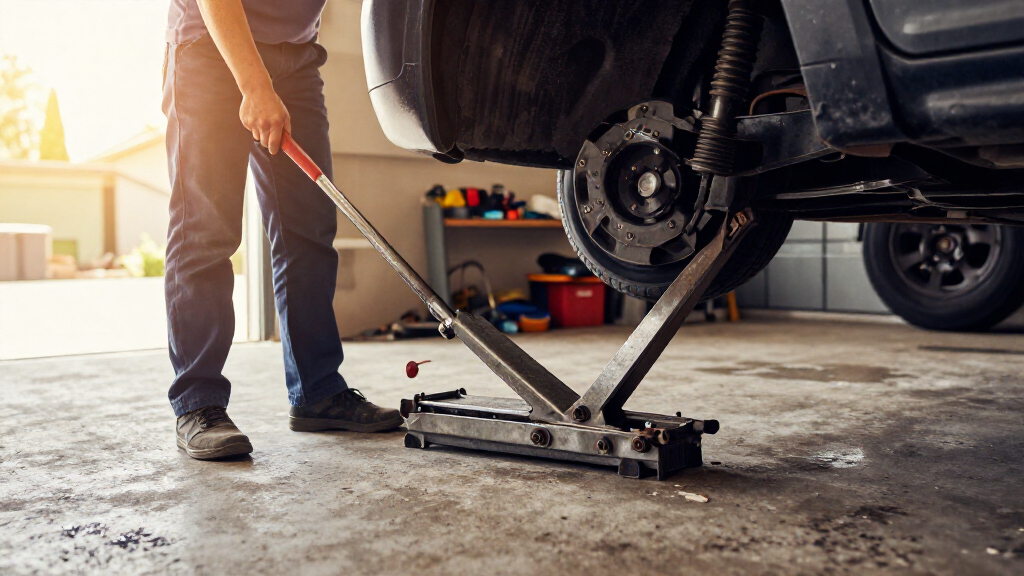
How We Picked
I compared these heavy-duty garage floor jacks by the details buyers can use to match a jack to a vehicle: stated capacity, minimum and maximum lift height where supplied, profile, pump design, and intended lifting format. A higher rating can widen the range of suitable jobs, but I did not treat capacity alone as proof of better build quality or safer use. I also gave weight to practical fit: a jack needs to roll under the vehicle, reach the manufacturer-approved lift point, and work on the garage floor available to the buyer.
The order favors versatility and usable specifications over a single headline number. Jacks with clear capacity and lift-range information, useful low-profile features, or dual-piston pumps rise when those details match common garage needs. Specialized designs and products with less complete supplied specifications rank lower for broad use, even if they may suit a particular vehicle or task well. Product names and specifications are presented as supplied; I do not infer unlisted construction details, durability, or performance.
| heavy-duty garage floor jack | Material |
|---|---|
| AV Steel Heavy-Duty 4 Ton Floo | Steel |
| LARBANKE 3 Ton Hydraulic Floor | Carbon steel |
| LiftMaster 3 Ton Heavy Duty Ul | Steel |
| 5 Ton Hydraulic Low Profile Fl | Heavy-duty steel |
| Yellow Jacket Low Profile Floo | Heavy-duty steel |
| LARBANKE 3 Ton Hydraulic Floor | Carbon steel |
| Maxority 3-Ton Low Profile Hyd | High-strength steel |
| SATA 3-Ton Heavy-Duty Steel Fl | Industrial-grade steel |
| Powerbuilt 2 Ton U-Jack Garage | Steel |
| AV Steel Low Profile Floor Jac | Steel |
| Majority 5-Ton | — |
| Jack Boss 4 Ton Hydraulic Low | — |
| Heavy-Duty 3-Ton Low Profile H | — |
| Larbanke 3 Ton Hydraulic Floor | — |
| AV Steel 3 Ton Floor Jack | — |
Factors to Consider When Choosing Heavy-duty Garage Floor Jacks
Before choosing among these jacks, I’d work backward from the vehicle and the jobs I actually plan to do. The best fit is not automatically the model with the largest capacity or the lowest entry height; it is the one that reaches the right lift points, raises the vehicle far enough, and suits the floor and storage space.
Match Capacity to the Load at the Lift Point
Start with the vehicle’s weight and the manufacturer’s guidance for lifting, but do not assume a jack needs to lift the vehicle’s entire curb weight at once. A floor jack typically raises one end or one corner, yet load distribution changes during lifting and depends on where the jack is positioned. Choose a rated capacity that comfortably covers the intended lifting task rather than selecting the smallest rating that seems sufficient. The 2-ton Powerbuilt is a more specialized choice than the 3-, 4-, and 5-ton models, while a 5-ton rating may be unnecessary for many passenger-car owners. A higher rating can also bring a larger, heavier jack that is harder to move or store. Never exceed the jack’s marked capacity, and use properly rated jack stands once the vehicle is raised.
Check Both Entry Height and Maximum Reach
Minimum height determines whether the saddle can get beneath the vehicle; maximum height determines whether it can raise the vehicle enough for the intended work. Buyers often focus on a low-profile label but overlook the listed minimum measurement, which can vary considerably between models. Measure the clearance at the actual approved lifting point, not just under the front bumper or side skirt. Then compare the maximum lift height with the stand height and the task, leaving room for the saddle and vehicle suspension movement. A very low entry point does not automatically mean a jack has more vertical reach. If your vehicle is modified, carrying a load, or fitted with bodywork that limits access, recheck clearance in that configuration.
Treat Pump Design as a Convenience Feature
Dual-piston and quick-lift labels suggest a design intended to raise the saddle with fewer pump strokes before it contacts the load, which can make repeated setup less tedious. They do not tell you the force needed at the handle, the jack’s lowering control, or how it performs under a particular load. If you lift vehicles often, pump design may deserve more weight in your choice than it would for occasional seasonal work. Compare the full lift range and capacity alongside pump features rather than letting a quick-lift label decide the purchase. Also check the product instructions for release-valve operation and any maintenance requirements. A faster approach to lifting is useful, but controlled lowering and correct stand placement remain the safety priorities.
Account for Floor, Mobility, and Storage
A heavy steel jack can be a good workshop tool and still be awkward if you need to carry it up stairs or move it across a crowded garage. Floor jacks rely on their wheels and a firm, level surface, so cracked concrete, steep slopes, loose debris, or soft ground can affect positioning and stability. Consider the jack’s overall footprint and the room required for its handle to move through a full pumping stroke. A compact storage area may favor a simpler or smaller model over a high-capacity shop-style jack. Before buying, check the manufacturer’s stated dimensions and weight if they are available; do not infer portability from capacity alone. If your work surface is unsuitable, address that problem rather than trying to compensate with a larger jack.
Choose a Saddle That Fits the Job
The saddle must meet the vehicle at an approved lift point without slipping or damaging components. A standard flat saddle may suit many routine lifts, while a specialized shape such as the Powerbuilt U-Jack’s U-shaped saddle is aimed at particular lifting arrangements. Confirm that the saddle shape and any supplied adapters match the vehicle maker’s lift-point instructions. Do not assume a specialty saddle works for every frame, axle, or pinch weld. An adapter can change the contact height and stability, so verify compatibility before lifting. If your garage includes several vehicle types, a broadly compatible saddle and approved accessories may be more useful than a design tailored to one task.
Compare the Full Specification, Not the Headline
Product names sometimes repeat similar capacity figures while leaving out details that affect fit, such as the exact minimum height, maximum height, jack weight, or saddle dimensions. The two LARBANKE 3-ton listings illustrate why checking the full specification matters: one gives a 5.31-to-18.11-inch range, while another states a 2.87-to-19.69-inch range and a dual-piston design. Do not assume products with similar names share the same dimensions or construction. Check the exact model listing, manual, warranty terms, and service guidance before purchase. A model with fewer published details may still fit your task, but it is harder to compare confidently. Prioritize verified specifications over labels such as heavy-duty or low profile.
Frequently Asked Questions
Is a 3-ton floor jack enough for a full-size truck or SUV?
It can be suitable for some lifting tasks, but the vehicle’s total weight alone does not answer the question. Check the vehicle manufacturer’s approved lift points and guidance, then confirm the jack’s rated capacity and reach for the specific end or corner being lifted. A 3-ton rating should not be treated as permission to lift any truck or SUV. Buyers who handle heavier vehicles regularly may prefer to compare the 4- and 5-ton options, while also checking their larger footprint and handling needs. Use jack stands rated for the load and never work beneath a vehicle supported only by a floor jack.
Should I choose the lowest-profile jack if my car has little ground clearance?
Choose a model whose stated minimum height is below the clearance at the approved lift point, but do not pick by the low-profile label alone. The SATA is described as ultra-low profile, and one Larbanke listing gives a 2.87-inch minimum, while other listed models start higher. Measure the vehicle in its normal loading condition and account for low skirts or underbody components that can block access. Also check maximum height, since a jack that fits underneath may still not raise the vehicle far enough for your stands or task. Avoid placing the saddle beneath an unapproved body panel just to make a jack fit.
Is a dual-piston pump worth choosing over a single-piston design?
A dual-piston pump can be useful if you want to bring the saddle up with fewer strokes before it contacts the vehicle, especially during frequent garage work. It is a convenience factor, not a direct measure of capacity, stability, or service life. This roundup includes dual-piston designs across 3-, 4-, and 5-ton listings, so the feature alone does not distinguish one capacity class from another. Compare minimum height, maximum reach, rated load, and available service information as well. If you lift only occasionally, fit and safe operation may matter more than pump speed.
Can I use a floor jack on a sloped driveway or uneven garage floor?
A floor jack should be used on a firm, level surface that lets its wheels move as the vehicle rises. On a slope or uneven floor, the jack may not roll into position as intended, and the vehicle or jack can become unstable. A high capacity rating does not make an unsuitable surface safe. If you cannot use a level, solid work area, postpone the lift or use a suitable professional facility. Chock the wheels that remain on the ground, follow the vehicle’s lifting instructions, and support the raised vehicle with stands.
When does a 5-ton jack make more sense than a 3- or 4-ton model?
A 5-ton model may suit buyers who regularly lift heavier vehicles or want a higher stated capacity for their intended work, provided its height range and lifting points fit those vehicles. This roundup includes two 5-ton listings, but their ratings alone do not show which one is easier to position or better for a particular garage. Compare the published minimum and maximum height, overall dimensions, weight, and instructions before deciding. For routine passenger-car work, a 3- or 4-ton jack may be easier to handle and offer enough rated capacity for the task. In every case, follow the vehicle maker’s lift guidance and the jack’s capacity limit.
Conclusion
For the broadest mix of garage jobs, I’d choose the AV Steel Heavy-Duty 4 Ton as the best overall candidate, while confirming its height range suits the vehicles I lift. The AV Steel 3-ton is a best-value style of pick for buyers who want a straightforward lower-capacity option, provided its 5.5-to-18.5-inch range fits their needs. For a best-premium direction, I’d look first at the Majority 5-ton if extra stated capacity is the priority, or the SATA ultra-low-profile if low access and a dual-piston pump matter more than maximum capacity. Beginners should favor a clearly specified model with a comfortable capacity margin and a lift range that matches their car, rather than chasing the biggest rating. For specific low-clearance needs, compare the SATA with the Larbanke listing that states a 2.87-inch minimum; for specialized U-shaped saddle use, consider the Powerbuilt only if its 2-ton rating and design fit the job. In every case, verify the exact model specifications, use approved lift points, and support the vehicle with correctly rated stands.
Halloween Picks
halloween
As an affiliate, we earn on qualifying purchases.