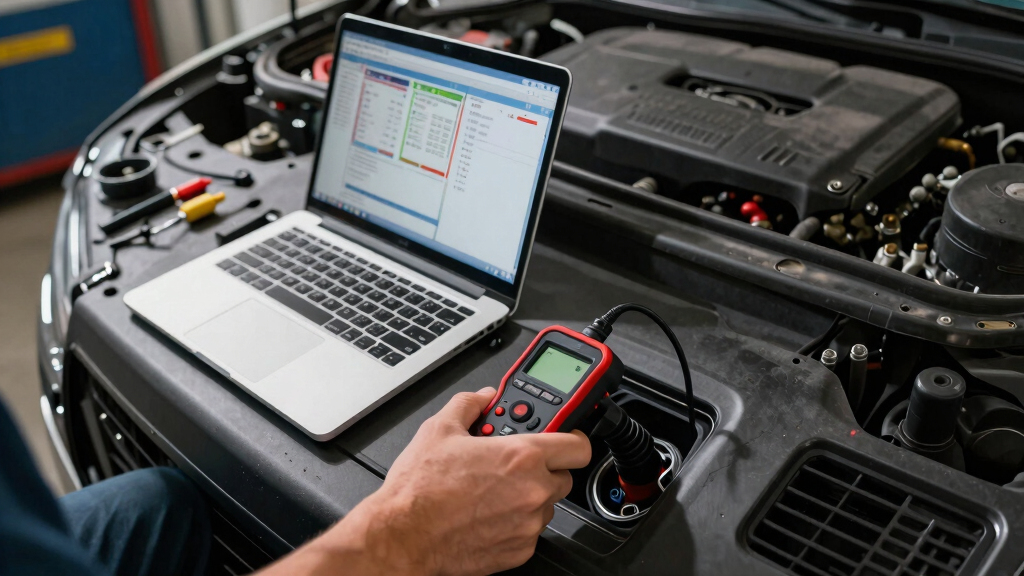

The best OBD scanners in this lineup split into clear tiers: simple code readers, richer DIY diagnostic tools, and premium scanners for deeper system work. My best overall pick is the Launch CRP123X V3.0 Elite because it balances multi-system diagnostics, lifetime WiFi updates, and everyday usability better than most rivals. The MOTOPOWER MP69033 stands out as the budget choice for basic check-engine reads, while the Innova 5610 makes more sense for buyers who want bidirectional controls. The main tradeoff is paying only for code clearing versus spending more for ABS, SRS, transmission, reset functions, app support, or live data. Keep reading for the full breakdown of which scanner fits each buyer type.

Get business pricing on garage and car supplies
- Business-only prices and quantity discounts
- Tax-exempt purchasing
- Multiple users, one account, clear invoices
Key Takeaways
- Launch CRP123X V3.0 Elite ranks best overall because it offers broader diagnostics than basic readers without jumping into full pro-tool pricing.
- The lowest-cost models, especially MOTOPOWER MP69033, ANCEL AD310, and Autel AL319, are best for check-engine-light basics, not deeper module work.
- Innova 5610 is the premium pick because bidirectional control separates it from scanners that only read and erase codes.
- Bluetooth options split by buyer type: BlueDriver is friendlier for phone-first reports, while OBDLink MX+ is stronger for data-heavy users who want broader app flexibility.
- FOXWELL and TOPDON models dominate the middle of the list, but their best value depends on whether the buyer needs battery testing, reset functions, or all-system scanning.
| Launch OBD2 Scanner CRP123X V3.0 Elite with Lifetime WiFi Updates |  | Best Overall | Model: CRP123X V3.0 Elite | Display: 5-inch 720P touchscreen | Memory: 32GB | VIEW LATEST PRICE | See Our Full Breakdown |
| MOTOPOWER MP69033 Car OBD2 Scanner Code Reader |  | Best Budget Pick | Power Source: Vehicle OBDII port | Operation: Plug-and-play | Screen Size: 2.8 inches | VIEW LATEST PRICE | See Our Full Breakdown |
| ANCEL AD310 Classic Enhanced Universal OBD II Scanner Car Engine Fault Code Reader CAN Diagnostic Scan Tool |  | Best Travel-Friendly Code Reader | Power Source: Corded electric via vehicle port | Screen Size: 2.4 inches | Language: English | VIEW LATEST PRICE | See Our Full Breakdown |
| TOPDON AD600S OBD2 Scanner, Code Reader & Diagnostics Tool for ABS/SRS/AT/Engine |  | Best for Service Resets | Reset Services: 9 | Display: 5-inch color touchscreen | Compatibility: 1996+ vehicles, 90+ brands | VIEW LATEST PRICE | See Our Full Breakdown |
| Autel AL319 OBD2 Scanner Code Reader |  | Best for Beginners | Power Source: Battery powered / vehicle-powered plug-in operation | Operation: Plug & Play | Screen Size: 2.4 inches | VIEW LATEST PRICE | See Our Full Breakdown |
| FOXWELL NT301 OBD2 Scanner Live Data Diagnostic Code Reader for Check Engine Light |  | Best Budget Plug-In Scanner | Power Source: Plug and Play via OBD2 port | Screen Size: 2.8 inches | Display: Color LCD | VIEW LATEST PRICE | See Our Full Breakdown |
| 2026 FOXWELL NT624 Elite OBD2 Scanner – All-System Diagnostic Tool with 8 Reset Functions and Lifetime WiFi Updates |  | Best All-System Upgrade | Power Source: Corded electric via vehicle connection | Operating System: Linux | Screen Size: 4.3 inches | VIEW LATEST PRICE | See Our Full Breakdown |
| 2-in-1 FOXWELL NT301 Plus OBD2 Scanner with 12V Battery Tester |  | Best Engine-and-Battery Combo | Display Size: 2.8 inches | Power Source: Corded electric via vehicle connection | Supported Vehicles: 1996+ U.S., 2001+ European, 2005+ Asian vehicles | VIEW LATEST PRICE | See Our Full Breakdown |
| FOXWELL NT604 Elite Car Diagnostic Scanner OBD2 ABS SRS Transmission Check Engine Code Reader |  | Best Four-System Scanner | Compatibility: Over 60 car brands worldwide | Supported Systems: Engine, ABS, SRS, Transmission | Live Data: Live data stream supported | VIEW LATEST PRICE | See Our Full Breakdown |
| TOPDON AD500 OBD2 Scanner with Full System Diagnostics and Reset Functions |  | Best Touchscreen Diagnostic Scanner | Power Source: Battery powered | Operating System: Android | Screen Size: 5 inches | VIEW LATEST PRICE | See Our Full Breakdown |
| Innova 5610 OBD2 Bidirectional Scan Tool | 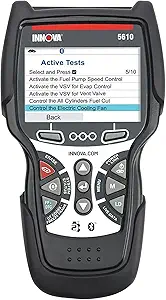 | Best Bidirectional Handheld Pick | Power Source: Vehicle powered | Device Compatibility: iOS and Android | Screen Size: 3.5 inches | VIEW LATEST PRICE | See Our Full Breakdown |
| LAUNCH CRP123I V3.0 Elite OBD2 Scanner with Lifetime Free WiFi Updates |  | Best Touchscreen Scanner for Broad Coverage | Power Source: Corded electric | Operating System: Android 8.1 | Screen Size: 5 inches | VIEW LATEST PRICE | See Our Full Breakdown |
| ANCEL AD410 Enhanced OBD2 Scanner, Vehicle Code Reader for Check Engine Light, Automotive Fault Diagnosis for All 1996+ OBDII Cars |  | Best Budget Check-Engine Reader | Power Source: Corded electric | Operating System: Android 5.0 | Screen Size: 2.4 inches | VIEW LATEST PRICE | See Our Full Breakdown |
| BlueDriver Bluetooth Pro OBDII Scan Tool for iPhone & Android |  | Best App-Based Repair Guidance | Compatibility: Gas vehicles 1996+ in North America | Connectivity: Bluetooth | Device Support: iPhone and Android | VIEW LATEST PRICE | See Our Full Breakdown |
| OBDLink MX+ OBD2 Bluetooth Scanner for iPhone, Android, and Windows |  | Best Bluetooth Scanner for Power Users | Device Compatibility: iPhone, Android, and Windows | Connectivity: Bluetooth | Supported Protocols: OBD2 | VIEW LATEST PRICE | See Our Full Breakdown |
More Details on Our Top Picks
Launch OBD2 Scanner CRP123X V3.0 Elite with Lifetime WiFi Updates
I rank the Launch CRP123X V3.0 Elite highest because it covers the widest buyer need: multi-system diagnosis, broad 1996-2026 compatibility, AutoVIN, live data, health reports, and lifetime WiFi updates. Compared with the MOTOPOWER MP69033 or ANCEL AD310, it moves well beyond check-engine-light work, so it suits owners who want to inspect ABS, transmission, SRS, and engine data from one handheld unit. It also has a larger 5-inch touchscreen, more memory, and a rechargeable battery, which makes longer diagnostic sessions easier. The tradeoff is complexity and cost creep: CAN-FD and DoIP need extra cables, and optional TPMS or battery modules add expense. I see this as the best scanner here for serious DIY work, but not the simplest first tool.
Pros:- Covers 90+ vehicle brands from 1996 to 2026
- Reads multiple systems beyond basic engine codes
- Lifetime WiFi updates reduce long-term software costs
- 5-inch touchscreen, AutoVIN, live data, and health reports improve daily usability
Cons:- CAN-FD and DoIP support may require extra cables
- Battery tester and TPMS functions need optional purchases
- More complex than basic readers for first-time users
Best for: DIY mechanics and small-garage users who want broad multi-system diagnostics across many 1996-2026 vehicles.
Not ideal for: First-time owners who only need to clear a check engine light, since the menus and add-on cable needs may feel excessive.
- Model:CRP123X V3.0 Elite
- Display:5-inch 720P touchscreen
- Memory:32GB
- Battery:6100mAh rechargeable
- WiFi:2.4GHz and 5.0GHz
- Compatibility:1996-2026 vehicles, 90+ brands
- Protocols:CAN-FD, DoIP, FCA AutoAuth
- Expansion:Optional battery tester and TPMS tool
Bottom line: Buy this if you want the strongest all-around OBD scanner in this batch and plan to use more than basic engine-code functions.
MOTOPOWER MP69033 Car OBD2 Scanner Code Reader
The MOTOPOWER MP69033 earns the budget slot because it keeps the job narrow: read engine codes, clear them, view live data, and check basic OBDII information without a battery or app. Compared with the Launch CRP123X V3.0 Elite, it is much less capable, but that simplicity is exactly the appeal for buyers who want a glove-box tool for quick check-engine-light answers. Against the Autel AL319, its multi-language support and 2.5-foot cable make it a flexible low-cost choice, though the screen is still basic. The key limitation is system depth: it will not read ABS or airbag faults, so it cannot replace a full diagnostic tablet. I would choose it for price-first ownership, not for ongoing repair work.
Pros:- Affordable, compact, and easy to keep in a car
- Reads and clears engine fault codes without an app
- Supports 9 protocols and several interface languages
- Powered by the vehicle port, so there is no charger to manage
Cons:- Cannot read ABS, airbag, or other body-system codes
- Small monochrome display limits live-data readability
- No internal battery or advanced service functions
Best for: Budget-minded drivers who want a simple plug-in reader for engine codes and emissions-related checks.
Not ideal for: Owners trying to diagnose ABS, SRS, transmission, or manufacturer-specific faults, since it is limited to OBDII engine data.
- Power Source:Vehicle OBDII port
- Operation:Plug-and-play
- Screen Size:2.8 inches
- Resolution:128 x 64
- Dimensions:2.75 x 0.91 x 6.02 inches
- Protocols:9 protocols including OBD II and CAN
- Languages:English, German, Dutch, Spanish, French, Italian
- Cable Length:2.5 feet
Bottom line: Pick this when low cost matters more than advanced coverage.
ANCEL AD310 Classic Enhanced Universal OBD II Scanner Car Engine Fault Code Reader CAN Diagnostic Scan Tool
The ANCEL AD310 is the pick I would point toward for owners who want a no-fuss reader that is easy to pack, lend, or keep in the trunk. Its strength is fast engine-code access: read codes, clear them, and view basic live data on 1996-and-newer OBDII vehicles. Compared with the TOPDON AD600S, it lacks reset services, full-system scans, and a touchscreen, but it is far less involved and easier to justify for occasional use. Compared with the MOTOPOWER MP69033, it has a long-running reputation as a simple classic, though it stays English-only and emission-focused. The drawback is scope: if the warning light is tied to ABS, SRS, or non-emissions faults, this reader may leave the next step unanswered.
Pros:- Lightweight 12-ounce body is easy to store or travel with
- Supports all OBDII protocols for 1996+ vehicles
- Simple corded operation with no battery maintenance
- Fast code reading and clearing for emissions-related faults
Cons:- Limited to emissions-related OBDII diagnosis
- No ABS, SRS, transmission, or reset-service coverage
- English-only interface may not suit every household
Best for: Drivers who want a lightweight backup scanner for road trips, used-car checks, and basic check-engine-light diagnosis.
Not ideal for: Home mechanics chasing non-emissions or multi-system faults, because it is built around basic OBDII engine diagnostics.
- Power Source:Corded electric via vehicle port
- Screen Size:2.4 inches
- Language:English
- Operating System:Linux
- Dimensions:8.9 x 6.9 x 1.4 inches
- Weight:12 ounces
- Vehicle Support:1996+ OBDII vehicles
- Warranty:Amazon.com 30-Day Return Guarantee
Bottom line: Choose the AD310 if you want a dependable basic reader, not a full repair scanner.
TOPDON AD600S OBD2 Scanner, Code Reader & Diagnostics Tool for ABS/SRS/AT/Engine
The TOPDON AD600S sits just below the Launch in my ranking because its buying case is more service-focused: 9 reset services, full-system fault reading, live data, AutoVIN, and a 5-inch Android touchscreen. Compared with the Autel AL319 or ANCEL AD310, it is in a different class for maintenance work, especially when oil, battery, steering-angle, or similar resets matter. Compared with the Launch CRP123X V3.0 Elite, it is appealing for reset-heavy shoppers, but its compatibility caveats are more visible: AutoVIN is not universal, vehicle support can vary, and WiFi updates do not support 5G networks. I would choose it for a hands-on owner who wants guided service functions, while the Launch is the broader all-rounder.
Pros:- Includes 9 reset services for common maintenance tasks
- Reads ABS, SRS, transmission, and engine fault codes
- 5-inch Android 11.0 touchscreen feels closer to a tablet than a basic reader
- WiFi updates and 32GB memory support longer-term use
Cons:- Does not support 5G WiFi networks
- AutoVIN does not work on every vehicle
- Vehicle coverage can vary by make, model, and system
Best for: DIY maintainers who regularly perform service resets and want full-system code access on common 1996+ vehicles.
Not ideal for: Buyers with newer or less common vehicles who need confirmed AutoVIN and protocol coverage before purchase.
- Reset Services:9
- Display:5-inch color touchscreen
- Compatibility:1996+ vehicles, 90+ brands
- Protocols:OBD2, EOBD, JOBD, CAN, CAN-FD
- Memory:32GB
- Update Method:WiFi
- Operating System:Android 11.0
- Vehicle Types:Gasoline, diesel, light-duty trucks, SUVs, minivans
Bottom line: Buy the AD600S if service resets matter more to you than having the broadest possible protocol package.
Autel AL319 OBD2 Scanner Code Reader
The Autel AL319 is the most beginner-friendly pick here because it keeps the workflow plain: plug in, read the code, clear it when appropriate, and check I/M readiness before an emissions inspection. Compared with the TOPDON AD600S, it gives up reset services and full-system diagnosis, but that also means fewer menus for a new user to sort through. Compared with the MOTOPOWER MP69033, it plays a similar basic-reader role, with Autel’s simple layout and long cable making it easy to use from the driver seat. The tradeoff is that it remains a check-engine-light tool, not a repair platform. I would not buy it for ABS, airbag, or transmission problems, but it makes sense for owners who mainly want quick answers.
Pros:- Simple plug-and-play layout is easy for new users
- Reads and clears engine codes and shows live data
- I/M readiness checks help before emissions inspection
- Long cable makes in-car viewing easier
Cons:- Limited to 1996+ OBDII vehicles
- Basic 2.4-inch display is less readable than touchscreen models
- No rechargeable battery or advanced service functions
Best for: New car owners who want a simple check-engine-light reader and emissions readiness tool for 1996+ vehicles.
Not ideal for: DIY repair shoppers who need reset functions, bidirectional controls, or multi-system diagnostics.
- Power Source:Battery powered / vehicle-powered plug-in operation
- Operation:Plug & Play
- Screen Size:2.4 inches
- Language:English
- Dimensions:4.61 x 2.83 x 0.71 inches
- Vehicle Support:1996+ OBDII vehicles
- Functions:Read codes, clear codes, live data, I/M readiness
- Warranty:12 months
Bottom line: Choose the AL319 if you want the easiest path from check engine light to plain-code information.
FOXWELL NT301 OBD2 Scanner Live Data Diagnostic Code Reader for Check Engine Light
I rank the FOXWELL NT301 as the best budget plug-in scanner because it focuses on the jobs many buyers actually need: reading check-engine codes, clearing lights, graphing live data, and checking I/M readiness before an emissions visit. Compared with the FOXWELL NT301 Plus, it skips battery testing, so it is less useful for diagnosing starting or charging issues. Compared with the FOXWELL NT604 Elite, it also cannot read ABS, SRS, or transmission faults. That narrower scope is the point: it costs less, starts quickly from the OBD port, and does not push app subscriptions. I would pick it for simple engine diagnostics, but skip it if warning lights beyond the check-engine light are part of the problem.
Pros:- Plug-and-play setup with no app or subscription required
- Live data graphing helps connect codes with real-time engine behavior
- One-key I/M readiness check is useful before emissions testing
- Lifetime updates help keep vehicle coverage current
Cons:- No ABS, SRS, transmission, or reset-service support
- Updates require Windows rather than Mac or iOS
- Needs the vehicle ignition on for fault-code reading
Best for: DIY owners who mainly need check-engine diagnostics, live engine data, and emissions readiness checks without paying for shop-level features.
Not ideal for: Drivers troubleshooting ABS, airbag, transmission, or maintenance reset issues, since this model only handles basic OBD2 functions.
- Power Source:Plug and Play via OBD2 port
- Screen Size:2.8 inches
- Display:Color LCD
- Supported Vehicles:Most 1996+ gasoline and diesel cars, light trucks, and SUVs
- Protocols Supported:KWP2000, J1850 VPW, ISO9141, J1850 PWM, CAN
- Data Logging:Yes
- Data Print:Yes
- Update Policy:Lifetime updates included
Bottom line: Choose this if you want an affordable, no-fuss scanner for check-engine lights and emissions prep.
2026 FOXWELL NT624 Elite OBD2 Scanner – All-System Diagnostic Tool with 8 Reset Functions and Lifetime WiFi Updates
The FOXWELL NT624 Elite earns its spot as my best all-system upgrade because it moves past engine-only scanning into the major systems a serious DIYer or small garage is more likely to face. Compared with the FOXWELL NT604 Elite, it adds 8 reset functions, which makes it better for routine service jobs after the fault has been diagnosed. Against the TOPDON AD500, its 4.3-inch screen feels less tablet-like, and it still relies on vehicle power rather than an internal battery. The big tradeoff is that it does not cover SRS reset, TPMS programming, or active tests, so it is not a full professional bidirectional tool. I see it as the practical step-up pick for buyers who want wider system access without jumping to premium shop hardware.
Pros:- All-system diagnostics cover more faults than engine-only scanners
- Eight reset functions add value for maintenance work
- Lifetime WiFi updates reduce long-term ownership costs
- Auto VIN detection speeds up vehicle setup when supported
Cons:- No active tests, TPMS programming, or SRS reset support
- No built-in battery, so it must draw power from the vehicle
- Vehicle compatibility still needs checking before purchase
Best for: Home mechanics and small-shop users who need all-system code reading plus common maintenance resets in one wired scanner.
Not ideal for: Technicians who need active tests, TPMS programming, or SRS reset capability, since those functions are outside its range.
- Power Source:Corded electric via vehicle connection
- Operating System:Linux
- Screen Size:4.3 inches
- Native Resolution:480 x 272
- Diagnostics:All major vehicle systems
- Reset Functions:8 maintenance reset functions
- Updates:Lifetime WiFi updates
- Warranty:1 year
Bottom line: Pick the NT624 Elite if you want a serious step up from basic code readers without moving into full bidirectional tools.
2-in-1 FOXWELL NT301 Plus OBD2 Scanner with 12V Battery Tester
My reason for choosing the FOXWELL NT301 Plus is simple: it answers two common driveway questions in one tool, why the check-engine light is on and whether the 12V battery or charging system may be part of the issue. Compared with the standard FOXWELL NT301, the battery tester gives it a clearer role for owners dealing with hard starts, weak batteries, or alternator concerns. Compared with the TOPDON AD500 or FOXWELL NT604 Elite, though, it is much narrower because it does not scan ABS, SRS, or transmission systems. It also only works with 12V lead-acid batteries and uses Windows for updates. I would choose this over a basic code reader when battery health matters, but not as a broad diagnostic platform.
Pros:- Combines OBD2 code reading and 12V battery testing
- Charging-system checks help separate electrical issues from engine faults
- Live data recording and playback support closer troubleshooting
- No phone app or subscription is needed
Cons:- Battery testing is limited to 12V lead-acid types
- No ABS, SRS, transmission, or advanced reset functions
- Windows is required for updates
Best for: Car owners who want one handheld tool for check-engine codes plus quick 12V battery and charging-system checks.
Not ideal for: Buyers maintaining hybrids, EVs, or vehicles with non-lead-acid battery needs, and anyone who needs ABS or airbag diagnostics.
- Display Size:2.8 inches
- Power Source:Corded electric via vehicle connection
- Supported Vehicles:1996+ U.S., 2001+ European, 2005+ Asian vehicles
- Battery Compatibility:12V lead-acid batteries including Flooded, AGM, EFB, and GEL
- Operating System for Updates:Windows
- Dimensions:3.7 x 1.6 x 5.71 inches
- Data Functions:Live data recording and playback
- Warranty:30 days
Bottom line: Buy the NT301 Plus if battery health is as likely a concern as the check-engine light.
FOXWELL NT604 Elite Car Diagnostic Scanner OBD2 ABS SRS Transmission Check Engine Code Reader
The FOXWELL NT604 Elite sits in a useful middle lane: broader than the FOXWELL NT301, but less service-focused than the FOXWELL NT624 Elite. I rate it as the best four-system scanner because it targets the warning lights buyers most often panic over: engine, ABS, SRS, and transmission. That makes it a stronger diagnostic choice than the NT301 Plus if the issue is safety or drivability rather than battery health. The compromise is the lack of maintenance services such as oil reset or battery registration, areas where the NT624 Elite and TOPDON AD500 make more sense. It also cannot clear crash or collision data. I would buy it for multi-system fault finding, not for routine service resets after the repair.
Pros:- Reads four high-priority systems: engine, ABS, SRS, and transmission
- Supports more than 60 car brands worldwide
- Auto VIN support reduces manual setup on compatible vehicles
- Protective case helps with storage and garage use
Cons:- No maintenance functions such as oil reset or battery registration
- Vehicle coverage can vary by make, model, and year
- Crash or collision data cannot be cleared
Best for: Owners who want to read and clear faults across engine, ABS, airbag, and transmission systems without buying a larger tablet scanner.
Not ideal for: DIYers who mainly need oil resets, battery registration, or other maintenance-service functions after repairs.
- Compatibility:Over 60 car brands worldwide
- Supported Systems:Engine, ABS, SRS, Transmission
- Live Data:Live data stream supported
- Software Updates:Lifetime updates
- Auto VIN:Supported
- Connectivity:OBDII port
- Case:Solid protective case included
- Additional Features:Data playback and print support
Bottom line: Choose the NT604 Elite when warning-light coverage matters more than service reset menus.
TOPDON AD500 OBD2 Scanner with Full System Diagnostics and Reset Functions
I place the TOPDON AD500 as the best touchscreen diagnostic scanner in this group because it pairs broad OBD2 coverage with a more modern, tablet-style interface. Compared with the FOXWELL NT604 Elite, it adds 6 reset functions, so it is better for owners who want to perform service tasks after diagnosing engine, ABS, SRS, or transmission faults. Compared with the FOXWELL NT624 Elite, it has a larger 5-inch Android touchscreen and internal battery, but fewer listed reset functions and a learning curve for more advanced menus. Its 32GB storage and 3350mAh battery make it feel more self-contained than corded-only scanners. I would choose it for interface comfort and service features, while buyers wanting the broadest reset list may lean toward the NT624 Elite.
Pros:- Large 5-inch touchscreen is easier to read than smaller handheld displays
- Four-system diagnostics cover engine, ABS, SRS, and transmission issues
- Six reset functions support common maintenance work
- Built-in battery makes it more portable than vehicle-powered-only scanners
Cons:- Some advanced menus may feel technical for casual users
- Battery life depends on scan length and screen use
- Runs best with Android 11 requirements in mind
Best for: DIY repairers who want a larger touchscreen, four-system diagnostics, and common reset services in a portable scanner.
Not ideal for: Buyers who want the simplest plug-in code reader or who do not want to learn tablet-style diagnostic menus.
- Power Source:Battery powered
- Operating System:Android
- Screen Size:5 inches
- Native Resolution:1280 x 720
- Battery Capacity:3350mAh
- Storage:32GB ROM, 2GB RAM
- Vehicle Coverage:Over 67 car brands and 10,000+ models
- Reset Functions:6 maintenance reset services
- Dimensions:9 x 1 x 5 inches
Bottom line: Pick the AD500 if a clearer touchscreen and reset services matter more than the lowest price.
Innova 5610 OBD2 Bidirectional Scan Tool
I would rank the Innova 5610 as the best bidirectional handheld pick because it goes beyond reading codes: on supported vehicles, bidirectional controls let a DIYer command components for confirmation instead of guessing from a stored fault. Compared with the ANCEL AD410, it reaches deeper into ABS, SRS, transmission data, and live diagnostics, so it fits owners who want repair direction rather than a basic check-engine reset. The tradeoff is coverage. The 5610 is only strong when the vehicle make, model, and function are supported, while the LAUNCH CRP123I V3.0 Elite offers broader vehicle coverage and a larger touchscreen. I would choose the Innova for targeted active tests, not as the safest one-tool answer for every car in a household.
Pros:- Bidirectional controls help test supported vehicle functions
- Live diagnostics and data streaming give more repair context than basic code readers
- Covers ABS, SRS, and transmission data on supported models
- Free updates plus ASE-certified, US-based support
Cons:- Advanced functions depend on vehicle make, model, and year
- Not a true universal scanner for every vehicle in a driveway
- Some use cases require pairing with a compatible smartphone or device
Best for: DIY mechanics who want active component testing on supported vehicles without moving to a larger tablet scanner.
Not ideal for: Multi-car households with mixed makes that need the widest possible compatibility before advanced controls.
- Power Source:Vehicle powered
- Device Compatibility:iOS and Android
- Screen Size:3.5 inches
- Dimensions:7 x 3.75 x 1 inches
- Diagnostics:OBD2, ABS, SRS, and transmission data
- Control Functions:Bidirectional controls on select vehicles
- Updates:Free updates
- Support:ASE-certified and US-based customer service
- Warranty Support:30-day return guarantee
Bottom line: I would buy the Innova 5610 for supported vehicles where active tests matter more than broad plug-and-play coverage.
LAUNCH CRP123I V3.0 Elite OBD2 Scanner with Lifetime Free WiFi Updates
I would give the LAUNCH CRP123I V3.0 Elite the best touchscreen scanner role because it balances broad 1996-2026 vehicle coverage with a 5-inch Android interface that is easier to read than small corded readers. Compared with the Innova 5610, it is less centered on bidirectional testing, but it is friendlier for households with several cars thanks to ABS, SRS, engine diagnostics, reset functions, and live data graphing in one handheld unit. Against the BlueDriver, it avoids leaning on a phone and gives a dedicated screen for garage use. The weak spots are cost creep and protocol gaps: CANFD and DoIP need extra adapters, and some advanced functions may sit behind added purchases or vehicle-specific limits.
Pros:- Works with over 10,000 vehicle models from 1996 to 2026
- 5-inch touchscreen is easier to read than compact code readers
- Lifetime free WiFi updates reduce long-term software hassle
- Supports ABS, SRS, engine diagnostics, reset functions, and live data graphing
Cons:- CANFD and DoIP protocols require extra adapters
- Some advanced functions may require added purchase
- Feature support can vary by vehicle model and year
Best for: Households or small-garage users who want a dedicated touchscreen scanner for many vehicle years and brands.
Not ideal for: Buyers who need CANFD or DoIP support included from day one without buying extra adapters.
- Power Source:Corded electric
- Operating System:Android 8.1
- Screen Size:5 inches
- Native Resolution:1280 x 720
- Dimensions:8.6 x 1.3 x 4.7 inches
- Languages:English, French, German, Italian, Spanish
- Vehicle Coverage:Over 10,000 models from 1996 to 2026
- Compatibility:Universal fit
- Updates:Lifetime free WiFi updates
Bottom line: I would choose the LAUNCH CRP123I V3.0 Elite when broad coverage and a built-in screen matter more than the lowest price.
ANCEL AD410 Enhanced OBD2 Scanner, Vehicle Code Reader for Check Engine Light, Automotive Fault Diagnosis for All 1996+ OBDII Cars
I would keep the ANCEL AD410 in the lineup as the best budget check-engine reader, not as a replacement for higher-end scan tools. Its value is clarity: it reads and clears engine codes, shows fault definitions, runs emissions readiness checks, and handles sensor and EVAP tests without needing a phone. Compared with the MOTOPOWER MP69033 or Autel AL319, the color screen and broader diagnostic menu make it feel less bare-bones. Compared with the BlueDriver or LAUNCH CRP123I V3.0 Elite, the ceiling is much lower because it skips ABS, SRS, and transmission systems. I would buy it for fast check-engine answers on OBDII vehicles, but skip it if the warning lights involve brakes, airbags, or deeper module work.
Pros:- Strong fit for basic check-engine diagnosis and code clearing
- Shows fault definitions on a color screen without needing a phone
- Supports OBDII vehicles across many US, EU, and Asian models
- Powered from the OBDII port, so no separate battery is needed
Cons:- Does not diagnose ABS, SRS, or transmission systems
- Vehicle must be powered on for operation
- Software updates require Windows and are not Mac compatible
Best for: Drivers who mainly want to read, clear, and understand check-engine codes before a repair visit or emissions check.
Not ideal for: Owners chasing ABS, airbag, or transmission faults, since this model stays focused on engine diagnostics.
- Power Source:Corded electric
- Operating System:Android 5.0
- Screen Size:2.4 inches
- Native Resolution:320 x 240
- Dimensions:3.05 x 0.93 x 4.88 inches
- Compatibility:All 16-pin OBDII vehicles, including 1996+ US models, 2000+ EU models, Asian cars, light trucks, and SUVs
- Languages:English, German, French, Spanish, and others
- Display:True-color 262K LCD
- Supported Tests:Fault codes, sensor checks, EVAP tests, and emissions readiness
Bottom line: I would pick the ANCEL AD410 for low-cost engine-code work, not for full-system troubleshooting.
BlueDriver Bluetooth Pro OBDII Scan Tool for iPhone & Android
I would rank the BlueDriver Bluetooth Pro as the best app-based repair guide because it pairs code reading with repair reports, live data, and repair videos without a subscription. It gives more guidance than the ANCEL AD410, which is mostly about engine-code basics, and it feels easier for casual owners than the OBDLink MX+, which can be more app- and vehicle-setup dependent. The tradeoff is reach: BlueDriver is aimed at gas vehicles in North America, so diesel owners and shoppers outside that market should move on. It also depends on a phone every time, which is less convenient than the dedicated screen on the LAUNCH CRP123I V3.0 Elite when the car is already apart in the driveway.
Pros:- App-based interface is approachable for non-professional users
- Reads and clears check engine, ABS, SRS, and other supported codes
- Repair reports and videos help connect codes to likely fixes
- No subscription fees or hidden recurring costs
Cons:- Limited to gas vehicles in North America
- Requires a smartphone for every session
- Less flexible for power users than OBDLink MX+ with brand-specific apps
Best for: Gas-vehicle owners in North America who want phone-based codes, repair reports, and live data without subscription fees.
Not ideal for: Diesel owners or buyers outside North America, since coverage is limited to gas vehicles in that market.
- Compatibility:Gas vehicles 1996+ in North America
- Connectivity:Bluetooth
- Device Support:iPhone and Android
- Supported Systems:Check engine, ABS, SRS, and other supported modules
- Supported Brands:GM, Ford, Chrysler, Toyota, Nissan, Mazda, Subaru, Mitsubishi, Hyundai, Mercedes, BMW, Honda, and VW
- Subscription Fees:None
- Data Features:Real-time live data
- Repair Help:Repair reports and repair videos
- Vehicle Exclusion:Diesel vehicles not supported
Bottom line: I would choose BlueDriver for guided phone-based diagnosis on North American gas vehicles.
OBDLink MX+ OBD2 Bluetooth Scanner for iPhone, Android, and Windows
I would place the OBDLink MX+ as the best Bluetooth scanner for power users because it supports iPhone, Android, and Windows and exposes more live parameters and OEM data than many phone-based readers. Compared with the BlueDriver, it is less of a guided repair coach and more of a flexible data tool, which suits owners who want to pair it with brand-specific apps or a PC. It also has stronger platform reach than the Innova 5610, though the Innova may be easier when a supported bidirectional test is the goal. The drawback is setup. Full value depends on the right app and vehicle confirmation, so buyers who want one polished workflow may prefer BlueDriver or a dedicated-screen LAUNCH unit.
Pros:- Works with iPhone, Android, and Windows devices
- Supports detailed live parameters and enhanced OEM data
- Firmware updates help keep the tool current
- Over-voltage protection adds hardware protection during use
Cons:- Full functionality depends on choosing a compatible app
- Some enhanced features require vehicle-specific confirmation
- Less guided than BlueDriver for casual repair research
Best for: Tech-comfortable owners who want Bluetooth diagnostics across phone and Windows setups with enhanced OEM data support.
Not ideal for: Beginners who want guided repair steps in one app without checking vehicle-specific feature support.
- Device Compatibility:iPhone, Android, and Windows
- Connectivity:Bluetooth
- Supported Protocols:OBD2
- Data Features:Live parameters
- OEM Support:Enhanced OEM support for supported brands
- Updates:Firmware updates
- Protection:Over-voltage protection
- Supported Brands:Ford, GM, Mazda, Nissan/Infiniti, Toyota/Lexus/Scion, Honda, Hyundai, and Kia
Bottom line: I would buy the OBDLink MX+ for flexible Bluetooth data access, especially when a phone or Windows laptop is part of the workflow.
How We Picked
I ranked these scanners by how well they solve real diagnostic decisions, not by how many features appear on a spec sheet. The main criteria were diagnostic depth, ease of use, update policy, live-data clarity, supported vehicle systems, reset functions, build quality, and price-to-capability fit. A scanner moved higher when it gave a typical owner more actionable information without adding confusing menus or paid-update surprises.
The order also reflects buyer tradeoffs. Basic code readers earn a place when they are cheap, reliable, and easy to keep in the glovebox, but they sit below models that can read ABS, SRS, transmission, and manufacturer-specific data. Premium picks need to justify their price with stronger functions like bidirectional testing, better reporting, or wider vehicle coverage, while app-based scanners are judged by connection stability and long-term software value.
Factors to Consider When Choosing Best OBD Scanners
Choosing among the best OBD scanners is less about buying the most advanced tool and more about matching the scanner to the kind of decisions a driver needs to make. I would separate shoppers into three groups: owners who only want to understand a check-engine light, DIYers who handle maintenance and small repairs, and advanced users who need deeper module access. The right pick depends on how often the scanner will be used, how much repair work will follow, and whether phone-based or handheld controls feel easier.
Match Diagnostic Depth To The Repairs You Actually Handle
The biggest mistake is buying either too little scanner or far more tool than the job needs. A basic reader such as the MOTOPOWER MP69033 or ANCEL AD310 can read and erase engine codes, which may be enough for emissions readiness checks or a quick fault-code lookup. If the goal is to diagnose ABS lights, airbag warnings, or transmission faults, a midrange model like the Launch CRP123X, TOPDON AD600S, or FOXWELL NT604 Elite is the better tier. Advanced users who want to command parts during diagnosis should look at bidirectional tools such as the Innova 5610. Paying for deeper access makes sense only when the extra data will guide repairs, not just satisfy curiosity.
Do Not Treat All Reset Functions As Equal
Reset functions sound similar across product pages, but their value changes a lot by vehicle and maintenance routine. Oil reset, battery registration, electronic parking brake service, and steering-angle calibration can save money for DIY maintenance, while functions the car does not support add no practical benefit. That is why a scanner like the FOXWELL NT624 Elite has stronger appeal for home mechanics than for someone who only reads check-engine codes twice a year. The TOPDON AD500 and AD600S also make sense when reset access matters more than the lowest price. Before spending extra, match the listed services to the car in the driveway and the repairs planned over the next few years.
Choose Between Handheld And Bluetooth Based On Workflow
Handheld scanners are better for buyers who want a dedicated tool that works without pairing, apps, or phone battery worries. That gives models like the Autel AL319, FOXWELL NT301, and Launch CRP123I a simpler feel during quick garage checks. Bluetooth scanners like BlueDriver and OBDLink MX+ fit buyers who prefer phone screens, saved reports, and app-based updates. The tradeoff is that app quality becomes part of the tool, so the scanner is only as useful as its software, compatibility, and connection behavior. I would pick Bluetooth for report sharing and live-data logging, but handheld for a no-fuss tool that stays with the car.
Look Beyond Code Reading To Live Data Quality
Many scanners can read a fault code, but better models help explain what is happening before a part gets replaced. Live data matters because fuel trims, oxygen sensor readings, coolant temperature, and misfire information can separate a loose gas cap from a real drivability problem. The FOXWELL NT301 is stronger than many basic readers here because it leans into live-data viewing, while the cheapest models keep the focus on codes and readiness status. More advanced tools add module-specific data, which helps when the warning light is not engine-related. Buyers planning to diagnose rather than simply clear lights should give live-data layout almost as much weight as system coverage.
Check Update Policies Before Chasing A Low Price
OBD scanners depend on software, so updates can affect vehicle coverage, bug fixes, and long-term value. Models with lifetime WiFi updates, such as the Launch CRP123X, Launch CRP123I, and FOXWELL NT624 Elite, are easier to justify when the scanner will be kept for years. Budget readers may still be the smarter purchase for a single older vehicle, since basic OBD2 engine codes do not demand the same update depth. The risk is buying a scanner that looks capable but has limited or costly update support once newer cars enter the household. For multi-car families, update policy should sit near the top of the buying decision.
Spend More Only When The Scanner Can Prevent Guesswork
A premium scanner pays off when it reduces part-swapping, unnecessary shop visits, or repeat repairs. The Innova 5610 earns its premium slot because bidirectional controls can help confirm whether components respond as expected, a step basic scanners cannot perform. Midrange tools can also be cost-effective when they read the systems most likely to trigger warning lights on a specific vehicle. On the other hand, a buyer who only needs emissions readiness and check-engine-code clearing may get better value from the ANCEL AD410 or Autel AL319. The sweet spot is the least expensive scanner that answers the next repair question clearly.
Frequently Asked Questions
Should I Buy A Basic OBD Scanner Or A Full-System Scanner?
Choose a basic OBD scanner if the main goal is reading check-engine codes, checking emissions readiness, and clearing simple faults after a repair. Models like the MOTOPOWER MP69033, ANCEL AD310, and Autel AL319 are easier to justify for occasional use because they keep cost and complexity low. A full-system scanner is the better buy when the car has ABS, airbag, transmission, or body-system warnings. The higher price makes sense when it can point to the affected system before a shop visit. For most DIYers, midrange multi-system tools offer the best balance.
Is A Bluetooth OBD Scanner Better Than A Handheld Scanner?
A Bluetooth OBD scanner is better if the buyer wants app reports, larger phone-screen graphs, saved history, and easy sharing with a mechanic. BlueDriver is especially appealing for guided phone-based diagnostics, while OBDLink MX+ suits buyers who want stronger app flexibility and data logging. A handheld scanner is better for people who want a dedicated tool that works without pairing or app setup. Handheld models also make sense for glovebox use because they do not depend on a charged phone. The better format depends on workflow, not raw capability alone.
Are Lifetime Updates Worth Paying For?
Lifetime updates are worth paying for when the scanner will serve multiple vehicles, newer cars, or long-term DIY maintenance. They help keep vehicle coverage current and reduce the chance that useful functions age out too quickly. That is part of why the Launch CRP123X and FOXWELL NT624 Elite rank ahead of cheaper tools for more serious buyers. For a single older car and basic check-engine work, lifetime updates matter less because generic OBD2 coverage is already mature. I would pay extra for updates only when the rest of the scanner’s features match the buyer’s needs.
Do I Need Bidirectional Control In An OBD Scanner?
Bidirectional control is not necessary for simple code reading, but it becomes valuable when diagnosing parts rather than just identifying fault codes. It lets the scanner command certain components, such as relays, solenoids, or actuators, so a user can see whether the system responds. That is why the Innova 5610 sits in the premium tier rather than alongside ordinary code readers. The downside is price and a steeper learning curve, especially for buyers who are not doing hands-on repairs. I would reserve bidirectional tools for advanced DIYers, small-shop users, or owners who want to avoid guesswork on repeat issues.
Which OBD Scanner Is Best For A Beginner?
The best beginner scanner should be clear, affordable, and hard to overcomplicate. The Autel AL319 is a strong beginner pick because it focuses on check-engine diagnosis, readiness checks, and simple on-screen feedback without pushing the buyer into pro-level menus. The ANCEL AD310 is another easy entry point for users who mainly want a durable, low-cost reader. Beginners who prefer phone guidance may prefer BlueDriver, especially if repair reports and app explanations feel more approachable than handheld menus. I would avoid starting with an expensive all-system tool unless the buyer already plans to do deeper repairs.
Conclusion
My overall recommendation is the Launch CRP123X V3.0 Elite because it gives most DIY buyers the strongest mix of multi-system coverage, update support, and practical usability. For the lowest-cost choice, the MOTOPOWER MP69033 is the best value if the job is basic engine-code reading, while the Autel AL319 is my pick for beginners who want clearer feedback. Buyers who want a premium diagnostic tool should choose the Innova 5610 for its bidirectional controls. For phone-first diagnostics, I would choose BlueDriver for guided reports and OBDLink MX+ for app flexibility and data work. For deeper all-system coverage with reset functions, the FOXWELL NT624 Elite, FOXWELL NT604 Elite, and TOPDON AD600S are the strongest matches for maintenance-focused owners.
Fall Picks
fall essentials
As an affiliate, we earn on qualifying purchases.