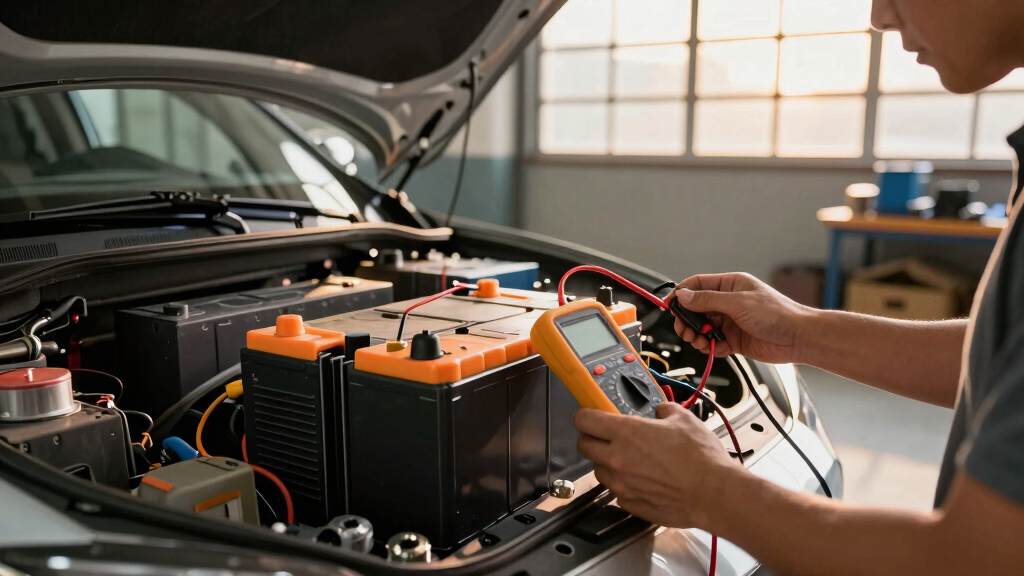

The phrase electric vehicle battery covers very different products, and that distinction shapes my ranking. Of these four batteries, only the TEMGO 51.2V 100Ah is packaged as a direct traction-battery upgrade for compatible 48V golf carts and utility vehicles. The BLUETTI 51.2V 100Ah is my stronger choice for an RV, boat, or off-grid electrical system, while the Anker models are expansion batteries for specific power stations and home-backup equipment.
I rank the TEMGO as Best Overall because it combines a 5.12kWh-class battery, high discharge capability, a charger, an LCD display, and app monitoring in one conversion package. The BLUETTI takes the premium position with 6,000-plus rated cycles, self-heating, IP65 protection, and a 200A battery-management system. Buyers who need outage power rather than vehicle propulsion should choose between the highly expandable Anker B6000 and the much smaller BP1000.
The main tradeoffs are compatibility, portability, output, and system lock-in. None of these products is a replacement battery for a Tesla, Ford, Hyundai, or another road-going passenger EV. I would choose by application first, then compare usable capacity, discharge current, cold-weather behavior, installation demands, and the supporting equipment included in the price.
Complete the kit


Key Takeaways
- The TEMGO is the clearest vehicle-focused choice because it is built for compatible 48V golf carts and includes a charger, display, and 200A BMS.
- The BLUETTI offers the strongest off-grid specification set, led by self-heating, IP65 protection, and a rated 6,000-plus cycles at 70% depth of discharge.
- The Anker SOLIX B6000 has the widest capacity range, but it belongs to the E10 home-backup system and is not a standalone traction battery.
- The Anker BP1000 is the easiest battery here to move, yet it works only as an expansion battery for the original SOLIX C1000 and excludes the Gen 2 model.
- Buyers replacing a passenger-EV battery should skip all four products and use a manufacturer-approved service route.
| TEMGO 48V (51.2V) 100Ah LiFePO4 Lithium Golf Cart Battery with Charger, LCD Display & App |  | Best Overall for Compatible 48V Golf Carts | Nominal Voltage: 51.2V | Capacity: 100Ah, approximately 5.12kWh nominal | Battery Chemistry: LiFePO4 | VIEW LATEST PRICE | See Our Full Breakdown |
| BLUETTI 51.2V 100Ah LiFePO4 Lithium Battery with Bluetooth, Built-in 200A BMS, Self-Heating, IP65 Waterproof & Dustproof |  | Best Premium Battery for RV, Marine, and Off-Grid Systems | Nominal Voltage: 51.2V | Capacity: 100Ah, approximately 5.12kWh nominal | Battery Chemistry: LiFePO4 | VIEW LATEST PRICE | See Our Full Breakdown |
| Anker SOLIX B6000 Battery Module for E10, 6kWh Expandable Capacity, 10kW Turbo Output |  | Best for Expandable Whole-Home Backup | Capacity: 6kWh per module | Maximum System Capacity: Up to 90kWh | Output: 10kW Turbo Output; up to 30kW with multiple modules | VIEW LATEST PRICE | See Our Full Breakdown |
| Anker SOLIX BP1000 Expansion Battery, 1056Wh LiFePO4 Battery |  | Best Compact Expansion Battery | Product Type: Expansion battery | Capacity: 1,056Wh | Combined System Capacity: 2,112Wh with the original SOLIX C1000 | VIEW LATEST PRICE | See Our Full Breakdown |
| electric vehicle batterie | Capacity | Battery Chemistry | Rated Lifespan | Nominal Voltage |
|---|---|---|---|---|
| TEMGO 48V | 100Ah, approximately 5.12kWh nominal | LiFePO4 | — | 51.2V |
| BLUETTI 51.2V 100Ah LiFePO4 Li | 100Ah, approximately 5.12kWh nominal | LiFePO4 | 10 years | 51.2V |
| Anker SOLIX B6000 Battery Modu | 6kWh per module | — | 10 years | — |
| Anker SOLIX BP1000 Expansion B | 1,056Wh | LiFePO4 | 10 years | — |
More Details on Our Top Picks
TEMGO 48V (51.2V) 100Ah LiFePO4 Lithium Golf Cart Battery with Charger, LCD Display & App
TEMGO earns my first-place ranking because it is the only product here sold as a fairly complete traction-battery package. Its 51.2V, 100Ah configuration provides about 5.12kWh of nominal energy, while the 200A discharge rating and three-second 600A peak are suited to the short bursts demanded by compatible golf-cart motors. The included charger, LCD touch display, and Bluetooth monitoring reduce the number of separate parts a buyer must source.
Compared with the BLUETTI 51.2V battery, TEMGO is easier to frame as a vehicle upgrade. Both use the same nominal voltage and capacity class, and both list a 200A BMS, but BLUETTI is positioned around RV, marine, solar, and off-grid installations. TEMGO supplies the vehicle-oriented accessories and advertises compatibility with most standard-controller 48V golf carts. BLUETTI counters with self-heating, IP65 protection, and a higher stated cycle count.
The phrase most 48V golf carts is not a universal-fit promise. Some modern carts exchange data with the original battery through proprietary communication protocols, and TEMGO warns that such systems may not work. I would verify controller voltage, communication requirements, compartment dimensions, cable sizing, mounting, and charger compatibility before ordering. At 61.7 pounds, it is lighter than many equivalent lead-acid banks but still calls for careful handling.
This pack can also support solar or stationary storage projects, although that is not why I place it first. Buyers focused on freezing-weather cabins or exposed marine compartments may get more from BLUETTI’s environmental features. For a compatible conventional golf cart, however, TEMGO offers the clearest all-in-one value in this lineup.
Pros:- Includes a matched charger, LCD touch display, and Bluetooth monitoring
- 200A continuous discharge and 600A three-second peak support demanding motor loads
- More than 5,000 stated deep cycles reduce replacement frequency
- 5.12kWh-class capacity can replace a bulky lead-acid bank in a compatible cart
Cons:- Does not support carts that require an incompatible battery communication protocol
- Controller, wiring, mounting, and compartment fit must be verified before purchase
- Lacks the stated self-heating and IP65 advantages of the BLUETTI
Best for: Owners converting a compatible 48V golf cart or utility cart from lead-acid batteries to a monitored LiFePO4 package.
Not ideal for: Passenger EVs, communication-dependent golf carts, or buyers who cannot confirm controller and compartment compatibility.
- Nominal Voltage:51.2V
- Capacity:100Ah, approximately 5.12kWh nominal
- Battery Chemistry:LiFePO4
- Continuous Discharge:200A
- Peak Discharge:600A for 3 seconds
- Maximum Power Output:10.24kW
- Weight:61.7 pounds
- Dimensions:20.67 x 10.59 x 8.66 inches
- Included Equipment:Charger, LCD touch display, and Bluetooth-enabled BMS
Our verdict“I rank the TEMGO first for compatible 48V golf carts because it pairs strong traction-oriented output with the charger and monitoring hardware needed for a practical conversion.”
BLUETTI 51.2V 100Ah LiFePO4 Lithium Battery with Bluetooth, Built-in 200A BMS, Self-Heating, IP65 Waterproof & Dustproof
The BLUETTI 51.2V 100Ah takes second place as my premium choice for a custom electrical system. It matches the TEMGO’s basic 51.2V and 100Ah figures but adds self-heating and IP65 protection, two meaningful advantages for an RV, boat, or off-grid enclosure exposed to cold, moisture, or dust. Its built-in 200A BMS monitors risks such as excessive current and unsafe operating conditions.
Longevity is its clearest advantage over the other products. BLUETTI lists more than 6,000 cycles at 70% depth of discharge, versus TEMGO’s stated 5,000-plus deep cycles, Anker BP1000’s 3,000 cycles, and B6000’s 4,000-plus cycles. Those ratings are not directly interchangeable because the brands may use different test conditions, but BLUETTI still presents the strongest cycle specification in this group.
I rank it behind TEMGO for vehicle buyers because it is a battery component, not a ready-made conversion kit. A proper installation may still need a compatible charger, inverter, fusing, disconnects, cables, mounting hardware, and system design. Its self-heating feature also consumes energy and should not be mistaken for permission to charge under any temperature or installation condition.
Scalability up to a stated 24-battery configuration makes the BLUETTI better suited than TEMGO to a large solar bank, but adding batteries raises cost, weight, cabling demands, and balancing complexity. The Anker B6000 offers a more integrated route to very large backup capacity. I favor BLUETTI when the buyer wants control over a custom 51.2V system and values environmental resilience over plug-and-play convenience.
Pros:- Rated for more than 6,000 cycles at 70% depth of discharge
- Self-heating supports properly configured cold-weather use
- IP65 enclosure resists dust and water exposure
- Built-in 200A BMS and Bluetooth provide protection and monitoring
Cons:- Requires additional system components and installation planning
- Heavy, high-capacity format is poorly suited to frequent carrying
- Large multi-battery configurations increase cost and wiring complexity
Best for: Experienced RV, marine, and off-grid buyers building a high-capacity 51.2V system for cold or exposed conditions.
Not ideal for: Shoppers seeking a lightweight portable battery, a complete golf-cart conversion kit, or a passenger-EV replacement pack.
- Nominal Voltage:51.2V
- Capacity:100Ah, approximately 5.12kWh nominal
- Battery Chemistry:LiFePO4
- Cycle Life:6,000+ cycles at 70% depth of discharge
- Protection System:Built-in 200A BMS
- Environmental Rating:IP65 water and dust resistance
- Cold-Weather Feature:Integrated self-heating
- Configuration:Scalable up to a stated 24 batteries in parallel
- Rated Lifespan:10 years
Our verdict“I would choose the BLUETTI for a premium off-grid, RV, or marine build where cycle life, self-heating, and enclosure protection matter more than kit-style convenience.”
Anker SOLIX B6000 Battery Module for E10, 6kWh Expandable Capacity, 10kW Turbo Output
I place the Anker SOLIX B6000 third because its scale is exceptional, but its connection to electric vehicles is indirect. Each module adds 6kWh of storage to the SOLIX E10 home-backup platform, with a system range extending to a stated 90kWh. That makes it the strongest choice here for keeping household circuits running through a long outage, not for powering a golf cart or replacing a road-EV traction pack.
Compared with the BLUETTI and TEMGO batteries, the B6000 belongs to a more tightly integrated ecosystem. Buyers give up the flexibility of a general-purpose 51.2V battery in exchange for stackable modules, smart system management, and coordinated high-output operation. A single module advertises 10kW Turbo Output, while expanded configurations can reach a stated 30kW, making this system more capable of handling heavy household appliances than the portable BP1000 arrangement.
The safety and environmental specifications strengthen its fixed-installation case. Automotive-grade LFP cells, UL 9540A testing, a NEMA 4 enclosure, IP66 protection, and an operating range from -4°F to 131°F support use in demanding locations when installed as directed. Yet the five-year warranty is shorter than the stated 10-year lifespan, a gap I would weigh when pricing a large installation.
Expansion is both the attraction and the drawback. Reaching the largest capacity or output figures means buying several modules, allocating space, and paying for professional design and installation where required. The B6000 is my pick for an E10 owner who wants long-duration backup. Anyone seeking actual vehicle propulsion should choose TEMGO for a compatible cart or consult the vehicle maker for a passenger EV.
Pros:- Expands from 6kWh per module to a stated 90kWh system capacity
- Supports high output for heavy household loads
- Automotive-grade LFP cells are rated for more than 4,000 cycles
- UL 9540A, NEMA 4, and IP66 credentials suit demanding fixed installations
Cons:- Works as part of the Anker SOLIX E10 ecosystem rather than as a general-purpose battery
- Large configurations require multiple modules and can become expensive and complex
- Five-year warranty covers only half of the stated 10-year lifespan
Best for: Anker SOLIX E10 owners who want modular, weather-resistant storage for extended whole-home backup.
Not ideal for: Anyone seeking a standalone battery, a portable power source, or a traction battery for a road-going EV.
- Capacity:6kWh per module
- Maximum System Capacity:Up to 90kWh
- Output:10kW Turbo Output; up to 30kW with multiple modules
- Cell Type:Automotive-grade LFP
- Cycle Rating:4,000+ cycles
- Rated Lifespan:10 years
- Operating Range:-4°F to 131°F
- Protection and Testing:UL 9540A, NEMA 4, and IP66
- Warranty:5 years
Our verdict“I recommend the B6000 only for buyers building an expandable SOLIX E10 backup system, where its capacity range and high output outweigh its platform lock-in.”
Anker SOLIX BP1000 Expansion Battery, 1056Wh LiFePO4 Battery
The Anker SOLIX BP1000 finishes fourth, though it has a clear role for owners of the original SOLIX C1000. Connecting it raises that power station’s combined capacity to 2,112Wh, giving campers and emergency-preparedness buyers more runtime without moving up to a home-scale installation. Its 1,056Wh capacity is much easier to handle than the 5.12kWh-class TEMGO or BLUETTI batteries.
Portability is the reason to choose the BP1000, but capacity is the reason to skip it. It stores roughly one-fifth as much energy as either 100Ah, 51.2V model, so it is better matched to electronics, refrigeration, lights, and intermittent appliance use than sustained propulsion or a large off-grid bank. Compared with the 6kWh B6000, it has a lower entry point and simpler portable role, yet it offers none of that module’s whole-home scale.
The 3,000-cycle, 10-year rating is respectable for a compact LiFePO4 expansion battery, and a full recharge in under two hours reduces downtime when paired with the supported system and charging mode. UltraFast charging relies on the appropriate app setting, adding a software step that buyers who prefer physical controls may dislike.
Compatibility is the decisive limitation: this battery is designed for the original Anker SOLIX C1000 and does not work with the C1000 Gen 2. It also cannot function as an independent vehicle battery. I would buy it only after checking the exact power-station model number. Within that narrow match, it is a tidy way to double capacity; outside it, every higher-ranked product has a clearer purpose.
Pros:- Doubles the original SOLIX C1000 system capacity to 2,112Wh
- Compact format is easier to transport than the larger batteries in this comparison
- Rated for 3,000 cycles and a 10-year lifespan
- Can recharge fully in under two hours with the supported setup
Cons:- Incompatible with the Anker SOLIX C1000 Gen 2
- UltraFast charging requires the appropriate app mode
- Much lower capacity and output scope than the other three products
Best for: Owners of the original Anker SOLIX C1000 who want a compact capacity upgrade for camping or emergency power.
Not ideal for: C1000 Gen 2 owners, vehicle conversions, large off-grid systems, or anyone needing a standalone battery.
- Product Type:Expansion battery
- Capacity:1,056Wh
- Combined System Capacity:2,112Wh with the original SOLIX C1000
- Battery Chemistry:LiFePO4
- Cycle Rating:3,000 cycles
- Rated Lifespan:10 years
- Recharge Time:Under 2 hours with the supported setup
- Compatibility:Original Anker SOLIX C1000; not compatible with C1000 Gen 2
- Fast-Charging Control:UltraFast mode requires the supported app
Our verdict“I would pick the BP1000 as a compact C1000 capacity extender, but its strict compatibility and modest scale make it the least suitable answer for vehicle-battery shoppers.”
How We Picked
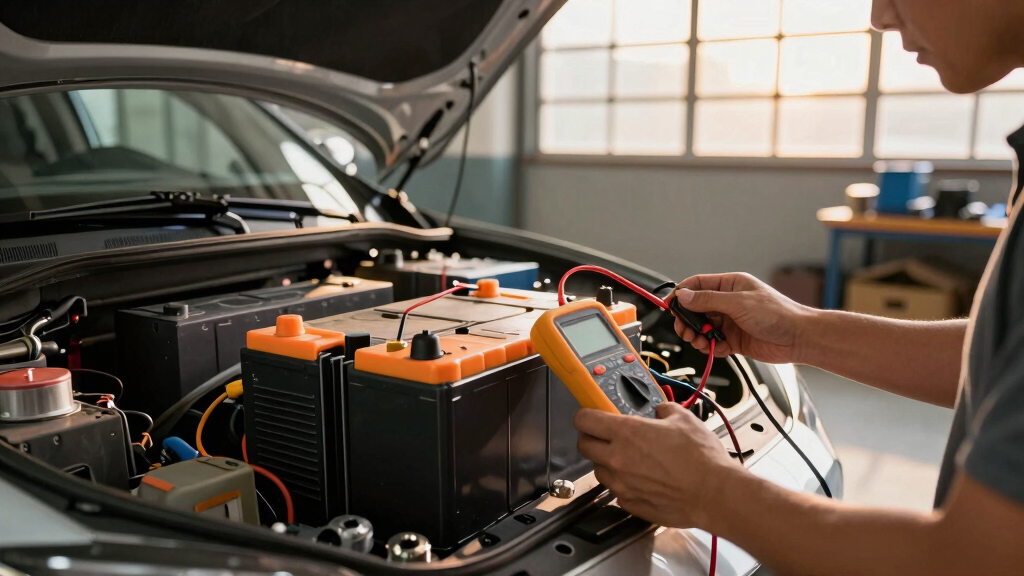
I ordered these products by how directly they answer the search for an electric vehicle battery, then weighed application fit, electrical capability, durability, and ownership friction. Vehicle compatibility carries the most weight: a battery can have excellent cells and still be the wrong purchase if its voltage, controller interface, charging profile, or mounting arrangement does not match the vehicle.
I also compared capacity with output. A large kilowatt-hour figure tells me how much energy a battery stores, while discharge current and peak power indicate whether it can handle acceleration, motors, or heavy electrical loads. Cycle ratings, LiFePO4 chemistry, environmental protection, battery-management hardware, and cold-weather features helped separate products intended for demanding fixed installations from lighter expansion packs.
My ranking also reflects what comes in the package and how much extra equipment is needed. TEMGO gains ground by including its charger and display. BLUETTI offers stronger environmental and longevity specifications but requires a separately designed system around it. The Anker batteries rank lower for vehicle use because each depends on a particular Anker platform. I treat manufacturer lifespan figures as ratings rather than guarantees, and I flag where a quoted lifespan exceeds the supplied warranty period.
Factors to Consider When Choosing Best Electric Vehicle Batteries
I would start with the machine or power system the battery must serve. Voltage alone cannot establish compatibility, and a large capacity figure cannot make a stationary expansion module suitable for vehicle propulsion.Match the Battery to the Application
For a conventional 48V golf cart, I would compare controller requirements, peak current, physical fit, and communication protocols before capacity. That favors TEMGO when the cart accepts a standard 51.2V lithium conversion. For an RV, boat, or solar bank, BLUETTI’s self-heating and IP65 enclosure may matter more than the accessories included with TEMGO. The two Anker batteries should enter the shortlist only when the matching Anker host system is already owned or planned.
Separate Energy Capacity from Power Output
Kilowatt-hours measure stored energy; kilowatts and amps describe how quickly that energy can be delivered. A 5.12kWh battery can run a given load far longer than the 1.056kWh BP1000, but it still needs suitable discharge hardware for a motor or inverter. TEMGO’s 200A continuous and 600A short peak ratings support motor surges. The B6000’s high-output figures apply within its E10 architecture, not as a free-standing vehicle specification.
Read Cycle Claims with Their Test Conditions
I use cycle ratings as a comparison aid, not a precise expiration date. Depth of discharge, temperature, charge rate, and storage habits all affect service life. BLUETTI states more than 6,000 cycles at 70% depth of discharge, while TEMGO states more than 5,000 deep cycles. Those numbers are not perfectly equivalent without matching test methods. Warranty length provides a second reference point; the B6000’s five-year warranty is shorter than its 10-year lifespan claim.
Plan the Entire Electrical System
A battery purchase may also require a charger, inverter, fuses, disconnects, busbars, cables, and secure mounting. TEMGO bundles more of the golf-cart hardware than BLUETTI, but neither removes the need to verify wiring and controller limits. Parallel battery banks demand matched units and careful system design. For high-current vehicle, marine, or home installations, I would budget for qualified installation rather than treating the battery price as the whole project cost.
Frequently Asked Questions
Can any of these batteries replace the pack in a Tesla or another passenger EV?
No. I would not use any of these products as a replacement traction pack for a road-going passenger EV. Such vehicles rely on model-specific battery enclosures, cooling systems, contactors, software, crash protection, and high-voltage controls. The TEMGO targets compatible low-speed golf carts, BLUETTI targets custom low-voltage energy systems, and both Anker products are proprietary expansion modules. A passenger-EV repair belongs with an approved battery service provider.
Why is the TEMGO ranked above the BLUETTI?
I rank TEMGO higher because the title promises an electric-vehicle-battery comparison, and TEMGO has the clearest vehicle role. It includes a charger and display and is marketed for compatible 48V golf carts. BLUETTI has the stronger cycle, cold-weather, and enclosure specifications, so I prefer it for premium RV, marine, and off-grid builds. The ranking reflects buyer fit rather than claiming that TEMGO has better cells in every respect.
Is a 51.2V LiFePO4 battery compatible with every 48V golf cart?
No. A nominal voltage match is only the first checkpoint. I would verify the cart controller’s voltage range, maximum current, charger profile, battery-compartment dimensions, cable and connector sizes, and any required communication link. Some carts will report faults or refuse to operate without data from a supported battery-management system. TEMGO specifically warns buyers to check carts that require communication protocols.
Does self-heating make the BLUETTI safe to charge in any cold temperature?
No. Self-heating broadens the battery’s usefulness in cold settings, but I would still follow the manufacturer’s temperature limits, installation instructions, and charging rules. LiFePO4 cells can be damaged when charged while too cold. The heating system must have enough stored energy and time to bring the cells into an allowed range. An insulated, dry installation and a compatible charger remain part of a sound cold-weather setup.
Can the Anker BP1000 or B6000 operate as a standalone battery?
These are platform expansion modules rather than general-purpose standalone batteries. The BP1000 is designed for the original SOLIX C1000 and is explicitly incompatible with the C1000 Gen 2. The B6000 expands the SOLIX E10 home-backup system. I would not buy either product without confirming the exact host model, required cables, supported module count, and installation arrangement. For a custom system, BLUETTI or TEMGO provides a more relevant starting point.
Conclusion
For a compatible 48V golf cart, I would choose the TEMGO because its charger, display, app monitoring, and high-current output form the most vehicle-ready package here. For an RV, boat, or custom solar bank, the BLUETTI is my premium pick, particularly where self-heating, IP65 protection, and a high cycle rating justify the added system-planning work.
An existing SOLIX E10 owner should look to the B6000 for expandable whole-home backup, while an owner of the original SOLIX C1000 can use the BP1000 as a compact capacity upgrade. I would skip both Anker models for propulsion. Buyers replacing a passenger-EV pack should skip the entire lineup and seek a battery engineered and approved for that exact vehicle.