The best off-road vehicle accessory is the one that solves the recovery problem my vehicle is most likely to face. I rank the Off-Road Traction Boards with Jack Base first because they address mud, sand, and snow while adding a lifting platform. The Autobots Tow Hitch Receiver is my preferred rear recovery-point upgrade, while the X-BULL Recovery Traction Tracks offer a more clearly sized alternative for drivers planning around limited cargo space.
The main choice is between traction equipment and connection hardware. Boards can help a vehicle regain movement without another truck, but they take up more storage room and require digging and careful placement. Hitch receivers and shackles are smaller, yet they only become useful when paired with a compatible strap, rope, recovery vehicle, and properly rated attachment point. I ranked these picks by recovery utility, stated ratings, terrain range, storage clarity, and the compromises each buyer must accept.
Complete the kit


Key Takeaways
- The Off-Road Traction Boards rank first because their jack base and dual-sided tread cover more recovery situations than the other three picks.
- The Autobots receiver provides the strongest stated recovery connection here, with an 11,000-pound working load and 45,000-pound break strength.
- The X-BULL tracks publish exact dimensions, making them easier to plan around than the larger boards whose measurements are not listed.
- The Nilight two-pack suits buyers who already have rated recovery points but need shackles, isolators, and washers for two connections.
- Traction boards support solo recovery, while the receiver and shackles depend on additional compatible recovery gear and sound technique.
| Off-Road Traction Boards with Jack Base, Heavy-Duty Recovery Tracks for 4×4, Truck, Jeep, SUV |  | Best Overall | Material: Automotive-grade polypropylene reinforced with fiber | Maximum Load Capacity: 10 tons | Temperature Range: -30°C to 60°C (-22°F to 140°F) | VIEW LATEST PRICE | See Our Full Breakdown |
| Autobots Tow Hitch Receiver 2-Inch Shackle Hitch Receiver with 45,000-Pound Break Strength and 5/8-Inch Pin |  | Best for Hitch Recovery | Hitch Size: 2 inches | Working Load: 11,000 pounds | Break Strength: 45,000 pounds | VIEW LATEST PRICE | See Our Full Breakdown |
| X-BULL Recovery Traction Tracks Tire Ladder for Sand, Snow, and Mud 4WD |  | Best for Predictable Storage | Dimensions: 35.8 x 12.2 x 4.3 inches | Material: Reinforced nylon | Load Capacity: 10 tons | VIEW LATEST PRICE | See Our Full Breakdown |
| Nilight 2-Pack 3/4-Inch D-Ring Shackle 4.75-Ton Capacity with Isolators and Washer Kit |  | Best Recovery Hardware Set | Quantity: 2 shackles | Shackle Size: 3/4 inch | Rated Capacity: 4.75 tons (9,500 pounds) each | VIEW LATEST PRICE | See Our Full Breakdown |
| off-road vehicle accessorie | Material | Temperature Range | Maximum Flex | Traction Pattern |
|---|---|---|---|---|
| Off-Road Traction Boards with | Automotive-grade polypropylene reinforced with fiber | -30°C to 60°C (-22°F to 140°F) | Up to 120 degrees | Double-sided diamond array |
| Autobots Tow Hitch Receiver 2- | Carbon steel | — | — | — |
| X-BULL Recovery Traction Track | Reinforced nylon | -20°C to 60°C (-4°F to 140°F) | Up to 120 degrees | Interlocking diamond array |
| Nilight 2-Pack 3/4-Inch D-Ring | Heavy-duty steel | — | — | — |
More Details on Our Top Picks
Off-Road Traction Boards with Jack Base, Heavy-Duty Recovery Tracks for 4×4, Truck, Jeep, SUV
I rank these Off-Road Traction Boards with Jack Base first because they offer the broadest recovery role in the lineup. Their double-sided diamond pattern is designed to give tires a path across mud, loose sand, and snow, while the integrated jack base can create a steadier platform for compatible lifting equipment. Compared with the Autobots receiver and Nilight shackles, these boards can support a self-recovery without a second vehicle or recovery rope.
The automotive-grade polypropylene is reinforced with fiber, and the boards carry a stated 10-ton maximum load. Their ability to bend up to 120 degrees helps them follow uneven ground rather than acting like rigid ramps. A temperature range from -22°F to 140°F also makes them the most climate-flexible traction pick here. Against the X-BULL tracks, the real advantage is the jack-base function; both claim the same load capacity, but this model provides one more recovery use.
That extra versatility comes with uncertainty. The listing describes them as large but provides no exact dimensions, so I cannot confidently say whether they will fit behind a seat, in a short cargo bay, or on an existing roof mount. They may also be more equipment than a driver needs for maintained gravel roads. I would choose these for varied trail travel, but buyers with strict storage limits get clearer planning information from X-BULL.
Pros:- Double-sided diamond tread provides tire contact on several loose surfaces
- Built-in jack base expands the boards beyond traction-only recovery
- Stated 10-ton capacity suits a wide range of 4x4s, trucks, Jeeps, and SUVs
- Included carry bag keeps the pair contained during transport
Cons:- Exact dimensions are not supplied, which complicates mounting and storage planning
- Large construction may consume more cargo room than occasional users want
- Successful recovery still depends on digging and accurate board placement
Best for: Drivers who want one traction system for mud, sand, and snow, plus a built-in base for compatible lifting equipment
Not ideal for: Casual gravel-road drivers or buyers who must verify exact dimensions before choosing a storage location
- Material:Automotive-grade polypropylene reinforced with fiber
- Maximum Load Capacity:10 tons
- Temperature Range:-30°C to 60°C (-22°F to 140°F)
- Maximum Flex:Up to 120 degrees
- Traction Pattern:Double-sided diamond array
- Jack Base:Built in
- Storage Accessory:Carry bag included
- Listed Size:Large; exact dimensions not specified
Our verdict“This is my best overall pick for buyers who value multi-terrain self-recovery and a useful jack platform more than compact, clearly documented sizing.”
Autobots Tow Hitch Receiver 2-Inch Shackle Hitch Receiver with 45,000-Pound Break Strength and 5/8-Inch Pin
The Autobots Tow Hitch Receiver takes second place because it creates a dedicated connection at a standard 2-inch receiver. Its stated 11,000-pound working load is more useful for planning than the larger 45,000-pound break strength, since working-load limits are the relevant figures during controlled service. Dual pin holes allow horizontal or vertical positioning, which can help align the shackle with a recovery direction or bumper layout.
This pick serves a different buyer from the leading traction boards. It does not help a tire grip loose ground by itself, but it gives a compatible truck or SUV a defined rear attachment option for a rated strap or rope. Compared with the Nilight shackle pair, Autobots supplies both the receiver block and a 3/4-inch D-ring shackle, making it a more complete answer for a vehicle that has a receiver but lacks a suitable rear recovery connection.
Carbon-steel construction, electro-galvanized corrosion resistance, and a black powder coat suit gear that may live near road spray and trail debris. Multiple color combinations also add a visual choice absent from the other products. The tradeoff is substantial steel weight, and compatibility is limited to a properly mounted 2-inch receiver. I would not treat the hitch ball, an unrated factory tie-down, or the accessory’s break-strength figure as permission for aggressive shock loading.
Pros:- 11,000-pound stated working load supports heavy recovery and towing setups
- Includes a 3/4-inch D-ring shackle and 5/8-inch receiver pin
- Dual pin holes allow horizontal or vertical installation
- Protective steel finish and several color combinations suit exposed mounting
Cons:- Heavy construction can be awkward to install, remove, and store
- Only fits compatible 2-inch hitch receivers
- Safe use depends on the ratings of the receiver, vehicle, pin, rope, and every other connection
Best for: Truck and SUV owners with a properly rated 2-inch receiver who need a strong rear connection for planned recoveries
Not ideal for: Vehicles with non-standard receivers, buyers seeking solo traction equipment, or anyone without rated recovery straps and attachment hardware
- Hitch Size:2 inches
- Working Load:11,000 pounds
- Break Strength:45,000 pounds
- Receiver Pin:5/8 inch
- Shackle Size:3/4 inch
- Material:Carbon steel
- Finish:Electro-galvanized with black powder coating
- Mounting Positions:Horizontal or vertical via dual pin holes
- Color Options:Eight listed combinations
Our verdict“I recommend the Autobots receiver when a strong rear recovery point matters more than the solo-recovery freedom provided by traction boards.”
X-BULL Recovery Traction Tracks Tire Ladder for Sand, Snow, and Mud 4WD
The X-BULL Recovery Traction Tracks are my third pick and the better traction choice for buyers who need to plan their cargo layout before ordering. Each listed track measures 35.8 by 12.2 by 4.3 inches, removing the sizing uncertainty attached to the first-place boards. Reinforced nylon, a diamond-array surface, and up to 120 degrees of flex are aimed at creating a tire path over sand, snow, mud, and ice.
Like the leading boards, X-BULL claims a 10-ton load capacity, so the distinction is not the headline rating. The leading model wins on functional range because its built-in jack base supports another recovery task and its lower stated temperature reaches -30°C rather than X-BULL’s -20°C. X-BULL earns its role through measurable packaging and a straightforward traction-focused design, not through extra functions.
These tracks still require room, digging, and correct alignment with the driven wheels. Their olive finish is the only listed color, which may matter to buyers mounting boards outside the vehicle. I see them as a sensible middle ground for drivers who want self-contained traction help without adding receiver hardware, yet do not need a jack platform. Buyers who already carry the first-place boards gain little by adding another similar pair.
Pros:- Published dimensions make storage and mounting easier to plan
- Reinforced nylon bends with uneven ground and resists impact
- Diamond-array tread is designed for sand, snow, mud, and ice
- Stated 10-ton load capacity covers many common off-road vehicles
Cons:- Lacks the integrated jack base found on the first-place boards
- Placement can require digging and repeated adjustment
- Olive is the only listed color
Best for: 4WD owners who need traction boards with published measurements for roof-rack, bed, or cargo-area planning
Not ideal for: Buyers who want a built-in jack base, a wider color selection, or recovery gear for regular paved-road driving
- Dimensions:35.8 x 12.2 x 4.3 inches
- Material:Reinforced nylon
- Load Capacity:10 tons
- Temperature Range:-20°C to 60°C (-4°F to 140°F)
- Maximum Flex:Up to 120 degrees
- Traction Pattern:Interlocking diamond array
- Target Surfaces:Sand, snow, mud, and ice
- Color:Olive
Our verdict“The X-BULL tracks are my choice for drivers who want capable traction equipment with known dimensions and can skip the leading model’s jack-base feature.”
Nilight 2-Pack 3/4-Inch D-Ring Shackle 4.75-Ton Capacity with Isolators and Washer Kit
I place the Nilight 2-Pack D-Ring Shackles fourth because these are supporting components rather than a complete recovery solution. Each 3/4-inch steel shackle carries a stated 4.75-ton capacity, and the set includes two connection points rather than the single shackle bundled with the Autobots receiver. That makes Nilight useful for a front-and-rear kit or for joining compatible recovery equipment at both ends.
The supplied isolators and washers are a practical difference. They can reduce metal contact, rattling, and cosmetic damage when the shackles remain mounted. Compared with the Autobots hitch assembly, however, Nilight does not provide the receiver block that connects a shackle to a 2-inch hitch. Buyers still need properly rated vehicle recovery points, and the 7/8-inch pins must physically fit those points before the capacity number has any value.
Powder-coated steel helps with exposure, but the coating can still wear where loaded parts contact each other. The fixed 3/4-inch format also lacks the connection flexibility of soft shackles in some modern recovery setups. I recommend this kit for completing an existing system, not for beginning one from scratch. If solo travel is the concern, either traction-board option offers more independent recovery utility.
Pros:- Two-shackle package supports connections at both ends of a recovery setup
- Each shackle has a stated 4.75-ton capacity
- Isolators and washers reduce rattling and metal contact
- Powder-coated steel is suited to exposed off-road hardware
Cons:- Cannot function without compatible rated recovery points and additional equipment
- 3/4-inch bodies and 7/8-inch pins may not fit every mount or hook
- Steel shackles require careful handling around people and vehicle bodywork
Best for: Drivers who already have rated recovery points and need two conventional steel shackles with anti-rattle accessories
Not ideal for: Beginners building a complete recovery kit or vehicles whose attachment points cannot accept 7/8-inch shackle pins
- Quantity:2 shackles
- Shackle Size:3/4 inch
- Rated Capacity:4.75 tons (9,500 pounds) each
- Pin Size:7/8 inch
- Material:Heavy-duty steel
- Coating:Powder coated
- Included Accessories:Isolators and washer kit
- Listed Applications:Jeeps, trucks, trailers, towing, and off-road recovery
Our verdict“I would add the Nilight pair to an established recovery setup, but I would choose boards or the Autobots receiver first when foundational equipment is still missing.”
How We Picked
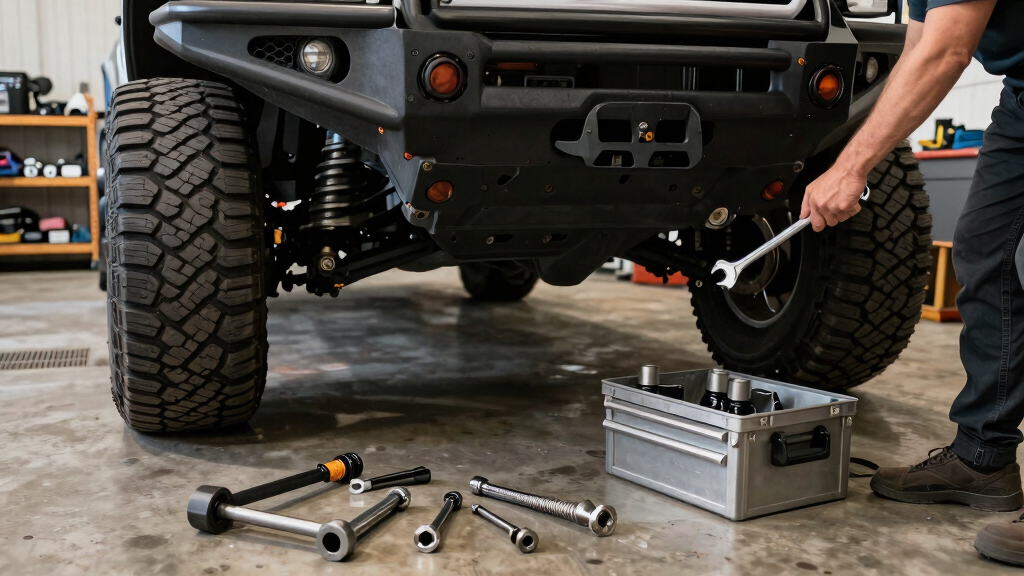
I treated this as a recovery-focused off-road roundup, since every listed product is meant to help a stuck vehicle or create a usable connection during a pull. I gave priority to accessories that cover several surfaces, have clear load information, and solve a problem that commonly stops a trail trip. I also looked at whether each item can work independently or requires a larger recovery system.
My order reflects breadth of use, rating clarity, portability, and added functions. The jack-base boards lead because they combine traction and lifting support. The Autobots receiver follows as a strong, dedicated hitch connection. X-BULL takes the next spot because its published dimensions improve storage planning, though it lacks the built-in jack base of the leading boards. Nilight ranks fourth because shackles are valuable supporting parts, but they cannot create traction or serve as recovery points by themselves.
I treated all capacities as manufacturer-stated ratings, not independent test results. A recovery system is only as capable as its lowest-rated part, including the vehicle attachment point, receiver, pin, shackle, rope, and strap. I would match every component to the vehicle and recovery method rather than choosing from one large number alone.
| off-road vehicle accessorie | Material | Temperature Range | Traction Pattern |
|---|---|---|---|
| Off-Road Traction Boards with | Automotive-grade polypropylene reinforced with fiber | -30°C to 60°C (-22°F to 140°F) | Double-sided diamond array |
| Autobots Tow Hitch Receiver 2- | Carbon steel | — | — |
| X-BULL Recovery Traction Track | Reinforced nylon | -20°C to 60°C (-4°F to 140°F) | Interlocking diamond array |
| Nilight 2-Pack 3/4-Inch D-Ring | Heavy-duty steel | — | — |
Factors to Consider When Choosing Off-road Vehicle Accessories
I would build an off-road recovery kit around likely terrain, vehicle attachment points, and available storage. A large capacity claim does not make two products interchangeable: traction boards create tire grip, a receiver provides a rear connection, and shackles link rated parts together.
Choose Between Solo Traction and Assisted Recovery
If I expected loose sand, mud, or snow, I would start with traction boards. They can be placed under the driven tires without another vehicle, though digging a path often makes the difference between success and wheelspin. A hitch receiver and shackles suit assisted recovery, where a second vehicle, winch, or anchored pulling system is available. They are smaller to carry but do not solve the traction problem alone.
Match Every Rating in the Recovery Chain
I would compare the working load of the receiver, vehicle recovery point, pin, shackle, strap, and rope. The lowest rating sets the practical ceiling for the assembled system. Break strength is not the same as a normal service rating, and vehicle weight alone does not capture suction from mud, slope forces, or shock loading. I would follow the vehicle and equipment makers’ instructions and keep people away from a tensioned line.
Plan Storage Before Buying Boards
Traction boards are useful only when I can reach them before the vehicle is buried. Exterior mounts save cabin room but expose equipment to weather and theft; interior storage keeps it protected but can bring mud inside after recovery. The X-BULL dimensions make fit easier to judge. The first-place boards offer a jack-base advantage, but their unspecified measurements create more buying uncertainty.
Check Physical Compatibility, Not Just Capacity
I would verify a receiver’s 2-inch opening, pin diameter, clearance, and vehicle hitch rating. For shackles, the pin must pass through the recovery point without side loading or binding. A high rating cannot correct poor geometry. The Autobots assembly makes sense for a standard receiver, while Nilight is better for vehicles that already have suitable tabs, bumpers, or mounts.
Frequently Asked Questions
Should I buy traction boards or recovery shackles first?
I would buy traction boards first for solo travel across sand, snow, or mud because they can help without another vehicle. I would prioritize shackles when my vehicle already has rated recovery points and I regularly travel with another equipped vehicle. Many trail kits need both, but they solve separate parts of a recovery.
Is a 45,000-pound break strength the same as a safe working load?
No. The Autobots receiver lists a 45,000-pound break strength and an 11,000-pound working load. I would use the working-load figure when comparing normal service limits and then check every connected component. The system must stay within the lowest applicable rating rather than borrowing confidence from its strongest part.
Do traction boards work without digging?
Sometimes, but I would expect to remove loose material from in front of the tire and create a shallow path for the board. Correct placement gives the tread a better chance to engage, while hard acceleration can throw the board or dig the tire deeper. Smooth throttle and attention to the driven wheels matter more than the printed load rating.
Can I attach a recovery strap to a tow ball?
I would not use a tow ball as a recovery attachment unless the vehicle and equipment manufacturers explicitly approve that setup. A rated receiver recovery point, such as a compatible shackle receiver, is designed for a defined connection. The hitch, mounting hardware, shackle, and strap still need compatible ratings and alignment.
Are steel D-ring shackles suitable for every recovery point?
No. I would check whether the 7/8-inch pin fits the recovery-point opening and whether the mount permits straight loading without binding. Steel shackles are strong but heavy, so careful rigging and handling matter. Some closed recovery points may work better with compatible soft shackles, depending on their construction and manufacturer guidance.
Conclusion
For the widest self-recovery coverage, I would choose the Off-Road Traction Boards with Jack Base. Their terrain range and lifting platform justify the first-place rank, provided the unknown dimensions do not disrupt storage plans. Buyers who want known measurements should choose the X-BULL tracks instead.
For a truck or SUV with a rated 2-inch receiver, the Autobots Tow Hitch Receiver is my pick for a dedicated rear connection. I would select the Nilight two-pack only when suitable recovery points and the rest of the pulling system are already in place. The right choice follows the missing capability in the vehicle’s kit, not the largest number printed on the accessory.