
When readers search for the best Ducati motorcycles, most actually want two things: a deeper appreciation of the machines themselves and practical knowledge before owning one. That’s why my top pick is The Complete Book of Ducati Motorcycles, Third Edition — it covers every model since 1946 in one place, making it the single most useful reference for almost any Ducati enthusiast. If your interest runs toward modern superbikes, Ducati 1098/1198: The Superbike Redefined goes far deeper on one era, while Ducati Bevel Twins: Essential Buyer’s Guide is the one to buy before spending real money on a classic. The main tradeoff you’ll face is breadth versus depth: encyclopedias cover everything but touch lightly, while single-model books go narrow but deep. Keep reading for the full breakdown of which book fits which kind of Ducati fan.

Get business pricing on garage and car supplies
- Business-only prices and quantity discounts
- Tax-exempt purchasing
- Multiple users, one account, clear invoices
Complete the kit


Key Takeaways
- Breadth-versus-depth is the single biggest decision: the Complete Book series covers every model since 1946, while titles like the 860/900/Mille Bible or the 851/888/916 book trade coverage for engineering and ownership detail.
- The Third Edition of the Complete Book effectively replaces the Second Edition for most buyers — unless you find the older edition at a steep saving, the newer volume wins on updated photography and recent models.
- Only one title in this lineup is a true pre-purchase tool: the Bevel Twins Essential Buyer’s Guide is written for buyers walking into a sale, not for armchair reading.
- Ducati Singles stands apart as the only book covering the two- and four-stroke singles (including Mototrans), filling a gap no other entry addresses.
- Race-history fans are best served by Ducati Corse World Superbikes and the Superbikes 851/888/916 volume, which overlap in subject but differ sharply in scope — one is broad racing history, the other model-focused.
| The Complete Book of Ducati Motorcycles, Third Edition: Every Model Since 1946 |  | Best Overall Reference | Edition: Third Edition | Coverage: Every Ducati model since 1946 | Scope: Full model range, all categories | VIEW LATEST PRICE | See Our Full Breakdown |
| Ducati Corse World Superbikes |  | Best for Racing Fans | Subject: Ducati Corse World Superbike racing | Focus: Competition machines and racing history | Format: Print book | VIEW LATEST PRICE | See Our Full Breakdown |
| Ducati Singles: All Two- and Four-Stroke Single-Cylinder Motorcycles Including Mototrans, 1945 Onwards (Osprey Collector’s Library) | 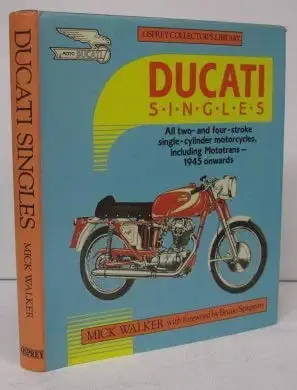 | Best for Vintage Single Enthusiasts | Format: Hardcover | Series: Osprey Collector’s Library | Publisher: Osprey | VIEW LATEST PRICE | See Our Full Breakdown |
| Ducati 1098/1198: The Superbike Redefined |  | Best Modern Superbike Deep Dive | Format: Book | Models covered: Ducati 1098 and 1198 | Focus: Modern superbike generation | VIEW LATEST PRICE | See Our Full Breakdown |
| The Ducati 860, 900 and Mille Bible |  | Best for Bevel-Twin Era Owners | Models covered: Ducati 860, 900, and Mille | Format: Print book | Era: Classic bevel-twin Ducatis | VIEW LATEST PRICE | See Our Full Breakdown |
| Ducati Superbikes: 851, 888, 916 |  | Best for Superbike History Buffs | Format: Book | Models Covered: Ducati 851, 888, 916 | Category: Motorcycle history and specifications | VIEW LATEST PRICE | See Our Full Breakdown |
| Ducati Bevel Twins: Essential Buyer’s Guide |  | Best Classic Bike Buyer’s Companion | Format: Book | Models Covered: Ducati Bevel Twins | Category: Buyer’s guide | VIEW LATEST PRICE | See Our Full Breakdown |
| The Complete Book of Ducati Motorcycles, 2nd Edition: Every Model Since 1946 |  | Best Comprehensive Reference | Edition: 2nd Edition | Coverage: Ducati motorcycle models since 1946 | Format: Book | VIEW LATEST PRICE | See Our Full Breakdown |
| Ducati motorcycle | Format | Best use | Focus | Coverage |
|---|---|---|---|---|
| The Complete Book of Ducati Mo | Print book | General reference and overview | — | Every Ducati model since 1946 |
| Ducati Corse World Superbikes | Print book | Racing heritage and motorsport reading | Competition machines and racing history | World Superbike program |
| Ducati Singles: All Two- and F | Hardcover | Collector and restoration reference | — | Ducati single-cylinder motorcycles, 1945 onwards |
| Ducati 1098/1198: The Superbik | Book | Owner and enthusiast reference | Modern superbike generation | — |
| The Ducati 860 | Print book | Ownership, restoration, and buying reference | — | — |
| Ducati Superbikes: 851 | Book | — | Ducati superbikes | — |
| Ducati Bevel Twins: Essential | Book | — | Purchase evaluation and selection | — |
| The Complete Book of Ducati Mo | Book | — | All Ducati models, full history | Ducati motorcycle models since 1946 |
More Details on Our Top Picks
The Complete Book of Ducati Motorcycles, Third Edition: Every Model Since 1946
For a single-volume foundation to any Ducati library, this third edition stands out as the broadest starting point in the lineup. Where Ducati Singles narrows to one engine format and The Ducati 860, 900 and Mille Bible goes deep on a single family, this book spans every model since 1946, giving new enthusiasts the full map before they specialize. Compared with the second edition also in this roundup, the updated edition makes the older printing largely redundant for buyers starting fresh. The tradeoff is depth: a survey this wide can only skim each model, so collectors restoring a specific machine will still want a dedicated buyer’s guide alongside it. This pick makes the most sense for readers who want one authoritative overview rather than a shelf of narrow volumes.
Pros:- Covers every Ducati model from 1946 onward in a single volume
- Updated third edition supersedes older printings with current model coverage
- Ideal entry point before buying narrower, model-specific books
- Broad historical framing helps buyers understand Ducati’s design evolution
Cons:- Breadth comes at the cost of restoration-level depth on any single model
- Heavier and less portable than focused collector’s guides
Best for: New Ducati enthusiasts and general readers who want a complete, model-by-model history in one volume
Not ideal for: Restorers who need wrench-level detail on one specific model — the scope is too broad for that job
- Edition:Third Edition
- Coverage:Every Ducati model since 1946
- Scope:Full model range, all categories
- Format:Print book
- Best use:General reference and overview
- Depth:Survey-level, model by model
Our verdict“Buy this first if you want the whole Ducati story in one place, then add specialist titles later.”
Ducati Corse World Superbikes
Where The Complete Book of Ducati Motorcycles spreads across road bikes and street history, this volume trains its lens on Ducati’s World Superbike racing campaign — the arena where the brand’s engineering reputation was forged. That focus is its whole value: racing fans get the machines, riders, and seasons that mattered, context a general survey can’t deliver. The tradeoff is obvious when placed beside the broader titles here — if your interest is classic road bikes or singles, this racing-centric angle will feel narrow. It pairs naturally with Ducati 1098/1198: The Superbike Redefined, which covers one chapter of the street-going side of that racing DNA. This model is better suited to readers who follow WSBK than to buyers researching their first road bike.
Pros:- Focused coverage of Ducati’s World Superbike racing program
- Captures the racing heritage behind the brand’s performance image
- Complements general surveys by adding competition context
- Appeals to motorsport fans rather than just motorcycle collectors
Cons:- Narrow scope excludes most road-going and classic Ducati models
- Less useful as a buying or restoration reference
Best for: World Superbike followers and fans of Ducati’s racing heritage who want the competition story told in depth
Not ideal for: Buyers researching street models or classic singles — the racing focus leaves road bikes largely in the background
- Subject:Ducati Corse World Superbike racing
- Focus:Competition machines and racing history
- Format:Print book
- Best use:Racing heritage and motorsport reading
- Coverage:World Superbike program
- Depth:Racing-focused narrative
Our verdict“A racing-history pick for WSBK devotees, not a general reference for road-bike buyers.”
Ducati Singles: All Two- and Four-Stroke Single-Cylinder Motorcycles Including Mototrans, 1945 Onwards (Osprey Collector’s Library)
This hardcover from the Osprey Collector’s Library occupies a specialist niche none of the other titles here attempt: the single-cylinder Ducatis from 1945 onward, including the Spanish-built Mototrans license machines that most references quietly omit. That Mototrans coverage alone justifies its place for collectors hunting obscure variants. Compared with The Complete Book of Ducati Motorcycles, this volume trades breadth for genuine depth in one engine family — a fair swap if you already own the general survey. The honest drawback is age: as a vintage publication, it predates later research and discoveries, so it works best paired with a newer overview rather than as a standalone source. This option stands out for period accuracy over currency.
Pros:- Documents every two- and four-stroke single-cylinder Ducati from 1945 onwards
- Includes Mototrans license-built machines often missing from other references
- Hardcover format from a recognized collector’s series built to last
- Period detail valuable for authentic restorations
Cons:- Vintage publication may omit recent research and corrected model information
- Single-cylinder focus limits usefulness for buyers of twins and superbikes
Best for: Collectors and restorers of vintage Ducati singles, especially anyone chasing Mototrans-built Spanish variants
Not ideal for: Readers interested in modern Ducatis or multi-cylinder models — the single-cylinder focus excludes them entirely
- Format:Hardcover
- Series:Osprey Collector’s Library
- Publisher:Osprey
- Coverage:Ducati single-cylinder motorcycles, 1945 onwards
- Engine types:Two-stroke and four-stroke singles
- Special coverage:Mototros license-built models from Spain
- Best use:Collector and restoration reference
Our verdict“The definitive niche pick for single-cylinder Ducati collectors who value Mototrans coverage over modern updates.”
Ducati 1098/1198: The Superbike Redefined
This is the roundup’s pick for modern superbike obsession. Rather than surveying decades like The Complete Book of Ducati Motorcycles, it devotes an entire book to the 1098 and 1198 — the machines that returned Ducati to the front of the superbike conversation. That single-model devotion translates into detail a survey simply cannot offer: development history, design decisions, and the engineering logic behind the twin. The flip side mirrors the tradeoff in Ducati Singles: narrow focus means anyone outside this model family gets nothing. Owners and prospective buyers of these bikes benefit most; casual browsers will find the intensity excessive. Compared with Ducati Corse World Superbikes, this stays on the street side while still honoring the racing lineage.
Pros:- Exhaustive, dedicated coverage of the 1098 and 1198 generation
- Explains the engineering and design story behind a pivotal modern Ducati era
- Serves as a useful companion for owners researching their own machine
- Deeper on these models than any general survey can be
Cons:- Extremely narrow scope limited to two related models
- No value for readers interested in classics, singles, or other families
Best for: Owners and prospective buyers of the 1098 or 1198 who want exhaustive detail on these specific superbikes
Not ideal for: General Ducati readers — a two-model book leaves the other 75 years of history untouched
- Format:Book
- Models covered:Ducati 1098 and 1198
- Focus:Modern superbike generation
- Era:Contemporary Ducati Superbikes
- Depth:Model-dedicated, detailed
- Best use:Owner and enthusiast reference
Our verdict“A must-have only if the 1098/1198 era is your passion; skip it for broader Ducati reading.”
The Ducati 860, 900 and Mille Bible
The word ‘Bible’ in the title signals intent: this is the exhaustive treatment of the 860, 900, and Mille range, aimed squarely at people who own or are buying one. Next to Ducati Bevel Twins: Essential Buyer’s Guide elsewhere in this roundup, this volume goes deeper — where a buyer’s guide helps you choose wisely, a bible helps you live with the machine. And compared with Ducati 1098/1198: The Superbike Redefined, it serves the same obsessive depth for an earlier, more collectible generation. The tradeoff is proportionality: buyers who just want purchase advice may find more than they need, and the price of specialist depth is zero coverage of anything outside these models. This pick makes the most sense for committed bevel-era enthusiasts.
Pros:- Definitive, exhaustive treatment of the 860, 900, and Mille range
- Goes well beyond buying advice into ownership and restoration territory
- Serves the highly collectible bevel-twin era that general books skim
- Valuable long-term companion for owners rather than one-time readers
Cons:- Specialist depth exceeds the needs of shoppers who just want purchase tips
- No coverage outside the three model families in the title
Best for: Bevel-twin era enthusiasts who own or are restoring an 860, 900, or Mille and want the definitive reference
Not ideal for: Casual buyers who only need quick purchase guidance — the buyer’s guide format covers that faster and cheaper
- Models covered:Ducati 860, 900, and Mille
- Format:Print book
- Era:Classic bevel-twin Ducatis
- Depth:Exhaustive, model-family dedicated
- Best use:Ownership, restoration, and buying reference
- Audience:Committed enthusiasts and owners
Our verdict“The deep reference bevel-twin owners will keep on the workbench, overkill for casual shoppers.”
Ducati Superbikes: 851, 888, 916
This pick makes the most sense for readers obsessed with the era when Ducati rewrote superbike rules. Where The Complete Book of Ducati Motorcycles spreads its attention across every model since 1946, this volume goes narrow and deep on the 851, 888, and 916 — the machines that defined Ducati’s liquid-cooled racing DNA. That focus is the whole point: buyers get development history and specification detail on just three bikes rather than a paragraph each on dozens. Compared with Ducati Corse World Superbikes, which leans toward racing coverage, this option centers on the road-going machines themselves. The tradeoff is obvious — anyone shopping for broader Ducati coverage will find the scope restrictive, and the older publication date means recent models and current valuations are absent.
Pros:- Focused coverage of three iconic Ducati superbikes
- Development and specification detail deeper than general histories
- Appeals strongly to collectors of the 851/888/916 era
- Covers the machines that shaped Ducati’s modern identity
Cons:- Very narrow subject focus compared with all-model references
- Older publication excludes modern Ducati models and current market context
- Thin supplemental information available for preview before purchase
Best for: Enthusiasts and collectors fixated on 851/888/916-era superbikes who want model-specific history and specs
Not ideal for: General Ducati fans or buyers of modern bikes — the narrow scope leaves out everything outside three flagship models
- Format:Book
- Models Covered:Ducati 851, 888, 916
- Category:Motorcycle history and specifications
- Focus:Ducati superbikes
- Audience:Superbike enthusiasts and collectors
- Coverage Style:Model-specific, in-depth
Our verdict“A worthwhile buy only for readers whose Ducati passion centers squarely on the 851, 888, and 916.”
Ducati Bevel Twins: Essential Buyer’s Guide
Among the Ducati books in this lineup, this is the only one built as a practical purchasing tool rather than a history read. Where Ducati Superbikes: 851, 888, 916 celebrates the machines, this guide helps buyers avoid expensive mistakes when acquiring a classic Bevel Twin — what to inspect, what to avoid, and what makes one example worth more than another. That decision-oriented approach makes it closer to a workshop companion than a coffee-table piece. Compared with The Ducati 860, 900 and Mille Bible, which serves a similar audience with exhaustive depth, this option favors portability and quick reference. The drawback is scope: it’s useless for anything outside Bevel Twins, and it won’t replace a full model history for readers who want context over buying advice.
Pros:- Practical, purchase-focused guidance rather than pure history
- Specifically addresses Bevel Twin evaluation and selection
- Helps buyers identify problem areas before spending money
- Portable format suits taking along to viewings
Cons:- Coverage limited to Bevel Twins only
- Limited descriptive material available to evaluate the book beforehand
- Not a substitute for a comprehensive Ducati reference library
Best for: Prospective Bevel Twin buyers who need inspection guidance before committing to a classic Ducati purchase
Not ideal for: Readers wanting general Ducati history or coverage of modern bikes — the buying-guide format skips broad context
- Format:Book
- Models Covered:Ducati Bevel Twins
- Category:Buyer’s guide
- Focus:Purchase evaluation and selection
- Audience:Classic Ducati buyers
- Coverage Style:Practical and reference-oriented
Our verdict“If a Bevel Twin purchase is actually on the table, this guide earns its shelf space; otherwise skip it.”
The Complete Book of Ducati Motorcycles, 2nd Edition: Every Model Since 1946
This is the broadest title in the lineup, covering every Ducati model since 1946, and that sweep is what justifies its place. Compared with Ducati Superbikes: 851, 888, 916 or Ducati Singles, which each corner one slice of the marque, this second edition functions as a single-volume encyclopedia — useful for identifying obscure models, tracing lineage, or simply browsing decades of design. Readers who already own the Third Edition of the same book should pause here: much of the content overlaps, and the newer release is the stronger choice for current-model coverage. The tradeoff for breadth is depth; any single model gets less attention than it would in a dedicated volume like the Bevel Twins buyer’s guide. And with limited published detail on length and format, buyers are trusting the series reputation.
Pros:- Covers every Ducati model from 1946 onward
- Updated second edition with expanded material
- Works as a single-volume reference for the whole marque
- Useful for identifying and comparing obscure models
Cons:- Superseded by the Third Edition for current coverage
- Breadth limits per-model depth versus dedicated titles
- Sparse published detail on format, length, and contents
Best for: Ducati fans and newer enthusiasts who want one wide-coverage reference spanning the marque’s entire history
Not ideal for: Owners of the Third Edition, or specialists wanting deep detail on one model family — the broad format trades depth for reach
- Edition:2nd Edition
- Coverage:Ducati motorcycle models since 1946
- Format:Book
- Category:Comprehensive marque reference
- Focus:All Ducati models, full history
- Audience:General Ducati enthusiasts and collectors
- Coverage Style:Encyclopedic, breadth-first
Our verdict“The right starting point for a general Ducati library, provided the newer Third Edition isn’t the better fit.”

How We Picked
I judged each title on four buyer-relevant factors. Scope and coverage came first: does the book deliver what its title promises, and does it overlap needlessly with other entries? Depth of technical detail mattered next — model-specific books were held to a higher standard for engine, chassis, and production detail than general surveys. Usability played a large role: a buyer’s guide you can carry to a viewing beats a coffee-table tome, so format and organization affected ranking as much as content. Finally, I weighed audience fit, because a collector restoring a 1974 bevel twin needs a completely different book than a fan of the 1098.
The ranking logic is straightforward: the broadest, most current reference leads, followed by the strongest single-subject titles in order of how many readers they genuinely serve. Two overlapping titles — the Second and Third Editions of the Complete Book — are separated deliberately, and the buyer’s-guide format earns its high placement for practical value that no other entry matches.
| Ducati motorcycle | Coverage | Format | Best use | Depth |
|---|---|---|---|---|
| The Complete Book of Ducati Mo | Every Ducati model since 1946 | Print book | General reference and overview | Survey-level, model by model |
| Ducati Corse World Superbikes | World Superbike program | Print book | Racing heritage and motorsport reading | Racing-focused narrative |
| Ducati Singles: All Two- and F | Ducati single-cylinder motorcycles, 1945 onwards | Hardcover | Collector and restoration reference | — |
| Ducati 1098/1198: The Superbik | — | Book | Owner and enthusiast reference | Model-dedicated, detailed |
| The Ducati 860 | — | Print book | Ownership, restoration, and buying reference | Exhaustive, model-family dedicated |
| Ducati Superbikes: 851 | — | Book | — | — |
| Ducati Bevel Twins: Essential | — | Book | — | — |
| The Complete Book of Ducati Mo | Ducati motorcycle models since 1946 | Book | — | — |
Factors to Consider When Choosing Best Ducati Motorcycles
Choosing the right Ducati book comes down to matching the title to how you actually engage with the marque — reading, restoring, racing history, or researching a purchase.Breadth or Depth — Decide Before You Buy
The most common mistake is buying an encyclopedia when you really want a single-model study, or vice versa. General surveys like the Complete Book series give you model-by-model coverage from 1946 onward, ideal for building context and identifying which era of Ducati excites you most. Single-subject books go deeper into engineering changes, production quirks, and model-year differences that surveys simply cannot fit. If you already own or covet one specific bike, the focused title will hold your attention longer and teach you more. If you’re still exploring the marque, start broad and narrow later.
Match the Book to Your Era
Ducati’s history divides cleanly into eras, and the books in this roundup map onto them. Pre-1970s singles are covered only by the Osprey Collector’s Library volume, including the Spanish-built Mototrans bikes most general books skip. Bevel-drive twins of the 1970s have their own buyer’s guide, while belt-drive desmodues like the 860, 900, and Mille have a dedicated bible. Modern superbikes from the 851 through the 1198 are split across two racing-leaning titles. Buying outside your era of interest is the fastest way to end up with an expensive paperweight.
Reader versus Buyer — Know the Difference
Most Ducati books are written for readers and enthusiasts; only a small handful are written for someone about to hand over money. Essential Buyer’s Guide titles are structured around inspections, common faults, and price-affecting issues — the kind of information that can save you a bad purchase. Coffee-table and history books assume you want context, photography, and narrative instead. A common error is assuming a beautiful hardcover will help you spot a worn bevel-twin engine at a viewing; it won’t. If a purchase is on the horizon, the buyer’s guide earns its place on your shelf first.
Edition Matters With Reprinted Titles
When a book has multiple editions, the differences can be more than cosmetic. The Third Edition of the Complete Book adds newer models, refreshed photography, and corrected details compared with the Second Edition. For a marque still producing bikes, an older edition starts going stale the day it’s printed. That said, an older edition can still serve if your interest ends at a specific historical cutoff point, such as the close of the bevel-twin era. Check the coverage end date before choosing between editions.
Racing History Versus Road Bike Coverage
Several of these titles blur the line between road bikes and race bikes, and the distinction changes the reading experience. Ducati Corse World Superbikes is racing history first — riders, seasons, and championships — with road bikes appearing only as background. Superbikes 851, 888, 916 and the 1098/1198 volume treat homologation specials as machines in their own right, with race pedigree woven in. If you care about Carl Fogarty more than camshaft drives, the racing title wins; if you care about what’s parked in your garage, the model books serve you better.
Format, Photography, and Long-Term Value
Physical format shapes how you’ll use the book. Large-format hardcovers showcase period photography and studio shots beautifully but resist being read anywhere but a table. Smaller formats, like the Osprey Collector’s Library, trade image size for portability and often for tighter, more factual writing. Think about whether the book is for display, reference, or travel to a bike viewing. Reference longevity also differs: deeply researched model bibles tend to hold their relevance for decades, while racing-history titles age with each new season.
Frequently Asked Questions
Should I buy the Third Edition or the Second Edition of The Complete Book of Ducati Motorcycles?
For most buyers the Third Edition is the right call because it extends coverage to more recent models and refreshes photography throughout. The Second Edition still covers everything from 1946 up to its publication cutoff, so it remains a legitimate choice if your interest ends before the newer era or if you find it at a meaningful saving. What you shouldn’t do is own both, since the older volume is fully superseded for overlapping years. Treat the Second Edition as a budget alternative, not a companion. Check the exact model-year coverage of each printing before deciding, since Ducati adds bikes faster than most publishers update.
I’m about to buy a classic bevel-twin Ducati — which book do I actually need?
Ducati Bevel Twins: Essential Buyer’s Guide is the only title in this lineup built for that moment. It’s organized around what to inspect, which faults are expensive, and how model-year differences affect value — exactly the questions you’ll face standing next to a bike for sale. The Complete Book gives you useful background on the model range, and the singles volume covers an earlier era, but neither helps you spot a tired engine or a poor restoration. Read the buyer’s guide before you view the bike, not after. It may be the least expensive book in this comparison and the one that saves you the most money.
Which book is best if I mainly love the 916 and modern superbikes?
It depends on how you engage with them. Ducati Superbikes: 851, 888, 916 covers the machines that defined Ducati’s 1990s dominance, blending model detail with the racing story behind them. Ducati 1098/1198: The Superbike Redefined picks up the story a generation later and goes deep on bikes many readers can still actually buy and ride. If World Superbike racing itself is your passion, Ducati Corse World Superbikes frames the whole championship story rather than individual models. Many enthusiasts end up with two of the three because they cover adjacent ground from different angles. Start with the volume matching the bikes you’d realistically own.
Are the older Ducati singles worth a whole book, or is the general encyclopedia enough?
If the singles era genuinely interests you, the dedicated book is worth it. Ducati Singles covers every two- and four-stroke single from 1945 onward, including the Mototrans-built Spanish machines that general encyclopedias handle in a page or two. The level of production variation, racing history, and mechanical detail simply cannot fit inside a survey covering the whole marque. The encyclopedia is enough if you just want singles placed in context alongside everything else Ducati built. The difference is the same as between a map of a country and a guidebook to one city.
Is The Ducati 860, 900 and Mille Bible too specialized for a general Ducati fan?
It is specialized, but that’s the point — and it depends on what you mean by a general fan. The book serves owners, restorers, and serious students of the big belt-drive desmodues, with model-year detail far beyond survey-level coverage. A casual fan who enjoys browsing photos of everything from the 1946 Cucciolo to the Panigale will use it rarely. But if you own or intend to own one of these bikes, the bible format pays for itself by explaining the differences between model years that look identical. Think of it as an ownership tool with narrative history attached, rather than a book you read cover to cover once.
Conclusion
The right choice here depends entirely on your relationship with the Ducati marque. For the best overall pick, I recommend The Complete Book of Ducati Motorcycles, Third Edition — no other single volume covers so much ground with current information, and it suits nearly every reader. For best value, the Bevel Twins Essential Buyer’s Guide delivers the highest practical return per dollar, potentially saving you thousands on a poor classic purchase. The best premium choice is Ducati Superbikes: 851, 888, 916, which offers the deepest, most obsessive coverage of the marque’s most celebrated era. Newcomers to Ducati should start with the encyclopedia and skip the specialized volumes until they know which era pulls at them. And for specific needs: racing fans get Ducati Corse World Superbikes, 1098/1198 admirers get the Superbike Redefined volume, big desmodue owners get the 860/900/Mille Bible, and vintage-single devotees get the Osprey Ducati Singles title. Buy the book that matches the bike you love, and the rest of the shelf will follow.