If you’re choosing an abrasion resistant adventure textile jacket, my best overall pick is the Alpinestars Honda Andes V3 Drystar for its adventure focus and weather-oriented design. The Alpinestars Ardent 3-in-1 stands out for riders who want a more adaptable touring setup, while the Tourmaster Adventure Lite Mesh favors airflow in warm conditions. The main tradeoff is between tougher-feeling coverage and ventilation, with weather protection, armor, fit, and layering adding further differences. Product names and feature claims alone can’t confirm a jacket’s abrasion performance, so I’d check its documented materials and safety certification before buying. Continue reading for the full breakdown of how these 12 options compare and which rider each suits best.

Get business pricing on garage and car supplies
- Business-only prices and quantity discounts
- Tax-exempt purchasing
- Multiple users, one account, clear invoices
Complete the kit


Key Takeaways
Adventure-focused design separates the leaders. The Honda Andes V3 Drystar and MSR Voyager Adventure are more directly aligned with touring and mixed-weather use than mesh-first options.
Ventilation is a clear dividing line. Cryomesh, BYKR Mesh, Adventure Lite Mesh, and Ridgecrest Mesh emphasize airflow, but buyers should weigh that against coverage, liners, and the jacket’s documented abrasion materials.
Layering changes the value calculation. The Ardent 3-in-1 is the standout for adaptable use; a multi-layer setup can serve more conditions, though it may add bulk and require more setup than a simpler jacket.
Armor claims need a closer look. Several listings mention CE armor, but included armor and abrasion certification are different things. I would verify both the armor’s level and the garment’s protective documentation.
Several picks are difficult to rank on the listing name alone. The generic Cordura enduro jacket and J.A.G. Touring jacket call for extra scrutiny of fabric specifications, seams, fit, and certification before either is treated as a protection-first choice.
| MSR Xplorer ADV Jacket |  | Best for Severe Weather | Fabric: eVent DV Expedition 3-layer | Abrasion-resistant overlays: Superfabric and 630D twisted nylon | Armor: D3O CE Level 1 LP1 shoulder and elbow armor | VIEW ON AMAZON | See Our Full Breakdown |
| MSR Cryomesh ADV Jacket – Breathable Mesh Riding Jacket with Removable CE Level 1 Armor |  | Best for Hot-Weather Adventure Riding | Main fabric: Synthetic mesh | Material overlays: 840D ballistic fabric and 500D reinforcements | Armor: Removable CE Level 1 shoulder, elbow, chest, and back protectors | VIEW ON AMAZON | See Our Full Breakdown |
| Motorcycle Jacket for Men, Weather Resistant Cordura Textile Fabric for Enduro Motocross |  | Best for Commuting and Enduro Use | Fabric: 600D Cordura | Weather protection: Waterproof and windproof | Thermal lining: Removable thermal lining listed; inclusion is not specified | VIEW ON AMAZON | See Our Full Breakdown |
| Alpinestars Honda Andes V3 Drystar Jacket |  | Best for Layered Touring Comfort | Outer fabric: Reinforced polyfabric textile | Membrane: Drystar waterproof and breathable membrane | Thermal liner: Removable long-sleeve liner; 100g body and 80g sleeves | VIEW ON AMAZON | See Our Full Breakdown |
| BYKR Mesh Motorcycle Jacket for Men Dual Sports Adventure Breathable Riding Protective Motorbike Jackets Enduro CE Armored |  | Best for Simple Hot-Weather Protection | Fabric: Cordura | Armor: CE-approved shoulder, elbow, and back armor | Ventilation: Ventilated design | VIEW ON AMAZON | See Our Full Breakdown |
| MSR Voyager Adventure Jacket |  | Best for Wet-Weather Protection | Fabric: TPU waterproof coating | Protection: Reinforced panels | Shoulder and elbow armor: CE-rated | VIEW ON AMAZON | See Our Full Breakdown |
| BYKR Adventure Touring Motorcycle Jacket for Men & Women Enduro Biker Textile Riding Gear CE Armored |  | Best for Adjustable All-Season Fit | Fabric: Cordura textile | Armor: CE armor at shoulders, elbows, and back | Seasonality: 4-season | VIEW ON AMAZON | See Our Full Breakdown |
| Tourmaster Adventure Lite Mesh Motorcycle Jacket |  | Best for Hot-Weather Off-Road Riding | Shell materials: 400D Cordura nylon, nylon ripstop, Superfabric, and 500D poly mesh | Design: Ultra-lightweight mesh shell with polyester overlays | Armor placement: Back, shoulders, and elbows | VIEW ON AMAZON | See Our Full Breakdown |
| Tourmaster Men’s Ridgecrest Mesh Adventure Motorcycle Jacket |  | Best for Reinforced All-Weather Coverage | Main fabric: 600-denier polyester with hi-flow mesh shell | Reinforcement: 1,000-denier honeycomb nylon ripstop at shoulders, elbows, and forearms | Shoulder and elbow armor: CE Level 2 | VIEW ON AMAZON | See Our Full Breakdown |
| Alpinestars Ardent 3-in-1 Adventure Touring Jacket |  | Best for Three-Season Layering Versatility | Main fabrics: 300D ripstop polyester, 1,200D textured polyester, heavy-duty dobby polyester, and 600D polyester reinforcements | Waterproof liner: Drystar seam-taped liner | Thermal liner: Removable | VIEW ON AMAZON | See Our Full Breakdown |
| Tourmaster Trek Adventure Motorcycle Jacket |  | Best for Reinforced Coverage | Shell fabric: 600-denier polyester and nylon ripstop | Reinforcement: 1000D honeycomb nylon ripstop | Shoulder and elbow armor: CE Level 2 SAFE-TECH | VIEW ON AMAZON | See Our Full Breakdown |
| J.A.G. Touring Motorcycle Jacket for Men |  | Best for Ventilated Touring | Material: Cordura fabric | Armor: CE-approved armor at shoulders, elbows, and back | Ventilation: Breathable mesh panels | VIEW ON AMAZON | See Our Full Breakdown |
| abrasion resistant adventure textile jacket | Armor | Care |
|---|---|---|
| MSR Xplorer ADV Jacket | D3O CE Level 1 LP1 shoulder and elbow armor | Hand wash only |
| MSR Cryomesh ADV Jacket | Removable CE Level 1 shoulder, elbow, chest, and back protectors | Machine wash |
| Motorcycle Jacket for Men | — | — |
| Alpinestars Honda Andes V3 Dry | — | Hand wash only |
| BYKR Mesh Motorcycle Jacket fo | CE-approved shoulder, elbow, and back armor | Hand wash only |
| MSR Voyager Adventure Jacket | — | Hand wash only |
| BYKR Adventure Touring Motorcy | CE armor at shoulders, elbows, and back | — |
| Tourmaster Adventure Lite Mesh | — | Hand wash with mild soap; air dry; avoid bleach and harsh chemicals |
| Tourmaster Men’s Ridgecrest Me | — | — |
| Alpinestars Ardent 3-in-1 Adve | Not specified in the supplied product data | — |
| Tourmaster Trek Adventure Moto | — | — |
| J.A.G. Touring Motorcycle Jack | CE-approved armor at shoulders, elbows, and back | — |
More Details on Our Top Picks
MSR Xplorer ADV Jacket
The MSR Xplorer ADV is my pick for riders who put weather protection and abrasion-resistant construction ahead of easy care. Its eVent DV Expedition 3-layer fabric is built for demanding conditions, while Superfabric and 630D twisted-nylon overlays add reinforcement where the jacket needs more abrasion resistance. Integrated D3O CE Level 1 shoulder and elbow armor adds impact protection without relying on separate protectors. Compared with the mesh-focused MSR Cryomesh ADV, the Xplorer is better suited to wet, exposed rides, but it gives up much of that jacket’s airflow and storage versatility. The tradeoffs are practical: it requires hand washing, and its PFAS treatment may not suit buyers who avoid those chemicals. Choose it for harsh-weather coverage, not low-maintenance ownership.
Pros:- Waterproof, breathable three-layer eVent DV Expedition fabric is suited to severe weather.
- Superfabric and 630D twisted-nylon overlays reinforce abrasion-prone areas.
- Integrated D3O CE Level 1 shoulder and elbow armor adds impact protection.
- Designed to pair with matching MSR adventure gear.
Cons:- Hand-wash-only care is less convenient than the machine-washable MSR Cryomesh ADV.
- PFAS chemicals may be a concern for buyers seeking gear without that treatment.
- The weather-focused construction may be less appealing for hot rides than a mesh jacket.
Best for: Adventure riders who regularly face wet, exposed conditions and want reinforced textile construction with integrated shoulder and elbow armor.
Not ideal for: Hot-weather riders seeking maximum airflow, or environmentally conscious buyers who want to avoid PFAS-treated gear.
- Fabric:eVent DV Expedition 3-layer
- Abrasion-resistant overlays:Superfabric and 630D twisted nylon
- Armor:D3O CE Level 1 LP1 shoulder and elbow armor
- Waterproofing:Waterproof and breathable fabric
- Care:Hand wash only
- Chemical treatment:Made with PFAS chemicals
Our verdict“Choose the Xplorer ADV if severe-weather coverage and reinforced construction matter more to you than easy care or maximum airflow.”
MSR Cryomesh ADV Jacket – Breathable Mesh Riding Jacket with Removable CE Level 1 Armor
For riders who need airflow without giving up reinforced zones, the MSR Cryomesh ADV is the lineup’s most ventilation-led choice. Its mesh construction is paired with 840D ballistic fabric and 500D reinforcements, plus removable CE Level 1 shoulder, elbow, chest, and back protectors. That broader armor coverage and its many storage pockets set it apart from the BYKR Mesh Motorcycle Jacket, whose supplied details emphasize ventilation and shoulder, elbow, and back armor but do not mention a waterproof liner or comparable pocket capacity. The Cryomesh includes a waterproof liner, reflective elements, and a jacket-to-pant zipper, making it more adaptable when conditions shift. Its limits are the usual mesh tradeoffs: it may need extra layers in cold weather, and its heavier reinforcements can feel bulky. Pick it for warm-weather versatility, not minimal bulk.
Pros:- Breathable mesh helps release heat on warm rides.
- Removable CE Level 1 protectors cover shoulders, elbows, chest, and back.
- 840D ballistic fabric and 500D reinforcements add abrasion-resistant zones.
- Waterproof liner, jacket-to-pant zipper, reflective elements, and numerous pockets broaden its utility.
Cons:- Mesh construction may feel too cool in cold weather without additional layers.
- Heavy-duty overlays can add bulk compared with more airflow-focused mesh options.
- The extensive pocket layout may be unnecessary for riders who prefer a simpler jacket.
Best for: Adventure riders in warm climates who want ventilated construction, removable armor at the shoulders, elbows, chest, and back, and extensive storage.
Not ideal for: Riders who often ride in cold weather without adding layers, or those who prefer a light, trim jacket with few pockets.
- Main fabric:Synthetic mesh
- Material overlays:840D ballistic fabric and 500D reinforcements
- Armor:Removable CE Level 1 shoulder, elbow, chest, and back protectors
- Weather feature:Waterproof liner
- Adjusters:Waist, forearm, bicep, and cuff
- Storage:Front cargo, external chest, chest-protector, hand, back-stash, and ID pockets
- Additional features:Jacket-to-pant zipper, hydration pocket, and reflective elements
- Care:Machine wash
Our verdict“Choose the Cryomesh ADV for hot-weather rides that still call for broad removable armor, reinforced zones, and useful storage.”
Motorcycle Jacket for Men, Weather Resistant Cordura Textile Fabric for Enduro Motocross
This 600D Cordura jacket suits riders seeking one textile layer for commuting and occasional adventure routes. The waterproof, windproof fabric, removable elbow and shoulder protectors, back armour plate, and front and rear ventilation zips cover a useful range of everyday needs. Compared with the MSR Xplorer ADV, it specifies a removable thermal lining and ventilation zips, giving riders more ways to adjust the jacket as temperatures change; the Xplorer, by contrast, names its eVent membrane and abrasion-resistant overlays more explicitly. Reflective 3M Scotlite piping is a practical addition for road visibility. The supplied details do not identify the thermal lining as included, despite describing it as removable, so buyers should verify what comes with their chosen version. Heavy-duty zippers may also need a break-in period. It is a flexible generalist, not the clearest pick for extreme-weather touring.
Pros:- 600D Cordura construction offers a durable textile shell.
- Waterproof and windproof design supports mixed-weather riding.
- Removable elbow and shoulder protectors and a back armour plate provide protective components.
- Front and back ventilation zips and reflective 3M Scotlite piping add practical flexibility.
Cons:- The product details do not confirm whether the removable thermal lining is included.
- Heavy-duty zippers may require a break-in period.
- Its membrane and abrasion reinforcement details are less specific than those provided for the MSR Xplorer ADV.
Best for: Commuters and enduro riders who want waterproof 600D textile, removable protectors, ventilation zips, and a removable thermal-lining option.
Not ideal for: Riders seeking clearly specified premium membrane construction or confirmed included thermal insulation for long, cold-weather tours.
- Fabric:600D Cordura
- Weather protection:Waterproof and windproof
- Thermal lining:Removable thermal lining listed; inclusion is not specified
- Protectors:Removable CE elbow and shoulder protectors; back armour plate
- Ventilation:Front and back ventilation zips
- Pockets:Two side pockets and one back pocket
- Reflective detail:3M Scotlite piping
Our verdict“Choose this Cordura jacket for everyday commuting and enduro use if you want adaptable ventilation and can confirm the lining configuration before buying.”
Alpinestars Honda Andes V3 Drystar Jacket
The Honda Andes V3 Drystar is the touring-minded option here, pairing a waterproof, breathable membrane with a removable thermal liner and movement-friendly sleeve construction. Its pre-contoured sleeves and elbow stretch panels are useful for a riding posture that can make ordinary textile jackets bind, while the waterproof wallet pocket keeps a small essential separate from the weather. Compared with the MSR Xplorer ADV, this model gives more attention to thermal versatility and pocket organization; the Xplorer names Superfabric and 630D twisted-nylon overlays, making its abrasion reinforcement more explicit. The Andes V3 uses reinforced polyfabric textile, but the supplied details do not specify abrasion-overlay materials or armor. Its liner can also feel warm when conditions rise, and hand-wash-only care asks for more upkeep. I’d choose it for touring comfort and weather range rather than the strongest documented abrasion package.
Pros:- Drystar membrane is described as waterproof and breathable.
- Removable thermal liner supports use across changing temperatures.
- Pre-contoured sleeves and elbow accordion stretch panels support riding mobility.
- Waterproof wallet pocket and other storage provide touring utility.
Cons:- Hand-wash-only care takes more effort than machine-washable options such as the MSR Cryomesh ADV.
- The thermal liner may feel too warm in hot weather.
- The supplied specs do not identify abrasion-overlay materials or armor.
Best for: Touring riders who want waterproof coverage, a removable thermal liner, practical weather-protected storage, and sleeves shaped for a riding position.
Not ideal for: Riders who prioritize specifically identified abrasion-resistant overlays or want armor details clearly stated in the supplied product information.
- Outer fabric:Reinforced polyfabric textile
- Membrane:Drystar waterproof and breathable membrane
- Thermal liner:Removable long-sleeve liner; 100g body and 80g sleeves
- Pockets:Large external utility pocket, internal pockets, and waterproof wallet pocket
- Closure:Premium YKK zipper
- Mobility features:Pre-contoured sleeves and accordion stretch panels on elbows
- Construction features:Integrated soft-edge collar and 3D mesh construction
- Care:Hand wash only
- Chemical treatment:PFAS chemical treatment
Our verdict“Choose the Andes V3 for touring comfort and a removable thermal layer, but look elsewhere if clearly specified abrasion overlays are your main priority.”
BYKR Mesh Motorcycle Jacket for Men Dual Sports Adventure Breathable Riding Protective Motorbike Jackets Enduro CE Armored
The BYKR Mesh Motorcycle Jacket makes the most sense for riders who want ventilation, adjustable fit, and CE-approved impact armor without the Cryomesh ADV’s more involved feature set. Its listed Cordura fabric and armor at the shoulders, elbows, and back give it a protection-focused basis, while adjustments at the cuffs, forearms, biceps, collar, and waist help tailor the fit over riding layers. Reflective accents add visibility, though the supplied specs do not describe their placement or extent. Compared with the MSR Cryomesh ADV, BYKR keeps the feature list simpler: it does not specify a waterproof liner, jacket-to-pant connection, or the Cryomesh’s detailed pocket layout. That makes it a plausible warm-weather choice, but a weaker match for changing weather or riders who carry more gear. There is also no stated waterproof feature, and hand-wash-only care may be inconvenient.
Pros:- Ventilated design is suited to riding in hot weather.
- Cordura fabric is specified for the shell.
- CE-approved armor is listed for shoulders, elbows, and back.
- Multiple adjustment points and reflective accents add fit flexibility and visibility.
Cons:- No waterproof feature is specified, unlike the liner-equipped MSR Cryomesh ADV.
- The supplied details do not list pockets or a jacket-to-pant connection.
- Hand-wash-only care may be less convenient than machine-washable alternatives.
Best for: Hot-weather dual-sport and enduro riders who want ventilated Cordura construction, adjustable fit, and listed shoulder, elbow, and back armor.
Not ideal for: Touring riders who need stated waterproof protection, extensive storage, or a jacket-to-pant connection.
- Fabric:Cordura
- Armor:CE-approved shoulder, elbow, and back armor
- Ventilation:Ventilated design
- Adjustments:Cuffs, forearm, biceps, collar, and waist
- Reflective details:Reflective accents
- Waterproofing:Not specified
- Care:Hand wash only
- Origin:Imported
Our verdict“Choose the BYKR for straightforward, ventilated riding with listed armor, but skip it if waterproofing and touring storage are priorities.”
MSR Voyager Adventure Jacket
The MSR Voyager Adventure Jacket is the clearest choice here when keeping rain out matters more than minimizing weight. Its stated 10,000 mm waterproof rating, TPU-coated fabric, water-resistant YKK zippers, and reinforced panels suit exposed routes where sustained wet conditions are a concern. Included CE-rated shoulder, elbow, and back protection also gives it a more complete armor package than the Tourmaster Adventure Lite, which emphasizes airflow and removable sleeves instead. The tradeoff is a heavier, less ventilation-focused build, so I would not choose it as my first option for hot-weather trail riding. Hand-wash-only care adds effort after muddy trips, too. This jacket makes the most sense for riders who prioritize weather protection and built-in armor over easy maintenance and a light feel.
Pros:- Stated 10,000 mm waterproof rating and TPU coating target sustained wet-weather use.
- Reinforced panels add abrasion-focused coverage in key areas.
- Includes CE-rated shoulder, elbow, and back protection.
- Water-resistant YKK zippers help limit water entry at closures.
Cons:- Heavy-duty construction may feel burdensome on long rides or in warm weather.
- Hand-wash-only care is less convenient after muddy or dusty trips.
- The supplied details do not establish a dedicated ventilation system.
Best for: Adventure riders who regularly face heavy rain and want waterproof construction with included shoulder, elbow, and back protection.
Not ideal for: Hot-climate riders or anyone seeking a light, highly ventilated jacket; its heavy-duty construction may feel weighty, and it requires hand washing.
- Fabric:TPU waterproof coating
- Protection:Reinforced panels
- Shoulder and elbow armor:CE-rated
- Back protection:CE-rated back pad
- Zippers:Water-resistant YKK
- Care:Hand wash only
- Origin:Imported
Our verdict“Choose the Voyager if rain protection and included armor matter more to you than low weight or easy care.”
BYKR Adventure Touring Motorcycle Jacket for Men & Women Enduro Biker Textile Riding Gear CE Armored
The BYKR Adventure Touring Jacket stands out for riders who want to tune the fit around changing layers and riding positions. Its Cordura textile construction is paired with CE armor at the shoulders, elbows, and back, while adjustable cuffs, forearms, biceps, neck, and waist give more fit control than the more weather-specialized MSR Voyager. Multiple airflow pockets and water resistance point to a flexible all-season setup, though the supplied details do not specify a waterproof rating or removable liner. That makes its wet-weather credentials less concrete than the Voyager’s stated 10,000 mm rating. The broad adjustment range and protective coverage can also mean a bulkier feel. I’d pick it for mixed-condition touring, not for riders who want a clearly quantified waterproof shell or a minimal cut.
Pros:- Cordura textile construction is intended for durable riding use.
- CE armor covers shoulders, elbows, and back.
- Adjustments at the cuffs, forearms, biceps, neck, and waist help tailor the fit.
- Airflow pockets, water resistance, and reflective accents support varied riding conditions.
Cons:- May feel bulky, especially for riders who prefer a close-fitting shell.
- No waterproof rating or removable liner is specified in the provided details.
- All-season capability depends on balancing ventilation and water resistance rather than a stated waterproof system.
Best for: Touring riders who want broad fit adjustments, ventilation, and CE armor for shoulder, elbow, and back coverage.
Not ideal for: Riders who need a verified waterproof rating or prefer a slim, lightweight jacket; water resistance is specified, but its level is not.
- Fabric:Cordura textile
- Armor:CE armor at shoulders, elbows, and back
- Seasonality:4-season
- Water resistance:Yes; rating not specified
- Ventilation:Multiple airflow pockets
- Adjustability:Cuffs, forearms, biceps, neck, and waist
- Pockets:Multiple, including phone pocket
- Warranty:1-year free replacement
Our verdict“Pick the BYKR if fit adjustability and broad armor coverage are your priorities, but choose the Voyager for a specified high waterproof rating.”
Tourmaster Adventure Lite Mesh Motorcycle Jacket
For warm rides where airflow is more valuable than a sealed shell, the Tourmaster Adventure Lite Mesh has the most focused design in this group. A shell combining 500D poly mesh with 400D Cordura nylon, ripstop, and Superfabric overlays aims to balance ventilation with tougher coverage. Its zip-off sleeves also let riders adapt the jacket to changing conditions, a different approach from the more weather-protective MSR Voyager. Armor is listed for the back, shoulders, and elbows, but the supplied details do not give a CE rating, so I would not treat it as equivalent to jackets here with stated CE-rated protection. The open mesh build is also a poor match for cold or persistent rain without added layers. Choose it for hot-weather airflow, not all-weather coverage.
Pros:- Lightweight mesh shell supports airflow on hot rides.
- Uses 400D Cordura nylon, ripstop, Superfabric, and 500D poly mesh.
- Zip-off sleeves provide a way to adapt the garment to changing conditions.
- Includes armor at the back, shoulders, and elbows, plus adjustable waist and wrist zippers.
Cons:- Mesh construction is not suited to persistent rain or cold weather without additional layers.
- Armor is listed, but its CE rating is not specified in the supplied product data.
- Hand washing and air drying require more care than machine-washable gear.
Best for: Off-road and adventure riders in warm conditions who value high airflow, low weight, and the option to remove the sleeves.
Not ideal for: Riders who need a waterproof shell, strong cold-weather coverage, or specified CE-rated armor; its mesh design favors ventilation.
- Shell materials:400D Cordura nylon, nylon ripstop, Superfabric, and 500D poly mesh
- Design:Ultra-lightweight mesh shell with polyester overlays
- Armor placement:Back, shoulders, and elbows
- Sleeves:Zip-off
- Adjustments:Adjustable waist and wrist zippers
- Additional features:Reflective striping and rear zippered pocket
- Care:Hand wash with mild soap; air dry; avoid bleach and harsh chemicals
Our verdict“Choose the Adventure Lite for breathable hot-weather riding, but favor the Voyager or Ridgecrest when weather coverage is more important.”
Tourmaster Men’s Ridgecrest Mesh Adventure Motorcycle Jacket
The Tourmaster Ridgecrest earns its place for riders who want mesh airflow without giving up more substantial reinforcement and changeable weather coverage. Its 1,000-denier honeycomb nylon ripstop at the shoulders, elbows, and forearms gives it a more protection-focused construction than the lighter Adventure Lite, while CE Level 2 shoulder and elbow armor is explicitly specified. A waterproof zip-out liner and separate thermal vest liner also make it more adaptable across conditions than the mesh-first Tourmaster. The cost of that versatility is bulk: reinforced materials and two liners can feel heavy, and care requires hand washing and air drying. Its back pad is removable EVA foam rather than a listed CE-rated insert. This is a stronger match for touring riders who want layered weather options than for minimalist hot-weather riders.
Pros:- 1,000-denier honeycomb nylon ripstop reinforces shoulders, elbows, and forearms.
- CE Level 2 armor is specified for shoulders and elbows.
- Waterproof zip-out liner and thermal vest liner support changing conditions.
- Stretch panels, waist belts, and rear expansion panels help accommodate movement and fit.
Cons:- Reinforcements and multiple liners may make the jacket heavy or bulky.
- The removable back pad is EVA foam, not a specified CE-rated back protector.
- Hand-wash and air-dry care takes more effort.
Best for: Adventure tourers who want reinforced abrasion-focused zones, stated CE Level 2 shoulder and elbow armor, and removable weather layers.
Not ideal for: Riders who prioritize a very light, simple mesh jacket or require a CE-rated back protector; the listed back pad is EVA foam.
- Main fabric:600-denier polyester with hi-flow mesh shell
- Reinforcement:1,000-denier honeycomb nylon ripstop at shoulders, elbows, and forearms
- Shoulder and elbow armor:CE Level 2
- Back pad:Removable EVA foam
- Waterproof liner:Breathable, waterproof, zip-out liner
- Thermal layer:Removable thermal vest liner
- Fit and storage:4-way stretch panels, adjustable waist belts, multiple pockets, and rear expansion panels with mesh gussets
Our verdict“Choose the Ridgecrest if you want reinforced zones and removable weather layers, and accept added weight for that versatility.”
Alpinestars Ardent 3-in-1 Adventure Touring Jacket
The Alpinestars Ardent 3-in-1 is the most layer-focused option here: a seam-taped Drystar waterproof liner, removable thermal liner, and detachable jacket let riders adjust the setup as conditions shift. Its shell combines 300D ripstop polyester with 600D reinforcements and heavier 1,200D textured and dobby polyester, giving it a varied fabric mix for touring use. Compared with the MSR Voyager, the Ardent emphasizes modular layering and ventilation panels rather than a stated 10,000 mm rating and reinforced waterproof details. The supplied product data does not list armor, so buyers should verify protection compatibility and included armor before choosing it over the BYKR or Ridgecrest. Hand-wash-only care is another drawback. I’d shortlist it for riders who value removable layers and fit adjustments over clearly documented armor coverage.
Pros:- Three-in-one design combines a detachable jacket with removable waterproof and thermal layers.
- Seam-taped Drystar liner is specified as waterproof.
- Ventilation panels and adjustable fit support changing riding conditions.
- Uses several fabric weights, including 600D reinforcements and 1,200D textured polyester.
Cons:- The supplied specifications do not state which armor is included.
- No numeric waterproof rating is provided.
- Hand-wash-only care requires extra upkeep.
Best for: Touring riders who want a removable waterproof liner, thermal layer, and ventilation options in one adaptable jacket.
Not ideal for: Buyers who need clearly specified included armor or a stated waterproof rating; those details are not provided here.
- Main fabrics:300D ripstop polyester, 1,200D textured polyester, heavy-duty dobby polyester, and 600D polyester reinforcements
- Waterproof liner:Drystar seam-taped liner
- Thermal liner:Removable
- Configuration:3-in-1 design with detachable jacket
- Seasonality:Four-season liner system
- Ventilation:Ventilation panels
- Fit:Adjustable fit
- Armor:Not specified in the supplied product data
Our verdict“Choose the Ardent for removable weather layers and adjustable ventilation, but confirm armor details before prioritizing it for abrasion-focused protection.”
Tourmaster Trek Adventure Motorcycle Jacket
The Trek makes the strongest case here for riders who put abrasion-resistant construction ahead of a light, airy feel. Its 600D polyester shell gains extra reinforcement from 1000D honeycomb nylon ripstop panels, while CE Level 2 shoulder and elbow armor offers a higher stated armor level than the CE Level 1 protection on the MSR Cryomesh ADV Jacket. A removable waterproof liner and separate thermal liner let riders adapt to changing weather without committing to a single-season shell. The tradeoff is added bulk and the upkeep of managing multiple zip-out layers; compared with the more airflow-focused Tourmaster Adventure Lite Mesh Motorcycle Jacket, the Trek is the more coverage-oriented but less breezy choice. Its EVA back pad is removable, so riders seeking substantial back protection may want to check whether it meets their needs.
Pros:- 600D polyester shell paired with reinforced 1000D honeycomb nylon ripstop panels
- CE Level 2 SAFE-TECH armor at the shoulders and elbows
- Removable waterproof and thermal liners support changing weather
- Multiple exterior and interior storage options, including a rear pouch
Cons:- Protective layers and two removable liners can add weight and bulk
- Multiple liners require extra handling and care
- The listed back protection is a removable EVA foam pad, not specified as CE-rated armor
Best for: Adventure riders who prioritize reinforced textile panels, CE Level 2 shoulder and elbow armor, and removable weather layers for varied conditions.
Not ideal for: Hot-weather riders seeking maximum airflow, or riders who want a lighter jacket with fewer layers to manage.
- Shell fabric:600-denier polyester and nylon ripstop
- Reinforcement:1000D honeycomb nylon ripstop
- Shoulder and elbow armor:CE Level 2 SAFE-TECH
- Back padding:Removable EVA foam pad
- Waterproof liner:Breathable, zip-out liner
- Thermal liner:Zip-out liner
- Adjustments:Snap-lock zippered cuffs and TPR hook-and-loop strap
- Storage:Front cargo pockets, zippered hand pockets, rear storage pouch, and internal pockets
Our verdict“Choose the Trek if reinforced panels and adaptable liners matter more to you than low weight or maximum ventilation.”
J.A.G. Touring Motorcycle Jacket for Men
The J.A.G. takes a different approach from the Tourmaster Trek: it pairs a Cordura fabric shell with mesh panels and reflective strips, aiming to balance textile durability with airflow and visibility. That makes it a better match for riders who spend time in warm conditions or want cooling built into the jacket, rather than relying on removable liners as the Trek does. The product data lists CE-approved armor at the shoulders, elbows, and back, although it does not specify an armor level or describe the Cordura weight or reinforcement layout. Those details leave less to judge about abrasion protection than the Trek’s stated 600D shell and 1000D reinforced panels. Its adjustable fit and internal and external pockets add touring practicality, but the jacket may feel bulky, and its men-focused design may not suit every rider.
Pros:- Cordura fabric provides a durable textile shell
- Breathable mesh panels support airflow in warm riding conditions
- CE-approved armor is listed at the shoulders, elbows, and back
- Reflective strips, adjustable fit, and multiple pockets add touring utility
Cons:- Armor level and fabric weight are not specified, making protection comparisons less precise
- No removable waterproof or thermal liners are listed
- May feel bulky, and the design is described as primarily for men
Best for: Touring riders who want a Cordura textile jacket with mesh airflow, reflective detailing, and listed armor at the shoulders, elbows, and back.
Not ideal for: Riders who need clearly specified high-denier reinforcement, a removable waterproof or thermal liner, or a fit designed around women’s sizing.
- Material:Cordura fabric
- Armor:CE-approved armor at shoulders, elbows, and back
- Ventilation:Breathable mesh panels
- Visibility:Reflective strips
- Fit:Adjustable
- Storage:Internal and external pockets
- Intended conditions:All-season use; hot-weather riding is listed
- Design:Described as primarily designed for men
Our verdict“Pick the J.A.G. for mesh-assisted airflow and touring visibility, but choose the Trek if you want more clearly detailed reinforcement and removable weather layers.”
How We Picked
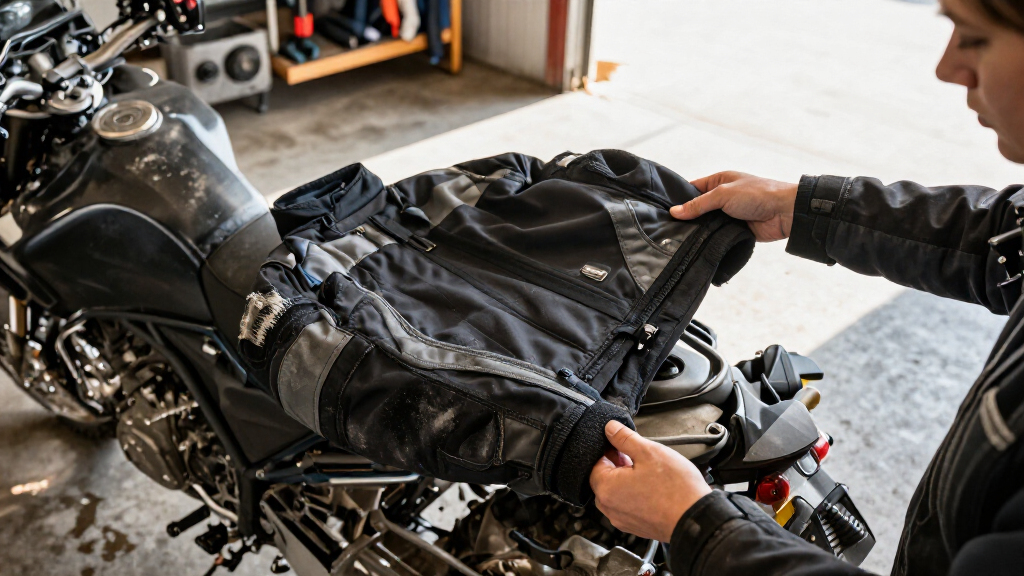
I ranked these jackets by how convincingly their stated design matches adventure riding and the specific goal of abrasion resistance. I gave more weight to clearly described textile construction, documented protective certification, armor details, and useful coverage than to broad claims such as “protective” or “weather resistant.” I also considered ventilation, weather adaptability, touring utility, and how readily a buyer can understand the jacket’s intended use.
The ranking reflects the information available in the product names and descriptions, not independent lab tests or hands-on testing. A model with adventure-specific features can rank ahead of a generic riding jacket, but that does not establish its abrasion performance without verifiable material and certification details. I treat mesh-focused options as stronger candidates for hot-weather comfort, and layered or weather-oriented options as more versatile, while accounting for possible bulk and reduced airflow. Before purchase, buyers should confirm the exact garment specification, armor included, sizing, and return terms.
| abrasion resistant adventure textile jacket | Armor | Care |
|---|---|---|
| MSR Xplorer ADV Jacket | D3O CE Level 1 LP1 shoulder and elbow armor | Hand wash only |
| MSR Cryomesh ADV Jacket | Removable CE Level 1 shoulder, elbow, chest, and back protectors | Machine wash |
| Motorcycle Jacket for Men | — | — |
| Alpinestars Honda Andes V3 Dry | — | Hand wash only |
| BYKR Mesh Motorcycle Jacket fo | CE-approved shoulder, elbow, and back armor | Hand wash only |
| MSR Voyager Adventure Jacket | — | Hand wash only |
| BYKR Adventure Touring Motorcy | CE armor at shoulders, elbows, and back | — |
| Tourmaster Adventure Lite Mesh | — | Hand wash with mild soap; air dry; avoid bleach and harsh chemicals |
| Tourmaster Men’s Ridgecrest Me | — | — |
| Alpinestars Ardent 3-in-1 Adve | Not specified in the supplied product data | — |
| Tourmaster Trek Adventure Moto | — | — |
| J.A.G. Touring Motorcycle Jack | CE-approved armor at shoulders, elbows, and back | — |
Factors to Consider When Choosing Abrasion Resistant Adventure Textile Jacket
The right jacket is not simply the one with the most features: it has to match your climate, riding position, and protection priorities. I’d use these checks to separate genuine protective information from broad adventure styling claims.
Check abrasion evidence, not just fabric names
A label such as textile, Cordura, or adventure does not by itself tell you how a complete jacket performs in a slide. Look for a garment-level safety standard or a clearly documented abrasion rating, and confirm that it applies to the exact version being sold. Fabric strength is only part of the picture; seams, reinforcement placement, and coverage over likely impact areas also matter. A jacket can use a strong material in one panel while leaving other areas less protected. If a listing does not provide enough information, ask the seller or manufacturer rather than treating the omission as proof of performance. This matters especially when comparing mesh-heavy jackets with denser textile touring designs.
Match ventilation to your climate and riding speed
Mesh can make slow traffic and hot-weather rides more bearable, but airflow is not a substitute for verified abrasion protection. On long highway days, wind exposure and changing weather can make a fully ventilated jacket uncomfortable even when temperatures feel pleasant at a stop. Consider where the jacket will be worn most: sustained heat, variable mountain conditions, or mixed commuting and touring. Large vents, mesh panels, and removable liners each affect airflow differently, so check how the jacket can be configured rather than relying on a product label. A common mistake is choosing maximum ventilation for a route that regularly includes cold rain or high-speed travel. If you ride across seasons, a jacket with adjustable airflow or a usable liner may be the better compromise.
Separate armor from abrasion protection
Elbow and shoulder armor help address impact protection, while the outer shell and construction address different risks. A listing that says CE armor is included does not automatically establish that the jacket itself has a certified abrasion rating. Check which armor comes with the garment, what level it is, whether a back protector is included or sold separately, and whether the pockets allow a secure fit. Armor that shifts or sits away from the joint may be less useful than its label suggests. Try the jacket in a riding posture, with the layers you expect to wear, and confirm that sleeves and protectors stay in place. This is a reason to compare the BYKR and MSR mesh options by their exact armor details rather than by the word “armored” alone.
Choose weather coverage for your actual routes
Water resistance, a waterproof membrane, and a removable rain liner are not interchangeable claims. A liner can add flexibility, but it may also take time to install and can change how the jacket feels over other layers. Fixed weather protection is simpler to use, while a 3-in-1 arrangement can offer more configurations at the cost of added components and possible bulk. Think about whether rain is occasional, expected for hours, or unlikely on your usual rides. Also check whether the collar, cuffs, and waist can close securely, since gaps can affect comfort in wind and rain. Buyers drawn to the Andes V3 Drystar or Ardent 3-in-1 should verify the specific liner and weather details for the version they are considering.
Prioritize fit in a riding position
A jacket that fits well while standing may pull at the shoulders or ride up when you reach the handlebars. Check sleeve length, torso coverage, cuff closure, and whether the waist adjustment keeps the hem in place without restricting movement. Allow room for a base layer or midlayer if the jacket is meant for cold-weather use, but avoid sizing up so much that armor can shift. Compare the size chart with your measurements and check whether the cut is designed for touring posture or general street wear. Fit is especially worth examining on broadly named options such as the J.A.G. Touring and generic enduro jacket, where the listing may offer less detail about cut. A return option is useful when a correct riding-position fit cannot be confirmed in advance.
Pay for versatility only if you will use it
Removable liners, expansion panels, and multiple pockets can make a jacket more adaptable, but every extra feature adds decisions and potential maintenance. A rider who mainly travels in warm, dry weather may get more use from a straightforward ventilated jacket than a complex layered system. For frequent touring across changing conditions, additional configurations can reduce the need to carry separate outerwear. Check whether liners are easy to remove, how they attach, and whether the shell remains comfortable without them. Also look at care instructions, since some protective textiles and membranes need specific washing or reproofing methods. The useful question is not how many features the jacket lists, but whether those features solve a recurring problem on your rides.
Frequently Asked Questions
Does a jacket advertised as abrasion resistant have to show a certification?
The phrase alone is not enough to establish a tested level of protection. Look for a recognized garment safety standard or specific documentation that identifies the jacket’s rating, not just its fabric or included armor. Check that the documentation matches the exact model and version being sold. If the seller cannot supply that information, treat the claim cautiously and compare it with options that disclose their protective specifications. A missing detail does not prove the jacket is unsafe, but it leaves you with less evidence for a protection-focused purchase.
Is a mesh adventure jacket a sensible choice for highway riding?
It can be, but airflow should not be the only factor in the decision. Confirm the shell’s documented abrasion performance, seam construction, and armor before choosing a mesh design for sustained road speeds. Mesh also exposes you to wind and can become uncomfortable when temperatures drop or rain arrives. A removable liner or separate over-layer may help, though it adds gear to manage. For riders who alternate between hot local trips and long highway days, compare a mesh jacket with a more covered touring model rather than assuming one design suits every ride.
What should I verify when a listing says CE armor is included?
Check which body areas have armor, the stated armor level, and whether a back protector is part of the package. Confirm that the protectors fit the jacket’s pockets securely and sit over your joints when you assume a riding posture. CE armor refers to the protectors, not automatically to the jacket’s abrasion performance. Product listings can use broad wording, so compare the exact included components with the manufacturer’s specification. If the back protector is absent, factor in whether a compatible one is available and fits properly.
Should I choose a 3-in-1 jacket or buy separate warm- and wet-weather layers?
A 3-in-1 jacket can simplify packing if you ride across changing conditions and want a coordinated set of layers. Its tradeoffs are possible bulk, added setup, and the need to manage components when conditions change during a ride. Separate layers give you more freedom to combine gear, but you must check that they work together and do not interfere with fit or armor placement. Compare how often you encounter rain or cold with how often you ride in heat, when extra layers may be inconvenient. The Ardent 3-in-1 is the lineup’s clearest option for adjustability, but a simpler jacket may suit a more predictable climate better.
How can I tell whether an adventure jacket will fit correctly over riding gear?
Use the manufacturer’s size chart, then assess the fit while reaching forward as you would on your motorcycle. Check that the sleeves cover your wrists, the hem stays over your waist, and the shoulder and elbow armor remain in place. If you plan to wear a midlayer, try the jacket with a similar layer rather than ordering based on a standing fit alone. Avoid extra room that allows protectors to move away from your joints. When the listing gives little guidance on cut or layering, check return conditions before purchase so you can evaluate fit safely at home.
Conclusion
For the broadest adventure-touring fit among these picks, I’d start with the Alpinestars Honda Andes V3 Drystar as my best overall, while verifying its exact protection documentation before buying. The MSR Voyager Adventure is my value-minded choice for riders focused on a straightforward adventure jacket, provided its specifications match their protection needs. For a premium, adaptable setup, the Alpinestars Ardent 3-in-1 makes the most sense for riders who will use its multiple configurations. Beginners may prefer the Tourmaster Adventure Lite Mesh if warm-weather airflow is the priority, but should check armor and abrasion details carefully; the Tourmaster Trek Adventure is another option to investigate for a more touring-oriented approach. For hot conditions, compare the Cryomesh, BYKR Mesh, and Ridgecrest Mesh; for a generic enduro or touring listing, ask for clearer material and safety information before choosing. My final rule is simple: select the best-fitting jacket whose protection claims you can verify, then choose ventilation and weather features around the rides you actually take.