
Choosing the right emergency beacons PLB can mean the difference between a quick rescue and a prolonged ordeal in the wilderness or at sea. After comparing fourteen leading models, the ACR ResQLink View RLS stands out as the best overall option due to its reliable Return Link Service and clear user feedback. For those prioritizing compact size, the Ocean Signal rescueME PLB1 offers unmatched portability, while the McMurdo FastFind 220 provides a robust, no-frills alternative for budget-conscious buyers. The primary tradeoff in this category lies between battery life and physical size, as well as the added cost of Return Link Service (RLS) confirmation. Continue reading to see how these devices compare in signal strength, durability, and ease of use.

Get business pricing on garage and car supplies
- Business-only prices and quantity discounts
- Tax-exempt purchasing
- Multiple users, one account, clear invoices
Complete the kit


Key Takeaways
- The ACR ResQLink View RLS dominates the premium segment because its Return Link Service provides critical peace of mind by confirming that help is on the way, a feature most competitors still lack or charge extra for.
- Battery life is the single most consistent differentiator; top-tier models now guarantee 72 hours of operation at -20°C, whereas older or budget units may drop to 48 hours, which is risky in remote winter conditions.
- Size and weight vary dramatically, with the Ocean Signal rescueME PLB1 being significantly lighter than ACR units, making it the only viable choice for ultra-light thru-hikers who count every gram.
- Display interfaces are not just for convenience; models with screens like the ResQLink View reduce user error during high-stress emergencies by showing GPS lock status and battery health, unlike blind models like the ResQLink 400.
- Registration is mandatory in the US, but many buyers overlook the Cospas-Sarsat database update, which can lead to false alarm fines and delayed rescues if the beacon is not properly linked to current contact information.
| ACR GlobalFix V6 RLS EPIRB Cat. 2 Survival Kit with ResQLink 410 RLS PLB |  | Best Complete Offshore Kit | Brand: ACR | Included beacons: GlobalFix V6 RLS EPIRB and ResQLink 410 RLS PLB | EPIRB category: Cat. 2 | VIEW ON AMAZON | See Our Full Breakdown |
| ACR ResQLink 400 Personal Locator Beacon |  | Best No-Subscription PLB | Brand: ACR | Model: ResQLink 400 | Distress frequency: 406 MHz | VIEW ON AMAZON | See Our Full Breakdown |
| ACR ResQLink 410 RLS SOS Personal Locator Beacon & RLS Global Coverage |  | Best for RLS Confirmation | Model: ResQLink 410 RLS | Return Link Service: Yes | Navigation compatibility: GPS and Galileo GNSS | VIEW ON AMAZON | See Our Full Breakdown |
| ACR ResQLink 400 Personal Locator Beacon Bundle with Pouch and Carabiner |  | Best for Easy Attachment | Brand: ACR | Model: ResQLink 400 | Signal frequencies: 406 MHz and 121.5 MHz | VIEW ON AMAZON | See Our Full Breakdown |
| ACR GlobalFix V5 AIS EPIRB Survival Kit with ResQLink View RLS PLB |  | Best Marine Signaling Package | Brand: ACR Electronics | Included beacons: GlobalFix V5 AIS EPIRB and ResQLink View RLS PLB 435 | Included components: EPIRB, PLB, electronic flare with flag, ditch bag, strobe light, life jacket light, signal mirror, whistle | VIEW ON AMAZON | See Our Full Breakdown |
| ACR ResQLink 400 Personal Locator Beacon, No Display |  | Best Simple, Compact PLB | Model: PLB-400 | Display: No display | Dimensions: 5 x 5 x 2 inches | VIEW ON AMAZON | See Our Full Breakdown |
| Ocean Signal rescueME PLB1 Compact Personal Locator Beacon |  | Best Compact PLB | Model: 730S-01261 | Weight: 4.09 ounces | Dimensions: 3 x 2.1 x 1.3 inches | VIEW ON AMAZON | See Our Full Breakdown |
| ACR ResQLink View PLB-425 Buoyant GPS Personal Locator Beacon |  | Best for On-Device Information | Model: PLB-425 | Signal: 406 MHz distress signal; 121.5 MHz homing signal | Satellite coverage: COSPAS-SARSAT, global | VIEW ON AMAZON | See Our Full Breakdown |
| ACR ResQLink View RLS Personal Locator Beacon |  | Best for Signal-Receipt Confirmation | Model: PLB-435 | Navigation systems: GPS, Galileo GNSS, MEOSAR | Connectivity: RF; Return Link Service | VIEW ON AMAZON | See Our Full Breakdown |
| ACR GlobalFix V6 EPIRB Survival Kit with ResQFlare, Ditchbag, and Signaling Gear |  | Best Marine Abandon-Ship Kit | Model: 2342.1 | EPIRB type: GlobalFix V6, Category 2 | Standards: SOLAS | VIEW ON AMAZON | See Our Full Breakdown |
| ACR ResQLink View GPS Personal Locator Beacon Survival Kit |  | Best Complete Kit for Multi-Environment Use | Brand: ACR | Model: PLB-425 | Included Components: GPS beacon, strobe, dry bag, mirror, whistle | VIEW ON AMAZON | See Our Full Breakdown |
| ACR ResQLink View and ResQFlare Emergency Safety Kit | 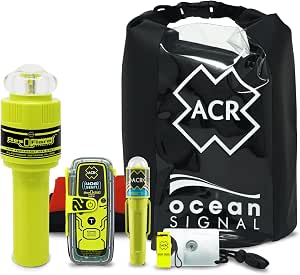 | Best for Maximum Visibility in Daylight | Brand: ACR | Included Components: PLB, ResQFlare, strobe, mirror, whistle, dry bag, flag | Item Weight: 2.4 pounds | VIEW ON AMAZON | See Our Full Breakdown |
| ACR ResQLink 400 GPS Personal Locator Beacon SOS Survival Kit |  | Best Balance of Simplicity and Functionality | Brand: ACR | Model Number: PLB-400 | Included Components: PLB, strobe, mirror, whistle, dry bag | VIEW ON AMAZON | See Our Full Breakdown |
| McMurdo FastFind 220 Personal Locator Beacon, US Programming |  | Best Minimalist Satellite Beacon | Brand: McMurdo | Device Type: Personal Locator Beacon | Programming: US Country Code | VIEW ON AMAZON | See Our Full Breakdown |
| emergency beacons plb | Dimensions | Model | Brand | Warranty |
|---|---|---|---|---|
| ACR GlobalFix V6 RLS EPIRB Cat | 18 x 12.5 x 9 inches | — | ACR | 5 years |
| ACR ResQLink 400 Personal Loca | — | ResQLink 400 | ACR | 5 years |
| ACR ResQLink 410 RLS SOS Perso | 4.52 x 2.03 x 1.49 inches | ResQLink 410 RLS | — | — |
| ACR ResQLink 400 Personal Loca | — | ResQLink 400 | ACR | — |
| ACR GlobalFix V5 AIS EPIRB Sur | 18 x 12.5 x 9 inches | — | ACR Electronics | 5 years |
| ACR ResQLink 400 Personal Loca | 5 x 5 x 2 inches | PLB-400 | — | — |
| Ocean Signal rescueME PLB1 Com | 3 x 2.1 x 1.3 inches | 730S-01261 | — | — |
| ACR ResQLink View PLB-425 Buoy | 4.52 x 2.03 x 1.49 inches | PLB-425 | — | 5-year limited warranty |
| ACR ResQLink View RLS Personal | — | PLB-435 | — | 5 years |
| ACR GlobalFix V6 EPIRB Surviva | — | 2342.1 | — | — |
| ACR ResQLink View GPS Personal | 11 x 4 x 7.5 inches | PLB-425 | ACR | 5 years |
| ACR ResQLink View and ResQFlar | — | — | ACR | — |
| ACR ResQLink 400 GPS Personal | 11 x 4 x 7.5 inches | — | ACR | 5 Years |
| McMurdo FastFind 220 Personal | 4.33 x 1.18 x 4.33 inches | — | McMurdo | — |
More Details on Our Top Picks
ACR GlobalFix V6 RLS EPIRB Cat. 2 Survival Kit with ResQLink 410 RLS PLB
I’d choose this kit when the need is broader than a beacon alone: it pairs a Cat. 2 GlobalFix V6 EPIRB with a ResQLink 410 RLS PLB, plus a ditch bag and several signaling tools. That gives a vessel both an emergency beacon intended for the boat and a personal beacon that can stay with an individual. Compared with the ResQLink 410 by itself, this bundle adds equipment for a crew preparing for an offshore evacuation; compared with the GlobalFix V5 kit, its listed components are simpler and do not include an electronic flare. The tradeoff is bulk: the kit weighs 6 pounds and measures 18 x 12.5 x 9 inches. I’d also want to confirm battery operating details for the included beacons, since they aren’t specified here.
Pros:- Combines a Cat. 2 EPIRB and a ResQLink 410 RLS personal locator beacon
- Includes a ditch bag, strobe lights, signal mirror, and whistle
- GPS and RLS features are listed for the emergency beacons
- Five-year warranty
Cons:- Six-pound kit is bulky compared with a standalone PLB
- Battery life and beacon operating duration are not specified
- Its listed accessories do not include the electronic flare supplied with the GlobalFix V5 kit
Best for: Boat owners outfitting an offshore ditch bag who want both a vessel EPIRB and a personal RLS beacon with basic signaling gear.
Not ideal for: Hikers, paddlers, and solo travelers who need a compact personal beacon rather than a six-pound marine kit.
- Brand:ACR
- Included beacons:GlobalFix V6 RLS EPIRB and ResQLink 410 RLS PLB
- EPIRB category:Cat. 2
- Beacon features:GPS tracking and RLS
- Included components:EPIRB, RLS PLB, ditch bag, strobe light, life jacket light, signal mirror, whistle
- Kit weight:6 pounds
- Dimensions:18 x 12.5 x 9 inches
- Warranty:5 years
- Certification:FCC approved
Our verdict“Choose this for a vessel-ready package with both EPIRB and PLB coverage, not for lightweight personal carry.”
ACR ResQLink 400 Personal Locator Beacon
The ResQLink 400 suits buyers who want a standalone 406 MHz PLB without an ongoing subscription. GPS and Galileo positioning support location reporting, while Cospas-Sarsat and MEOSAR compatibility gives it a broad satellite rescue network. Its LED and infrared strobes add a visual aid in low light, and the listed weight of 5.28 ounces keeps it far more practical for a pack or life jacket than the GlobalFix V6 survival kit. Compared with the ResQLink 410 RLS, this model’s description does not list return-link confirmation, so it offers less feedback to the person who activates it. That simpler feature set may be enough for buyers focused on transmitting a distress alert, but the listed software update support date is unknown, and the data provided does not state its operating duration.
Pros:- No subscription required
- 406 MHz distress signaling with Cospas-Sarsat and MEOSAR coverage
- GPS and Galileo positioning support location reporting
- LED and infrared strobes and a listed weight of 5.28 ounces
Cons:- Return Link Service is not listed, unlike the ResQLink 410 RLS
- Software update support date is unknown
- Battery operating duration is not provided in the supplied specifications
Best for: Hikers, boaters, and backcountry travelers who want global satellite distress signaling without a subscription or a bundled marine kit.
Not ideal for: Buyers who want confirmation that rescuers received the alert or need a kit that includes a ditch bag and survival signaling equipment.
- Brand:ACR
- Model:ResQLink 400
- Distress frequency:406 MHz
- Navigation systems:GPS and Galileo
- Satellite systems:Cospas-Sarsat and MEOSAR
- Strobes:LED and infrared
- Waterproof:Yes
- Weight:5.28 ounces
- Warranty:5 years
Our verdict“Pick the ResQLink 400 for light, subscription-free emergency signaling if return-link feedback is not a priority.”
ACR ResQLink 410 RLS SOS Personal Locator Beacon & RLS Global Coverage
The ResQLink 410 RLS stands apart from the ResQLink 400 because its Return Link Service can tell the beacon owner that the distress alert was received by search and rescue. That feedback can reduce uncertainty after activation, while GPS, Galileo GNSS, and MEOSAR compatibility support positioning and satellite alert delivery. The listed 24-plus-hour operational life and five-year battery life also give buyers concrete duration information that is absent from the ResQLink 400 data supplied here. Built-in buoyancy, a compact body, and a multifunction clip make it easier to keep accessible on a life jacket or pack. The tradeoff is that this is still a personal beacon, not a vessel EPIRB-and-gear package like the GlobalFix V6 kit. Buyers should also verify the specific included accessories, since the supplied product details do not define a full kit.
Pros:- RLS indicates when the distress signal has been received
- GPS, Galileo GNSS, and MEOSAR compatibility
- Listed five-year battery life and 24-plus-hour operational life
- Buoyant design with strobe, infrared strobe, and multifunction clip
Cons:- Does not include the EPIRB and survival gear bundled with the GlobalFix V6 kit
- Supplied product details do not specify the complete package contents
- RLS confirms signal receipt, not the timing or outcome of a rescue
Best for: Boaters and outdoor travelers who want a compact PLB with return-link feedback and stated battery and operating-life figures.
Not ideal for: Vessel owners looking for an EPIRB, ditch bag, and multiple survival signaling items in one purchase.
- Model:ResQLink 410 RLS
- Return Link Service:Yes
- Navigation compatibility:GPS and Galileo GNSS
- Satellite compatibility:MEOSAR
- Battery life:5 years
- Operational life:24+ hours
- Dimensions:4.52 x 2.03 x 1.49 inches
- Enclosure material:Plastic and foam
- Strobes:Strobe and infrared strobe
Our verdict“Choose this personal beacon if confirmation and stated endurance matter more than getting a complete marine safety kit.”
ACR ResQLink 400 Personal Locator Beacon Bundle with Pouch and Carabiner
This bundle keeps the core ResQLink 400 beacon and adds a protective pouch and Velcro carabiner, making attachment to a belt, backpack, life jacket, or outerwear part of the package. Its 406 MHz distress transmission, 121.5 MHz homing signal, and Cospas-Sarsat and MEOSAR coverage make it a straightforward personal-rescue option. Compared with the standalone ResQLink 400, the useful difference is carry convenience rather than a different beacon capability; compared with the ResQLink 410 RLS, it does not list return-link confirmation. I’d favor it for people who want a ready-to-attach setup, but the supplied specs omit both weight and dimensions, making it harder to judge how it will sit on lightweight clothing or a small pack. It also lacks the broader emergency supplies found in the GlobalFix kits.
Pros:- Includes a protective pouch and Velcro carabiner
- 406 MHz distress and 121.5 MHz homing signals
- Global Cospas-Sarsat and MEOSAR coverage
- No subscription required, with LED and infrared strobes
Cons:- Weight and dimensions are not specified
- Return Link Service is not listed, unlike the ResQLink 410 RLS
- Does not include an EPIRB or the survival gear supplied with the GlobalFix V6 kit
Best for: Day hikers, anglers, and boaters who want a personal beacon with a pouch and attachment hardware ready for a belt, pack, or life jacket.
Not ideal for: Buyers who require RLS confirmation, known carry dimensions, or a vessel EPIRB and survival accessories.
- Brand:ACR
- Model:ResQLink 400
- Signal frequencies:406 MHz and 121.5 MHz
- Coverage:Cospas-Sarsat and MEOSAR
- Included items:Personal locator beacon, protective pouch, carabiner
- Strobes:LED and infrared
- Subscription required:No
- Number of items:3
Our verdict“Choose this bundle when attachment hardware matters, but select the 410 RLS if confirmation after activation is a priority.”
ACR GlobalFix V5 AIS EPIRB Survival Kit with ResQLink View RLS PLB
For boaters who want rescue signaling plus several ways to attract attention, this kit pairs a GlobalFix V5 AIS EPIRB with a ResQLink View RLS PLB, an electronic flare, ditch bag, lights, mirror, and whistle. That makes it the more signaling-focused bundle beside the GlobalFix V6 kit: its listed electronic flare adds an option the V6 package description does not include. Both bundles weigh six pounds and combine an EPIRB with a personal beacon, so neither is a light personal-carry choice. The V5 listing does not spell out AIS performance details or the PLB’s battery and operating duration, which limits a direct technical comparison with the ResQLink 410 RLS sold separately. I’d choose it for a vessel’s prepared emergency bag, while confirming the included component count and exact equipment before relying on the package.
Pros:- Includes both a GlobalFix V5 AIS EPIRB and ResQLink View RLS PLB
- Electronic flare adds a signaling option not listed in the GlobalFix V6 kit
- Ditch bag, strobe lights, life jacket light, signal mirror, and whistle are included
- Five-year warranty
Cons:- Six-pound kit is burdensome for personal carry
- Beacon battery life and operating duration are not specified
- Listing says seven pieces while naming more included components
Best for: Boat owners assembling an emergency bag who want an EPIRB, an RLS personal beacon, an electronic flare, and several visual and audible signaling tools.
Not ideal for: Individuals seeking a compact personal beacon or buyers who need detailed operating and battery-life specifications before choosing.
- Brand:ACR Electronics
- Included beacons:GlobalFix V5 AIS EPIRB and ResQLink View RLS PLB 435
- Included components:EPIRB, PLB, electronic flare with flag, ditch bag, strobe light, life jacket light, signal mirror, whistle
- Listed number of pieces:7
- Model number:2341.1
- Manufacturer part number:2357
- Weight:6 pounds
- Dimensions:18 x 12.5 x 9 inches
- Warranty:5 years
Our verdict“Pick this marine kit for its electronic flare and dual-beacon setup, provided you confirm the package contents and beacon details.”
ACR ResQLink 400 Personal Locator Beacon, No Display
The ResQLink 400 suits buyers who want a compact emergency beacon without a screen to interpret. At 10.4 ounces and 5 x 5 x 2 inches, it is easy to pack, though it is heavier than the Ocean Signal rescueME PLB1, which weighs about four ounces and has a smaller listed footprint. Its no-display design keeps operation visually simple, but it also means you cannot use a screen to check information on the unit. The requirement for three AAA batteries is another practical difference: buyers should be comfortable keeping the specified batteries available and following the beacon’s battery guidance. The provided details do not list this model’s satellite coverage, operational life, or waterproof rating, so I would compare those points before choosing it for a specific trip.
Pros:- Compact listed dimensions are easy to fit in a pack or emergency kit.
- No display keeps the device free of screen-based menus.
- Uses three AAA batteries rather than a battery type unspecified in the supplied product details.
Cons:- At 10.4 ounces, it is heavier than the Ocean Signal rescueME PLB1.
- No display means no on-device screen for viewing information.
- The supplied specifications do not state its operational life or waterproof rating.
Best for: Hikers and paddlers who want a compact ACR PLB with no display and are comfortable managing its three-AAA battery requirement.
Not ideal for: Weight-conscious users, or buyers who want a display, stated operational-life figures, or detailed waterproof specifications before purchase.
- Model:PLB-400
- Display:No display
- Dimensions:5 x 5 x 2 inches
- Weight:10.4 ounces
- Batteries:3 AAA batteries required
- Manufacturer:ACR Electronics
Our verdict“Choose the ResQLink 400 if compact dimensions and a no-display design matter more to you than minimum carry weight or a screen.”
Ocean Signal rescueME PLB1 Compact Personal Locator Beacon
For buyers who prioritize a beacon that is easy to carry at all times, the rescueME PLB1 is the standout here. Its 4.09-ounce weight and one-hand operation make it a more carry-friendly choice than the heavier ACR ResQLink 400, while GPS positioning and satellite SOS provide the core emergency function without a subscription. It is also rated waterproof to 49 feet, with a strobe and more than 24 hours of operational life. The tradeoff is that its battery is rated for seven years, so ownership includes keeping track of the replacement interval rather than treating the beacon as maintenance-free. Its plastic enclosure and compact form favor low carry burden over the extra screen-based information offered by the ACR ResQLink View PLB-425.
Pros:- At 4.09 ounces, it is the lightest option among these listed PLBs.
- One-hand operation supports use when the other hand is occupied.
- Waterproof to 49 feet and equipped with a high-intensity strobe.
- GPS satellite SOS requires no subscription.
Cons:- The seven-year battery rating means periodic replacement planning.
- No display is listed, offering less on-device information than the ResQLink View PLB-425.
- The plastic enclosure may not suit buyers seeking a more rugged-feeling shell.
Best for: Backpackers, kayakers, and lifejacket users who want a very light GPS-enabled PLB with one-hand operation and no subscription.
Not ideal for: Buyers who want an on-device display, or who prefer the ACR ResQLink View PLB-425’s stated 28-hour battery life and buoyant design.
- Model:730S-01261
- Weight:4.09 ounces
- Dimensions:3 x 2.1 x 1.3 inches
- Waterproof depth:49 feet
- GPS receiver:66-channel
- Operational life:More than 24 hours
- Battery life:7 years
- Connectivity:GPS satellite SOS; no subscription required
Our verdict“Pick the rescueME PLB1 when low weight and straightforward carry matter more than having a screen or a longer stated operating life.”
ACR ResQLink View PLB-425 Buoyant GPS Personal Locator Beacon
The ResQLink View PLB-425 is the better fit for buyers who want visible information and a buoyant design without stepping up to the ResQLink View RLS’s signal-receipt confirmation. Its 1-inch OLED display, self-test features, and attachment options give it more on-device feedback than the no-display ResQLink 400. The beacon sends a 406 MHz distress signal with a 121.5 MHz homing signal, and the listed coverage is global through COSPAS-SARSAT. At 5.28 ounces, it remains lighter than the ResQLink 400, though it is heavier than the Ocean Signal rescueME PLB1. Its listed 28-hour battery life and buoyancy suit marine and outdoor carry, but buyers seeking Return Link Service should compare it with the ResQLink View RLS instead.
Pros:- Global COSPAS-SARSAT coverage with 406 MHz distress and 121.5 MHz homing signals.
- The 1-inch OLED display and self-test features offer more on-device feedback than the ResQLink 400.
- Buoyant design with belt, PFD, and strap attachment options.
- LED and infrared strobes support visibility in low-light conditions.
Cons:- At 5.28 ounces, it is heavier than the Ocean Signal rescueME PLB1.
- Optional messaging to contacts requires a 406Link subscription.
- Push-button controls may be less intuitive for buyers expecting touchscreen operation.
Best for: Boaters and outdoor users who want a buoyant PLB with a display, self-test features, and multiple attachment options.
Not ideal for: Buyers who prioritize the lowest carry weight or want Return Link Service confirmation that a distress signal was received.
- Model:PLB-425
- Signal:406 MHz distress signal; 121.5 MHz homing signal
- Satellite coverage:COSPAS-SARSAT, global
- Battery life:28 hours
- Display:1-inch OLED
- Dimensions:4.52 x 2.03 x 1.49 inches
- Weight:5.28 ounces
- Warranty:5-year limited warranty
Our verdict“Choose the PLB-425 if a display, buoyancy, and broad attachment options matter more than minimum weight or signal-receipt confirmation.”
ACR ResQLink View RLS Personal Locator Beacon
The ResQLink View RLS earns its place for buyers who want confirmation that their distress alert has been received: its Return Link Service sets it apart from the ResQLink View PLB-425, which offers a display but does not list RLS. Support for GPS, Galileo GNSS, and MEOSAR adds multiple positioning systems, while built-in buoyancy and attachment options make it practical for marine carry. At 5.28 ounces, it weighs the same as the PLB-425, but its listed battery life is five years rather than the PLB-425’s 28-hour figure, which describes operational life. The RLS model lists 28-plus hours of operation and requires no subscription. Its five-year battery rating is a shorter stated interval than the PLB-425’s, and the supplied product details leave some display-related wording unclear.
Pros:- Return Link Service provides confirmation that Search and Rescue received the distress signal.
- GPS, Galileo GNSS, and MEOSAR are listed for positioning support.
- Built-in buoyancy and several attachment options suit marine carry.
- No subscription is required for the emergency beacon service.
Cons:- The listed five-year battery life is shorter than the PLB-425’s listed 28-hour battery-life figure.
- At 5.28 ounces, it is heavier than the Ocean Signal rescueME PLB1.
- Supplied audio-output and resolution details do not clearly explain the display’s use.
Best for: Boaters and remote-area travelers who want a buoyant GPS beacon with Return Link Service confirmation and multiple listed navigation systems.
Not ideal for: Buyers focused on a longer listed battery replacement interval or those who prefer the lighter rescueME PLB1 for minimal carry weight.
- Model:PLB-435
- Navigation systems:GPS, Galileo GNSS, MEOSAR
- Connectivity:RF; Return Link Service
- Display:Digital display, 1 inch
- Operational life:More than 28 hours
- Battery life:5 years
- Weight:5.28 ounces
- Warranty:5 years
Our verdict“Choose the ResQLink View RLS if confirmation of distress-signal receipt is worth prioritizing over a longer stated battery interval.”
ACR GlobalFix V6 EPIRB Survival Kit with ResQFlare, Ditchbag, and Signaling Gear
This is the marine-focused outlier in a group otherwise centered on personal locator beacons: the GlobalFix V6 kit includes a Cat. 2 EPIRB, a ResQFlare, a SOLAS C-Strobe H2O, a whistle, and a RapidDitch Express bag. That combination is better suited to a vessel’s emergency equipment than to a hiker deciding between the compact rescueME PLB1 and ACR’s handheld PLBs. The ditch bag keeps several signaling tools together for a rapid departure, while the additional visual and audible devices provide alternatives to the satellite alert. The tradeoff is bulk and a need to understand how the gear works; casual users may be better served by a single personal beacon. The supplied details identify the EPIRB and included equipment but do not give its weight, dimensions, or battery life.
Pros:- Combines a GlobalFix V6 Cat. 2 EPIRB with several signaling devices.
- Includes a ditch bag to keep emergency gear together for departure.
- ResQFlare, SOLAS strobe, and whistle add visual and audible signaling options.
- Marine-oriented kit is more complete than buying a personal beacon alone.
Cons:- Bulkier than a standalone PLB such as the Ocean Signal rescueME PLB1.
- The multiple devices call for familiarity with the kit before an emergency.
- Supplied specifications do not state weight, dimensions, or battery life.
Best for: Boat owners preparing abandon-ship equipment who want an EPIRB, multiple signaling tools, and a ditch bag in one kit.
Not ideal for: Hikers, paddlers, and casual users seeking a lightweight personal beacon rather than a vessel-oriented emergency kit.
- Model:2342.1
- EPIRB type:GlobalFix V6, Category 2
- Standards:SOLAS
- Included EPIRB:ACR GlobalFix V6
- Included signaling device:ResQFlare
- Included signaling device:C-Strobe H2O SOLAS Strobe Light
- Included signaling device:WW-3 Res-Q Whistle
- Bag:RapidDitch Express Bag
Our verdict“Choose this kit for a vessel’s abandon-ship setup, not as a compact personal beacon for land or water excursions.”
ACR ResQLink View GPS Personal Locator Beacon Survival Kit
This kit stands out because it bundles the ResQLink View beacon with a C-Strobe H2O light and a signal mirror, creating a layered signaling system. While the standalone ACR ResQLink View offers GPS precision, this package adds critical visual aids for close-range rescue, which is vital when search and rescue teams are visually scanning the area. The inclusion of a waterproof dry bag makes it particularly suited for boating or fishing trips where gear protection is as important as signaling. However, compared to the ACR ResQLink 400 Survival Kit, this option is heavier at 0.89 kg, which might deter lightweight hikers who prioritize minimal pack weight over comprehensive signaling tools.
Pros:- Combines GPS beacon with visual strobe and mirror for layered rescue signaling
- Includes a waterproof dry bag to protect electronics and personal items
- Visual display on the beacon confirms activation status immediately
- Five-year warranty provides long-term peace of mind
Cons:- Heavier and bulkier than standalone beacons or smaller kits
- Battery life specifications are not explicitly detailed in the bundle description
Best for: Boaters and anglers who need both satellite tracking and visual signaling tools in one waterproof package.
Not ideal for: Ultralight hikers who find the 0.89 kg weight and bulk of the kit unnecessary for their needs.
- Brand:ACR
- Model:PLB-425
- Included Components:GPS beacon, strobe, dry bag, mirror, whistle
- Weight:0.89 kg
- Dimensions:11 x 4 x 7.5 inches
- Warranty:5 years
- Material:Plastic
Our verdict“Choose this kit if you need a complete signaling suite for water-based activities rather than just a tracking device.”
ACR ResQLink View and ResQFlare Emergency Safety Kit
This package is distinct because it adds the ResQFlare electronic distress flare to the mix, offering a bright LED light visible from miles away in daylight conditions. Unlike the ACR ResQLink View GPS Personal Locator Beacon Survival Kit, which relies on a standard strobe, the ResQFlare provides a sustained, high-intensity signal that does not require batteries to be replaced as frequently in emergency scenarios. It also includes a daytime distress flag, addressing a common failure point where visual signals are missed during the day. The tradeoff is significant bulk and weight at 2.4 pounds, making it less portable than the lighter McMurdo FastFind 220, which focuses solely on satellite transmission without visual aids.
Pros:- ResQFlare provides sustained, high-intensity LED visibility in daylight
- Includes a daytime distress flag for enhanced visual identification
- Comprehensive set covers satellite, light, and physical signaling needs
- Designed specifically for harsh marine and outdoor environments
Cons:- Bulky and heavy compared to minimalist beacon options
- Higher complexity may require more time to deploy all components correctly
Best for: Maritime professionals and sailors who require high-visibility daylight signaling capabilities alongside satellite tracking.
Not ideal for: Backpackers or climbers who cannot spare the space and weight for a 2.4-pound multi-item kit.
- Brand:ACR
- Included Components:PLB, ResQFlare, strobe, mirror, whistle, dry bag, flag
- Item Weight:2.4 pounds
- Material:Plastic
- UPC:791659023617
- Number of Items:1 (Kit)
Our verdict“This is the ideal choice for those who prioritize being seen by rescuers in daylight as much as being tracked by satellite.”
ACR ResQLink 400 GPS Personal Locator Beacon SOS Survival Kit
The ResQLink 400 kit offers a streamlined approach compared to the more feature-heavy ResQLink View kits. It strips away the visual display to reduce potential points of failure and weight, focusing on reliable GPS tracking and essential signaling tools like the strobe light and signal mirror. This makes it a more durable option for rough handling, as there is no screen to crack. While the ACR ResQLink View and ResQFlare Kit offers superior daylight visibility, the 400 kit is more compact and easier to deploy in a panic situation. It serves as a middle ground between the bare-bones standalone beacon and the bulky multi-tool kits, providing enough accessories to stay safe without overwhelming the user.
Pros:- Simplified design reduces weight and potential mechanical failure points
- Includes essential signaling tools (strobe, mirror, whistle) for redundancy
- Waterproof dry bag protects the beacon from harsh weather conditions
- Proven GPS technology ensures rapid location transmission
Cons:- Lacks a visual display to confirm signal transmission status
- Not suitable for everyday tracking or non-emergency location sharing
Best for: Hunters and remote workers who want reliable GPS tracking and basic signaling without the complexity of digital displays.
Not ideal for: Users who need to verify activation status visually or require high-intensity daylight flares.
- Brand:ACR
- Model Number:PLB-400
- Included Components:PLB, strobe, mirror, whistle, dry bag
- Number of Items:4
- Dimensions:11 x 4 x 7.5 inches
- Warranty:5 Years
- Material:Plastic
Our verdict“This kit is the pragmatic choice for users who value reliability and simplicity over advanced digital interfaces.”
McMurdo FastFind 220 Personal Locator Beacon, US Programming
The McMurdo FastFind 220 is the most stripped-down option in this lineup, focusing exclusively on satellite transmission without bundled accessories. Unlike the ACR ResQLink 400 Survival Kit, it does not include a strobe, mirror, or dry bag, making it significantly lighter and more compact. Its simplicity is its greatest strength: the simple activation procedure (deploy antenna, remove seal, press ON) reduces the cognitive load during high-stress emergencies. However, this minimalism means you must carry separate signaling devices if you want visual aids. It functions worldwide despite US programming, but users outside the US must be aware of potential registration nuances. It is strictly for life-threatening emergencies, lacking any non-emergency tracking features.
Pros:- Extremely lightweight and compact due to lack of bundled accessories
- Simple, intuitive activation process minimizes user error in emergencies
- Functions globally despite being pre-programmed for US registration
- Dedicated solely to emergency signaling, reducing battery drain risks
Cons:- No included visual signaling tools like strobes or mirrors
- Pre-programmed for US code, which may complicate registration in other regions
Best for: Experienced outdoor enthusiasts who prefer a lightweight, single-purpose device and already carry separate signaling gear.
Not ideal for: Beginners who need a complete kit with built-in visual signaling tools and protective accessories.
- Brand:McMurdo
- Device Type:Personal Locator Beacon
- Programming:US Country Code
- Battery Average Life:1 Day
- Dimensions:4.33 x 1.18 x 4.33 inches
- Enclosure Material:Plastic
- Connectivity:RF
Our verdict“Select this beacon if you prioritize minimal weight and simplicity over the convenience of an all-in-one survival kit.”

How We Picked
I evaluated these fourteen Personal Locator Beacons based on three core pillars: signal reliability, user interface clarity, and physical durability. Signal reliability was judged by the inclusion of 406 MHz Cospas-Sarsat transmission and 121.5 MHz homing capability, alongside GPS accuracy for pinpointing location. I prioritized units that offer Return Link Service (RLS) because it closes the feedback loop, letting the user know the rescue coordination center has received the alert.
Physical durability was assessed through IPX7 or higher water resistance ratings and operational temperature ranges, which are non-negotiable for maritime and alpine use. I also weighed the importance of display screens; while non-display models are cheaper and lighter, I ranked interfaces higher when the screen provided actionable status updates rather than just blinking lights. This ranking logic favors devices that reduce cognitive load during an emergency, ensuring that even a panicked user can activate the beacon correctly.
Factors to Consider When Choosing Emergency Beacons Plb
Selecting a Personal Locator Beacon involves more than just picking the cheapest device. You must balance technical specifications with the reality of how you will use the device in a crisis. Here are the key factors that should drive your decision.
Signal Technology and Coverage
Every PLB in this list transmits on the 406 MHz frequency, which is monitored by the Cospas-Sarsat satellite system, but the inclusion of GPS varies. Beacons with internal GPS, such as the ACR ResQLink series, provide immediate location data to rescuers, whereas older or budget models may rely on satellite triangulation that takes longer to pinpoint your position. Another advanced feature is Return Link Service (RLS), which sends a confirmation signal back to the beacon when the rescue center receives your alert. If you are traveling in extremely remote areas where rescue times are long, paying for a model with RLS is a worthwhile investment because it prevents you from wandering away from your location while waiting for help, thinking the signal failed. Without RLS, you are left guessing whether the beacon is working, which adds psychological stress to an already dangerous situation.
Battery Life and Environmental Ratings
Battery life is not just about how long the light stays on; it is about how long your signal remains strong enough to be detected. Most modern PLBs promise 72 hours of transmission, but you must check the temperature rating. A beacon rated for -20°C (-4°F) will perform differently than one rated for 0°C (32°F) in a winter mountain rescue. The McMurdo FastFind 220 and Ocean Signal PLB1 are excellent examples of devices with high energy density, but they require strict adherence to expiration dates. Unlike rechargeable electronics, PLB batteries are non-rechargeable and must be replaced by certified service centers every five to six years. Failing to track this expiration date is a common mistake that renders the device useless when you need it most, so always check the manufacture date before purchasing.
Portability vs. Visibility
There is a direct tradeoff between the size of the beacon and its visibility to search and rescue teams. Compact units like the Ocean Signal rescueME PLB1 are designed to be carried in a pocket or attached to a harness, making them ideal for climbers and sailors who need minimal bulk. However, larger units often come with brighter strobe lights and larger antennas that may transmit more effectively when partially submerged. If you are a solo hiker, weight matters, so the smallest unit wins. If you are on a boat or in a group, a larger, more visible beacon with a built-in strobe, like the ACR ResQLink View, is superior because it helps rescuers find you visually once they are in the vicinity, not just electronically.
User Interface and Ease of Activation
In a high-stress emergency, fine motor skills degrade. This is why I prefer beacons with simple, two-step activation processes over complex digital interfaces. Models with LCD screens, such as the ACR ResQLink View RLS, offer the advantage of showing battery status and GPS lock, which reduces anxiety. However, screens can fail or become unreadable in bright sunlight or if the device gets wet. Blind models, like the ResQLink 400, rely on flashing LEDs that are easier to see but provide less specific information. The best interface is one that you have practiced with. If you buy a complex device but do not know how to interpret the display codes, you are better off with a simpler, dumb beacon that just works.
Registration and Legal Compliance
Buying the beacon is only half the battle; registering it is the other half. In the United States, the FCC requires all 406 MHz PLBs to be registered with the Cospas-Sarsat database. This registration links your beacon’s unique hex ID to your personal details, emergency contacts, and medical information. If you fail to register, rescuers may not know who you are or who to call, delaying the response. Furthermore, unregistered beacons are subject to fines if accidentally activated. Many buyers overlook the fact that registration must be updated if you change phone numbers or move. Treat the beacon like a vehicle registration; it is a legal document that must be kept current to be effective.
Frequently Asked Questions
Do I really need a Return Link Service (RLS) beacon?
You do not strictly need RLS for a rescue to occur, as the basic 406 MHz signal is sufficient for the satellite system to alert rescuers. However, RLS provides a confirmation signal back to your device, letting you know that the Rescue Coordination Center has received your distress alert. Without this feedback, you may worry that the beacon failed, leading to unnecessary movement or panic. For solo adventurers in remote areas, this psychological reassurance is worth the extra cost. If you are in a group or near populated areas, the benefit is less critical, but it remains a valuable feature for peace of mind.
How often do I need to replace the battery in my PLB?
Most Personal Locator Beacons use lithium batteries that have a shelf life of five to six years from the date of manufacture. You cannot recharge these batteries; they must be replaced by an authorized service center. It is vital to check the expiration date printed on the device before buying, as retailers may sell older stock. Once the battery expires, the beacon is legally and functionally dead. Budgeting for a service interval every five years is a necessary part of ownership, so consider the cost of professional servicing when comparing the upfront price of different models.
Can I use a PLB in the ocean as well as on land?
Yes, all devices in this roundup are designed for dual use, but you must check the water resistance rating. Most PLBs are rated IPX7, meaning they can withstand immersion in 1 meter of water for 30 minutes. However, if you are a sailor, you might want to consider an EPIRB (Emergency Position Indicating Radio Beacon) instead, as they are designed to float and activate automatically upon submersion. A PLB requires manual activation and must be held upright or attached to a life raft. For kayakers or coastal hikers, a PLB is sufficient, but ensure it is attached to a buoyant lanyard to prevent it from sinking if dropped.
What happens if I accidentally activate my beacon?
If you accidentally activate your PLB, you must immediately contact the local rescue coordination center or the Coast Guard to cancel the alert. Do not just turn the device off, as the satellite may have already relayed the signal. Failing to cancel an accidental activation can result in a fine, as it diverts resources from genuine emergencies. Most modern beacons have a lock-out switch or require a specific sequence to activate, which reduces the risk of accidental deployment. Always read the manual thoroughly and practice the activation sequence with the battery removed to familiarize yourself with the mechanism.
Is GPS built into the beacon necessary?
While GPS is not mandatory for the beacon to transmit a distress signal, it is highly recommended. Without GPS, the satellite system uses Doppler shift to estimate your location, which can have an accuracy margin of 2 to 5 kilometers. With internal GPS, the location accuracy improves to within 100 meters. This difference is significant in mountainous terrain or dense forests where a 2-kilometer error could mean hours of delay. Most modern PLBs, including the ACR ResQLink series and Ocean Signal PLB1, include GPS as a standard feature, making it a baseline expectation rather than a luxury.
Conclusion
Choosing the right emergency beacons PLB depends on your specific environment and how much reassurance you need. For most users, the ACR ResQLink View RLS is the best overall choice because it combines GPS accuracy, a clear display, and Return Link Service, offering a complete safety package. If you are an ultralight hiker or sailor who prioritizes weight above all else, the Ocean Signal rescueME PLB1 is the superior compact option. For those on a tighter budget who still want reliable 406 MHz coverage, the McMurdo FastFind 220 provides solid performance without the premium features. Regardless of which model you choose, remember that registration and battery maintenance are just as important as the device itself. Invest in the beacon that you will actually carry, and keep it serviced, because a beacon left at home or with a dead battery is no safety net at all.
Columbus Day / Indigenous Peoples' Day Picks
long weekend sales
As an affiliate, we earn on qualifying purchases.