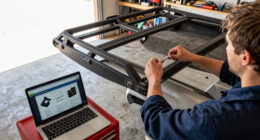
Choosing the right engine data logger depends heavily on your specific needs—whether you’re after detailed technical measurements, high-speed performance data, or straightforward monitoring. For 2026, three standout options include the DATAQ DI-2008, a versatile multi-input logger ideal for detailed laboratory or hobbyist use; the Racepak 610-KT-SPRTMN, which excels in high-channel, real-time vehicle performance analysis; and the Edge 98618 EAS Datalogging Kit, best suited for quick setup and monitoring of exhaust gases and pressures. Each offers unique benefits and tradeoffs, making the choice dependent on your technical demands and budget.

Get business pricing on garage and car supplies
- Business-only prices and quantity discounts
- Tax-exempt purchasing
- Multiple users, one account, clear invoices
Complete the kit


Key Takeaways
- The DATAQ DI-2008 is best for multi-sensor data collection across different operating systems but has limited inputs.
- The Racepak 610-KT-SPRTMN provides extensive channels and high-speed sampling for in-depth vehicle performance analysis.
- The Edge 98618 offers quick setup and auto-detection, ideal for monitoring exhaust gases with minimal fuss.
- Tradeoffs include input limits on the DATAQ, sensor expansion costs on the Racepak, and limited details on compatibility for the Edge kit.
- Your choice should align with whether you prioritize versatility, high-speed vehicle data, or quick installation.
| DATAQ DI-2008 Data Logger for Thermocouple, Pressure, Humidity, and Voltage Measurement |  | Best Overall Multi-Input Data Logger | Number of Analog Inputs: 8 | Input Types: Thermocouple, Voltage, Pressure, Humidity | Input Voltage Range: 10mV to 50V | VIEW ON AMAZON | See Our Full Breakdown |
| Racepak 610-KT-SPRTMN Sportsman Data Logger |  | Best for Vehicle Performance Monitoring | Channels: 25 | Internal Sensors: Engine RPM, Driveshaft RPM, Battery Voltage, 2 Axis G Meter | Sample Rate: up to 100 fps | VIEW ON AMAZON | See Our Full Breakdown |
| Edge 98618 EAS Datalogging Kit |  | Best for Easy Exhaust Gas and Pressure Monitoring | Monitor: EGT | Supports: Pressures | Setup: Auto detected by CTS3 | VIEW ON AMAZON | See Our Full Breakdown |
| engine data logger | Sample Rate |
|---|---|
| DATAQ DI-2008 Data Logger for | 2000 Hz for a single channel, 200 Hz for multiple channels |
| Racepak 610-KT-SPRTMN Sportsma | up to 100 fps |
| Edge 98618 EAS Datalogging Kit | — |
More Details on Our Top Picks
DATAQ DI-2008 Data Logger for Thermocouple, Pressure, Humidity, and Voltage Measurement
The DATAQ DI-2008 stands out for its versatile 8 analog inputs capable of measuring thermocouples, pressure, humidity, and voltage. Its high-resolution 16-bit ADC ensures precise data acquisition, essential for detailed laboratory or experimental setups. The ability to stream real-time data directly into Excel via ExcelLink makes it accessible for users who need immediate analysis. Compared with the Racepak, which offers more channels and higher sampling rates for vehicle-specific data, the DI-2008 excels in multi-purpose applications requiring diverse sensor inputs. However, its input limit and reliance on compatible software can be restrictive for users needing larger channel counts or plug-and-play simplicity.
Pros:- High-resolution 16-bit data acquisition
- Supports thermocouples, pressure, humidity, and voltage inputs
- Real-time streaming to Excel enhances immediate analysis
- Compatible with Windows, Mac, Chromebook, Linux
Cons:- Limited to 8 analog inputs, restricting complex setups
- Requires compatible software for data streaming
- Price may be high for casual hobbyists
Best for: Hobbyists and engineers needing flexible, multi-sensor data logging across different operating systems.
Not ideal for: Users seeking extensive automotive channel coverage or ultra-high sampling rates for racing applications.
- Number of Analog Inputs:8
- Input Types:Thermocouple, Voltage, Pressure, Humidity
- Input Voltage Range:10mV to 50V
- Resolution:16-bit
- Sample Rate:2000 Hz for a single channel, 200 Hz for multiple channels
- Digital I/O:7 bi-directional ports
Our verdict“A highly adaptable data logger suited for detailed multi-sensor measurements in laboratory or research settings.”
Racepak 610-KT-SPRTMN Sportsman Data Logger
The Racepak 610-KT-SPRTMN offers a comprehensive 25-channel capacity, focusing on real-time vehicle data such as engine RPM, driveshaft RPM, and battery voltage. Its high sample rate of up to 100 frames per second captures detailed performance metrics crucial for racing and high-performance tuning. The inclusion of an SD card simplifies data transfer and storage, making it a robust choice for serious automotive analysis. Compared to the Edge kit, which is simpler and more focused on exhaust gases, the Racepak provides broader data collection for complex vehicle diagnostics. A downside is that some sensors, like EGT and shock channels, are sold separately, adding to overall costs.
Pros:- High channel count for diverse data points
- Fast sampling rate up to 100 fps
- Includes SD card for easy data management
- Designed specifically for vehicle diagnostics
Cons:- Sensors for EGT and shocks sold separately
- Complex setup may require some technical knowledge
- Potentially higher overall cost with expansion sensors
Best for: Professional racers and automotive engineers needing extensive, high-speed data collection during vehicle testing.
Not ideal for: Casual users or those with limited budget, since additional sensors can increase costs.
- Channels:25
- Internal Sensors:Engine RPM, Driveshaft RPM, Battery Voltage, 2 Axis G Meter
- Sample Rate:up to 100 fps
- Memory:SD Card included
- Weight:.65 lbs
Our verdict“An excellent choice for high-speed automotive testing, offering extensive channels and fast data capture, ideal for racing teams and performance tuning.”
Edge 98618 EAS Datalogging Kit
The Edge 98618 EAS Datalogging Kit simplifies monitoring exhaust gas temperatures and pressures with its auto-detection feature via CTS3. Its setup process is streamlined, making it accessible for users who want quick insights without extensive wiring or configuration. While it doesn’t offer the broad sensor variety or high channel count of the Racepak, it excels in ease of use and targeted monitoring of gases and pressures. Compared with the other two options, this kit is less suited for detailed multi-sensor data logging but provides a straightforward solution for specific automotive diagnostics. Limited compatibility details and lack of extensive specs may be a concern for some users.
Pros:- Auto-detection simplifies installation
- Focus on EGT and pressure monitoring
- Fast setup process
Cons:- Limited details on compatibility and expandability
- Lacks broad sensor support compared to others
- No detailed specs or extensive data options
Best for: Automotive enthusiasts and professionals needing quick, reliable EGT and pressure readings with minimal setup.
Not ideal for: Users requiring comprehensive data logging across multiple parameters or advanced analysis features.
- Monitor:EGT
- Supports:Pressures
- Setup:Auto detected by CTS3
Our verdict“A practical, hassle-free solution for monitoring exhaust gases and pressures, especially for users who value quick setup over extensive data collection.”

How We Picked
In selecting these engine data loggers, I focused on a combination of technical flexibility, performance capacity, ease of use, and compatibility. I prioritized products that offer clear distinctions in their roles—whether for laboratory precision, vehicle performance, or straightforward monitoring—so users can identify which best suits their application. I compared input options, sampling rates, data transfer methods, and overall build quality. I also considered potential tradeoffs such as cost, setup complexity, and sensor expansion needs to ensure each product provides a meaningful advantage for specific user scenarios.
Factors to Consider When Choosing Engine Data Loggers
Selecting an engine data logger involves understanding your specific performance, measurement, and ease-of-use needs. Whether you’re a hobbyist, professional tuner, or researcher, the right device balances input options, sampling speed, data transfer methods, and setup complexity. Knowing these factors helps narrow down choices to those that genuinely match your application.Determine Your Measurement Needs
First, define what parameters are critical for your work. Are you monitoring multiple sensors like thermocouples, pressure, humidity, and voltage? Or are you focused on high-speed vehicle data such as RPMs and accelerations? The DATAQ DI-2008 excels at multi-sensor versatility, while the Racepak is better for high-channel, high-speed vehicle diagnostics. For quick and straightforward exhaust gas and pressure readings, the Edge kit is ideal.
Consider Ease of Use and Compatibility
Ease of setup varies significantly. The Edge 98618 offers auto-detection and minimal wiring, making it perfect for users who want immediate results. The Racepak requires more installation effort but provides extensive data channels. The DATAQ supports multiple operating systems and real-time data streaming but depends on compatible software, which might add complexity for casual users.
Evaluate Data Speed and Storage
High sampling rates are crucial for capturing rapid engine events. The Racepak supports up to 100 fps, ideal for racing applications. The DATAQ offers up to 2000 Hz for a single channel, suitable for laboratory precision. The Edge kit focuses on monitoring rather than high-speed data capture. Storage options also matter—SD cards in the Racepak facilitate large data sets, whereas the DATAQ streams data directly to software.
Assess Input Expansion and Compatibility
If you need to add sensors later, consider the input limits and sensor compatibility. The DATAQ DI-2008 offers 8 inputs, which might be enough for many applications but could be limiting for complex setups. The Racepak allows expansion with additional sensors but at added cost. The Edge kit is more focused, with limited expandability but simpler integration for specific measurements.
Frequently Asked Questions
What is an engine data logger used for?
An engine data logger records various engine and vehicle parameters in real-time, such as RPM, temperature, pressure, and voltage. This information helps users analyze performance, diagnose issues, and optimize tuning. Data loggers are essential tools for racers, engineers, and enthusiasts seeking detailed insights into engine behavior during operation.
How do I choose the right data logger for my vehicle?
Choosing the right data logger depends on your specific goals. If you need multi-sensor flexibility for experiments or research, the DATAQ DI-2008 is ideal. For high-speed, in-depth vehicle testing, the Racepak offers extensive channels and rapid sampling. If quick setup and monitoring of exhaust gases are your priorities, the Edge kit provides a straightforward solution. Consider your measurement needs, ease of use, and budget when deciding.
Can these data loggers connect to different operating systems?
Yes, the DATAQ DI-2008 supports Windows, Mac, Chromebook, and Linux, making it highly versatile across various platforms. The Racepak and Edge kit are primarily designed for automotive use, often with dedicated software or interfaces, and may have more limited OS compatibility. Always check the manufacturer’s specifications to ensure compatibility with your preferred system.
What are the main tradeoffs between these options?
The DATAQ DI-2008 offers multi-sensor flexibility but has a channel limit and relies on software, which could add complexity. The Racepak provides high-speed, high-channel data collection ideal for racing but can become costly with sensor expansions. The Edge kit is the easiest to set up and use but is limited to exhaust gases and pressures, with less expandability and fewer detailed specs. Your specific application determines which tradeoffs matter most.
Are these data loggers suitable for beginners?
The Edge 98618 stands out as the most beginner-friendly with its auto-detection and simple setup. The DATAQ DI-2008 requires some technical knowledge to configure software and hardware connections but offers substantial versatility. The Racepak may be more challenging for newcomers due to its multiple channels and higher complexity but is suited for those with some automotive or data logging experience.
Conclusion
For hobbyists and researchers seeking flexible data collection across multiple sensors, the DATAQ DI-2008 makes a compelling choice. Performance tuners and racing teams needing high-speed, high-channel insights will find the Racepak 610-KT-SPRTMN better suited. Meanwhile, automotive professionals or enthusiasts who want quick, straightforward exhaust and pressure monitoring should consider the Edge 98618. Each option serves a distinct user profile, making it essential to match your technical needs and setup preferences.
Halloween Picks
halloween
As an affiliate, we earn on qualifying purchases.