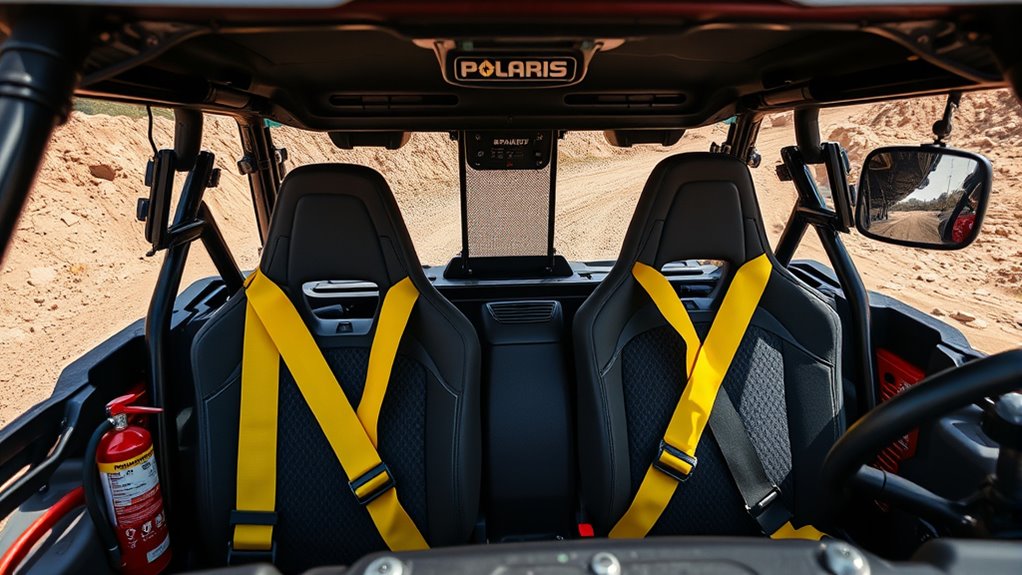

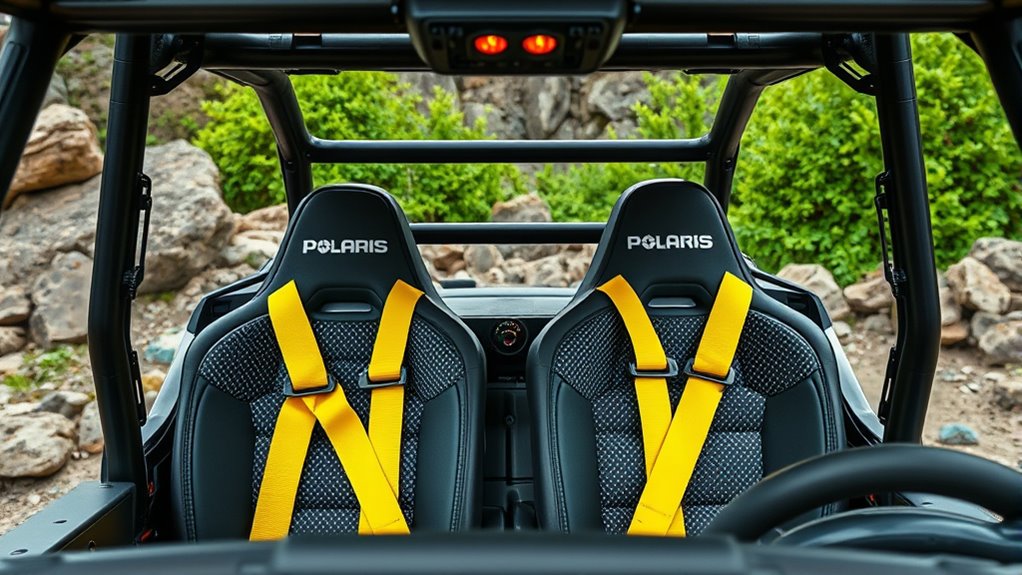
Polaris builds in advanced safety mechanisms like roll bars, seat belts, and emergency shut-off switches to protect you during off-road adventures. These features help minimize risks if an incident occurs, ensuring your safety before, during, and after rides. It’s important to verify that all safety systems are working properly before hitting the trail. If you keep exploring, you’ll discover more ways Polaris keeps you safe and secure on rugged terrains.
Key Takeaways
- Polaris vehicles feature safety elements like roll bars and seat belts to protect occupants during rollovers or crashes.
- Emergency shut-off switches allow quick power disconnection to prevent further injury after an incident.
- Built-in stability controls and traction management systems help maintain control on challenging terrains.
- Safety mechanisms include alarms and alerts for vehicle malfunctions or unsafe conditions.
- Regular maintenance and inspections ensure all safety features function correctly before each ride.
Riding Polaris off-road vehicles can be exhilarating, but safety should always come first. When you’re hitting rugged trails or sandy dunes, the right safety measures can make the difference between an exciting adventure and a serious injury. One of the most critical safety tools you’ll use is your helmet. Not all helmets are created equal, so it’s essential to pay attention to helmet standards. Look for helmets that meet recognized safety standards, such as those certified by the Department of Transportation (DOT) or the Snell Memorial Foundation. These standards ensure your helmet has undergone rigorous testing for impact absorption, durability, and fit. A helmet that complies with these standards offers maximum protection, absorbing shocks and reducing the risk of head injuries. Remember, a helmet isn’t just a basic requirement; it’s your first line of defense.
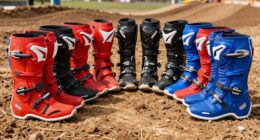
Beyond your helmet, wearing the appropriate safety gear can dramatically improve your safety on the trails. Safety gear includes protective gloves, goggles, knee and elbow pads, and durable riding boots. Gloves improve grip and protect your hands from blisters and injuries, while goggles shield your eyes from dust, debris, and branches. Knee and elbow pads provide extra cushioning, especially if you take a tumble or bump into obstacles. Durable riding boots with ankle support help prevent sprains and provide better control over your vehicle. These gear pieces are designed specifically to withstand the rigors of off-road riding, giving you confidence and protection in unpredictable environments. Using high-quality safety gear also aligns with the importance of proper safety standards, such as those outlined in family photoshoot fails, which highlight the value of preparation and attention to detail for a successful outing.
Choosing high-quality safety gear isn’t just about meeting minimum requirements; it’s about investing in your well-being. Make sure your gear fits properly and is comfortable enough to wear for extended periods. Ill-fitting equipment can distract you or fail to provide adequate protection when needed most. Regularly inspect your safety gear for signs of wear and replace anything damaged. Remember, safety gear isn’t just for your ride — it’s for your peace of mind, allowing you to focus on steering through challenging terrains without unnecessary worry.
In addition to wearing the right gear, familiarize yourself with Polaris safety features. Many Polaris models come equipped with safety mechanisms like roll bars, seat belts, and emergency shut-off switches. These features are designed to minimize risks and protect you during unexpected incidents. Always double-check that these safety features are in working order before every ride. Combining proper helmet standards, thorough safety gear, and the built-in safety mechanisms of your Polaris vehicle creates a layered defense that keeps you safer on every adventure. Prioritizing safety gear and proper helmet use isn’t just about compliance; it’s about ensuring you get home safely after every off-road outing.

USANOOKS Microfiber Cleaning Cloth Grey - 12 Pcs (12.5"x12.5") - High Performance - 1200 Washes, Ultra Absorbent Microfiber Towel Weave Grime & Liquid for Streak-Free Mirror Shine - Car Washing Cloth
- High Absorbency Microfiber: Locks in 8-10x its weight in liquids
- Durable 2.5mm Thick Design: Enhances grip and longevity during use
- Lint-Free and Scratch-Resistant: Prevents streaks, swirls, and damage
As an affiliate, we earn on qualifying purchases.
Frequently Asked Questions
How Does Polaris Ensure Safety During Off-Road Crashes?
Polaris guarantees your safety during off-road crashes by integrating advanced safety technology and crash prevention features. These include stability control systems, roll-over protection, and reinforced frames that absorb impact. You’re equipped with sensors that detect potential crashes early, allowing the vehicle to react and reduce severity. Polaris’s focus on crash prevention helps you stay safer, giving you confidence to tackle tough terrains while minimizing injury risks.
What Maintenance Is Required for Safety Features?
Your safety features are your lifeline, so regular maintenance is essential. Check safety gear like helmets and seat belts for wear or damage, replacing anything compromised. Keep emergency procedures updated and review them often, ensuring you know how to react swiftly. Test safety alarms and sensors regularly, and clean sensors to prevent malfunctions. By staying vigilant, you turn your off-road adventures into a safe, exhilarating experience—like riding a lightning bolt!
Can Safety Mechanisms Be Customized for Different Terrains?
Yes, you can customize safety mechanisms for different terrains to enhance terrain adaptability. Adjusting safety features like braking sensitivity, traction control, and suspension settings helps you optimize safety and performance. By tailoring safety customization, you guarantee your Polaris vehicle adapts effectively to varied terrains, giving you better control and reducing risks. Always review your vehicle’s manual or consult a professional to make safe, effective modifications suited to specific off-road conditions.
Are Safety Features Effective for All Polaris Models?
Think of safety features like a sturdy helmet; they protect you across various terrains but aren’t foolproof. For all Polaris models, these features are designed to be effective, but your safety depends on proper use. Always wear safety gear and follow emergency protocols, no matter the model. While the safety mechanisms provide a solid foundation, your vigilance and preparation guarantee true protection in every off-road adventure.
How Often Should Safety Checks Be Performed?
You should perform routine inspections before every off-road adventure to guarantee safety. Regularly check safety mechanisms like brakes, lights, and safety belts as part of your safety protocol. It’s also wise to do a more thorough safety check weekly or after rough rides. Staying consistent with these inspections helps catch issues early, keeps you safe, and ensures your Polaris operates properly in all off-road conditions.
Conclusion
So, as you venture into the rugged wilderness, remember that Polaris’s safety features are your trusty sidekick, akin to a knight’s armor in a medieval quest. Stay alert, wear your gear, and never underestimate the terrain—otherwise, you might find yourself needing a modern-day “Chesterfield” to get out of trouble. With these precautions, you’ll enjoy off-road adventures confidently, knowing that safety is always your best companion on this wild journey.