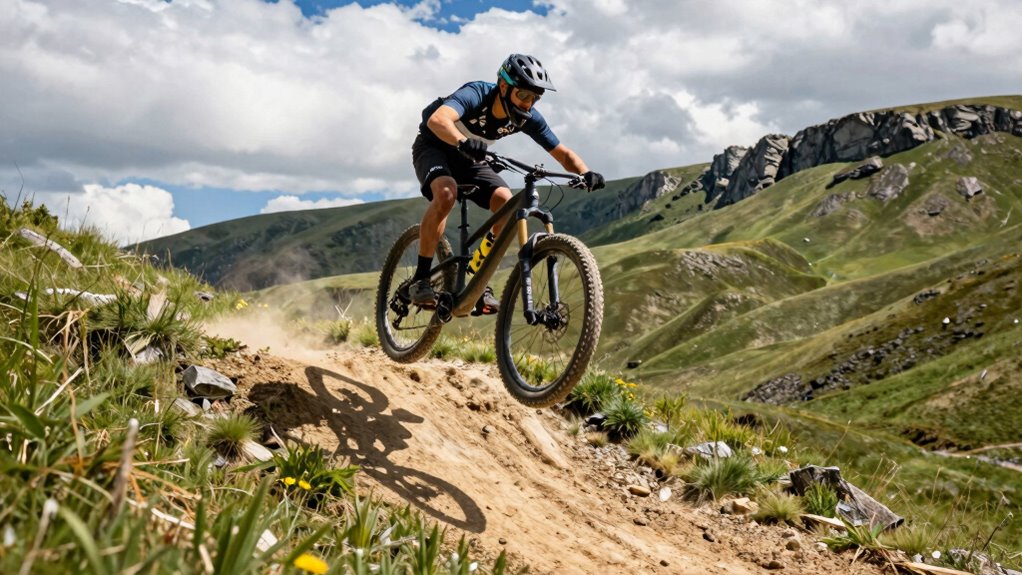

To prevent loop-outs and washouts when riding hills, you must maintain consistent, smooth weight shifts over your bike. Keep your center of gravity stable by gradually shifting your hips forward on inclines and back on declines, avoiding abrupt movements. Properly managing terrain changes and adjusting your body position accordingly are vital to stay balanced. Mastering this weight shift rule improves control and safety; explore further techniques to elevate your hill riding skills.

Get business pricing on garage and car supplies
- Business-only prices and quantity discounts
- Tax-exempt purchasing
- Multiple users, one account, clear invoices
Key Takeaways
- Maintain a smooth, gradual weight transfer to keep your center of gravity stable during hill riding.
- Shift your hips forward on climbs and back on descents to prevent front or rear wheel loss.
- Engage your core and keep your body aligned over the bike for better control and balance.
- Anticipate terrain changes and adjust pressure smoothly to avoid sudden shifts that cause washouts.
- Practice controlled weight shifts with drills to develop muscle memory and improve stability on varied terrain.
bike weight distribution training tools
As an affiliate, we earn on qualifying purchases.
As an affiliate, we earn on qualifying purchases.
Why Proper Weight Distribution Is Critical When Riding Hills

Proper weight distribution is essential when riding hills because it directly affects your bike’s stability and control. When ascending, shift your weight slightly forward to keep the front wheel engaged and prevent it from lifting. This traction control is crucial for maintaining momentum on steep inclines. Conversely, when descending, move your weight back to maintain balance and prevent the front wheel from diving or losing traction. Keeping your core engaged and hips aligned over the bike allows for precise adjustments as terrain changes. Avoid leaning excessively into the hill or the downhill slope, as this can destabilize your ride. Additionally, understanding how proper weight distribution influences your bike’s handling can help prevent loop-outs and washouts, enhancing overall safety. Maintaining consistent center of gravity during changes in terrain helps improve control and reduces fatigue. Being mindful of bike dynamics can further improve your riding technique and safety.
What Are Loop-Outs and Washouts, and How Do They Happen?

Loop-outs and washouts occur when your weight shifts unevenly, often caused by imbalance during turns or uneven terrain. These issues can happen if you don’t maintain proper weight distribution or fail to adapt to obstacles. Understanding how terrain and obstacle impact your center of gravity helps prevent these destabilizing events. Incorporating a balanced support breakfast can help maintain energy and focus, reducing the risk of losing control. Additionally, being mindful of your body positioning and adjusting your stance accordingly can significantly improve stability on variable surfaces. Recognizing the significance of a dream belief in your mindset can also enhance your confidence and responsiveness while riding. Developing a weight shift rule based on terrain changes can further improve your control and prevent common riding errors. Moreover, cultivating an awareness of dynamic balance can help you adjust more effectively during unpredictable conditions.
Imbalance During Turns
During turns, imbalance often results from improper weight shifting, causing the skis or board to lose grip and veer unexpectedly. When your weight isn’t centered over the contact points, pressure becomes uneven, leading to reduced edge hold. Overloading the inside edge or shifting weight too abruptly destabilizes your equipment, increasing the risk of loop-outs or washouts. Precise control requires maintaining a balanced posture, with gradual, controlled movements across the fall line. Focus on engaging your edges progressively as you initiate and complete each turn. Avoid sudden shifts or leaning excessively into the turn, as these can compromise grip and cause unpredictable skidding or loss of control. Developing a consistent, balanced weight transfer during each turn minimizes imbalance and enhances overall stability on variable terrain.
Uneven Weight Distribution
Ever wonder why skis suddenly release or skid out unexpectedly? Uneven weight distribution causes this by shifting load away from the ski’s contact patches, reducing grip and control. When your weight isn’t centered or balanced, you risk losing traction, especially on variable terrain. To prevent this:
- Maintain equal pressure on both skis during turns.
- Keep your weight forward and centered over the skis.
- Avoid overloading the tail or tip, which causes instability.
- Adjust your stance dynamically to adapt to terrain changes.
This precise control helps prevent loop-outs and washouts. Proper weight distribution ensures consistent edge engagement, reducing the likelihood of sudden releases. Focus on maintaining a balanced, centered stance, especially on hills, to keep your skis firmly planted and your rides smooth.
Terrain and Obstacle Impact
Terrain features and obstacles considerably influence ski control, often leading to unintended releases or skidding if not properly managed. Variations such as bumps, icy patches, or abrupt changes in slope can disrupt your balance and weight distribution. When navigating these features, maintain a centered, dynamic stance, adjusting your weight as terrain demands. Unexpected obstacles can cause your skis to catch or catch an edge, resulting in loop-outs or washouts. To prevent this, anticipate terrain changes and adapt your pressure smoothly, avoiding sudden shifts that can destabilize your skis. Focus on consistent, controlled movements, and keep your core engaged to respond swiftly. Properly managing terrain and obstacle impact ensures your weight shift remains effective, reducing the risk of loss of control and maintaining fluid, safe skiing. Additionally, understanding how bike horsepower affects your bike’s response can help you better coordinate weight transfer and control at higher speeds.
The Simple Weight Shift Rule for Safer Hill Riding
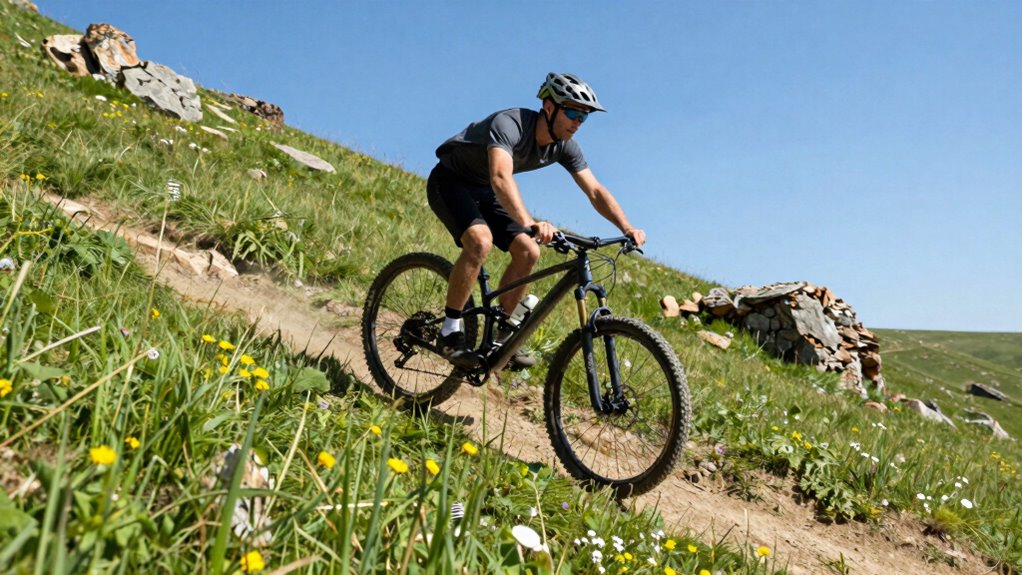
To ride hills safely, you must maintain your center of gravity over your bike and shift your weight smoothly. Practice making gradual adjustments rather than quick movements to preserve balance. Consistent, deliberate weight transfers are essential for controlling your bike and avoiding accidents. Understanding the fundamental principles of balance helps riders develop better control and confidence on varied terrain. Additionally, being aware of filtration and maintenance schedules ensures your bike remains reliable during challenging rides. Knowing how to properly select high-quality gear can further enhance your safety and riding experience. Incorporating herbal infusion tools into your maintenance routine can also help improve your bike’s performance and longevity. Mastering these balance techniques allows for more intuitive riding and quick adaptation to changing hill conditions.
Maintain Center of Gravity
Maintaining your center of gravity is essential for safe hill riding, as it directly influences your bike’s stability and control. Properly managing your weight ensures ideal traction and minimizes risks of loop-outs or washouts. To maintain your center of gravity effectively:
- Keep your weight centered over the bottom bracket, avoiding excessive lean forward or back.
- Distribute your weight evenly between the pedals, especially during climbs.
- Engage your core to stabilize your torso and prevent shifting under load.
- Adjust your body position to match terrain changes, maintaining a consistent, balanced stance. Smart bike positioning can help optimize your stability and control on challenging terrain.
Shift Weight Gradually
Shifting your weight smoothly during hill climbs helps maintain control and prevents sudden instability. Sudden or jerky movements can cause loss of traction or make your bike unstable, risking a loop-out or washout. To achieve a gradual shift, anticipate the terrain’s incline and begin moving your weight slightly before reaching the steepest section. Use small, controlled adjustments—lean forward or back incrementally—rather than abrupt shifts. Keep your core engaged and focus on maintaining a steady, balanced posture. Consistent, measured movements ensure your contact patches stay grounded, maximizing traction and stability. Incorporating proper body positioning and techniques can further improve your control and confidence on the trail. Remember, the goal is to transfer weight seamlessly to adapt to changing terrain, avoiding sudden shifts that could destabilize your bike. Practice this deliberate, gradual approach for safer, more confident hill riding. Incorporating live demonstrations or guided practice can further improve your technique and confidence on the trail.
Practice Consistent Movements
Practicing consistent movements is essential for mastering safe hill riding, as it helps you develop muscle memory and control. Smooth, deliberate adjustments prevent sudden shifts that could cause instability. Focus on maintaining a steady cadence and predictable body positioning throughout your ride. Repeating precise weight shifts ensures muscle memory reinforces correct technique under varying terrain.
To achieve this, follow these key practices:
- Maintain even pedal pressure during weight shifts.
- Move your hips and torso fluidly, avoiding abrupt motions.
- Keep your eyes focused on your line, not on your front wheel.
- Synchronize your braking, steering, and shifting actions smoothly.
Consistent movements improve your ability to anticipate terrain changes, ultimately reducing the risk of loop-outs and washouts.
How to Apply the Weight Shift Technique on Hills

Have you ever wondered how to effectively apply the weight shift technique when riding hills? To do so, focus on maintaining a centered, stable stance, aligning your hips and shoulders with the bike’s frame. As you approach an incline, gradually shift your weight slightly forward to keep traction on the front wheel, preventing it from lifting. On steeper sections, lean into the hill by shifting your hips forward, engaging core muscles to sustain balance. Avoid abrupt movements; instead, execute slow, controlled shifts that match the terrain’s demands. Keep your knees slightly bent and stay relaxed, allowing your body to adapt fluidly. Proper application of this technique ensures consistent traction, minimizes loop-outs, and maintains stability throughout the ascent. Additionally, incorporating proper bike setup can significantly enhance your ability to apply these weight shifts effectively. Developing a good understanding of bike handling skills will also improve your confidence and control on varied terrain. Practicing these techniques regularly will help you develop terrain-specific skills necessary for safe and efficient hill riding. Being mindful of your body position can also help in preventing washouts and maintaining optimal control during challenging climbs. Integrating consistent practice into your riding routine will further reinforce these skills and improve your overall technique.
Top Tips for Staying Balanced on Inclines and Declines

Maintaining balance on inclines and declines requires precise body positioning and awareness of terrain dynamics. To stay centered and avoid loop-outs or washouts, focus on these key tips:
- Keep your weight centered over the bike’s core, adjusting as terrain shifts.
- Shift your hips slightly forward on inclines to maintain traction and control.
- Lean back slightly on declines to prevent front wheel lift and improve stability.
- Maintain a relaxed grip on the handlebars to allow subtle body movements and absorb terrain variations.
Implementing these strategies ensures your body responds instinctively to terrain changes, maximizing balance and minimizing risks during challenging uphill or downhill sections.
Common Mistakes That Lead to Loop-Outs and Washouts

One of the most common causes of loop-outs and washouts is improper body positioning in response to terrain changes. When you fail to shift your weight correctly, you risk losing traction or overloading one side of your tire. Leaning back excessively on steep descents reduces rear wheel grip, increasing the chance of a washout. Conversely, leaning forward on ascents can cause the front wheel to lift or wash out. Inconsistent weight distribution, such as shifting abruptly or not shifting at all, destabilizes your bike’s balance. Overcorrecting with sharp body movements or neglecting to anticipate terrain shifts also contributes to instability. To prevent these errors, maintain a centered, balanced position, and respond smoothly to terrain changes, ensuring ideal traction and control.
Adjusting Your Riding Technique for Different Terrain Conditions
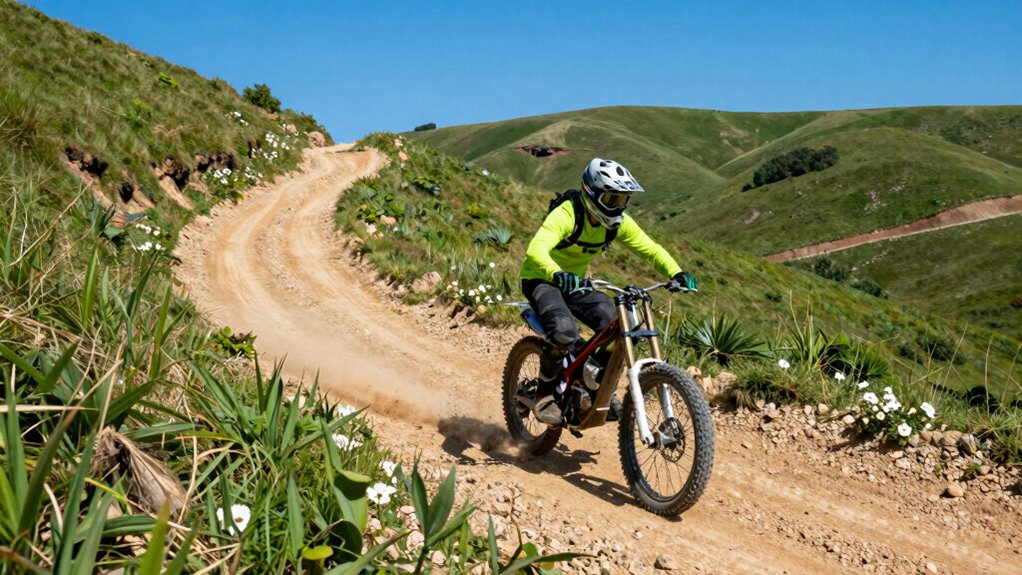
Adapting your riding technique to match different terrain conditions is essential for maintaining control and preventing accidents. Recognize terrain variations and adjust your body position accordingly. Aiming for a smooth and consistent water source navigation helps to prevent sudden shifts that could lead to washouts. 1. Uphill: Shift your weight slightly forward to maintain traction on the front wheel, preventing it from lifting. 2. Downhill: Lean back subtly, distributing weight toward the rear to avoid looping out and to improve stability. 3. Technical rocky sections: Keep your body centered, with a slight bias back, to absorb shocks and maintain balance. 4. Loose or slippery surfaces: Lower your center of gravity by flexing your knees and elbows, increasing grip and control. Consistently adapt these techniques to the terrain to optimize traction, stability, and safety, minimizing risks of washouts or loop-outs.
Practice Drills to Master the Hill Weight Shift Technique
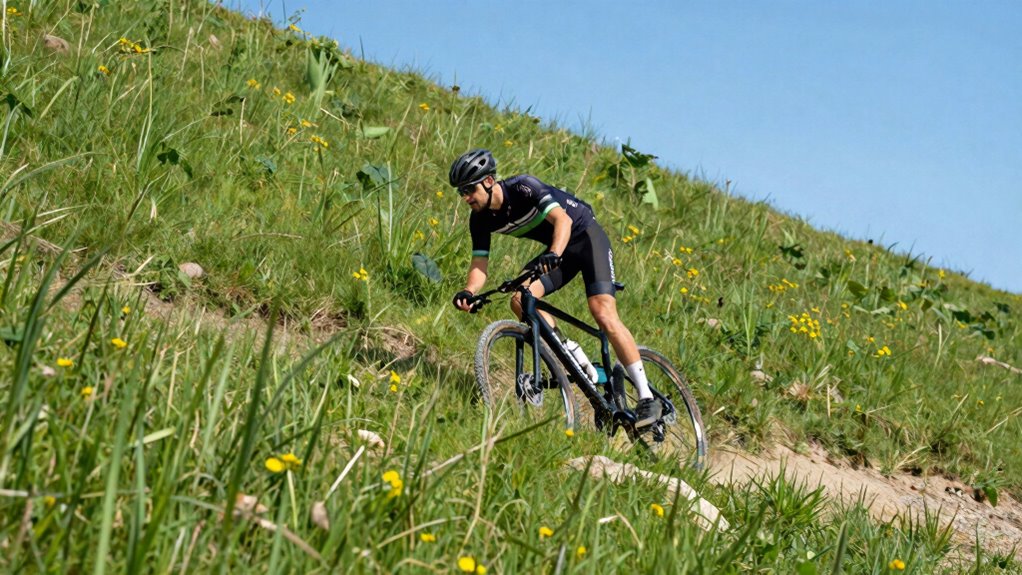
To develop precise control over your hill weight shifts, incorporate targeted practice drills that simulate real riding scenarios. Begin by practicing slow, deliberate weight transfers on gentle inclines, focusing on shifting your hips and upper body smoothly without abrupt movements. Use cones or markers to create specific points where you initiate and complete the shift, ensuring consistency. Progress to steeper terrain gradually, emphasizing proper body positioning and timing to maintain traction and stability. Incorporate drills that simulate sudden obstacles or changes in terrain to improve your reactive shifting skills. Record your sessions to analyze your technique, identify inconsistencies, and refine your movements. Regular, focused practice guarantees your weight shifts become instinctive, greatly reducing the risk of loop-outs and washouts on challenging hills.
Frequently Asked Questions
How Does Bike Type Influence Weight Shifting on Hills?
Your bike type considerably affects how you should shift your weight on hills. For lightweight road bikes, lean forward slightly to maintain traction and prevent wheel lift. Mountain bikes with wider tires require more balanced weight distribution, keeping weight centered to avoid washouts. Fat bikes need extra forward weight on climbs to prevent slipping, while heavier touring bikes demand a steady, balanced approach. Adjust your weight shift based on your bike’s geometry and tire contact patch for ideal control.
Can Weather Conditions Affect the Effectiveness of This Weight Shift Rule?
Weather conditions can markedly impact the effectiveness of your weight shift rule. Rain, snow, or wet surfaces reduce traction, making it harder to control your bike during weight shifts. In such conditions, you should shift your weight more gradually and avoid abrupt movements that could lead to slip-outs or washouts. Adjust your riding technique accordingly, and always anticipate reduced grip, maintaining a balanced, cautious approach to preserve stability.
Is Additional Equipment Needed to Implement This Technique Safely?
No, additional equipment isn’t necessary to implement this weight shift technique safely. Focus on maintaining proper bike positioning and balance, especially when maneuvering inclines. Use your core and leg muscles to control your weight distribution smoothly. Ensure your tires are properly inflated and your suspension is adjusted for terrain. Regularly check your equipment for wear, but this technique primarily relies on rider skill and body mechanics, not extra gear.
What Signs Indicate I’M Shifting My Weight Incorrectly?
Imagine your bike as a ship steering through turbulent waters. If your weight shifts incorrectly, you’ll notice the bow dipping or the stern rising unexpectedly, signaling imbalance. You might also feel instability through your handlebars or notice your tires losing grip during turns. These signs indicate you’re not aligning your weight properly over the bike, risking loop-outs or washouts. Stay attentive to these cues to maintain smooth, controlled riding.
How Does Rider Experience Level Impact Applying This Rule Effectively?
Your experience level affects how precisely you apply the weight shift rule. Beginners may struggle to maintain consistent pressure, causing instability. As you gain experience, you learn to anticipate terrain changes and adjust your weight smoothly, preventing loop-outs and washouts. Focus on developing a feel for your bike’s response, practicing controlled shifts, and refining your timing. With practice, applying this rule becomes instinctive, enhancing stability and safety on varied terrain.
Conclusion
Mastering the weight shift rule transforms your hill riding from risky to controlled. While equipment and terrain vary, your balance remains the constant. Think of it as precision engineering—every shift, deliberate and measured, prevents dangerous loop-outs and washouts. Without this technique, even the most advanced bike can become unpredictable. In the end, safety hinges not on equipment alone, but on your ability to apply these principles consistently—turning challenging inclines into manageable, confident rides.
Halloween Picks
halloween
As an affiliate, we earn on qualifying purchases.