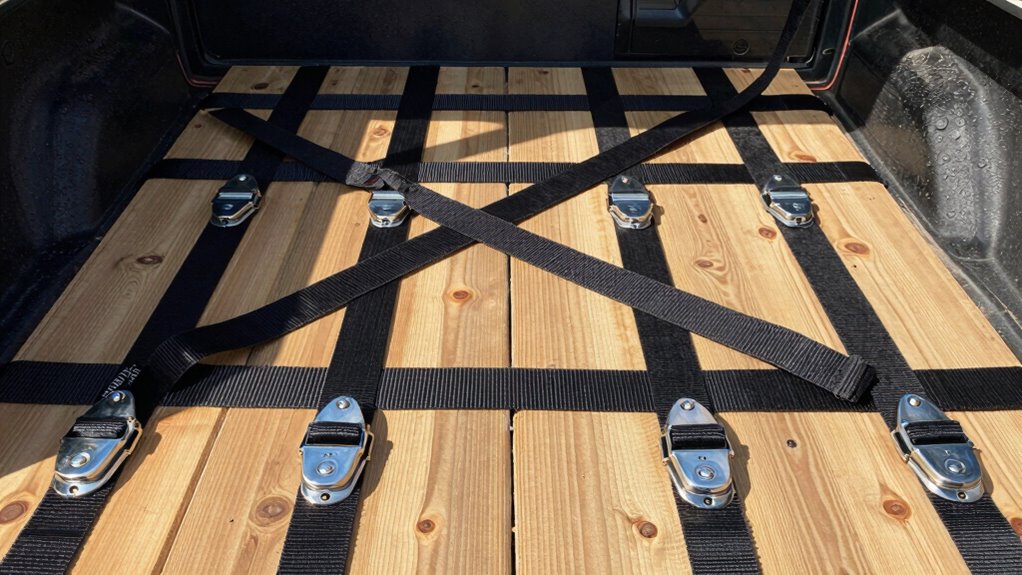

To prevent tie-downs from loosening when transporting in truck beds, use a crisscross or cross-pattern technique. Secure straps diagonally across the load and tighten them evenly, ensuring balanced tension on all sides. Regularly check and adjust the tension as you go. Using sturdy anchor points and the right tools helps maintain security, even on rough roads. Keep in mind these strategies to keep your cargo safe — and there’s more to discover for peak safety.
Key Takeaways
- Use a crisscross or cross-pattern tie-down method to evenly distribute tension and prevent shifting.
- Secure straps diagonally across the load, creating a stable grid resistant to movement.
- Regularly check and tighten tie-downs during transit to maintain proper tension.
- Choose quality straps and sturdy anchor points suited to your cargo’s shape and weight.
- Incorporate padding or cushioning for fragile items to prevent damage and ensure securement.

Rhino USA Ratchet Straps Tie Downs (4-Pack) – 1 Inch x 15 Feet (1,823lb Break Strength) – Ultimate Tie Down Straps with Safety S Hooks – for Trucks, Cargo, Moving, Appliances – Black
STANDARD RATCHET STRAPS – Locking tie down straps with a precision manual crank-and-release mechanism, anodized ratchet, and positive…
As an affiliate, we earn on qualifying purchases.
As an affiliate, we earn on qualifying purchases.
Why Proper Tie-Downs Are Essential for Truck Bed Loads

Proper tie-downs are vital because they keep your load secure and prevent accidents while driving. If you don’t properly secure your cargo weight, it can shift unexpectedly, compromising vehicle stability. When cargo moves, it can cause your truck to become unbalanced, increasing the risk of losing control, especially during sudden stops or sharp turns. Using the right tie-downs ensures that heavier items stay in place, maintaining the truck’s center of gravity and overall stability. Properly securing loads also helps prevent damage to your cargo and reduces the chance of debris falling onto the road, which could cause accidents for other drivers. In short, effective tie-downs are a critical safety measure that protect you, your cargo, and others on the road. Additionally, understanding the importance of load distribution can further enhance your cargo securing practices and overall safety. Ensuring load balance is maintained across the truck bed can help prevent shifting and improve stability during transit, especially when combined with knowledge of proper tie-down techniques. Being aware of load stability principles can also help prevent accidents and ensure a safer journey. Incorporating proper tensioning methods into your tie-down routine is essential to prevent slack that could lead to cargo shifting during transit.

BILIONE Cross Luggage Straps and Luggage Tags Set, Cross Luggage Straps and 2 Tags Set, Heavy Duty Suitcase Belts Adjustable Travel Accessories for 20-32 Inch Luggage (Orange)
Cross-reinforced design: The cross luggage straps feature high-strength nylon webbing that wraps in a cross pattern to securely…
As an affiliate, we earn on qualifying purchases.
As an affiliate, we earn on qualifying purchases.
Which Tie-Down Patterns Keep Your Cargo Secure?
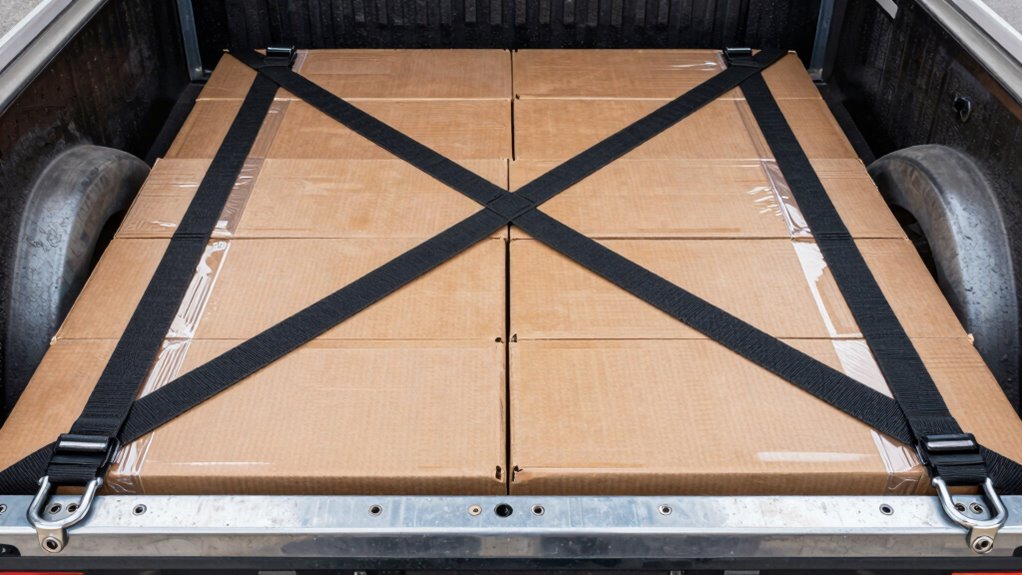
Choosing the right tie-down pattern is key to keeping your cargo secure during transit. You might consider the cross-pattern method for stability, or opt for diagonally anchored ties to prevent shifting. The over-under tension technique can also help make sure your load stays tight and safe. Additionally, integrating smart load management systems can enhance overall cargo security by providing real-time monitoring and adjustments. Proper load distribution ensures that weight is balanced across your truck bed, reducing the risk of tie-downs loosening or cargo shifting. Being aware of innovative AI discoveries can inspire new approaches to cargo securing technology, further improving safety and efficiency. Incorporating appropriate tie-downs suited to your cargo type further improves safety and stability during transportation.
Cross-Pattern Security Method
The cross-pattern security method is one of the most effective tie-down techniques to keep your cargo stable during transport. By crossing the straps over the load, you create a crisscross pattern that enhances cargo wrapping, preventing shifting in any direction. This pattern helps distribute tension evenly across the load, promoting better load balancing and reducing stress on individual tie points. Proper tensioning is essential to ensure the effectiveness of this method and to prevent any movement during transit. Using tie-down patterns correctly can greatly improve safety and cargo security, especially on rough or uneven roads. With this method, you can guarantee that your cargo remains secure, even on bumpy roads. It’s especially useful for irregularly shaped or heavy items that require extra stability. Just remember to tighten each strap firmly and check the tension regularly. The cross-pattern not only keeps your cargo from loosening but also maximizes safety during transit, giving you peace of mind.
Diagonally Anchored Ties
Diagonally anchored ties are a highly effective pattern for securing cargo because they create a stable, crisscrossing network that resists shifting in any direction. By anchoring straps diagonally across your load, you distribute tension evenly, preventing movement during transit. This pattern works well with cargo netting, which complements the tension and helps hold items tightly in place. You’ll want to attach the ties to sturdy anchor points on your truck bed, crossing them over the cargo at angles that oppose each other. This creates a secure grid that minimizes shifting and reduces the risk of loose cargo. Proper tension is essential to ensure the ties hold firmly without damaging the cargo or the straps. Diagonally anchored ties are especially useful for irregularly shaped or heavy loads that require extra stability, giving you peace of mind on the road. Ensuring the tension is properly maintained helps prevent slack that could compromise the security of your cargo during transit, especially when you consider the importance of load stability, which is a fundamental aspect of cargo safety in preventing accidents.
Over-Under Tension Technique
The Over-Under Tension Technique enhances cargo security by systematically applying tension in alternating directions. When you use cargo straps with this method, you wrap the straps over and under the load, creating a pattern that distributes tension evenly. This tension technique helps prevent shifting during transit, reducing the risk of loosening or damage. By alternating the direction of the straps, you guarantee consistent pressure across all sides of your cargo, keeping it firmly in place. This method is especially effective for irregularly shaped or heavy loads. Properly tensioned straps using this pattern provide a reliable grip, making sure your cargo stays put no matter how bumpy the ride gets. Additionally, understanding navigation and mapping techniques can help you plan the best routes to minimize cargo movement. Incorporating secure cargo practices can further enhance safety and stability during transport. It’s a simple yet powerful way to keep your cargo secure, especially when combined with proper body-anchoring methods to prevent shifting. Using tension distribution strategies can also improve overall cargo stability and safety during transit.

Heavy Duty Truck Bed Tie Down Anchors Rings Trailers Hook Cargo Bolt on V Ring Pickups Rail Accessories (4 Pack)
Easy To USE: By threading a screw or bolt through the 13/32" diameter bolting hole( (that's between 3/8"…
As an affiliate, we earn on qualifying purchases.
As an affiliate, we earn on qualifying purchases.
Adjust Your Tie-Down Pattern for Different Cargo Types

To keep your cargo secure, you need to adjust your tie-down pattern based on its weight, shape, and size. Heavier or bulkier items may require more anchor points, while fragile items need extra padding and gentle securing. Always tailor your approach to make certain everything stays safe and intact during transport. Additionally, understanding Feature Buddies can help you choose the most effective securing methods for different cargo types. Recognizing the importance of cargo stability can further enhance your securing strategy to prevent shifting or damage during transit. Properly assessing load distribution ensures that the weight is evenly spread across your truck bed for optimal safety during transport. Incorporating load balancing techniques can also improve overall cargo security and reduce the risk of accidents on the road. Being aware of center of gravity considerations can help prevent tipping or loss of control while driving.
Cargo Weight Considerations
Adjusting your tie-down pattern based on cargo weight is essential to guarantee safe and secure transportation. Proper cargo distribution and weight balancing prevent shifting and damage. Heavier items should be positioned centrally or lower in the truck bed, ensuring they don’t tip or slide. Use the table below to help determine tie-down strategies based on cargo weight:
| Cargo Weight | Tie-Down Approach | Additional Tips |
|---|---|---|
| Light (less than 50 lbs) | Minimal tension, quick securing | Check tension frequently |
| Moderate (50-200 lbs) | Firm tension, cross-pattern for stability | Use additional straps if needed |
| Heavy (over 200 lbs) | Maximum tension, multiple points of contact | Reinforce anchor points |
Balancing cargo weight enhances safety and reduces the risk of loosening tie-downs during transit.
Shape and Size Adjustments
Different shapes and sizes of cargo require modifications to your tie-down pattern to guarantee stability. For irregularly shaped items, such as bulky equipment or oddly sized boxes, use cargo wraps to secure them tightly and prevent shifting. When transporting large or oddly shaped cargo, adjusting your tie-down points ensures even pressure distribution. If your truck bed has a bed liner, take care to avoid puncturing or damaging it while attaching straps, and choose anchor points that won’t slip. For fragile or delicate items, consider adding padding or extra wrap layers. Always evaluate the cargo’s shape and size before tying down, ensuring your pattern accounts for potential movement. Proper adjustments help prevent cargo from loosening or shifting during transit, keeping both your load and your truck safe.
Securing Fragile Items
When securing fragile items in your truck bed, you need to modify your tie-down pattern to prevent damage during transit. Use soft, non-abrasive straps or specialized cargo blankets to cushion delicate items and absorb shocks. Anchor your fragile cargo at multiple points to distribute pressure evenly, avoiding tight pulls that could crush or crack delicate items. Place cushioning materials like foam or padding around fragile cargo for extra protection. Avoid tight tie-downs that cause stress points; instead, lightly secure the items, ensuring they can’t shift but aren’t compressed. Regularly check your straps during transit, adjusting if necessary. Properly securing fragile cargo minimizes movement and reduces the risk of damage, ensuring your delicate items arrive safely at their destination.
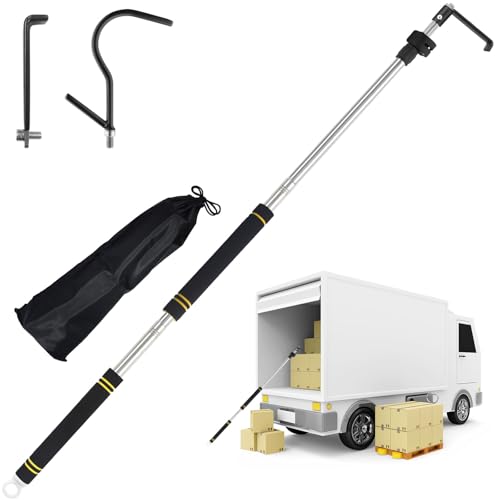
Bed Buddy Truck Tool,Cargo Grabber Pickup Truck Bed Thickened Stainless Steel Telescopic 33-74inch wear-Resistant complimentary Storage Bag Professional Cargo Grabber Reach Retriever Tool
Fully Adjustable Telescopic Design This Truck bed reach tool features 4 adjustable lengths from 33 to 74 inches,…
As an affiliate, we earn on qualifying purchases.
As an affiliate, we earn on qualifying purchases.
How to Tie Down Loads Securely
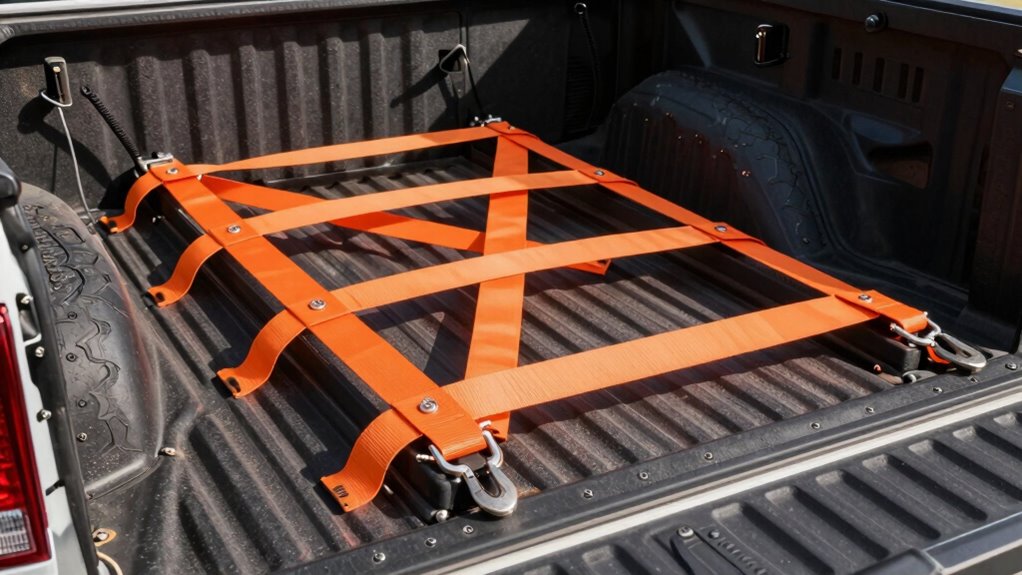
Securing your load properly is essential to prevent shifting or falling during transport. To achieve this, focus on proper load distribution across your truck bed, ensuring weight is balanced evenly. This helps maintain stability and minimizes the risk of movement. When tying down, apply consistent tie down tension—tight enough to hold the load firm, but not so tight that it damages items or the anchor points. Use quality straps or ropes, securing them at multiple points to create a crisscross pattern for maximum hold. Check that each anchor point is secure before driving, and tighten the straps as needed during your journey. Proper load distribution combined with correct tie down tension keeps your cargo safe and your drive smooth.
Tools and Tips for Effective Cargo Securement
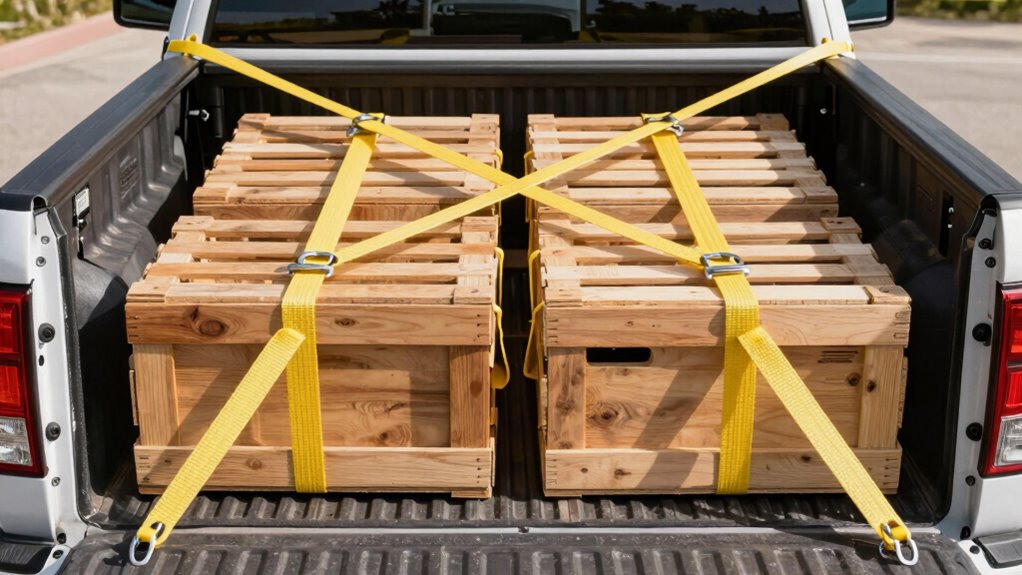
Having the right tools is essential for effective cargo securement, as they make it easier to tighten straps, check anchor points, and guarantee your load stays in place. Use quality cargo straps designed for truck bed loads—they provide the necessary strength and flexibility. A ratchet or cam buckle helps you tighten straps securely, preventing any slack that could cause shifting. Always inspect anchor points before securing your load; sturdy anchor points ensure your cargo stays put during transit. Keep a toolkit nearby with a wrench, scissors, and gloves for quick adjustments and safety. Tips include applying even tension across all straps and double-checking each anchor point’s integrity. Proper tools and a systematic approach ensure your cargo remains safe and secure throughout your journey.
Common Tie-Down Mistakes and How to Avoid Them
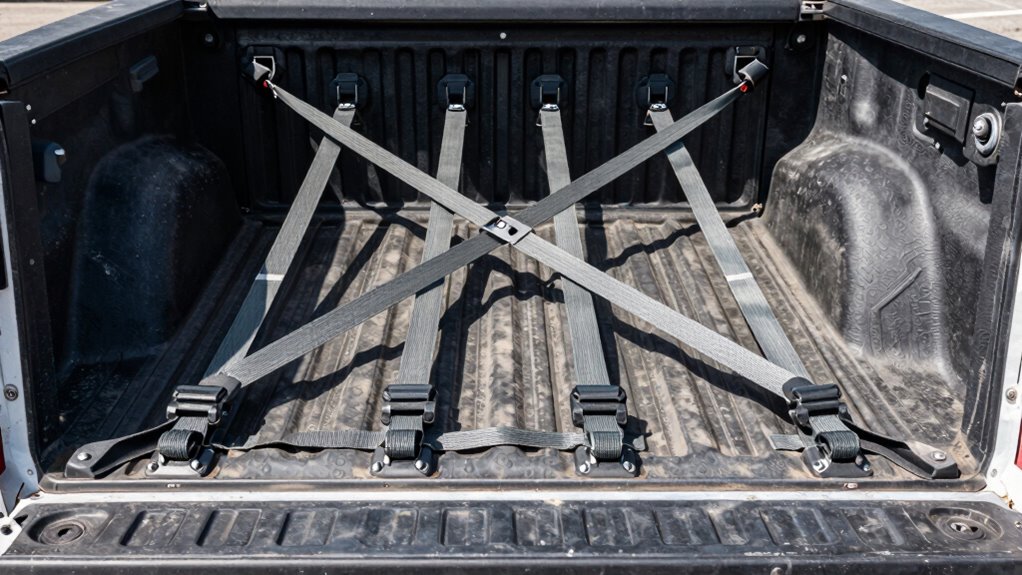
One common mistake people make when tie-downs aren’t properly secured is over-tightening straps, which can damage the cargo or the equipment. This is a typical example of common strap mistakes that can compromise safety. Over-tightening can also distort or break the straps, reducing their effectiveness. Another frequent error is improper anchoring; if your tie-downs aren’t anchored to secure points, they can shift or loosen during transit. To avoid this, ensure your straps are snug but not overly tight, and always attach them to solid, designated anchor points on the truck bed. Check that the straps are free of twists and frays, and verify that the tension is evenly distributed. Properly securing your cargo minimizes movement and prevents accidents.
How to Troubleshoot and Re-Check Tie-Downs During Transport
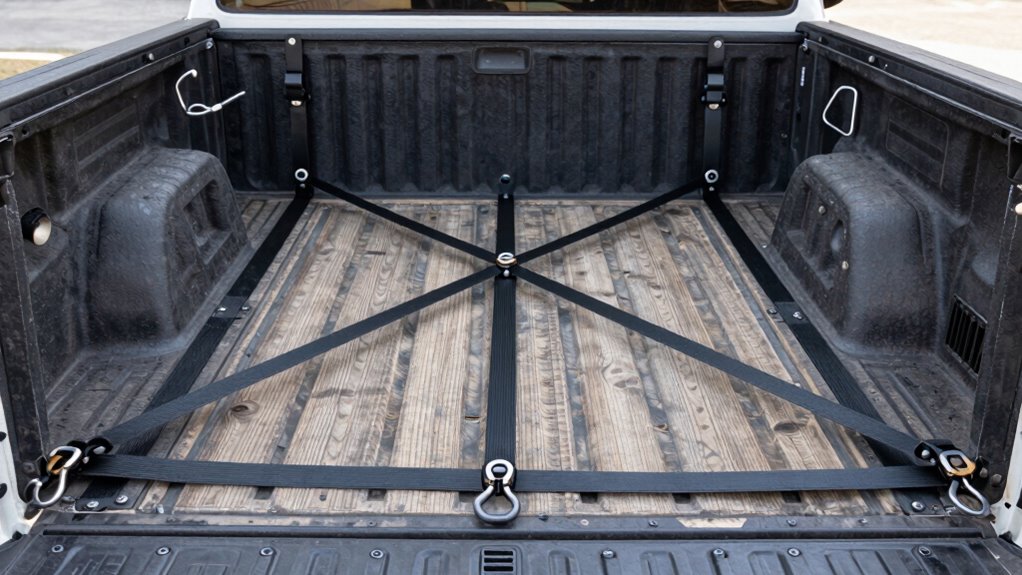
During transport, it’s essential to periodically check your tie-downs to guarantee they remain secure. Begin by inspecting for slack or movement in the straps, ensuring load distribution stays balanced. Confirm that the tension remains consistent; if you notice any looseness, tighten the straps accordingly. While rechecking, consider sensor calibration if your tie-down system uses electronic sensors to monitor tension—miscalibrated sensors can give false readings. Also, verify that load distribution hasn’t shifted, which can affect stability and safety. Regularly rechecking helps catch potential issues before they escalate, preventing load shift or damage. Remember, a secure load depends on proper tension, correct sensor calibration, and even load distribution throughout transport. Staying vigilant ensures your cargo stays safe and your drive remains accident-free.
Best Practices for Safe and Secure Truck Bed Hauling

To guarantee safe and secure truck bed hauling, you must prioritize proper load preparation and restraint techniques. Start with thorough trailer maintenance to prevent equipment failure. Use effective loading techniques, distributing weight evenly to avoid shifting during transit. Always secure your cargo with high-quality tie-downs, ensuring they are tight and positioned correctly. Regularly check your straps and anchor points throughout the trip. Avoid overloading your truck bed, which can compromise stability. Keep pathways clear for quick inspection and adjustments. Properly maintained trailer equipment reduces risks of accidents and damage. Remember, a well-prepared load minimizes movement, protecting both your cargo and others on the road. Follow these best practices for a safe, efficient haul every time.
Frequently Asked Questions
Can Specific Tie-Down Patterns Prevent Cargo Shifting During Sharp Turns?
Yes, specific tie-down patterns can prevent cargo shifting during sharp turns. By securing your cargo with a crisscross or diagonal pattern, you enhance cargo securing and improve vehicle stability. This method distributes tension evenly, keeping items firmly in place even during sudden maneuvers. Properly following these patterns guarantees your load stays secure, reducing the risk of accidents and maintaining the integrity of your transport.
What Are the Best Materials for Durable, Non-Loosening Tie-Downs?
Like the unbreakable shield of Achilles, your tie-downs need unmatched material durability for maximum tie-down longevity. Opt for heavy-duty nylon straps or polyester webbing, both resistant to weather, UV rays, and abrasion. Steel or stainless steel chains are also excellent for heavy loads. These materials guarantee your cargo stays secure, even during sharp turns, preventing loosening and providing peace of mind on every trip.
How Often Should I Recheck Tie-Downs During Long Hauls?
You should recheck your tie-downs every 2-3 hours during long hauls. Regular inspection intervals help guarantee everything stays secure and prevent accidents. Make safety checks a routine part of your trip, especially after rough roads or stops. Tighten any slack and verify the load’s stability. Staying vigilant reduces the risk of shifting cargo and keeps your journey safe for everyone involved.
Are There Industry Standards for Tie-Down Tension and Pattern Consistency?
Yes, industry regulations specify tie-down tension guidelines and pattern consistency to guarantee cargo safety. You should follow these standards closely, applying the correct tension to prevent loosening or shifting during transit. Consistent pattern use, like the four-point or crisscross method, helps maintain stability. Regularly check your tension and pattern alignment, especially on long hauls, to stay compliant and keep your cargo secure throughout the journey.
How Do Weather Conditions Impact Tie-Down Effectiveness and Safety?
Weather impact can substantially affect tie-down durability and safety. Rain, snow, and humidity cause metal rust and weaken straps over time, increasing the risk of loosening. Extreme heat can stretch or degrade materials, reducing their holding power. To guarantee a secure load, regularly check and tighten tie-downs, especially after weather changes, and use weather-resistant straps designed for outdoor conditions. Proper maintenance keeps your tie-downs effective and safe.
Conclusion
Stick to the right tie-down pattern, and you’ll turn your truck bed into an unbreakable fortress—no cargo will ever budge, slip, or fly away! With proper technique and regular checks, you’ll master the art of secure hauling, transforming transport chaos into smooth sailing. Remember, a little effort now saves you from disaster later. So tighten, adjust, and keep your cargo safe—because nothing’s more powerful than a perfectly secured load hurtling down the road!