
You might notice that intercom ranges claimed by manufacturers often seem much smaller in real-world terrain. Natural obstacles like hills, trees, and buildings interfere with signals, drastically reducing effective distance. Environmental factors such as rain or dust can also cause disruptions, while interference from Wi-Fi or other electronics adds to the challenge. Additionally, tough terrain and high power use can drain batteries faster, affecting performance. To guarantee reliable communication, it’s vital to understand these limits—and there’s more to uncover if you keep exploring.
Key Takeaways
- Manufacturer range claims are often exaggerated and can be significantly reduced by real-world terrain obstacles.
- Natural features like hills, trees, and buildings interfere with signals, shortening effective communication distance.
- Environmental conditions such as rain or fog degrade signal quality and limit intercom range.
- Interference from other wireless devices can disrupt signals, further reducing reliable communication distance.
- Proper testing in actual terrain is essential to determine realistic intercom range and ensure effective communication.

Many intercom systems boast impressive range claims, but these numbers often fall apart once terrain comes into play. What looks great on paper quickly diminishes in real-world settings, especially when natural obstacles like hills, trees, or buildings interfere. You may find yourself thinking your intercom should work across vast distances, only to realize that signals fade or cut out entirely when you’re orchestrating uneven terrain. These issues highlight the importance of understanding the actual limits of your system rather than relying solely on manufacturer specifications. Additionally, terrain obstacles can significantly reduce effective range even in the absence of interference. Wireless interference is a major factor that can considerably cut into your effective range. Even if your intercom boasts a long-range capacity, nearby Wi-Fi networks, Bluetooth devices, or other electronics can create noise that disrupts your signal. This interference forces your device to work harder to maintain a connection, often reducing the usable distance. External factors like environmental conditions such as rain, fog, or dust can also degrade signal quality and should be considered when assessing your system’s reliability. Additionally, environmental factors like temperature extremes can affect the internal components of your device, further impacting performance. Properly shielding and designing devices to withstand environmental stressors can help mitigate these issues. Battery life is another critical aspect that impacts your intercom experience, especially when terrain or interference forces your device to work harder. If your intercom consumes a lot of power trying to maintain a connection through challenging terrain or interference, your battery drains faster than expected. This can leave you without communication just when you need it most, whether you’re on a hike, construction site, or coordinating multiple team members. To avoid this, look for systems that maximize power consumption or have longer-lasting batteries, so your communication remains reliable over extended periods. Recognizing these performance limitations can help you better plan for reliable usage. Understanding these limitations helps you set realistic expectations for your intercom’s performance. Terrain and environmental factors often mean your effective range is much shorter than advertised, particularly in hilly, wooded, or built-up areas. Wireless interference can further diminish the signal quality, forcing you to move closer or find better positioning to stay connected. Meanwhile, battery life becomes a limiting factor, especially if your device struggles to maintain strong signals in tough conditions. To get the most out of your intercom system, choose models with good battery longevity and resistance to interference, and always test them in the environment where you’ll be using them. Knowing these potential pitfalls allows you to plan better, ensuring reliable communication no matter what terrain or interference challenges come your way.
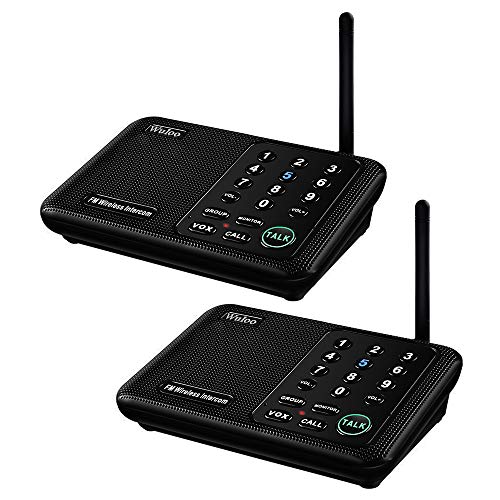
Wuloo Intercoms Wireless for Home 1 Mile (5280 Feet) Range 10 – Channel, Wireless Home Intercom System for House Business Office, Room to Room Intercom, Home Communication System (2 Packs, Black)
- Long Range Signal: Up to 5280 feet (1 mile) range
- Multiple Channels: 10 channels with 3 digital codes
- Secure Communication: Anti-interference with digital coding
As an affiliate, we earn on qualifying purchases.
As an affiliate, we earn on qualifying purchases.
Frequently Asked Questions
How Do Terrain Features Specifically Block Radio Signals?
Terrain features block radio signals through obstructions attenuation and signal reflection. When hills, mountains, or dense trees are in your line of sight, they absorb or weaken the signal, reducing range. These obstructions cause signal reflection, bouncing signals off surfaces, which creates interference and further diminishes clarity. As a result, your radio communication becomes less reliable, especially in rugged terrain where these features are prominent, cutting your effective range considerably.
Are There Any Intercom Systems Unaffected by Terrain?
Like a rugged smartphone from the future, some intercom systems have enhanced durability and minimal susceptibility to terrain. These systems are designed to maintain communication despite obstacles, but terrain still impacts range. If you prioritize user preferences for reliable communication, look for models with strong signal penetration and durability. While no system is completely unaffected by terrain, these advanced options offer the best chance of clear, consistent communication in tough environments.
What Frequencies Are Most Susceptible to Terrain Interference?
You’ll find that high-frequency signals, especially those above 1 GHz, are most susceptible to terrain interference. Terrain can disrupt frequency stability, causing signal degradation or loss. Lower frequencies, around 300-900 MHz, tend to have better signal amplification and penetrate obstacles more effectively. To avoid issues, choose intercom systems with robust frequency stability and adequate signal amplification, especially if you operate in rugged terrain where obstacles frequently block signals.
How Can Users Improve Intercom Range in Hilly Areas?
To improve intercom range in hilly areas, you should focus on signal boosting and ideal antenna placement. Position your antennas higher up on hills or elevated structures to avoid terrain obstructions. Use signal boosters or repeaters to strengthen the signal, especially in valleys or behind hills. Keep antennas clear of obstructions, and guarantee they’re properly aligned for maximum coverage. These steps help maintain a clearer, longer-range intercom signal in challenging terrains.
Do Weather Conditions Impact Intercom Performance Over Terrain?
Weather patterns can dramatically impact your intercom’s performance over terrain. Heavy rain, fog, or snow cause signal attenuation, weakening your connection when you need it most. You might think your device is reliable, but sudden weather shifts can cut your range unexpectedly. Stay alert — changing conditions could silence your communication just when you need to stay connected. Prepare by understanding how weather influences terrain-based signals, and always be ready for surprises.
Conclusion
So, while those impressive intercom range claims might seem a bit optimistic, remember that real-world terrain can gently remind you of nature’s own boundaries. Instead of feeling disappointed, view it as a chance to appreciate the landscape’s quiet ways of keeping us grounded. Embrace the journey, and enjoy the subtle dance between technology and terrain—after all, sometimes the best connections happen when the world keeps a gentle, natural distance.