
To capture clear, usable footage during your off-road adventures, you need more than just electronic stabilization. Proper mounting is essential to keep your camera steady over rough terrain, preventing shake and excessive vibrations. Choose mounts with shock absorption and secure placement to guarantee your camera stays stable and durable against impacts. Focus on physical stability and durability, as they directly influence footage quality. Keep these factors in mind, and you’ll improve your footage—if you keep exploring, you’ll discover even more ways to optimize your camera setup.
Key Takeaways
- Proper camera mounting ensures stability and prevents shifting, reducing shaky footage during rough off-road conditions.
- Durable, impact-resistant mounts protect cameras from shocks and impacts, maintaining footage quality over time.
- Optimal placement, such as windshield or roof mounts, provides a broad view and better shock absorption.
- Physical stability through secure mounting surpasses electronic stabilization in off-road environments.
- Shock-absorbing mounts and rugged camera design are essential for capturing clear, usable footage during aggressive rides.
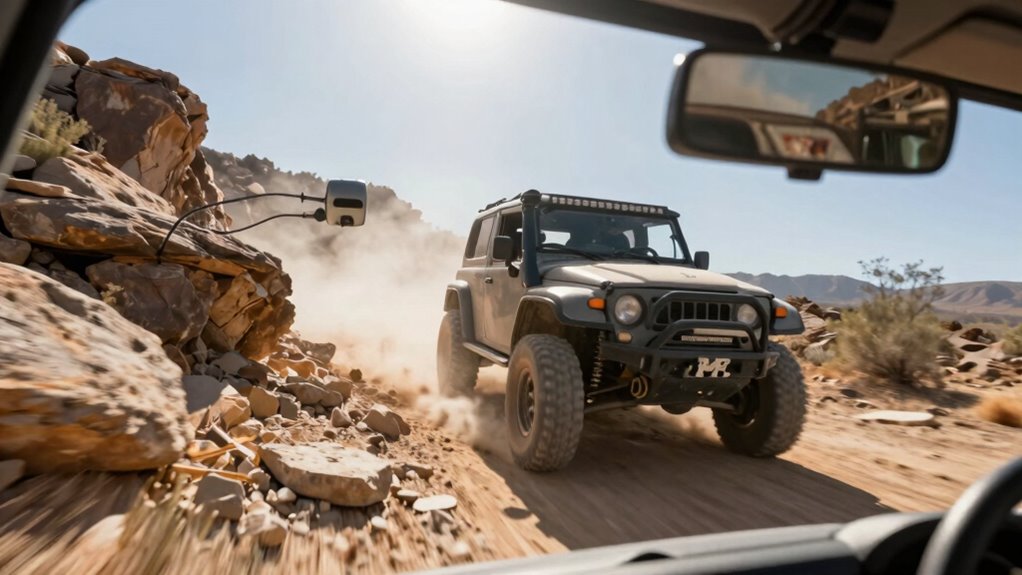
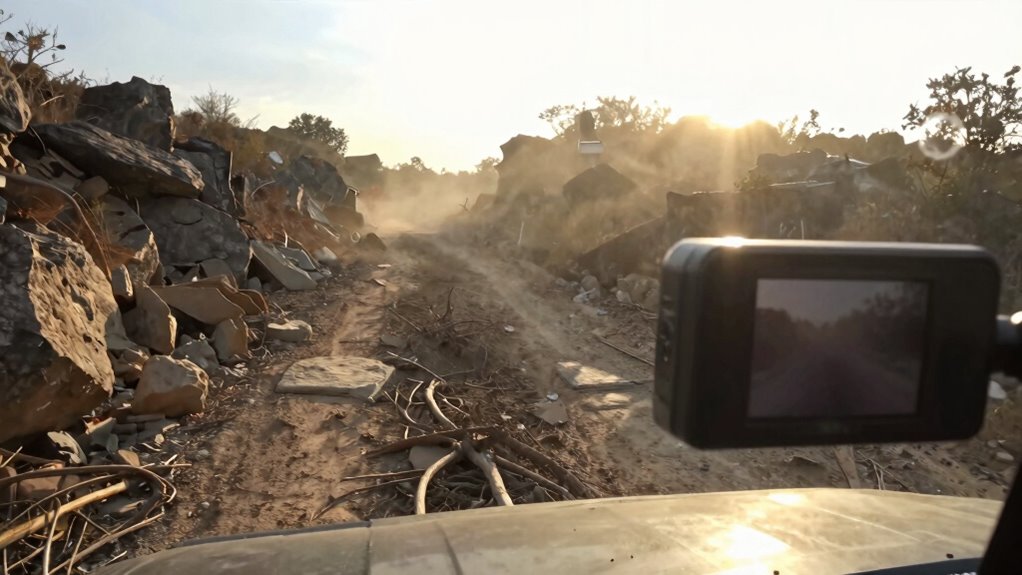
Another key aspect is camera mounting. Proper mounting isn’t just about positioning the camera for the best shot; it’s about guaranteeing it stays secure during the most aggressive off-road maneuvers. You should look for mounting options that offer stability and vibration resistance. Many dash cams come with suction cups, adhesive mounts, or specialized brackets, but not all are equal in off-road conditions. You want a mount that won’t shake loose or shift as your vehicle bounces over rocks and uneven surfaces. Secure mounting also helps maintain a clear view, reducing the chances of shaky or unusable footage. Mounting options play a crucial role in ensuring your camera remains stable and functional during rough rides. Additionally, choosing a mount with shock absorption capabilities can further enhance footage stability by minimizing vibrations reaching the camera.
Stabilization features like electronic image stabilization alone aren’t enough. Off-road conditions demand more than just software correction; they require physical stability. Without a solid mount, even the best stabilization algorithms can’t produce clear, watchable footage. When you’re capturing your adventure, you want footage that’s sharp and steady, not blurred or jittery. Proper camera mounting combined with a rugged design ensures you get high-quality video that accurately documents your ride. In challenging off-road environments, physical stability becomes essential for capturing usable footage. Ensuring your camera is also equipped with durable construction can help it withstand harsh environments and impacts, further improving footage quality. Remember, vibration resistance is vital because even minor tremors can ruin otherwise good footage.
Additionally, consider the placement of your camera. Mounting it in a location that’s protected yet offers a broad view of the trail helps. Usually, a mounted camera on the windshield or roof provides the best perspective. Just ensure it’s mounted securely and that the mount can absorb shocks without transmitting excessive vibrations to the camera lens. This way, you get footage that’s both stable and detailed enough to relive your off-road highlights.

Dash Cam Mount,Rearview Mirror Bracket Installation Kit,16 Connectors
- Universal Compatibility: 16 connectors for most dashcams and GPS
- No Residue or Damage: Stable mount without damaging car surfaces
- Sturdy and Secure: Resistant to sun exposure and falls
As an affiliate, we earn on qualifying purchases.
As an affiliate, we earn on qualifying purchases.
Frequently Asked Questions
What Are the Best Resolution Settings for Off-Road Dash Cams?
You should set your off-road dash cam to the highest resolution possible, like 4K or 1440p, to guarantee clear footage in rugged conditions. Proper camera mounting minimizes vibrations, so your footage remains steady. Additionally, use resolution scaling settings to optimize storage without sacrificing clarity. This way, your videos stay sharp and useful for reviewing off-road adventures, even in challenging environments.
How Do Weather Conditions Affect Dash Cam Performance?
Think of weather conditions as nature’s unpredictable storyteller, influencing your dash cam’s performance. You need a sensor with high sensitivity to capture clear footage in low-light or rain, and a camera built for durability to withstand snow, mud, or dust. Harsh weather can cause glare or fog, so choosing a rugged device with weather-resistant features guarantees your footage remains sharp and reliable, no matter the storm.
Can Off-Road Dash Cams Record Audio Effectively?
Yes, off-road dash cams can record audio effectively. To get clear audio, focus on microphone placement—preferably near the camera’s main body to minimize background noise. Make sure your dash cam has good audio clarity features, like noise reduction and wind filtering. Regularly check the microphone’s condition and position, especially after rough rides. Proper setup helps capture high-quality sound, making your footage more informative and immersive.
What Is the Average Battery Life of Off-Road Dash Cams?
The average battery life of off-road dash cams varies, typically lasting between 2 to 6 hours depending on battery size and usage. To maximize battery longevity, you should focus on effective power management, such as turning off unnecessary features when not in use or using external power sources. Regularly checking and maintaining your battery guarantees your dash cam stays operational during long off-road adventures.
Are There Any Legal Considerations for Recording Off-Road Adventures?
You should be aware of legal restrictions and privacy concerns when recording off-road adventures. Laws vary by location, so check if consent is needed from others before filming. Respect private property and avoid capturing people without permission. Remember, some areas prohibit recording altogether. Staying informed about local regulations helps you avoid legal issues and guarantees your footage remains lawful and respectful of others’ privacy.
Conclusion
To truly get the most out of your off-road dash cam, you need more than just stabilization—you need clear footage that captures every detail, no matter how rough the ride gets. Don’t let shaky videos be your downfall; invest in features that keep your footage steady and usable. Remember, it’s better to have a camera that’s built tough and smart enough to handle the terrain than to rely on luck. Stay prepared and don’t leave your footage to chance.