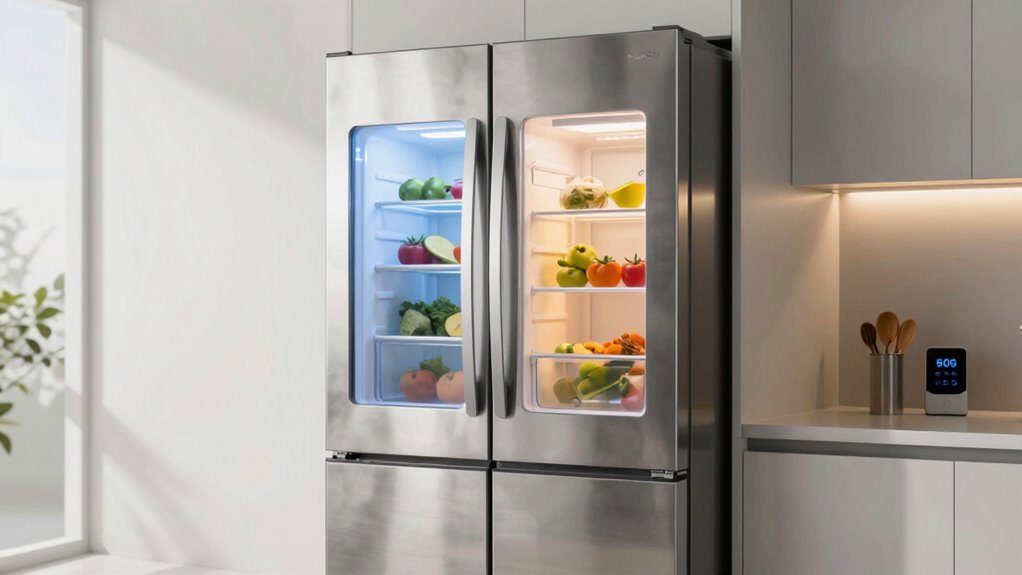

Dual-zone fridges are great for keeping different foods at ideal temperatures, but they often use more power than you might expect. This is because they have complex systems like extra compressors and sensors that require more energy to run efficiently. Factors like frequent door openings or poor insulation can also boost energy use. If you’re curious about how to balance benefits with costs, keep exploring — there’s helpful insight ahead.

Get business pricing on garage and car supplies
- Business-only prices and quantity discounts
- Tax-exempt purchasing
- Multiple users, one account, clear invoices
Key Takeaways
- Dual-zone fridges often consume more energy due to multiple compressors and advanced temperature control systems.
- Increased operation time from complex cooling features raises overall power usage.
- Proper insulation and correct temperature settings are essential to prevent excessive energy consumption.
- Regular maintenance can improve efficiency and mitigate some of the higher energy costs.
- Weighing storage benefits against increased energy bills helps determine if a dual-zone fridge is cost-effective.
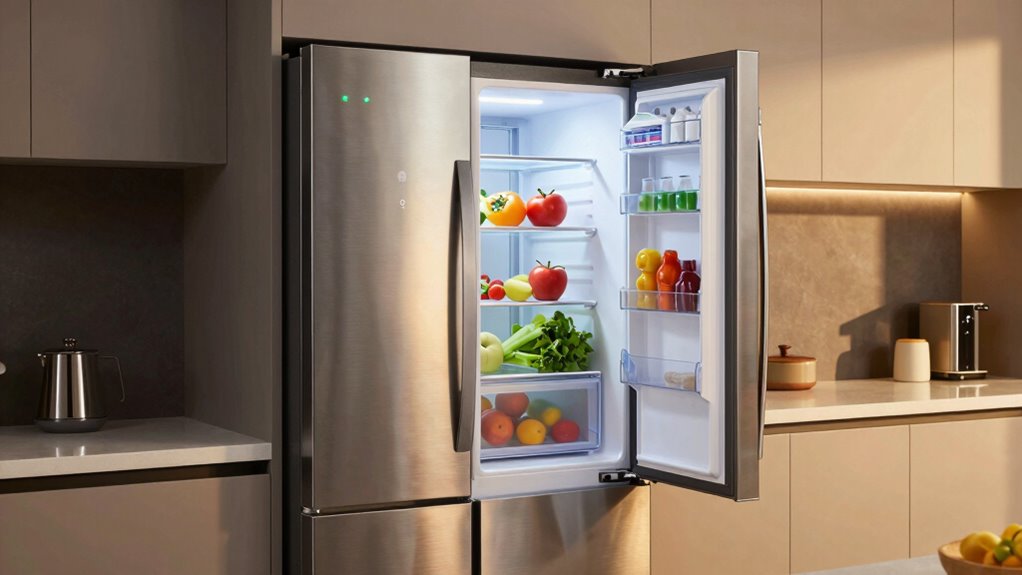
Dual-zone refrigerators offer the convenience of separately controlling two compartments, making them appealing for those who want to store different types of food at ideal temperatures. You get the flexibility to keep fruits and vegetables crisp in one zone while maintaining a colder environment for meats or dairy in the other. This setup sounds perfect for maintaining food quality, but it also comes with some hidden costs—specifically, increased power consumption. Many buyers aren’t aware that dual-zone designs tend to burn more power than single-zone models, mainly due to their complex temperature control systems and additional compressors.
Energy efficiency is a critical factor to factor in when choosing a refrigerator, especially if you’re concerned about monthly utility bills. Dual-zone fridges inherently use more energy because they need to operate two separate cooling systems or more sophisticated components to maintain distinct temperatures. While this setup offers better temperature control, it also means that the fridge runs more frequently or for longer periods to keep each compartment at its desired temperature. This increased workload leads to higher energy use, which can surprise buyers who expected these models to be just as efficient as traditional single-zone units. Moreover, advanced cooling technology can sometimes lead to increased energy consumption if not properly managed.
Temperature control in dual-zone fridges is often praised, but it’s a double-edged sword. Precise control requires additional sensors, more advanced thermostats, and sometimes multiple compressors. These features allow you to customize each compartment’s environment, but they also increase the power draw. If you’re not meticulous about setting the right temperatures or if the fridge has poor insulation, it can end up consuming even more energy trying to compensate. Furthermore, if you frequently open the doors, the compressor has to work harder to restore the proper temperature, further boosting power consumption. Additionally, the complexity of design can lead to higher maintenance costs over time. It’s also important to note that improper use or lack of regular maintenance can diminish the energy efficiency of these units. Regular maintenance, such as cleaning coils and checking seals, can help mitigate some of the increased energy use caused by the design complexity.
You might think that the benefits of separate zones outweigh the extra energy cost, but it’s worth weighing whether your actual needs justify the expense. If you only want to keep different foods at slightly different temperatures, a high-quality single-zone fridge might do the job just as well with less power. Conversely, if you regularly store a variety of perishables that require distinct environments, investing in a dual-zone fridge could be worthwhile despite its higher energy use. Just be prepared for the ongoing energy costs and ensure your household’s electrical setup can handle the extra load.
In the end, dual-zone fridges offer impressive temperature control and food preservation benefits, but they often come with a trade-off: increased power consumption. Understanding this balance helps you make an informed decision, ensuring you select a model that fits both your storage needs and your energy-conscious priorities. Being aware of the energy consumption implications can help you plan your household’s electrical needs accordingly and avoid unexpected costs.
dual-zone refrigerator energy-efficient
As an affiliate, we earn on qualifying purchases.
As an affiliate, we earn on qualifying purchases.
Frequently Asked Questions
How Much More Energy Do Dual-Zone Fridges Typically Consume?
You’ll find that dual-zone fridges typically consume about 20-30% more energy than standard models. This is due to their increased functionality and separate temperature controls, which can affect overall energy efficiency. When doing a power comparison, keep in mind that while dual-zone fridges offer flexibility, they often use more power, so you might see higher electricity bills. Be sure to weigh the convenience against the energy costs before making a decision.
Do Dual-Zone Fridges Have Higher Maintenance Costs?
Yes, dual-zone fridges tend to have higher maintenance costs because their complex systems require more frequent servicing. While they offer energy savings by allowing you to customize temperatures, the cost comparison shows they can be pricier to maintain over time. You might save on energy bills, but keep in mind the additional expenses linked to their advanced features and potential repairs, which can add up.
Are There Specific Brands Offering More Energy-Efficient Dual-Zone Models?
Yes, some brands offer more energy-efficient dual-zone models. When you do a brand comparison, you’ll notice variations in features like insulation and compressor technology, which affect power consumption. Brands like LG and Samsung typically provide models with better energy ratings. By comparing feature variations, you can find a dual-zone fridge that balances convenience with lower energy use, helping you save on long-term electricity costs.
How Can I Reduce Power Consumption in a Dual-Zone Fridge?
Like Da Vinci’s mastery of art, mastering energy saving tips helps you cut power use in your dual-zone fridge. Keep the door closed as much as possible to prevent cold air escape, and avoid overloading. Regularly clean the condenser coils for better compressor efficiency. Setting the temperature to the manufacturer’s recommended levels also minimizes energy use. These simple steps can considerably reduce your fridge’s power consumption without sacrificing performance.
Do Dual-Zone Fridges Last Longer Than Standard Models?
Yes, dual-zone fridges can last longer than standard models because their design considerations often include better insulation and higher-quality components, which enhance durability. You benefit from increased user convenience, as you can store different items at ideal temperatures without sacrificing longevity. However, proper maintenance is essential to maximize their lifespan. By choosing a reputable brand and following care instructions, you guarantee your dual-zone fridge remains reliable and efficient over time.
Conclusion
So, before you rush to buy that shiny dual-zone fridge, remember they sound like a modern marvel but can gobble up more power than you’d think — a bit like expecting a knight but getting a dragon. Balance your love for convenience with your energy bills, and don’t forget to check the specs. Just like the wise old owl, make your choice with eyes wide open, and you’ll be happier in the long run.
Fall Picks
fall essentials
As an affiliate, we earn on qualifying purchases.