TL;DR

Get business pricing on garage and car supplies
- Business-only prices and quantity discounts
- Tax-exempt purchasing
- Multiple users, one account, clear invoices
Off-road LED light bars dramatically improve nighttime visibility, with recent advances making them brighter and more durable. Picking the right size, beam pattern, and features ensures safer, more effective off-road adventures.
Imagine tearing through a pitch-black forest, the trail ahead illuminated by a beam so bright it feels like daylight. That’s what a quality off-road LED light bar can do for you. These powerful beams aren’t just about looking cool—they’re about safety, confidence, and conquering the toughest terrains.
If you’re serious about off-roading, understanding what makes a good LED light bar is your first step. From brightness to build quality, every choice impacts your adventure. Here’s what you need to know to pick the perfect light bar and get the most out of it on your next trail.
Match your light pattern (spot, flood, combo) to your typical off-road terrain for optimal visibility.
Look for IP67 or higher waterproof ratings and impact-resistant lenses to ensure durability in extreme conditions.
Smart features like adjustable beams and remote control add versatility, especially on unpredictable trails.
Proper installation—mounting, wiring, and alignment—is key to safety and performance.
Always check local laws regarding auxiliary lighting to avoid fines and safety issues.
How to Pick the Perfect Off-Road LED Light Bar for Your Vehicle
Choosing the right LED light bar isn’t just about size or brightness. It’s about matching your needs with the right features. Think about your typical trails—deep woods, rocky mountains, or open desert—and what kind of light will serve you best.
First, decide on the beam pattern. Do you need a long, narrow spot beam for high-speed drives, or a wide flood beam to see all around you? Or maybe a combo that offers both.
Next, consider size. A 10-inch bar might fit snugly on a bumper, while a massive 50-inch model can light up the whole horizon but may require custom mounting. Durability is key—look for IP67 or higher waterproof ratings and impact-resistant lenses. For example, a rugged aluminum housing with reinforced glass will survive mud, water, and vibrations.
Finally, don’t forget about power and wiring. LED bars operate on 12V or 24V DC systems. Make sure your vehicle’s electrical setup can handle the load, especially for larger models. Proper installation isn’t just about looks—it’s about safety and performance.
As an affiliate, we earn on qualifying purchases.
Recent Tech Breakthroughs Making LED Light Bars Better Than Ever
LED technology keeps evolving quickly. Today’s off-road light bars shine brighter with lumens exceeding 20,000 in some models, yet they consume less power. This means you get more illumination without draining your vehicle’s battery excessively, which is crucial during long expeditions where power conservation is vital. The ability to produce intense brightness while maintaining low power draw allows for extended use without risking electrical issues or battery drain.
Smart features are taking over. Imagine remote-controlled beams, adjustable angles, and even dimming options. These innovations allow you to adapt your lighting to rapidly changing conditions—like switching from a wide flood to a focused spot when approaching hazards or navigating narrow trails. This flexibility can significantly enhance safety, reduce glare for other drivers, and improve your control over the lighting environment.
Waterproofing has also improved. Modern models often have IP68 ratings, sealing out water, dust, and mud—common adversaries in off-road environments. Shock-resistant designs withstand the brutal vibrations and impacts encountered on rough terrain. Furthermore, the latest laser or hybrid LED-laser systems push brightness and range even further, allowing you to see over a thousand meters ahead, which is invaluable for high-speed or obstacle-rich trails. These advancements mean you can confidently rely on your light bar in the most extreme conditions, knowing it’s built to last.
Plus, aesthetic options now include customizable colors, integrated DRLs, and sleek mounting brackets, blending performance with style. These enhancements not only improve functionality but also allow you to personalize your vehicle’s look, making your off-road setup both practical and visually striking.
Compare the Top Features: Which LED Light Bar Fits Your Off-Road Style?
| Feature | Spot Beam | Flood Beam | Combo Beam |
|---|---|---|---|
| Best for | High-speed, long-distance | Trail work, close-up visibility | Versatile, all-around |
| Light Pattern | Narrow, focused | Wide, dispersed | Both combined |
| Ideal Size | Small to medium | Small to medium | Medium to large |
| Best For | High-speed desert runs | Rocky trails | Mixed terrain |
Choosing between these depends on your typical off-road conditions. For high-speed desert sprints, a spot beam is ideal because it provides long-distance illumination, allowing you to see far ahead and react quickly. Conversely, for winding mountain trails or dense forests, a flood beam offers a wider spread of light, helping you see obstacles and terrain features close to your vehicle. Most experienced off-roaders opt for a combo to enjoy the benefits of both, providing flexibility and safety across various terrains. The tradeoff is that combo bars may be larger and more expensive, so consider your vehicle’s size and your specific needs when choosing.
Installation Tips to Get the Most Out of Your Light Bar
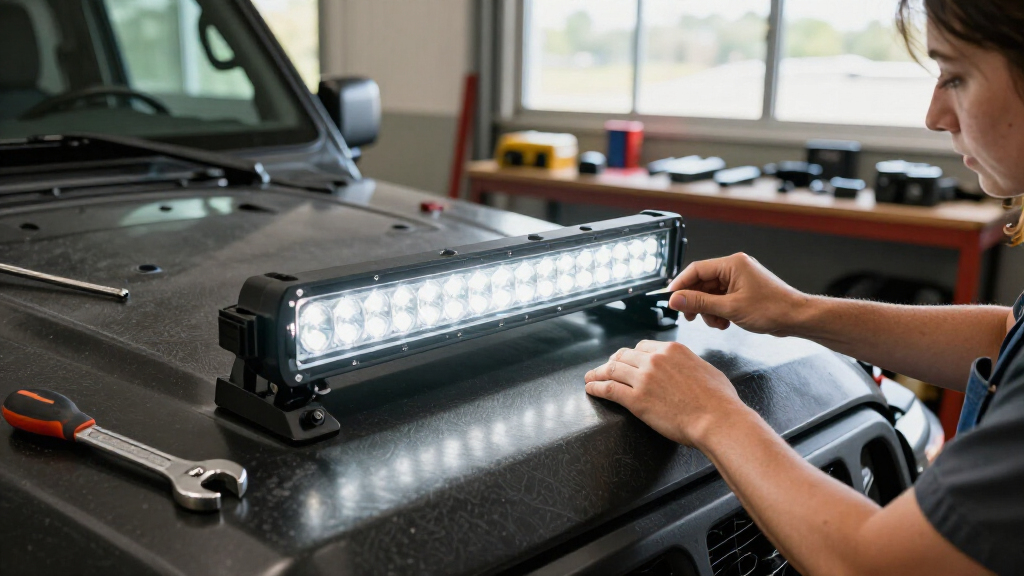
- Choose a sturdy mounting point—bumper, roof rack, or grille guard. Make sure it can handle the weight and vibrations, as a poorly mounted light can shift or fall off, risking damage or accidents.
- Use high-quality wiring and relays. Cheap wiring can cause flickering, reduce brightness, or even damage your vehicle’s electrical system over time, especially under the demanding conditions of off-road use. Proper wiring ensures consistent power delivery and longevity.
- Align the light properly. Incorrectly aimed lights can blind oncoming drivers, creating safety hazards, and can also reduce your own visibility if the beam is misdirected. Use a level or alignment tool to set the beam at the optimal angle for your typical terrain.
- Test the setup before heading out. Make adjustments to angle and focus to maximize coverage and minimize glare. This step is crucial to avoid last-minute issues during your trip.
- Remember to check local laws. Some regions have restrictions on auxiliary lights, especially regarding their brightness and aim. Being aware of regulations prevents fines and ensures your vehicle remains street-legal.
For example, a friend installed a 20-inch LED bar on his grille with a simple mounting kit. With proper wiring and alignment, he instantly noticed a significant improvement—bright, wide coverage that made night riding feel like daylight. Proper setup isn’t just about aesthetics; it directly impacts your safety and the effectiveness of your lighting system.
Durability and Legal Tips for Off-Road Light Bars
Durability isn’t just about sturdy materials; it’s about how well the light bar withstands mud, water, and vibrations over time. Look for models with IP67 or higher waterproof rating and impact-resistant lenses because these features ensure your light can survive the harshest off-road conditions without failing. A durable light bar reduces the need for frequent replacements, saving you money and hassle, and provides peace of mind that your lighting will perform when you need it most.
Legal compliance is equally important. Many regions restrict the use of excessively bright or misaligned auxiliary lights on public roads to prevent glare and accidents. Installing a high-powered light bar without proper aim or certification can lead to fines, safety hazards, and even vehicle impoundment. Always verify local laws and regulations before mounting large or bright light bars, and consider adjustable mounts that allow you to switch between off-road and street use easily.
Pro tip: Keep the lights covered or unplugged when not in use on public roads. This simple step helps you stay within legal limits and avoids unnecessary attention, without sacrificing your ability to use the lights effectively during off-road adventures.
Frequently Asked Questions
How do I know what size LED light bar I need?
Consider your typical off-road conditions. For open desert runs, a larger bar (around 50 inches) offers broad coverage. For tight trails, smaller sizes (6-12 inches) fit better and still provide ample light.Are LED light bars legal for road use?
It depends on your region. Many areas restrict overly bright or misaligned auxiliary lights on public roads. Always check local regulations before mounting large light bars for street driving.Can I install a light bar myself?
Yes, many off-roaders do DIY installs, especially smaller models. However, for larger, integrated setups or if you’re unsure about wiring, a professional install ensures safety and optimal performance.How long will my LED light bar last?
Quality LED light bars typically last over 50,000 hours. Proper maintenance and avoiding water ingress extend their lifespan even further.What should I do to avoid blinding other drivers?
Always aim your light bar properly. Use adjustable mounts and test the beam before hitting the trail. Cover or turn off the lights when on public roads to prevent glare.Conclusion
Picking the right off-road LED light bar isn’t just about brightness. It’s about matching durability, features, and legality to your adventure style. When installed correctly, it turns dark, unpredictable trails into bright, confident journeys.
Remember, a high-quality light bar is an investment in safety and fun. So choose wisely and get ready to light up your next off-road adventure like never before.
Halloween Picks
halloween
As an affiliate, we earn on qualifying purchases.