
TL;DR

Get business pricing on garage and car supplies
- Business-only prices and quantity discounts
- Tax-exempt purchasing
- Multiple users, one account, clear invoices
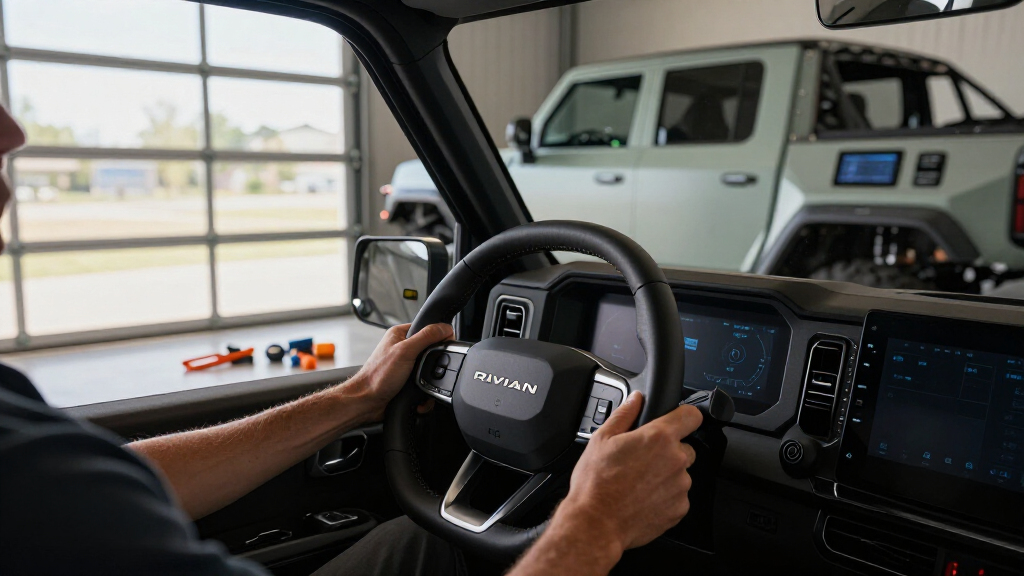
Rivian has announced a significant push toward achieving full autonomous driving capabilities. The move aligns with increasing industry focus on self-driving technology but remains in developmental stages. The development could impact Rivian’s market position and the future of electric autonomous vehicles.
Rivian has publicly committed to accelerating its development of full autonomous vehicle technology, marking a major shift in its strategic priorities. The company’s new focus aims to bring fully autonomous capabilities to its electric trucks and SUVs, a move that could reshape its competitive positioning in the EV market and the autonomous driving sector.
Rivian’s leadership announced during a recent investor presentation that it is intensifying efforts to develop and deploy full self-driving capabilities across its vehicle lineup. The company has outlined plans to integrate advanced driver-assistance systems (ADAS) with the goal of achieving Level 4 or higher autonomy, where vehicles can operate without human intervention under certain conditions.
While Rivian has not yet released a fully autonomous vehicle to the public, it is reportedly conducting extensive testing of its autonomous systems on public roads in select regions. Industry insiders suggest that Rivian’s approach involves a combination of lidar, radar, and camera sensors, along with sophisticated AI algorithms, to navigate complex environments.
The company’s move comes amid rising competition from other automakers and tech firms investing heavily in autonomous vehicle technology. Rivian’s strategic pivot also coincides with increased investor interest in autonomous EVs, which are seen as a potential game-changer in transportation.
Implications for Rivian’s Market Strategy and Industry Competition
This development signals Rivian’s ambition to remain competitive in the rapidly evolving electric vehicle market, particularly as autonomous driving becomes a key differentiator. Achieving full autonomy could allow Rivian to expand its offerings into new mobility services, such as autonomous delivery or ride-hailing, potentially opening new revenue streams. However, the timeline for full deployment remains uncertain, and the technology faces significant regulatory, safety, and technical hurdles. The move also underscores the intensifying race among EV manufacturers and tech giants to lead in autonomous vehicle capabilities, with Rivian aiming to carve out its niche.
Products Worth Considering

DEWALT 20V MAX XR Hammer Drill and Impact Driver Combo Kit with Two 4Ah Batteries and Charger

VIOFO A229 Pro 3-Channel 4K Dash Cam with STARVIS 2 Sensors

Innova SD35 OBD2 Scanner for All-System Vehicle Diagnostics
As an affiliate, we earn on qualifying purchases.
Rivian’s Autonomous Ambitions in the Broader EV Landscape
Rivian has established itself as a notable player in the electric truck and SUV market, with its R1T pickup and R1S SUV gaining attention for their performance and design. The company has also partnered with Amazon for delivery van projects, emphasizing its focus on commercial applications of EV technology.
Industry interest in full autonomy has surged over the past few years, driven by advances in AI, sensor technology, and regulatory discussions. Major automakers like Tesla, GM, and Ford, along with tech firms such as Waymo and Apple, are investing heavily in autonomous systems. Rivian’s pivot toward full autonomy reflects this broader industry trend but also introduces new challenges, given its relatively smaller scale and shorter track record in autonomous development.
While Rivian has been cautious about timelines publicly, industry analysts note that the company’s recent statements suggest a serious commitment to achieving significant autonomous capabilities within the next few years. The company’s testing programs and technology investments indicate a strategic shift, but the exact timeline and regulatory pathway remain unclear.
Unclear Timeline and Regulatory Challenges for Full Autonomy
While Rivian has announced increased efforts toward full autonomy, specific timelines for commercial deployment are not yet confirmed. The company’s progress depends on overcoming technical challenges, gaining regulatory approval, and ensuring safety standards are met, all of which are complex and time-consuming processes. It is not yet clear when fully autonomous Rivian vehicles might be available to consumers or commercial clients.
Next Steps in Rivian’s Autonomous Development Roadmap
Rivian is expected to continue testing autonomous systems in controlled environments and on public roads, with potential pilot programs or limited releases in the coming years. The company may also seek regulatory approvals and partnerships to facilitate deployment. Monitoring Rivian’s progress in these areas will be key to understanding when full autonomy might become a reality for its vehicles.
Key Questions
What level of autonomy is Rivian aiming for?
Rivian aims to achieve Level 4 or higher autonomy, where vehicles can operate without human intervention under certain conditions, though exact targets are still being refined.
When might Rivian’s fully autonomous vehicles be available?
There is no confirmed timeline. Industry experts suggest it could take several years, depending on technological, regulatory, and safety developments.
How does Rivian’s autonomous effort compare to competitors?
Rivian’s focus is similar to other automakers and tech firms investing in autonomous driving, but it currently remains behind some industry leaders in public testing and deployment. Its smaller scale may influence its pace.
Will autonomous Rivian vehicles be used commercially?
Potentially, yes. The company has partnerships with Amazon, indicating interest in autonomous commercial applications, but no specific plans or timelines have been announced.
Source: hn