
TL;DR

Get business pricing on garage and car supplies
- Business-only prices and quantity discounts
- Tax-exempt purchasing
- Multiple users, one account, clear invoices
University of Michigan researchers, working with the Toyota Research Institute, built and tested a steering wheel with inflatable air sacs. In a driving simulator, the wheel let drivers respond to a semi-autonomous system’s steering suggestions by pressing the sacs, and participants reported less effort and frustration. The test does not establish how the design would perform on public roads or whether it will be used in production cars.
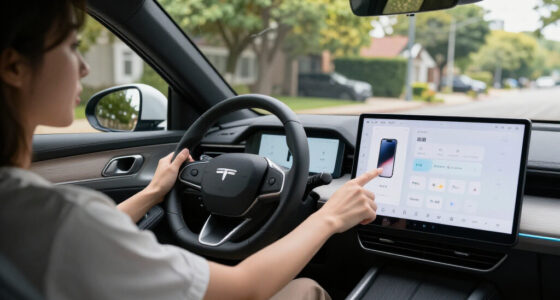
University of Michigan researchers, working with the Toyota Research Institute, built and tested a steering wheel with air sacs that inflate and deflate to communicate with a driver-assistance system. The simulator study explored whether this tactile, two-way interface could reduce conflicts between a driver and a semi-autonomous car that still requires human attention.
The wheel has inflatable sections, described by the researchers as haptic zones, positioned at roughly the 10 o’clock and 2 o’clock points where a driver would hold it. When the system wants to steer left, the sacs on the left side inflate. A driver who disagrees can press the sacs to deflate them; if the system continues to recommend the turn, it can send pulses of air the driver can feel.
The researchers’ aim is to give drivers a way to respond without having to wrestle the wheel or disengage the assistance system. The design could add a third option to the familiar choices of allowing the system to act or taking over, actions that can deactivate some current systems. The team argues that touch could carry information in both directions, unlike a warning light or chime that primarily alerts the driver.
In the reported test, participants used a driving simulator to navigate a turn where unexpected obstacles might appear. A research paper described less time spent fighting the assistance system and less braking among drivers using the wheel. The University of Michigan release also said participants reported lower effort, frustration and physical demand. The findings concern a simulator experiment, not a road trial.
Driver-assistance systems can make steering suggestions while leaving the person behind the wheel responsible for monitoring the road. That shared-control arrangement can become confusing if the driver and system appear to want different things. A tactile interface could give drivers a way to express disagreement without making a sudden correction or triggering a system shutdown.
The study also points to a safety trade-off. Participants reportedly regained trust in the system more readily after it made a mistake, but researchers found they sometimes became too trusting. That means a more comfortable interface is not automatically a safer one: designers would need to balance easier interaction with clear reminders that the driver remains responsible for attention and control.
For drivers, the concept raises a practical question: does communicating through a moving wheel improve understanding enough to justify specialized hardware? The simulator results offer an early reason to study the idea, but they do not show that it outperforms other interfaces in everyday driving.
As an affiliate, we earn on qualifying purchases.
Fully autonomous driving remains a longer-term goal, while many available assistance systems still require an attentive human driver. In those systems, the vehicle may help steer or manage a maneuver, but the driver must remain prepared to intervene. The researchers’ project focuses on this handoff and cooperation problem rather than claiming to make a car driverless.
The University of Michigan team worked with researchers from the Toyota Research Institute, which also provided funding, according to The Drive’s report. The team tested the wheel in a simulator and described its findings in a research study. The source report contrasts the concept with Mercedes’ MB.Drive Assist Pro, which it says accepts inputs such as a steering-wheel tug or brake tap without completely disengaging. That comparison illustrates that two-way interaction can be pursued without inflatable wheel components.
“Participants reported “lower effort, frustration, and physical demand.””
— University of Michigan release, as quoted in The Drive
Road Performance Remains Unknown
The reported work does not establish how the wheel performs on public roads, in different vehicles or during emergencies. The source material provides no participant count, measured effect sizes, or comparison figures for the reported reductions in fighting, braking and perceived workload, so their scale cannot be assessed from the available account.
It is also unclear whether the design will be tested further, developed for production or adopted by an automaker. The research does not show that inflatable controls are safer than warning lights, chimes, conventional steering inputs or other approaches. And because the test found that some drivers could become overly trusting, the effects on attention and supervision need further study.
Further Testing Would Decide Its Use
The immediate next step would be additional evaluation beyond the reported simulator scenarios, including whether drivers interpret the wheel consistently and remain attentive when the system is wrong. The source material does not identify a schedule for such testing or announce a commercial plan.
For now, the air-sac wheel is a research concept, not a confirmed feature in a consumer vehicle. Further results would be needed to show whether its two-way tactile signals provide a meaningful advantage over simpler ways of accepting or rejecting a vehicle’s steering input.
Key Questions
What does the breathing steering wheel do?
Inflatable air sacs signal a semi-autonomous system’s steering intention and let the driver respond by pressing them. The researchers tested the concept in a simulator.
How can a driver disagree with the system?
If the system suggests a left turn, the sacs on the left side inflate. The driver can press them to deflate them; the system may then send pulses of air if it still recommends the maneuver.
Did the wheel make driving safer?
The reported simulator study found less time spent fighting the assistance system and less braking, while participants reported lower effort and frustration. It does not establish that the wheel improves safety on public roads.
Is the steering wheel going into production?
No production plan is confirmed in the source report. Whether the research will lead to further testing or a commercial vehicle feature remains unclear.
Source: rss
Halloween Picks
halloween
As an affiliate, we earn on qualifying purchases.