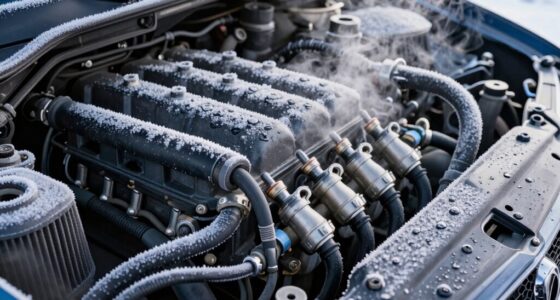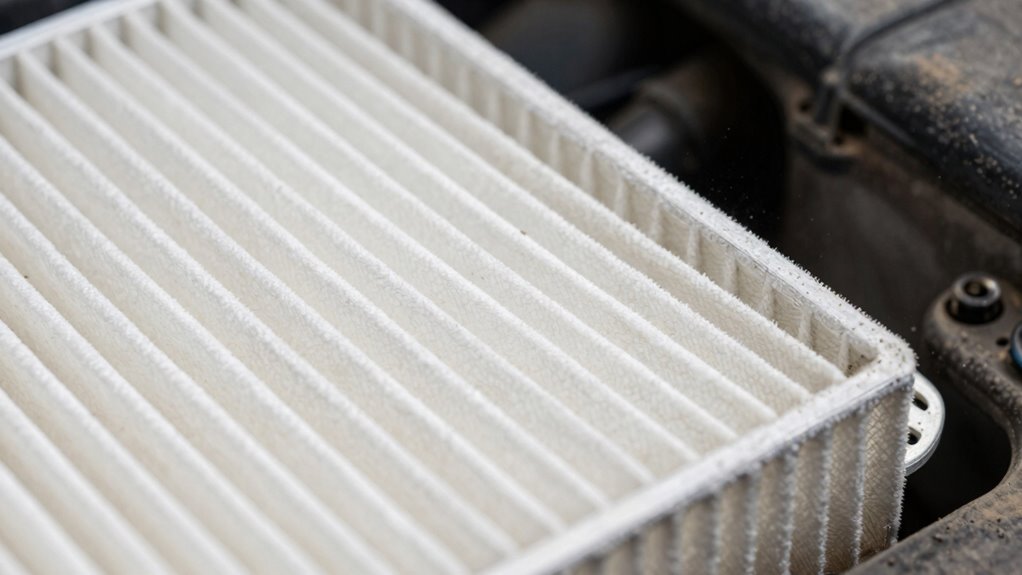

Your air filter is vital for preventing dust from entering your engine, but tiny particles can bypass via microscopic gaps or improper sealing—especially if the filter is worn or poorly installed. Dust acts as an abrasive, causing micro-scratches on engine parts, reducing efficiency, and accelerating wear on pistons, valves, and injectors. Recognizing signs of a dirty filter and maintaining it properly helps preserve power and longevity. Continue exploring how dust silently chips away at your engine’s performance and what you can do to prevent it.
Key Takeaways
- Dust bypassing the filter causes abrasive particles to erode engine components, reducing power and efficiency.
- Dirt buildup on filters restricts airflow, leading to misfires, rough idling, and decreased engine responsiveness.
- Tiny gaps or poor sealing allow unfiltered dust into the combustion chamber, accelerating engine wear.
- Contaminants clog fuel injectors and airflow pathways, disrupting the air-fuel mixture and lowering power output.
- Regular filter maintenance prevents dust intrusion, preserving engine health and preventing silent power loss.
How Dust Bypasses Your Air Filter and Its Impact on Your Engine
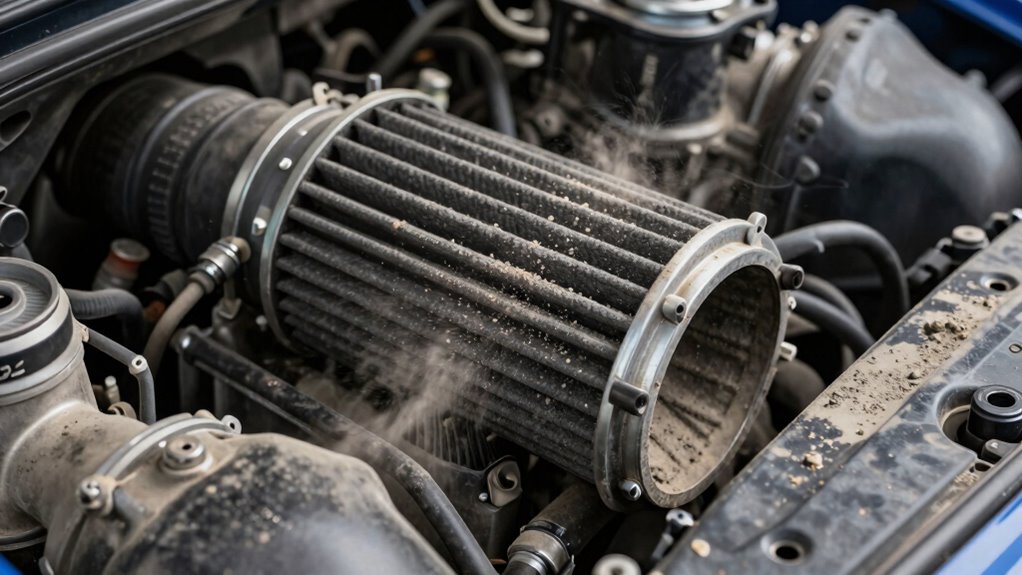
Despite the presence of an air filter, small particles of dust and debris can still bypass its defenses through microscopic gaps or improper sealing. These tiny openings, often caused by poor installation or filter wear, enable particulate matter to infiltrate the intake system. Once airborne contaminants pass the filter’s surface, they enter the engine’s combustion chamber, where high temperatures and pressures facilitate their penetration into sensitive components. Over time, these particles accumulate on piston rings, cylinder walls, and valves, disrupting seal integrity and impairing combustion efficiency. This infiltration not only introduces abrasive elements into the engine but also accelerates component wear. Advanced filtration techniques can help improve the effectiveness of dust prevention strategies. Consequently, even a seemingly effective filter cannot guarantee complete protection, emphasizing the importance of proper installation, maintenance, and sealing to minimize dust bypass. Additionally, understanding air filtration technology can help in selecting the most effective filters to prevent dust intrusion.
How Dust and Dirt Damages Engine Components and Reduces Power

Have you ever wondered how dust and dirt directly affect your engine’s performance? When abrasive particles bypass the air filter, they enter the combustion chamber and settle on crucial components such as pistons, valves, and cylinder walls. The abrasive nature of dirt causes increased wear through micro-scratches, leading to pitting and erosion of metal surfaces. Over time, this damage reduces the efficiency of piston rings and valve seals, causing compression loss and decreasing power output. Dust accumulation also clogs fuel injectors and airflow pathways, disrupting ideal air-fuel mixtures. Consequently, combustion becomes less complete, resulting in decreased engine responsiveness and fuel economy. Essentially, dirt accelerates component degradation and hampers engine efficiency, leading to noticeable reductions in power, increased emissions, and potential costly repairs.
Signs Your Air Filter Is Dirty and Needs Attention
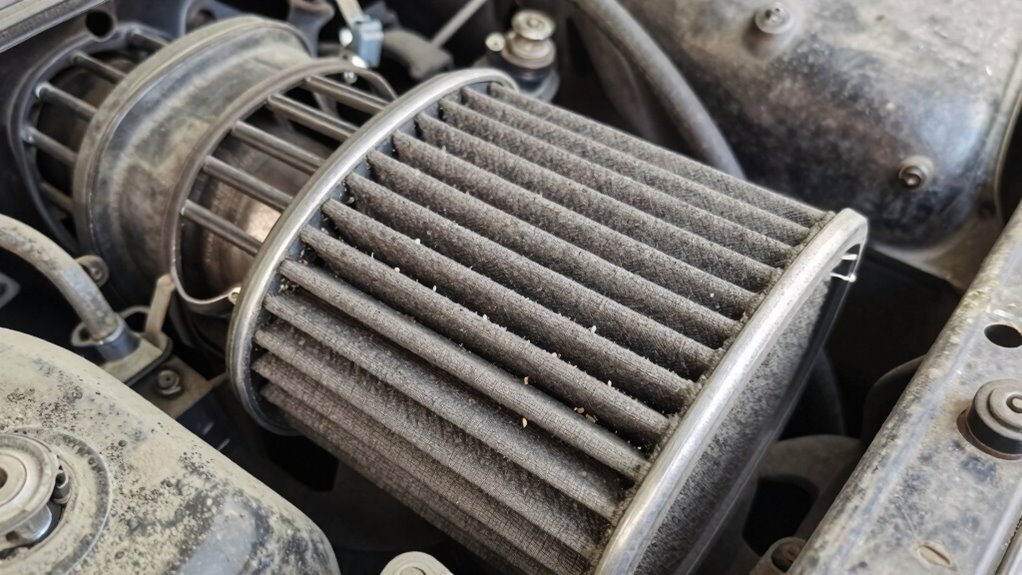
A dirty air filter can considerably impair your vehicle’s performance, often signaling its need for replacement before more serious damage occurs. Common indicators include a noticeable decrease in acceleration responsiveness and a reduction in fuel efficiency, as restricted airflow causes the engine to compensate with richer fuel mixes. You may also experience engine misfires, rough idling, or difficulty starting, which result from insufficient air entering combustion chambers. Additionally, increased exhaust emissions and a visible buildup of dirt or debris on the filter itself are clear signs. If you notice these symptoms, it’s essential to inspect your air filter promptly. Regular checks can prevent dust accumulation from compromising engine performance, ensuring suitable airflow and maintaining power output. Air filtration systems play a crucial role in protecting engine components from harmful dust and debris. Proper maintenance of these systems not only extends engine life but also sustains optimal engine efficiency, especially as advanced vehicle monitoring can alert you when filters need attention, helping to prevent dust buildup from causing further damage.
Why Regular Air Filter Maintenance Protects Engine Performance

Regular air filter maintenance is essential for sustaining ideal engine performance because it guarantees unobstructed airflow, which is critical for efficient combustion. When the filter functions optimally, it prevents dust and debris from entering the combustion chamber, preserving combustion efficiency and power output. The following table illustrates key impacts of filter condition:
| Filter Condition | Airflow Resistance | Engine Impact |
|---|---|---|
| Clean | Minimal | Optimal power and efficiency |
| Slightly Dirty | Moderate | Slight performance decline |
| Dirty | High | Power loss, increased wear |
Regular inspections and timely replacements ensure consistent airflow, safeguarding engine longevity and performance. Unobstructed airflow is vital for maintaining engine health and preventing costly repairs over time. Additionally, a properly maintained air filter can improve overall engine responsiveness, contributing to a smoother driving experience. Ensuring regular maintenance practices can further optimize engine efficiency and extend its lifespan. To further support engine efficiency, air quality considerations like ensuring clean intake environments can make a significant difference.
Easy Steps to Keep Dust Out and Keep Your Engine Running Smoothly
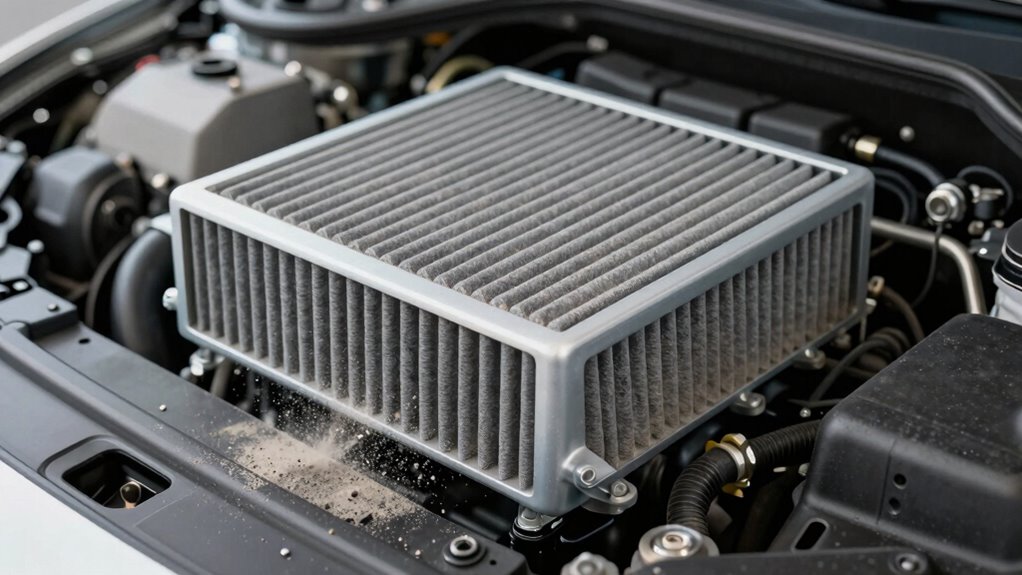
Keeping dust out of your engine requires implementing straightforward, effective measures that prevent particulate buildup and maintain ideal airflow. Regularly inspect and replace your air filter according to manufacturer specifications, ensuring it’s free of debris and fully functional. Seal any leaks or gaps in the intake system to prevent unfiltered air entry, which bypasses the filter’s protective barrier. Maintain proper engine compartment cleanliness by removing loose dust and dirt from critical components, reducing the likelihood of airborne particles infiltrating the intake. Use high-quality filters suited to your vehicle’s operating environment, especially if driving in dusty conditions. Consider leasing a car to access newer models with advanced filtration systems that can better handle dust exposure. Ensuring your entire air filtration system is properly maintained can significantly reduce the risk of dust intrusion and engine damage. Regularly checking the air intake system helps identify potential issues before they lead to serious damage. Incorporating engine air quality assessments into your routine maintenance can help detect dust-related problems early. Additionally, upgrading to high-efficiency filters can provide enhanced protection against fine dust particles. Consistent maintenance minimizes particulate intrusion, preserves airflow efficiency, and ultimately prolongs engine life. These proactive steps constitute a precise approach to safeguarding your engine from dust-related damage and power loss.
Frequently Asked Questions
Can Using an Aftermarket Air Filter Increase Dust Bypass Risk?
Using an aftermarket air filter can increase dust bypass risk if it’s poorly designed or doesn’t fit properly. These filters may have inferior sealing or filtration media, allowing dust particles to bypass the filter media and enter the engine. As a result, dust accumulation accelerates wear on engine components, reduces airflow efficiency, and can lead to decreased power and fuel economy. Always choose high-quality, properly fitted aftermarket filters to mitigate these risks.
How Often Should I Replace My Air Filter for Optimal Protection?
You should replace your air filter every 12,000 to 15,000 miles or every 12 months, whichever comes first, for ideal protection. Regular replacement ensures maximum airflow, prevents dust accumulation, and maintains engine efficiency. Inspect filters more frequently if you drive in dusty conditions or urban areas. Consistent maintenance minimizes dust bypass, reduces wear, and preserves power output, ultimately extending your engine’s lifespan and enhancing overall vehicle performance.
Does Driving in Dusty Conditions Require More Frequent Filter Changes?
Yes, driving in dusty conditions necessitates more frequent air filter replacements. Dust particles clog the filter’s media, reducing airflow and causing the engine to work harder. This increased strain accelerates filter fouling, typically requiring replacement every 5,000 to 7,500 miles or sooner, depending on dust levels. Regular inspections and prompt replacements optimize engine performance, prevent dirt buildup, and mitigate long-term damage caused by restricted airflow.
Are There Specific Types of Air Filters That Better Block Dust?
You’ll want high-efficiency particulate air (HEPA) filters or those with MERV ratings of 13 or higher, as they’re designed to trap finer dust particles more effectively. These filters use dense media that block microscopic dust, reducing engine wear and maintaining ideal airflow. While they may cost more, their superior filtration ensures less frequent replacements and better protection for your engine against the damaging effects of dust buildup.
What Are the Long-Term Engine Damage Signs From Dust Exposure?
You may notice decreased engine performance, rough idling, or increased fuel consumption as signs of long-term dust damage. Dust accumulation causes piston and valve wear, leading to compression loss and potential overheating. Over time, this results in reduced power output and increased emissions. Regular maintenance and high-efficiency filters can minimize dust ingress, but neglecting these signs accelerates engine degradation, ultimately causing costly repairs or engine failure.
Conclusion
Neglecting your air filter allows dust to bypass and settle inside your engine, causing wear and power loss. Regular inspection and timely replacement are essential for peak performance and longevity. Are you willing to risk costly repairs and decreased efficiency by ignoring dust buildup? Maintaining a clean air filter isn’t just routine—it’s a critical step in safeguarding your engine’s health. Stay proactive, stay powerful.