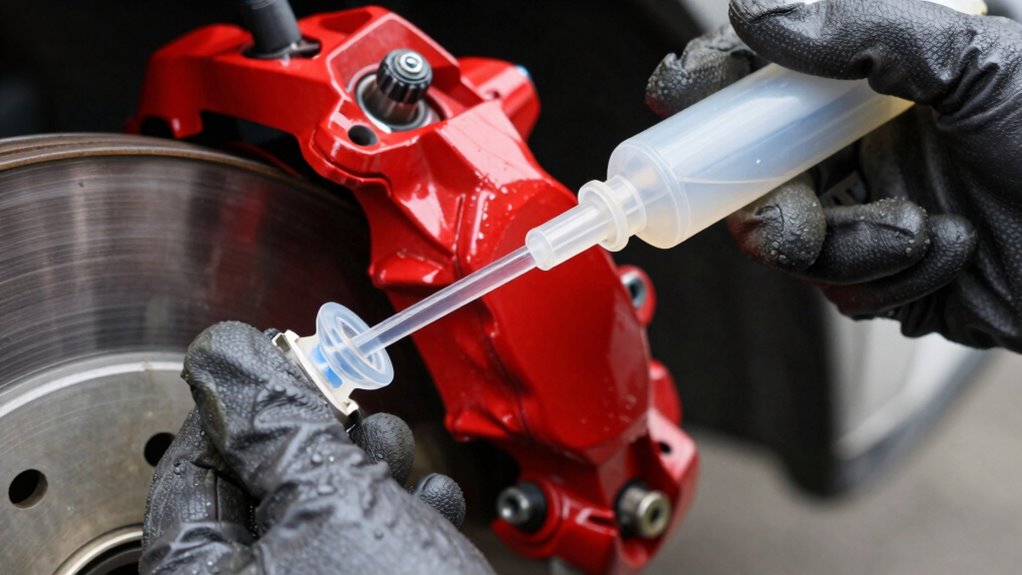

To brake bleed without bubbles using the tap-and-hold method, start by filling the master cylinder with fresh, clean brake fluid. Attach a clear hose to the bleeder valve and keep the reservoir topped off. Open the valve slightly, hold the pedal down for a few seconds, then close the valve before releasing. Repeat this process steadily, ensuring no air enters the system. If you want to master this technique and keep your brakes firm, there’s more to learn below.

Get business pricing on garage and car supplies
- Business-only prices and quantity discounts
- Tax-exempt purchasing
- Multiple users, one account, clear invoices
Key Takeaways
- Use the tap-and-hold method to control fluid flow and prevent air from entering the brake system.
- Keep the master cylinder reservoir topped off to avoid introducing air during bleeding.
- Open the bleeder valve slightly, hold the pedal steady, then close the valve before releasing.
- Maintain a steady, gentle pressure on the brake pedal to minimize bubble formation.
- Regularly check for leaks and ensure all fittings are secure to prevent air ingress during the process.
Products Worth Considering

Chemical Guys TORQX Random Orbital Polisher Kit, 9-Piece

Chemical Guys Carbon Force Ceramic Paint Coating Kit, 1 fl oz, with 3 Applicators

Chemical Guys 17-Piece Car Detailing Kit for Interior, Wheels, and Exterior
As an affiliate, we earn on qualifying purchases.
Why Do Bubbles Get Trapped When Bleeding Brakes?

Bubbles often get trapped during brake bleeding because air naturally rises to the highest points in the brake system, where it becomes difficult to expel. This air entrapment occurs because bubbles form when air is introduced into the fluid, and since air is less dense than brake fluid, it rises and collects at the highest spots. When you pump the brake pedal, the fluid compresses slightly, but the trapped air doesn’t fully compress, creating a pocket of air that hampers proper braking. These bubbles can persist if not carefully removed, leading to a spongy brake pedal feel and reduced brake performance. Understanding this process helps you recognize why air gets stuck and the importance of proper bleeding techniques to eliminate these stubborn bubbles. Additionally, employing effective AI tools can assist in diagnosing and optimizing bleeding procedures for better safety and efficiency. Using specialized bleeding techniques like the tap-and-hold method can further prevent the entrapment of bubbles by maintaining steady pressure during the process. Incorporating proper technique ensures that air is less likely to become trapped, resulting in a more reliable brake system. Moreover, understanding the fluid dynamics involved in brake systems can help troubleshoot persistent issues with trapped air.
How to Prepare Your Brake System for a Bubble-Free Bleed

Before you start bleeding your brakes, it’s important to prepare the system to prevent trapped air and guarantee a bubble-free process. First, check the brake fluid level and top it off with fresh brake fluid of the correct viscosity. This ensures consistent hydraulic pressure during bleeding. Next, pump the brake pedal a few times to build up pressure and verify it feels firm. Removing excess moisture and contaminants from the brake fluid helps maintain proper viscosity, which aids in smooth fluid movement and reduces air entrapment. Also, inspect the master cylinder for leaks or damage. Properly pressurizing the hydraulic system and ensuring the brake fluid’s quality are vital steps to prevent air from entering and to achieve a clean, bubble-free bleed. Additionally, understanding the role of color accuracy in hydraulic fluid quality can help you select the best brake fluid for optimal performance. Recognizing the importance of fluid viscosity can further improve bleeding efficiency and prevent issues related to inconsistent brake operation.
How to Bleed Brakes Using the Tap-and-Hold Method
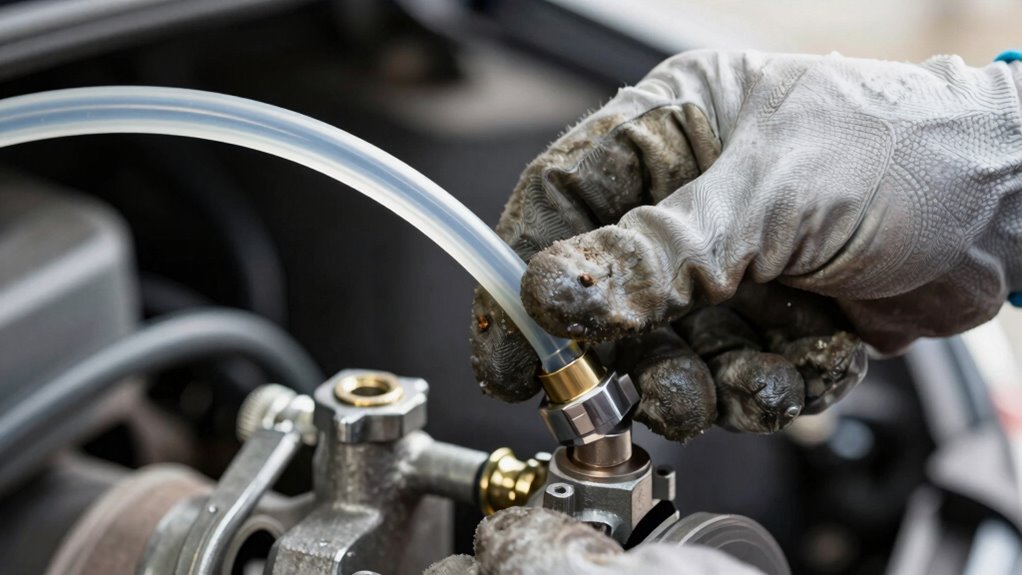
The tap-and-hold method is an effective technique for bleeding brakes because it allows you to control fluid flow precisely while minimizing air entrainment. To start, fill your master cylinder with fresh brake fluid to prevent contamination. Attach a clear hose to the bleeder valve and place the other end in a catch container. Open the valve slightly and hold it open for a few seconds, then close it firmly before releasing the brake pedal. Repeat this process, maintaining steady pressure and ensuring the brake fluid remains clean to avoid contamination. This method reduces the chance of introducing air or dirt into the system, which is essential for proper brake system maintenance. Consistent, controlled bleeding helps keep your brakes responsive and safe. Proper technique ensures effective brake bleeding and maintains the integrity of your braking system. Additionally, using quality brake fluid is crucial for long-term system performance.
Troubleshooting Brake Bubbles and Common Problems
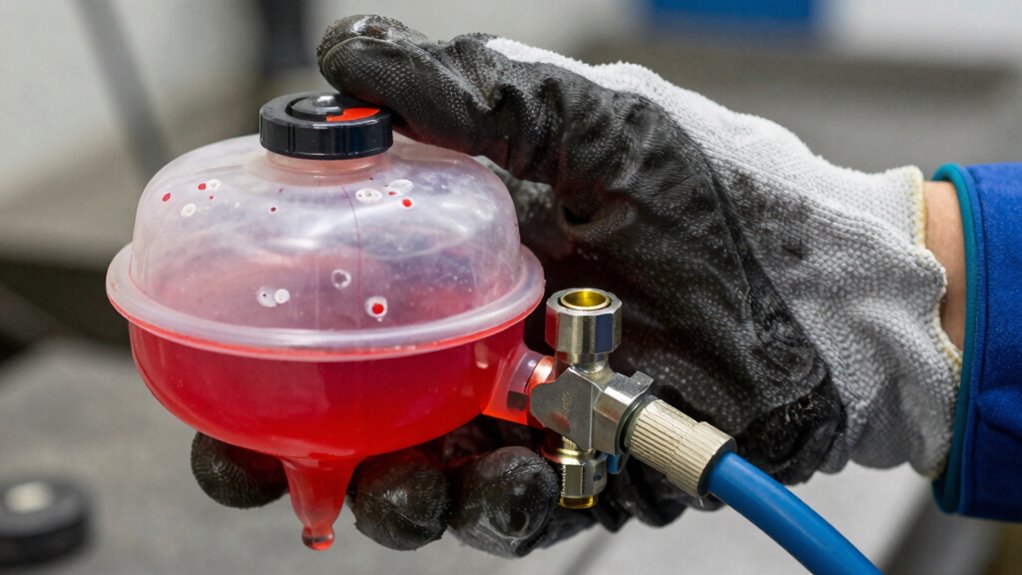
You might notice air bubbles or spills during the bleeding process, which can affect brake performance. Identifying where the bubbles are forming helps you address the root cause quickly. Proper brake system maintenance ensures that air does not become trapped and reduces the likelihood of bleeding issues. Additionally, using the correct tools and techniques can help prevent introducing new problems during the process. To avoid spills, always keep the brake fluid reservoir topped off and work carefully through each step. Ensuring that your working environment is clean and free of contaminants can also prevent air from entering the system and causing bubbles. Maintaining a clean workspace is essential for preventing dirt and debris from entering the brake system during bleeding. Incorporating proper fluid handling, such as avoiding overfilling, can further minimize the risk of introducing bubbles.
Identifying Air Bubbles
Air bubbles are the most common culprit behind spongy brake pedals and inconsistent braking performance. To identify if air bubbles are present, you should: 1. Watch the brake fluid reservoir for visible bubbles or frothing, which indicates trapped air. 2. Check for fluid contamination—milky or dark fluid can hide bubbles and reduce brake efficiency. 3. Perform a thorough brake system inspection, looking for leaks or loose connections that might introduce air. If you notice these signs, you likely have air in the system. Confirm by gently pressing the brake pedal; a spongy feel or pedal sinking may also signal bubbles. Properly identifying these issues helps you target the root cause and ensures a safe, effective brake bleed. Regularly checking the brake fluid level and quality can prevent air from entering the system during maintenance. Additionally, understanding hydraulic pressure dynamics can help troubleshoot persistent issues more effectively. Being aware of air entrapment causes can guide you in preventing future problems during brake service. Maintaining proper system sealing is also crucial to avoid air ingress during repairs.
Preventing Brake Spills
To prevent brake spills and minimize the risk of introducing air into the system, it is vital to handle brake fluid carefully during maintenance. Always work in a clean, controlled environment and use a container with a narrow nozzle to avoid splashing. Keep brake fluid levels topped off to prevent accidental spills when opening reservoirs. Use a steady hand when opening and closing brake lines or bleeder valves, and avoid over-tightening fittings. Wearing gloves helps protect your skin from corrosive brake fluid and keeps contaminants out of the system. After completing work, double-check that all caps and fittings are secure. Spill prevention is key to maintaining brake system integrity and avoiding the need for extensive bleeding or troubleshooting later. Being familiar with brake fluid types and their compatibility can also help prevent leaks and system issues. Incorporating proper wiring basics during installation can further reduce the risk of accidental leaks caused by loose or improperly connected fittings. Additionally, using the tap-and-hold method correctly can significantly reduce the chances of introducing bubbles during bleeding procedures. Proper technique and careful handling during brake bleeding are essential to avoid unwanted air entrapment and ensure optimal brake performance.
Tips to Keep Your Brake Pedal Firm and Responsive Long-Term

To keep your brake pedal firm and responsive over time, you should regularly check your brake fluid levels and quality. Using proper bleeding techniques guarantees no air bubbles compromise your braking performance, while high-quality components help maintain reliability. Staying on top of these tips will help your brakes stay responsive and safe for the long haul.
Regular Brake Fluid Checks
Regular brake fluid checks are essential for maintaining a firm and responsive brake pedal over time. Fresh fluid ensures proper hydraulic pressure and consistent fluid viscosity, preventing sponginess. To stay ahead, focus on these three key steps:
- Check fluid level regularly—low levels can reduce hydraulic pressure and compromise pedal firmness.
- Inspect fluid color—dark or contaminated fluid indicates it’s time for a change to maintain ideal viscosity.
- Test for moisture contamination—water in the fluid can lower boiling point, affecting pressure and responsiveness.
- Be aware of vetted maintenance tips for ensuring your brake system remains safe and effective. Maintaining proper fluid quality is crucial for long-term brake system performance and safety, as fluid condition directly impacts the system’s reliability and safety.
Proper Bleeding Techniques
Ensuring your brake system stays responsive over time requires mastering proper bleeding techniques. Start by inspecting caliper maintenance, ensuring all connections are tight and seals are intact to prevent air ingress. When bleeding, pay attention to brake fluid chemistry; use the correct type and avoid contamination, which can lead to spongy pedals. Always keep the master cylinder reservoir topped off to prevent introducing air into the system. During the process, pump the brake pedal gently to avoid sudden pressure changes that could disturb the fluid’s consistency. Consistent, methodical bleeding helps remove trapped air without disturbing the seals or creating new leaks. Proper technique preserves caliper integrity and ensures your brake fluid remains effective, resulting in a firm, responsive pedal that lasts long-term.
Using Quality Brake Components
Using high-quality brake components is essential for maintaining a firm and responsive brake pedal over time. Investing in top-tier brake fluid types ensures better lubrication and reduces brake fade, keeping your system reliable. Additionally, choosing durable brake system seals prevents leaks and maintains proper pressure, avoiding spongy pedals. Here are three tips to maximize your braking performance:
- Select brake fluid that’s compatible with your vehicle’s specifications and change it regularly.
- Inspect and replace worn or damaged brake system seals to prevent air ingress and fluid leaks.
- Use quality brake components designed for your vehicle’s make and model to ensure long-lasting performance.
Tap-and-Hold vs. Other Brake Bleeding Techniques: Which Is Best?
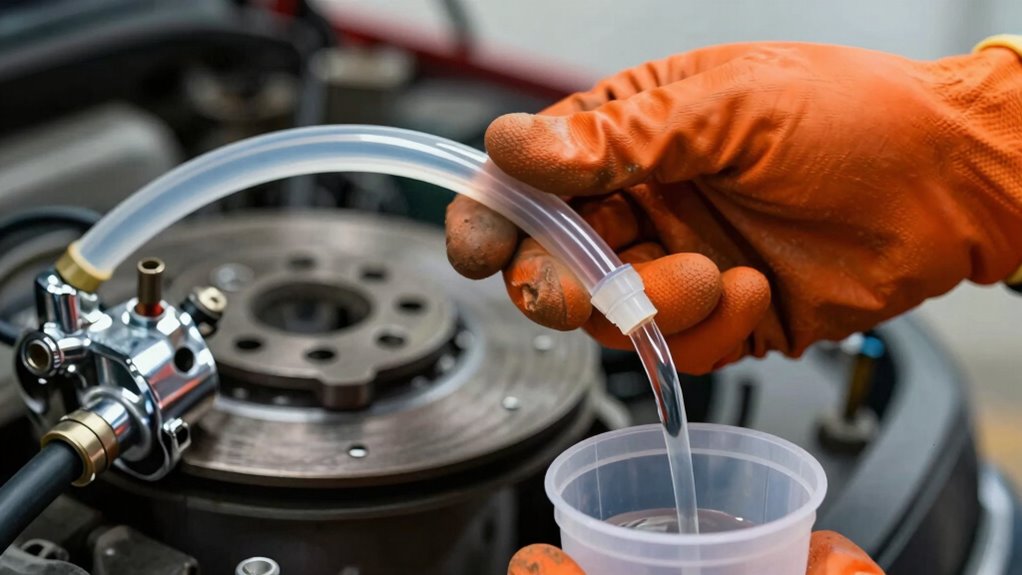
When it comes to brake bleeding, the tap-and-hold method often stands out as a straightforward technique, but it’s worth comparing it to others to find what suits you best. This method minimizes the risk of brake fluid contamination by reducing unnecessary fluid movement and air entry. It also promotes pedal travel consistency, making it easier to achieve firm, responsive braking. Other techniques, like the push-pedal or pressure bleeding methods, can be faster but may require special equipment or more careful monitoring to prevent introducing air or contaminants. Ultimately, the tap-and-hold approach offers simplicity and control, making it ideal for DIYers. However, if you’re experienced and need speed, alternative methods might suit your needs better.
Frequently Asked Questions
Can the Tap-And-Hold Method Be Used on ABS Brake Systems?
Yes, you can use the tap-and-hold method on ABS brake systems, but with caution. ABS compatibility varies, so check your vehicle’s manual first. This method applies hydraulic pressure gradually, helping to remove air bubbles effectively. However, avoid excessive force or quick pedal releases, as they might trigger the ABS pump, causing issues. Always guarantee you understand your system’s specifications before attempting, to prevent damage.
How Often Should I Bleed My Brakes to Prevent Bubbles?
You should bleed your brakes every 2 to 3 years, or when brake fluid lifespan and color indicate it’s time. Regularly check the brake fluid’s clarity; dark or contaminated fluid signals the need for a bleed. Bubbles can compromise braking, so timely bleeding keeps your brakes responsive, safe, and reliable. Don’t wait for issues—prevent them by maintaining your brake system on schedule, ensuring smooth, safe stops every time.
Is Special Equipment Needed for the Tap-And-Hold Bleeding Technique?
You don’t need special tools for the tap-and-hold bleeding technique, but having a clear container for brake fluid and a wrench for the bleed screw helps. You’ll need fresh brake fluid to top off the reservoir. This method involves tapping the brake caliper or wheel cylinder while holding the brake pedal, so make certain your work area is clean and you have a steady hand. No fancy equipment is necessary for this effective process.
What Safety Precautions Should I Take During Brake Bleeding?
You should wear protective gear like gloves and safety glasses to prevent brake fluid contact and eye injuries. Make certain the vehicle is on a stable, flat surface to maintain vehicle stability during the process. Keep a fire extinguisher nearby, as brake fluid is flammable, and work in a well-ventilated area. Never lean over the brake system and follow all safety instructions carefully to avoid accidents.
Can This Method Be Applied to Motorcycle or Bicycle Brakes?
Like a clockmaker fine-tuning a pocket watch, you can apply the tap-and-hold method to motorcycle or bicycle brakes. Just make certain you maintain proper hydraulic pressure and use compatible fluid to prevent damage. This technique works well if you carefully monitor fluid levels and avoid air bubbles. Always check your brake system’s specifications first, and proceed with caution to keep your ride safe and responsive.
Conclusion
Did you know that improper brake bleeding can increase stopping distances by up to 15%? Using the tap-and-hold method, you can effectively eliminate bubbles and restore your brake system’s responsiveness. This technique isn’t just easier—it’s proven to be more reliable, helping you stay safer on the road. So, next time you bleed your brakes, remember that a bubble-free system isn’t just a comfort; it’s a vital safety upgrade you can’t ignore.