
A burning clutch smell indicates overheating or slipping components, often caused by riding the clutch, excessive slipping, or worn parts like pressure plates or bearings. This odor signals potential damage that could lead to clutch failure if ignored. To address it, safely pull over, shift to neutral, and allow cooling. Regular inspections and proper driving habits can prevent this issue. Understanding these signs helps you know when to seek professional diagnosis and repair.
Key Takeaways
- A burning clutch smell often indicates overheating, slipping, or worn components needing immediate inspection.
- Immediate action includes safely stopping, releasing the clutch, and checking for heat, smoke, or unusual odors.
- Persistent or strong odors suggest clutch damage or failure, requiring professional diagnosis and possible replacement.
- Regular maintenance, proper shifting, and avoiding riding the clutch can prevent overheating and odors.
- Address clutch odors promptly to avoid costly repairs and ensure vehicle safety and performance.
What Does the Clutch Smell Mean and Why Does It Happen?
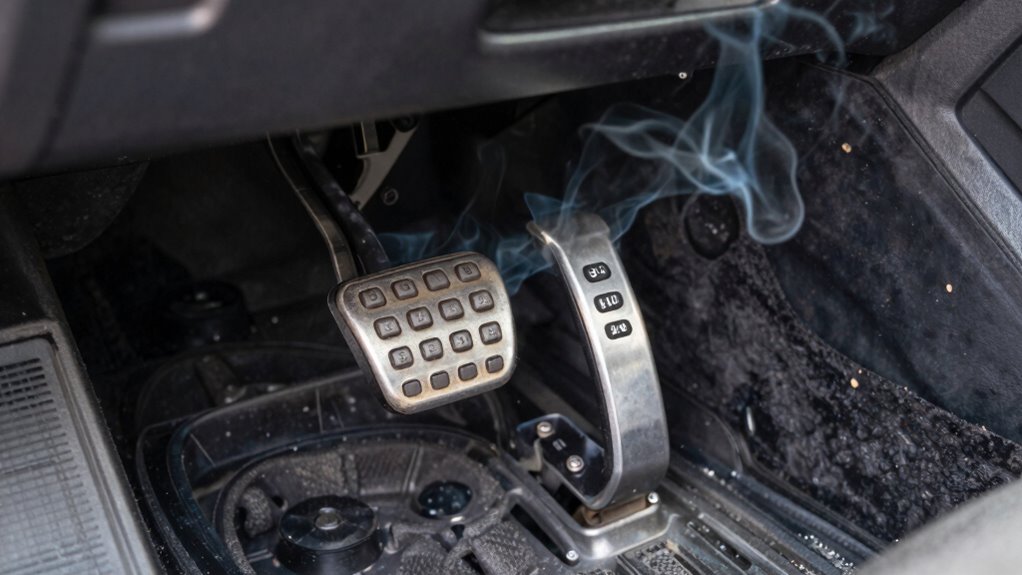
Have you noticed a burning smell when engaging your clutch? This odor typically indicates excessive heat generated by the friction between the clutch disc and flywheel. When you press the clutch pedal, the clutch disengages the engine from the transmission, allowing gear shifts. If you hold the clutch pedal down for prolonged periods, especially in traffic or during frequent shifting, the friction material overheats. Overheating causes the organic compounds within the clutch lining to break down, releasing a distinct burnt smell. Additionally, slipping of the clutch—where the clutch disc fails to fully engage with the flywheel—can also produce heat and odor. This situation suggests abnormal wear or misalignment, which can accelerate component deterioration and compromise vehicle operation.
How Can You Recognize Different Clutch Odors and Their Significance?

You can identify clutch odors by their distinct profiles, such as a burnt smell indicating overheating or a chemical scent suggesting fluid leaks. Pay attention to when the odor appears—whether during engagement or prolonged driving—as this provides clues about the underlying issue. Additionally, note any mechanical symptoms like slipping or difficulty shifting that accompany the odor, helping you assess its severity and significance. Recognizing early warning signs related to clutch odors can prevent more serious damage to your vehicle.
Distinct Odor Profiles
Recognizing different clutch odors requires familiarity with their specific scent profiles, as each can indicate distinct mechanical issues. A burnt smell often signifies overheating due to excessive friction. A sweet, syrup-like aroma suggests clutch slipping, causing heat buildup. A chemical or solvent scent may point to oil leaks affecting clutch components. Here’s a comparison:
| Odor Profile | Significance |
|---|---|
| Burnt smell | Overheating clutch, potential damage |
| Sweet/Syrupy scent | Clutch slipping, increased friction |
| Chemical/Plastic odor | Oil or hydraulic fluid leaks affecting clutch system |
| No distinct odor | Normal operation, no immediate concern |
Being able to detect these odors accurately helps in timely diagnosis and intervention, preventing further damage.
Timing of Odor Emergence
The timing of odor emergence from your clutch provides critical clues about the underlying issue. If the smell appears immediately upon clutch engagement, it suggests a possible seal failure or fluid leak, indicating a mechanical breach that allows fluid or heat to escape early. Odors developing after prolonged driving may point to overheating or friction-related issues, as heat buildup intensifies over time. Sudden, strong smells during operation often signal imminent failure or component burnout. Conversely, a persistent, mild odor that gradually intensifies could indicate early-stage wear or slight fluid leakage. Recognizing these temporal patterns helps you diagnose potential problems accurately, enabling timely intervention before critical damage occurs. Additionally, understanding free floating conditions can help identify issues with clutch components that are not firmly anchored, which may contribute to unusual odors or malfunction. Monitoring clutch temperature can also provide additional insights into overheating issues that may not be immediately apparent through smell alone. Being aware of clutch engagement timing can further assist in pinpointing the root cause of odor issues, as different problems manifest at specific operational phases. For instance, irregular clutch pedal feel may also be associated with certain odor patterns, indicating specific mechanical concerns. A comprehensive understanding of clutch system operation can enhance your ability to interpret these signals effectively.
Associated Mechanical Symptoms
Different clutch odors are often accompanied by specific mechanical symptoms that aid in diagnosing the underlying issue. A burnt smell combined with slipping or difficulty engaging gears indicates clutch plate overheating or wear, signaling impending failure. If you notice a sweet, syrupy odor alongside clutch slipping, it suggests hydraulic fluid leakage or contamination affecting the clutch release system. A metallic or burnt smell with vibrations or grinding noises may point to damaged pressure plates or warped flywheels. Additionally, a persistent odor during clutch engagement accompanied by pedal stiffness could indicate a failing release bearing or misaligned clutch components. Recognizing these symptoms allows for timely diagnosis and intervention, preventing further damage. Proper clutch system maintenance and regular inspections can help identify issues before they become severe. Regularly inspecting clutch components and understanding clutch operation principles can improve early detection of problems. Always correlate odors with these mechanical cues to determine the severity and appropriate repair actions. Being familiar with clutch failure indicators can enhance your ability to address issues promptly and effectively. Understanding diagnostic procedures and how to interpret symptoms can further aid in accurate troubleshooting. For example, using visual inspection techniques can sometimes reveal hidden problems that contribute to abnormal odors or symptoms.
What Are Common Causes of Clutch Burning and Odor?
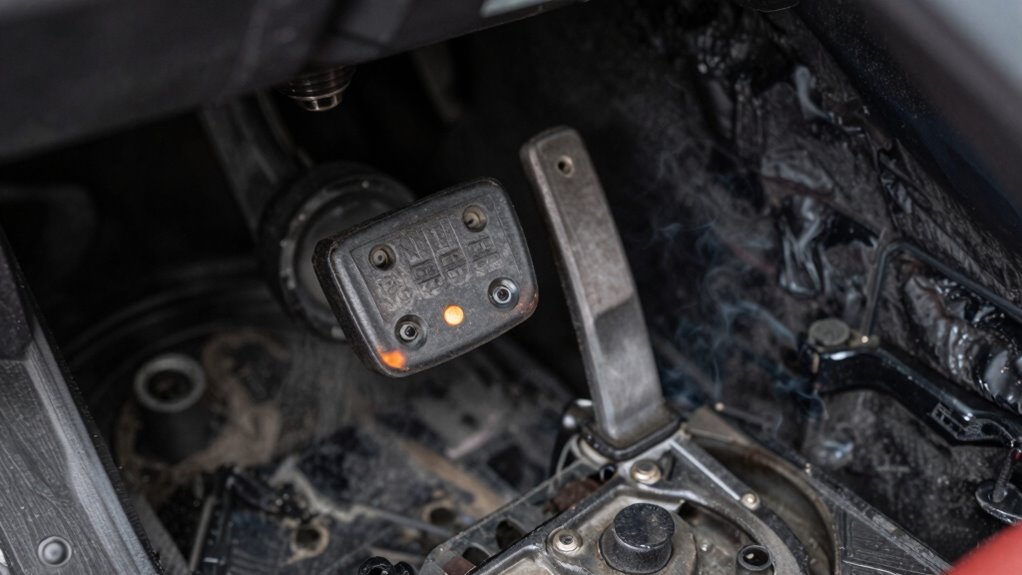
Clutch burning and odor typically result from specific mechanical issues that cause excessive heat buildup or improper engagement. One common cause is riding the clutch pedal, which keeps the clutch partially engaged, generating continuous friction and heat. Another cause is slipping the clutch under heavy loads or during start-up, leading to excessive wear and heat accumulation. Improper clutch adjustment can cause incomplete disengagement, increasing friction and heat. Additionally, worn or damaged clutch components, such as the pressure plate, clutch disc, or release bearing, may fail to engage or disengage correctly, resulting in excessive friction. Overheating can also occur from towing heavy loads or aggressive driving habits, which strain the clutch system and produce a burnt smell. Regular clutch inspection and maintenance are essential to prevent these issues and ensure optimal performance. Proper clutch adjustment can also help mitigate the risk of burning odor. Neglecting these issues over time can lead to more costly repairs and clutch failure, emphasizing the importance of timely diagnosis and repair. Addressing these problems early can also help prevent further damage to the clutch system, saving money and avoiding breakdowns. Identifying these causes early helps prevent further damage.
Signs That a Clutch Odor Signals a Serious Problem
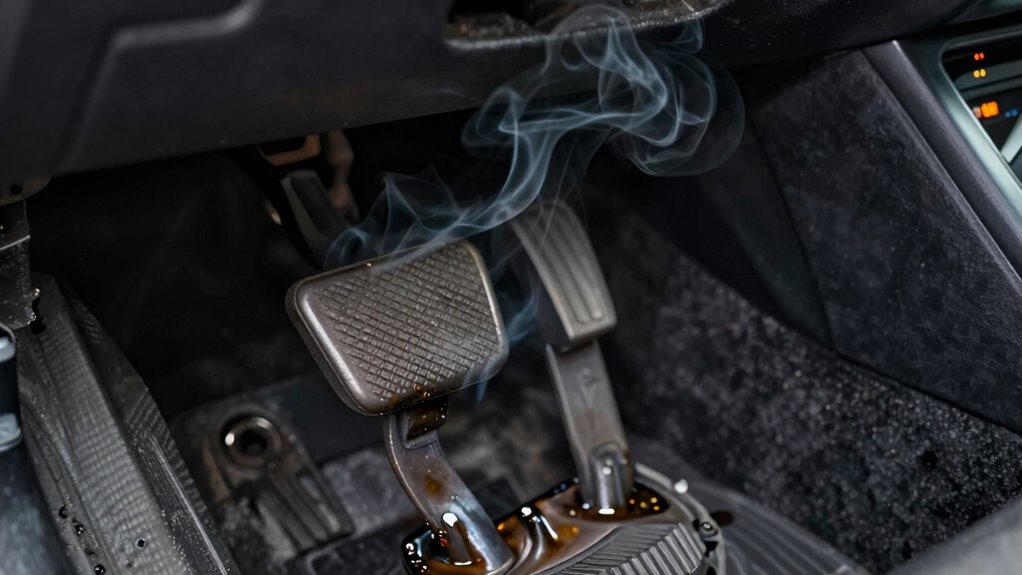
A persistent burning odor indicates that your clutch may be overheating, risking component damage. Unusual clutch behavior, such as slipping or difficulty engaging gears, further signals a potential problem. If you notice a burning smell during operation, it’s essential to assess whether the clutch system is compromised before more severe failure occurs. Understanding clutch overheating can help you identify early warning signs and take appropriate action.
Persistent Burning Odor
When you notice a persistent burning odor while driving, it often indicates that the clutch is overheating due to excessive friction or underlying mechanical issues. This odor results from the clutch’s friction material reaching high temperatures, which can degrade the components and compromise performance. Persistent burning smell suggests that the clutch is either slipping excessively or not disengaging fully, leading to continuous heat buildup. If untreated, this condition can cause damage to the pressure plate, flywheel, or release bearing, ultimately resulting in costly repairs. It’s critical to assess whether the clutch pedal feels abnormal or if shifting becomes difficult, which may confirm overheating. Addressing this issue promptly involves inspecting the clutch system for wear or damage and avoiding prolonged slipping to prevent further deterioration. Additionally, understanding the role of nanotechnology in developing advanced heat-resistant materials could help mitigate such problems in future clutch designs. Regular maintenance and awareness of the clutch system can also help prevent overheating and extend the lifespan of your vehicle’s transmission components.
Unusual Clutch Behavior
Unusual clutch behavior often manifests through specific symptoms that indicate a serious problem beyond mere overheating. You may notice difficulty shifting gears, such as grinding or resistance when engaging or disengaging the clutch. A spongy or inconsistent clutch pedal, coupled with abnormal vibrations, suggests internal wear or hydraulic issues. Slipping clutch, where engine revs increase without corresponding acceleration, signals insufficient friction material or linkage failure. Additionally, a clutch that engages too high or too low on the pedal travel can point to misadjustment or component deterioration. These behaviors are indicative of underlying mechanical faults that can compromise vehicle safety and performance. Addressing them promptly prevents further damage and ensures the clutch system functions reliably. Moreover, understanding technological innovations in clutch design can help in diagnosing and selecting appropriate repairs or replacements, enhancing diagnostic accuracy for mechanics and technicians. Recognizing clutch wear patterns can also aid in early detection and proactive maintenance, reducing costly repairs down the line.
Burning Smell During Use
A burning smell during clutch operation typically indicates excessive heat buildup within the clutch assembly, signaling a serious issue that requires immediate attention. This odor results from frictional heat generated when the clutch engages or slips excessively, leading to thermal degradation of clutch components. Such heat can cause glazing of clutch plates, warping of the flywheel, or damage to the pressure plate and release bearing. If you notice this smell while driving, it’s a sign that the clutch is overheating and not engaging properly. Continued operation under these conditions risks severe damage to the clutch system, potentially leading to complete failure. You should avoid heavy clutch use, reduce driving strain, and have a qualified mechanic inspect and repair the clutch system promptly. Additionally, understanding clutch wear signs can help prevent unexpected failures and ensure safer riding.
How Overheating or Slipping Clutches Produce Burning Smells
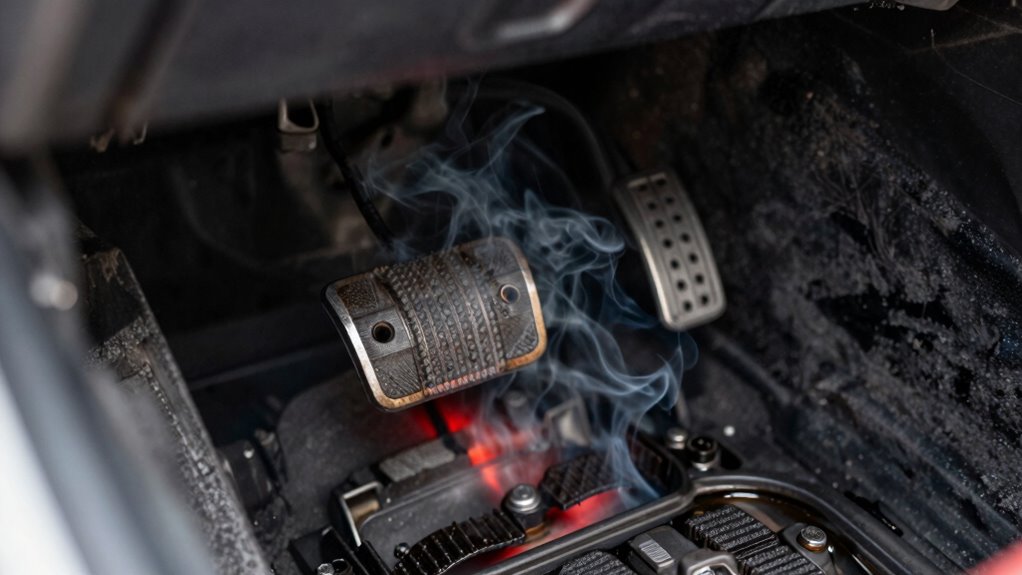
Overheating or slipping clutches generate a distinctive burning smell due to the high friction and heat produced during excessive slip or prolonged engagement. When the clutch slips, the clutch disc continuously rubs against the flywheel, converting kinetic energy into heat. This friction elevates the temperature of the clutch components rapidly, often exceeding ideal operating ranges. The intense heat causes thermal decomposition of the organic materials within the clutch friction material, releasing volatile compounds that produce a burning odor. As the temperature increases, the clutch surfaces may emit a noticeable smell, signaling that the clutch is overheating. Persistent slipping or excessive engagement accelerates component wear and can ultimately compromise clutch integrity if not addressed promptly. Recognizing this smell helps you identify critical issues before severe damage occurs.
What Should You Do Immediately If You Smell a Burning Clutch?

If you detect a burning smell while driving, it’s essential to act immediately to prevent further damage. Safely pull over to a flat, secure area away from traffic. Shift into neutral and fully release the clutch pedal to minimize stress on the system. Inspect the clutch pedal and surrounding area for signs of excessive heat, smoke, or a burning odor. Do not attempt to drive further if the clutch feels abnormal, slips, or if you notice a persistent smell. Turn off the engine to allow the clutch components to cool. If you are unable to identify or resolve the issue on your own, arrange for professional towing and mechanical inspection. Prompt action helps avoid costly repairs and prevents additional drivetrain damage.
Tips to Prevent Clutch Odors and Avoid Damage
To prevent clutch odors and avoid damage, regular maintenance and proper driving techniques are essential. Guarantee your clutch system is inspected periodically for wear and proper fluid levels. Avoid riding the clutch pedal unnecessarily, which causes excessive friction and heat buildup. Shift gears smoothly, matching engine RPMs to reduce strain on the clutch components. Use the clutch pedal fully when shifting to prevent partial engagement that generates heat. Do not hold the clutch engaged for extended periods, especially at traffic lights or stop signs. Keep the clutch release bearing well-lubricated and inspect the pressure plate and disc for signs of wear. Implementing these measures minimizes unnecessary heat and friction, preserving clutch integrity and preventing odors caused by overheating or component failure.
How Can a Professional Inspect and Diagnose Clutch Issues?
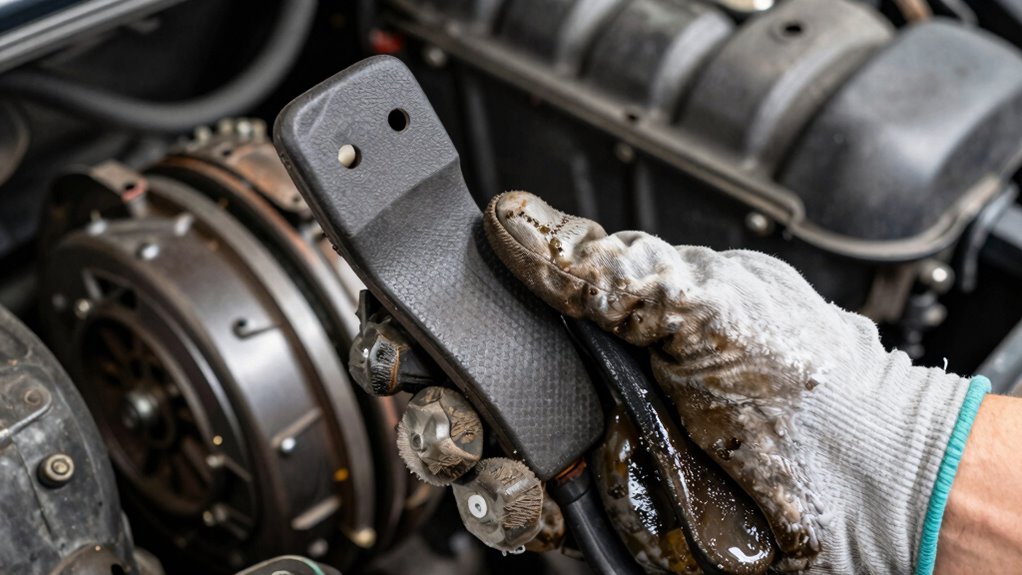
Professional inspection and diagnosis of clutch issues involve systematic testing and visual assessment to identify underlying problems. The technician begins with a detailed visual inspection of the clutch components, checking for signs of wear, cracks, or contamination. They then perform functional tests, such as pedal free play measurement, clutch engagement point evaluation, and pedal travel check, to assess operation consistency. In some cases, a hydraulic system pressure test is conducted to verify proper fluid flow and pressure. Diagnostic tools like scan tools or specialized clutch testers may be used to detect sensor or electronic faults. This thorough approach guarantees accurate identification of issues like slipping, sticking, or abnormal noises, enabling targeted repairs and preventing further damage.
Repair Options and Costs for Clutch-Related Odors
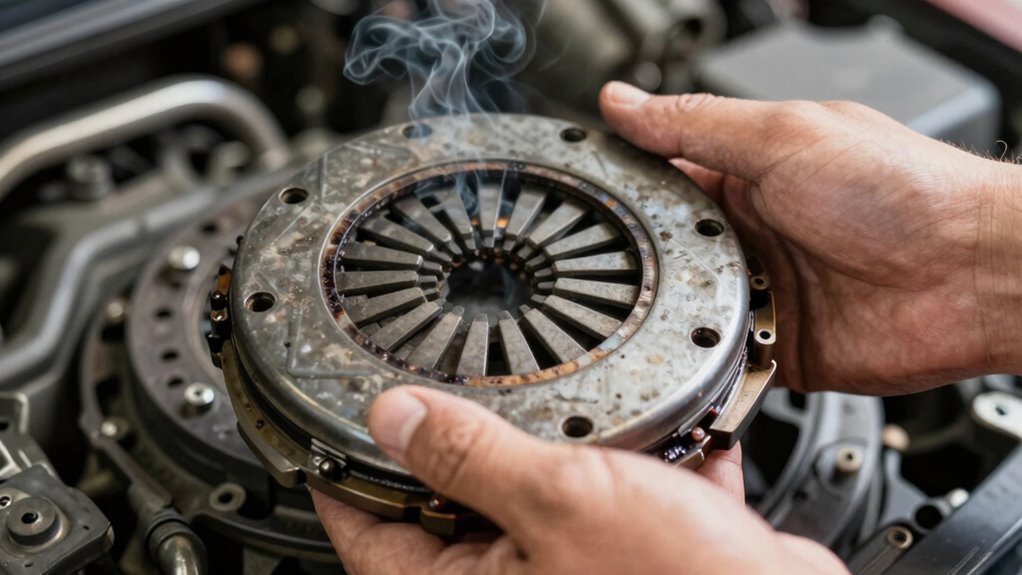
When clutch-related odors are detected, addressing the issue typically involves repairs ranging from simple adjustments to extensive component replacements. Minor fixes, such as adjusting clutch linkage or replacing the clutch release bearing, often cost between $200 and $500. More complex repairs, like replacing the clutch disc, pressure plate, or flywheel, generally range from $800 to $2,000 depending on vehicle make and labor rates. The table below summarizes common repair options, associated parts, and estimated costs:
| Repair Type | Components Involved | Estimated Cost Range |
|---|---|---|
| Clutch Adjustment | Clutch cable/linkage | $100 – $300 |
| Release Bearing Replacement | Release bearing | $200 – $500 |
| Clutch Disc & Pressure Plate | Discs, pressure plate | $800 – $1,500 |
| Flywheel Resurfacing | Flywheel | $300 – $700 |
| Complete Clutch Replacement | All clutch components | $1,000 – $2,500 |
When Is It Time to Replace Your Clutch and How to Extend Its Life?
Recognizing signs of clutch wear, such as slipping or difficulty shifting, indicates it’s time for replacement. The typical lifespan ranges from 50,000 to 100,000 miles, depending on driving habits and conditions. Implementing proper driving techniques and regular maintenance can effectively extend the clutch’s service life.
Signs of Clutch Wear
Monitoring the condition of your clutch is essential to prevent unexpected failure and maintain ideal vehicle performance. Recognizing signs of clutch wear allows timely intervention, avoiding costly repairs. Common indicators include:
- Slipping clutch, characterized by engine revs increasing without corresponding acceleration
- Difficult or inconsistent gear shifting, especially when engaging first or reverse
- Unusual noises such as grinding or squealing during clutch engagement
Additionally, a burning smell or a noticeable clutch pedal vibration signals excessive friction or component deterioration. Regularly assess pedal feel; a spongy or unresponsive pedal may indicate wear. Addressing these signs promptly can prolong clutch life, but once these symptoms become persistent, replacement is often necessary to restore optimal operation. Accurate diagnosis ensures safe driving and prevents further damage to drivetrain components.
Typical Replacement Timeline
A typical clutch replacement timeline varies based on driving habits, vehicle type, and maintenance practices, but most clutches last between 50,000 and 100,000 miles. Factors influencing longevity include daily start-stop frequency and load conditions. Regular inspections can identify wear before failure. To optimize clutch lifespan, monitor for slipping, unusual noises, or difficulty shifting. Consider the following table for key indicators and recommended actions:
| Indicator | Action |
|---|---|
| Clutch slipping or grabbing | Immediate inspection; replace if necessary |
| Unusual noises during engagement | Schedule diagnostic assessment |
| Difficulty shifting gears | Check clutch components; consider replacement |
Proactive maintenance can extend clutch life, but timely replacement prevents costly damage.
Tips to Prolong Clutch Life
To maximize your clutch’s lifespan, implement consistent driving habits that reduce stress on the system, such as avoiding aggressive acceleration and abrupt gear changes. Proper technique minimizes wear on friction materials and hydraulic components. Regularly monitor pedal engagement and avoid riding the clutch pedal unnecessarily. Additionally, guarantee proper clutch adjustments and avoid slipping during acceleration. To further prolong clutch life, consider these practices:
- Shift gears smoothly, matching engine RPM to prevent unnecessary friction
- Avoid holding the clutch pedal down for extended periods
- Regularly inspect clutch components for signs of wear or damage
Adopting these habits reduces premature wear, delays the need for replacement, and maintains ideal clutch performance. Proper care is essential for maximizing component longevity and ensuring reliable operation.
Frequently Asked Questions
Can Clutch Odors Indicate Transmission Problems Beyond the Clutch Itself?
Yes, clutch odors can indicate transmission issues beyond the clutch itself. A persistent smell may suggest overheating, which could stem from a slipping clutch, low transmission fluid, or internal component failure. These problems can cause increased friction and heat, potentially damaging other transmission parts. If you notice a strong odor, it’s vital to have a mechanic inspect your vehicle promptly to prevent further damage and guarantee proper transmission operation.
How Long Can You Drive With a Clutch Smell Before Risking Damage?
You shouldn’t drive with a clutch smell for more than a few miles, as it indicates excessive heat and potential clutch or transmission damage. Continuing to operate the vehicle risks worn or warped clutch components, which can lead to costly repairs. If you notice the smell, stop promptly, avoid excessive clutch slipping, and have a mechanic inspect the system. Prompt action preserves your transmission’s integrity and prevents further damage.
Are There Specific Driving Habits That Cause Clutch Odors?
Yes, certain driving habits cause clutch odors. Holding the clutch pedal partially engaged for extended periods, such as riding the clutch or resting your foot on it, generates excess heat. Aggressive shifting, slipping the clutch during rapid acceleration, or clutch pedal misuse also increases friction and heat buildup. These actions degrade clutch components over time, leading to the smell. To prevent this, avoid unnecessary clutch engagement and practice smooth, deliberate shifts.
Is a Clutch Smell Always a Sign of Imminent Failure?
A clutch smell isn’t always a sign of imminent failure, but it indicates abnormal heat buildup often caused by slipping or excessive friction. If you notice the odor, you should inspect your clutch system promptly, as continued operation under these conditions can lead to damage. Addressing the issue early, whether through adjusting driving habits or seeking mechanic advice, helps prevent costly repairs and ensures the clutch functions properly.
How Does Climate Affect Clutch Odor and Its Detection?
Imagine a warm summer day, where humidity clings to your car’s interior. Climate influences clutch odor detection by altering scent dispersion; high temperatures intensify the smell, making it more noticeable, while cold weather diminishes it. Humidity enhances odor retention, complicating diagnosis. As a result, climate conditions can mask or exaggerate clutch odors, affecting your ability to identify early warning signs and respond promptly to potential clutch issues.
Conclusion
Monitoring clutch odors is vital, as up to 70% of clutch failures involve overheating signs. Recognizing the smell promptly helps prevent costly repairs and extends your clutch’s lifespan. Regular inspections and early intervention can reduce repair costs by up to 50%. Addressing odors immediately guarantees peak performance and safety. Stay vigilant, and don’t ignore the warning signs—timely maintenance keeps your vehicle running smoothly and avoids more serious, expensive damage down the line.