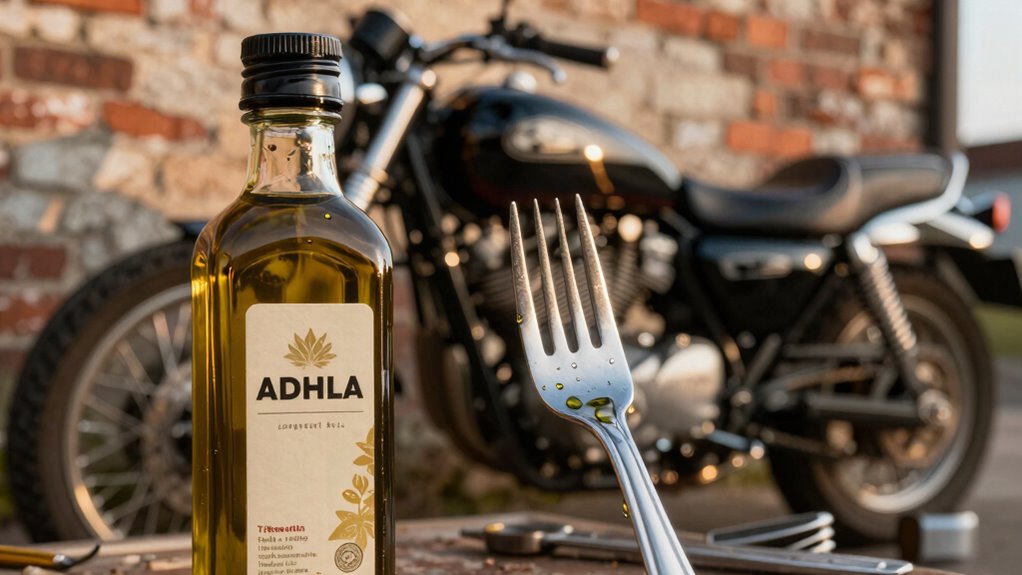
Fresh fork oil does more than just soften a harsh ride; it transforms your bike’s performance and safety. By regularly changing the oil, you enhance ride comfort and guarantee consistent damping, which is essential for stability during cornering. The right viscosity improves responsiveness, while old oil can lead to unpredictable handling. Plus, regular maintenance lets you spot other potential issues. If you want to discover how this simple update can elevate your ride, keep exploring!

Get business pricing on garage and car supplies
- Business-only prices and quantity discounts
- Tax-exempt purchasing
- Multiple users, one account, clear invoices
Key Takeaways
- Fresh fork oil enhances ride comfort and overall bike handling, not just addressing harshness.
- Regular oil changes improve damping effectiveness, ensuring predictable handling in various conditions.
- Oil viscosity significantly impacts responsiveness; finding the right balance is crucial for optimal performance.
- Temperature fluctuations can affect oil performance, making consistent maintenance vital for stability.
- Changing fork oil provides an opportunity to inspect other components, promoting overall bike longevity.

When you notice that your ride feels harsher than usual, it might be time to contemplate a fresh change in fork oil. Many riders underestimate the impact that oil viscosity has on your bike’s performance. Over time, fork oil can break down, losing its ability to dampen effectively. This degradation can lead to a stiffer, less responsive ride, making every bump and dip feel more jarring. Not only does fresh oil improve comfort, but it also enhances your bike’s overall handling.
You might be asking yourself why oil viscosity matters. Simply put, it determines how well the oil flows through the fork’s internals. Thicker oil might sound appealing for reducing harshness, but it can actually compromise the damping characteristics. If the oil is too thick, it can slow down the fork’s response to smaller bumps, making it feel sluggish. On the flip side, too thin oil might lead to excessive compression and rebound, resulting in a bouncy ride. Finding the right balance is essential for maintaining peak performance.
Oil viscosity is crucial for fork performance; too thick or too thin can compromise ride quality and responsiveness.
Changing your fork oil isn’t just about comfort; it’s also about safety. Old, degraded oil can lead to inconsistent damping, which could affect your bike’s stability during cornering or braking. You want predictable handling, especially in challenging conditions. By regularly replacing your fork oil, you guarantee that the damping characteristics remain consistent, allowing you to tackle corners and obstacles with confidence. Additionally, temperature can significantly influence oil performance, as oil viscosity changes with heat, affecting your ride quality. Using a high-quality oil formulated for specific riding conditions can help maintain optimal viscosity across temperature ranges.
Another aspect you might overlook is the effect of temperature on oil performance. As you ride, the oil heats up and can thin out, altering its viscosity. This change can affect how your forks behave, particularly during aggressive riding or extended sessions. Proper oil viscosity management helps ensure your suspension remains balanced and responsive, regardless of riding style or conditions. To further optimize your riding experience, consider consulting manufacturer recommendations for the best oil types and intervals. By using high-quality oil suited for your riding style and conditions, you can mitigate these temperature fluctuations and maintain more consistent performance throughout your ride.
Lastly, don’t forget that the process of changing fork oil is an opportunity to inspect other components. While you’re at it, check for any leaks or wear on seals and bushings. A thorough approach to maintenance not only improves your bike’s performance but also prolongs its lifespan.
motorcycle fork oil replacement kit
As an affiliate, we earn on qualifying purchases.
As an affiliate, we earn on qualifying purchases.
Frequently Asked Questions
How Often Should I Change My Fork Oil?
You should change your fork oil every 10 to 20 hours of riding, depending on your oil change intervals and riding conditions. If you’re using regular fork oil types, you might need to change it more frequently, especially if you ride hard or in rough terrain. Always check your owner’s manual for specific recommendations, but staying proactive about oil changes can greatly improve your bike’s performance and handling.
Can I Use Any Oil for My Forks?
No, you can’t just use any oil for your forks. Choosing the right oil viscosity is essential for ideal fork performance. If you use the wrong type, you may end up with a harsh ride or inadequate damping. Your forks need specific oil properties to function properly, so check your bike’s manual. Using the right oil not only enhances comfort but also prolongs the life of your suspension components. Don’t risk it!
What Are the Signs of Old Fork Oil?
You’ll notice signs of old fork oil through discoloration and changes in viscosity. If the oil appears dark or murky, it’s time for a change. Additionally, if you feel your forks are less responsive or too stiff, that’s a clear indicator the oil’s lost its effectiveness. Regularly checking your fork oil helps maintain peak performance and guarantees a smoother ride, so don’t overlook these signs during your maintenance routine.
Does Fork Oil Affect Ride Height?
Yes, fork oil does affect ride height. When you change the oil viscosity, it can influence how the fork compresses and rebounds, which ultimately impacts your bike’s ride height adjustments. Thicker oil may lead to a stiffer feel, raising the front end, while thinner oil can allow more compression, lowering it. Keeping your fork oil fresh guarantees peak performance, helping you maintain your desired ride height and improve overall handling.
Can Fork Oil Improve Handling in Wet Conditions?
Absolutely, fork oil can greatly improve handling in wet conditions. When you switch to a higher-quality fluid with the right viscosity, you enhance damp performance and boost wet traction. This change can make all the difference, especially when you’re maneuvering slippery surfaces. You’ll notice better stability control, allowing you to tackle corners with confidence. Don’t underestimate the impact of fresh fork oil—it can transform your ride when the roads get wet.
Conclusion
In the grand symphony of your ride, fresh fork oil is the maestro that fine-tunes every note, transforming harshness into harmony. Don’t overlook this simple yet powerful upgrade; it’s the secret ingredient that elevates your performance. Like a painter reviving a canvas, new oil breathes life into your suspension, allowing you to dance gracefully over bumps and corners. So, embrace the change and let your bike sing with newfound fluidity and grace on every journey.
Halloween Picks
halloween
As an affiliate, we earn on qualifying purchases.