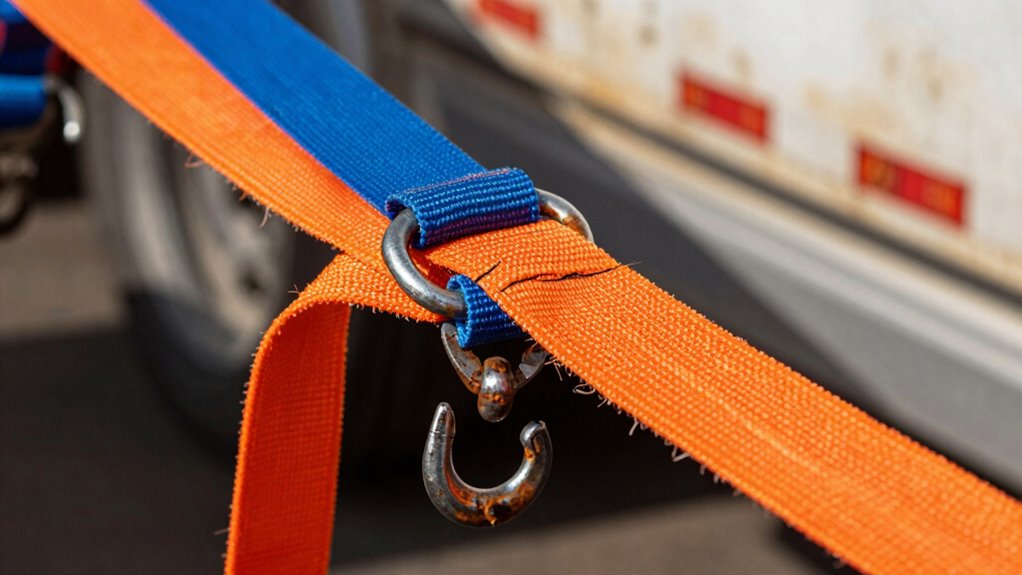
In hot weather, heat causes your tie-down straps made of polyester or nylon to absorb energy and expand, which can lead to stretching. This stretching weakens the tension and may loosen the straps, increasing the risk of cargo shifting or falling. Over time, repeated heat exposure also weakens the strap materials and reduces their durability. To keep your load secure, it’s important to understand how heat affects your tie-downs and what measures you can take to prevent loosening. Keep going to discover more solutions to this common issue.

Get business pricing on garage and car supplies
- Business-only prices and quantity discounts
- Tax-exempt purchasing
- Multiple users, one account, clear invoices
Key Takeaways
- Heat causes synthetic straps to expand and stretch, reducing tension and load security.
- Repeated heat exposure weakens strap fibers, leading to increased loosening over time.
- Straps made from heat-resistant materials maintain tension better in high temperatures.
- Regular inspection and re-tightening are essential as heat-induced stretching can compromise safety.
- High-quality, heat-resistant tie-downs are less prone to stretching and long-term loosening.
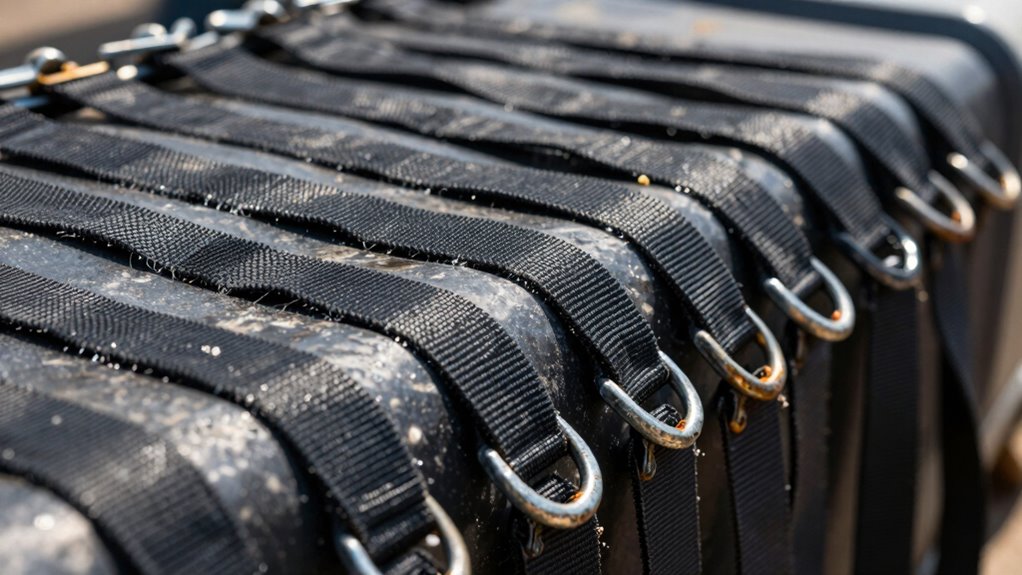
When temperatures soar, tie-down systems are at risk of loosening, which can compromise load security and safety. As the heat intensifies, the straps you rely on to secure cargo can stretch, making your entire setup less stable. This isn’t just an inconvenience; it’s a serious safety concern that can lead to shifting loads, accidents, or damage to your cargo. That’s why understanding how heat affects tie-downs is vital to maintaining cargo safety and guaranteeing your equipment’s durability.
In hot conditions, the materials used in straps—especially synthetic fibers like polyester and nylon—expand as they absorb heat. This expansion causes the straps to stretch slightly, which might seem insignificant at first. However, even minimal stretching can reduce the tension that keeps your cargo firmly in place. Over time, repeated exposure to high temperatures can weaken the structural integrity of these straps, making them more prone to failure. In essence, the heat not only stretches the straps but also accelerates wear and tear, undermining the durability of your equipment. Proper material selection is crucial because different fibers respond to heat differently, influencing their longevity.
You might think that simply tightening your straps more often will solve the problem, but that’s not always effective. Heat can cause straps to stretch after you’ve secured them, leading to a false sense of security. As the straps loosen, your cargo becomes vulnerable to shifting during transit. This movement can damage goods, cause accidents, or even result in fines if safety regulations are violated. To prevent this, you should regularly inspect your tie-downs, especially in hot weather, and re-tighten them as needed. Additionally, strap materials that are resistant to heat and stretching can significantly improve load stability in high temperatures. Being aware of temperature effects on materials can help you choose the most suitable straps for extreme conditions.
It’s also worth considering the quality of your equipment. High-quality tie-downs made from heat-resistant materials tend to hold their tension better in extreme temperatures. Investing in equipment with proven durability means you’re less likely to face the risks associated with strap stretching. Proper maintenance, combined with choosing the right straps, ensures your cargo safety isn’t compromised just because the weather is hot.
As an affiliate, we earn on qualifying purchases.
Frequently Asked Questions
How Can I Prevent Straps From Stretching in High Temperatures?
To prevent straps from stretching in high temperatures, choose straps made from heat-resistant materials tested according to strict manufacturing standards. Make sure you select products that undergo material testing for durability under heat. Regularly inspect your tie-down systems for signs of wear or stretching, and replace any compromised straps promptly. Properly tensioning straps and avoiding over-tightening also helps maintain secure loads without risking damage from heat-induced stretching.
Are Certain Materials More Heat-Resistant for Tie-Down Straps?
Irony strikes: the most heat-resistant materials often come with a hefty price tag. You’ll want straps made from high-durability materials like polyester or nylon, which resist stretching better than cheaper options. Still, over time, even the toughest straps may need replacement as their material durability diminishes. Investing in quality straps now can save you from frequent strap replacement later, ensuring your load stays secure without constant adjustments.
How Often Should I Check My Straps During Hot Weather?
You should check your straps at least every 30 minutes during hot weather, as heat impact can cause them to loosen or stretch, affecting strap durability. Regular inspections help you spot any signs of wear or slack before they become a problem. Keep an eye on tension and look for fraying or damage. Staying proactive guarantees your load remains secure, even when high temperatures challenge the strength of your tie-down system.
Can Improper Tensioning Cause Straps to Loosen in Heat?
Improper tensioning can definitely cause straps to loosen in heat because material degradation accelerates when straps are not tensioned correctly. When you don’t make proper tension adjustments, the straps may stretch more easily as they heat up, leading to looseness. By ensuring the right tension during installation, you help prevent stretching from heat, maintaining secure tie-downs and reducing the risk of load shifting or accidents.
What Are the Best Practices for Storing Straps in Hot Climates?
To preserve strap durability in hot climates, you should store them in a cool, dry place away from direct sunlight, which can cause heat expansion and weaken the material. Avoid exposing straps to extreme heat, as this accelerates stretching and reduces their lifespan. Regularly inspect straps for signs of wear or damage, and store them flat or hanging to prevent unnecessary stress, ensuring they stay strong and effective over time.
Conclusion
Just like Icarus flying too close to the sun, your tie-downs can lose their grip in the heat if you’re not careful. Remember, heat causes straps to stretch, risking your cargo’s safety. Stay vigilant and check your straps regularly, especially on hot days. Think of it as safeguarding your own wings—preventing a fall before it’s too late. Keep cool, stay secure, and avoid a crash landing by respecting the power of heat on your tie-downs.
Evergreen bestsellers Picks
bestsellers
As an affiliate, we earn on qualifying purchases.