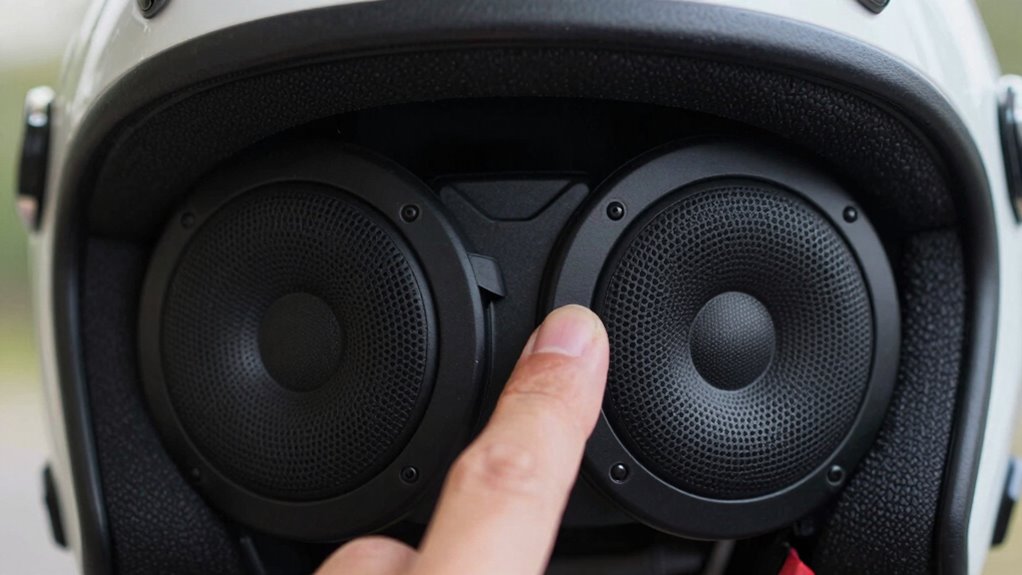

You might notice your helmet speakers sound weak until you shift them by just one centimeter. Slight adjustments in speaker positioning can profoundly improve sound clarity because they optimize how sound waves reach your ears. Proper placement prevents sound diffusion or obstruction, making music, calls, and navigation clearer. Thanks to ergonomic designs, making these small tweaks is easy and doesn’t sacrifice comfort. Keep exploring to discover how small movements can greatly boost your audio experience during rides.

Get business pricing on garage and car supplies
- Business-only prices and quantity discounts
- Tax-exempt purchasing
- Multiple users, one account, clear invoices
Key Takeaways
- Slight adjustments of 1 cm can align speakers more directly with ear channels, improving sound clarity.
- Proper ergonomic placement prevents sound wave diffusion, enhancing audio performance.
- High-quality speakers are sensitive to small positional changes, significantly affecting sound strength.
- Fine-tuning speaker position based on acoustic principles optimizes sound delivery and reduces muffling.
- Regular testing and minor adjustments ensure consistent, clear audio during rides.
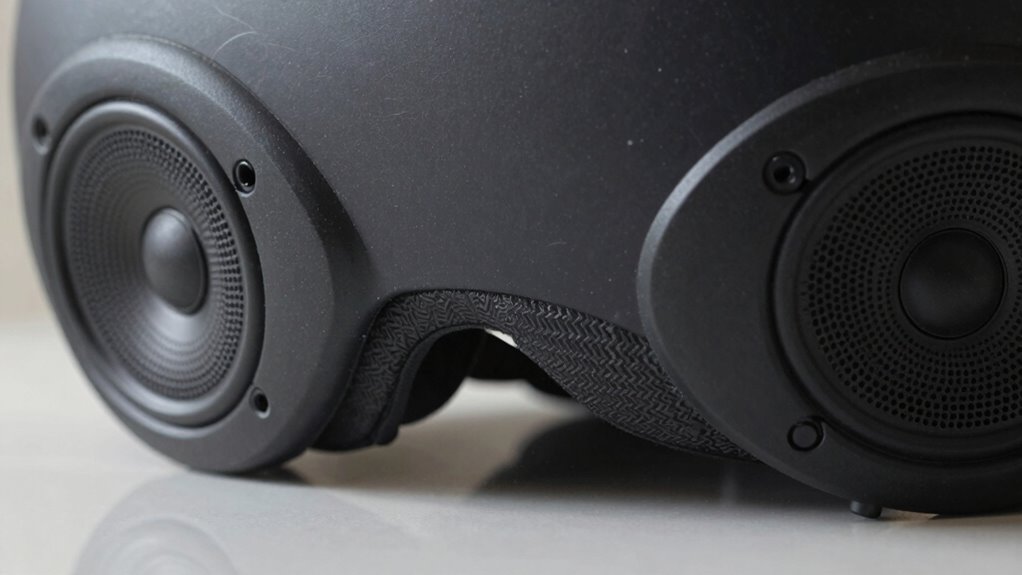
If you’ve noticed your helmet speakers sound muffled or weak, it might surprise you to learn that simply moving them by just one centimeter can make a big difference. This small adjustment can profoundly enhance your audio quality, guaranteeing you get clear, crisp sound while riding. The placement of helmet speakers is vital because even a slight shift can optimize how sound reaches your ears. When speakers aren’t positioned correctly, the sound waves might be obstructed or diffused, diminishing the clarity and volume you experience. By carefully adjusting their position, you can improve the overall audio experience without needing to upgrade your gear.
Adjusting helmet speakers by just one centimeter can significantly improve sound clarity and riding safety.
The importance of ergonomic design becomes apparent here. Modern helmet speakers are crafted with ergonomics in mind, aiming to fit comfortably and securely while maintaining peak sound delivery. An ergonomic design ensures that the speakers stay in place during your ride, but it also means you have some flexibility to fine-tune their position. When you move the speakers just a centimeter, you’re aligning them better with your ears, which directly boosts the audio quality. This subtle tweak helps you hear more detail in music, navigation prompts, or calls, making your ride safer and more enjoyable.
You might not realize how sensitive sound delivery is to positioning until you experiment with it. The difference between muffled audio and clear sound can be as small as a centimeter, especially with high-quality speakers designed to maximize audio performance. The better the ergonomic design of your helmet speakers, the easier it is to make these adjustments without sacrificing comfort. Some helmets even feature adjustable mounts or mounts that allow for slight movement, giving you control over the sound experience. Additionally, understanding acoustic principles can help you better optimize your speaker placement for the best sound quality. A properly positioned speaker ensures that sound waves reach your ears directly and without interference. Moreover, considering the surround sound effect can help you achieve a more immersive listening experience by adjusting the speaker angles accordingly. Being aware of sound wave behavior can further guide you in making precise adjustments for optimal audio clarity.
Finally, taking a moment to test your setup after making adjustments can help you fine-tune the sound to your preference, ensuring the optimal audio experience every ride.
As an affiliate, we earn on qualifying purchases.
Frequently Asked Questions
Do Helmet Speakers Work Better With Different Helmet Types?
Yes, helmet speakers work better with different helmet types because of helmet fit and speaker compatibility. When your helmet fits snugly, speakers sit closer to your ears, improving sound quality. If your helmet is too tight or loose, sound may seem weak until you adjust or reposition the speakers. Choosing helmet speakers designed for your helmet type and ensuring proper fit enhances overall audio clarity and comfort while riding.
Can Adjusting Speaker Position Improve Overall Sound Quality?
Imagine fine-tuning a musical instrument, where tiny adjustments can transform the sound. You can improve overall sound quality by adjusting speaker placement. Moving your helmet speakers just a centimeter can make a huge difference, optimizing sound and enhancing clarity. Proper speaker placement guarantees sound waves hit your ears perfectly, giving you richer, clearer audio. So, yes, small tweaks in positioning directly boost sound quality and make your listening experience more enjoyable.
Are There Specific Models Known for Better Sound Without Adjustments?
Yes, some helmet speaker models deliver better audio quality without needing adjustments. Brands like Sena and Cardo design speakers with optimized speaker placement, ensuring consistent sound clarity right out of the box. These models focus on balancing audio quality and comfort, so you don’t have to fiddle with placement. Investing in a well-designed helmet with built-in high-quality speakers means you get clear sound without constantly adjusting the position.
How Does Ambient Noise Affect Helmet Speaker Audio Clarity?
Ambient noise markedly impacts your helmet speaker audio clarity by causing noise interference, which can drown out the sound. To improve clarity, look for helmets with effective sound dampening features that block out unwanted noise. When noise levels are high, the speakers may struggle to deliver clear audio, so choosing models with good insulation or using additional ear protection can help you enjoy better sound quality during rides.
Is There a Recommended Method for Positioning Speakers Consistently?
You should use consistent speaker mounting and positioning techniques to guarantee ideal sound. Start by securing the speakers firmly in the same spot each time, using markings or mount points for reference. Adjust them so they’re just right—about a centimeter from your ears if needed—then mark these positions. This way, you maintain consistent placement, reducing sound variability and improving audio clarity regardless of ambient noise.
Conclusion
Imagine trying to whisper into a friend’s ear, only to find they can’t hear you unless you lean in just a little closer. That’s exactly what you experience with these helmet speakers—sound seems weak until you nudge them a centimeter. Once you do, clarity bursts through like a switch flipped. It’s a tiny adjustment with a big impact, reminding us that sometimes, the smallest change can make all the difference in getting the perfect sound.
Halloween Picks
halloween
As an affiliate, we earn on qualifying purchases.