
Before adjusting the idle screw, you must fix any air leaks in your intake system. Unsealed components like vacuum hoses, gaskets, or intake boots cause fluctuations in air-fuel mixture, leading to rough idling and performance issues. Addressing these leaks first guarantees your engine runs smoothly and prevents incorrect adjustments. Continuing to ignore the leak risks further damage and complicates tuning, but solutions to detect and repair leaks are accessible if you follow the proper steps.
Key Takeaways
- Air leaks disrupt the air-fuel mixture, causing rough idling and hesitation before adjusting the idle screw.
- Detect and repair leaks using visual inspection, soapy water, or smoke testing to ensure proper airflow.
- Common leak sources include vacuum hoses, intake manifold gaskets, and throttle body seals.
- Fix leaks first to stabilize engine performance and prevent unnecessary adjustments to the idle screw.
- Ignoring leaks can lead to higher emissions, sensor damage, and costly repairs, making leak repair a priority.
Why Air Leaks Cause Rough Idle and Poor Performance
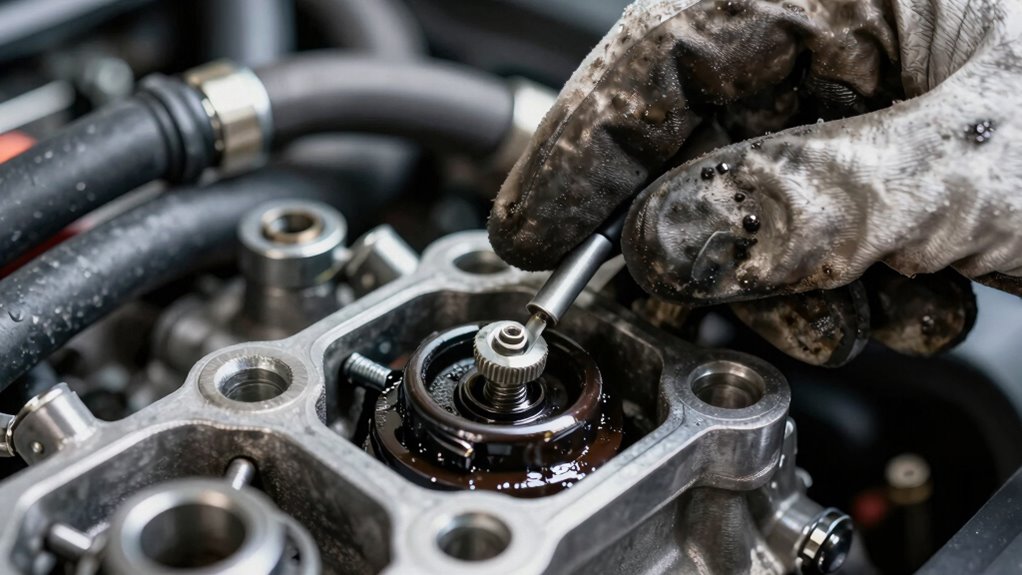
Air leaks in your vehicle’s intake system disrupt the ideal air-fuel mixture, causing combustion inconsistencies that lead to rough idling and diminished performance. When unmetered air enters the intake, it skews the air-fuel ratio, making the engine run lean. This imbalance causes fluctuations in cylinder pressure, resulting in unstable engine RPMs. The engine control unit (ECU) struggles to compensate, often increasing fuel delivery or adjusting ignition timing, which may not fully correct the issue. As a result, you experience rough idling, hesitation, and reduced power output. Persistent leaks also increase emissions and can damage sensors like the mass airflow sensor (MAF). Proper sealing of intake components ensures precise air measurement, maintaining suitable combustion and engine stability.
Common Components That Cause Air Leaks in Your Intake System

The intake manifold gasket is one of the most common sources of air leaks, as it seals the connection between the intake manifold and the cylinder head. Over time, it can warp or degrade, allowing unmetered air to bypass sensors and disrupt airflow. Other key components include vacuum hoses, which can crack or disconnect, and throttle body gaskets, prone to wear. Intake boots or elbows may develop cracks or tears, compromising seal integrity. Regular inspection helps identify these issues early. Additionally, understanding the European cloud innovation landscape can help in developing more sustainable and secure solutions for vehicle diagnostics and maintenance.
How to Detect Air Leaks in Your Engine Before Tuning
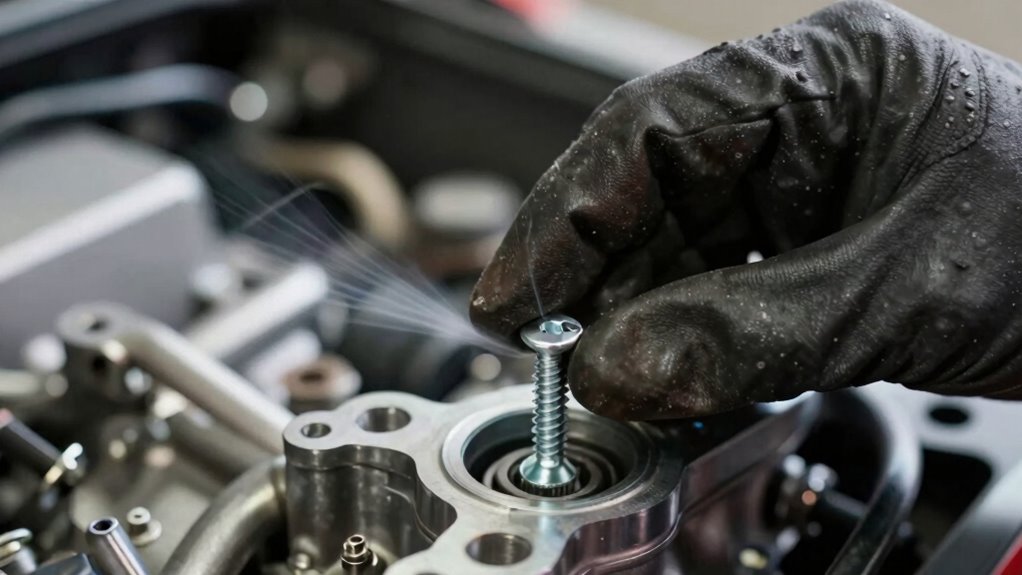
To identify air leaks before tuning, start with a thorough visual inspection of hoses, clamps, and gaskets for cracks or disconnections. Listen carefully for hissing sounds around intake components, which indicate escaping air. Additionally, apply soapy water to suspect areas; bubbles will form if there’s an active leak. Using diagnostic tools like smoke machines or electronic leak detectors can further improve accuracy in pinpointing leaks. Understanding the fundamentals of airflow helps in recognizing subtle signs of leaks that might otherwise be overlooked. Regular maintenance of air intake systems is essential for optimal engine performance, and being familiar with home cleaning systems can also aid in maintaining components that impact airflow efficiency. Proper understanding of airflow dynamics can assist in detecting and preventing leaks more effectively.
Visual Inspection Techniques
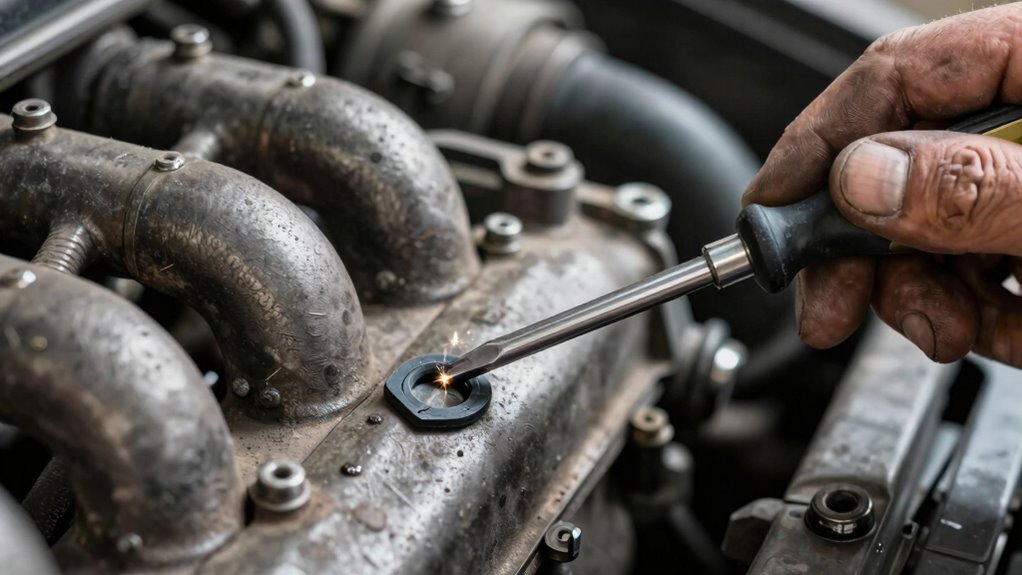
Although air leaks can be subtle, a thorough visual inspection can reveal telltale signs before you begin tuning. Begin by inspecting all intake hoses, connectors, and clamps for cracks, tears, or looseness. Look for discolored or oily residues around joints, indicating leaks or unburned fuel escaping. Examine the throttle body and intake manifold gasket for signs of damage, warping, or improper sealing. Check vacuum lines for brittleness, cracks, or disconnections. Use a flashlight to highlight small leaks or imperfections that may be less visible in ambient light. Confirm that all fittings are properly seated and secured, paying special attention to areas prone to wear. Proper sealing techniques are essential to prevent air leaks and ensure optimal engine performance. Employing visual inspection techniques can significantly improve your ability to detect even the smallest leaks that might otherwise go unnoticed. Additionally, understanding air leak detection methods can help you more effectively locate hidden issues. This meticulous approach allows you to identify potential leak sources that could compromise engine performance.
Listening for Hisses
Listening for hissing sounds is an effective way to detect air leaks that may not be visible during a visual inspection. Air leaks create distinct, high-pitched noises that can be pinpointed with careful listening. Use a mechanic’s stethoscope or a length of rubber hose as a makeshift stethoscope to isolate sounds from specific engine components. Position your ear near the intake manifold, vacuum lines, and throttle body while the engine is running at idle. Be attentive to consistent or irregular hissing noises, which indicate escaping air. Conduct this process in a quiet environment to minimize background noise. Identifying the source of the hissing allows precise targeting of leaks, ensuring that you address the correct component before proceeding with further adjustments. Understanding free floating conditions can help prevent further issues caused by unnoticed leaks.
Using Soapy Water
Applying soapy water is an effective method for visually detecting air leaks in your engine before proceeding with tuning. Prepare a solution of dish soap and water in a spray bottle, ensuring thorough mixing. With the engine running at idle, spray the soapy solution generously around potential leak points, including intake manifold gaskets, vacuum hoses, and throttle body seals. Air leaks will cause the soapy water to bubble or foam at the leak site, providing immediate visual confirmation. Maintain a steady hand and move systematically around suspected areas to avoid missing leaks. Be cautious to not spray excessive liquid directly into sensitive components. This technique allows precise identification of leaks, enabling targeted repairs before advancing to idle screw adjustments, ensuring accurate tuning and engine performance. Incorporating visual inspection methods alongside soapy water testing can further enhance leak detection accuracy. Additionally, using proper safety precautions can help prevent engine damage or personal injury during the process. For added assurance, inspecting the air intake system thoroughly can help locate hidden leaks that may not be immediately visible.
Why Ignoring Air Leaks Risks Further Engine Problems

Ignoring air leaks increases engine strain, causing components to work harder than designed. Over time, this added stress can lead to premature wear and potential failure of critical parts. Addressing leaks promptly prevents costly repairs and maintains ideal engine performance. Additionally, smart energy management can help detect and correct such leaks efficiently.
Increased Engine Strain
When air leaks in your engine’s intake system go unnoticed, they cause the engine to work harder to maintain proper airflow, leading to increased strain on critical components. The unmetered air entering the system disrupts the air-fuel ratio, prompting the engine control unit (ECU) to compensate by adjusting fuel delivery and ignition timing. This constant adjustment causes additional wear on sensors, actuators, and the throttle body. Over time, the increased workload elevates engine temperatures and accelerates component fatigue. The excessive strain hampers *ideal* combustion efficiency, reducing power output and fuel economy. Ignoring these leaks forces your engine’s systems to operate outside their designed parameters, risking early failure of *essential* parts and compromising overall engine reliability. Addressing air leaks promptly restores proper airflow, easing engine stress and ensuring longevity. Proper maintenance of Vetted Electric Bike Conversion Kits demonstrates how attention to system integrity can prevent similar issues in complex mechanical setups, highlighting the importance of system monitoring for engine health.
Potential Costly Repairs
Unaddressed air leaks in your engine’s intake system can lead to costly repairs by causing uneven combustion and excessive strain on engine components. Over time, this imbalance accelerates component wear, leading to potential failures in sensors, valves, or pistons. Proper air intake maintenance can help detect and prevent these issues early on, saving you money and avoiding breakdowns. Staying proactive with diagnostic tools and regular inspections can further enhance the detection and resolution of air leaks. The table below illustrates key consequences:
| Issue | Result | Repair Cost Estimate |
|---|---|---|
| Lean air-fuel mixture | Increased piston wear and potential engine knocking | $1,000–$3,000 for major repairs |
| Elevated emissions | Fines, failed inspections, catalyst damage | $500–$2,500 |
| Sensor malfunction | Erratic engine performance and reduced fuel economy | $200–$1,200 for sensor replacement |
Ignoring leaks risks escalating repair costs, making early detection and fixing critical. Additionally, proper maintenance practices can help prevent these issues from developing in the first place, including regularly inspecting intake system components for signs of wear or damage. Staying informed about AI discoveries and integrating advanced diagnostic tools can further aid in identifying and resolving air leaks more efficiently.
How to Fix Air Leaks Step-by-Step

To effectively fix air leaks, start by identifying the source of the leak using a systematic approach. First, perform a visual inspection of hoses, connections, and gaskets for cracks, looseness, or damage. Second, use a soapy water solution, applying it around suspect areas; bubbles indicate the leak location. Third, employ a compressed air tool or leak detection spray for more precise identification. Once pinpointed, ensure the area is clean and dry before proceeding. Tighten loose fittings or replace damaged components. Seal small cracks with appropriate gasket material or repair compounds. For larger leaks, replace the affected parts entirely. This methodical process guarantees accurate detection and effective sealing, preventing further issues before adjusting idle screws or making other adjustments. Additionally, understanding the air flow dynamics in your system can help prevent future leaks and improve overall efficiency. Being aware of how different components influence pressure and airflow can lead to more durable repairs and better system performance.
How to Confirm Your Air Leak Is Fixed
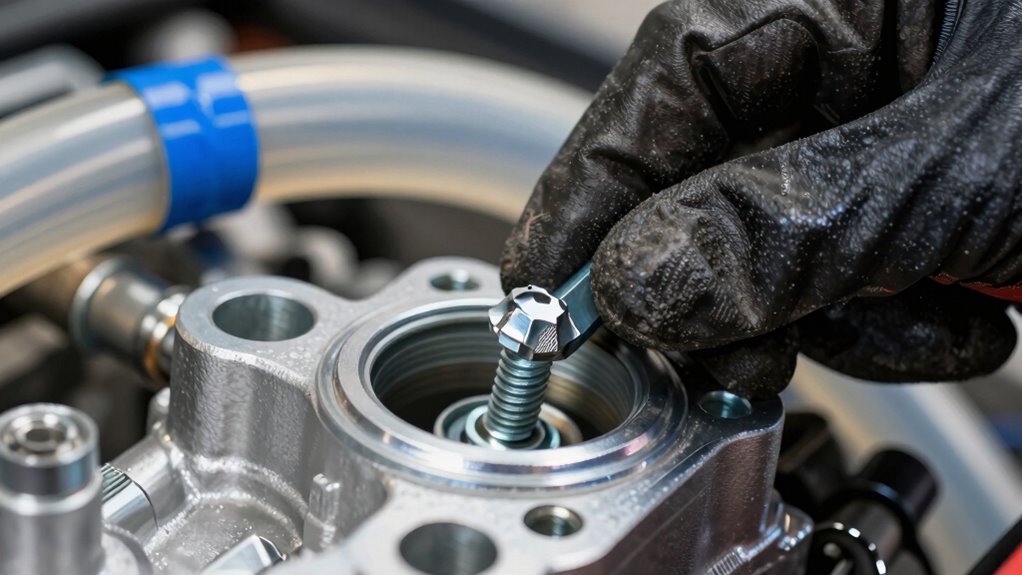
After completing repairs, you must verify that the air leak is fully sealed before proceeding with any further adjustments. To confirm, start the engine and allow it to reach normal operating temperature. Use a propane torch or carburetor cleaner near the repaired seal, without igniting, to detect any escaping air—if the engine RPMs fluctuate, there’s still a leak. Alternatively, employ a smoke test by introducing non-flammable smoke near the seal; visible smoke escaping indicates a leak. Ensure all vacuum hoses and gaskets are securely connected. Listen for hissing sounds and visually inspect the area for any signs of ongoing air escape. Confirming a complete seal ensures subsequent adjustments, like idle screw tuning, are based on an airtight system, preventing misdiagnosis.
Tips for Maintaining a Leak-Free Intake System
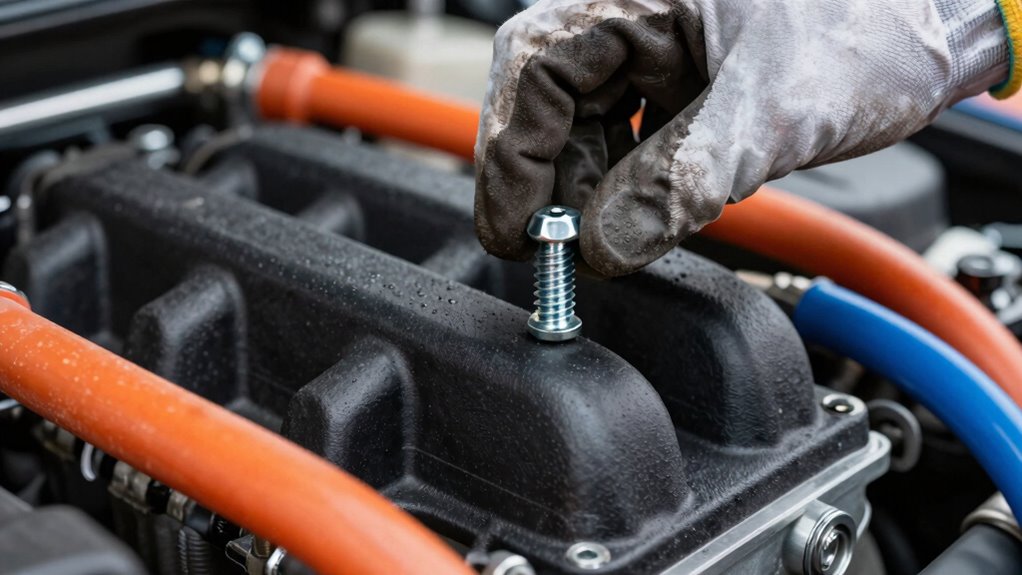
Maintaining a leak-free intake system requires regular inspection and proactive measures to prevent air leaks from developing. To guarantee continued integrity, focus on these key practices:
Regular inspections and prompt replacements keep your intake system airtight and leak-free.
- Conduct periodic visual inspections of hoses, clamps, and gaskets for cracks, corrosion, or looseness.
- Use a soapy water solution to detect leaks; bubbles indicate escaping air, signaling areas needing repair.
- Replace worn components promptly, especially rubber hoses and sealing gaskets, to maintain airtight connections.
Frequently Asked Questions
Can Air Leaks Damage Engine Components Over Time?
Yes, air leaks can damage engine components over time. When unmetered air enters the intake, it disrupts the air-fuel mixture, causing the engine to run lean. This lean condition increases combustion temperatures, which can lead to premature wear of pistons, valves, and spark plugs. Persistent leaks strain the intake manifold and sensors, potentially resulting in costly repairs and reduced engine lifespan if left unaddressed.
Are There Specific Tools Recommended for Detecting Intake Leaks?
Think of tools as your detective’s kit for intake leaks. You’ll want a smoke machine for visual detection, which introduces smoke into the intake system to reveal leaks by escaping at weak points. A carburetor cleaner or brake cleaner spray can also help; when sprayed around suspected areas, engine stumbles indicate leaks. A digital manometer can measure pressure drops, pinpointing leaks precisely. These tools give you clarity when chasing elusive intake leaks.
How Often Should I Inspect My Intake System for Leaks?
You should inspect your intake system for leaks every 10,000 to 15,000 miles or during routine maintenance. Regular inspections involve visually checking hoses, clamps, and gaskets for cracks, wear, or looseness. Use a smoke machine or soapy water to detect hidden leaks effectively. Promptly address any identified issues to maintain peak engine performance and prevent further damage. Consistent inspections help ensure your intake system remains airtight and efficient.
Do Air Leaks Affect Fuel Economy Significantly?
Yes, air leaks can substantially impact your fuel economy. When an intake system leak occurs, your engine compensates by increasing fuel delivery to maintain performance, leading to higher fuel consumption. Even small leaks cause imbalance in the air-fuel ratio, reducing efficiency. Regularly inspecting and sealing leaks guarantees ideal combustion, improves mileage, and prevents potential engine damage caused by unmetered air entering the system.
Is Professional Diagnosis Necessary for Complex Leaks?
You need a professional diagnosis for complex leaks because they can be tricky and require specialized tools. Think of it like trying to fix a clock—without proper expertise, you might miss underlying issues. A trained technician can accurately identify the source, evaluate the severity, and recommend effective repairs, ensuring safety and peak performance. Relying on expert insight saves you time and prevents further damage, making it a wise investment.
Conclusion
Addressing air leaks is like sealing a crack in your engine’s armor; it restores integrity, ensuring peak performance. Ignoring these leaks is akin to leaving holes in a dam—pressure and efficiency will falter, risking further damage. By carefully diagnosing and fixing leaks, you reinforce your engine’s core, much like patching a leak preserves a vessel’s stability. Stay vigilant, maintain a sealed intake, and keep your engine running smoothly, just as a well-maintained ship stays afloat.