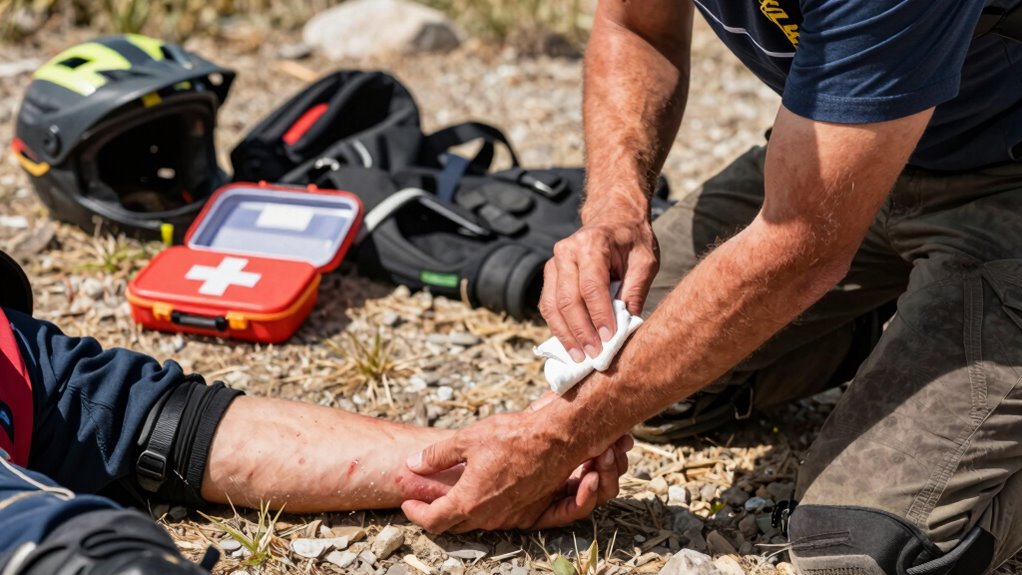
When riding, knowing how to ‘Stop the Bleed’ can save lives by controlling severe bleeding quickly. You need to recognize signs of heavy bleeding, like pooling or spurting blood, and know how to apply firm, direct pressure with clean materials. Using a tourniquet should be a last resort and done safely above the injury. Staying calm, choosing the right supplies, and seeking help promptly are key. Keep going to learn more about handling bleeding emergencies confidently.

Get business pricing on garage and car supplies
- Business-only prices and quantity discounts
- Tax-exempt purchasing
- Multiple users, one account, clear invoices
Key Takeaways
- Recognize severe bleeding signs like pooling blood, soaked dressings, and shock symptoms to act promptly.
- Apply firm, steady pressure directly on the wound with clean material until bleeding stops.
- Use a tourniquet only as a last resort, placing it above the injury and securing tightly until help arrives.
- Keep the injured rider warm, calm, and still to prevent shock and further injury.
- Stay composed, trust your training, and seek emergency help immediately if bleeding is uncontrolled or signs of shock appear.
As an affiliate, we earn on qualifying purchases.
What Is ‘Stop the Bleed’ and Why Riders Need It

Understanding what ‘Stop the Bleed’ is and why it matters can make a essential difference in emergencies. As a rider, your safety depends on quick, informed actions. ‘Stop the Bleed’ is a campaign focused on teaching you how to control severe bleeding before professional help arrives. It’s a critical part of emergency preparedness because heavy bleeding can happen unexpectedly during riding accidents. Knowing how to apply pressure, use a tourniquet, or pack a wound can save lives. Riding safety isn’t just about helmets and protective gear; it’s about being ready to handle injuries confidently. By understanding ‘Stop the Bleed,’ you become better equipped to respond effectively, reducing the risk of serious blood loss and improving overall safety on your rides. Proper first aid techniques, such as bleeding control methods, are essential skills for all riders to learn.
How to Recognize Heavy Bleeding in an Emergency
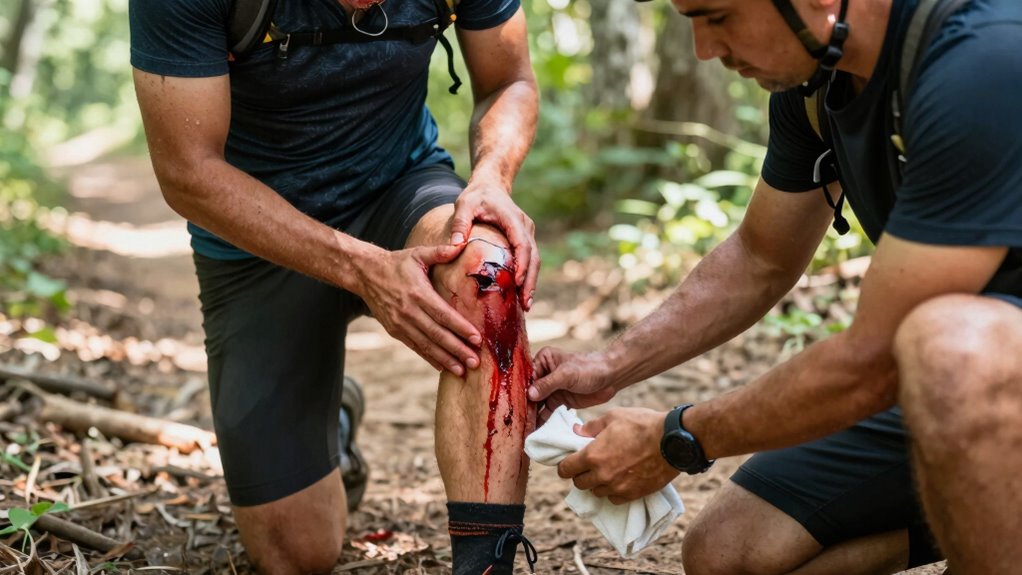
Knowing how to spot heavy bleeding is vital in an emergency. Look for signs like large blood pools, soaked bandages, or blood spurting from a wound. Quickly assess the injury and decide if professional help is needed to prevent further harm. Recognizing signs of bleeding severity can also help you guide children in understanding their online safety. Understanding first aid for bleeding enables you to respond effectively and potentially save lives in critical moments.
Signs of Severe Bleeding
When someone is experiencing severe bleeding, it’s crucial to recognize the warning signs quickly. Heavy bleeding often involves more than just a visible wound; it can include quick blood loss, pooling of blood, or blood that soaks through dressings rapidly. Knowing the bleeding types helps you identify severity. Watch for these key signs:
- Bright or dark blood flowing steadily or spurting from the wound
- Blood soaking through bandages or pooling on the ground
- Wound edges that are gaping or gushing
- Skin that appears pale, clammy, or bluish around the injury
These indicators signal significant blood loss, requiring prompt wound care and possibly emergency help. Recognizing these signs ensures you respond quickly to prevent shock and stabilize the rider.
How to Assess Injury
Quickly evaluating injury is essential in an emergency, especially to determine if the bleeding is severe. Your injury assessment should focus on bleeding indicators such as blood pooling, spurting, or soaking through clothing or bandages. Look for signs of heavy bleeding like large amounts of blood that won’t stop, blood that’s bright red and active, or blood loss that causes weakness or dizziness. Check the injury site carefully to see if the bleeding is controlled or if it’s actively worsening. Remember, rapid recognition of heavy bleeding helps you decide whether to apply direct pressure or seek emergency help immediately. Staying calm and focused during your injury assessment ensures you respond quickly and effectively to minimize blood loss. Using well-draining soil can help prevent infection if the injury involves contaminated or outdoor environments. Recognizing signs of shock early is also crucial for providing appropriate care and alerting emergency services promptly. Additionally, understanding the healthy dog snacks that promote healing can support recovery after the injury. Properly identifying support breakfast options can also be beneficial in maintaining energy and strength during recovery. Being aware of Youngster Choice can help in understanding the importance of timely and appropriate responses in emergency situations.
When to Seek Help
Heavy bleeding requires immediate attention because it can quickly lead to shock or other serious complications. Recognizing when to seek help is vital, especially in distracted driving situations or bad weather hazards that increase accident risks. Look for these signs:
- Continuous, heavy bleeding that doesn’t slow down despite applying pressure
- Blood pooling or soaking through dressings quickly
- Pale, clammy skin, or signs of shock such as dizziness or weakness
- If the injury is severe or you’re unsure, don’t hesitate to call for emergency help
Being aware of life-saving measures can make a critical difference in managing bleeding effectively. In any of these cases, getting professional medical assistance is essential. Don’t let distracted driving or weather hazards delay your response—timely help can save lives.
Applying Pressure Correctly to Stop Bleeding

When applying pressure to a bleeding wound, position your hands correctly—centered directly over the injury. You need to maintain steady, firm pressure without lifting or shifting your hands. This ensures blood flow slows down and helps the wound stop bleeding effectively. Using the correct best woods for farmhouse tables can also ensure the durability of furniture in high-traffic areas. Additionally, understanding first aid techniques is essential for proper response and effective care during emergencies. Developing strong auditory processing skills can enhance your ability to respond quickly and accurately in critical situations. Being familiar with digital safety practices can further prepare you to handle online emergencies and protect yourself in various situations.
Proper Hand Placement
To effectively stop bleeding, you need to apply pressure directly to the wound with your hand. Proper hand placement is essential for the pressure technique to be effective. First, position your palm flat against the wound, ensuring your fingers don’t interfere with blood flow. Second, press firmly but steadily—avoid pressing too hard, which could cause further damage. Third, keep your hand centered over the bleeding area to distribute pressure evenly. Fourth, maintain consistent pressure until help arrives or bleeding slows. Remember, the right hand placement and pressure technique can make a significant difference in controlling bleeding. Focus on firm, steady pressure, avoiding unnecessary movement or shifting, to give the injured person the best chance for effective bleeding control.
Maintaining Steady Pressure
Maintaining steady pressure is essential to effectively control bleeding and prevent further blood loss. Proper pressure application helps slow or stop blood flow to the wound, giving your body a chance to form a clot. To do this, press firmly directly on the bleeding site with a clean cloth or sterile bandage. Keep consistent pressure without lifting or shifting the material, as this can disturb clot formation. If blood soaks through, add more material on top without removing the initial pressure, and continue pressing. Do not loosen or remove pressure prematurely, even if bleeding seems to slow. Steady pressure ensures adequate bleeding control, minimizes blood loss, and helps stabilize the victim until professional help arrives.
Choosing the Best Materials to Control Bleeding
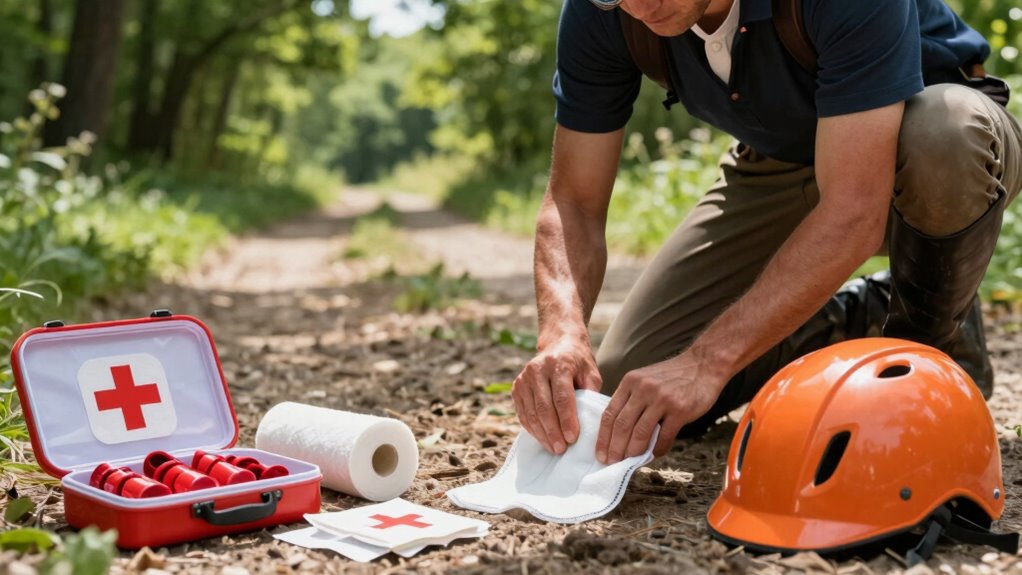
Choosing the right materials to control bleeding is crucial for effective first aid. Your goal is to select dressings that suit the wound and have the appropriate material properties. Here are four key considerations:
Selecting appropriate dressings ensures effective bleeding control and promotes healing.
- Absorbency – Choose dressings that can soak up blood quickly to keep the wound clean.
- Sterility – Use sterile materials to prevent infection.
- Adhesiveness – Select dressings that stay in place without causing additional pain.
- Flexibility – Pick flexible materials that conform to the body, especially for irregular or joint areas.
How to Use a Tourniquet Safely in an Emergency
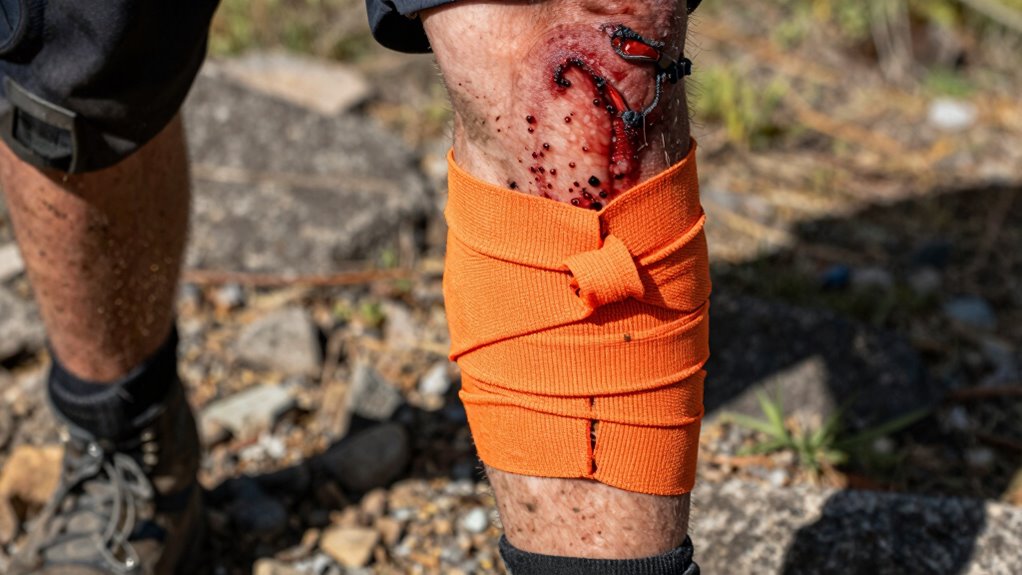
When a limb is severely bleeding and other methods to control the flow aren’t effective, applying a tourniquet can be life-saving. Proper emergency tourniquet application is vital for tourniquet safety. Place the tourniquet high on the limb, above the bleeding site, and tighten it until the bleeding stops. Use a windlass or a sturdy object to tighten further, then secure it with a knot or clip. Do not loosen it once in place, as bleeding could restart. Remember, a tourniquet is a last resort. Keep it in place until professional help arrives. Additionally, understanding the horsepower of electric dirt bikes can help in recognizing the importance of quick response and safety measures in off-road emergencies. Being aware of life-saving techniques can make a critical difference in emergency situations. Proper training and first aid knowledge are essential to ensure safety and effectiveness when applying a tourniquet. Knowing how to quickly identify severe bleeding can significantly improve outcomes in critical moments.
Other First Aid Steps After Controlling Bleeding

Once you’ve effectively controlled the bleeding, the next crucial step is to guarantee the injured person remains as comfortable and stable as possible. This is essential for horse safety and ensuring proper rider training responses. Here are four key actions to take:
- Keep the person warm with a blanket or clothing to prevent shock.
- Reassure them calmly to reduce anxiety and promote stability.
- Avoid moving the injured person unless necessary, especially if spinal injury is suspected.
- Monitor their breathing and consciousness until professional help arrives.
- Use appropriate first aid supplies to support stabilization and comfort during the wait. Proper use of safety checklists can help identify potential hazards and ensure all necessary precautions are taken. Applying proper stabilization techniques can further reduce the risk of aggravating injuries during this critical period. Additionally, maintaining a calm environment can help prevent further stress or panic in the injured individual. Being aware of first aid guidelines based on first aid training ensures a more effective response. These steps help maintain stability, support the rider’s safety, and reinforce proper first aid training. Staying calm and focused ensures you respond efficiently, protecting both the injured person and the horse.
When to Seek Emergency Medical Help
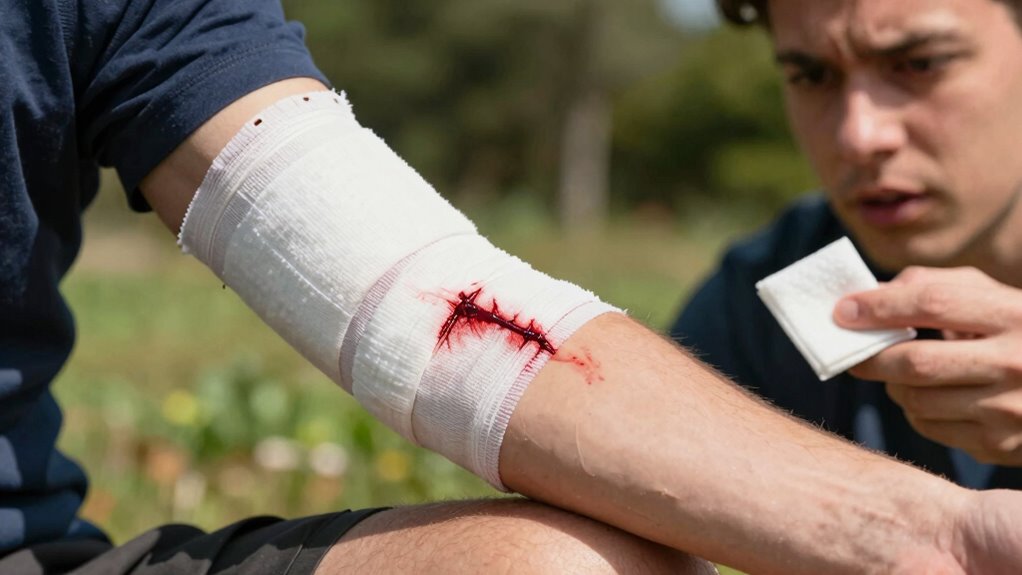
Knowing the signs that indicate a situation requires immediate medical attention is essential for rider safety. If someone’s bleeding is severe, doesn’t stop after applying pressure, or if the rider shows signs of shock—such as pale skin, rapid breathing, or weakness—you should seek emergency medical help right away. If the injury involves a head, neck, or spinal trauma, don’t move the rider unless absolutely necessary, and call for professional assistance immediately. Emergency preparedness means recognizing these critical cues promptly. Delaying medical care can worsen injuries or lead to life-threatening complications. Always trust your instincts; when in doubt, it’s safer to get professional help quickly. Your swift action can make a pivotal difference in ensuring rider safety and proper recovery.
Staying Calm and Confident During Bleeding Emergencies
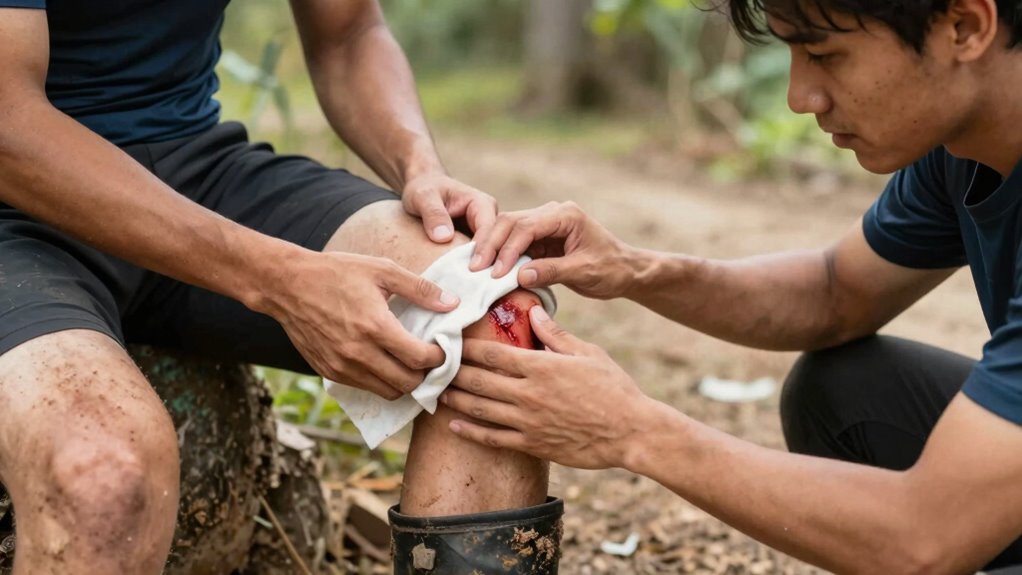
Remaining calm and confident during a bleeding emergency is essential because it helps you think clearly and act effectively. When you stay focused, you can better assess the situation and avoid panic. Remember, medication interactions can affect bleeding risks or responses, so consider if anyone has taken blood thinners or other medications. Keep riders hydrated, as dehydration can impair your ability to stay composed. To maintain confidence, consider these key points:
Staying calm during bleeding emergencies helps you think clearly, assess risks, and act effectively.
- Take deep breaths to steady your nerves.
- Focus on immediate priorities, like applying pressure.
- Communicate clearly with others for help.
- Trust your training and avoid unnecessary movements.
Frequently Asked Questions
Can ‘Stop the Bleed’ Techniques Be Used on All Types of Bleeding?
Yes, ‘stop the bleed’ techniques can be used on most types of bleeding, but their effectiveness depends on the bleeding severity. For minor cuts, simple pressure may suffice, while severe bleeding requires more advanced methods like tourniquets or wound packing. Always assess the type of bleeding first, and if it’s life-threatening, act quickly with appropriate techniques to control the flow and prevent shock.
How Long Should I Maintain Pressure on a Bleeding Wound?
They say “a stitch in time saves nine,” and that’s true for bleeding too. You should maintain pressure application on a bleeding wound for at least 10 minutes, or until help arrives. During this duration management, keep applying steady, firm pressure without releasing to check if bleeding slows. If bleeding persists after 10 minutes, continue pressure and seek emergency assistance, as prolonged bleeding needs professional intervention.
What Are Common Mistakes to Avoid When Applying a Tourniquet?
When applying a tourniquet, avoid common mistakes like incorrect placement, which can cause nerve damage. Always position it high on the limb, above the bleeding site, but not directly over a joint. Tighten it firmly enough to stop blood flow without cutting off circulation completely. Confirm it’s secure, and don’t loosen it prematurely. Proper placement and avoiding nerve damage are key to effective bleeding control and safe application.
How Do I Identify Signs of Shock After Bleeding?
You can identify signs of shock by recognizing symptoms like pale, clammy skin, rapid heartbeat, shallow breathing, dizziness, weakness, and confusion. If you notice the injured rider looks very pale or sweaty, or if they’re feeling faint or disoriented, these are clear signs of shock. Act quickly by keeping them warm, elevating their legs if possible, and calling for emergency help to prevent further complications.
What Supplies Should I Keep in a First Aid Kit for Riders?
Imagine your first aid kit as a safety saddlebag for emergencies. You should pack first aid kit essentials like bandages, antiseptic wipes, scissors, and gloves, along with rider safety gear such as a helmet and reflective vest. These supplies help you address cuts, scrapes, or minor injuries quickly, ensuring rider safety and preventing complications. Always keep your kit stocked and accessible, just like you’d prepare your gear before a ride.
Conclusion
Knowing how to properly respond to bleeding emergencies can save lives. Remember, applying pressure quickly and using a tourniquet if needed are vital steps. Did you know that uncontrolled bleeding is responsible for up to 40% of pre-hospital deaths? Staying calm and confident can make a real difference. With the right knowledge, you’re better prepared to act fast and help keep yourself and fellow riders safe in emergencies.
Fall Picks
fall essentials
As an affiliate, we earn on qualifying purchases.