
TL;DR

Get business pricing on garage and car supplies
- Business-only prices and quantity discounts
- Tax-exempt purchasing
- Multiple users, one account, clear invoices
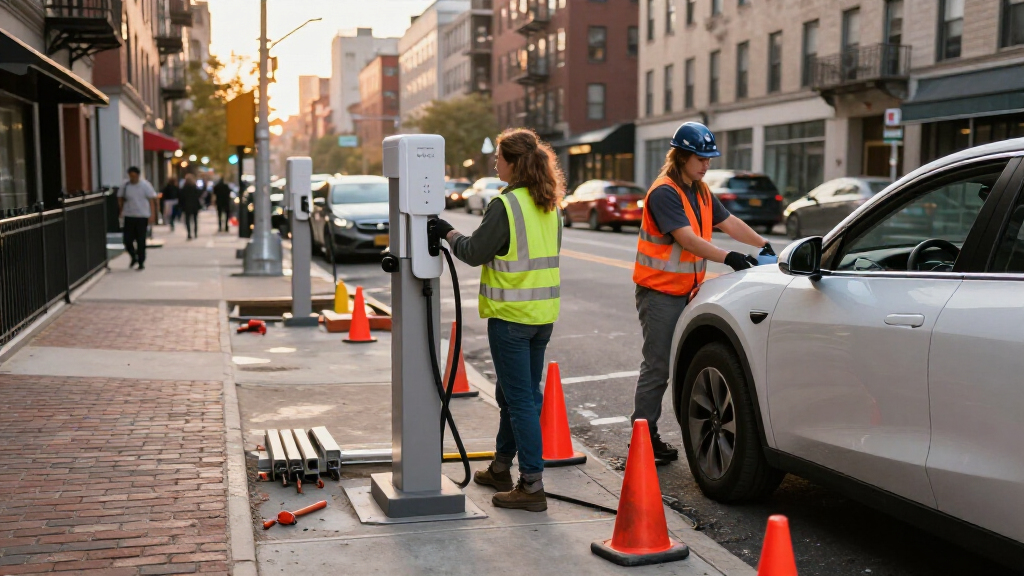
Maverick Construction will lead engineering and construction for it’s electric’s permanent PlugNYC curbside charging network across New York City’s five boroughs. The project is set to replace the city’s pilot infrastructure and add 600 chargers over three years; installation locations, costs and the rollout schedule have not been specified in the source material.
Maverick Construction will lead the design, engineering, construction and installation work for it’s electric’s permanent PlugNYC curbside EV charging network, a New York City project set to replace the existing pilot infrastructure and add 600 chargers over three years. The network is planned across all five boroughs, though the source material does not give a start date or identify the first installation sites.
The source report says New York City and the New York Power Authority selected it’s electric for the contract in August. Maverick Corporation will provide engineering and construction services, including utility coordination and work to prepare locations for charger installation. The contract concerns the infrastructure buildout; the report does not specify the total project cost, the number of charging ports per site or the charging hardware model.
Installations are intended to target neighborhoods with high concentrations of Taxi and Limousine Commission drivers and limited off-street parking. Curbside charging is aimed at drivers who cannot readily install a charger at home. The planned 600 chargers are additional to the replacement of the city’s current pilot infrastructure, according to the report, but it gives no count for how many pilot units will be replaced.
The work also connects to the city’s Green Rides Initiative. The source says the initiative requires all Uber and Lyft trips licensed by the TLC to be electric or accessible by 2030. The contract announcement does not describe how much of the new network must be operating by that deadline or how the city will measure progress toward it.
Charging Access for TLC Drivers
The project is intended to add charging options on public streets in areas where many TLC drivers work and where residents may have limited off-street parking. For drivers without access to a private driveway or garage, curbside chargers could provide another way to charge an electric vehicle. The announcement establishes the planned scale and contractor roles, but it does not provide usage projections or say how many drivers the network is expected to serve.
The connection to the 2030 Green Rides requirement gives the buildout a role in the city’s broader effort to support electric or accessible-for-hire trips. Public charging infrastructure may help drivers who cannot charge at home, but the contract announcement alone does not show whether the planned network will meet demand. That will depend on factors such as the final site locations, installation pace, charger availability and how often drivers can use each site.
For the public, the work will involve construction and utility coordination at curbside locations across the five boroughs. The source does not identify specific blocks or describe possible effects on parking, traffic or pedestrian access during installation. Those details will matter to drivers and nearby residents as sites are selected and work begins.
From Pilot to Permanent Network
PlugNYC’s existing pilot infrastructure is the baseline the new contract is meant to replace. The report says the August selection covers a permanent network and an additional 600 curbside chargers over three years. It does not give the pilot’s original launch date, current charger count or a detailed schedule for removing or replacing its equipment.
Maverick and it’s electric have also worked together on a curbside charging project in Boston. Nathan King, it’s electric’s co-founder and CEO, said Maverick partnered on what he described as the company’s first-of-a-kind Boston buildout in 2025. The source attributes the scale and significance of that earlier work to King; it does not provide independent project figures for comparison with the New York plan.
Maverick says it has worked with the New York Power Authority, New York State and local entities on EV infrastructure for several years. That experience is relevant to a project requiring engineering, construction and coordination with utilities. The announcement does not identify which utility companies or city agencies will be involved at individual sites.
““Maverick has enjoyed a long-standing relationship with NYPA, New York State, and local entities for several years, doing the design and construction of EV infrastructure in support of the state’s robust EV charging initiatives.””
— Diarmuid Clancy, president of Maverick EV Services
Sites, Costs and Schedule
The source report does not state when construction will begin, how the three-year installation period will be divided or when the first chargers are expected to open. It also gives no project budget, site list, charger specifications or count of pilot units to be replaced. The precise number of locations may differ from the number of chargers, since the announcement does not say how units will be grouped.
It is also unclear how the city and NYPA will sequence installations among the five boroughs, what public process will apply to site selection, and whether any locations have already been approved. The announcement describes intended priorities—TLC driver concentrations and limited off-street parking—but does not publish a ranking method or neighborhood list. No separate project statement from the city or NYPA is included in the source material.
King’s description of the buildout as the largest in the country is an attributed characterization. The report does not supply a comparison of charger counts, project timelines or other measures against other cities’ networks. The confirmed project figure in the source is the plan to install 600 additional curbside chargers over three years.
Detailed Rollout Plans Ahead
The next practical milestones are likely to include identifying installation sites, coordinating utility work and setting a construction schedule. The source announcement does not name dates for those steps, so it is not yet possible to say when drivers or residents will see work begin. Information from the city, NYPA or it’s electric could clarify which neighborhoods are first and how residents will be notified about street-level construction.
As the project proceeds, the three-year target will provide a timeframe against which the planned 600 additional chargers can be tracked. Further details on the pilot equipment being replaced, charger operation and access for drivers will help show how the permanent network differs from the current system. The source does not say when those details will be released.
Key Questions
What will Maverick do for the PlugNYC project?
Maverick Corporation will provide engineering and construction services for it’s electric’s contract, covering design, installation and utility coordination for the curbside charging infrastructure.
How many chargers are planned?
The plan calls for 600 additional curbside chargers over the next three years, alongside replacement of the city’s existing pilot infrastructure. The source does not state how many pilot units will be replaced.
Where will the chargers be installed?
The network is planned across all five boroughs. Installations are intended to focus on neighborhoods with many TLC drivers and limited off-street parking, but specific sites have not been announced in the source material.
How does the project relate to the Green Rides Initiative?
The source says the initiative requires all Uber and Lyft trips licensed by the TLC to be electric or accessible by 2030. The announcement does not specify how many chargers must be operating by then.
Source: rss
Fall Picks
fall essentials
As an affiliate, we earn on qualifying purchases.