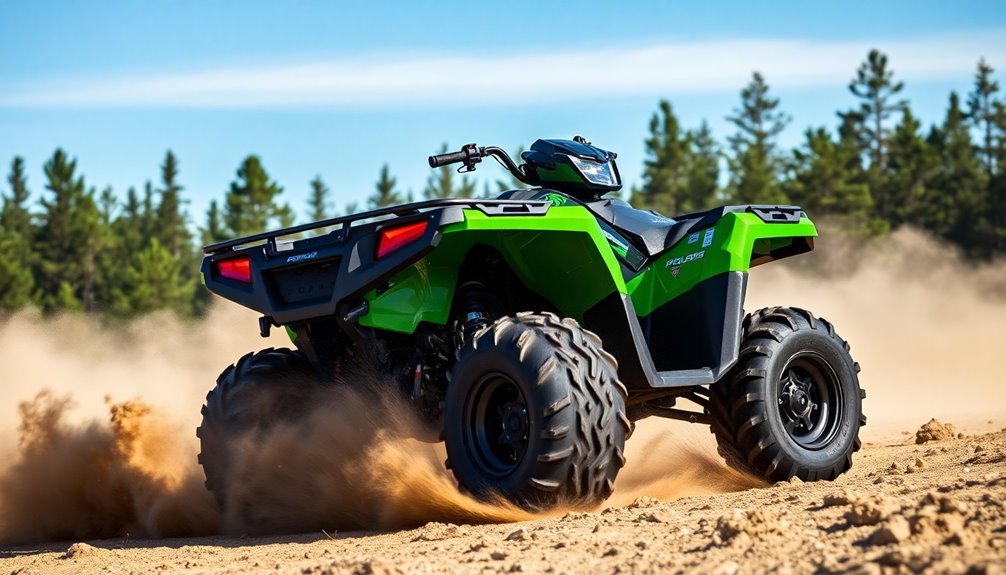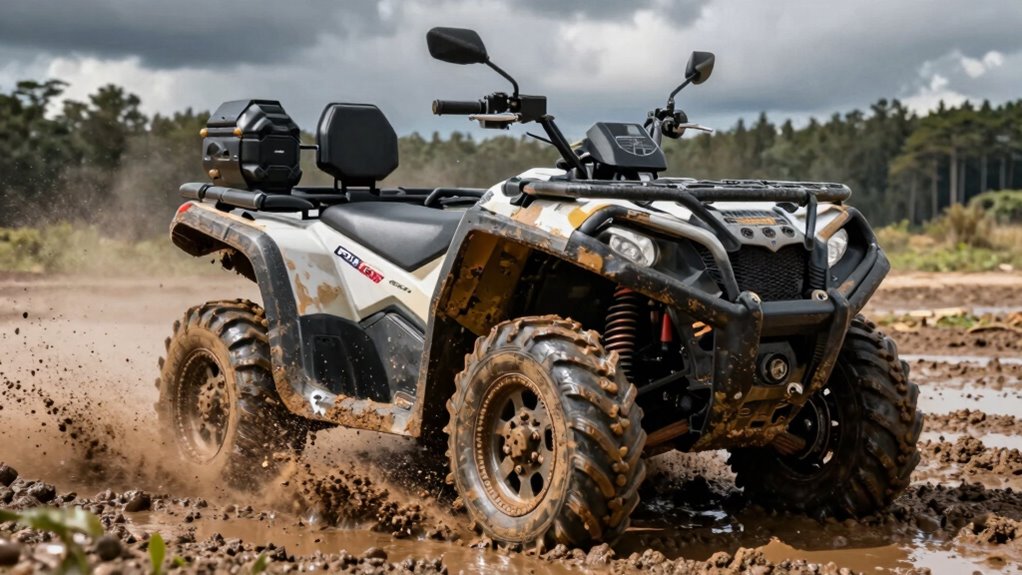

When you’re traversing muddy terrains, CVT heat is your biggest worry. If you don’t check the CVT belt regularly or clear mud and debris, you risk overheating, which can lead to serious performance issues. Aggressive riding can worsen this, so adjusting your throttle and maintaining awareness is key. Ignoring strange noises or burning smells can spell disaster. Understanding how to manage heat effectively can keep your ride safe and enjoyable. There’s more to know about protecting your CVT.

Get business pricing on garage and car supplies
- Business-only prices and quantity discounts
- Tax-exempt purchasing
- Multiple users, one account, clear invoices
Key Takeaways
- Regularly check the CVT belt and clear mud to prevent overheating during rides.
- Aggressive throttle use in muddy conditions increases heat buildup, risking CVT failure.
- Monitor for strange noises or burning smells, which indicate overheating issues.
- Invest in a quality CVT cover to protect against moisture and mud exposure.
- Prioritize heat management and proactive monitoring to ensure rider safety and vehicle performance.
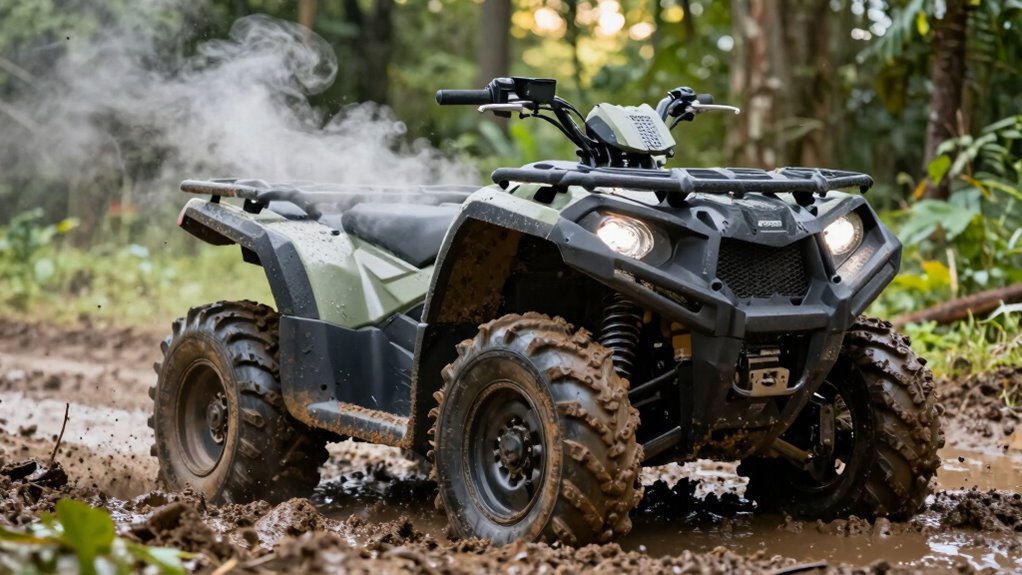
When you’re out riding your Polaris in muddy conditions, you’ve probably noticed how quickly the CVT can heat up. The continuous variable transmission (CVT) is vital for delivering power to your wheels, but mud can lead to overheating issues that you need to be aware of. While enjoying the thrill of mud performance, it’s easy to forget that excessive heat can cause significant problems, impacting not just the vehicle but also your safety as a rider.
It’s important to keep up with CVT maintenance. Regularly checking the belt and making sure that the CVT is clear of mud and debris can help prevent overheating. When mud builds up, it can restrict airflow and cooling, leading to a rise in temperature. If you’ve ever felt that heat radiating from the CVT, you know it’s not just uncomfortable; it’s a warning sign. Ignoring these signs can lead to catastrophic failures, leaving you stranded or, worse, risking injury.
Regular CVT maintenance is crucial; mud buildup can restrict airflow and cause overheating, risking serious damage and rider safety.
You should also consider how your riding style affects the CVT’s temperature. If you’re constantly gunning the throttle while maneuvering through deep mud, you’re putting extra strain on the CVT. Slowing down in particularly mucky sections can help reduce heat buildup and improve your mud performance. This doesn’t mean you have to sacrifice fun; it just requires a bit of awareness of how your actions affect your ride.
Another important aspect of rider safety is being proactive about monitoring the CVT’s performance. If you notice any strange noises, slipping, or a burning smell, it’s time to pull over and assess the situation. It’s better to take a moment to evaluate than to push through and risk serious damage. Always carry a basic toolkit for quick fixes when you’re out on the trails.
Investing in a quality CVT cover can also help protect components from mud and moisture, further enhancing your riding experience. When you take these precautions, not only do you prolong the life of your CVT, but you also promote a safer ride. Ultimately, understanding how to manage heat in the CVT while riding in muddy conditions can enhance your overall enjoyment and keep you safe on your Polaris. So gear up, stay aware, and enjoy the ride!
Polaris CVT belt maintenance kit
As an affiliate, we earn on qualifying purchases.
As an affiliate, we earn on qualifying purchases.
Frequently Asked Questions
How Can I Prevent CVT Overheating During Regular Use?
To prevent CVT overheating during regular use, focus on effective CVT cooling and heat management. Regularly check your CVT belt and sheaves for wear, ensuring they’re clean and free of debris. Use a high-quality CVT fluid and consider installing a cooling fan or vent if you’re riding in hot conditions. Keep an eye on your engine temperature and take breaks if you notice excessive heat. Proper maintenance goes a long way!
What Are the Signs of CVT Damage From Heat?
You can spot signs of CVT overheating by watching for specific heat indicators. Look for unusual noises, like grinding or squealing, which may signal damage. If your vehicle hesitates during acceleration or struggles to shift gears, that’s another red flag. Additionally, keep an eye on the temperature gauge; if it shows higher than normal readings, it’s time to check your CVT. Ignoring these signs can lead to costly repairs down the road.
Can CVT Heat Affect Overall Vehicle Performance?
Absolutely, CVT heat can seriously affect overall vehicle performance. When heat builds up, it hampers CVT efficiency, making your ride feel sluggish. It’s like a car running in a marathon without proper hydration! Poor heat dissipation leads to degraded fluid quality, which can cause slippage and hesitation. If you notice these signs, you might be facing a performance impact that could compromise your driving experience. Keep an eye on those temperatures!
What Maintenance Tips Help Reduce CVT Heat Buildup?
To reduce CVT heat buildup, you should regularly check and change your CVT fluid, ensuring it’s clean and at the right level. Improve airflow around the CVT by cleaning debris from cooling systems and vents. Make airflow improvements by adding vents or fans if needed. Schedule regular inspections to catch any issues early, ensuring your vehicle runs smoothly and efficiently, especially in challenging conditions like mud.
Are Aftermarket Parts Effective in Managing CVT Heat?
Yes, aftermarket parts can be effective in managing CVT heat. They often provide cooling solutions that enhance airflow and dissipate heat more efficiently. By upgrading your CVT with high-performance components, you can take advantage of these aftermarket benefits. This not only helps maintain ideal operating temperatures but also improves overall performance in challenging conditions. Just make certain to choose reputable brands and confirm compatibility with your vehicle for the best results.
Conclusion
When tackling muddy trails, you can’t underestimate the danger of Polaris CVT heat. It’s a silent but deadly issue that can ruin your ride and leave you stranded. Keeping an eye on your CVT temperature and using proper techniques can make all the difference. So, why risk your adventure with overheating? Stay informed and prepared to guarantee your ride remains smooth and enjoyable, no matter how messy the terrain gets. Your Polaris deserves the best care!
Halloween Picks
halloween
As an affiliate, we earn on qualifying purchases.