Payload ratings are just the starting point for off-road adventures. They don’t capture how load distribution affects vehicle stability and handling. Packing gear unevenly or too high can lead to tipping and poor traction. You need to reflect on weight placement and prioritize essential items to optimize performance. Understanding these factors guarantees a safer, more enjoyable experience on rough terrain. Stick around to uncover more tips for smarter packing strategies and enhanced off-road performance.
Key Takeaways
- Payload ratings indicate maximum capacity but do not reflect load distribution effects on vehicle stability and handling.
- Uneven weight distribution can lead to poor traction and increased risk of tipping during off-road maneuvers.
- Excess weight may hinder performance, making it crucial to prioritize essential gear over sheer quantity for off-roading.
- Packing strategies, such as placing heavier items lower and distributing weight evenly, enhance vehicle stability and navigation.
- Understanding the impact of load on vehicle performance is vital for a safer and more enjoyable off-road experience.
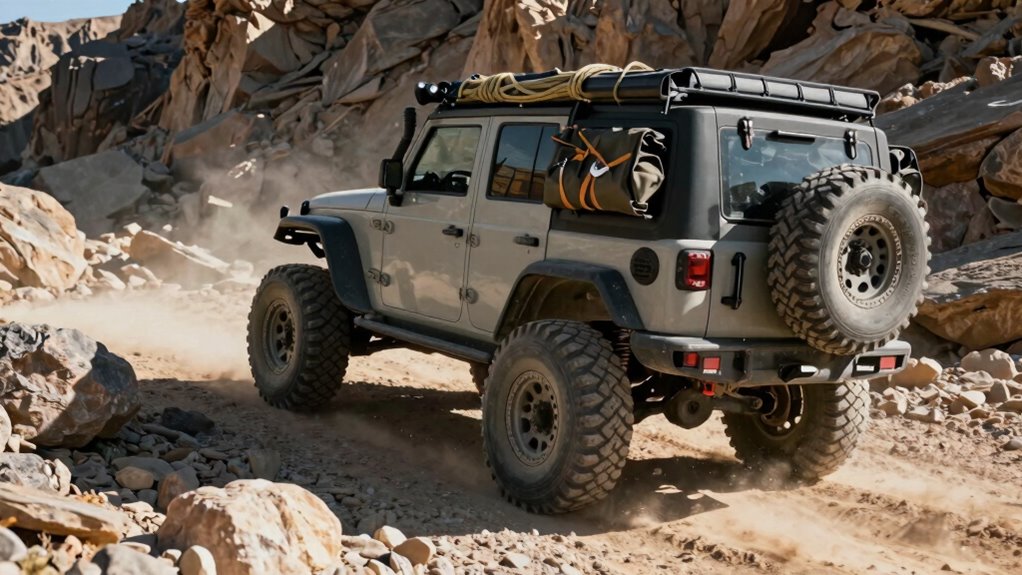
When you’re gearing up for an off-road adventure, understanding payload ratings is vital. Many people think that as long as you stay within the specified limits, you’re good to go. However, that’s a common misconception. Payload ratings provide a baseline, but they don’t tell the whole story. You need to reflect on how you load your vehicle and how that affects your off-road performance.
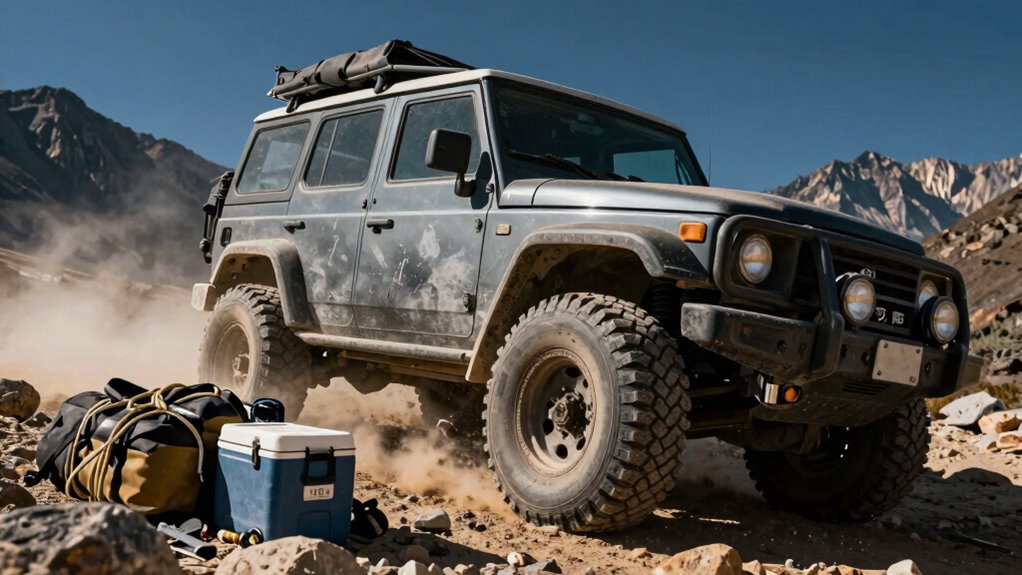
Load distribution plays a significant role in your vehicle’s stability and handling. If you’re cramming all your gear in the back without taking into account how it’s balanced, you could easily run into trouble. Uneven weight can lead to poor traction, making it harder for your tires to grip the terrain. This could mean getting stuck in mud, sand, or rocky paths where you really need every advantage. When you’re out there, the last thing you want is to be dealing with a top-heavy load that tips your vehicle or makes steering unpredictable.
Another payload misconception is that heavier isn’t always better. While you might feel tempted to load up on everything you think you’ll need, excess weight can bog you down. Off-roading isn’t just about having the most gear; it’s about having the right gear. Sometimes, leaving behind those extra tools or supplies can make all the difference. Think about what you truly need for your adventure, focusing on essential items that won’t compromise your vehicle’s performance.
Pay attention to how you pack your gear. Try to distribute the weight evenly, placing heavier items lower in the vehicle. This not only helps with stability but also improves your vehicle’s center of gravity. Keeping the load balanced will allow your vehicle to navigate obstacles more efficiently and can prevent unnecessary wear and tear on your suspension. Additionally, understanding payload ratings and how they relate to actual off-road loads can help you make smarter choices before hitting the trail. Being aware of how load distribution affects your vehicle’s handling can prevent many common off-road mishaps. It’s also beneficial to familiarize yourself with your vehicle’s recommended weight limits to avoid surpassing safe thresholds. Furthermore, understanding how vehicle weight impacts off-road maneuverability can help you optimize your packing strategy for improved performance.
Ultimately, understanding payload ratings is just the start. You’ve got to think critically about how you load your vehicle. It’s not just about staying within a number; it’s about maximizing your off-road experience by ensuring your vehicle performs at its best. So the next time you’re preparing for an adventure, don’t just glance at the payload rating—take a moment to reflect on load distribution and gear selection. Properly managing your off-road loads can significantly enhance your vehicle’s capabilities and safety on challenging terrains. Your vehicle will thank you when you’re cruising over challenging terrains with ease.
off-road load distribution weight balance
As an affiliate, we earn on qualifying purchases.
As an affiliate, we earn on qualifying purchases.
Frequently Asked Questions
How Do Tire Choices Affect Off-Road Load Capacity?
Tire choices greatly affect off-road load capacity. You need to take into account tire pressure, as proper inflation enhances load distribution. The tread design impacts traction performance on varied terrains, while sidewall strength prevents damage under heavy loads. Choose tire compounds that withstand rough conditions for better durability. A well-selected tire can handle more weight efficiently, ensuring your vehicle performs at its best off-road, so always evaluate your options before hitting the trails.
What Role Does Vehicle Suspension Play in Off-Road Performance?
Vehicle suspension plays an essential role in off-road performance by enhancing stability and handling. Different suspension types, like coil or leaf springs, affect how your vehicle responds to terrain. Damping systems and shock absorbers help manage load distribution, reducing the impact of bumps and obstacles. By optimizing these elements, you guarantee better traction and control, allowing you to tackle challenging off-road conditions with confidence and ease.
Can Payload Ratings Vary With Different Terrains?
Yes, payload ratings can vary with different terrains. When you tackle uneven surfaces, like rocky paths or deep mud, the terrain challenges affect load distribution. If your vehicle’s weight isn’t balanced correctly, it might struggle to handle the load effectively, leading to potential damage or reduced performance. Always consider these factors when loading your vehicle for off-road adventures to guarantee you stay safe and maintain peak handling throughout your journey.
How Do Accessories Impact Overall Vehicle Load Ratings?
Imagine loading your vehicle with a sturdy roof rack and a winch. Each accessory type you add shifts the weight distribution, impacting your overall load ratings. When you load up for an adventure, those extra pounds can make a difference. Heavy gear on the roof might raise your center of gravity, affecting stability. Always consider how accessories influence your vehicle’s performance and safety when hitting rugged terrains. It’s all about balance!
Are There Legal Limitations on Off-Road Load Capacities?
Yes, there are legal limitations on off-road load capacities. Load regulations often vary by region, so it’s vital to check local laws. Proper weight distribution is also critical to guarantee safety and compliance. When you exceed these limits, you risk fines and can compromise your vehicle’s performance. Always be mindful of both the legal aspects and the practical implications of your load to enjoy your off-road adventures safely.
Conclusion
So, next time you glance at a payload rating, remember it’s just part of the picture. Imagine hitting that rugged trail, your gear bouncing in the back, and the vehicle straining under the weight. Will it hold up? The real test lies in how your ride handles those unpredictable off-road challenges. As you venture deeper, you might just discover that those numbers can’t capture the true grit needed for your adventure. Are you ready to find out?