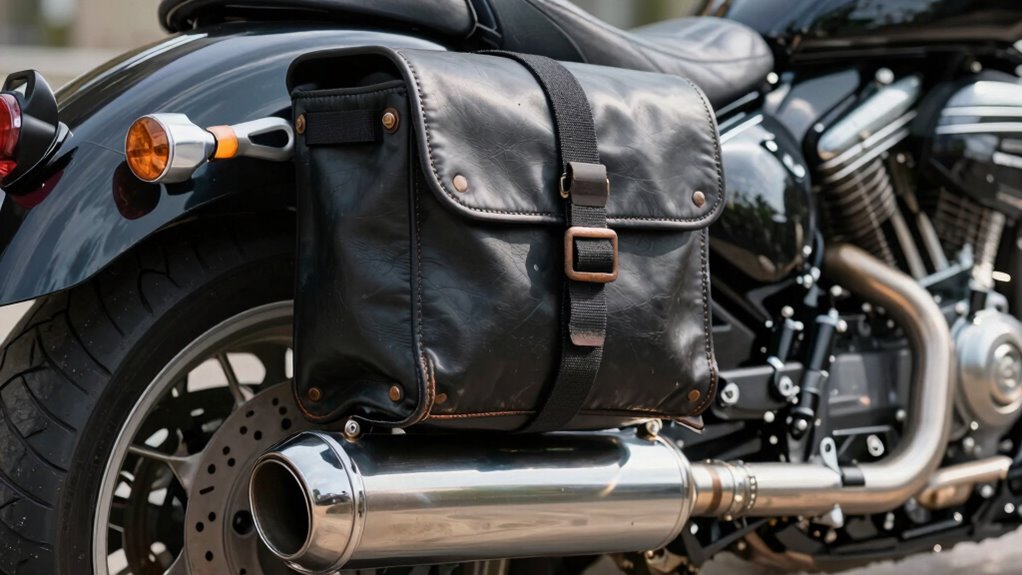

To mount a tool bag without melting it on your vehicle’s exhaust, position it away from heat sources using sturdy brackets or straps rated for high temperatures. Use heat shields, exhaust wraps, or insulating spacers to protect your tools from direct heat. Choose heat-resistant materials like leather, nylon, or canvas for the bag itself. Securing everything properly and organizing tools guarantees safety and easy access. Keep these tips in mind, and you’ll learn more about safeguarding your gear effectively.
Key Takeaways
- Mount the tool bag at a safe distance from the exhaust, ideally with a heat-resistant spacer or insulated mount.
- Use heat shields or exhaust wraps made of ceramic or titanium to protect the bag from direct heat exposure.
- Select durable, heat-resistant materials like leather or heavy-duty nylon for the tool bag itself.
- Secure the bag with sturdy straps or brackets rated for high temperatures, ensuring even tension and stability.
- Regularly inspect mounting hardware and heat protection components for wear, replacing damaged parts promptly.
Why You Should Mount Your Tool Bag Away From the Exhaust

Mounting your tool bag away from the exhaust is essential to prevent it from melting or becoming damaged. The materials of your tool bag, whether leather, nylon, or canvas, each have different heat tolerances, but all are vulnerable to prolonged exposure to exhaust heat. Exhaust heat can reach temperatures high enough to weaken or warp materials, especially if your bag is made from synthetic fabrics or thin leather. If placed too close, the heat can cause melting, discoloration, or even structural failure of your tool bag. By mounting it farther away, you protect your tools and extend the lifespan of your bag. Proper heat shielding can also help reduce the risk of heat damage when positioning your tool bag near the exhaust system. Additionally, understanding heat output and how it varies with engine operation can help you choose a safer mounting location. Being aware of heat dissipation characteristics can further aid in selecting an optimal mounting position to minimize risk. Furthermore, considering thermal insulation options can provide extra protection against heat transfer, ensuring your tool bag remains safe even if mounted closer to the exhaust.
How to Choose the Best Location on Your Vehicle for Mounting
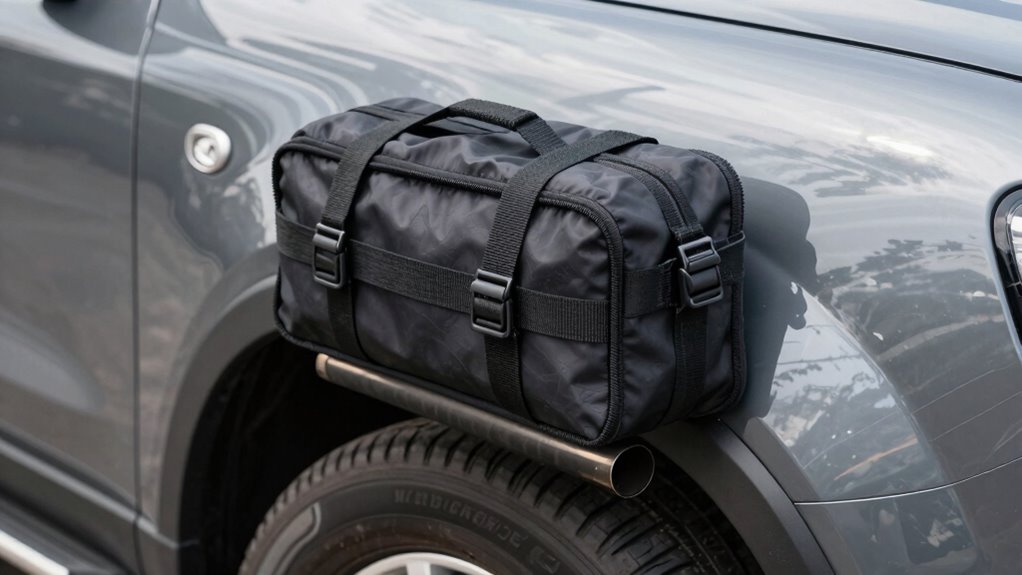
Choosing the right spot on your vehicle for mounting your tool bag can make a significant difference in its safety and longevity. Look for a location that keeps the bag secure during transit and minimizes exposure to heat, debris, and moisture. Ideally, mount it where it won’t interfere with vehicle safety features or obstruct your view. Consider areas with easy access, so you can quickly grab your tools when needed. Avoid mounting near hot surfaces like the exhaust, which can damage the bag over time. Instead, find a sturdy, flat surface that provides stable support. Proper placement ensures your tool accessibility remains ideal while reducing the risk of damage or accidents. Taking time to choose the right spot pays off in durability and convenience. Understanding vehicle safety considerations can help you select the best mounting location for both security and compliance. Additionally, being aware of heat sources on your vehicle can help prevent damage from nearby hot components. Being mindful of proper mounting techniques can further enhance the safety and stability of your tool setup.
Furthermore, inspecting your vehicle regularly for potential hazards can help you identify any risks that might affect your tool bag’s safety over time.
What Materials Are Best for Mounting Near the Exhaust
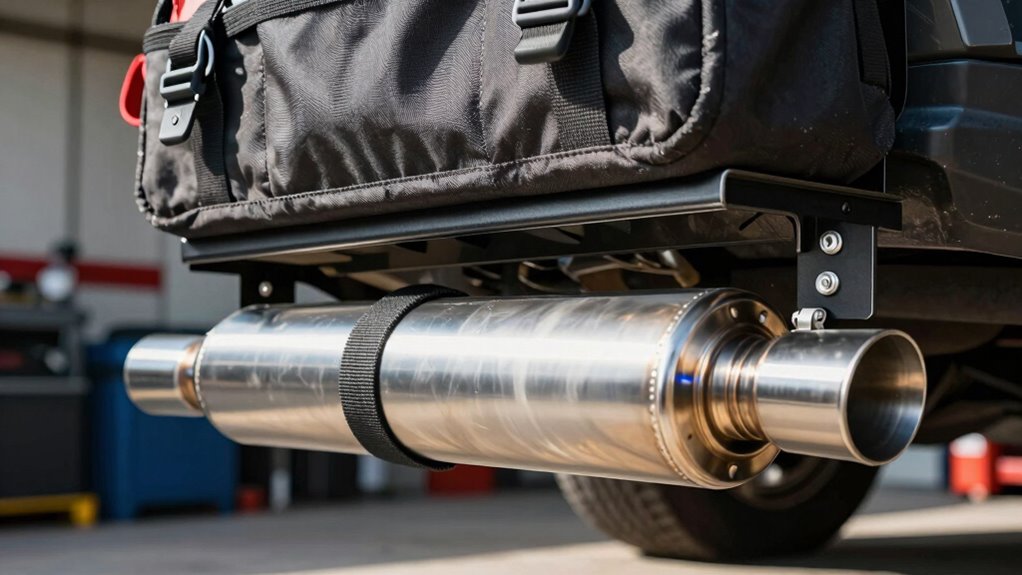
Since the area near the exhaust can get extremely hot, selecting materials that withstand high temperatures is essential. Your material selection should focus on heat-resistant options that won’t melt or warp. Steel and aluminum are excellent choices due to their durability and heat tolerance. Use mounting techniques that minimize direct contact with the exhaust, such as brackets with insulating spacers or heat-resistant pads. Additionally, considering thermal expansion can help prevent issues caused by temperature fluctuations. Here’s a quick comparison:
| Material | Heat Resistance | Durability |
|---|---|---|
| Steel | High | Very durable |
| Aluminum | Moderate to high | Lightweight, strong |
| Titanium | Very high | Expensive, tough |
Choosing materials with thermal stability is crucial for safety and longevity in such high-temperature environments. Pick materials that suit your mounting needs, ensuring your tool bag stays safe without risking melting or damage. Incorporating fire-resistant materials into your setup can further enhance safety and longevity.
How to Install Heat Shields or Exhaust Wraps to Protect Your Tools
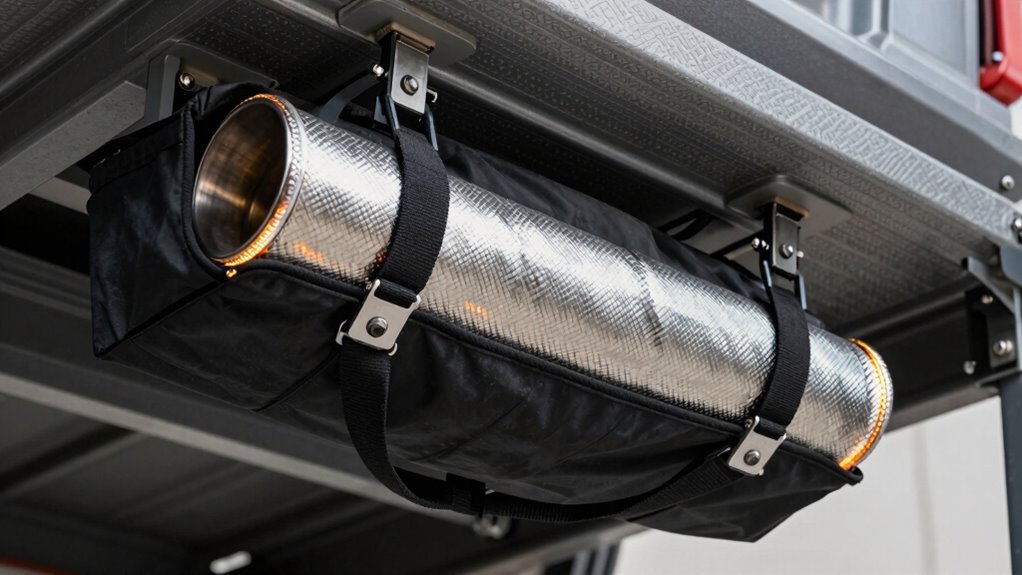
Protecting your tools from heat damage is key when mounting near the exhaust. To do this effectively, focus on material selection for heat shields or exhaust wraps. Choose heat-resistant materials like titanium, ceramic, or specialized heat wrap fabrics designed for high temperatures. Proper installation is essential—ensure the shield or wrap covers exposed areas without gaps. Always follow safety precautions, such as wearing gloves and eye protection, since handling high-heat materials can be risky. Secure the heat shield or wrap tightly to prevent movement or sagging, which could expose your tools to heat. Regularly inspect the installation for signs of wear or damage, replacing components as needed. Properly installed heat shields or wraps considerably reduce the risk of melting your tool bag while maintaining safety. Additionally, understanding the heat transfer properties of your chosen materials can help optimize protection and longevity of your tools. To maximize effectiveness, consider thermal insulation techniques that further reduce heat exposure. Incorporating heat dissipation methods can also aid in maintaining lower temperatures around your mounted tools.
How to Secure Your Tool Bag With Straps or Brackets
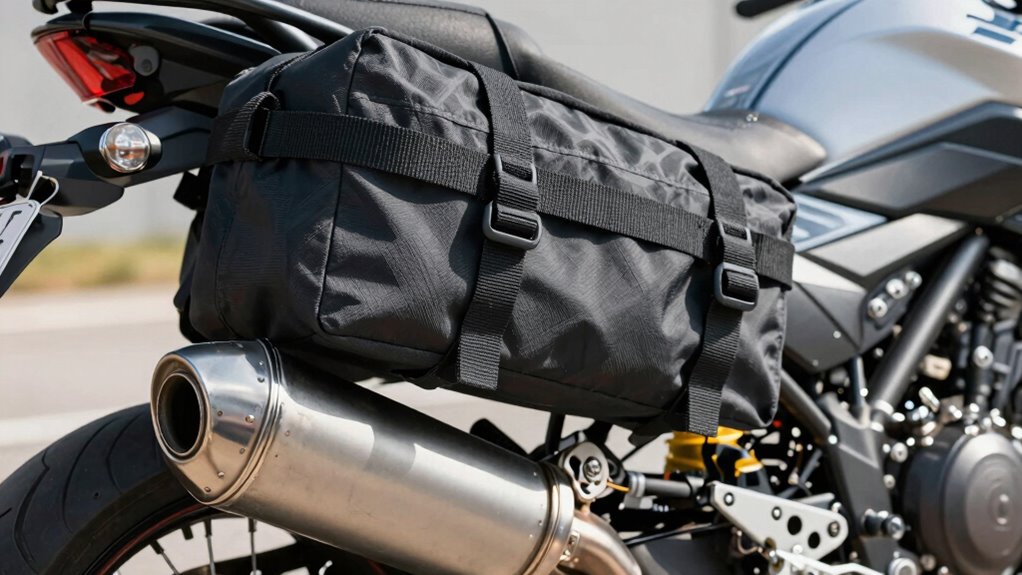
Securing your tool bag with straps or brackets is essential to prevent movement and guarantee safety during operation. Proper mounting safety depends on how well you secure the bag and maintain appropriate strap tension.
- Choose durable straps or brackets designed for heat resistance and mounting strength.
- Position the straps or brackets firmly around the tool bag and mounting surface, ensuring even tension.
- Tighten the straps gradually, checking for consistent strap tension to avoid slack or over-tightening.
- Regularly inspect the mounting setup for signs of wear or loosening, adjusting as needed for ongoing security.
Maintaining correct strap tension ensures your tool bag stays in place, reducing the risk of damage or accidents. Proper mounting safety makes your work safer and more efficient.
Tips for Organizing Your Tools for Safety and Easy Access
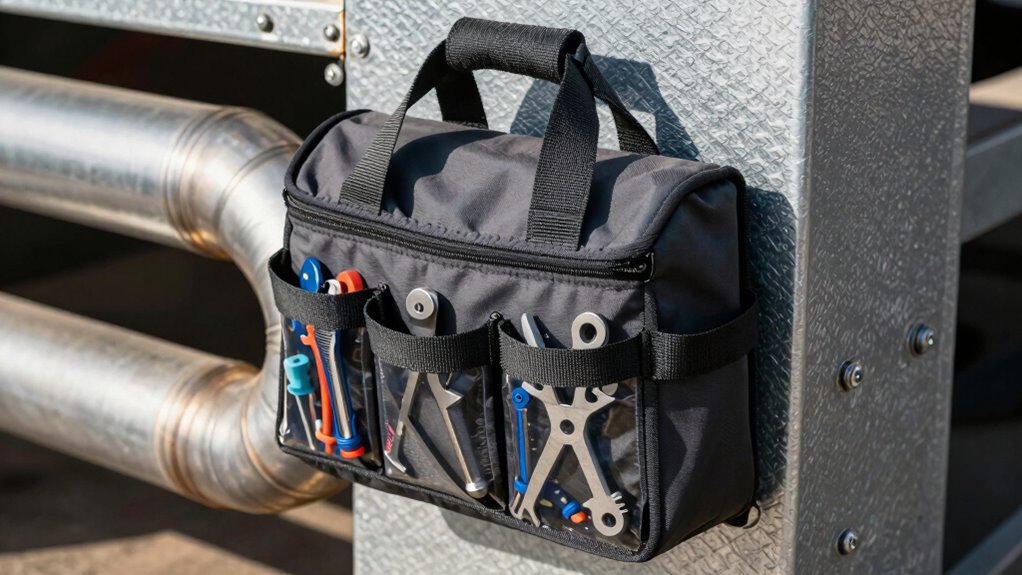
To stay safe and efficient, focus on organizing your tools by keeping only the essentials within reach. Use secure mounting methods to prevent tools from shifting or falling, and guarantee clear access paths so you can grab what you need quickly. Proper organization helps you work safely and saves time during every task.
Prioritize Essential Tools
Have you ever found yourself digging through a cluttered tool bag to find the right wrench? To avoid this, prioritize essential tools that you’ll use most often. Keep the heaviest items, like your main tools, close to the top to reduce the tool bag weight and make access easier. Be mindful of exhaust temperature—avoid storing heat-sensitive tools near hot exhaust parts. Limit your kit to only what’s necessary to keep it lightweight and manageable. Incorporating connected equipment can help you monitor your tools’ placement and temperature for optimal safety. Additionally, understanding heat management principles can significantly prevent damage to your tools and ensure their longevity. Here are four tips:
- Select tools you use daily or frequently.
- Store heavier tools at the bottom or sides.
- Keep heat-sensitive tools away from exhaust heat.
- Regularly review and remove unused items.
This approach guarantees safety, quick access, and prevents melting due to excessive heat.
Use Secure Mounting Methods
Properly securing your tools is essential to prevent accidents and keep your workspace organized. Tool bag security relies on effective mounting techniques that prevent slipping or falling. Use sturdy straps, brackets, or mounts designed specifically for your vehicle or work area. Confirm your mounting hardware is rated for the weight of your tool bag and won’t loosen over time. Position the bag in a location that’s easily accessible but out of the way of moving parts or heat sources. Double-check that all fasteners are tight and secure before starting work. Selecting mounting solutions that are designed for safety can further reduce the risk of accidents and enhance durability. Utilizing proper load distribution ensures that the weight is evenly spread, minimizing stress on mounting points. Considering vibration resistance is crucial, especially when riding over rough terrain, to keep your tools secure during rough rides. By choosing the right mounting method also involves considering shock absorption, which can help protect your tools from damage caused by sudden impacts. By choosing the right mounting techniques, you minimize the risk of tools falling, which can cause injuries or damage. Secure mounting methods keep your tools within reach and your workspace safe and organized. Incorporating local automation can help you monitor and maintain your mounting setup for maximum safety and efficiency.
Maintain Clear Access Paths
Keeping your tools organized and accessible is essential for safety and efficiency. Clear access paths prevent accidents and make your work smoother. To maintain this, focus on proper mounting techniques and tool bag safety. You are trained on data up to October 2023. Additionally, understanding the why behind proper organization can help you develop better habits for tool safety and efficiency. Properly securing tools reduces the risk of falling objects or damage during operation, further enhancing safety and reliability.
Common Mistakes When Mounting a Tool Bag Near the Exhaust (and How to Avoid Them)
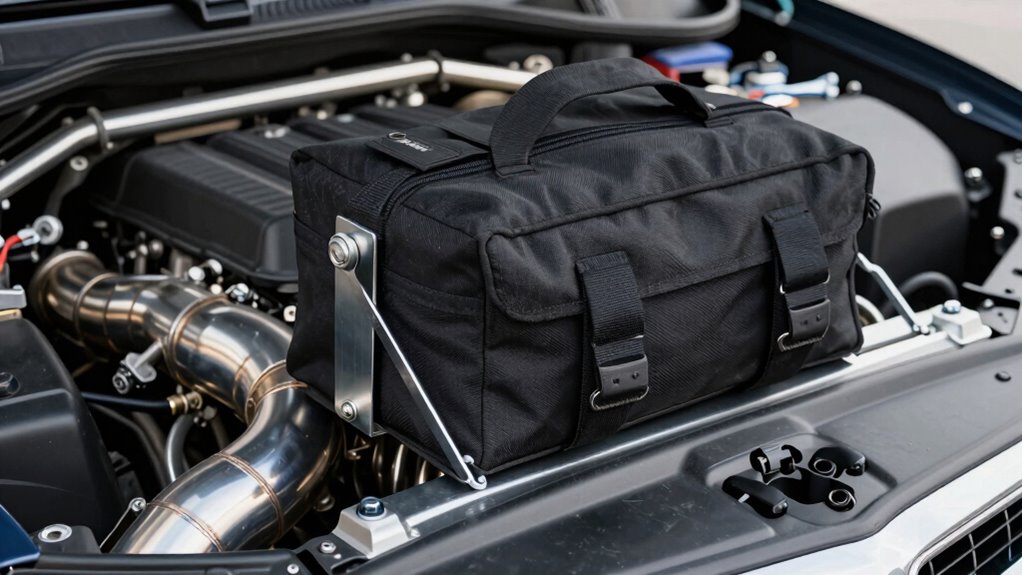
Mounting a tool bag too close to the exhaust can lead to serious damage, so it’s crucial to avoid common mistakes. One mistake is choosing the wrong tool bag materials; synthetic fabrics melt easily, so opt for heat-resistant options. Another error is improper mounting height—placing the bag too low increases exposure to heat. Many people overlook the importance of secure attachment, risking movement that brings the bag closer to the exhaust. Additionally, failing to take into account heat shields or insulation can cause melting or damage over time. Always measure carefully to ensure the bag sits at a safe distance, and select materials designed to withstand high temperatures. By paying attention to mounting height and material selection, you prevent costly damage and prolong your tool bag’s lifespan. Proper mounting techniques and understanding the impact of heat exposure are essential for safe and effective installation.
Troubleshooting and Maintaining Your Mounting System

Regularly inspecting your mounting system helps catch issues before they cause damage or safety hazards. This keeps your tool bag secure and prevents overheating near the exhaust. To troubleshoot effectively:
- Check vehicle compatibility to ensure your mounting brackets fit and won’t interfere with other components.
- Examine the material selection for your mounting hardware — choose heat-resistant, durable materials suited for high temperatures.
- Inspect the mounting points for wear, rust, or looseness, tightening or replacing parts as needed.
- Test the stability of your setup after adjustments to confirm the bag stays secure during transit.
Routine maintenance like cleaning connections and replacing worn parts extends the system’s lifespan and maintains safety. Staying vigilant keeps your tools safe without risking melting or damage.
Frequently Asked Questions
Can I Use Adhesive Mounts Instead of Straps for Securing the Tool Bag?
You can use adhesive mounts instead of straps, but check their adhesive strength to guarantee they hold securely. Adhesive mounts may work for lightweight tool bags, but they often lack the mounting durability needed for rough rides or heavy loads. For best results, opt for high-quality, automotive-grade adhesive mounts designed for outdoor use, and clean the surface thoroughly before attaching. This approach helps prevent the bag from falling off during your ride.
What Are the Signs That My Tool Bag Is Exposed to Excessive Heat?
If your tool bag starts to look like a rainbow, with discoloration or a burnt smell, it’s a sign of heat damage. You might also notice the material feels softer or even warps, as if it’s melting away. These signs mean your bag’s been exposed to excessive heat, risking damage or failure. Keep an eye out for these clues to prevent further deterioration and protect your gear.
Are There Specific Tools or Materials Recommended for Heat-Resistant Mounting?
You should use mounting accessories made from heat-resistant materials like silicone, stainless steel, or high-temperature rubber. These materials withstand heat without melting or degrading. Look for specialized brackets, straps, or clamps designed for high temperatures, ensuring your tool bag stays securely mounted. Always check product specifications to confirm they’re rated for your exhaust’s heat levels, and avoid regular plastic mounts that could melt under extreme heat.
How Often Should I Inspect the Mounting System for Safety and Wear?
You should inspect the mounting system for safety and wear at least every 3 to 6 months, depending on usage conditions. Regular inspections help confirm the mounting system’s durability and identify any signs of damage or looseness early. If you notice rust, cracks, or worn components, tighten or replace parts immediately. Consistent checks prevent potential failures and keep your tool bag securely mounted without risking damage or accidents.
Is It Safe to Mount a Tool Bag on the Exhaust Pipe Itself?
Mounting a tool bag directly on the exhaust pipe isn’t safe because exhaust heat can melt or damage it, risking safety and tool loss. Instead, consider using heat-resistant mounting brackets or insulated straps designed for high temperatures. These guarantee mounting safety while protecting your tools from extreme heat. Always check the mounting system regularly for wear or damage to prevent accidents, and never compromise safety for convenience.
Conclusion
Think of your tool bag as a precious treasure that needs safeguarding from the fiery furnace of your exhaust. By choosing the right spot, using heat shields, and securing it firmly, you create a sturdy shield against melting mishaps. Stay vigilant, avoid common pitfalls, and maintain your setup regularly. With these steps, your tools will stay safe and ready, riding along like a loyal crew on your vehicle’s journey, never lost in the heat of the moment.